
Cycling Fitness: Build Leg Power, Core Stability, and Endurance on the Bike

Last updated: October 4, 2026
Over 51 million people in the United States cycle each year, and the global bicycle count sits at roughly one billion. Those numbers are not driven by competitive racing. Most people ride because cycling delivers real, measurable fitness benefits without the joint punishment that comes with running or high-impact training.
Cycling fitness is often underestimated. It gets filed under “just cardio” and left at that. That is not accurate. Done properly, cycling builds meaningful leg strength, trains the cardiovascular system across a wide range of intensities, and places genuine demands on core stability. It is also one of the most joint-friendly forms of exercise available, which makes it particularly valuable for adults over 45 who want to stay active without accumulating wear and tear.
This article covers what cycling fitness actually means in practical terms — how it builds leg power, why core stability matters more than most cyclists realise, and how to develop genuine endurance on the bike. It covers road cycling, mountain biking, and indoor cycling. It also explains honestly where cycling has limits, and where adding simple off-bike strength work fills those gaps.
If you are considering a home training option, our best exercise bike for knee issues buying guide is a useful starting point for choosing the right setup.
Key Takeaways
- Cycling fitness includes leg muscular endurance, cardiovascular conditioning, and core stability — it is not just aerobic exercise.
- Cycling is genuinely joint-friendly, with significantly lower joint loading than running, making it suitable for people managing knee discomfort.
- Leg power on the bike is real, but cycling builds muscular endurance more than maximum strength — off-bike resistance work still matters.
- Core stability is a critical and often neglected component of cycling performance and injury prevention.
- Road cycling, mountain biking, and indoor cycling each offer distinct fitness benefits, and all three are valid training tools.
Table of Contents
- What Does “Cycling Fitness” Actually Mean?
- Why Cycling Is a Joint-Friendly Cardio Option
- Leg Power on the Bike: What Muscles Cycling Builds
- How to Build More Leg Power Through Cycling
- Core Stability: The Hidden Fitness Benefit of Cycling
- Cycling Endurance: Why the Bike Is Built for Longevity Training
- Road Cycling vs Mountain Biking vs Indoor Cycling
- Is Cycling Enough for Strength Training?
- Knee-Safe Cycling Tips for Better Fitness
- Sample Cycling Fitness Week for Beginners
- Who Gets the Most Benefit from Cycling Fitness?
- Frequently Asked Questions
- Conclusion
What Does “Cycling Fitness” Actually Mean?
It Is More Than Being Able to Ride Longer
When most people think about cycling fitness, they picture cardiovascular endurance — the ability to ride further or longer without stopping. That is part of it, but only part.
Cycling fitness is a combination of several physical qualities working together:
- Cardiovascular capacity — how efficiently your heart and lungs deliver oxygen to working muscles
- Muscular endurance — how long your legs can sustain repeated pedal strokes under load
- Neuromuscular coordination — how smoothly your body manages the mechanics of the pedal stroke
- Core stability — how well your trunk supports power transfer and maintains position on the bike
- Metabolic efficiency — how well your body uses fuel at different intensities
Each of these qualities improves with consistent, structured riding. The balance between them depends on how you ride, at what intensity, and for how long.
Why Cycling Works for Beginners and Experienced Athletes
The simplest way to look at it is this: cycling is scalable. A beginner can ride at a comfortable pace and still generate meaningful cardiovascular and muscular adaptation. An experienced athlete can push hard intervals, climb at threshold effort, and train multiple systems simultaneously.
That scalability is one reason cycling for fitness suits such a wide range of people. The barrier to entry is low, the injury risk is manageable when setup is correct, and the ceiling for progression is high. For adults over 45 in particular, this combination is genuinely useful — it allows consistent training without the recovery cost of higher-impact activities.
Why Cycling Is a Joint-Friendly Cardio Option
Low Impact Does Not Mean Low Value
This is where hype sometimes gets in the way in the opposite direction. Some people dismiss low-impact exercise as less effective than high-impact alternatives. The evidence does not support that view.
Research comparing joint loading across different exercise modes consistently shows that cycling places substantially lower forces on the knee joint than running. During running, the knee absorbs impact forces that can reach two to three times body weight with each stride. On a bike, the load is distributed across the pedal stroke in a smooth, circular motion with no impact phase. The joint is loaded, but not hammered.
The Arthritis Foundation and similar joint-health organisations regularly recommend cycling as a preferred exercise for people with knee osteoarthritis precisely because it maintains joint mobility and builds surrounding muscle without aggravating cartilage. For people managing knee discomfort, this matters enormously.
This does not mean cycling is risk-free. Poor bike setup, excessive resistance, or rapid increases in training load can all cause knee problems. But the baseline risk profile is genuinely lower than many other cardio options.
Why Bike Fit Matters for Knee Comfort
Saddle height is the single most important fit variable for knee health. If the saddle is too low, the knee is over-flexed at the bottom of the pedal stroke, increasing patellofemoral stress. If it is too high, the hip rocks to reach the bottom of the stroke, straining the lateral knee structures.
A practical starting point: with the pedal at the bottom of the stroke and the heel on the pedal, the leg should be almost fully extended. When you move your foot to the correct ball-of-foot position, there should be a slight bend at the knee — roughly 25 to 35 degrees of flexion.
Cleat position, handlebar height, and reach also influence how load is distributed across the body. If knee discomfort persists despite correct saddle height, a professional bike fit is worth the investment.
Leg Power on the Bike: What Muscles Cycling Builds
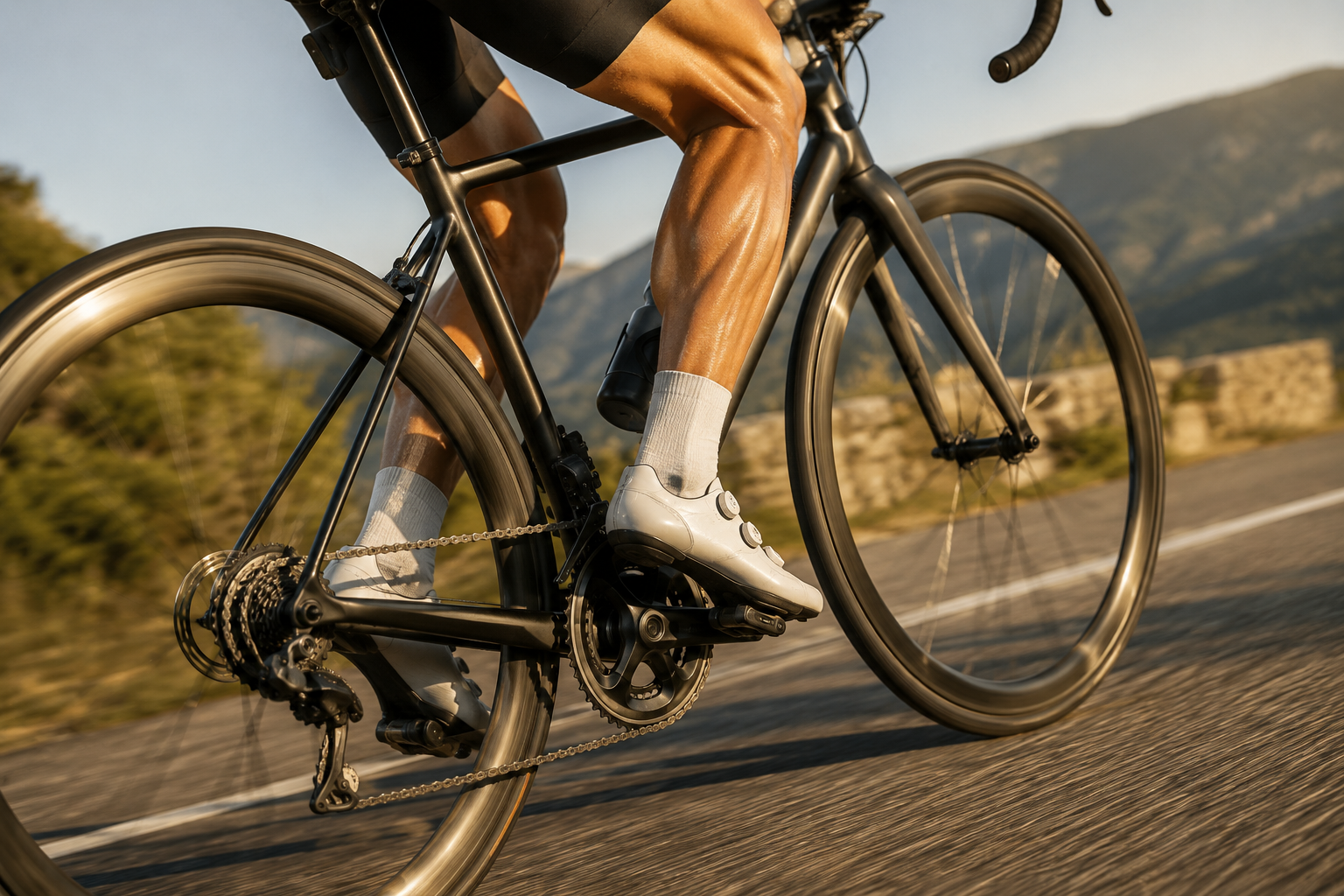
Main Muscles Used in the Pedal Stroke
The pedal stroke is a compound movement that recruits multiple muscle groups across the full rotation. Understanding which muscles do what helps you train them more deliberately.
| Phase of Pedal Stroke | Primary Muscles |
|---|---|
| Power phase (12 to 5 o’clock) | Quadriceps, gluteus maximus |
| Bottom of stroke (5 to 7 o’clock) | Calf muscles (gastrocnemius, soleus) |
| Pull-back phase (7 to 9 o’clock) | Hamstrings |
| Upstroke (9 to 12 o’clock) | Hip flexors, tibialis anterior |
The quadriceps and glutes do the majority of the work. The hamstrings and hip flexors play a supporting role, particularly when using clipless pedals that allow a more complete pedal stroke.
Road Cycling vs MTB vs Indoor Cycling Leg Demands
Road cycling tends to emphasise sustained, rhythmic muscular endurance at moderate to high cadence. The leg muscles work consistently over long durations, which builds endurance capacity effectively.
Mountain biking places more varied demands on the legs. Technical terrain requires explosive bursts of power, sudden braking and acceleration, and significant isometric loading through the lower body when navigating obstacles. This makes mountain biking fitness more dynamic and less predictable than road cycling.
Indoor cycling, particularly on a stationary bike or smart trainer, allows precise control of resistance and cadence. This makes it highly effective for structured training — you can target specific power outputs, work at consistent effort levels, and repeat sessions accurately. For cycling leg strength development, indoor training offers a level of control that outdoor riding cannot always match.
Why Cycling Builds Muscular Endurance More Than Maximum Strength
Let’s keep this practical. Cycling involves hundreds to thousands of repetitions per session at relatively moderate resistance. That training stimulus is ideal for developing muscular endurance — the ability to sustain force output over time — rather than maximum strength, which requires high loads and low repetitions.
This is not a weakness of cycling. Muscular endurance is highly functional and carries over into everyday life. But it does mean that if building maximum leg strength is a goal, cycling alone is unlikely to deliver it. Off-bike resistance training is needed for that.
How to Build More Leg Power Through Cycling
Use Resistance Carefully
Increasing resistance — whether through a harder gear on the road or a higher resistance setting on an indoor bike — increases the force demand on the legs with each pedal stroke. This shifts the training stimulus closer to strength-endurance territory.
The key word is carefully. High resistance at low cadence places greater stress on the knee joint. A sensible starting point is to increase resistance gradually, maintain a cadence of at least 60 to 70 RPM even when climbing, and avoid grinding gears that force the knee into a compromised position.
Add Hill-Style Intervals
Climbing — whether on actual hills or simulated through resistance — is the most effective way to build cycling leg strength within a ride. Short, repeated efforts of two to five minutes at high effort, with recovery between, train both the cardiovascular system and the leg muscles more effectively than steady-state riding alone.
This approach aligns with what current cycling performance research shows: structured, quality sessions deliver strong physiological adaptations even at lower total training volumes. The key is consistency and appropriate effort, not simply riding more hours.
Add Off-Bike Strength Work
The evidence suggests that combining cycling with targeted resistance training produces better outcomes for leg power than cycling alone. Squats, lunges, step-ups, and Romanian deadlifts target the glutes, quadriceps, and hamstrings through a greater range of motion and at higher loads than cycling can replicate.
For adults over 45, maintaining muscle mass is a health priority in its own right. Our exercise guide for better health covers the broader case for combining aerobic and resistance training as part of a sustainable fitness approach.
Core Stability: The Hidden Fitness Benefit of Cycling
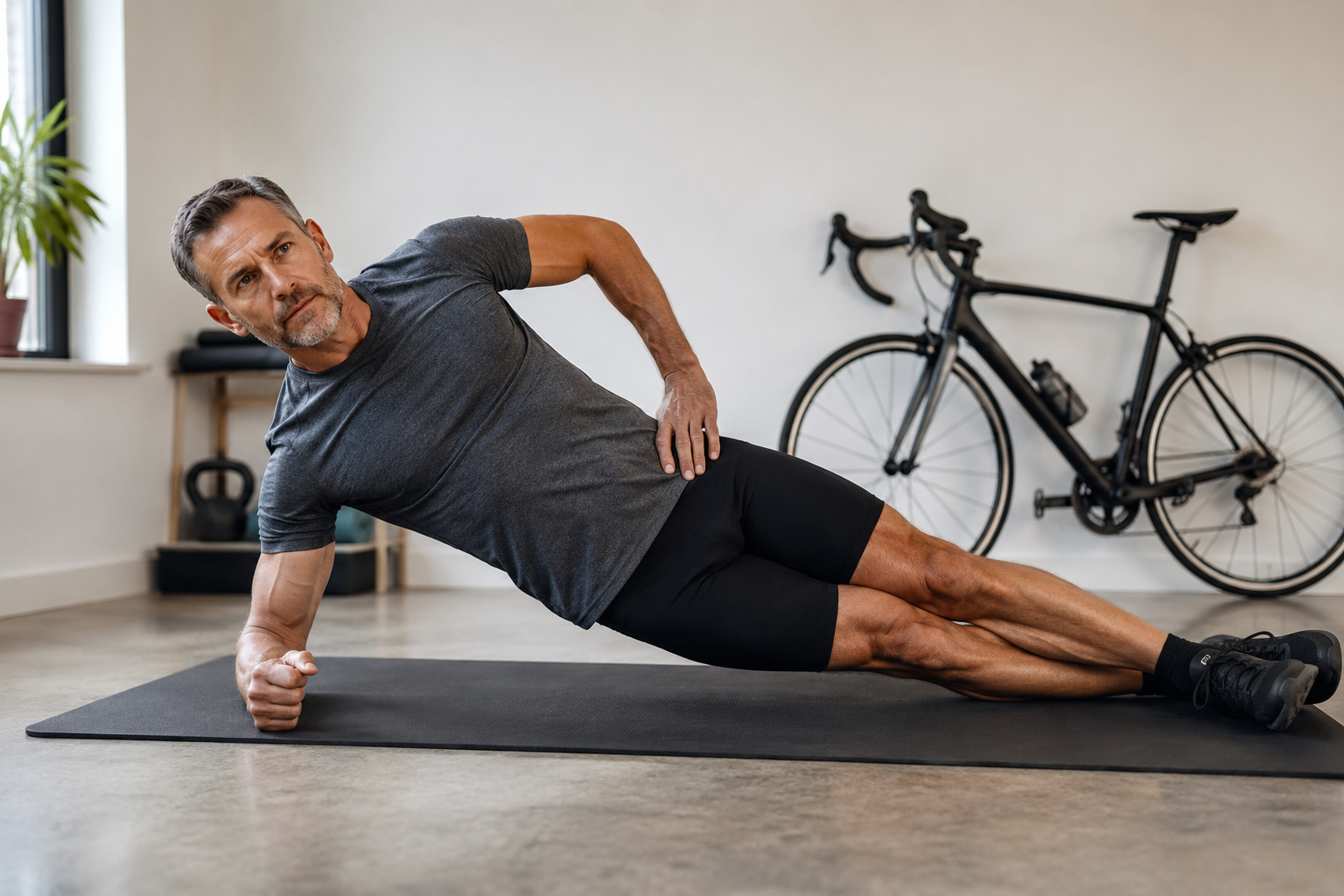
Your Core Keeps Power from Leaking
Here is the real issue with how most people think about cycling: they focus entirely on the legs and ignore the trunk. But the core is the foundation through which all leg power is transferred to the pedals.
When the core is weak or fatigued, the pelvis rocks, the spine moves excessively, and energy that should drive the pedals is absorbed by unnecessary movement. The result is less efficient riding, earlier fatigue, and increased risk of lower back pain — one of the most common complaints among cyclists.
Core strength for cyclists is not about having visible abdominal muscles. It is about being able to maintain a stable, neutral spine position under load, for extended periods. That requires endurance in the deep stabilising muscles — the transverse abdominis, multifidus, and obliques — not just the superficial muscles.
Core Demands by Cycling Type
The core demands vary meaningfully across different riding styles:
- Road cycling: Sustained isometric core endurance is the primary demand. Holding position on the bike for one to five hours requires deep stabiliser endurance rather than explosive core strength.
- Mountain biking: Technical terrain requires rapid, reactive core stabilisation. The core must respond quickly to changes in surface, body position, and balance. This is a more dynamic and demanding core challenge than road riding.
- Indoor cycling: Without the balance demands of outdoor riding, core engagement can be less automatic. Riders need to consciously maintain good posture rather than relying on terrain to prompt it.
Best Core Exercises to Support Cycling
The following exercises target the specific core qualities cyclists need most:
| Exercise | Primary Benefit | Sets/Duration |
|---|---|---|
| Plank (forearm) | Deep stabiliser endurance | 3 x 30 to 60 seconds |
| Side plank | Lateral stability, obliques | 3 x 20 to 40 seconds each side |
| Glute bridge | Posterior chain, hip stability | 3 x 12 to 15 reps |
| Dead bug | Anti-rotation, spinal control | 3 x 8 to 10 reps each side |
| Bird dog | Lumbar stability, balance | 3 x 10 reps each side |
Two to three sessions per week of these exercises, done consistently over several weeks, produces noticeable improvements in on-bike comfort and efficiency. There is no magic in it — just consistent, targeted effort.
For a broader approach to home-based strength and stability work, see our home workouts without equipment guide.
Cycling Endurance: Why the Bike Is Built for Longevity Training
Aerobic Endurance Without Joint Pounding
Cycling endurance is built through repeated aerobic effort over time. The cardiovascular system adapts — the heart becomes more efficient, stroke volume increases, and the muscles develop a greater capacity to use oxygen. These adaptations are well-established and occur across all forms of sustained aerobic exercise.
What makes cycling particularly well-suited for longevity training is the absence of repetitive impact. Running builds aerobic fitness effectively, but the cumulative load on joints over years of training is significant. Cycling delivers comparable aerobic stimulus with a fraction of that mechanical stress.
For adults over 50 who want to maintain cardiovascular health across decades, this distinction matters. Our guide on how to exercise when you’re over 50 covers this in more detail, including how to structure training to support long-term health rather than just short-term performance.
Muscular Endurance That Carries Into Real Life
Cycling endurance is not just about the heart. The legs develop the ability to sustain repeated contractions for extended periods, which translates into reduced fatigue during everyday activities — walking, climbing stairs, carrying loads.
This functional carry-over is often underappreciated. Cycling for fitness is not just about performance on the bike. It is about maintaining physical capacity in daily life, which becomes increasingly important from middle age onwards.
Zone 2, Intervals, and Long Rides
A balanced cycling endurance programme uses three types of effort:
Zone 2 (conversational pace): Low-to-moderate intensity riding where you can hold a conversation. This trains aerobic base, fat metabolism, and mitochondrial density. It is the foundation of endurance cycling fitness and should make up the majority of training time.
Threshold intervals: Efforts at a pace you can sustain for roughly 20 to 40 minutes at maximum effort. These improve lactate threshold and cycling-specific fitness efficiently.
Long rides: Extended rides at Zone 2 pace that build aerobic capacity and muscular endurance simultaneously. Even one longer ride per week adds meaningful training stimulus.
Understanding your fat burn heart rate helps you identify the right intensity for Zone 2 training and avoid the common mistake of riding too hard on easy days.
Road Cycling vs Mountain Biking vs Indoor Cycling
Road Cycling
Road cycling fitness is built through sustained effort, consistent cadence, and the ability to manage varied terrain over long distances. It is excellent for developing aerobic base, cycling leg strength through climbing, and mental endurance.
The main limitation is weather and road access. Road cycling requires safe infrastructure and reasonable conditions. It is also higher risk for falls than indoor alternatives.
Mountain Biking
Mountain biking fitness is more multidimensional. Technical terrain demands explosive leg power, reactive core stability, upper body engagement, and mental focus simultaneously. Riders develop fitness across a broader range of physical qualities than road cycling typically provides.
The trade-off is that mountain biking is harder to structure precisely. Effort varies with terrain in ways that are difficult to control, making it less suitable as the sole training tool for someone targeting specific fitness outcomes. It is, however, highly enjoyable — and enjoyment is a legitimate factor in long-term adherence.
Indoor Cycling
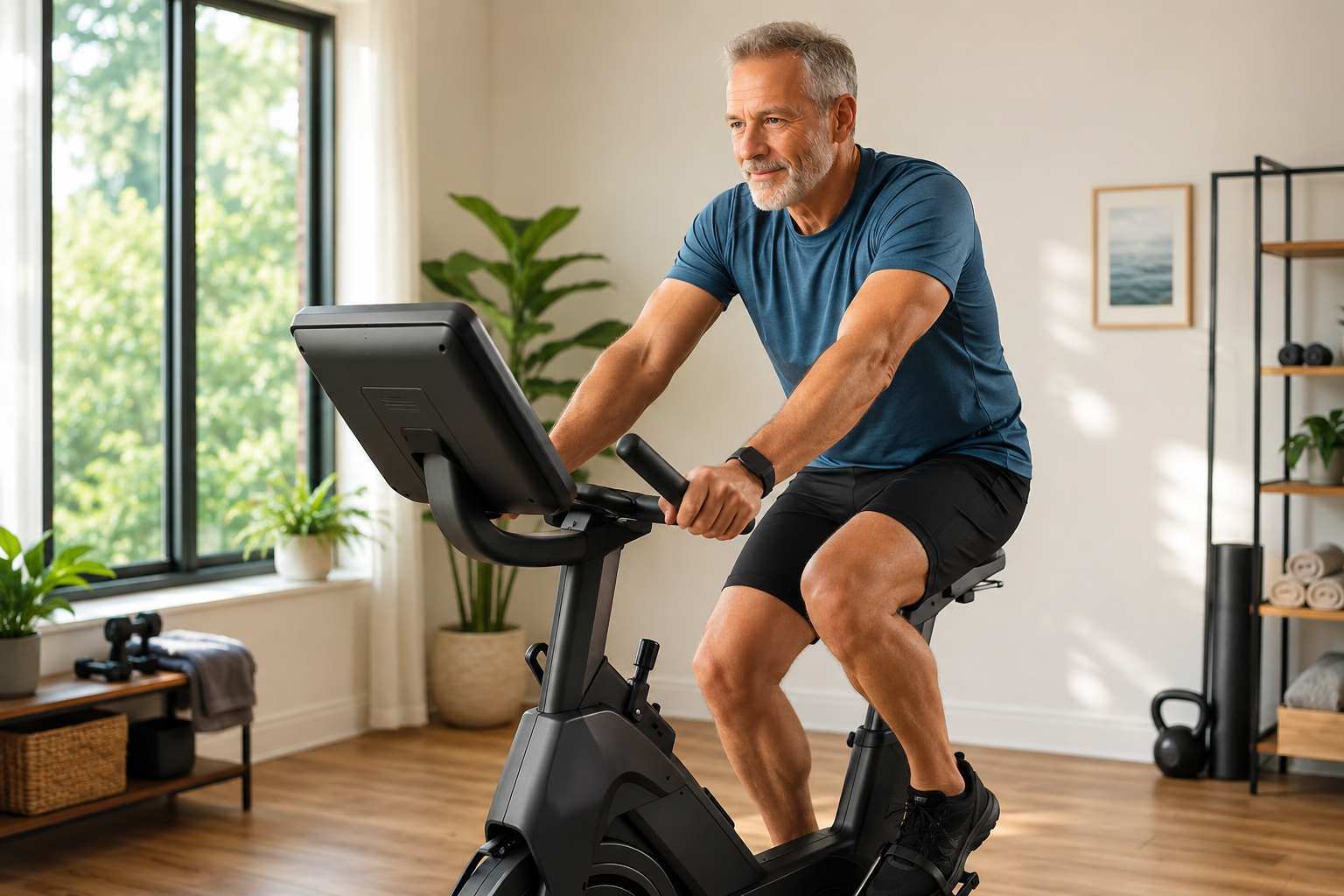
Indoor cycling benefits are significant and often underestimated. A stationary bike or smart trainer removes weather, traffic, and terrain as variables. Resistance and cadence can be set precisely. Sessions can be repeated consistently. This makes indoor cycling one of the most controllable and time-efficient training environments available.
Modern indoor platforms have expanded the experience considerably. Smart trainers that respond to virtual terrain, structured workout programmes, and real-world video routes have made indoor training far more engaging than it once was.
For people managing joint issues, an exercise bike workout can be done daily with a recovery cost that may be lower than higher-impact work for some people. The joint-friendly nature of indoor cycling makes it particularly suitable for lower-impact training periods, when it fits a person’s clinician or rehabilitation plan, high-frequency training, or simply maintaining fitness when outdoor riding is not possible.
If you are evaluating home equipment, our best exercise bike for knee issues guide covers what to look for in a setup that supports joint-friendly cardio without compromising training quality.
Is Cycling Enough for Strength Training?
What Cycling Does Well
Cycling builds meaningful muscular endurance in the quadriceps, glutes, hamstrings, and calves. It maintains muscle mass in the lower body when done consistently. It improves neuromuscular coordination specific to the pedal stroke. For cardiovascular conditioning, it is highly effective across a wide range of intensities.
What Cycling Does Not Fully Replace
Cycling does not load the upper body in any meaningful way. It does not train the muscles of the posterior chain through full range-of-motion hip extension the way deadlifts or hip thrusts do. It does not build maximum strength, which requires higher loads than cycling can typically provide. And it does not maintain bone density as effectively as weight-bearing exercise, which is a relevant consideration for adults over 50.
The Best Answer Is Cycling Plus Simple Strength Work
That is a strong claim and it needs to be stated clearly: cycling is not a complete fitness programme on its own. It is an excellent component of one.
The most practical approach combines regular cycling — for cardiovascular fitness, muscular endurance, and joint health — with two sessions per week of basic resistance training targeting the whole body. This does not need to be complicated. Squats, deadlifts, pressing movements, and rows cover the major muscle groups and take 30 to 45 minutes per session.
The basics still do the heavy lifting here. Consistent cycling plus simple, progressive resistance training is more effective than either approach alone.
Knee-Safe Cycling Tips for Better Fitness
Start with the Right Setup
- Saddle height: Slight knee bend (25 to 35 degrees) at the bottom of the pedal stroke
- Saddle fore-aft position: Knee should be roughly over the pedal axle when the crank is horizontal
- Cadence: Aim for 80 to 100 RPM for most riding — higher cadence reduces force per pedal stroke
- Resistance: Start lower than feels necessary and build gradually over weeks
Avoid the Most Common Knee Mistakes
- Riding with the saddle too low (most common cause of anterior knee pain in cyclists)
- Using too high a resistance or too hard a gear before building adequate leg strength
- Increasing training volume too quickly
- Ignoring early warning signs such as aching around the kneecap or pain on the outside of the knee
Pain signals matter. Mild muscle fatigue is expected. Sharp, persistent, or worsening joint pain is not. If knee pain develops and does not resolve with rest and setup adjustment, seek assessment from a physiotherapist or sports medicine professional before continuing.
Progression Rule
A practical rule for safe progression: increase total weekly cycling time by a gradual weekly increase, adjusted to symptoms, fitness, and training history. This applies to both duration and intensity. The body adapts to training load, but it needs time to do so.
Sample Cycling Fitness Week for Beginners
Beginner Joint-Friendly Week
This is designed for someone new to cycling fitness or returning after a break. All sessions should feel manageable — you should be able to hold a conversation throughout.
| Day | Session | Duration | Notes |
|---|---|---|---|
| Monday | Easy indoor ride | 20 minutes | Low resistance, comfortable cadence |
| Tuesday | Rest or gentle walk | — | Active recovery |
| Wednesday | Easy indoor or outdoor ride | 25 minutes | Slightly longer than Monday |
| Thursday | Core exercises | 15 minutes | Plank, side plank, glute bridge |
| Friday | Rest | — | Full recovery |
| Saturday | Longer easy ride | 30 to 40 minutes | Build duration gradually |
| Sunday | Rest or light stretching | — | — |
Intermediate Road, MTB, or Indoor Week
This is for someone with a base of fitness who wants to develop cycling endurance and leg strength more deliberately.
| Day | Session | Duration | Notes |
|---|---|---|---|
| Monday | Zone 2 ride | 45 to 60 minutes | Conversational pace throughout |
| Tuesday | Resistance training | 35 to 45 minutes | Squats, deadlifts, lunges, rows |
| Wednesday | Interval session | 40 minutes | 5 x 4 minutes at hard effort, 3 minutes recovery |
| Thursday | Core and mobility | 20 minutes | Plank variations, bird dog, hip flexor stretch |
| Friday | Rest or very easy ride | 20 to 30 minutes | Recovery only |
| Saturday | Longer ride (road, MTB, or indoor) | 60 to 90 minutes | Zone 2 pace |
| Sunday | Rest | — | Full recovery |
Who Gets the Most Benefit from Cycling Fitness?
Cycling fitness delivers the most value to people who need effective, sustainable exercise with a lower injury risk profile. That includes:
- Adults over 45 who want to maintain cardiovascular health and leg strength without high-impact loading
- People managing knee osteoarthritis or joint discomfort who need joint-friendly cardio that does not aggravate symptoms
- Beginners who need a scalable entry point into regular exercise
- People returning from injury who need a lower-stress training environment during recovery
- Experienced athletes who use cycling as a cross-training tool to maintain aerobic base while reducing impact load
Context matters here. Cycling is not the best tool for every fitness goal. But for the goals listed above, it is one of the most practical and evidence-supported options available.
Frequently Asked Questions
Is cycling good for fitness?
Yes. Cycling builds cardiovascular fitness, muscular endurance in the lower body, and core stability. It is effective across a wide range of intensities and suitable for beginners through to experienced athletes.
Does cycling build leg muscle?
Cycling builds muscular endurance in the quadriceps, glutes, hamstrings, and calves. It maintains muscle mass effectively. However, it does not build maximum leg strength to the same degree as weighted resistance training. For maximum strength gains, off-bike resistance work is still needed.
Does cycling strengthen your core?
Cycling places sustained isometric demands on the core, particularly the deep stabilising muscles. Regular riding improves core endurance. Dedicated core exercises — planks, side planks, dead bugs — accelerate this development and are recommended alongside cycling.
Is cycling good for knees?
For most people, yes. Cycling places significantly lower joint forces on the knee than running or high-impact exercise. It is frequently recommended for people with knee osteoarthritis. Correct bike setup, appropriate resistance, and sensible cadence are essential for keeping it knee-friendly.
Is indoor cycling as effective as outdoor cycling?
From a cardiovascular and muscular endurance perspective, indoor cycling is equally effective. It offers greater control over resistance and cadence, making it well-suited for structured training. It lacks the balance and terrain demands of outdoor riding, but for most fitness goals, it is a fully valid alternative.
How often should beginners cycle for fitness?
Three to four sessions per week of 20 to 40 minutes each is a practical starting point. Consistency matters more than duration in the early stages. Build gradually over weeks rather than trying to do too much too soon.
Common Mistakes and Weak Angles to Avoid
A few patterns consistently undermine cycling fitness progress:
- Riding at the same pace every session: Without variation in intensity, adaptation stalls. Mixing Zone 2 rides with occasional harder efforts produces better results.
- Ignoring strength training: Cycling alone does not maintain upper body muscle mass or build maximum lower body strength. Simple resistance training fills this gap.
- Neglecting core work: Most cyclists underinvest in core training until back pain forces the issue. Proactive core work prevents this.
- Poor bike setup: Saddle height errors are the leading cause of cycling-related knee pain. Check your setup before building training volume.
- Measuring progress only by distance or speed: Cycling fitness includes cardiovascular efficiency, muscular endurance, and core stability. Progress in any of these areas is meaningful, even if speed does not change immediately.
Conclusion: Cycling Is Joint-Friendly Cardio With Strength Crossover
Cycling fitness is a practical, evidence-supported approach to building cardiovascular health, leg muscular endurance, and core stability — particularly for adults who need effective exercise without high joint loading.
The main takeaway is this: cycling is not just cardio, and it is not a complete fitness programme on its own. It is a highly effective component of a well-rounded approach. Combine consistent riding with basic resistance training and targeted core work, and the results are genuinely meaningful — improved cardiovascular capacity, stronger and more resilient legs, better posture on and off the bike, and a sustainable exercise habit that can be maintained for decades.
Road cycling, mountain biking, and indoor cycling each offer distinct benefits. The best choice is the one you will actually do consistently. For many adults, particularly those managing joint issues or returning to exercise, an indoor exercise bike offers the most controllable and accessible starting point.
If you are considering setting up a home training option that supports joint-friendly fitness, our best exercise bike for knee issues guide covers the key features to look for and what to avoid. For a broader view of how cycling fits into a complete health and exercise strategy, the exercise guide for better health is worth reading alongside this article.
Keep it simple and consistent. Start with what gives the biggest return — regular riding at manageable intensity, correct bike setup, and a small investment in core and strength work. The basics still do the heavy lifting.
References
| Use in article section | Citation | URL |
|---|---|---|
| Weekly exercise targets and why cycling supports aerobic activity | Centers for Disease Control and Prevention. Adult Activity: An Overview. CDC, 2023. Supports 150 minutes of moderate activity plus 2 days of strength work weekly. | https://www.cdc.gov/physical-activity-basics/guidelines/adults.html |
| General physical activity guidance and longevity framing | Office of Disease Prevention and Health Promotion. Physical Activity Guidelines for Americans: Current Guidelines. U.S. Department of Health and Human Services. | https://odphp.health.gov/our-work/nutrition-physical-activity/physical-activity-guidelines/current-guidelines |
| Core stability section | Kibler WB, Press J, Sciascia A. The Role of Core Stability in Athletic Function. Sports Medicine. 2006;36(3):189–198. Supports core control, force transfer, posture, and reduced joint load. | https://pubmed.ncbi.nlm.nih.gov/16526831/ |
| Joint-friendly cycling and knee comfort | EatingWell. 4 Low-Impact Activities Physical Therapists Recommend Most. 2026. Useful for the practical claim that cycling is commonly recommended as low-impact exercise for knees and long-term consistency. | https://www.eatingwell.com/low-impact-activities-physical-therapists-recommend-most-11965284 |
| Strength training for cyclists | Cycling Weekly. Strength Training for Cyclists: How Often Should We Hit the Gym, and What Should We Do There? 2025. Supports the point that cycling should be paired with strength work, especially squats, lunges, deadlifts, rows, and hip work. | https://www.cyclingweekly.com/fitness/strength-training-for-cyclists-how-often-should-we-hit-the-gym-and-what-should-we-do-there |
Medical Disclaimer
This article is for general educational purposes only and is not medical advice. Exercise needs vary. Stop if a movement causes sharp or worsening pain, and seek individual advice from a qualified clinician or exercise professional when returning after injury, managing a condition, or unsure how to progress.

Dave James is a health researcher and writer specialising in evidence-based nutrition, exercise, and longevity. He founded All Perfect Health to provide clear, practical health guidance rooted in current research and real-world experience.
📂 The Complete Guide to Sport-Specific Training
This article is part of the APH cluster. Use the links below to move between the pillar and child articles.
- Read the pillar: The Complete Guide to Sport-Specific Training: How to Prepare Your Body for Any Activity (2026)
- → Hiking and Backpacking Fitness: Build Leg Endurance and Protect Your Joints on the Trail
- → Tennis and Pickleball Conditioning for Adults 50+: Agility, Shoulder Health, and Reaction Speed
- YOU ARE HERE Cycling Fitness: Build Leg Power, Core Stability, and Endurance on the Bike
- → Strength Training for Runners: Prevent Injury and Build Speed
- → Best Exercises for Golf: Rotation, Power, and Back Protection
- → 10 Best Exercises for Skiing: Build Strength, Balance, and Endurance Before You Hit the Slopes