Plant Toxins, Antinutrients and Why Our Ancestors Cooked: The Complete Evidence-Based Guide
Last updated: September 26, 2026
Evidence note: “Plant toxins” and “antinutrients” are broad labels, not a single diagnosis or verdict on plant foods. This guide separates direct human findings, plausible mechanisms, genuine acute food-safety hazards, and questions that remain unproven. It will be updated as stronger research becomes available.
Quick answer
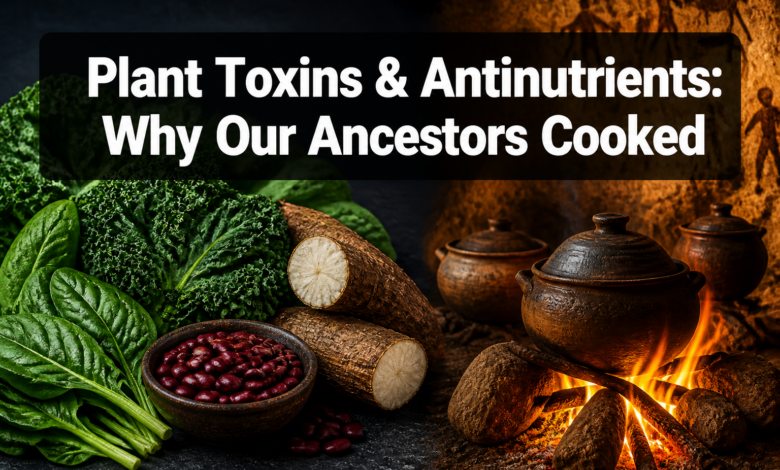
Some compounds in plant foods can change mineral absorption in a particular meal, and a small number of plant-food situations are genuine acute hazards—most clearly raw or insufficiently cooked red kidney beans, raw apricot kernels or extracts, and insufficiently processed cassava in vulnerable settings. Those findings do not show that ordinary, properly prepared plant foods cause chronic gut injury, autoimmune disease, ADHD, infertility, thyroid disease, or a universal “toxin burden.”
The most defensible conclusion is narrower: the food, preparation, amount, nutritional context, and outcome measured all matter. A short-term absorption study is not a deficiency diagnosis. A poisoning outbreak is not evidence that a whole food category is chronically harmful. And a laboratory mechanism is not the same thing as a human clinical outcome.
Key takeaways
- Controlled meal studies show that phytate can reduce iron and zinc absorption from a meal under specified conditions; they do not demonstrate chronic illness from normally prepared phytate-containing foods.
- Raw or inadequately cooked red kidney beans are a documented acute food-poisoning hazard. That is different from claiming that properly cooked beans or lectins generally cause chronic disease.
- Dietary oxalate has a modest observational association with kidney stones in some cohorts and can change short-term urinary markers; it does not establish that oxalate-containing foods cause kidney disease in every adult.
- Claims about ordinary lectins, saponins, enzyme inhibitors, crucifers, or soy causing chronic gut, thyroid, or endocrine harm need stronger direct human evidence than is currently available.
What these terms do—and do not—mean
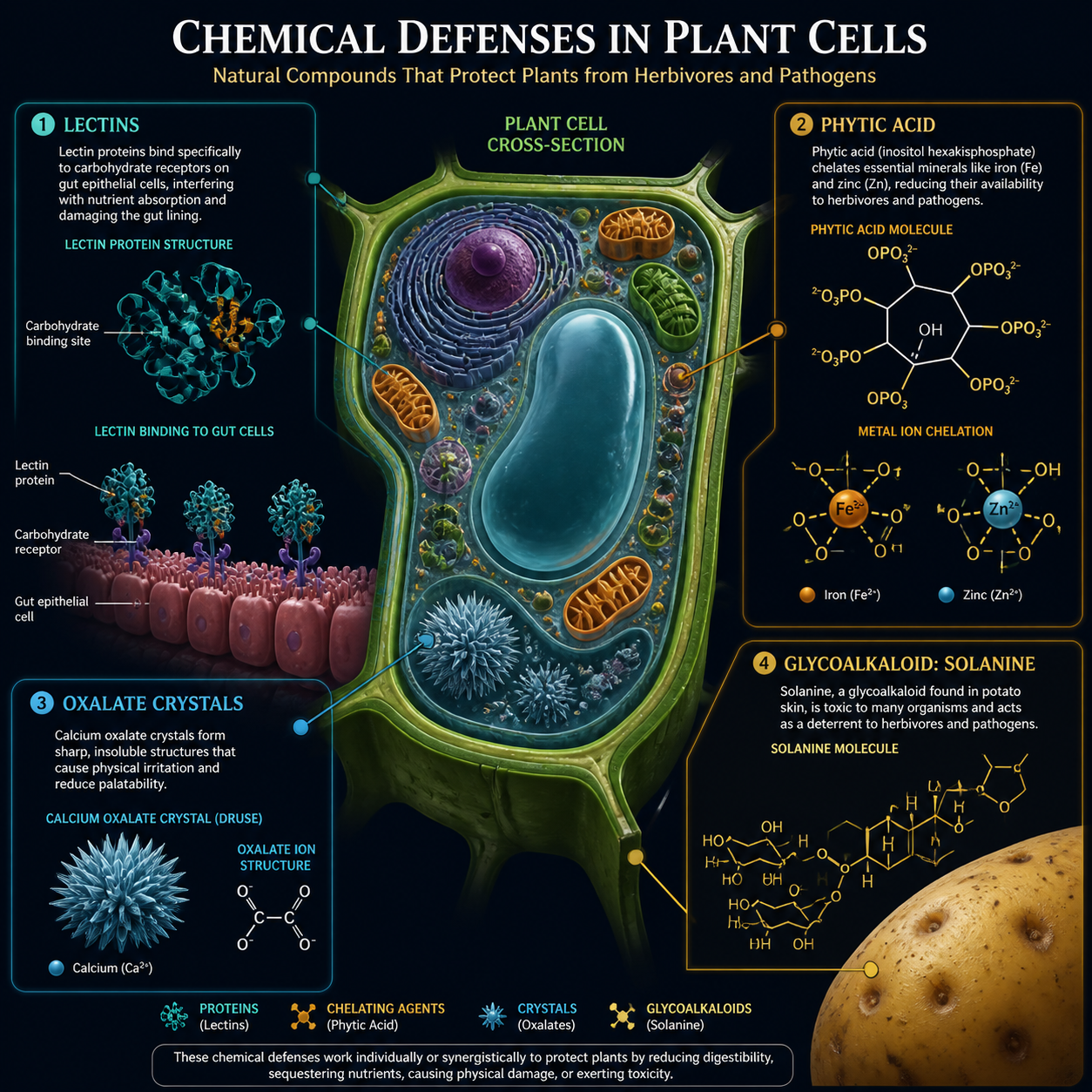
Antinutrient is a descriptive label for a food component that can affect the absorption or use of another nutrient under some conditions. Plant toxin is more appropriately reserved for a compound or exposure with a demonstrated harmful effect at the amount and preparation in question. Those categories overlap imperfectly. Phytate, for example, can reduce absorption of some minerals from a test meal; that does not make every food containing phytate an acute toxin. By contrast, the phytohaemagglutinin (PHA) in raw or insufficiently cooked red kidney beans has a well-documented acute hazard.
The distinction matters because a mechanism alone cannot answer a clinical question. A compound may bind a mineral in a laboratory system, change a short-term absorption measure, or affect cells at a high experimental concentration. None of those observations automatically establishes a deficiency, symptom, or disease outcome in people eating ordinary food patterns.
What has been measured directly in people
Phytate and mineral absorption: real, but bounded
Controlled human meal studies have found that added phytate can reduce acute non-heme iron absorption and reduce fractional zinc absorption under the tested conditions. Hallberg and colleagues measured dose-dependent inhibition of iron absorption in a labelled-meal experiment, while Fredlund and colleagues measured lower fractional zinc absorption and lower short-term calcium retention as added phytate increased. A crossover study of specially bred low-phytate maize also found higher short-term zinc absorption than conventional maize in healthy adults.
These are useful findings, but their scope is often overstated. They measure absorption or retention over hours or days—not anemia, osteoporosis, fatigue, cognition, or chronic disease. They do not establish that a normal mixed diet containing legumes, grains, nuts, or seeds causes mineral deficiency. The child evidence also provides an important counterweight: a six-month randomized trial of low-phytate maize in Guatemala did not improve growth, Bayley developmental scores, or morbidity, despite the biological rationale for improving zinc absorption.
Tea, tannins, and iron: meal effects are not a population diagnosis
Human experiments show that tea polyphenols can reduce non-heme iron absorption from a test meal. In the classic study by Disler and colleagues, tea inhibited non-heme iron absorption while cooked hemoglobin iron was not inhibited. A small labelled-meal study also found lower non-heme iron absorption when green-tea extract was added to a meal. That is direct evidence about an absorption effect, not proof that normal tea drinking causes iron deficiency.
That distinction is supported by a cross-sectional study of more than 2,500 French adults, which found no adjusted association between reported tea use and iron depletion or ferritin status. It cannot prove that tea has no effect in every nutritional context, but it does mean the broad claim “tea depletes everyone’s iron” is not supported by this evidence.
Oxalate and kidney outcomes: an association, not a universal rule
Oxalate is relevant to calcium-oxalate stone biology. In three prospective US cohorts, higher estimated dietary oxalate was associated with a modestly higher incidence of kidney stones in men and older women, but not in younger women; the authors did not consider dietary oxalate a major stone-risk factor overall. A short controlled feeding study found an increase in a urinary calcium-oxalate crystallization marker after an oxalate load. These results support a context-specific concern, not a claim that spinach, almonds, or other oxalate-containing foods cause kidney failure or stones in every person.
People with a diagnosed stone disorder, hyperoxaluria, or medically prescribed diet need individual clinical guidance. This article is not a basis for a food blacklist or self-directed treatment.
| Finding | What it supports | What it does not support |
|---|---|---|
| Phytate can reduce mineral absorption in controlled meals | A context-specific absorption effect | That ordinary plant foods cause deficiency or chronic disease |
| Tea polyphenols can reduce non-heme iron absorption from a meal | A short-term meal effect | That normal tea use itself causes iron deficiency in the general population |
| Dietary oxalate is associated with stones in some cohorts | A possible risk contributor in some settings | A causal, universal kidney-disease claim |
The food-safety hazards that deserve a separate category
Red kidney beans and PHA
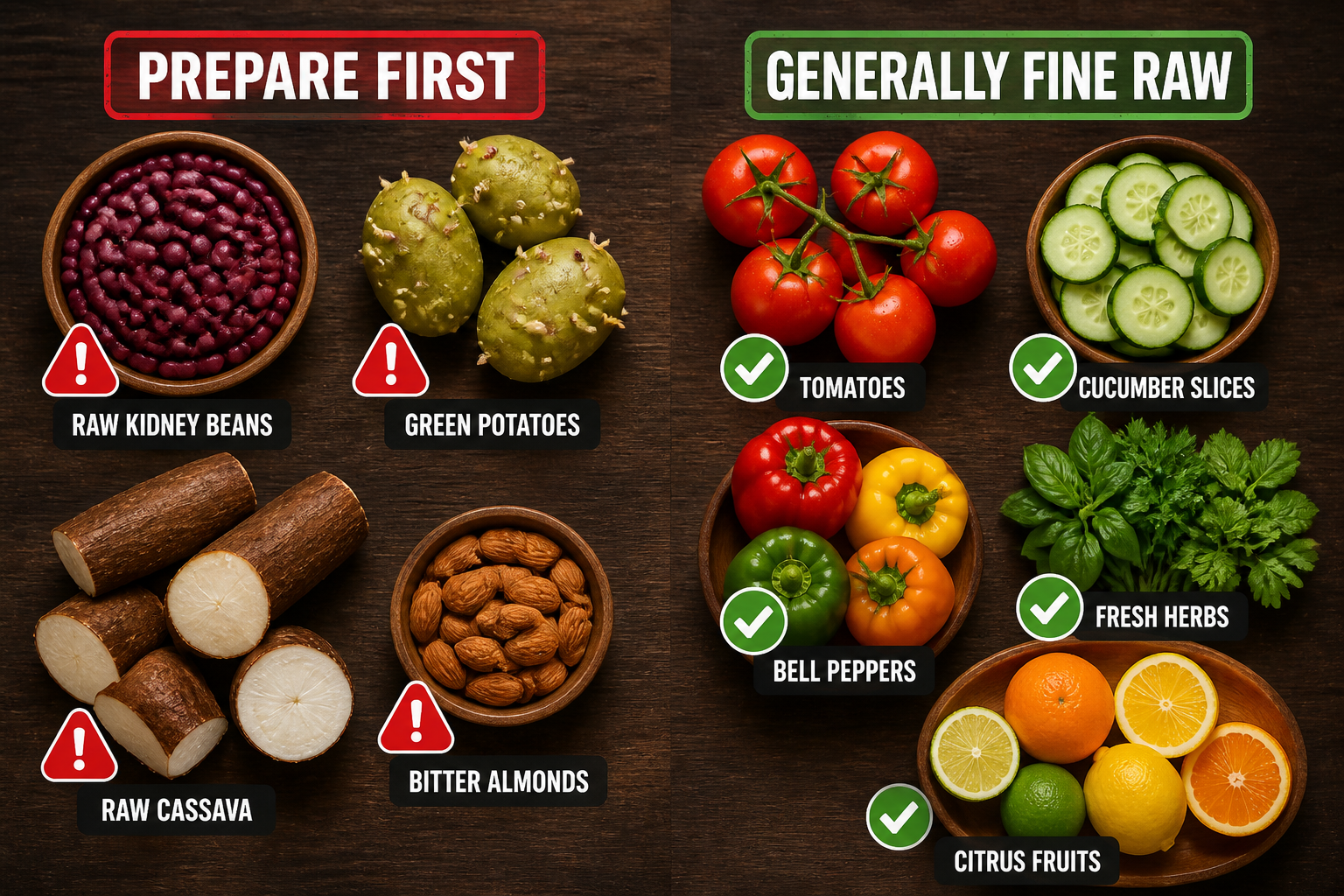
The clearest lectin-related human hazard is not a vague chronic “lectin load.” It is acute gastroenteritis after raw or insufficiently cooked red kidney beans. A 1980 report documented food poisoning from raw red kidney beans and identified a haemagglutinin as the likely toxic factor. A later military-base outbreak investigation linked undercooked kidney beans in chili to acute gastrointestinal illness and detected PHA in the food. These reports support a narrow, important conclusion: cooking reduces the activity of many food lectins, but the extent depends on the food and how it is prepared. Raw or insufficiently cooked red kidney beans are the clearly documented acute hazard.
They do not establish that properly cooked beans cause chronic gut permeability, autoimmune disease, or general “lectin toxicity.”
Potato glycoalkaloids
Potato glycoalkaloids are another food-safety issue best kept in their own lane. A small ascending-dose human study reported acute nausea and vomiting in one participant at the highest experimental mashed-potato dose. An EFSA risk assessment describes nausea, vomiting, and diarrhea as acute effects at sufficiently high exposure and reported no identified evidence of health problems from repeated or long-term glycoalkaloid intake through potatoes. That does not establish zero risk in every conceivable situation; it does not support turning ordinary potato consumption into a proven chronic-toxicity claim.
Cyanogenic glycosides: context matters
Raw apricot kernels and extracts can be a source of acute cyanide poisoning; an EFSA assessment addresses that specific risk, and a published case report described coma and metabolic acidosis after apricot-kernel consumption. Cassava requires similarly careful language. Evidence of konzo concerns reliance on insufficiently processed cassava in food-insecure settings with nutritional vulnerability; it is not evidence that ordinary prepared cassava or fruit is broadly toxic in well-nourished populations. Acute hazards deserve clear recognition without being generalized into a verdict on all plants or all preparation traditions.
Where popular claims run ahead of the evidence
Lectins, saponins, and enzyme inhibitors
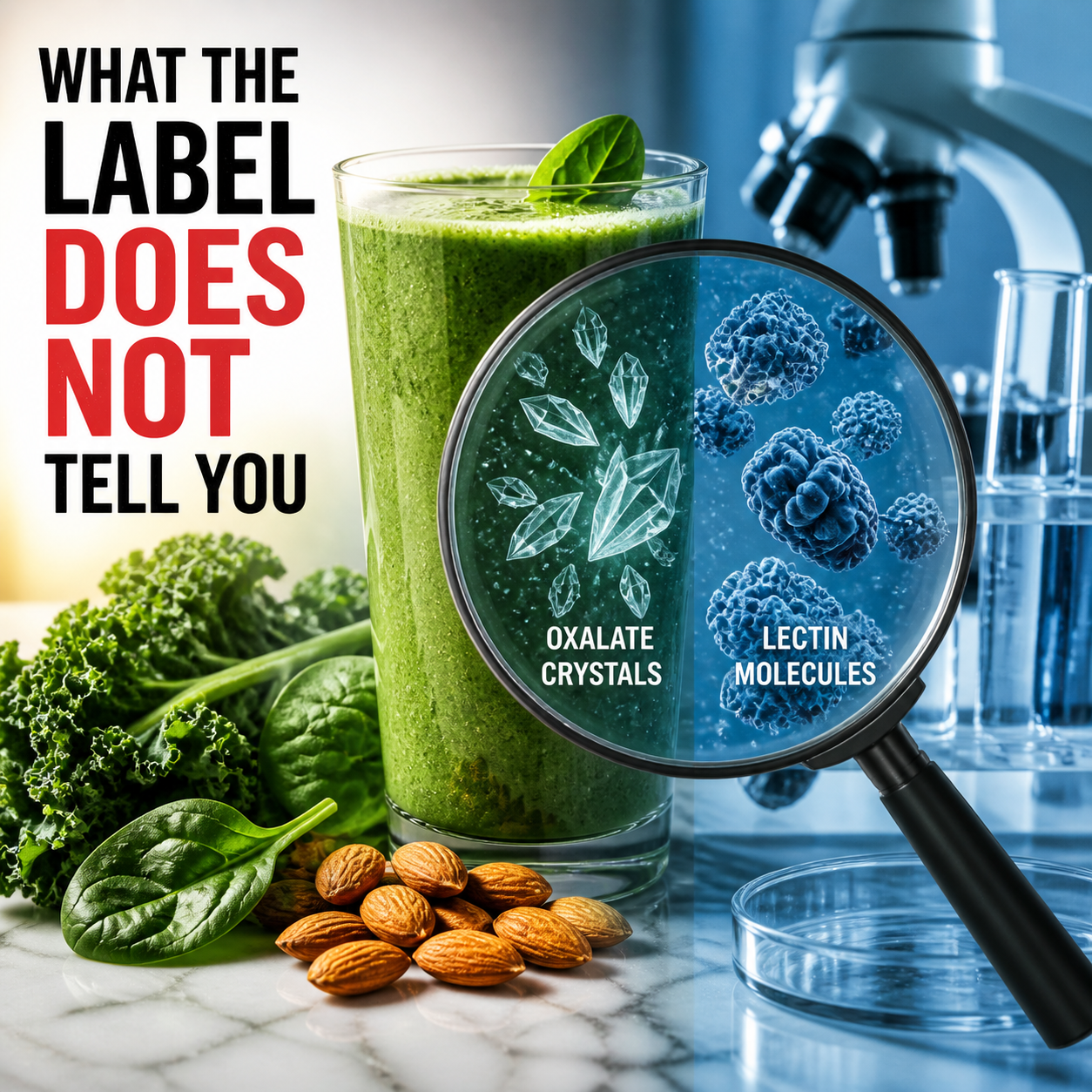
Laboratory, animal, and high-dose experiments can be useful for identifying possible pathways. They are not direct evidence that normal cooked legumes, grains, or vegetables cause chronic gut damage in people. The source-locked evidence set reviewed here does not establish that ordinary dietary lectins, saponins, or enzyme inhibitors cause “leaky gut,” autoimmune disease, ADHD, or chronic inflammation. That does not prove an effect is impossible for every individual; it means the proposed chronic-disease pathway remains unproven.
Crucifers, soy, thyroid, and fertility
Cruciferous vegetables contain glucosinolate-derived compounds, and soy contains isoflavones. Those facts do not by themselves demonstrate thyroid suppression or endocrine injury from ordinary food intake. A 2024 systematic review of Brassica vegetables and thyroid function and a randomized-trial meta-analysis of soy and thyroid function both support a more cautious interpretation than the popular claim that these foods “shut down” the thyroid. A meta-analysis of clinical studies also found no effect of soy or isoflavone intake on male reproductive hormones. None of this makes a universal individual-safety promise; it does mean broad causal claims about ordinary food intake are not justified by the available direct evidence.
People with thyroid disease, a prescribed diet, or medication questions should discuss their individual situation with their clinician rather than use a general article to change treatment or eliminate a food group.
Children, attention, and development
Children deserve a higher standard of proof, not stronger speculation. Specific child studies support context-dependent effects on mineral absorption, while the six-month low-phytate-maize trial did not improve growth or developmental scores. No reliable direct study located for this review isolates ordinary dietary phytates, properly cooked lectins, oxalates, tannins, or saponins and shows that they cause ADHD or developmental impairment. The evidence is incomplete; the broad causal claim is not established. For the child-specific evidence review, see Children, Antinutrients, and ADHD: What the Evidence Actually Shows.
Preparation: useful context, not a universal health protocol
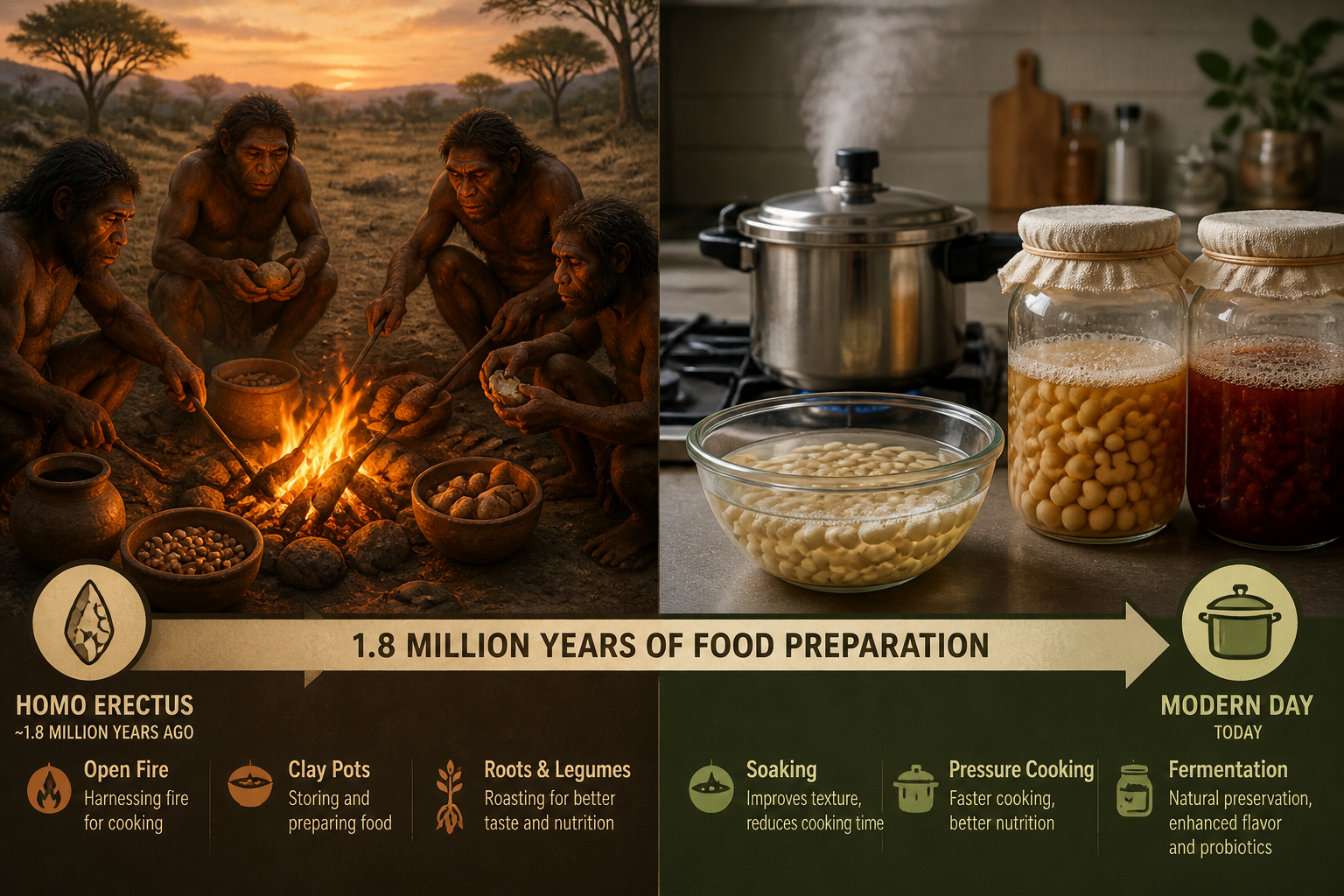
Cooking, soaking, fermentation, peeling, deseeding, and other preparation methods can alter texture, flavour, digestibility, and sometimes particular compounds. Their effects vary by food, processing method, and starting material. It is accurate to say that preparation can matter; it is not accurate to treat one duration, percentage reduction, or traditional custom as a universal medical rule.
Traditional practices are also not proof of a specific health mechanism. Food cultures develop techniques for many overlapping reasons: safety, taste, storage, texture, fuel, availability, and habit. The appropriate evidence-led conclusion is modest: particular preparation failures can matter for particular foods, and cooking reduces the activity of many lectins. It does not follow that every raw plant food is dangerous, that every prepared food is free of biologically active compounds, or that preparation alone predicts a health outcome.
When to get help: Acute vomiting or diarrhea after suspected inadequately cooked kidney beans, or acute illness after raw kernels or extracts, warrants prompt poison-control or medical guidance. Persistent nutritional, kidney-stone, gastrointestinal, developmental, or thyroid concerns need individualized assessment from a qualified clinician—not self-diagnosis from this article.
Frequently asked questions
Are antinutrients always harmful?
No. The term describes a possible interaction, often involving nutrient absorption, rather than a universal clinical outcome. The relevant question is which compound, in which food, at what preparation and exposure, and measured against which health outcome.
Do lectins damage the gut?
Raw or insufficiently cooked red kidney beans can cause acute gastrointestinal illness. That is not the same as evidence that lectins in normally prepared foods chronically damage the gut in healthy people. The latter claim requires direct human outcome research that is not established in the sources reviewed here.
Does phytate cause mineral deficiency?
Controlled studies show that phytate can reduce iron or zinc absorption from a meal. Those short-term results do not by themselves demonstrate a deficiency or symptom outcome from a normal mixed diet.
Should everyone avoid high-oxalate foods?
No universal avoidance rule follows from the evidence. Kidney-stone history and diagnosed metabolic conditions are individualized medical questions. The available studies do not support treating oxalate-containing foods as a universal cause of kidney disease.
References
- Hallberg L, Brune M, Rossander L. Iron absorption in man: ascorbic acid and dose-dependent inhibition by phytate. American Journal of Clinical Nutrition. 1989.
- Fredlund K, et al. Phytate reduction and mineral absorption/retention in controlled meals. Journal of Trace Elements in Medicine and Biology. 2006.
- Adams CL, et al. Zinc absorption from low-phytate maize. American Journal of Clinical Nutrition. 2002.
- Mazariegos M, et al. Low-phytate maize and growth/development outcomes in Guatemalan infants. Journal of Nutrition. 2010.
- Noah ND, et al. Food poisoning from raw red kidney beans. British Medical Journal. 1980.
- Watier-Grillot S, et al. Investigation of a phytohaemagglutinin foodborne-disease outbreak. Toxins. 2023.
- Taylor EN, Curhan GC. Dietary calcium and oxalate intake and the risk of incident kidney stones. Journal of the American Society of Nephrology. 2007.
- Kumar R, et al. Dietary oxalate and urinary calcium-oxalate nanocrystals. 2020.
- Mensinga TT, et al. Human safety assessment of potato glycoalkaloids. Regulatory Toxicology and Pharmacology. 2005.
- EFSA CONTAM Panel. Risk assessment of glycoalkaloids in feed and food, in particular in potatoes and potato-derived products. 2020.
- EFSA CONTAM Panel. Acute health risks related to cyanogenic glycosides in raw apricot kernels and products derived from raw apricot kernels. 2016.
- Suchard JR, et al. Acute cyanide toxicity caused by apricot-kernel ingestion. Annals of Emergency Medicine. 1998.
- Kambale KJ, et al. Konzo and cyanogen exposure in cassava-dependent communities. PLoS Neglected Tropical Diseases. 2017.
- Disler PB, et al. The effect of tea on iron absorption. Gut. 1975.
- Samman S, et al. Green tea extract and non-heme iron absorption. American Journal of Clinical Nutrition. 2001.
- Mennen LI, et al. Tea consumption and iron status in French adults. European Journal of Clinical Nutrition. 2007.
- Systematic review: Do Brassica vegetables affect thyroid function? 2024.
- Otun J, et al. Systematic review and meta-analysis on the effect of soy on thyroid function. Scientific Reports. 2019.
- Reed KE, et al. Neither soy nor isoflavone intake affects male reproductive hormones: meta-analysis. Reproductive Toxicology. 2021.
This article is for informational purposes only and is not medical advice. It does not diagnose, treat, or recommend dietary, supplement, or medication changes. Consult a qualified healthcare professional about individual health concerns.

About the author
Dave James is the founder of All Perfect Health. This article follows the available human evidence and distinguishes measured outcomes from proposed mechanisms and unresolved questions.
Explore Food Science & Preparation
YOU ARE HERE Plant Toxins, Antinutrients and Why Our Ancestors Cooked: The Complete Evidence-Based Guide
→ What Plant Toxins Actually Do to Your Body: Effects on Digestion, Absorption and Inflammation
→ Enzyme Inhibitors in Raw Plant Foods: Why Cooking Matters More Than Influencers Admit
→ How Traditional Food Preparation Reduces Antinutrients: Soaking, Sprouting, Fermenting and Cooking
→ Synergistic Plant Toxin Effects: How Oxalates Amplify Lectin Damage in the Gut
→ Histamine Intolerance and Plant Lectins: The Overlooked Gut-Brain Connection
→ Phytates and Brain Fog: What the Evidence Actually Shows
→ Antinutrients and Skin Health: How Tannins and Phytoestrogens Trigger Eczema Flares
→ Children, Antinutrients, and ADHD: What the Evidence Actually Shows
→ Pesticides vs Plant Toxins: Which Is the Bigger Threat to Your Health and the Environment?
→ Climate Change and Plant Toxins: Rising Levels of Alkaloids and Glycosides in Crops
→ Global Toxicity Hotspots: Plant Toxins Amplified in China, Brazil, US Crops