
How Traditional Food Preparation Reduces Antinutrients: Soaking, Sprouting, Fermenting and Cooking
Last updated: May 24, 2026
Quick Answer: Traditional food preparation methods — soaking, sprouting, fermenting, boiling, and techniques like nixtamalization — can meaningfully reduce many antinutrients in grains, legumes, seeds, and root vegetables. These methods do not eliminate all defensive plant compounds, but they consistently improve digestibility, mineral absorption, and overall food safety. This is not folk wisdom. It is applied food chemistry, refined over thousands of years of practical necessity.
Quick practical tool: If you already know the food you are preparing, jump to the Traditional Food Preparation Quick Selector for a simple food-by-food guide to soaking, sprouting, fermenting, boiling, pressure cooking, and safety notes.
Key Takeaways
- Antinutrients are natural plant defence compounds — phytates, lectins, oxalates, tannins, enzyme inhibitors, and cyanogenic glycosides — that can interfere with nutrient absorption or cause harm at high doses.
- Traditional preparation methods reduce, not eliminate, most antinutrients. The degree of reduction depends on the compound, the food, the method, and the conditions.
- Soaking reduces phytate and some tannins in legumes and grains, but does not deactivate lectins in kidney beans.
- Sprouting activates phytase enzymes that break down phytate, improving mineral availability — but sprouted beans are not automatically safe to eat raw.
- Fermentation can substantially reduce phytate and improve digestibility, especially in sourdough bread and fermented porridges, but results depend on time, temperature, and microbial culture.
- Boiling and discarding cooking water reduces soluble oxalates and deactivates most lectins in properly cooked beans. Dry heat (roasting) does not reliably lower oxalate.
- Nixtamalization — treating corn with lime (calcium hydroxide) — improves niacin availability and can reduce some mycotoxins, but does not guarantee complete toxin removal.
- Cassava requires specific processing (peeling, soaking, boiling, draining) to reduce cyanogenic glycosides to safe levels.
- People with kidney disease, kidney stones, digestive disease, pregnancy, or medically prescribed diets should seek qualified medical guidance before making major dietary changes. This article is educational, not personal medical advice.
Table of Contents
- What Are Antinutrients, in Plain English?
- Why Traditional Preparation Was Applied Food Chemistry
- Soaking: What It Helps With and What It Does Not Fix
- Sprouting and Germination: Phytase, Minerals, and Safety Limits
- Fermentation: Microbes, Acidity, Phytates, Tannins, and Digestibility
- Boiling, Discarding Water, and Pressure Cooking
- Peeling, Dehulling, Leaching, and Proper Storage
- Nixtamalization: Why Lime-Treated Corn Is Different
- Cassava Processing: Reducing Cyanogenic Glycosides Safely
- Which Method Helps With Which Compound?
- What Traditional Preparation Cannot Promise
- Are Antinutrients Really Bad for You — or Just Overhyped?
- Who Is Most Sensitive to Antinutrient Effects?
- How Do Traditional Methods Compare to Enzyme Supplements?
- Safety and Nuance
- Practical Starting Points
- Quick Selector: Traditional Food Preparation Methods
- FAQ
What Are Antinutrients, in Plain English?
Antinutrients are compounds that plants produce — not to harm humans specifically, but to protect themselves from insects, fungi, and other threats. When we eat those plants, some of these compounds can interfere with how we digest food or absorb minerals.
The main ones worth knowing:
| Compound | Found In | Primary Concern |
|---|---|---|
| Phytate (phytic acid) | Grains, legumes, seeds, nuts | Binds minerals (iron, zinc, calcium), reducing absorption |
| Lectins | Beans, lentils, wheat, nightshades | Can irritate gut lining; toxic at high doses in raw kidney beans |
| Oxalates | Spinach, beets, rhubarb, nuts | Bind calcium; contribute to kidney stones in susceptible people |
| Tannins | Tea, coffee, legumes, sorghum | Reduce protein digestibility and iron absorption |
| Enzyme inhibitors | Raw legumes, grains | Block digestive enzymes (protease, amylase) |
| Cyanogenic glycosides | Cassava, bitter almonds, flaxseed | Release hydrogen cyanide when plant tissue is damaged |
| Glycoalkaloids | Potatoes (especially green/sprouted) | Toxic at high doses; affect nervous system |
In plain English: these are real compounds with real effects. But the dose, the food, and how it is prepared all determine whether they matter in practice. For a broader look at how these compounds affect the body, see our guide to plant toxins and antinutrients.
Why Traditional Preparation Was Applied Food Chemistry
Traditional cultures did not have biochemistry labs. What they had was generations of observation: people who ate certain foods raw got sick; people who soaked, fermented, or cooked them first did not. The preparation methods that survived were the ones that worked.
That is not superstition. That is empirical problem-solving, passed down through practice.
Nixtamalization — soaking corn in lime water — was developed by Mesoamerican cultures at least 3,500 years ago. When Spanish colonisers took corn back to Europe without the preparation method, populations that relied on it as a staple developed pellagra (niacin deficiency) in large numbers. The preparation was not optional decoration. It was the chemistry that made the food nutritionally complete.
The same logic applies across cultures:
- West African and South Asian fermented porridges (ogi, idli, dosa) reduce phytate and improve protein digestibility.
- European sourdough bread-making uses lactic acid bacteria to break down phytate in wheat.
- Traditional Andean potato processing (freeze-drying and leaching in water) reduces glycoalkaloids in bitter potato varieties.
- Japanese miso and natto ferment soybeans, reducing enzyme inhibitors and improving mineral availability.
The pattern is consistent across geography and culture: traditional food preparation antinutrients reduction was a practical response to real physiological problems. Understanding the chemistry behind it helps us apply these methods more deliberately today.
For more on how enzyme inhibitors in raw plant foods affect digestion, that article covers the specific mechanisms in detail.
Soaking: What It Helps With and What It Does Not Fix
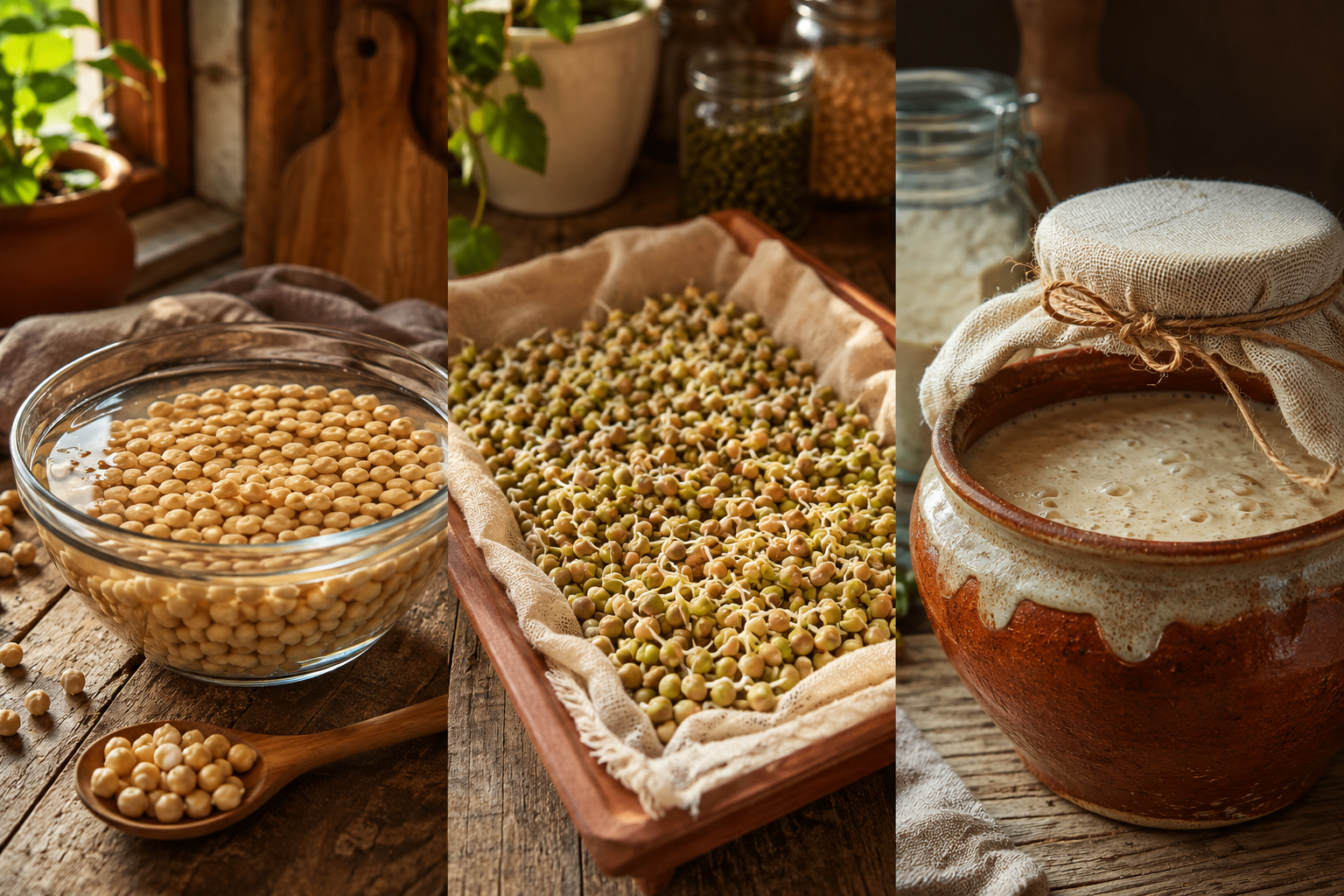
Soaking grains and legumes in water — typically for 8 to 24 hours — is one of the simplest and most widely used traditional preparation methods. It works primarily by activating the seed’s own enzymes and by leaching water-soluble compounds out of the food.
What soaking reduces:
- Phytate: Soaking activates endogenous phytase enzymes in the seed, which begin breaking down phytic acid. The effect is modest compared to fermentation or sprouting, but measurable.
- Some tannins: Water-soluble tannins leach into the soaking water, which should be discarded.
- Some saponins: Present in quinoa and some legumes; water-soluble and removed by rinsing and soaking.
What soaking does not fix:
- Lectins in kidney beans: This is a critical safety point. Soaking alone does not deactivate phytohaemagglutinin (PHA), the lectin in red kidney beans responsible for bean poisoning. Proper boiling is required.
- Insoluble oxalates: These do not leach into water. Only soluble oxalates are reduced by soaking or boiling with water discarded.
- Heat-stable compounds: Many antinutrients require heat — not just water — to be deactivated.
Practical rule: Always discard soaking water. Rinsing after soaking adds an extra step that removes more leached compounds. Warm water (around 40–50°C) activates phytase more effectively than cold water, though this requires more attention to food safety timing.
Sprouting and Germination: Phytase, Minerals, and Safety Limits
Sprouting — allowing seeds, grains, or legumes to germinate before eating — activates phytase and other enzymes that break down antinutrients as the seed prepares to grow. The evidence on phytate reduction through sprouting is reasonably consistent: germination can reduce phytate content meaningfully, improving the availability of iron, zinc, and calcium.
What sprouting can do:
- Activate phytase, reducing phytate by a significant margin in many grains and legumes.
- Increase levels of some B vitamins and vitamin C.
- Improve protein digestibility by partially breaking down storage proteins.
- Reduce some tannins and enzyme inhibitors.
What sprouting does not guarantee:
Here is where the evidence requires care. Sprouting does not automatically make all grains, beans, or seeds safe to eat raw. Specifically:
- Kidney beans and some other legumes still contain lectins after sprouting. Raw sprouted kidney beans remain a food safety risk.
- Sprouting conditions matter. Time, temperature, humidity, and the specific variety all affect how much phytate is reduced. A 12-hour sprout in cool conditions is not the same as a 48-hour sprout in warm conditions.
- Microbial safety is a real concern. Warm, moist sprouting conditions are ideal for bacterial growth (Salmonella, E. coli, Listeria). Oregon State University Extension food safety researchers have documented sprouting-associated foodborne illness outbreaks. Rinsing frequently, maintaining hygiene, and keeping temperatures controlled matters.
The main takeaway: sprouting is a genuinely useful preparation step for grains and some seeds. For legumes — especially kidney beans — it is a preparation step, not a finishing step. Cooking is still required.
Fermentation: Microbes, Acidity, Phytates, Tannins, and Digestibility
Fermentation is arguably the most powerful traditional tool for reducing antinutrients in plant foods. Lactic acid bacteria and wild yeasts produce phytase enzymes and organic acids that break down phytate, reduce tannins, and improve overall digestibility.
The evidence is strongest for:
- Sourdough bread: Long-fermented sourdough (12+ hours with active starter) can reduce phytate in wheat by 50–90% compared to unfermented bread, depending on flour type, hydration, and fermentation conditions. This is why traditionally made sourdough is better tolerated by many people than modern quick-rise bread.
- Fermented legume porridges: Traditional preparations like West African ogi (fermented maize) or South Asian idli/dosa batter (fermented rice and lentils) show consistent phytate reduction and improved iron and zinc bioavailability.
- Fermented soybeans: Miso, tempeh, and natto reduce enzyme inhibitors and improve protein digestibility compared to cooked but unfermented soy.
What affects fermentation outcomes:
Fermentation effects depend on crop variety, time, temperature, microbial culture, pH, and preparation details. A short, cold ferment with a weak starter is not equivalent to a long, warm ferment with an active, diverse culture. This is not a trivial point — it explains why “fermented” on a label does not automatically mean “low antinutrient.”
For a deeper look at how fermented foods interact with gut health, the article on fermented foods vs probiotics vs postbiotics covers the microbial side of this well.
Boiling, Discarding Water, and Pressure Cooking
Boiling is the most reliable method for deactivating heat-sensitive antinutrients, particularly lectins. For kidney beans, it is not optional — it is a safety requirement.
Key points on boiling:
- Lectins in kidney beans are deactivated by boiling at 100°C for at least 10 minutes. Pressure cooking achieves this more quickly and reliably. Slow cookers that do not reach boiling temperature are not safe for kidney beans — the lower temperature can actually increase lectin activity.
- Microwaving is not a reliable shortcut for deactivating kidney-bean lectins. Proper boiling or pressure cooking to full softness is the safer standard.
- Soluble oxalates leach into cooking water during boiling. Discarding that water — rather than using it as stock — can reduce soluble oxalate content meaningfully in high-oxalate vegetables like spinach and beet greens.
- Dry cooking concentrates oxalate. Roasting or dehydrating high-oxalate foods removes water but leaves oxalate behind, effectively increasing oxalate concentration per gram. Do not assume roasting lowers oxalate.
Pressure cooking offers the same benefits as boiling but faster, and at slightly higher temperatures, which can improve lectin deactivation and overall digestibility. It is a practical tool for people who cook legumes regularly.
For more on how modern food processing affects gut chemistry, that article covers the broader picture of heat treatment and food structure.
Peeling, Dehulling, Leaching, and Proper Storage
Some antinutrients are concentrated in specific parts of the plant — the outer bran layer, the seed coat (hull), or the skin. Physical removal of these layers is a straightforward and effective reduction strategy.
- Dehulling legumes (removing the seed coat) reduces tannins substantially, since tannins are concentrated in the hull. Dehulled lentils and split peas have lower tannin content than whole varieties.
- Peeling potatoes removes most glycoalkaloids (solanine, chaconine), which concentrate in the skin and just beneath it. Green or sprouted potatoes should be discarded, as glycoalkaloid levels can be high regardless of preparation.
- Leaching — soaking in multiple changes of water over extended periods — is used in traditional Andean processing of bitter potatoes and in some cassava preparations. It is time-intensive but effective for water-soluble compounds.
- Proper storage matters because some antinutrients increase with poor storage. Mycotoxins (produced by moulds) can develop in improperly stored grains and corn. Nixtamalization can help, but it is not a substitute for good storage practice.
Nixtamalization: Why Lime-Treated Corn Is Different
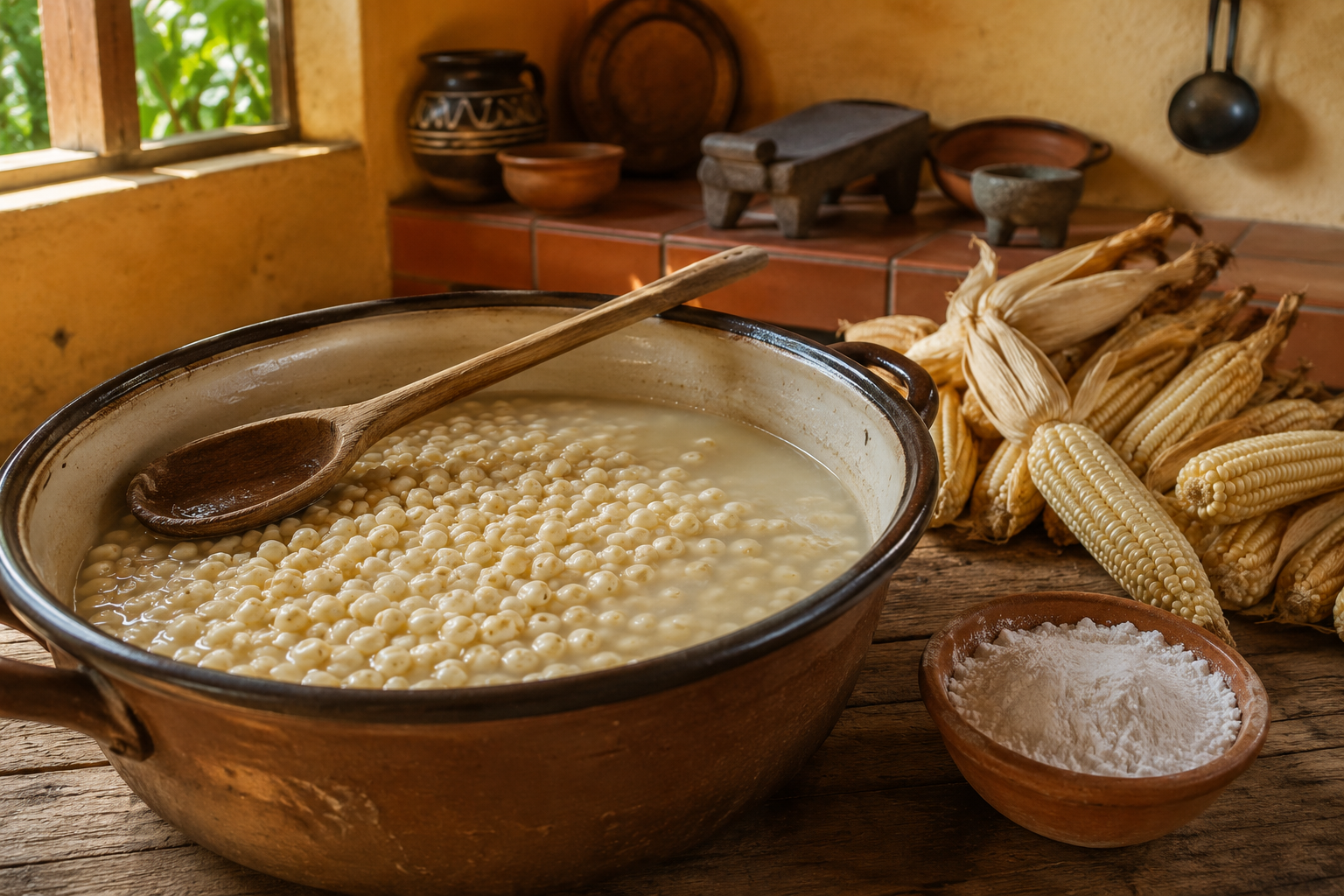
Nixtamalization is the process of soaking and cooking dried corn in an alkaline solution — traditionally calcium hydroxide (lime, or “cal”) — then washing and hulling the kernels before grinding. It is one of the most chemically significant traditional food preparation methods known.
What nixtamalization achieves:
- Niacin (vitamin B3) availability: Corn naturally contains niacin, but in a bound form (niacytin) that humans cannot absorb. The alkaline treatment breaks these bonds, releasing free niacin. This is why populations eating nixtamalized corn as a staple did not develop pellagra, while those eating untreated corn did.
- Improved amino acid profile: The process increases the availability of lysine and tryptophan.
- Mycotoxin reduction: Some research, including work referenced by Nebraska Extension and CIMMYT, indicates that nixtamalization can substantially reduce certain mycotoxins (particularly fumonisins) in contaminated corn, especially when combined with washing and pericarp (outer hull) removal. However, this is not a guarantee of complete toxin removal. The degree of reduction depends on the mycotoxin type, contamination level, lime concentration, cooking time, and washing thoroughness.
- Improved texture and digestibility: The process gelatinises starch and softens the kernel, making the resulting masa more digestible.
What nixtamalization does not promise: It does not eliminate all contaminants, and it is not a substitute for using good-quality, properly stored corn. The washing step — discarding the alkaline soaking liquid (nejayote) — is important for removing loosened compounds.
Cassava Processing: Reducing Cyanogenic Glycosides Safely
Cassava (Manihot esculenta) is a staple food for hundreds of millions of people, particularly in sub-Saharan Africa, South America, and Southeast Asia. It also contains cyanogenic glycosides — primarily linamarin — which release hydrogen cyanide when plant tissue is damaged or consumed.
Sweet cassava varieties have lower cyanogenic glycoside content than bitter varieties. But even sweet cassava requires proper preparation. The FAO and WHO/JECFA have documented cases of acute cyanide poisoning from improperly processed cassava, particularly in food-insecure settings where processing steps are shortened.
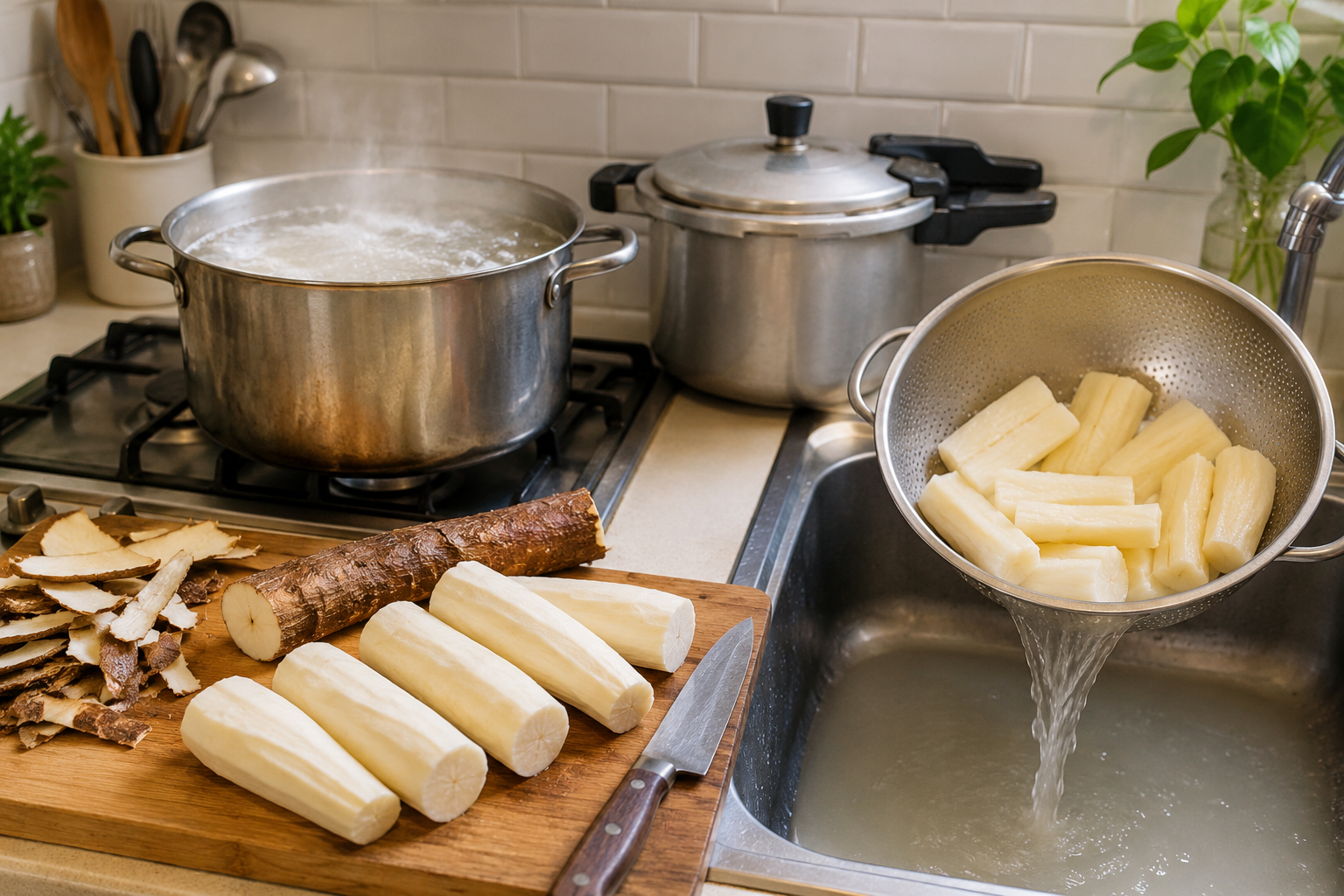
The traditional processing sequence:
- Peel thoroughly — the peel and outer cortex contain the highest concentration of cyanogenic glycosides.
- Grate or chop — breaking plant tissue activates the enzyme linamarase, which begins converting linamarin to hydrogen cyanide. This is a necessary step, not a risk to avoid.
- Soak in water for 24–48 hours (or longer for bitter varieties) — this allows cyanide to dissolve and diffuse out of the tissue.
- Boil in fresh water and discard the cooking water — heat drives off volatile hydrogen cyanide gas, and the cooking water carries dissolved cyanogens away.
- Ferment (for products like gari or fufu) — fermentation further reduces cyanogenic content through enzymatic activity and acid production.
The critical point: Shortening any of these steps — particularly skipping soaking or reusing cooking water — increases cyanide exposure. This matters most for bitter cassava varieties and in contexts where malnutrition already compromises the body’s ability to detoxify cyanide (which requires adequate sulfur amino acids).
Which Method Helps With Which Compound?
Let’s keep this practical. Here is a consolidated reference:
| Preparation Method | Phytate | Lectins | Soluble Oxalate | Tannins | Enzyme Inhibitors | Cyanogens | Mycotoxins |
|---|---|---|---|---|---|---|---|
| Soaking (water, discard) | ✅ Moderate | ❌ No | ✅ Partial | ✅ Partial | ❌ No | ✅ Partial | ❌ No |
| Sprouting/Germination | ✅ Good | ⚠️ Partial | ❌ Minimal | ✅ Some | ✅ Some | ❌ Minimal | ❌ No |
| Fermentation | ✅ Strong | ⚠️ Partial | ❌ Minimal | ✅ Good | ✅ Good | ✅ Some | ❌ No |
| Boiling + discard water | ✅ Some | ✅ Strong | ✅ Good | ✅ Some | ✅ Strong | ✅ Good | ❌ No |
| Pressure cooking | ✅ Some | ✅ Strong | ✅ Good | ✅ Some | ✅ Strong | ✅ Good | ❌ No |
| Peeling/Dehulling | ❌ Minimal | ❌ No | ❌ No | ✅ Strong | ❌ No | ✅ Some | ❌ No |
| Nixtamalization | ✅ Some | ❌ No | ❌ No | ❌ No | ❌ No | ❌ No | ✅ Partial |
| Dry roasting | ❌ No | ⚠️ Partial | ❌ May increase | ✅ Some | ✅ Some | ❌ No | ❌ No |
⚠️ Note: “Strong” or “Good” reduction does not mean complete elimination. Results vary by food variety, preparation conditions, and compound type.
What Traditional Preparation Cannot Promise
Here is the real issue with some of the more enthusiastic claims about traditional food preparation antinutrients reduction: the methods are genuinely useful, but they are not magic.
What the evidence does not support:
- Complete elimination of any antinutrient through a single preparation step.
- Raw sprouted beans being safe for all people. Sprouting is a preparation step, not a finishing step for legumes.
- Roasting universally lowering oxalate. Dry heat removes water and concentrates oxalate per gram.
- Microwaving being equivalent to boiling for lectin deactivation in kidney beans.
- Fermentation always producing the same result regardless of conditions.
- Nixtamalization removing 100% of mycotoxins from contaminated corn.
The stronger evidence points to a consistent pattern: combining multiple preparation steps (soak, then ferment, then cook; or peel, soak, then boil and discard water) produces better results than any single method alone. Traditional cultures often used these combinations instinctively, because the results were better.
Are Antinutrients Really Bad for You — or Just Overhyped?
This is where hype gets in the way of useful thinking. The honest answer is: it depends on the conditions.
For most healthy adults eating a varied diet, the antinutrient content of properly prepared plant foods is not a meaningful health threat. In fact, some compounds labelled as antinutrients — such as polyphenols and certain tannins — have demonstrated antioxidant and anti-inflammatory effects at typical dietary doses. The picture is genuinely mixed.
Where antinutrients matter more:
- People eating large amounts of a single staple food (cassava, corn, sorghum) with limited dietary variety.
- People with existing mineral deficiencies, where even modest reductions in absorption compound the problem.
- People with kidney disease or a history of kidney stones, where oxalate management is clinically relevant.
- Populations in food-insecure settings where preparation shortcuts are common.
Where the concern is overstated:
- Healthy adults eating varied, traditionally prepared plant foods alongside adequate protein and micronutrient intake.
- People who already cook their legumes properly and eat a range of vegetables.
We need to separate fact from hype: plant foods are not dangerous by default, and preparation does not need to be perfect to be beneficial. The basics still do the heavy lifting.
For context on how these compounds interact with inflammation, the best anti-inflammatory foods for gut health article covers the dietary pattern side of this well.
Who Is Most Sensitive to Antinutrient Effects?
Children, the elderly, and people with specific health conditions are more sensitive to antinutrient effects than healthy adults. This is not alarmist — it is a practical consideration for tailoring preparation practices.
Groups where antinutrient reduction matters most:
- Children on restricted diets or with growth concerns: Phytate-rich diets with low mineral intake can affect iron and zinc status in growing children. Traditional fermented complementary foods were partly developed to address this. For more on this topic, see kids and plant toxins.
- Older adults (65+): Reduced stomach acid production with age can impair mineral absorption independently, and high phytate intake may compound this.
- People with kidney disease or kidney stones: Oxalate management is clinically significant. Boiling and discarding water for high-oxalate vegetables is a standard dietary recommendation in this context.
- People with iron-deficiency anaemia: High phytate and tannin intake alongside plant-based iron sources can reduce iron absorption. Fermentation and vitamin C consumption at the same meal both help.
- Pregnant women: Increased mineral requirements make bioavailability more important. Properly prepared foods matter more during pregnancy.
- People with severe digestive disease (IBD, IBS, coeliac disease): Lectins and other gut-active compounds may be more problematic when the gut barrier is already compromised.
How Do Traditional Methods Compare to Enzyme Supplements?
Enzyme supplements — phytase, alpha-galactosidase (the active ingredient in products like Beano), protease blends — are marketed as a modern shortcut to what traditional preparation achieves naturally. The comparison is worth making clearly.
What supplements can do:
- Alpha-galactosidase can reduce gas-producing oligosaccharides (GOS) from legumes, reducing flatulence.
- Phytase supplements can improve mineral absorption from high-phytate meals.
- Protease supplements may assist protein digestion from enzyme-inhibitor-rich foods.
Where traditional preparation has the advantage:
- Traditional methods work on the food before it is eaten, reducing the compound load rather than managing it after ingestion.
- Fermentation and sprouting produce additional beneficial compounds (B vitamins, short-chain fatty acids, bioactive peptides) that supplements do not replicate.
- Traditional preparation is consistent, low-cost, and does not require purchasing ongoing supplements.
- The combined effect of soaking + fermenting + cooking addresses multiple antinutrients simultaneously, while most supplements target one mechanism.
From a practical point of view: supplements can be a useful adjunct for specific situations (travelling, eating out, managing digestive symptoms). They are not a substitute for proper preparation of staple foods. There is no magic in it — the preparation methods work because they change the food’s chemistry, not just the digestive response to it.
Safety and Nuance
This article is educational, not personal medical advice.
People with the following conditions should seek qualified medical guidance before making major dietary changes based on antinutrient concerns:
- Kidney disease or a history of kidney stones
- Severe digestive disease (Crohn’s disease, ulcerative colitis, coeliac disease, IBS)
- Iron-deficiency anaemia or other diagnosed nutrient deficiencies
- Pregnancy or breastfeeding
- Children on restricted or medically supervised diets
- Eating disorders or a history of restrictive eating
- Any medically prescribed diet
A sensible starting point is to discuss specific concerns with a registered dietitian or your GP, particularly if you are making significant changes to staple foods or eliminating food groups.
Practical Starting Points
Start with what gives the biggest return. Here is a simple, evidence-grounded approach:
For legumes (beans, lentils, chickpeas):
- Soak dried legumes for 8–24 hours in fresh water. Discard the soaking water.
- Rinse thoroughly.
- Boil in fresh water until fully soft. Discard cooking water for high-phytate or high-tannin varieties.
- For kidney beans specifically: boil vigorously for at least 10 minutes before reducing heat. Do not use a slow cooker for kidney beans without pre-boiling.
For grains (wheat, oats, rye, rice):
- Soak overnight before cooking where practical.
- Choose traditionally fermented products (sourdough bread, fermented porridges) over quick-rise equivalents when available.
- Combine with vitamin C-rich foods at the same meal to improve iron absorption despite residual phytate.
For high-oxalate vegetables (spinach, beet greens, Swiss chard):
- Boil briefly and discard cooking water to reduce soluble oxalates.
- Do not rely on roasting or sautéing to reduce oxalate — these methods concentrate it.
- Eat alongside calcium-rich foods to bind oxalate in the gut rather than in the kidneys.
For corn (maize):
- Use nixtamalized masa flour for tortillas and traditional preparations where possible.
- Store corn in cool, dry conditions to minimise mycotoxin risk.
For cassava:
- Peel thoroughly, soak, boil in fresh water, and discard cooking water.
- Do not shortcut the soaking step, especially with bitter varieties.
Keep it simple and consistent. The combination of soaking, proper cooking, and discarding cooking water covers the majority of practical antinutrient concerns for most people eating a varied diet.
For a broader foundation on plant-based food safety, the plant toxins and antinutrients hub article is a useful companion read.
FAQ
Q: Do I need to soak canned beans before eating them?
No. Canned beans are pre-cooked under pressure and have already had much of their phytate and lectin content reduced. Rinsing canned beans removes some residual sodium and surface starches but is not required for antinutrient reasons.
Q: Is sourdough bread genuinely lower in phytate than regular bread?
Yes, when properly made. Long-fermented sourdough (12+ hours with an active starter) can reduce phytate substantially compared to quick-rise commercial bread. The effect depends on fermentation time, flour type, and starter activity. A short sourdough ferment with a weak starter may not achieve the same result.
Q: Can I eat raw sprouted lentils safely?
Lentils are lower in lectins than kidney beans, and many people eat raw sprouted lentils without obvious problems. However, sprouting does not eliminate all antinutrients, and raw sprouted legumes carry a higher microbial risk than cooked ones. Lightly cooking sprouted lentils is the safer and more nutritionally complete approach.
Q: Does cooking spinach reduce its oxalate content?
Boiling spinach and discarding the cooking water reduces soluble oxalate meaningfully. Steaming retains more oxalate than boiling. Sautéing or roasting does not reduce oxalate and may concentrate it as water evaporates. For people managing oxalate intake (kidney stone history, kidney disease), boiling with water discarded is the recommended method.
Q: Are green potatoes safe if you cook them thoroughly?
No. Glycoalkaloids (solanine, chaconine) in green or sprouted potatoes are heat-stable and are not reliably destroyed by cooking. Green or heavily sprouted potatoes should be discarded. Peeling removes most glycoalkaloids from normal potatoes, as they concentrate in the skin and just beneath it.
Q: How do I know if my fermented food has actually reduced antinutrients?
In practical terms, you cannot test this at home. The best indicators are: sufficient fermentation time (at least 12–24 hours for most preparations), visible activity (bubbling, sour smell), appropriate temperature (warm but not hot), and using an active microbial culture. Commercial “fermented” products that are pasteurised after fermentation may have reduced microbial activity, though some antinutrient reduction from the fermentation process itself can still remain.
Q: Is there any benefit to combining preparation methods?
Yes — this is one of the clearest patterns in the evidence. Soaking followed by fermentation followed by cooking consistently outperforms any single method alone. Traditional food preparation antinutrients reduction was rarely achieved through one step; it was the combination that made staple foods safe and nutritious.
Conclusion
Traditional food preparation antinutrients reduction is not a niche concern for nutrition specialists. It is practical food chemistry that has shaped how humans have safely eaten plant foods for thousands of years.
The core message is straightforward: plant foods contain defensive compounds, most of which can be meaningfully reduced through proper preparation. Soaking, sprouting, fermenting, boiling with water discarded, peeling, and techniques like nixtamalization and cassava processing each address different compounds in different ways. No single method does everything, and none eliminates antinutrients completely.
What matters most is this: the goal is not to fear plant foods or to achieve zero antinutrient exposure. The goal is to prepare food in ways that improve digestibility, mineral availability, and safety — which is exactly what traditional cultures figured out through long practice.
The basics still do the heavy lifting. Soak your legumes. Cook them properly. Discard cooking water from high-oxalate vegetables. Use traditionally fermented grains where you can. Be careful with cassava and kidney beans specifically.
That is a strong foundation, and it does not require supplements, special equipment, or anxiety about every meal.
Quick Selector: Traditional Food Preparation Methods
Choose the food you are preparing
Open the closest food category below. This no-JavaScript selector gives practical starting points without relying on browser scripts or theme optimisation.
Kidney beans and other high-lectin beans
- Best starting method: soak, discard soaking water, then boil vigorously until fully cooked.
- Do not use slow-cooker-only preparation for dry kidney beans unless the beans have already been properly boiled; undercooked kidney beans are a real food-safety risk.
- Pressure cooking can be useful after soaking because it reliably reaches high temperatures.
Lentils, chickpeas, peas and other legumes
- Best starting method: soak where appropriate, discard water, then cook thoroughly.
- For mineral availability: sprouting or fermentation can further reduce phytate, but safety and hygiene matter.
- For sensitive digestion: start with well-cooked, smaller servings rather than raw sprouts or large amounts.
Wheat, oats, rye, rice and other grains
- Best starting method: soaking, sourdough fermentation, or long fermentation where suitable.
- Sourdough-style fermentation is especially relevant for phytate reduction in bread-like foods.
- Cooking still matters: soaking alone is not a complete food-safety or digestibility solution.
Spinach, beet greens, chard and other high-oxalate greens
- Best starting method: boil and discard the cooking water to reduce soluble oxalates.
- Less useful: roasting or dry heat does not reliably reduce oxalate load.
- Medical caution: people with kidney disease or recurrent kidney stones should get personalised guidance.
Corn / maize
- Best starting method: traditional nixtamalization with lime/calcium hydroxide where appropriate.
- Why it matters: lime treatment changes corn chemistry and improves niacin availability.
- Limit: nixtamalization can reduce some risks, but it is not a guarantee that mouldy grain is safe.
Cassava
- Best starting method: peel, soak or ferment where appropriate, boil, and discard processing/cooking water.
- Do not shortcut processing: cassava is one of the clearest examples where traditional preparation is a safety requirement, not just a flavour choice.
- Follow local food-safety guidance for the specific cassava product and variety.
Green or sprouted potatoes
- Best starting method: avoid green, bitter, badly sprouted or damaged potatoes.
- Important limit: normal cooking does not reliably make high-glycoalkaloid potatoes safe.
- Practical rule: when potatoes are green or bitter, discard them rather than trying to rescue them with cooking.
Soybeans and soy foods
- Best starting method: proper heat treatment, fermentation, or traditionally prepared soy foods.
- Fermented options may improve digestibility and alter antinutrient profile.
- Context matters: whole-food, traditionally prepared soy is not the same discussion as highly processed isolated ingredients.
Rule of thumb: soaking helps some compounds, fermentation helps others, boiling is critical for lectins and soluble oxalates, and some hazards — such as green-potato glycoalkaloids — are better avoided than “fixed”.
Safety note: This selector is educational, not personal medical advice. People with kidney disease, kidney stones, severe digestive disease, nutrient deficiencies, pregnancy, children on restricted diets, eating disorders, or medically prescribed diets should seek qualified guidance before major dietary changes.
References
These selected outgoing references support the food-safety and food-chemistry points in this guide. They were chosen because they are practical, authoritative, and useful for readers who want to check the details behind phytate reduction, sprouting safety, lectins, cassava cyanide risk, oxalates, nixtamalization, and traditional processing methods.
- Reduction of phytic acid and enhancement of bioavailable micronutrients in food grains — strong overview of phytate reduction and mineral bioavailability in grains and legumes.
- Fermentation and germination improve nutritional quality and reduce antinutritional factors — useful research context for why soaking, sprouting, and fermentation are often combined.
- Oregon State University Extension: soaking method and sprouted snack ingredient safety — practical food-safety context for sprouting and soaking.
- FDA Bad Bug Book, Second Edition — foodborne illness reference covering hazards relevant to raw or undercooked beans and sprouts.
- Food Standards Australia New Zealand: red kidney bean safety — clear public-health guidance on phytohaemagglutinin risk and proper cooking.
- FAO: Cassava processing — technical material on cassava processing and cyanogenic glycoside reduction.
- WHO/JECFA toxicological evaluation of cyanogenic glycosides — safety background for cyanogenic glycosides such as those found in cassava.
- Dietary Oxalate Intake and Kidney Outcomes — medical review of oxalate intake and kidney-related outcomes.
- CIMMYT: nixtamalization resources — maize and nixtamalization background from a specialist maize research organisation.
📂 Plant Toxins & Antinutrients
This article is part of the APH cluster. Use the links below to move between the pillar and child articles.
- Read the pillar: Plant Toxins, Antinutrients and Why Our Ancestors Cooked: The Complete Evidence-Based Guide
- → What Plant Toxins Actually Do to Your Body: Effects on Digestion, Absorption and Inflammation
- → Enzyme Inhibitors in Raw Plant Foods: Why Cooking Matters More Than Influencers Admit
- YOU ARE HERE How Traditional Food Preparation Reduces Antinutrients: Soaking, Sprouting, Fermenting and Cooking
- → Synergistic Plant Toxin Effects: How Oxalates Amplify Lectin Damage in the Gut
- → Histamine Intolerance and Plant Lectins: The Overlooked Gut-Brain Connection
- → Plant Toxins and Brain Fog: New 2026 Studies Linking Phytates to Cognitive Decline
- → Antinutrients and Skin Health: How Tannins and Phytoestrogens Trigger Eczema Flares
- → Kids and Plant Toxins: Antinutrient Impacts on Growth, ADHD, and Developing Brains
- → Pesticides vs Plant Toxins: Which Is the Bigger Threat to Your Health and the Environment?
- → Climate Change and Plant Toxins: Rising Levels of Alkaloids and Glycosides in Crops
- → Global Toxicity Hotspots: Plant Toxins Amplified in China, Brazil, US Crops