
The Hidden Dangers of Reusing Cooking Oil: What You Need to Know This August 2026
Part of the Modern Food Processing & Gut Chemistry cluster →
Last updated: August 10, 2026
Quick Answer: Reusing cooking oil is far more dangerous than most people realize. Each time oil is heated, it breaks down chemically, producing toxic compounds including aldehydes, trans fats, and free radicals that are linked to inflammation, cardiovascular disease, and increased cancer risk. The evidence suggests there is no truly “safe” number of reuses, and the risks compound with every heating cycle. Understanding the Dangers of Reusing Cooking Oil is essential for health-conscious cooking.
Key Takeaways
- Every heating cycle degrades oil chemistry. Reused oil accumulates toxic compounds including acrolein, 4-hydroxynonenal (HNE), polycyclic aromatic hydrocarbons (PAHs), and polar compounds.
- The smoke point drops with each use, meaning degraded oil starts producing harmful fumes at lower temperatures.
- Health risks are real and documented: increased LDL cholesterol, systemic inflammation, insulin resistance, and elevated cancer risk are all associated with habitual consumption of food cooked in heavily reused oil [2][9].
- Animal studies show organ damage from reused oil, including liver inflammation, colon damage, and signs of neurodegeneration [8].
- Brain health may be at risk too, repeated heating depletes antioxidants and generates compounds linked to oxidative stress and neurodegenerative processes [3].
- Visual and smell cues matter: dark color, thick consistency, a rancid or acrid smell, and excessive foaming are all signs oil should be discarded.
- Some oils handle heat better than others. High-oleic oils and those with higher smoke points are more stable under heat.
- Proper storage between uses slows degradation, but does not stop it.
- Professional kitchens follow strict protocols for oil management. Home cooks should too.
- The simplest rule: if it looks dark, smells off, or foams heavily, throw it out.
What Happens When You Reuse Cooking Oil Multiple Times?
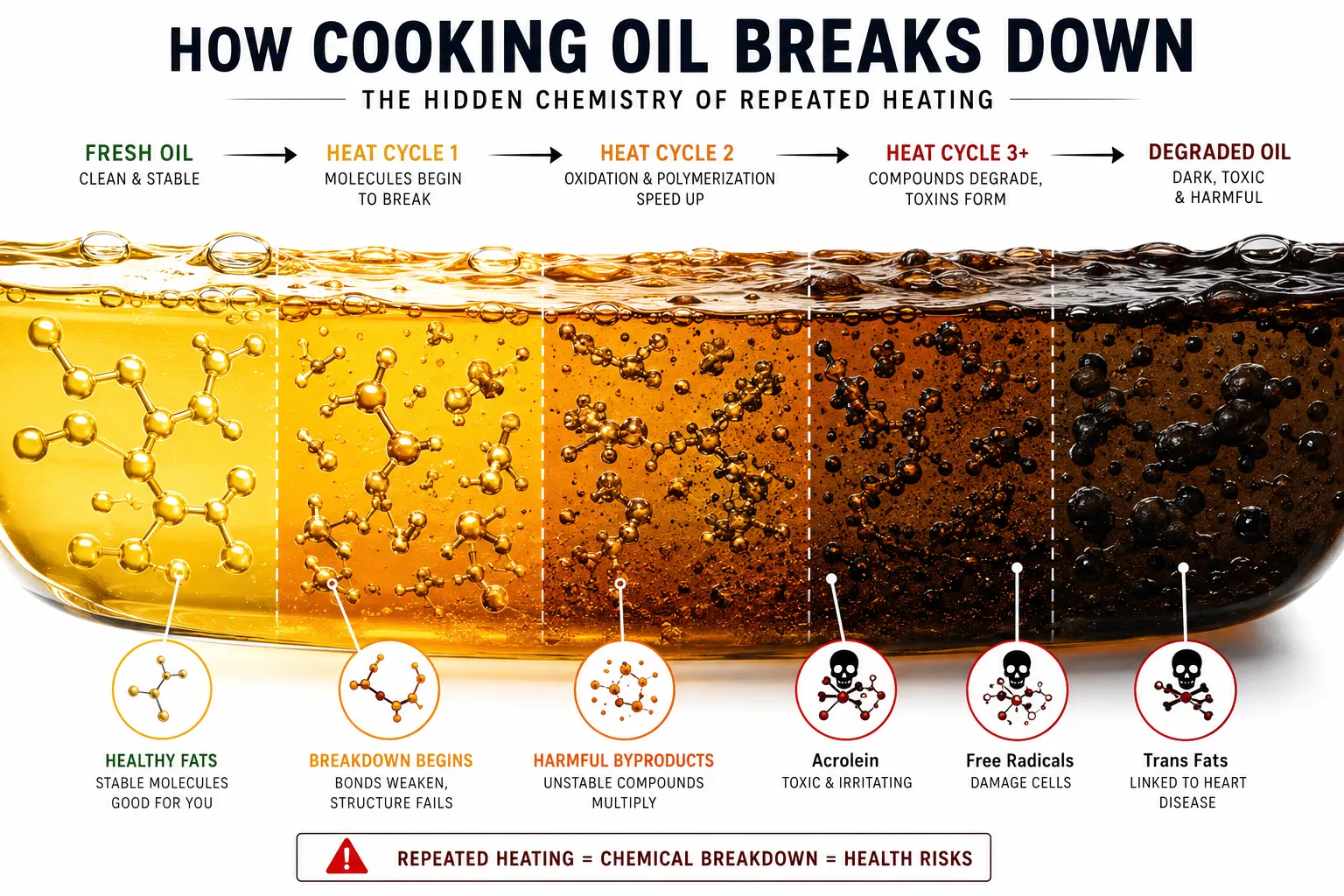
Each time cooking oil is heated to frying temperatures, its chemical structure changes. The first use begins a process of oxidation, hydrolysis, and polymerization that does not reverse when the oil cools. With every subsequent heating cycle, these changes accelerate.
Here is what is actually happening at a chemical level:
- Triglycerides break down into free fatty acids, diglycerides, and eventually smaller volatile compounds.
- Oxidation generates lipid peroxides and secondary breakdown products including aldehydes, some of which are directly toxic.
- Polar compounds accumulate. Regulatory bodies in several countries use total polar compound (TPC) content as a measure of oil degradation. Many set a legal limit of 25-27% TPC for commercial frying oils.
- The smoke point drops with each use, meaning the oil starts producing harmful smoke at progressively lower temperatures.
- Natural antioxidants are depleted, removing the oil’s built-in protection against further oxidation [3][7].
In plain English: the oil you use for the third or fourth time is chemically a different substance from what you started with. And that difference matters for your health.
What Are the Toxic Compounds in Reused Cooking Oil?
Reused cooking oil generates a specific set of harmful compounds that have been identified in laboratory research and increasingly linked to disease in human and animal studies.
The main ones to know:
| Compound | How It Forms | Primary Health Concern |
|---|---|---|
| Acrolein | Glycerol breakdown at high heat | Carcinogenic, respiratory irritant |
| 4-Hydroxynonenal (HNE) | Oxidation of omega-6 fatty acids | Cell damage, linked to neurodegeneration |
| Trans fatty acids | Partial hydrogenation during repeated heating | Raises LDL, lowers HDL, cardiovascular risk |
| Polycyclic Aromatic Hydrocarbons (PAHs) | Incomplete combustion of organic matter | Classified carcinogens |
| Polar compounds | General thermal and oxidative degradation | Broad toxicity marker |
| Free radicals | Oxidative chain reactions | Inflammation, cellular DNA damage |
The evidence suggests that acrolein and HNE are particularly concerning. Acrolein is already classified as a probable human carcinogen, and HNE has been implicated in liver toxicity and neurodegenerative changes [3][7][12]. A University of Illinois mouse study found that thermally abused oil promoted the progression of late-stage breast cancer, with acrolein and lipid peroxides specifically implicated [8].
That is a strong claim, and it comes from animal data, so it needs to be read carefully. But the direction of the evidence is consistent enough to take seriously.
Is Reusing Cooking Oil Bad for Your Health?
Yes, based on current evidence, regularly consuming food fried in heavily reused oil carries meaningful health risks. The key word is “regularly”, a single use of slightly reused oil is unlikely to cause harm. The problem is cumulative exposure over time [4][6].
Documented health risks include:
- Cardiovascular disease: Reused oil raises LDL (“bad”) cholesterol and triglycerides while promoting arterial inflammation. The Philippine National Nutrition Council explicitly links reheated oil to increased risk of heart disease and stroke [9].
- Insulin resistance and type 2 diabetes: Free radicals from degraded oil impair insulin signaling pathways [4][10].
- Liver stress: Animal studies show increased oxidative stress and liver inflammation in subjects fed food cooked in repeatedly heated oil [8].
- Inflammation: Oxidized lipids are potent drivers of systemic inflammation, a root mechanism in most chronic disease [2][9].
- Fatty liver disease: Nutritionists have flagged this as a concern in households that routinely reuse oil, particularly in high-temperature cooking cultures [4].
Columbia University’s health service adds Alzheimer’s disease, Parkinson’s disease, and atherosclerosis to the list of conditions associated with free radical exposure from reused oils [14, referenced in source material].
Context matters here. The risk is highest for people who consume deep-fried food frequently and whose cooking oil is reused many times without filtration or replacement.
Can Reused Cooking Oil Cause Cancer or Disease?
The cancer link is real but needs careful framing. This is where hype gets in the way of useful information.
What the evidence actually shows:
- Repeated heating alters oil chemistry in ways that generate compounds with known or probable carcinogenic properties, including PAHs, acrolein, and certain aldehydes [2][7].
- A June 2026 oncology review found that each heating cycle generates degradation products that drive chronic inflammation, cellular damage, and genetic alterations, all of which are recognized steps in cancer development [2].
- Gastrointestinal cancers, liver cancer, and hormone-related cancers are the types most frequently cited in connection with reused oil exposure [2].
- Animal studies support a biological mechanism, but direct causation in humans from cooking oil reuse alone has not been established in controlled trials [8].
The stronger evidence points to reused oil as a contributing factor in cancer risk, not a standalone cause. Chronic exposure to oxidized lipids and toxic aldehydes adds to the body’s overall oxidative and inflammatory burden, and that burden, sustained over years, is what raises cancer risk.
That is not the same as saying “reusing oil once gives you cancer.” But it is also not nothing.
How Many Times Can You Safely Reuse Cooking Oil?
There is no universal safe number, it depends on the oil type, frying temperature, what was cooked, and how the oil was stored between uses. That said, practical guidelines exist.
General guidance from food safety experts:
- For home frying: Most food safety advisors suggest 2-4 uses maximum, with careful filtering between each use and proper storage.
- For commercial operations: Many countries set a legal TPC limit (typically 25-27%) as the discard threshold, not a use-count.
- High-temperature frying (above 180°C / 356°F) degrades oil faster than lower-temperature cooking.
- Breaded or battered foods accelerate degradation because food particles left in the oil continue to burn and contaminate it.
Choose X if logic:
- Choose to discard after 1-2 uses if you are frying at high temperatures or cooking battered foods.
- Choose to extend to 3-4 uses only if you are frying at moderate temperatures, filtering carefully each time, and storing properly in a cool, dark place.
- Discard immediately if the oil shows any of the warning signs listed in the next section.
The numbers matter, but the condition of the oil matters more than the count.
How to Tell If Cooking Oil Has Gone Bad
This is practical information that every home cook should know. Degraded oil gives clear signals, you just need to know what to look for.
Visual cues:
- Darkened color, fresh oil is clear to golden; degraded oil turns brown or black
- Thick, viscous consistency, oil that pours slowly has polymerized
- Visible particles or sediment, unfiltered food debris accelerates degradation
- Excessive foaming when heated, a sign of significant breakdown
Smell and taste cues:
- Rancid or acrid smell, oxidized fatty acids produce a sharp, unpleasant odor
- Bitter or “off” taste in food cooked in the oil
- Smoke at lower temperatures than usual, the smoke point has dropped
The simplest way to look at it: if the oil smells wrong before you heat it, or produces visible smoke at normal cooking temperatures, it has already degraded past a safe point. Do not use it.
A sensible starting point is to filter oil after every use (a fine mesh strainer or cheesecloth works), store it in a sealed, opaque container in a cool dark place, and check it visually and by smell before each reuse.
Which Cooking Oils Are Safe to Reuse?
Not all oils degrade at the same rate. The key factors are smoke point, fatty acid composition, and natural antioxidant content.
More stable oils (better for reuse):
- Refined coconut oil, high saturated fat content makes it more resistant to oxidation
- Refined avocado oil, very high smoke point (~270°C / 520°F), high oleic acid content
- High-oleic sunflower or safflower oil, bred specifically for heat stability
- Refined peanut oil, commonly used in commercial frying for its stability
Less stable oils (poor candidates for reuse):
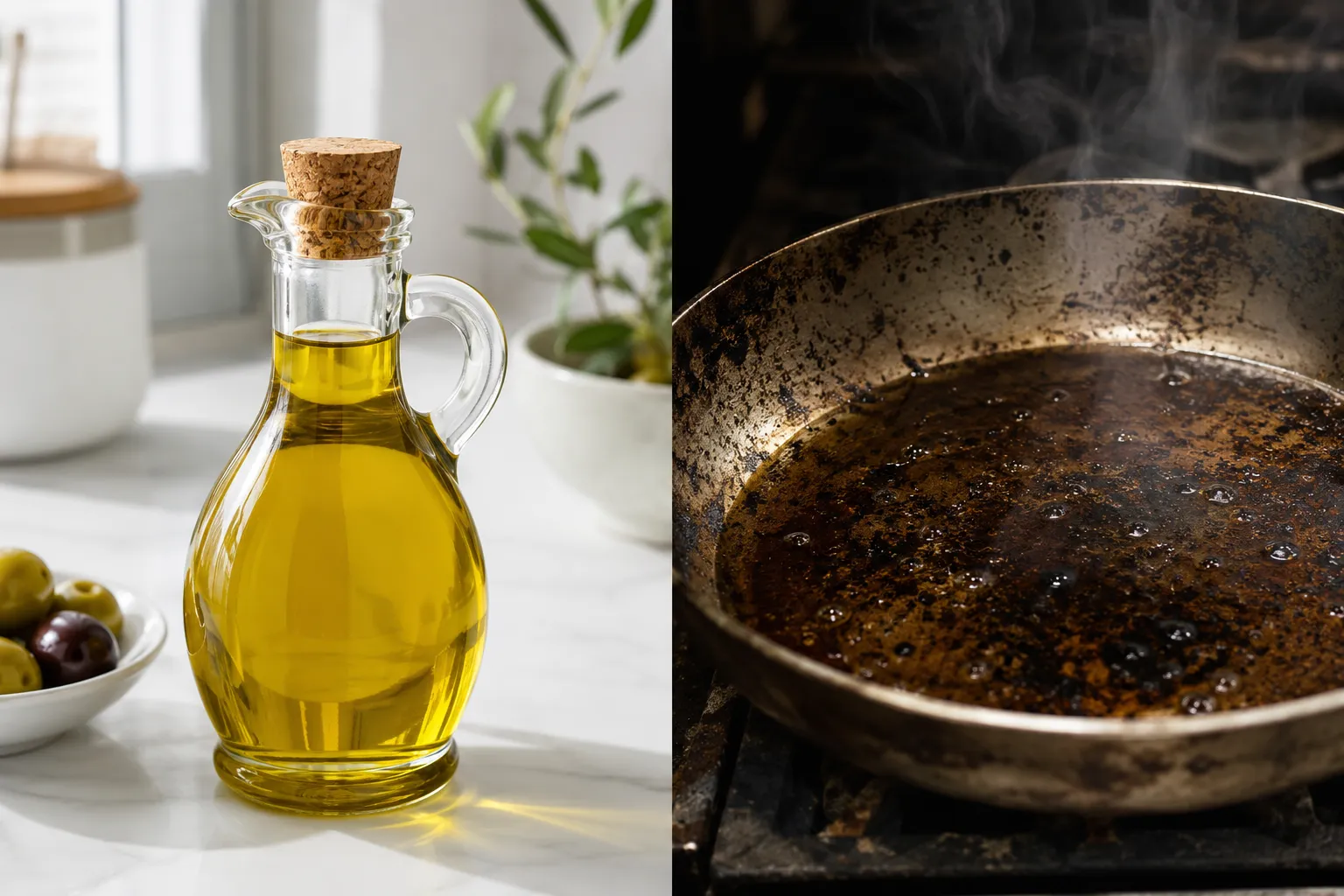
- Extra virgin olive oil, lower smoke point and antioxidants that deplete quickly under heat
- Standard sunflower or corn oil, high in polyunsaturated fats (PUFAs) that oxidize rapidly
- Flaxseed or walnut oil, extremely high PUFA content, should never be used for frying
The evidence suggests that oils high in polyunsaturated fatty acids (PUFAs) are the most vulnerable to oxidative damage on repeated heating. An ICMR-linked summary notes that repeated heating of vegetable oils oxidizes PUFAs, generating toxic compounds that raise cardiovascular disease and cancer risk [6].
This connects to broader questions about what modern processing does to food proteins and starches, the principle that processing changes food chemistry in ways that are not always visible applies directly to cooking oil.
What Temperature Does Cooking Oil Break Down At?
Oil begins to degrade meaningfully once it exceeds its smoke point, the temperature at which it starts to visibly smoke and produce volatile breakdown products. But degradation begins at lower temperatures too, just more slowly.
Key temperature thresholds:
- Below smoke point: Slow oxidation occurs, especially with prolonged heating
- At smoke point: Rapid production of acrolein and other volatile aldehydes begins
- Above smoke point: Accelerated breakdown, visible smoking, rapid accumulation of toxic compounds
Approximate smoke points for common oils:
| Oil | Smoke Point (°C) | Smoke Point (°F) |
|---|---|---|
| Refined avocado oil | ~270°C | ~520°F |
| Refined peanut oil | ~232°C | ~450°F |
| Refined coconut oil | ~204°C | ~400°F |
| Extra virgin olive oil | ~190°C | ~375°F |
| Unrefined sunflower oil | ~107°C | ~225°F |
The critical point: each time oil is used, its smoke point drops. An oil that started at 232°C may behave like one rated at 180°C after two or three uses. This is why reused oil begins smoking earlier, and why that smoke is a health signal, not just a cooking inconvenience [7].
Does Reusing Oil Increase Cholesterol or Inflammation?
Yes, and both effects are well-documented. This is one of the clearest areas of the evidence base.
Cholesterol effects:
- Trans fats generated during repeated heating raise LDL cholesterol and lower HDL cholesterol, a combination that directly increases cardiovascular risk [5][9].
- Free radicals from oxidized oil promote oxidation of LDL particles, making them more likely to contribute to arterial plaque [4][10].
Inflammation effects:
- Oxidized lipids are recognized pro-inflammatory signals. They activate inflammatory pathways in the gut lining, liver, and vascular tissue [2][9].
- Chronic low-grade inflammation from repeated exposure to degraded oil compounds is a plausible mechanism linking reused oil to long-term disease risk [6].
For anyone already managing cardiovascular risk or metabolic health, this is particularly relevant. If you are following a high-protein diet for weight loss or working on healthy meals for weight loss, the quality of your cooking oil matters as much as the food itself.
Best Practices for Storing Used Cooking Oil
Proper storage between uses slows degradation, it does not stop it, but it makes a meaningful difference.
Storage checklist:
- ✅ Filter immediately after use, remove all food particles with a fine mesh strainer or cheesecloth before storing
- ✅ Allow to cool completely before sealing, trapping steam accelerates rancidity
- ✅ Use an airtight, opaque container, light and oxygen both accelerate oxidation
- ✅ Store in a cool, dark place, a pantry or refrigerator is better than a counter near the stove
- ✅ Label with the date and number of uses, this removes guesswork
- ✅ Check before each reuse, smell and visual inspection take 10 seconds and can prevent a real problem
- ❌ Do not mix old oil with fresh oil, this contaminates the fresh batch
- ❌ Do not store in the original plastic bottle if it has been used, heat can cause plastic compounds to leach
The oil’s condition at storage determines how long it remains usable. Filtered, properly stored oil lasts longer than oil left in an open pan on the stove.
Common Mistakes People Make With Reused Oil
Let’s keep this practical. These are the errors that turn a manageable practice into a genuine health risk.
- Not filtering between uses. Leaving food particles in the oil means they continue to oxidize and contaminate the oil during storage.
- Reusing oil that has already been overheated. If the oil smoked during use, it has already generated significant toxic compounds. Do not reuse it.
- Mixing old and new oil. This does not “refresh” the old oil, it contaminates the new oil with existing degradation products.
- Storing in a warm, light-exposed location. A container next to the stove or in a sunny spot accelerates rancidity significantly.
- Losing count of uses. Without labeling, most people underestimate how many times oil has been used.
- Assuming it is fine because it looks okay. Some toxic compounds form before the oil shows visible signs of degradation.
- Using the wrong oil for high-heat frying. Using an unstable oil like standard sunflower oil for repeated deep-frying accelerates toxic compound formation [6][7].
Understanding how food preservatives and additives affect health gives useful context here, the principle that chemical changes in food processing have real biological consequences applies directly to what happens in your frying pan.
How Do Professional Restaurants Handle Used Cooking Oil?
Professional kitchens operate under food safety regulations that most home cooks are unaware of. The approach is systematic, not casual.
Standard commercial practices:
- TPC testing: Many commercial operations test oil daily or per-shift using handheld TPC meters. Oil is discarded when it exceeds the legal threshold (typically 25-27% polar compounds).
- Oil filtration systems: Commercial fryers often have built-in filtration that removes food particles after every use, extending usable life while maintaining safety.
- Temperature management: Commercial kitchens maintain precise frying temperatures to avoid unnecessary degradation from overheating.
- Turnover schedules: High-volume operations may replace oil every 1-3 days regardless of TPC readings, simply because throughput is high enough to warrant it.
- Used oil disposal contracts: Commercial kitchens contract with rendering companies that collect used frying oil for biodiesel production or animal feed manufacturing, it does not go down the drain.
The gap between professional kitchen practice and typical home practice is significant. Most home cooks have no objective measure of oil quality, which is exactly why the visual and smell cues described above are so important.
How to Properly Dispose of Used Cooking Oil
Used cooking oil should never go down the drain, it solidifies in pipes and causes serious blockage problems. Here are the right options.
Safe disposal methods:
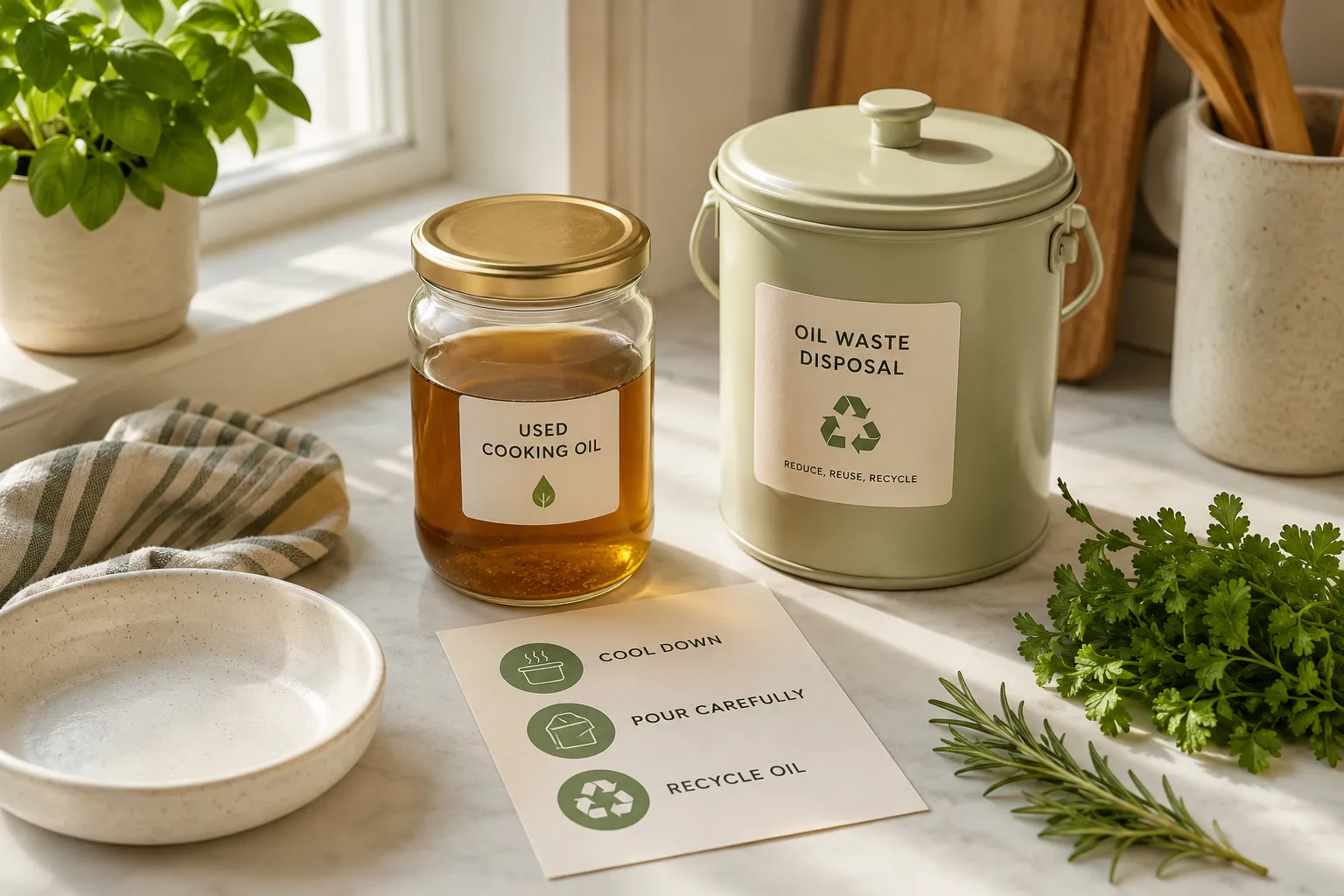
- Seal and bin it: Allow oil to cool completely, pour into a sealed container (the original bottle works), and place in general waste.
- Composting (small amounts only): Small quantities of vegetable oil can go into a compost bin, large amounts will cause problems.
- Community recycling programs: Many local councils and supermarkets have cooking oil recycling points. Used oil is converted to biodiesel.
- Rendering collection: Some areas have collection services for larger quantities of used cooking oil.
Never do this:
- Pour hot oil down the drain
- Pour oil directly into recycling bins
- Dump oil outside, it attracts pests and contaminates soil
Is It Cheaper to Reuse Oil or Buy New Oil?
In purely financial terms, reusing oil saves money in the short run. A litre of cooking oil costs roughly £1.50,£3.00 in the UK or $2,$5 in the US, depending on type. Reusing it four times instead of one reduces that cost by 75%.
But the real-world calculation is more complicated.
Factors that change the math:
- Degraded oil transfers off-flavors to food, reducing food quality
- Overused oil smokes more readily, increasing kitchen ventilation costs and fire risk
- Health costs from chronic exposure to degraded oil compounds are not priced into the per-litre cost
- The marginal cost of an extra litre of oil is low compared to the cost of managing chronic disease
From a practical point of view: using oil 2-3 times with proper filtration and storage is a reasonable economy. Using it 8-10 times to save money is a false economy when the health implications are factored in.
FAQ: Reusing Cooking Oil
Q: Can you reuse oil after frying fish?
A: Technically yes, but the oil absorbs strong fish odors and flavors that transfer to other foods. Most cooks choose to discard it or use it only for fish again. Degradation is also faster because fish proteins break down in the oil.
Q: Is it safe to reuse olive oil for frying?
A: Extra virgin olive oil is not ideal for repeated high-heat frying. Its smoke point is lower than refined oils, and its antioxidants, which provide some protection, deplete quickly. Use it once at moderate heat, or choose a more stable oil for frying.
Q: Does filtering used oil make it safe again?
A: Filtering removes food particles that accelerate degradation, which helps. But it does not remove oxidized compounds, trans fats, or aldehydes that have already formed. Filtered oil is better than unfiltered oil, but it is not restored to its original state.
Q: How long can filtered used cooking oil be stored?
A: In a cool, dark, airtight container, filtered used oil can typically be stored for 1-2 months. Check it before each use. If it smells rancid or looks dark, discard it regardless of how long it has been stored.
Q: Is reused oil worse for children than adults?
A: Children’s smaller body size means they receive a proportionally higher dose of any toxic compounds per kilogram of body weight. Limiting children’s exposure to food fried in heavily reused oil is a sensible precaution.
Q: What is the healthiest oil for frying?
A: Refined avocado oil and high-oleic sunflower oil are among the most stable options for high-heat frying. Refined coconut oil is also stable. The healthiest approach is to use a stable oil, keep temperatures controlled, and replace oil regularly.
Q: Can reused oil cause food poisoning?
A: Not in the conventional sense, reused oil does not harbor bacteria the way raw food does. The risk is from chemical toxins (aldehydes, oxidized lipids) rather than microbial contamination.
Q: Does the type of food cooked affect how fast oil degrades?
A: Yes, significantly. Breaded and battered foods leave particles that burn and accelerate degradation. High-water-content foods introduce steam that promotes hydrolysis. Frying plain proteins or vegetables is less damaging to oil than frying battered items.
Conclusion
The hidden dangers of reusing cooking oil are not theoretical, they are grounded in documented chemistry and a growing body of evidence linking degraded oil to inflammation, cardiovascular disease, and cancer risk [2][4][6][9]. The main takeaway is this: the oil in your pan changes chemically every time it is heated, and those changes accumulate in ways that matter for long-term health.
Actionable steps to take now:
- Set a use limit, 2 to 4 uses maximum, depending on oil type and frying temperature. Label your oil container.
- Filter after every use, remove food particles before storing.
- Store properly, sealed, opaque container, cool and dark location.
- Check before each use, smell it, look at it. If something seems off, trust that instinct.
- Choose stable oils for frying, refined avocado, high-oleic sunflower, or refined coconut oil.
- Dispose of used oil correctly, sealed container in general waste, or a local recycling point.
There is no magic in it. The basics still do the heavy lifting: use good oil, do not overheat it, do not reuse it indefinitely, and pay attention to what it looks and smells like. That alone puts you well ahead of the average household practice.
For more on how food quality affects long-term health, see the evidence-based guide to the most nutrient-dense foods and how ultra-processed foods, emulsifiers, and microplastics affect the body in similar cumulative ways. If you are thinking about how your overall diet fits together, the comprehensive guide to modern diets is a useful starting point.
📂 Modern Food Processing & Gut Chemistry
This article is part of the APH cluster. Use the links below to move between the pillar and child articles.
- Read the pillar: Modern Food Processing and Gut Health: How Processed Food Affects Gut Chemistry
- → Ultra-Processed Foods, Emulsifiers, and Microplastics: What They Really Do to Your Gut
- → Fermented Foods vs Probiotics vs Postbiotics: What Actually Survives Digestion?
- → Resistant Starch and Prebiotic Fiber: How Carbs Feed Your Gut Microbiome
- YOU ARE HERE The Hidden Dangers of Reusing Cooking Oil: What You Need to Know This August 2026
- → Beef Tallow vs. Seed Oil: Which is Healthier for Cooking in 2026?
- → Industrial Seed Oil Processing: What Happens Before It Hits the Shelf
- → How Food Additives Affect Your Gut Microbiome Health
- → What Modern Processing Does to Food Proteins and Starches
- → Food Preservatives Health Effects: What’s Really in Your Food and Why It Matters
- → Major US Study Links Ultra-Processed Foods to Heart Attack Risk in July 2026
References
[1] Watch – https://www.youtube.com/watch?v=GonMl-RugEQ[2] Reused Cooking Oils Examining The Evidence On Cancer Risk – https://williamscancerinstitute.com/reused-cooking-oils-examining-the-evidence-on-cancer-risk/
[3] Frequently Reusing Frying Oil May Accelerate Brain Damage – https://www.medicalnewstoday.com/articles/frequently-reusing-frying-oil-may-accelerate-brain-damage
[4] Stop Reusing Cooking Oil Experts Warn Of Rising Health Risks In Indian Households – https://www.ndtv.com/health/stop-reusing-cooking-oil-experts-warn-of-rising-health-risks-in-indian-households-9755296
[5] Watch – https://www.youtube.com/watch?v=qiAA6DUNXHE
[6] Reusing Cooking Oil May Lead To Harmful Health Effects Icmr Study Explains – https://www.news18.com/lifestyle/reusing-cooking-oil-may-lead-to-harmful-health-effects-icmr-study-explains-8895589.html
[7] Hidden Dangers Of Reusing Cooking Oil And Safe Alternatives – https://madinapvt.com/blogs-detail/hidden-dangers-of-reusing-cooking-oil-and-safe-alternatives
[8] Tests Show Reusing Deep Fry Oil Causes Harm – https://www.yahoo.com/news/tests-show-reusing-deep-fry-132856548.html
[9] Risk Of Used Or Reheated Oil To Your Health – https://nnc.gov.ph/mindanao-region/risk-of-used-or-reheated-oil-to-your-health/
[10] What Happens When You Reuse Your Cooking Oil A Doctor Explains – https://www.hindustantimes.com/lifestyle/health/what-happens-when-you-reuse-your-cooking-oil-a-doctor-explains-101629011693987.html