
Industrial Seed Oil Processing: What Happens Before It Hits the Shelf
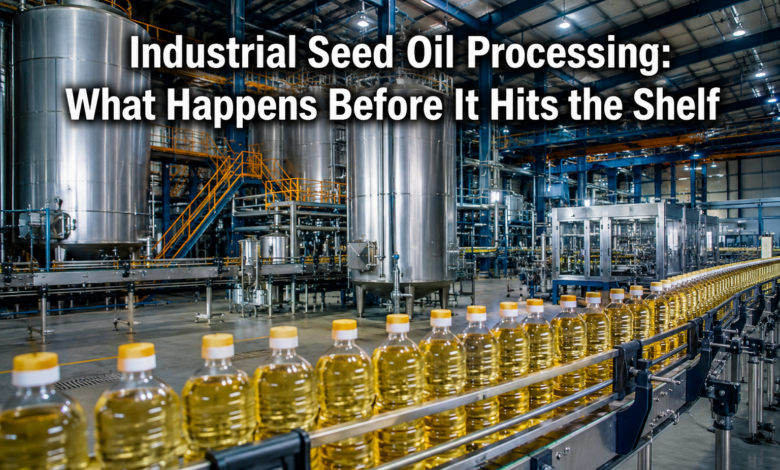
Most people grab a bottle of vegetable oil without thinking twice about how those soybeans, corn kernels, or sunflower seeds became the clear, odourless liquid on the shelf. But industrial seed oil processing involves a complex series of chemical and mechanical steps that fundamentally change the oil’s structure and nutritional profile. Let’s keep this practical and walk through exactly what happens from seed to bottle.
Understanding industrial seed oil processing matters because the methods used can create compounds that weren’t in the original seed, remove beneficial nutrients, and produce oils that behave differently in your body than their whole-food sources. The evidence suggests that how we process oils affects their impact on inflammation, oxidation, and overall health. This article is part of our Modern Food Processing & Gut Chemistry cluster, where we explore how modern food processing affects gut health and nutrient quality.

In this article
- What Counts as an Industrial Seed Oil
- Step 1: Extraction — Hexane and Mechanical Pressing
- Step 2: Refining — Removing Free Fatty Acids
- Step 3: Bleaching — Colour and Odour Removal
- Step 4: Deodorisation — High Heat Creates Trans Fats
- Cold-Pressed vs Expeller-Pressed vs Refined: What the Labels Actually Mean
- Practical Alternatives for Cooking
Key Takeaways
- Industrial seed oil processing uses hexane extraction, caustic refining, bleaching, and high-heat deodorisation to create shelf-stable oils
- Each processing step removes natural compounds and can create new ones, including trans fats during deodorisation
- Cold-pressed and expeller-pressed oils undergo minimal processing but have shorter shelf lives and different cooking properties
- Olive oil versus seed oils shows measurable differences in health outcomes
- Simple alternatives like butter, coconut oil, and true cold-pressed oils work for most cooking needs
What Counts as an Industrial Seed Oil
Industrial seed oils include soybean, corn, canola, sunflower, safflower, cottonseed, and rice bran oils. These differ from fruit oils like olive and avocado because seeds contain much less oil by weight, making extraction more challenging and expensive without industrial methods.
A soybean contains about 20% oil, compared to olives at 30-50%. This difference drives the processing intensity. You can press an olive and get usable oil. Try the same with a soybean and you’ll extract very little oil while leaving most of it trapped in the seed matrix.
The stronger evidence points to processing methods, not just oil type, as the key factor in health outcomes. How processed food affects gut health demonstrates that processing intensity correlates with inflammatory potential across food categories.
Industrial processing aims to maximize oil yield, extend shelf life, and create neutral-tasting products suitable for mass food production. Each step serves a commercial purpose but changes the oil’s chemical composition.
Step 1: Extraction — Hexane and Mechanical Pressing
Industrial seed oil processing typically starts with hexane extraction. Hexane is a petroleum-derived solvent that dissolves oil from crushed seeds with remarkable efficiency, extracting 95-99% of available oil compared to 60-70% from mechanical pressing alone.
The process works by flooding crushed seeds with hexane in large rotating drums. The hexane dissolves the oil, creating a hexane-oil mixture that gets separated through distillation. Manufacturers then evaporate the hexane for reuse, leaving behind crude oil.
Here’s the real issue: hexane residues remain in the final product. FDA regulations allow up to 25 parts per million of hexane in finished oils, though most contain 0.8-1.0 ppm. While these levels are considered safe for consumption, you’re consuming trace amounts of a neurotoxic solvent that was never part of the original seed.
Some facilities use mechanical pressing first, then hexane extraction on the remaining seed cake to maximize yield. This hybrid approach reduces hexane use but doesn’t eliminate it from the final product.
The alternative is pure mechanical pressing (expeller pressing), which uses friction and pressure to squeeze oil from seeds. This method extracts less oil and generates more heat, but avoids chemical solvents entirely.
Step 2: Refining — Removing Free Fatty Acids
Crude oil from extraction contains free fatty acids, phospholipids, proteins, and other compounds that cause rancidity and off-flavors. Industrial refining removes these through chemical treatment with caustic soda (sodium hydroxide).
The caustic refining process neutralizes free fatty acids by converting them to soap, which then gets separated from the oil. This step removes 2-5% of the original oil along with naturally occurring compounds like lecithin, sterols, and tocopherols (vitamin E).
What matters most is this: refining removes both harmful compounds that cause rancidity and beneficial compounds that provide antioxidant protection. The oil becomes more stable but nutritionally depleted compared to the crude version.
Some manufacturers use physical refining instead, which removes free fatty acids through steam distillation at high temperatures. This avoids caustic chemicals but requires even higher heat, potentially creating different degradation products.
The refining step explains why industrial seed oils have such long shelf lives compared to unrefined oils. You’re trading natural preservation compounds for chemical stability.
Step 3: Bleaching — Colour and Odour Removal
Bleaching removes color compounds, residual soap from refining, and trace metals that could catalyze oxidation. Despite the name, this process doesn’t use chlorine bleach but rather activated clay or carbon that adsorbs unwanted compounds.
The oil gets heated to 90-120°C and mixed with bleaching clay for 15-30 minutes. The clay particles bind to color compounds, chlorophyll, and oxidation products, then get filtered out along with the absorbed materials.
This step removes more beneficial compounds, including carotenoids (which give natural color) and additional tocopherols. The oil becomes lighter in color and more neutral in taste, but loses antioxidant compounds that were protecting it from oxidation.
From a practical point of view, bleaching creates oils that look and taste consistent batch after batch, which matters for food manufacturers but removes compounds that might benefit your health. Foods that are anti-inflammatory often contain the same pigments and antioxidants that get removed during bleaching.
Step 4: Deodorisation — High Heat Creates Trans Fats
Deodorisation removes volatile compounds that cause off-flavors and odors through steam distillation at 240-260°C (464-500°F) under vacuum. This creates the neutral taste that makes industrial seed oils suitable for processed foods.
Here’s where things get concerning. These extreme temperatures cause some cis fatty acids to convert to trans fatty acids. While manufacturers have reduced trans fat formation compared to older methods, complete elimination is impossible at deodorisation temperatures.
The process also removes remaining tocopherols, sterols, and other heat-sensitive compounds. Many manufacturers add synthetic antioxidants like BHT or BHA after deodorisation to replace the natural antioxidants they removed.
In real-world terms, deodorisation creates oils that taste like nothing and last forever on shelves, but the high-heat treatment fundamentally alters the oil’s molecular structure. Some of these changes persist even when you cook with the oil at lower temperatures.
The main takeaway is that deodorisation represents the most chemically intensive step in industrial seed oil processing, creating the biggest departure from anything resembling the original seed.
Cold-Pressed vs Expeller-Pressed vs Refined: What the Labels Actually Mean
Understanding oil processing labels helps you choose products that align with your health priorities, though the terminology can be misleading.
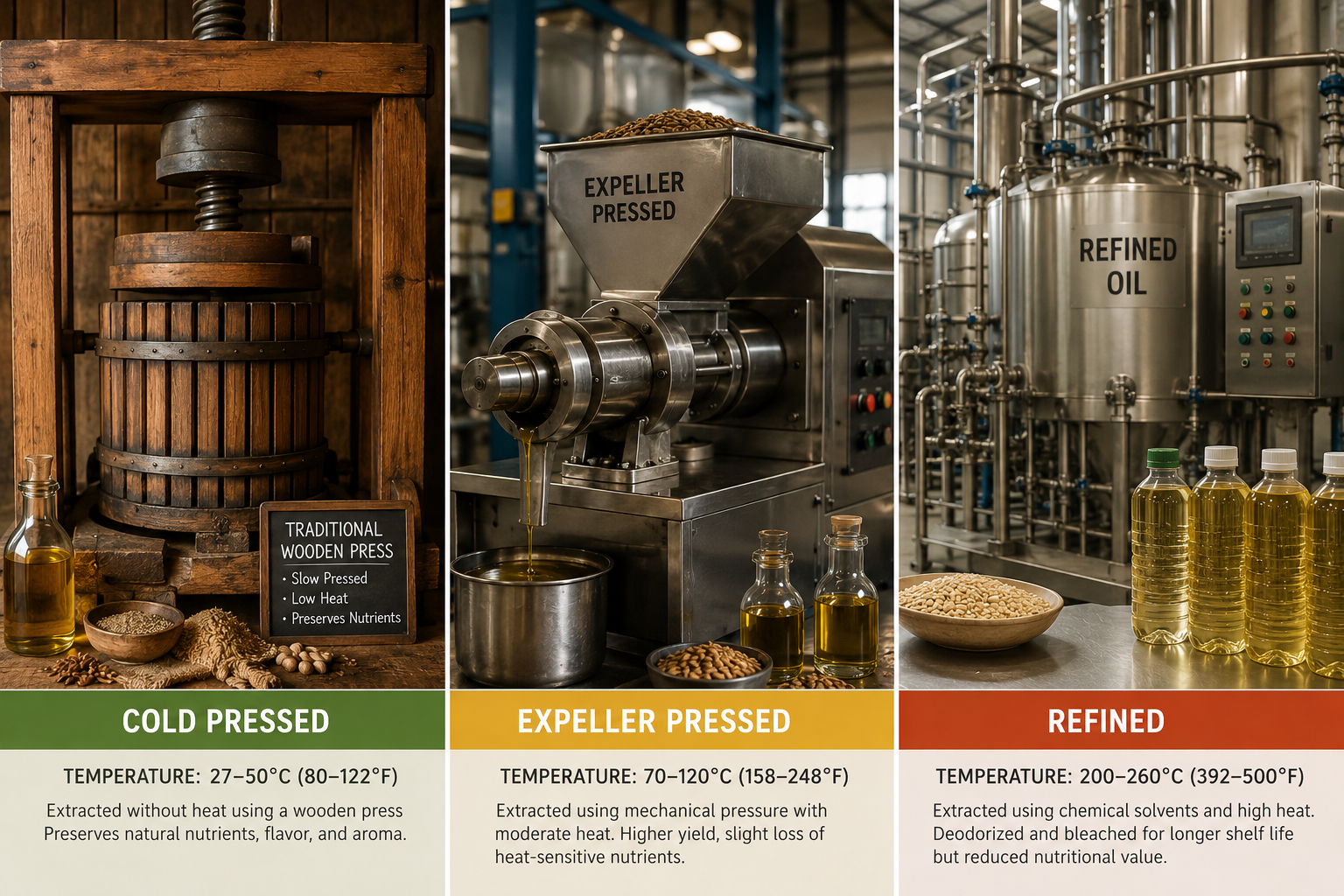
Cold-pressed means the oil was extracted mechanically without external heat, keeping temperatures below 80°F (27°C). This preserves heat-sensitive compounds but works efficiently only with high-oil seeds like sunflower or safflower. True cold-pressed oils retain natural flavors, colors, and antioxidants.
Expeller-pressed uses mechanical extraction but allows higher temperatures from friction, typically reaching 140-200°F (60-93°C). This extracts more oil than cold-pressing but still avoids chemical solvents. The heat can damage some beneficial compounds while preserving others.
Refined oils have undergone the full industrial processing sequence: extraction (often with hexane), refining, bleaching, and deodorisation. These oils are chemically and nutritionally different from their crude counterparts.
The labeling gets tricky because “expeller-pressed” oils can still be refined afterward. Look for “unrefined” or “crude” on labels if you want minimally processed oils. Ultra-processed foods, emulsifiers and microplastics explains how processing intensity affects food quality beyond just oils.
Keep it simple and consistent: if you choose seed oils, unrefined expeller-pressed versions retain more of their original nutritional profile, though they’ll have stronger flavors and shorter shelf lives.
Practical Alternatives for Cooking
Based on current evidence, several oils work well for different cooking applications without requiring industrial processing methods.
For high-heat cooking (searing, frying): Refined coconut oil, ghee, or tallow handle high temperatures without breaking down. These saturated fats remain stable at cooking temperatures and don’t require industrial processing to be shelf-stable.
For medium-heat cooking (sautéing, roasting): Butter, unrefined coconut oil, or true cold-pressed avocado oil work well. Watch temperatures with butter to avoid burning the milk solids.
For low-heat cooking and dressings: Extra virgin olive oil, unrefined avocado oil, or cold-pressed nut oils provide flavor and retain beneficial compounds. These oils taste like their source ingredients, which tells you they haven’t been stripped of natural compounds.
The simplest way to look at it is this: use oils that taste like what they came from and don’t require industrial facilities to produce. A sensible starting point is keeping 2-3 different oils for different cooking needs rather than relying on one neutral-tasting industrial oil for everything.
Context matters for cooking applications. How traditional food preparation reduces antinutrients shows that traditional cooking methods often work better than modern shortcuts, including oil choices.
📂 Modern Food Processing & Gut Chemistry
This article is part of the APH cluster. Use the links below to move between the pillar and child articles.
- Read the pillar: Modern Food Processing and Gut Health: How Processed Food Affects Gut Chemistry
- → Ultra-Processed Foods, Emulsifiers, and Microplastics: What They Really Do to Your Gut
- → Fermented Foods vs Probiotics vs Postbiotics: What Actually Survives Digestion?
- → Resistant Starch and Prebiotic Fiber: How Carbs Feed Your Gut Microbiome
- → The Hidden Dangers of Reusing Cooking Oil: What You Need to Know This August 2026
- → Beef Tallow vs. Seed Oil: Which is Healthier for Cooking in 2026?
- YOU ARE HERE Industrial Seed Oil Processing: What Happens Before It Hits the Shelf
- → How Food Additives Affect Your Gut Microbiome Health
- → What Modern Processing Does to Food Proteins and Starches
- → Food Preservatives Health Effects: What’s Really in Your Food and Why It Matters
- → Major US Study Links Ultra-Processed Foods to Heart Attack Risk in July 2026
FAQ
What’s wrong with a little hexane residue in oil?
The numbers matter here. While 1 ppm hexane won’t cause acute toxicity, you’re consuming a neurotoxic solvent daily that accumulates over time. No long-term studies exist on chronic low-level hexane consumption through food, and the precautionary principle suggests avoiding unnecessary chemical exposures when alternatives exist.
Are expeller-pressed seed oils actually healthier than refined ones?
The evidence suggests yes, but with caveats. Expeller-pressed oils retain more natural antioxidants and avoid chemical processing, but they’re still high in omega-6 fatty acids. The processing method matters, but so does the overall fatty acid profile and how much you consume.
Why do restaurants use industrial seed oils instead of alternatives?
Cost and functionality drive restaurant choices. Industrial seed oils cost less, have neutral flavors that don’t interfere with recipes, and handle repeated high-heat use without breaking down visibly. Restaurant economics prioritize these factors over potential health considerations.
Can I trust “cold-pressed” labels on seed oils?
Be careful with that claim. True cold-pressing works well for high-oil seeds but becomes economically impractical for low-oil seeds like soybeans. If you see “cold-pressed soybean oil” at a low price, question whether it’s actually cold-pressed throughout the entire process.
Do the health risks of industrial seed oils outweigh their benefits?
The stronger evidence points to industrial processing creating more problems than the oils solve. These oils provide calories and some vitamin E, but you can get both from less processed sources. The combination of chemical processing, high omega-6 content, and oxidation potential suggests the risks outweigh benefits for most people.
What about organic industrial seed oils?
Organic certification addresses pesticide residues and GMO concerns but doesn’t change the processing methods. Organic soybean oil still undergoes hexane extraction, refining, bleaching, and deodorisation. The processing creates the same chemical changes regardless of organic status.
Conclusion
Industrial seed oil processing transforms seeds into shelf-stable, neutral-tasting oils through hexane extraction, caustic refining, bleaching, and high-heat deodorisation. Each step removes beneficial compounds while potentially creating harmful ones, resulting in products that bear little resemblance to their original sources.
The evidence suggests that processing intensity matters more than specific oil types for health outcomes. While industrial seed oils serve commercial food production needs, they’re not necessary for home cooking where simpler alternatives work effectively.
Start with what gives the biggest return: replace industrial seed oils with minimally processed alternatives like butter, coconut oil, or true cold-pressed oils. Focus on oils that taste like their sources and don’t require industrial facilities to produce.
Truth over hype means acknowledging that perfect oils don’t exist, but some choices align better with human biology than others. The basics still do the heavy lifting: choose less processed options when practical, understand what you’re consuming, and make informed decisions based on evidence rather than marketing claims.
About the author
Dave James is a health researcher and writer specialising in evidence-based nutrition, exercise, and longevity. He founded All Perfect Health to provide clear, practical health guidance rooted in current research and real-world experience.