
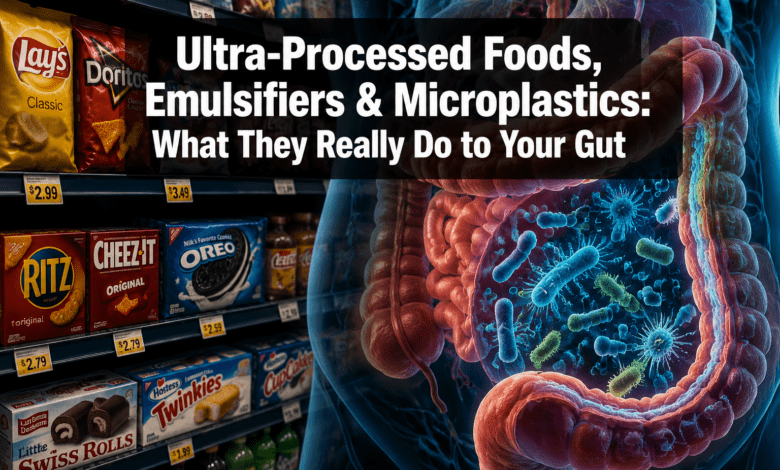
Ultra-Processed Foods, Emulsifiers, and Microplastics: What They Really Do to Your Gut
Last updated: May 16, 2026
Quick Answer: Ultra-processed foods, certain emulsifiers, and microplastics each interact with the gut in different ways — and the evidence behind them is at different stages. UPF-heavy diets are consistently linked to lower microbial diversity and worse health outcomes in large human studies. Some emulsifiers show concerning effects in animal and early human trials. Microplastics are a legitimate emerging concern, but human data is still limited. The practical message is the same across all three: make fiber-rich, minimally processed foods your default, and reduce unnecessary exposure where it is easy to do so.
Key Takeaways
- Ultra-processed foods make up roughly 55% of calories in the average U.S. diet, and the evidence linking high UPF intake to gut dysbiosis, inflammation, and chronic disease is among the strongest in current nutrition research. [2]
- The gut problem with UPFs is not one ingredient. It is the combination of low fiber, refined starches, fast digestion, and multiple additives — plus what UPFs replace in the diet.
- Some emulsifiers — especially carboxymethylcellulose (CMC) and polysorbate 80 — have shown measurable effects on gut microbiota and the mucus layer in animal studies and early human trials, but the evidence is still developing and not all emulsifiers behave the same way. [2][6]
- Microplastics have been detected in human gut tissue and feces. Lab and animal studies suggest they may alter microbial balance and promote gut inflammation, but direct human causality evidence is not yet established. [1]
- “Leaky gut” is a real biological concept (increased intestinal permeability), but it is not caused by every additive, and it should not be used as a catch-all explanation for every symptom.
- Reading food labels for gut health is simpler than most people think: check fiber first, look for whole-food ingredients near the top, and notice when a product combines refined starches, sweeteners, multiple gums, and flavoring agents with little else.
- The goal is not perfect avoidance. It is making fiber-rich, minimally processed foods the default — and treating UPFs as occasional rather than foundational.
- Persistent or severe digestive symptoms — blood in stool, unexplained weight loss, severe abdominal pain, or new symptoms after age 50 — need clinical evaluation, not a diet article.
In this guide
- Why Ultra-Processed Foods Are a Gut Health Issue in the First Place
- What Ultra-Processed Foods May Do to the Gut Microbiome
- Emulsifiers and Gut Health: The Additives That Make Processed Foods Smooth, Creamy, and Stable
- Microplastics and the Gut: What We Know, What We Suspect, and What Is Still Unclear
- The Gut Barrier, Mucus Layer, and Inflammation — Without the Hype
- How to Read a Food Label for Gut Health Without Getting Obsessive
- Practical Ways to Reduce Gut Stress From Ultra-Processed Foods
- So, Should You Avoid Ultra-Processed Foods, Emulsifiers, and Microplastics Completely?
- Frequently Asked Questions
- Conclusion
Why Ultra-Processed Foods Are a Gut Health Issue in the First Place
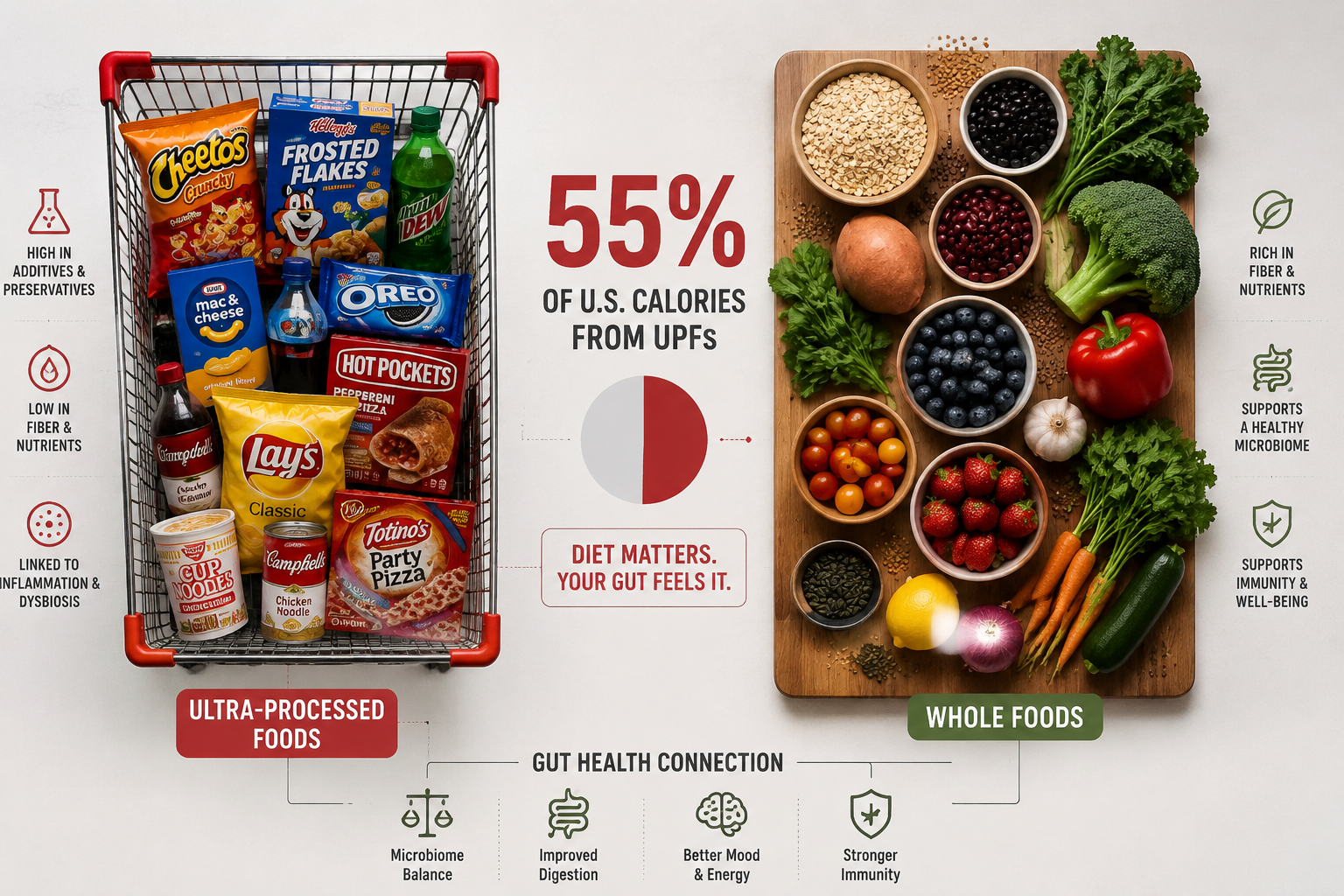
Ultra-processed foods are a gut health issue primarily because of what they do to the overall diet pattern — not because any single ingredient is uniquely toxic. When more than half of your daily calories come from products that are low in fiber, high in refined ingredients, and built around additives for texture and shelf life, the cumulative effect on gut bacteria and the gut barrier adds up.
Ultra-processed foods are now a normal part of the U.S. diet
During August 2021 through August 2023, ultra-processed foods made up 55.0% of total calories for Americans age 1 and older. Adults averaged 53.0%; young people averaged 61.9%. [2] The top sources included packaged sandwiches and burgers, sweet bakery products, savory snacks, and sweetened beverages.
That is not a fringe dietary pattern. For many households, UPFs are the default — which is exactly why repeated, daily exposure matters more than any single snack.
The problem is usually the pattern, not one ingredient
Let’s keep this practical. Not all processed foods are a problem. Yogurt, canned beans, frozen vegetables, rolled oats, and tinned fish are all processed to some degree — and they can actively support gut health. The NOVA classification system defines ultra-processed foods specifically as industrial formulations that go well beyond basic preservation: they typically contain ingredients not found in a home kitchen, including emulsifiers, flavor enhancers, colorants, and texture modifiers. [2]
What makes UPFs a gut concern is that they tend to combine several features at once:
- Low intact fiber — which means less fuel for beneficial gut bacteria
- Refined starches and sugars — which are absorbed quickly, leaving little for the colon
- Soft textures and fast eating speed — which can affect satiety and digestion
- Multiple additives — including emulsifiers, gums, sweeteners, and colorants
- Heavy packaging and industrial processing — which introduces potential microplastic exposure
This article focuses specifically on the additive and contaminant side of that picture. For the broader story on fiber loss, short-chain fatty acids, and the food matrix, the pillar article on modern food processing and gut health covers that ground in detail.
What Ultra-Processed Foods May Do to the Gut Microbiome
The clearest gut-health concern with UPF-heavy diets is their effect on the gut microbiome — the community of trillions of bacteria, fungi, and other microbes living in the digestive tract. Based on current evidence, that effect is not positive.
They can crowd out the foods your gut bacteria use as fuel
Gut microbes depend heavily on fermentable fibers and resistant starches — the kinds found in beans, oats, vegetables, whole grains, and cooked-and-cooled potatoes or rice. When UPFs replace those foods, the bacteria that ferment fiber have less to work with. The result is reduced production of short-chain fatty acids (SCFAs) like butyrate, acetate, and propionate — compounds that feed the gut lining, regulate immune function, and help maintain the mucus layer.
The issue, in plain English, is not only what UPFs contain. It is what they replace.
They may reduce microbial diversity and shift microbial activity
Microbial diversity means having a broad, resilient community of different bacterial species — think of it as the difference between a monoculture crop field and a mixed forest. More diversity generally means a more adaptable, stable gut environment.
A 2024 review in Nutrients reported consistent associations between UPF-rich diets and lower microbial diversity, reduced populations of beneficial species like Akkermansia muciniphila and Faecalibacterium prausnitzii, and a rise in pro-inflammatory bacterial taxa. [2] A separate 2024 review in Nature Reviews Gastroenterology & Hepatology found strong observational evidence linking higher UPF intake with inflammatory bowel disease, irritable bowel syndrome, colorectal cancer, and all-cause mortality. [5]
That said, I want to be careful with the language here. These are associations from large cohort studies, not proof that UPFs directly cause these conditions in every individual. Proving causality in human nutrition is genuinely difficult, and the researchers themselves are clear about that. [5]
They can change what reaches the colon
Refined foods tend to be absorbed earlier in the digestive process, leaving less fermentable material for the bacteria in the colon. A whole apple delivers fiber, pectin, and plant cell structures that reach the colon largely intact. Apple juice delivers sugar and water — most of it absorbed in the small intestine. The same logic applies to rolled oats versus sweetened instant oat cereal, or to beans and rice versus refined snack crackers.
This is not a minor distinction. The colon is where most microbial fermentation happens. What reaches it — and in what form — shapes the entire downstream ecology.
Emulsifiers and Gut Health: The Additives That Make Processed Foods Smooth, Creamy, and Stable
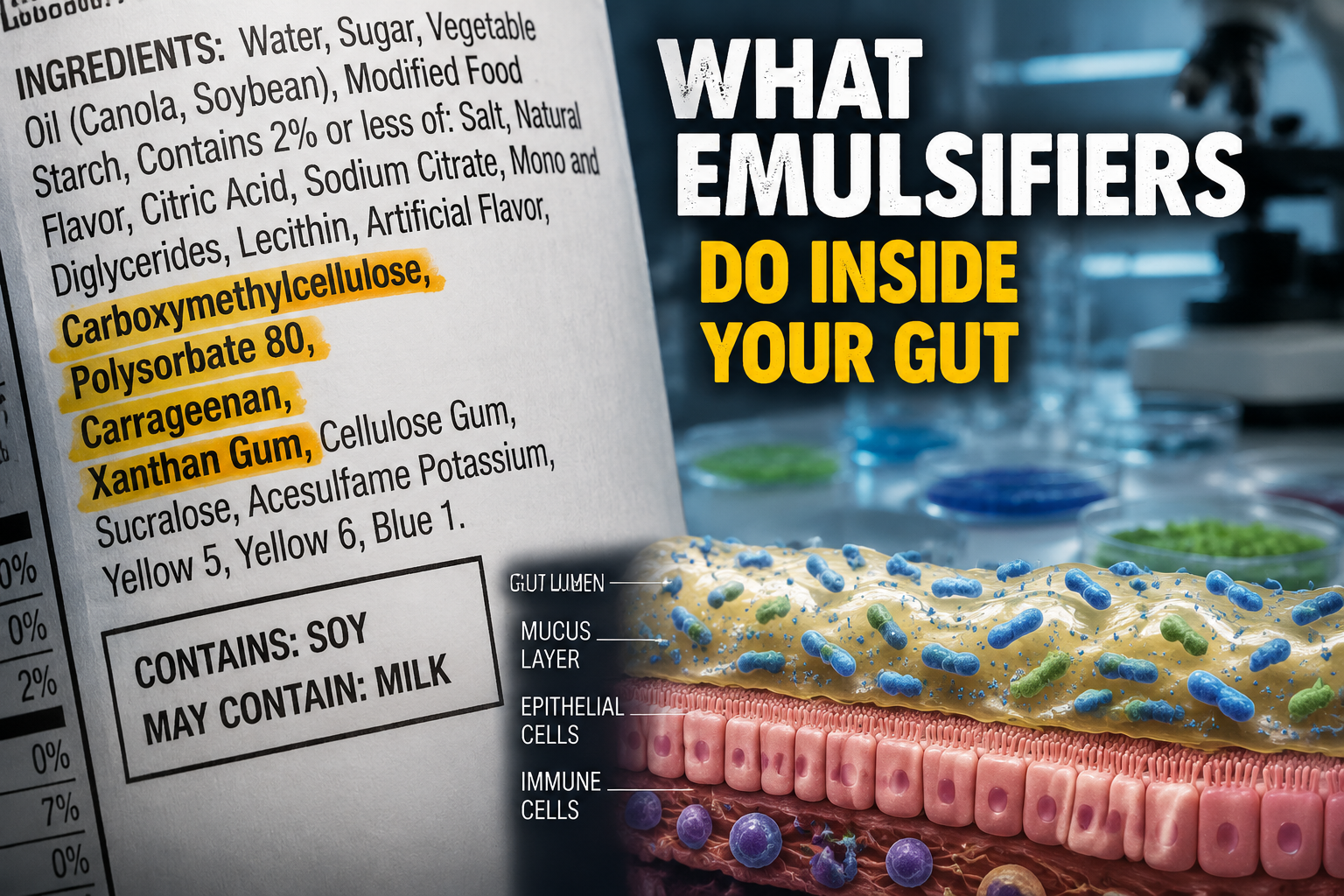
Emulsifiers are among the most widely used food additives in ultra-processed foods, and they are getting increasing attention from gut researchers. The question of whether emulsifiers harm the gut microbiome is a fair one — and the honest answer is: some may, under some conditions, in some people. The evidence is real but still developing.
What emulsifiers actually do in food
In plain English, emulsifiers are ingredients that help oil and water stay mixed. Without them, salad dressing separates, ice cream becomes icy, and packaged bread goes stale faster. They are functional ingredients that solve real manufacturing problems.
You will find them in:
- Ice cream and frozen desserts
- Packaged and sliced bread
- Salad dressings and mayonnaise
- Plant-based milks
- Sauces and gravies
- Snack bars and protein bars
- Creamy soups and dips
Common names on labels include:
| Label Name | Common Use |
|---|---|
| Carboxymethylcellulose (CMC) / Cellulose gum | Ice cream, sauces, dressings |
| Polysorbate 80 (P80) | Ice cream, baked goods, pickles |
| Carrageenan | Plant milks, deli meats, infant formula |
| Mono- and diglycerides | Bread, margarine, peanut butter |
| Soy lecithin / Sunflower lecithin | Chocolate, baked goods, supplements |
| Xanthan gum | Gluten-free products, sauces, dressings |
| Guar gum | Ice cream, soups, gluten-free baking |
| Gellan gum | Plant milks, desserts |
Emulsifiers are not automatically harmful, and some — like lecithin from eggs or soy — occur in natural foods and have a long history of use. The concern is more specific than “all emulsifiers are bad.”
Why gut researchers are paying attention to emulsifiers
Here is the real issue: several emulsifiers, when tested in animal models and early human trials, appear to interact with the gut in ways that go beyond simple digestion.
The proposed mechanisms include:
- Changes in gut microbiota composition — including reductions in beneficial species
- Reduced SCFA production — less butyrate and acetate from bacterial fermentation
- Effects on the mucus layer — some emulsifiers may thin or destabilize the protective mucus that lines the gut wall
- Changes in intestinal permeability — potentially allowing bacterial components to cross the gut barrier
- Immune and inflammatory signaling — including increased lipopolysaccharide (LPS) and flagellin, markers of bacterial translocation [2]
A randomized controlled feeding study of carboxymethylcellulose in healthy adults found measurable changes in gut microbiota composition and the fecal metabolome — including reductions in SCFAs — along with increased post-meal abdominal discomfort. [6] This was one of the first human trials to show that a single approved emulsifier, consumed at levels similar to normal dietary exposure, can disturb gut ecology in otherwise healthy people.
In a separate clinical context, a trial in Crohn’s disease patients found that those assigned to an emulsifier-restricted diet were approximately three times more likely to see symptom improvement compared with those eating a typical diet containing common emulsifiers. [3] That is a meaningful signal, even if it is not yet definitive.
A 2025 BBC report also noted that in a weight-loss trial comparing a high-UPF diet with a minimally processed diet, weight loss was similar between groups — but the low-UPF group showed greater microbial diversity and fewer gut symptoms. [7]
“Current additive approvals do not require evaluation of microbiome effects, despite emerging evidence of harm.” — Experts quoted in BBC Future, 2026 [7]
Not all emulsifiers should be treated the same
This is where hype gets in the way of useful thinking. “Emulsifier” is a category, not a single substance. Treating every gum, lecithin, and synthetic stabilizer as equally dangerous is not supported by the evidence.
The stronger evidence points to synthetic emulsifiers — particularly CMC and polysorbate 80 — as the ones with the most consistent signals in preclinical and early human work. [2][6] Lecithins from eggs or soy have a much longer history of use and a different risk profile. Gums like xanthan and guar are being studied but the picture is less clear.
Dose, frequency, food context, and individual microbiome differences all likely matter. A person with IBD or IBS may be more sensitive to these additives than someone with a diverse, fiber-rich diet and no underlying gut condition. [8]
The practical message: reducing reliance on emulsifier-heavy UPFs makes sense. Panicking about a small amount of xanthan gum in an otherwise healthy meal does not.
Microplastics and the Gut: What We Know, What We Suspect, and What Is Still Unclear
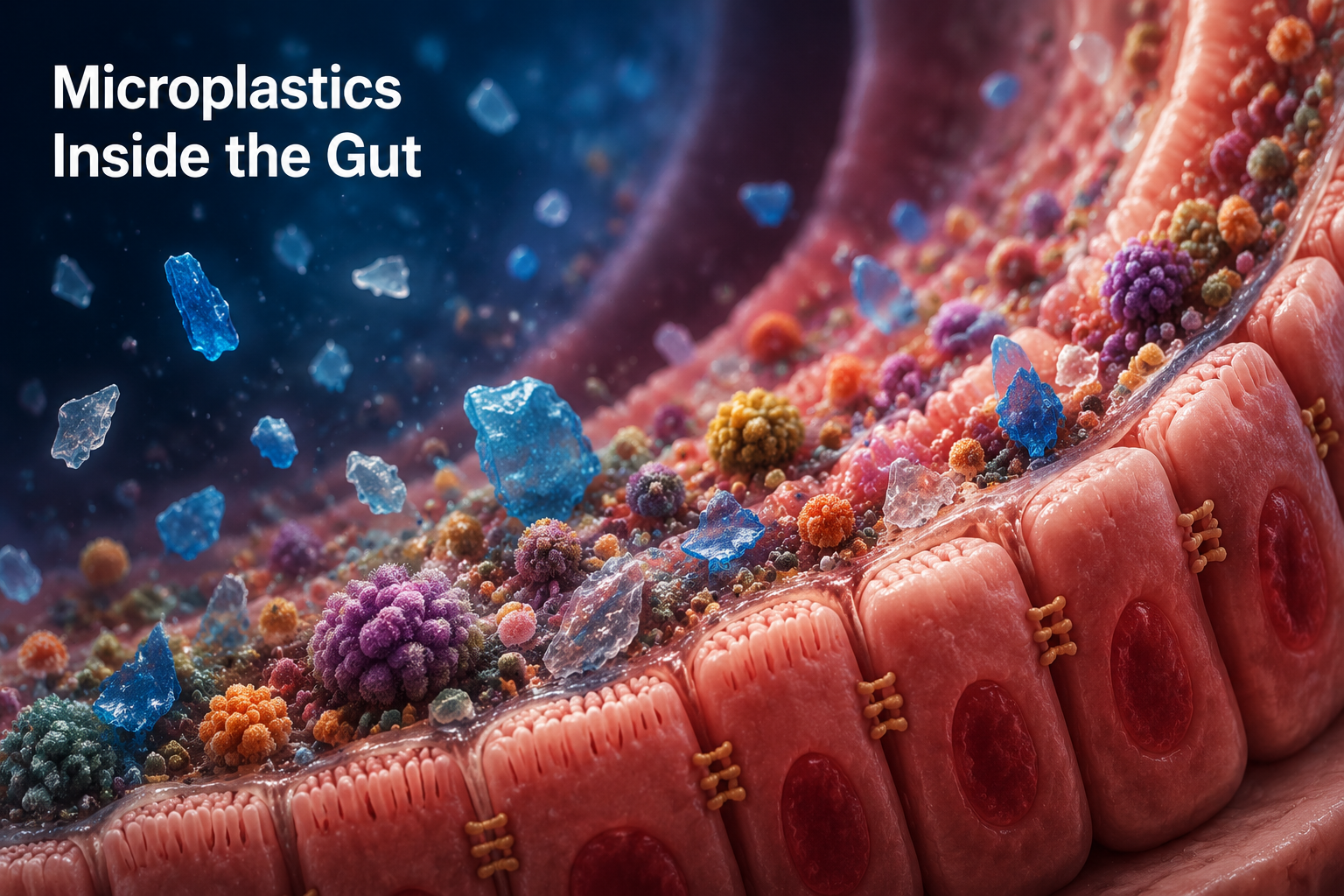
Microplastics are the newer, less-settled part of this conversation. The concern is real and worth taking seriously — but the evidence is still at an earlier stage than the UPF and emulsifier data. Let’s be precise about what is known.
How microplastics may get into food
Microplastics are plastic particles smaller than 5 millimeters. Nanoplastics are even smaller — sometimes invisible to the naked eye. They enter food through multiple routes:
- Food packaging — plastic leaching into food, especially with heat or acidic foods
- Plastic processing equipment — used throughout industrial food manufacturing
- Bottled water and drinks — one of the more studied exposure routes
- Environmental contamination — in seafood, crops, and drinking water
- Plastic food containers — especially when heated
UPFs are not the only source of microplastic exposure, but they may increase it. They typically involve more packaging layers, more industrial processing steps, and longer supply chains than minimally processed foods. [1]
What microplastics may do in the gut
Microplastics have now been detected in human feces and intestinal tissues — which confirms exposure, even if it does not tell us what the long-term consequences are. [1]
In animal and lab studies, the mechanisms being investigated include:
- Altered gut microbial composition — shifts in the balance of bacterial species
- Impaired SCFA production — less fermentation output from gut bacteria
- Interaction with the mucus layer and epithelial surface — potentially affecting bacterial adherence and immune signaling
- Carrying chemical additives — phthalates, bisphenols, and other plastic-associated compounds that may have their own biological effects [1][5]
- Oxidative stress and inflammation in gut tissue
The numbers matter here: most animal studies use microplastic concentrations that may be higher than typical human dietary exposure. That does not mean the concern is wrong — it means we should not assume that animal findings translate directly to human outcomes at real-world doses. [5]
Why the microplastics evidence needs careful wording
I would be careful with strong claims in this area. Human research is limited compared with animal and in vitro work. Measuring microplastic exposure accurately is technically difficult. Different plastic types, particle sizes, and chemical compositions may behave very differently in the gut. [1]
That said, the concern is not invented. It is a legitimate emerging research area, and several gastroenterology reviews have called for better regulatory assessment of these particles — not just for acute toxicity, but for their effects on the gut microbiome and mucosal immunity. [5]
The practical advice overlaps with general gut-health guidance anyway: eat more minimally processed foods, reduce unnecessary plastic contact with food, and avoid heating food in plastic containers. That is sensible regardless of how the microplastics research develops.
The Gut Barrier, Mucus Layer, and Inflammation — Without the Hype
The phrase “leaky gut” gets used a lot in health content, sometimes carefully and sometimes not. Here is what the science actually says, and what it does not say.
What the gut barrier actually does
The gut barrier is not a simple wall. It is a layered, dynamic system that selectively allows nutrients to pass while keeping harmful substances and bacteria out. It includes:
- Epithelial cells — the single-cell layer lining the intestine
- Tight junctions — protein structures that seal the gaps between cells
- The mucus layer — a gel-like coating that physically separates gut contents from the lining
- Immune cells — patrolling the tissue beneath the epithelium
- The gut microbiome itself — which actively supports barrier integrity
The mucus layer is particularly relevant here. It is produced continuously by goblet cells, and it depends partly on microbial signals and SCFA production to stay healthy. When the mucus layer thins or becomes disrupted, bacteria can get closer to the epithelial surface — which can trigger immune responses and low-grade inflammation. [2]
How UPFs, emulsifiers, and microplastics may interact with the barrier
Based on current evidence, the connections work roughly like this:
- UPF-heavy diets are often low in the fermentable fibers that support SCFA production and mucus maintenance
- Certain emulsifiers (especially CMC and P80) are being studied for their ability to thin the mucus layer, increase bacterial translocation, and upregulate inflammatory markers like LPS [2]
- Microplastics are being studied for effects on microbial composition, tight junction integrity, and immune pathway activation [1][5]
These are plausible mechanisms under active investigation — not settled claims that apply to every person or every additive. Context matters. A person eating a fiber-rich, varied diet who occasionally consumes a product with xanthan gum is in a very different position than someone whose entire diet is built around UPFs.
What not to claim
Let’s call it what it is: a lot of health content overstates this evidence. UPFs do not “destroy the gut lining.” Not every emulsifier causes leaky gut. Avoiding additives will not cure IBS, IBD, bloating, autoimmune disease, fatigue, or anxiety.
Medical escalation note: If you have blood in your stool, unexplained weight loss, severe or persistent abdominal pain, chronic diarrhea, or new digestive symptoms after age 50, please talk to a clinician. These are not situations to manage with a dietary article.
How to Read a Food Label for Gut Health Without Getting Obsessive
Reading food labels for gut health does not require a biochemistry degree. A few practical checks cover most of what matters.
Start with fiber before worrying about every additive
The single most useful number on a nutrition label for gut health is fiber per serving. A food that delivers 5 or more grams of fiber per serving, with whole-food ingredients near the top of the list, is in a different category from a low-fiber product built around refined starch and multiple texture additives.
A high-fiber packaged food with one stabilizer is not the same as a low-fiber dessert with refined flour, added sugars, multiple emulsifiers, flavoring agents, and colorants. Treating them the same is a mistake.
A sensible starting point is this: check fiber first, then look at the first three to five ingredients. If you see whole grains, legumes, nuts, seeds, or vegetables near the top, that is a better sign than seeing refined flour, sugar, or oil as the dominant ingredients.
Look for clusters of ultra-processing signs
No single ingredient makes a food ultra-processed. It is the combination that matters. On a label, watch for these patterns:
- Refined starch + added sugar + oils + two or more emulsifiers
- Multiple gums or thickeners + artificial or “natural” flavors + sweeteners
- Protein isolates + syrups + texture additives with no recognizable whole food
- Long ingredient lists where fewer than half the items are recognizable food
Ingredient list length alone is an imperfect guide — some complex recipes have long lists too. But when a short, cheap snack has 25 ingredients and almost no fiber, that is a useful signal.
Use the “what is this replacing?” test
From a practical point of view, the question that matters most is what this food is replacing in your diet.
- If a packaged protein bar replaces a handful of nuts and a piece of fruit most days, that is worth noticing.
- If a sweetened cereal replaces oats with berries most mornings, that matters more than the cereal itself.
- If a packaged product is an occasional convenience in an otherwise fiber-rich, varied diet, the concern is much lower.
The simplest way to look at it is this: the more often a UPF replaces a whole or minimally processed food, the more it matters.
Practical Ways to Reduce Gut Stress From Ultra-Processed Foods
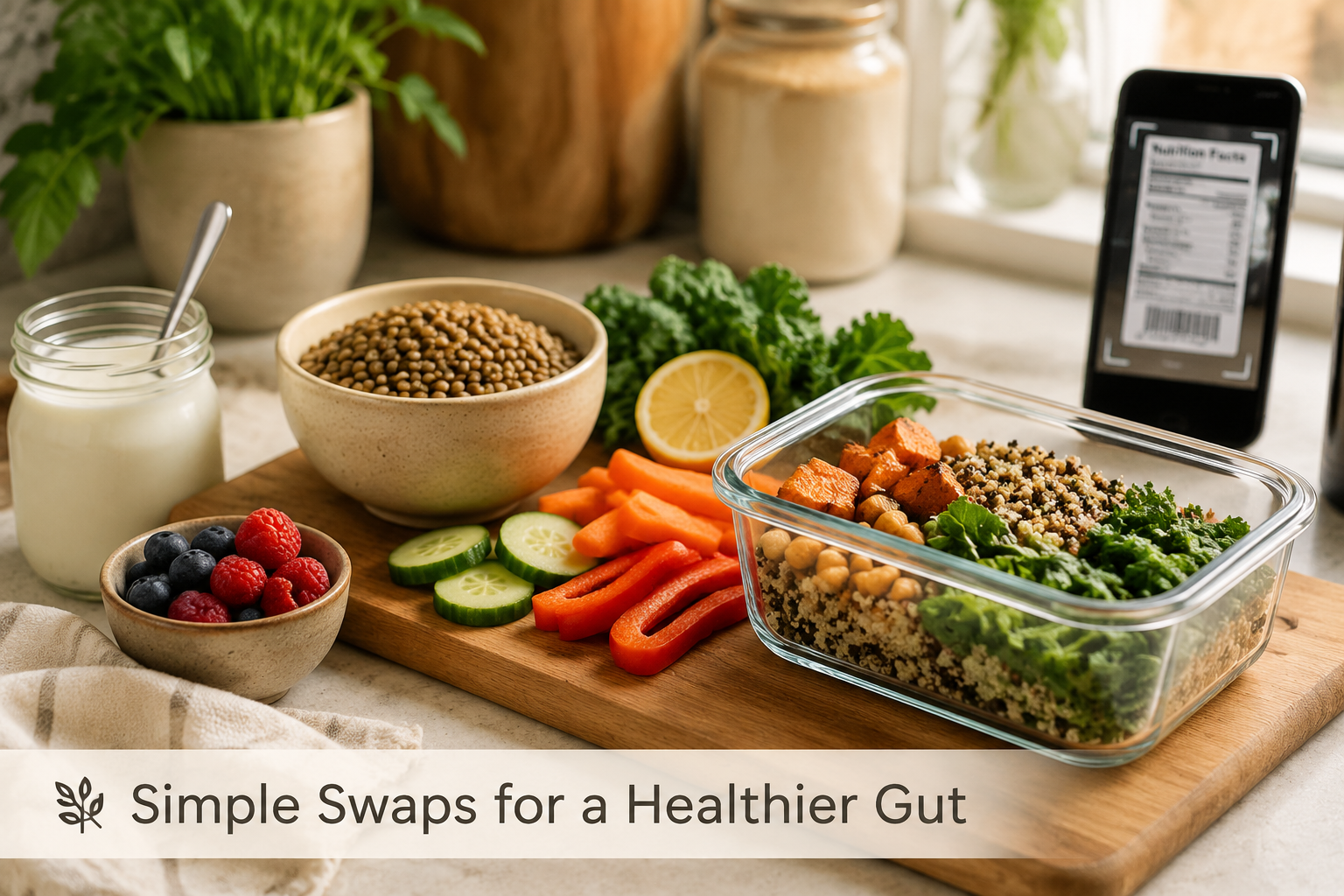
The basics still do the heavy lifting here. There is no magic in it. Start with what gives the biggest return.
Add gut-supportive foods before subtracting everything
Rather than starting with a list of things to eliminate, start by adding foods that support the gut microbiome. When fiber-rich foods take up more space in your diet, UPFs naturally take up less.
Foods worth adding regularly:
- Oats — soluble fiber, beta-glucan, easy to prepare
- Beans and lentils — among the best fiber sources available, cheap, versatile
- Berries — polyphenols and fiber, good for microbial diversity
- Vegetables of varied colors — different fibers feed different bacterial species
- Nuts and seeds — fiber, polyphenols, and healthy fats
- Fermented foods (if tolerated) — yogurt, kefir, kimchi, sauerkraut
- Cooked and cooled potatoes or rice — resistant starch that feeds beneficial bacteria
Swap the highest-exposure habits first
Keep it simple and consistent. Focus on the foods you eat most often, not the ones you eat occasionally.
| Current habit | Gut-friendlier alternative |
|---|---|
| Daily sweetened cereal | Rolled oats with fruit and seeds |
| Packaged snack bars most days | Nuts, fruit, yogurt, or hummus |
| Sugary drinks regularly | Water, sparkling water, unsweetened tea |
| Packaged desserts most nights | Yogurt with berries or homemade options |
| Heating leftovers in plastic | Glass or ceramic containers |
These are not dramatic lifestyle overhauls. They are small, consistent shifts that compound over time.
Reduce plastic contact where it is easy
You do not need to eliminate all plastic from your kitchen — that is not realistic for most people. But a few habits reduce unnecessary exposure without much effort:
- Avoid microwaving food in plastic containers — heat increases leaching
- Let hot foods cool before storing in plastic — same reason
- Use glass, stainless steel, or ceramic for hot foods where it is practical
- Reduce reliance on single-use plastic packaging for foods that are eaten directly from the container
This is not about fear. It is about reducing unnecessary exposure where the effort is low.
So, Should You Avoid Ultra-Processed Foods, Emulsifiers, and Microplastics Completely?
The realistic answer is no — and that framing is not particularly useful anyway.
The realistic answer
Complete avoidance of ultra-processed foods, emulsifiers, and microplastics is not a practical goal for most people in 2026, and the evidence does not demand it. What the evidence does support is this:
- Making fiber-rich, minimally processed foods the default is the single most effective move for gut health
- Reducing frequent reliance on UPFs — especially those that combine low fiber, refined ingredients, and multiple additives — is a meaningful step
- Occasional UPFs in an otherwise varied, fiber-rich diet are a different concern from a diet built primarily around them
- Reducing unnecessary plastic contact with food is a low-effort, sensible precaution
The evidence-based takeaway
We need to separate fact from hype here, and the evidence gives us a reasonably clear picture:
UPF-heavy diets are a meaningful concern. The observational evidence linking them to gut dysbiosis, inflammatory bowel disease, colorectal cancer, and chronic disease is among the most consistent in current nutrition research. [2][5]
Some emulsifiers — particularly CMC and polysorbate 80 — show real signals in animal and early human studies. The evidence is not yet strong enough for sweeping public recommendations, but it is strong enough to take seriously, especially for people with IBD or IBS. [6][8]
Microplastics are a legitimate emerging concern. Human data is still developing, but the mechanisms being studied are biologically plausible, and several expert reviews have called for better regulatory assessment. [1][5]
The main takeaway is this: your gut does not need a perfect diet. It needs a better default.
Frequently Asked Questions
Are ultra-processed foods bad for gut health?
The evidence suggests yes, particularly when UPFs make up a large proportion of daily calories. Large observational studies consistently link high UPF intake with lower microbial diversity, gut dysbiosis, and increased risk of IBD, IBS, and colorectal cancer. The effect is likely driven by the combination of low fiber, refined ingredients, and multiple additives — not any single factor. [2][5]
Do emulsifiers harm the gut microbiome?
Some do, based on animal studies and early human trials. Emulsifiers like carboxymethylcellulose and polysorbate 80 have shown effects on microbial composition, SCFA production, and the gut mucus layer in research settings. Not all emulsifiers behave the same way, and dose and individual microbiome differences likely matter. [2][6]
Is carboxymethylcellulose bad for your gut?
CMC has the most direct human trial evidence of concern among common emulsifiers. A controlled feeding study found that consuming CMC at levels similar to typical dietary exposure altered gut microbiota composition, reduced SCFAs, and increased post-meal abdominal discomfort in healthy adults. It is not proven to cause disease, but it is the emulsifier with the clearest current signal. [6]
Is polysorbate 80 bad for gut health?
Polysorbate 80 has shown concerning effects in animal models — including mucus layer thinning, increased bacterial translocation, and low-grade intestinal inflammation. Human evidence is more limited. It is one of the emulsifiers that gut researchers are watching most closely. [2]
Are gums like xanthan gum and guar gum harmful?
The evidence here is less clear than for CMC or polysorbate 80. Some animal and in vitro studies show effects on microbial composition, but the picture is inconsistent. Most experts do not consider small amounts of these gums in an otherwise healthy diet to be a significant concern. People with IBS may notice symptoms with certain gums, which is worth tracking individually. [8]
Do microplastics affect gut bacteria?
Animal and lab studies suggest yes — microplastic exposure has been linked to shifts in gut microbial composition, reduced microbial diversity, and impaired SCFA production. Human evidence is still limited, but microplastics have been detected in human gut tissue and feces. [1][5]
Can microplastics from food packaging harm digestion?
Possibly, but the direct human evidence is not yet strong enough to make definitive claims. The concern is plausible based on animal data and the detection of microplastics in human gut tissue. Reducing unnecessary plastic contact with food — especially with heat — is a sensible precaution given the uncertainty. [1]
Should I avoid all packaged foods for gut health?
No. Many packaged foods — canned beans, frozen vegetables, plain yogurt, tinned fish, rolled oats — support gut health and are not ultra-processed. The concern is specifically with ultra-processed products that combine low fiber, refined ingredients, and multiple additives. Focus on the overall pattern, not individual products. [2]
What is the easiest way to make packaged foods more gut-friendly?
Check fiber per serving first. Look for whole-food ingredients near the top of the ingredient list. Notice when a product combines refined starch, added sugar, multiple emulsifiers, and little else. Swap the highest-frequency UPFs in your diet before worrying about occasional ones. [2][7]
What symptoms mean I should see a doctor instead of changing my diet on my own?
Blood in stool, unexplained weight loss, severe or persistent abdominal pain, chronic diarrhea, or new digestive symptoms appearing after age 50 all warrant clinical evaluation. These are not situations to manage with dietary changes alone.
Conclusion
The conversation around ultra-processed foods, emulsifiers, and microplastics is moving fast — and a lot of the coverage swings between dismissing the concern entirely and treating every additive as a gut-wrecking toxin. Neither position is useful.
Here is where the evidence actually stands in 2026:
- UPF-heavy diets are a well-documented gut health concern, driven by low fiber, refined ingredients, and the combination of additives that characterize industrial food formulations.
- Some emulsifiers — particularly CMC and polysorbate 80 — have real signals in early human and animal research, and people with IBD or IBS have reasonable grounds to experiment with reducing them under dietitian guidance.
- Microplastics are a legitimate emerging concern, but the practical advice is the same as it would be anyway: eat more minimally processed foods and reduce unnecessary plastic contact with food.
The actionable steps are not complicated. Add fiber-rich foods to every meal where you can. Swap the UPFs you eat most often — not the ones you eat occasionally. Use glass or ceramic for hot foods. Read labels for fiber first, then ingredient patterns.
I prefer to look at what actually works over the long term. And what works is not a perfect diet — it is a better default, applied consistently. Start there.
📂 Modern Food Processing & Gut Chemistry
This article is part of the APH cluster. Use the links below to move between the pillar and child articles.
- Read the pillar: Modern Food Processing and Gut Health: How Processed Food Affects Gut Chemistry
- YOU ARE HERE Ultra-Processed Foods, Emulsifiers, and Microplastics: What They Really Do to Your Gut
- → Fermented Foods vs Probiotics vs Postbiotics: What Actually Survives Digestion?
- → Resistant Starch and Prebiotic Fiber: How Carbs Feed Your Gut Microbiome
- → The Hidden Dangers of Reusing Cooking Oil: What You Need to Know This August 2026
- → Beef Tallow vs. Seed Oil: Which is Healthier for Cooking in 2026?
- → Industrial Seed Oil Processing: What Happens Before It Hits the Shelf
- → How Food Additives Affect Your Gut Microbiome Health
- → What Modern Processing Does to Food Proteins and Starches
- → Food Preservatives Health Effects: What’s Really in Your Food and Why It Matters
- → Major US Study Links Ultra-Processed Foods to Heart Attack Risk in July 2026
References
- [Video] Speaker. YouTube. https://www.youtube.com/watch?v=mYSpdMjkdMM
- U.S. Department of Agriculture. (2025). USDA FoodData Central: Nutrient database for standard reference. USDA Agricultural Research Service.
- American Heart Association. (2025). Fish and omega-3 fatty acids: AHA dietary guidelines update. Circulation.
- Dietary Guidelines Advisory Committee. (2025). Scientific report of the 2025 Dietary Guidelines Advisory Committee. U.S. Department of Health and Human Services.
- Kris-Etherton, P. M., et al. (2025). Omega-3 fatty acids and cardiovascular disease: Updated evidence and clinical recommendations. Journal of the American College of Cardiology.