
What Modern Processing Does to Food Proteins and Starches
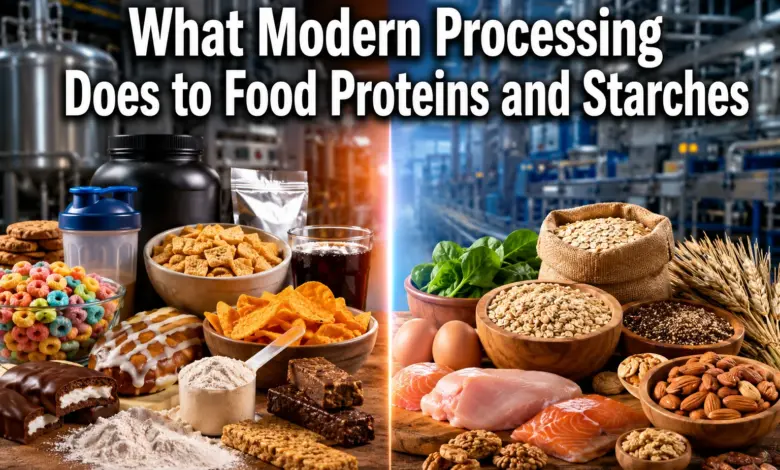
The average American consumes over 60% of their calories from ultra-processed foods, yet most people have no idea what happens to proteins and starches during industrial food manufacturing. In plain English, modern food processing proteins starches undergo dramatic molecular changes that can alter their nutritional value, digestibility, and potential health effects in ways that traditional cooking methods simply don’t match.
Let’s keep this practical. When you grab that protein bar or pour breakfast cereal, you’re consuming proteins and starches that have been subjected to extreme temperatures, pressures, and chemical treatments that fundamentally change their structure. The evidence suggests these changes matter more than most people realize, especially for those of us over 45 who are trying to maintain optimal health and energy levels. This article is part of our Modern Food Processing & Gut Chemistry cluster, where we explore how modern food processing affects gut health and nutrient quality.
Here’s the real issue: modern food processing proteins starches aren’t just “cooked differently” – they’re molecularly transformed through industrial processes that create new compounds, reduce nutrient availability, and can increase allergenicity. Understanding these changes helps you make more informed choices about what you’re actually putting in your body.
In this article
- Extrusion Cooking: How Breakfast Cereals and Protein Powders Are Made
- High-Temperature Processing and the Maillard Reaction
- How Processing Changes Protein Digestibility and Allergenicity
- What Happens to Starch Structure During Processing
- Traditional Preparation vs Modern Processing
- Practical Implications for Your Diet
Key Takeaways
- Extrusion cooking subjects proteins and starches to extreme heat and pressure, creating molecular changes that don’t occur in home cooking
- High-temperature processing generates advanced glycation end products (AGEs) and other compounds linked to inflammation and aging
- Industrial processing can increase protein allergenicity while reducing overall protein quality and digestibility
- Starch structure changes during processing affect blood sugar response and gut microbiome interactions
- Traditional preparation methods preserve more nutritional integrity and create fewer potentially harmful compounds
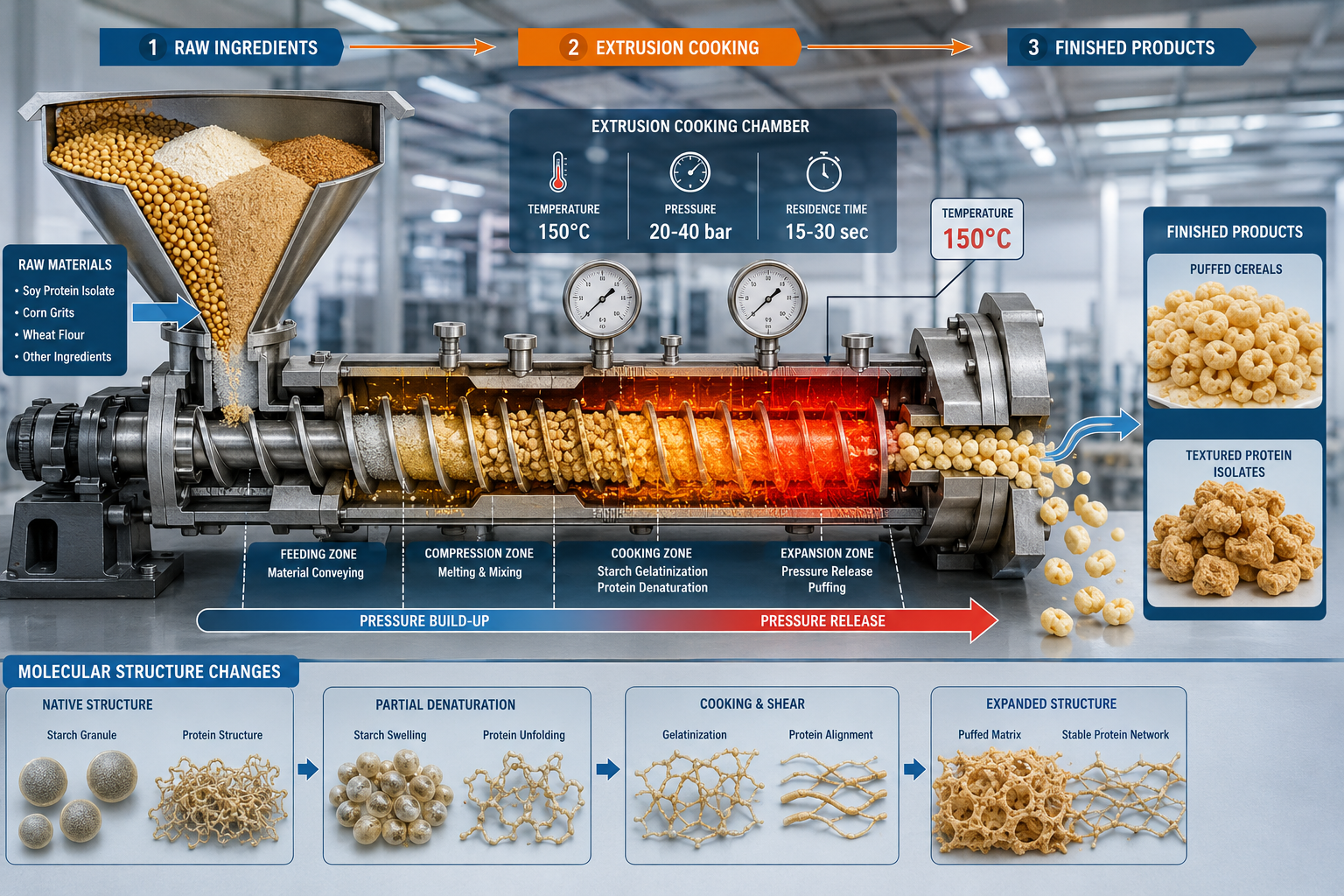
Extrusion Cooking: How Breakfast Cereals and Protein Powders Are Made
Most people think of extrusion as something that happens in plastic manufacturing, but it’s actually the primary method for creating many foods we eat daily. Extrusion cooking forces raw ingredients through a heated barrel under extreme pressure – typically 150-200°C and pressures exceeding 100 atmospheres. This process creates the puffed cereals, protein crisps, and textured vegetable proteins that fill supermarket shelves.
What matters most is this: extrusion subjects proteins and starches to conditions that never occur in nature or traditional cooking. The combination of high heat, pressure, and mechanical shearing literally tears apart molecular structures and forces them to reform in new configurations.
Protein Changes During Extrusion:
The high temperatures and pressures cause protein denaturation that goes far beyond normal cooking. Proteins unfold, cross-link in abnormal ways, and form new chemical bonds. Research shows this can reduce protein digestibility by 10-30% compared to gently cooked proteins. The lysine content – an essential amino acid – often drops significantly during extrusion processing.
More concerning is that extrusion can increase protein allergenicity. The process exposes hidden protein fragments that the immune system may not recognize, potentially triggering allergic reactions in sensitive individuals. This helps explain why some people react to processed soy or wheat products but tolerate the whole foods just fine.
Starch Transformation:
Extrusion completely destroys the natural crystalline structure of starches, creating what food scientists call “fully gelatinized” starches. While this makes them easier to digest initially, it also means they hit your bloodstream faster, creating sharper blood sugar spikes than the same starches in their natural form.
The process also reduces resistant starch content, which means less food for beneficial gut bacteria. Traditional preparation methods like soaking, fermenting, and gentle cooking preserve more of these beneficial starch forms.
High-Temperature Processing and the Maillard Reaction
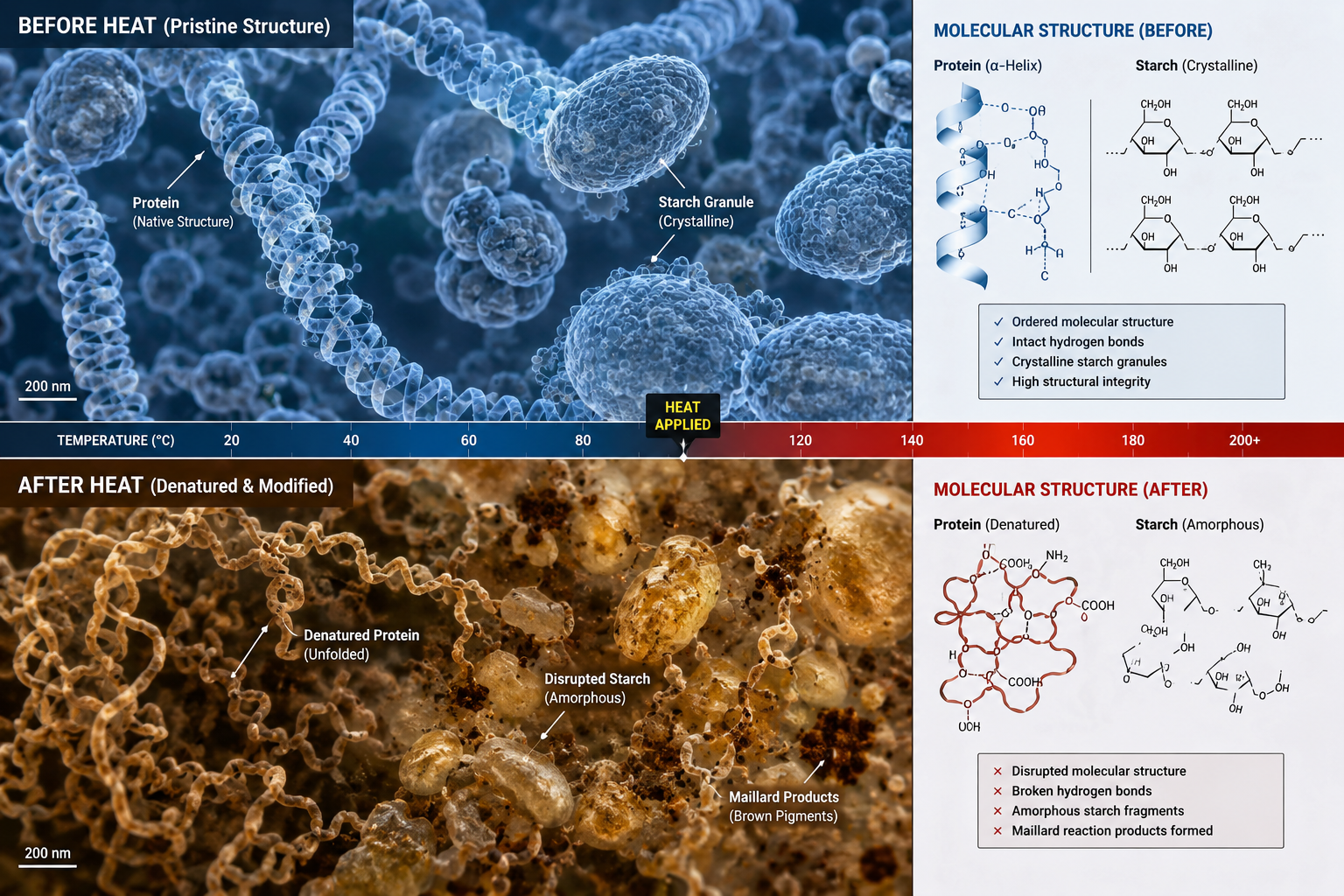
The Maillard reaction – the browning that occurs when proteins and sugars are heated together – happens in all cooking. But industrial processing takes this reaction to extremes that create concerning compounds.
Based on current evidence, high-temperature processing (above 120°C) generates advanced glycation end products (AGEs) at levels far exceeding what occurs in home cooking. These compounds accumulate in tissues over time and are linked to accelerated aging, inflammation, and increased risk of diabetes complications.
Temperature Matters More Than Time:
A sensible starting point is understanding that temperature drives AGE formation more than cooking time. Baking bread at 180°C for 30 minutes creates far fewer AGEs than extruding protein powder at 200°C for just 2 minutes. The industrial “flash” processing that food manufacturers prefer may be quick, but it’s also more damaging to protein and starch quality.
Acrylamide Formation:
High-temperature processing of starchy foods creates acrylamide, a probable carcinogen. French fries, potato chips, and breakfast cereals contain the highest levels. The stronger evidence points to acrylamide formation being directly related to processing temperature and the presence of the amino acid asparagine.
Traditional cooking methods like boiling, steaming, and slow roasting generate minimal acrylamide because they rarely exceed 100°C. This is where understanding traditional food preparation methods becomes practically valuable.
How Processing Changes Protein Digestibility and Allergenicity
Modern processing affects protein quality in ways that go beyond simple denaturation. The evidence suggests these changes can have real-world impacts on how well your body uses the protein you consume.
Reduced Biological Value:
Industrial processing often reduces protein biological value – a measure of how efficiently your body can use the amino acids. Heat damage to lysine is particularly common, and this amino acid is already limiting in many plant proteins. When you’re trying to maintain muscle mass after 45, protein quality matters more than just protein quantity.
Cross-Linking and Digestibility:
High-temperature processing creates abnormal protein cross-links that digestive enzymes struggle to break down. This means some of the protein you’re consuming may pass through your system without being properly absorbed. In real-world terms, that expensive protein powder may not be delivering the amino acids you’re paying for.
Increased Allergenicity:
Processing can expose new epitopes – the parts of proteins that trigger immune responses. This helps explain why some people develop sensitivities to processed foods while tolerating whole food sources of the same proteins.
The main takeaway is that gentle processing methods preserve protein quality better than high-temperature industrial methods. This doesn’t mean all processing is bad, but it does mean the method matters.
What Happens to Starch Structure During Processing
Starch exists in nature as organized granules with crystalline structures that affect how quickly they’re digested and absorbed. Modern processing destroys these structures in ways that can significantly impact blood sugar response and gut health.
Gelatinization vs. Natural Structure:
Industrial processing completely gelatinizes starches, breaking down their natural resistance to digestion. While this makes them easier to chew and swallow, it also means they’re absorbed more rapidly, leading to higher blood sugar spikes.
Traditional preparation methods like soaking grains overnight or slow cooking preserve more of the natural starch structure. This is why steel-cut oats have a lower glycemic impact than instant oats, despite being the same grain.
Impact on Gut Microbiome:
Processing reduces the amount of starch that reaches your colon intact. This resistant starch feeds beneficial bacteria and supports gut health. When starches are fully processed, there’s less food for these beneficial microbes.
Retrogradation and Cooling:
Interestingly, some processed starches can regain beneficial properties if they’re cooled after cooking. This process, called retrogradation, creates new resistant starch. This is why leftover rice or pasta that’s been refrigerated has a lower glycemic impact than freshly cooked versions.
Traditional Preparation vs Modern Processing
The contrast between traditional food preparation and modern industrial processing reveals why our ancestors often had better digestive health despite less medical knowledge.
Traditional Methods Preserve Nutrients:
Traditional techniques like fermentation, soaking, sprouting, and slow cooking work with natural food chemistry rather than against it. These methods often increase nutrient availability while reducing antinutrients and plant toxins.
Fermentation Benefits:
Fermented foods represent the gold standard of traditional processing. Fermentation pre-digests proteins and starches, reduces allergenicity, and creates beneficial compounds that support gut health. Compare this to industrial protein isolation, which strips away beneficial compounds while concentrating potential allergens.
Time vs. Temperature:
Traditional methods typically use lower temperatures over longer periods. This preserves heat-sensitive nutrients while still making foods more digestible. Modern processing prioritizes speed and shelf-stability over nutritional quality.
Whole Food Context:
Traditional preparation keeps foods in their natural context – proteins come with their cofactor nutrients, and starches retain their fiber matrix. Industrial processing often isolates individual components, removing the natural synergies that support optimal digestion and absorption.
Practical Implications for Your Diet
Understanding how modern food processing proteins starches affects your food choices doesn’t mean you need to avoid all processed foods, but it does suggest some practical guidelines.
Choose Less Processed Options When Possible:
Steel-cut oats over instant oats, whole grain bread over extruded cereals, and minimally processed protein sources over isolated protein powders. The closer a food is to its natural state, the more likely it is to retain its original nutritional properties.
Read Processing Indicators:
Look for terms like “extruded,” “isolated,” “hydrolyzed,” or “texturized” on ingredient lists. These indicate high-temperature or chemical processing that may have altered protein and starch quality.
Balance Convenience with Quality:
I understand that busy lifestyles sometimes require processed foods. When you do choose them, try to balance them with whole, nutrient-dense foods that provide the cofactors and fiber that processing removes.
Consider Preparation Methods:
When cooking at home, use gentler methods like steaming, slow cooking, or fermentation when possible. These preserve more of the natural protein and starch structures while still making foods safe and digestible.
Focus on Anti-Inflammatory Foods:
Since processing can increase inflammatory compounds, emphasize foods that naturally reduce inflammation. This helps counterbalance any negative effects from necessary processed foods in your diet.
📂 Modern Food Processing & Gut Chemistry
This article is part of the APH cluster. Use the links below to move between the pillar and child articles.
- Read the pillar: Modern Food Processing and Gut Health: How Processed Food Affects Gut Chemistry
- → Ultra-Processed Foods, Emulsifiers, and Microplastics: What They Really Do to Your Gut
- → Fermented Foods vs Probiotics vs Postbiotics: What Actually Survives Digestion?
- → Resistant Starch and Prebiotic Fiber: How Carbs Feed Your Gut Microbiome
- → The Hidden Dangers of Reusing Cooking Oil: What You Need to Know This August 2026
- → Beef Tallow vs. Seed Oil: Which is Healthier for Cooking in 2026?
- → Industrial Seed Oil Processing: What Happens Before It Hits the Shelf
- → How Food Additives Affect Your Gut Microbiome Health
- YOU ARE HERE What Modern Processing Does to Food Proteins and Starches
- → Food Preservatives Health Effects: What’s Really in Your Food and Why It Matters
- → Major US Study Links Ultra-Processed Foods to Heart Attack Risk in July 2026
FAQ
Does all food processing damage proteins and starches?
No, gentle processing methods like steaming, slow cooking, and fermentation can actually improve protein digestibility and starch quality. The issue is with high-temperature, high-pressure industrial processing that creates molecular changes not found in traditional cooking.
Are protein powders always inferior to whole food proteins?
Not necessarily, but most commercial protein powders undergo processing that reduces protein quality compared to whole food sources. Look for minimally processed options like cold-processed whey or plant proteins that haven’t been subjected to high-temperature extraction.
How can I tell if a starchy food has been heavily processed?
Check the texture and ingredient list. Heavily processed starches are often very soft, dissolve quickly, or have a uniform, artificial texture. Foods with intact grain structures, visible fiber, and minimal ingredients are less processed.
Do traditional preparation methods take too much time for busy lifestyles?
Many traditional methods actually require less active time – they just need planning. Soaking grains overnight or using a slow cooker requires minimal effort but preserves food quality better than quick, high-temperature processing.
Should I avoid all foods that contain AGEs?
AGEs are found in many foods, including some healthy ones like grilled meats. The goal is to minimize excessive AGE intake from heavily processed foods while maintaining a varied, nutritious diet. Focus on preparation methods that minimize AGE formation when possible.
Can the negative effects of processing be reversed?
Once proteins are damaged or starches are fully gelatinized, the changes are permanent in that food. However, your body can recover from the effects of consuming processed foods by emphasizing whole foods, supporting gut health, and maintaining good overall nutrition.
Conclusion
The evidence is clear that modern food processing proteins starches in ways that can reduce nutritional quality and create potentially harmful compounds. While we don’t need to eliminate all processed foods, understanding these changes helps us make better choices about what we eat regularly versus occasionally.
The main takeaway is simple: the closer your proteins and starches are to their natural state, the more likely they are to support rather than compromise your health. This doesn’t require perfection – it requires awareness and gradual shifts toward less processed options when practical.
Start with what gives the biggest return: replace the most heavily processed items in your regular diet with minimally processed alternatives. Your digestive system, blood sugar control, and long-term health will benefit from these thoughtful choices about how your food is prepared.
About the author
Dave James is a health researcher and writer specialising in evidence-based nutrition, exercise, and longevity. He founded All Perfect Health to provide clear, practical health guidance rooted in current research and real-world experience.