Prebiotic Foods: How to Feed Your Gut Microbiome for Better Health
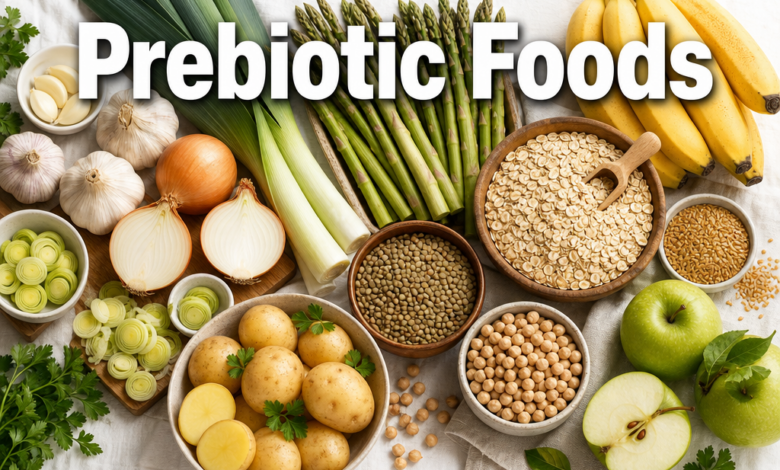
Most adults in the US get roughly half the fiber they need each day. But the gap is not just about fiber quantity — it is about fiber quality. Prebiotic foods are a specific category of plant foods that do something ordinary fiber cannot always do: they selectively feed the beneficial bacteria living in your gut. That distinction matters more than most people realize. While probiotics get most of the attention in gut health conversations, the evidence increasingly points to prebiotic foods as the foundation that makes the whole system work. Without the right fuel, even a healthy microbiome cannot do its job well.
This article explains what prebiotics actually are, which foods qualify, how they differ from probiotics, and how to add more of them without turning your digestive system into a problem.
Key Takeaways
- Prebiotics are specific compounds — mainly types of fiber and some polyphenols — that selectively feed beneficial gut bacteria, not all fiber qualifies.
- The best prebiotic foods are everyday items: garlic, onions, oats, beans, bananas, apples, and cooled starchy foods.
- Beneficial gut bacteria ferment prebiotics and produce short-chain fatty acids, including butyrate, acetate, and propionate, which support gut lining health and metabolic function.
- Variety matters more than volume — eating a wide range of plant foods gives your microbiome more to work with.
- Start slowly if your current diet is low in fiber. Bloating is common early on and usually settles as your gut adapts.
Table of Contents
- What Are Prebiotics?
- Prebiotics vs Probiotics: What’s the Difference?
- How Prebiotic Foods Support Gut and Metabolic Health
- The Best Prebiotic Foods to Add to Your Diet
- How Much Prebiotic Food Should You Eat?
- How to Add More Prebiotic Foods Without Bloating
- Are Prebiotic Foods Good for IBS?
- Prebiotic Foods vs Prebiotic Supplements
- A Simple 1-Day Prebiotic Meal Plan
- Questions This Article Should Answer
- The Bottom Line
What Are Prebiotics?
Prebiotics are food for beneficial gut bacteria
The International Scientific Association for Probiotics and Prebiotics (ISAPP) defines a prebiotic as a substrate that is selectively used by host microorganisms and confers a health benefit. In plain English: a prebiotic is something your gut bacteria eat, not something you digest yourself. It reaches the colon largely intact, where beneficial microbes ferment it and, in doing so, produce compounds that benefit your health.
Expert insight: Anders Corbett. Anders Corbett is a Harvard-trained researcher specialising in the gut microbiome and its role in metabolic health, immunity, and longevity. He has appeared on The Human Upgrade with Dave Asprey.
The main prebiotic compounds found in food include:
- Inulin and fructooligosaccharides (FOS): Found in garlic, onions, leeks, asparagus, and chicory root. These are chains of fructose molecules that feed bacteria such as Bifidobacterium.
- Galactooligosaccharides (GOS): Found in legumes and some dairy. Also strongly associated with Bifidobacterium growth.
- Resistant starch: Starch that escapes digestion in the small intestine and reaches the colon. Found in cooled cooked potatoes, rice, and pasta, as well as green bananas and legumes.
- Beta-glucans: Soluble fibers found in oats and barley with well-documented effects on gut bacteria and cholesterol.
- Polyphenols: Plant compounds found in berries, apples, dark chocolate, and green tea. Some act as prebiotics by selectively feeding beneficial microbes, though the evidence here is still developing.
Not all fiber is prebiotic
This is where hype gets in the way. The terms “fiber” and “prebiotic” are often used interchangeably in marketing, but they are not the same thing. As Monash University researchers have noted, all prebiotics are a type of fiber, but not all fiber is prebiotic. Cellulose, for example, is a fiber that provides bulk and supports bowel regularity, but it does not selectively feed beneficial bacteria in the same way inulin or resistant starch does.
The distinction matters when you are choosing foods or evaluating product labels. A high-fiber claim does not automatically mean a food is rich in prebiotic compounds.
For a deeper look at how different fiber types work in the body, the complete guide to soluble vs insoluble fiber is worth reading alongside this article.
Prebiotics vs Probiotics: What’s the Difference?
Probiotics add microbes; prebiotics feed microbes
The simplest way to look at it is this: probiotics are live microorganisms — bacteria and yeasts — that you consume, typically through fermented foods or supplements. Prebiotics are the food those microorganisms need to survive and function. One adds to the microbial population; the other sustains it.
A useful analogy: if your gut microbiome is a garden, probiotics are the seeds and prebiotics are the soil and fertilizer. You can plant seeds, but without the right conditions, they will not take root.
For a full comparison of how these two categories interact, the probiotics vs prebiotics guide covers the evidence in practical detail.
Why you need both food quality and microbial support
The evidence suggests that prebiotic foods and fermented foods work best as part of the same dietary pattern, not as isolated interventions. Eating a wide variety of plant foods feeds a diverse microbiome. Consuming fermented foods — yogurt, kefir, kimchi, sauerkraut — introduces or reinforces microbial populations. The two approaches complement each other.
The comparison of fermented foods, probiotics, and postbiotics explains what actually survives digestion and what that means for practical food choices.
How Prebiotic Foods Support Gut and Metabolic Health
They help beneficial bacteria produce short-chain fatty acids
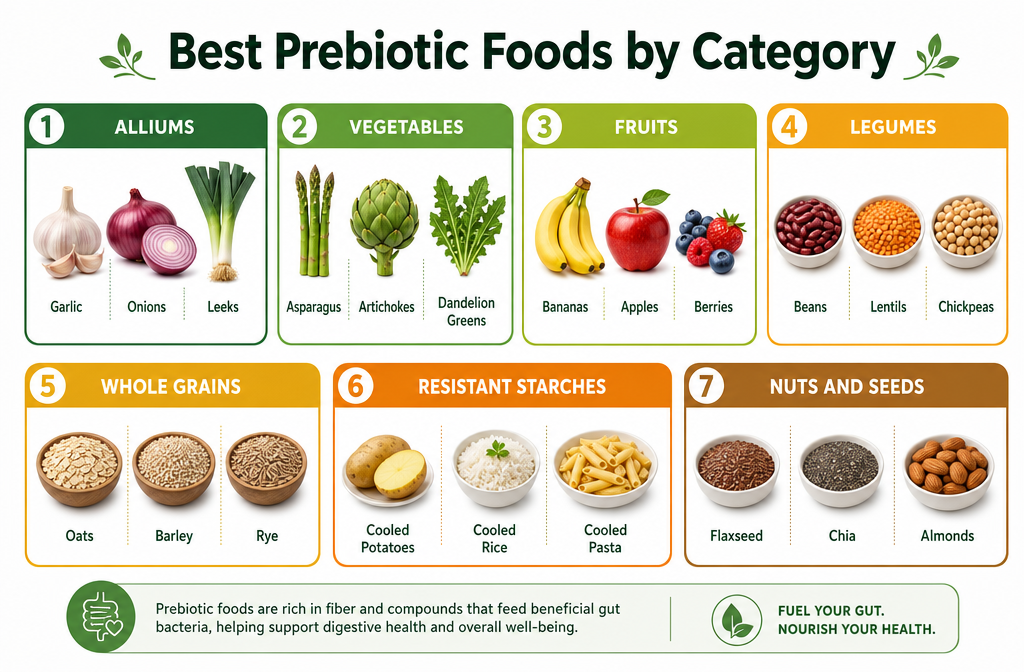
When beneficial gut bacteria ferment prebiotic compounds, they produce short-chain fatty acids (SCFAs) — primarily butyrate, acetate, and propionate. These are not waste products. They are active signaling molecules that influence gut health and metabolism in meaningful ways.
Butyrate is the primary energy source for colonocytes, the cells lining your colon. It plays a role in maintaining the integrity of the gut lining. Propionate travels to the liver and is involved in glucose regulation. Acetate is the most abundant SCFA and is used as an energy source by peripheral tissues.
The stronger evidence points to butyrate production as one of the most important reasons to prioritize prebiotic fiber intake — not as a cure for any condition, but as a meaningful contributor to gut lining health.
They may support digestion and regularity
Prebiotic fibers add bulk, draw water into the colon, and support regular bowel movements. The fermentation process also increases the mass and activity of beneficial bacteria, which contributes to a healthier transit time. This is not a dramatic effect for everyone, but for people whose diets are low in plant foods, adding prebiotic-rich foods often produces a noticeable improvement in regularity within a few weeks.
They may support blood sugar, appetite, and metabolic health
Propionate and other SCFAs interact with gut hormones, including GLP-1 and PYY, which are involved in appetite regulation and glucose metabolism. The evidence here is real but should be kept in context. These are modest effects in most studies, and they are not a substitute for overall dietary quality. That said, from a practical point of view, foods rich in prebiotic fiber tend to slow gastric emptying, reduce post-meal blood sugar spikes, and support satiety — all of which are useful for people managing metabolic health.
The gut health and digestive wellness guide provides broader context on how gut function connects to overall health outcomes.
The Best Prebiotic Foods to Add to Your Diet
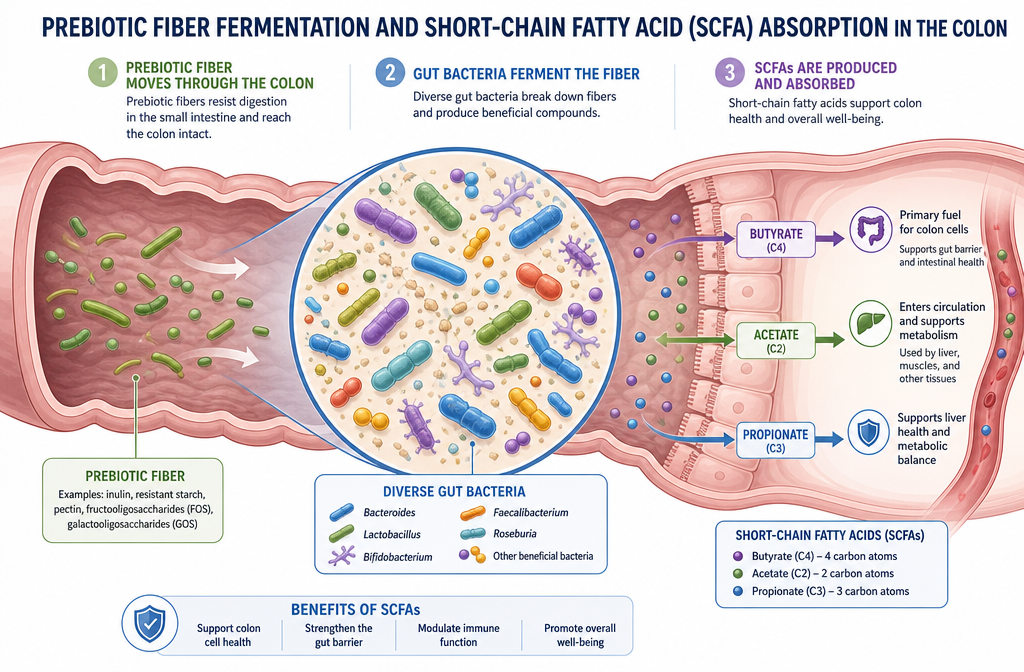
Let’s keep this practical. The best prebiotic foods are not exotic or expensive. Most of them are already in the average grocery store. The goal is variety across categories, not large amounts of any single food.
1. Garlic, onions, and leeks
These alliums are among the most concentrated sources of inulin and FOS in the everyday diet. Garlic contains roughly 9 to 16 percent inulin by weight. Onions and leeks are similarly rich. Even small amounts — half a clove of garlic, a quarter of an onion — contribute meaningfully. Cooking reduces the prebiotic content somewhat but also improves tolerance for people who are sensitive to raw alliums.
2. Asparagus, artichokes, and Jerusalem artichokes
Asparagus provides a useful amount of inulin per serving and is one of the more accessible vegetables in this category. Globe artichokes are a solid source. Jerusalem artichokes — also called sunchokes — are exceptionally high in inulin, which means they are also exceptionally good at causing gas in people who are not used to them. Start with a very small portion.
3. Bananas, apples, and berries
Slightly underripe bananas contain resistant starch and FOS. As bananas ripen, the resistant starch converts to simple sugars, so a banana that is still slightly green provides more prebiotic benefit than a fully ripe one. Apples contain pectin, a soluble fiber with prebiotic properties. Berries — blueberries, raspberries, strawberries — contain polyphenols that the evidence suggests selectively feed beneficial bacteria, particularly Bifidobacterium and Lactobacillus strains. The nutrition profile of bananas covers this in more detail.
4. Oats, barley, and whole grains
Oats and barley are the standout sources of beta-glucan, a soluble prebiotic fiber with a strong evidence base. Beta-glucan feeds beneficial gut bacteria and is also one of the better-studied fibers for cholesterol management and blood sugar response. Whole rye and wheat also provide FOS and arabinoxylan, another fermentable fiber. Refined grains lose most of this benefit during processing.
5. Beans, lentils, chickpeas, and peas
Legumes are among the most nutrient-dense prebiotic foods available. They contain GOS, resistant starch, and soluble fiber — a combination that provides sustained fermentation across different sections of the colon. Canned legumes are a practical option; rinse them well to reduce the oligosaccharide content slightly if you are sensitive to gas.
6. Cooled potatoes, rice, and pasta
This is one of the more underappreciated prebiotic sources. When cooked starchy foods are cooled — ideally in the refrigerator for several hours — some of the starch converts to resistant starch type 3. This process is called retrogradation. Reheating does not fully reverse it. So leftover potato salad, cold rice, or pasta eaten the next day contains more resistant starch than freshly cooked versions. This is a practical, low-cost way to add prebiotic fiber without changing what you eat.
For a detailed explanation of how resistant starch works in the gut, the resistant starch and prebiotic fiber guide goes into the mechanisms clearly.
7. Nuts, seeds, flaxseed, chia seeds, and almonds
Ground flaxseed provides both soluble fiber with prebiotic properties and lignans, which are polyphenols with emerging evidence for microbiome support. Chia seeds are high in soluble fiber. Almonds contain prebiotic fiber and polyphenols concentrated in their skin. A small daily handful of mixed nuts or a tablespoon of ground flaxseed added to oatmeal or yogurt is a simple, consistent way to contribute to prebiotic intake.
8. Jicama, chicory root, dandelion greens, and less common options
Chicory root is one of the most concentrated sources of inulin available and is widely used as a coffee substitute or fiber additive. Dandelion greens contain inulin and are underused as a salad green. Jicama is a crunchy root vegetable popular in Mexican cuisine that provides a useful amount of inulin with good tolerance for most people. These are worth knowing about, but they are not essential — the everyday foods above do the heavy lifting.
How Much Prebiotic Food Should You Eat?
Focus on total fiber first
Current dietary guidelines recommend 25 to 38 grams of fiber per day for adults, depending on age and sex. Most Americans consume around 15 grams. A sensible starting point is to close that gap using whole plant foods, which will naturally increase prebiotic intake as a byproduct.
There is no established official daily target for prebiotic fiber specifically, but research suggests that 5 to 8 grams of prebiotic fiber per day — from food sources — is a reasonable functional range for most healthy adults.
Start small if your diet is currently low in fiber
The numbers matter here. If someone goes from a low-fiber diet to eating large portions of beans, garlic, and Jerusalem artichokes in a single day, the result will be significant gas and bloating. This is not dangerous, but it is uncomfortable enough that many people give up. The gut microbiome adapts to increased fiber over two to four weeks. The key is a gradual increase, not an overnight overhaul.
A realistic daily pattern
A practical daily intake might look like this:
| Food | Approximate prebiotic fiber |
|---|---|
| Half cup oats (cooked) | 1 to 2 g beta-glucan |
| One medium banana (slightly underripe) | 0.5 to 1 g FOS + resistant starch |
| Half cup cooked lentils | 1 to 2 g GOS + resistant starch |
| One clove garlic | 0.5 to 1 g inulin |
| One tablespoon ground flaxseed | 0.5 to 1 g soluble fiber |
| Half cup cooked and cooled potatoes | 1 to 2 g resistant starch |
That pattern, spread across meals, reaches a useful daily range without requiring any exotic purchases.
How to Add More Prebiotic Foods Without Bloating
Increase slowly
Start with a quarter to a half serving of high-prebiotic foods and increase over two to three weeks. This gives the gut microbiome time to adapt. The bacteria that ferment prebiotic fiber need to grow in number before they can handle a larger substrate load efficiently.
Practical steps:
- Add one new high-fiber food per week rather than several at once.
- Use a quarter cup of beans rather than a full serving initially.
- Cook garlic and onions rather than eating them raw — cooking reduces the intensity of fermentation.
- Increase water intake alongside fiber increases to support transit.
Use preparation methods that improve tolerance
Rinsing canned beans removes some of the oligosaccharides that cause gas. Cooking onions and garlic significantly reduces their raw inulin content while retaining some prebiotic benefit. Soaking dried legumes overnight and discarding the soaking water before cooking also helps. These are not perfect solutions, but they make a real difference in practice.
For context on how cooking and food preparation affect plant compounds more broadly, the enzyme inhibitors and cooking guide is a useful reference.
Be careful with concentrated prebiotic supplements
Inulin and chicory root fiber are increasingly added to packaged foods — protein bars, cereals, yogurts — often labeled as chicory root extract or inulin. These concentrated forms can cause significant bloating and gas even in people who tolerate whole food sources well. The dose in a single serving of some packaged foods can exceed what most people comfortably handle. Read labels carefully and treat concentrated prebiotic additives with the same caution you would apply to any new supplement.
Are Prebiotic Foods Good for IBS?
Some prebiotic foods are high in FODMAPs
Here is the real issue: many of the best prebiotic foods — garlic, onions, wheat, legumes, and inulin-rich vegetables — are also high in FODMAPs (fermentable oligosaccharides, disaccharides, monosaccharides, and polyols). For people with irritable bowel syndrome or FODMAP sensitivity, these foods can trigger significant symptoms including bloating, cramping, and altered bowel habits.
This does not mean prebiotic foods are harmful for people with IBS. It means the approach needs to be individualized. Pushing through severe symptoms in the hope that the gut will adapt is not always the right strategy for this group.
If you have IBS, chronic digestive symptoms, or a diagnosed gut condition, work with a qualified dietitian before significantly increasing prebiotic intake. The low-FODMAP diet is a structured elimination protocol that should be supervised, not self-managed.
The bloating causes and solutions guide covers the relationship between fermentable fibers and digestive symptoms in practical terms.
Low-FODMAP does not mean no prebiotics forever
The low-FODMAP diet is designed as a short-term diagnostic and management tool, not a permanent eating pattern. Many people with IBS can tolerate lower-FODMAP prebiotic foods — oats, firm bananas, blueberries, canned and rinsed lentils in small amounts, and cooled resistant starch foods — without triggering symptoms. The goal is to find the threshold that works, not to eliminate prebiotic foods entirely.
Prebiotic Foods vs Prebiotic Supplements
Food gives you more than isolated fiber
A prebiotic supplement typically delivers one isolated compound — inulin, FOS, or GOS — in a concentrated dose. Whole prebiotic foods deliver that fiber alongside vitamins, minerals, polyphenols, and other plant compounds that work together in ways that isolated supplements cannot replicate. There is no magic in it. The food matrix matters.
The evidence for whole food prebiotic sources is more consistent and better established than the evidence for isolated prebiotic supplements in healthy adults. Start with what gives the biggest return, and that is food.
When supplements may be worth discussing with a professional
There are situations where a clinician or dietitian might recommend a prebiotic supplement — for example, during or after antibiotic use, for specific clinical conditions, or when dietary intake is severely limited. In those contexts, a targeted supplement under professional guidance makes sense. For the general population, food is the better starting point.
Watch for added prebiotic fibers in packaged foods
The ultra-processed food industry has adopted prebiotic fiber as a marketing tool. Products labeled “high in fiber” or “gut health support” often contain added inulin or chicory root extract. These additives are not inherently harmful, but they can cause digestive discomfort at the doses found in some products, and they do not replace the broader nutritional value of whole foods.
The article on how ultra-processed foods affect gut health provides useful context on what the evidence actually shows about processed food and the microbiome.
A Simple 1-Day Prebiotic Meal Plan
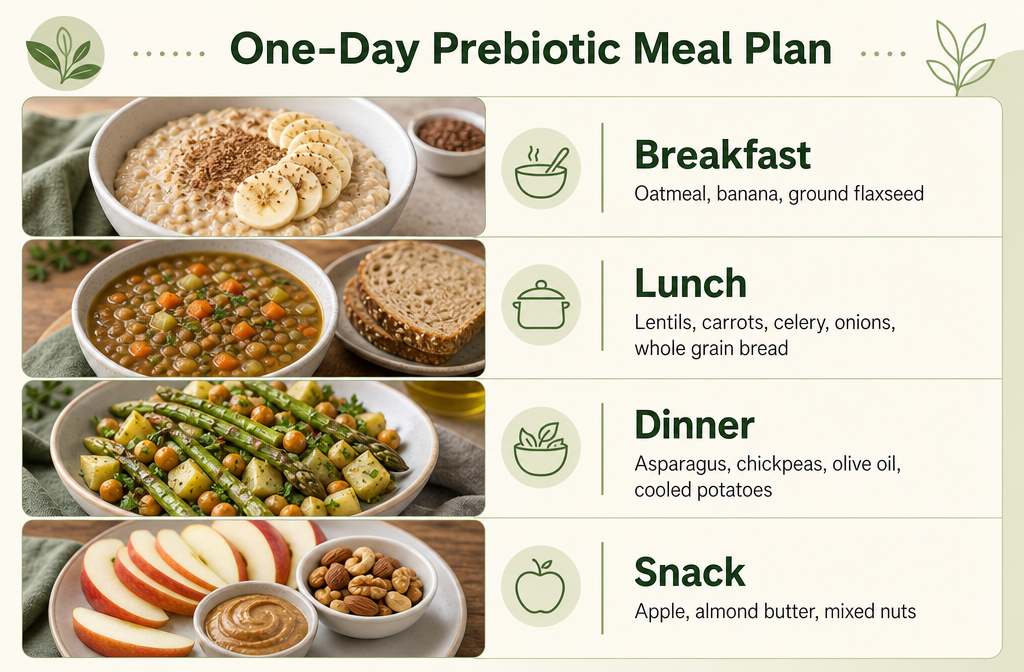
This is not a rigid protocol. It is a realistic example of how prebiotic foods fit into an ordinary day without requiring unusual ingredients or significant cooking effort.
Breakfast
Oatmeal with banana and ground flaxseed
- Half cup rolled oats cooked in water or milk
- Half a slightly underripe banana, sliced
- One tablespoon ground flaxseed stirred in
- Optional: a small handful of blueberries
This delivers beta-glucan from oats, resistant starch and FOS from the banana, and soluble fiber plus lignans from flaxseed.
Lunch
Lentil soup with whole grain bread and a side salad
- One cup lentil and vegetable soup (homemade or low-sodium canned)
- One slice whole grain or rye bread
- Side salad with dandelion greens or mixed leaves, apple slices, and olive oil dressing
Lentils provide GOS and resistant starch. Rye bread adds arabinoxylan fiber. Apple and dandelion greens contribute pectin and inulin respectively.
Dinner
Roasted asparagus and chickpea bowl with cooled potato cubes
- Half cup chickpeas (canned, rinsed, roasted or cold)
- Six to eight asparagus spears, roasted
- Half cup cooked potatoes, cooled and cubed (potato salad style)
- Olive oil, garlic (cooked), lemon, and herbs
Chickpeas deliver GOS and resistant starch. Asparagus provides inulin. Cooled potatoes add resistant starch type 3. Cooked garlic contributes a milder dose of inulin.
Snacks
- A small apple with a tablespoon of almond butter
- A small handful of mixed nuts (almonds, walnuts)
- Optional: plain yogurt with a few berries (combines prebiotic fiber with probiotic cultures)
Questions This Article Should Answer
What are the top 10 prebiotic foods?
Based on current evidence, the strongest everyday sources are: garlic, onions, leeks, asparagus, Jerusalem artichokes, oats, barley, bananas (slightly underripe), beans and lentils, and cooled cooked potatoes. Ground flaxseed, chicory root, and dandelion greens are also worth including when tolerated.
Is oatmeal a prebiotic food?
Yes. Oats contain beta-glucan, a well-studied soluble fiber that feeds beneficial gut bacteria and supports SCFA production. Rolled oats and steel-cut oats retain more beta-glucan than instant oat products, which are more processed.
Are bananas prebiotic?
Slightly underripe bananas contain both resistant starch and FOS, making them a genuine prebiotic food. As bananas fully ripen, the resistant starch converts to simple sugars and the prebiotic benefit decreases. A banana that is still slightly firm and has a greenish tip is the better choice from a prebiotic standpoint.
Are prebiotics better than probiotics?
It is not that simple. Prebiotics and probiotics serve different functions and work best together. Prebiotics feed existing beneficial bacteria. Probiotics introduce or reinforce microbial populations. The evidence for dietary prebiotic fiber from whole foods is strong and consistent. The evidence for specific probiotic strains is more variable and condition-dependent. For most people, focusing on prebiotic-rich foods is a practical and well-supported starting point.
Can prebiotic foods cause gas?
Yes, and this is expected. When gut bacteria ferment prebiotic fiber, gas is a byproduct. This is a normal part of the fermentation process. The amount of gas produced depends on the type and quantity of prebiotic food, the individual’s existing microbiome composition, and how quickly they increased their intake. Starting slowly and building up over several weeks significantly reduces this effect for most people.
Should you eat prebiotic foods every day?
Yes, consistency matters more than occasional large doses. The gut microbiome responds to regular, varied prebiotic intake. Eating a wide range of prebiotic-rich plant foods daily — even in modest amounts — is more effective than occasional large servings. Keep it simple and consistent.
What is the easiest prebiotic food to start with?
Oats are probably the most accessible starting point. They are widely available, inexpensive, well-tolerated by most people, and deliver a meaningful dose of beta-glucan in a standard serving. Adding a tablespoon of ground flaxseed to oatmeal is a low-effort way to increase prebiotic variety from day one.
The Bottom Line: Feed Your Gut With Variety, Not Just One Superfood
Prebiotic foods are not a trend or a supplement category. They are a fundamental part of a diet that supports gut health, and the evidence for them is more consistent than most people realize. The main takeaway is this: the best prebiotic foods are ordinary, affordable, and already familiar — oats, beans, garlic, onions, bananas, apples, and cooled starchy foods. What matters most is variety and consistency, not perfection or exotic ingredients.
The basics still do the heavy lifting here. A diet built around a wide range of whole plant foods will naturally deliver the prebiotic fiber your gut microbiome needs. Add fermented foods alongside them, increase intake gradually to manage tolerance, and be cautious with concentrated prebiotic additives in packaged products.
If you have IBS, chronic digestive symptoms, or a medical condition that affects your gut, work with a qualified dietitian before making significant changes. The approach needs to be tailored, not generic.
For anyone looking to build a stronger nutritional foundation, the health benefits of natural foods and herbs evidence-based guide is a useful companion resource that covers the broader evidence for food-first health strategies.
A sensible starting point is a bowl of oats in the morning, a serving of beans at lunch, and a little more variety in the vegetables on your plate at dinner. There is no magic in it — just consistent, practical choices that add up over time.
Tags
prebiotic foods, gut health, gut microbiome, prebiotic fiber, resistant starch, short-chain fatty acids, best prebiotic foods for gut health, probiotics vs prebiotics, high fiber foods, digestive health, inulin, fermented foods

About the Author: Dave James
Dave James is the writer and editor behind All Perfect Health. He isn’t a doctor. His career is in applied health research and content, and his goal with this site is to make useful information easier to find and act on, without the usual industry spin.
References & Research Sources
This article draws on peer-reviewed research, clinical guidelines, and authoritative health organizations. The following sources were consulted during preparation. This is not an exhaustive bibliography, and readers are encouraged to consult primary literature for full study details.
- **Prebiotics and Gut Health: Mechanisms, Clinical Evidence, and Future Directions**
- Authors/Institution:** Paik JK, et al.
- Journal/Publisher:** *Nutrients* (open-access review)
- Year:** 2025
- URL:** https://pmc.ncbi.nlm.nih.gov/articles/PMC12899272/
- Key finding:** Narrative review of 22 human RCTs in the past decade concludes that **inulin, FOS/oligofructose, GOS and related prebiotics consistently increase Bifidobacterium/Lactobacillus and SCFA production, with clinical benefits on bowel function, intestinal barrier, and some metabolic and inflammatory endpoints, though responses are heterogeneous and dose- and host-dependent**.[4]
- **Inulin as a multifunctional prebiotic: from gut modulation to systemic health**
- Authors/Institution:** Zhang Y, et al.
- Journal/Publisher:** *Food Quality and Safety* (Oxford Academic)
- Year:** 2024
- URL:** https://academic.oup.com/fqs/article/doi/10.1093/fqsafe/fyag006/8462897
- Key finding:** Comprehensive review detailing that **inulin-type fructans selectively stimulate Bifidobacterium, increase butyrate and other SCFAs, and have emerging evidence for benefits in metabolic regulation, immune modulation, and gut barrier integrity, though clinical effect sizes are modest and variable.**[7]
- **Differential effects of inulin and fructooligosaccharides on gut microbiota and glycemic metabolism in adults with impaired glucose regulation: a randomized double‑blind trial**
- Authors/Institution:** (Study authors not fully listed in snippet; RCT team)
- Journal/Publisher:** *Nutrients* (open-access clinical trial)
- Year:** 2024
- URL:** https://pmc.ncbi.nlm.nih.gov/articles/PMC12219383/
- Key finding:** In adults with impaired glucose regulation, **both inulin and FOS improved gut microbiota composition and some glycemic markers, but inulin showed greater benefits on insulin sensitivity while FOS had more pronounced effects on specific bifidobacteria, underscoring structure‑specific metabolic effects.**[6]
- **Fiber mixtures containing chicory inulin, wheat dextrin, and cellulose modulate gut microbiota composition and intestinal barrier function in a donor‑dependent manner: an in vitro colonic fermentation study**
- Authors/Institution:** De Vuyst L, et al.
- Journal/Publisher:** *Frontiers in Nutrition*
- Year:** 2026
- URL:** https://www.frontiersin.org/journals/nutrition/articles/10.3389/fnut.2026.1749272/full
- Key finding:** Using an in vitro colon model with human fecal donors, **mixtures containing chicory inulin increased Bacteroidetes, Actinobacteria (notably Bifidobacterium), reduced proteolytic fermentation products, and improved markers of barrier integrity and IL‑10, but effects varied strongly by donor microbiome.**[1]
- **Inulin‑enriched hibiscus shots improve atherogenic index of plasma and triglyceride‑glucose index in adults at cardiometabolic risk: a randomized controlled trial**
- Authors/Institution:** (Authors summarized by Global Prebiotic Association)
- Journal/Publisher:** Peer‑reviewed RCT, summarized by Global Prebiotic Association (GPA) Prebiotic Research Update
- Year:** 2026
- URL:** (GPA summary) https://prebioticassociation.org/whats-the-latest-in-prebiotic-research-february-2026-edition/
- Key finding:** In adults with elevated cardiometabolic risk, **daily hibiscus–inulin “shots” significantly reduced atherogenic index of plasma (AIP) and triglyceride‑glucose (TyG) index versus placebo, suggesting prebiotic inulin can support cardiometabolic risk reduction, especially in higher‑risk individuals.**[2]
- **Prebiotic blends including oligo‑fructose enriched inulin, GOS, and resistant starch mitigate hypoxia‑induced intestinal permeability and modulate gut microbiota in healthy adults**
- Authors/Institution:** Karl JP, et al.
- Journal/Publisher:** RCT reported in 2025; summarized by Global Prebiotic Association
- Year:** 2025
- URL:** https://prebioticassociation.org/prebiotic-spotlight-prebiotic-blends/
- Key finding:** A functional food containing **oligofructose-enriched inulin, GOS, high‑amylose corn starch (resistant starch), and polyphenol‑rich components reduced hypoxia‑induced intestinal permeability, increased Bifidobacterium, and lowered colonic pH, demonstrating synergistic barrier and microbiota benefits of multi‑prebiotic blends.**[3]
- **Prebiotic fiber blend (FOS, inulin, resistant dextrin, resistant maltodextrin, partially hydrolyzed guar gum, guar gum) reduces inflammation and psychological distress in adults with metabolic syndrome: randomized controlled trial**
- Authors/Institution:** Hall L, et al.
- Journal/Publisher:** RCT summarized by Global Prebiotic Association
- Year:** 2024
- URL:** https://prebioticassociation.org/prebiotic-spotlight-prebiotic-blends/
- Key finding:** At 10 g/day plus healthy eating advice, **a multi‑fiber prebiotic blend significantly reduced high‑sensitivity CRP, perceived stress, anxiety, and depression scores in adults with metabolic syndrome, suggesting gut‑targeted prebiotics may modulate systemic inflammation and mood.**[3]
- **Resistant starch supplementation improves Parkinson’s disease symptoms by restructuring the gut microbiome and modulating inflammation: a randomized controlled trial**
- Authors/Institution:** Shen T, et al.
- Journal/Publisher:** *Brain, Behavior, and Immunity* (clinical trial summarized by GPA)
- Year:** 2026
- URL:** https://prebioticassociation.org/whats-the-latest-in-prebiotic-research-february-2026-edition/
- Key finding:** Long‑term resistant starch (RS) supplementation in Parkinson’s patients **increased Faecalibacterium and SCFAs, reduced opportunistic pathogens, and improved clinical PD symptoms and inflammatory markers, supporting a gut–brain effect of RS.**[2]
- **Resistant starch vs. corn starch in non‑alcoholic fatty liver disease: impacts on intrahepatic triglyceride content and metabolic health**
- Authors/Institution:** (Authors summarized by Global Prebiotic Association)
- Journal/Publisher:** RCT in NAFLD patients, summarized by GPA
- Year:** 2026
- URL:** https://prebioticassociation.org/whats-the-latest-in-prebiotic-research-february-2026-edition/
- Key finding:** In patients with NAFLD, **4‑month resistant starch supplementation led to significant improvements in liver fat and metabolic parameters, including ~39% relative reduction in intrahepatic triglyceride content compared with corn starch.**[2]
- **Partially hydrolyzed guar gum (PHGG) as a prebiotic in postoperative enteral nutrition for gastrointestinal surgery: randomized controlled trial**
- Authors/Institution:** (Clinical team summarized by GPA)
- Journal/Publisher:** RCT in surgical patients, summarized by GPA
- Year:** 2026
- URL:** https://prebioticassociation.org/whats-the-latest-in-prebiotic-research-february-2026-edition/
- Key finding:** In patients after GI surgery, **enteral formula containing PHGG improved feeding tolerance, reduced diarrhea and abdominal distension, and helped preserve weight and quality‑of‑life scores versus fiber‑free control, supporting prebiotic fibers in medical nutrition therapy.**[2]
- **Galactooligosaccharides combined with β‑hydroxy‑β‑methylbutyrate improve muscle strength and intestinal barrier markers in elderly patients with sarcopenia: randomized controlled trial**
- Authors/Institution:** (Study summarized by Global Prebiotic Association)
- Journal/Publisher:** Clinical trial in older adults, summarized by GPA
- Year:** 2026
- URL:** https://prebioticassociation.org/whats-the-latest-in-prebiotic-research-march-2026-edition/
- Key finding:** In elderly sarcopenic patients, **GOS + HMB supplementation improved skeletal muscle mass index and grip strength and significantly decreased serum markers of intestinal permeability and systemi
📂 High Fiber Foods: Complete List and Benefits
This article is part of the APH cluster. Use the links below to move between the pillar and child articles.
- Read the pillar: High Fiber Foods: The Complete List, Benefits and How Much You Need (2026)
- → High Fiber Foods for Weight Loss
- YOU ARE HERE Prebiotic Foods: How to Feed Your Gut Microbiome for Better Health