Probiotics vs Prebiotics: The Complete Gut Health Starter Guide
Last updated: April 19, 2026
- What Is the Gut Microbiome, and Why Does It Matter?
- What Are Probiotics?
- What Are Prebiotics?
- Probiotics vs Prebiotics: Side-by-Side Comparison
- Best Probiotic Foods: What’s Actually Worth Eating
- Best Prebiotic Foods: The List Most People Ignore
- What Are Synbiotics? The Combined Approach
- Who Should Take Probiotics — and Who Should Be Careful
- When and How to Take Probiotics for Best Results
- A Simple 7-Day Gut Health Starter Plan
- Common Myths: Rapid-Fire Debunks
- When to Talk to a Doctor
Quick Answer: Probiotics are live beneficial bacteria you consume. Prebiotics are the dietary fibers those bacteria feed on. Both matter for gut health, but most people spend money on probiotic supplements while barely eating enough prebiotic soluble vs insoluble fiber explained with ramp-up plan to support the good bacteria they already have.
Key Takeaways
- Probiotics are live microorganisms (bacteria and yeasts) that support gut health while passing through your digestive system.
- Prebiotics are non-digestible plant fibers that feed your existing beneficial gut bacteria, producing health-supporting compounds called short-chain fatty acids (SCFAs).
- Recent research confirms both approaches significantly improve gut microbial diversity, with prebiotics showing a distinct bacterial response profile compared to probiotics. [1]
- Most healthy adults eating diverse whole foods don’t need a probiotic supplement. Prebiotic fiber, however, is chronically under-consumed in Western diets.
- Synbiotics combine both in one approach — either through food pairings or combined supplements.
- Probiotic supplements are most clearly useful after antibiotics, during travel, or when managing specific conditions like IBS.
- Food sources beat supplements for most people, most of the time.
- Response to both probiotics and prebiotics varies significantly between individuals based on their existing gut microbiome. [2]
- If you have persistent gut symptoms lasting more than three weeks, see a doctor — this guide is not a substitute for that.
What Is the Gut Microbiome, and Why Does It Matter?
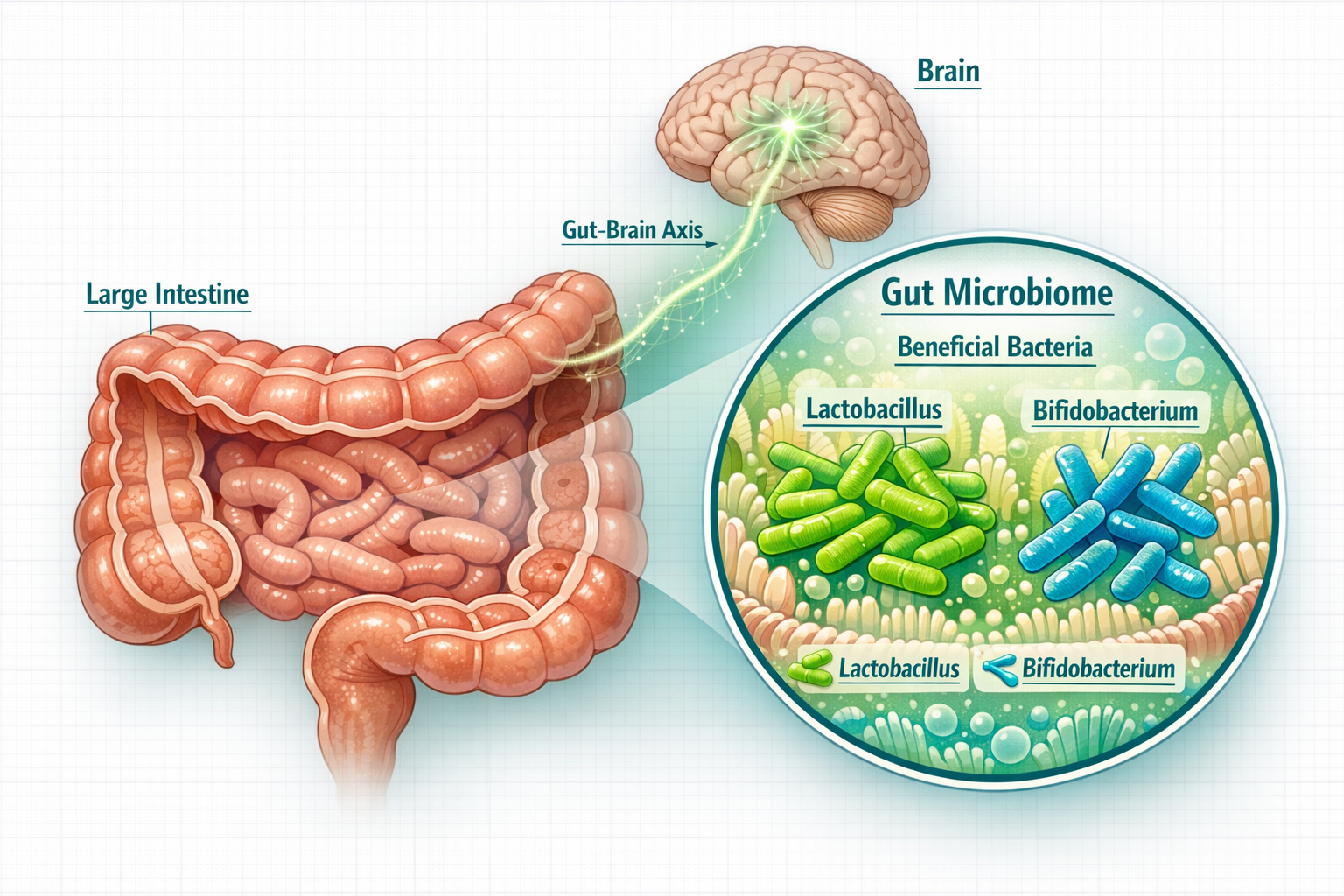
Your gut is home to roughly 100 trillion microorganisms, most of them living in your large intestine. This community — bacteria, fungi, viruses, and other microbes — is called the gut microbiome, and it does far more than digest food.
In plain English: your gut microbiome is less like a passive digestive organ and more like a working ecosystem that influences your entire body. Research has linked gut microbial health to immune function (an estimated 70% of your immune system is associated with gut tissue), the gut-brain axis explained — and which strains influence mood regulation through the gut-brain axis, metabolic health, and weight management. The balance between beneficial and harmful bacteria in this system shifts constantly, and modern diets — high in processed food, low in fiber, and frequently disrupted by antibiotics — tend to push that balance in the wrong direction.
This is exactly where the probiotics vs prebiotics conversation becomes practical rather than just theoretical. Understanding the differences and benefits of probiotics vs prebiotics is essential for making informed dietary choices, especially in relation to gut health.
What Are Probiotics?
Probiotics are live microorganisms that, when consumed in adequate amounts, provide a health benefit to the host. That definition comes from the World Health Organization and the International Scientific Association for Probiotics and Prebiotics (ISAPP), and it’s worth holding onto because it rules out a lot of products that use the word loosely.
What probiotics actually do is reinforce your existing beneficial bacteria population — temporarily. Most ingested probiotic strains don’t permanently colonize your gut. They pass through, interact with your existing microbiome, and influence the environment while they’re present. That’s not a failure; that’s how they work.
The most researched strains:
- Lactobacillus acidophilus, rhamnosus, reuteri — commonly found in yogurt and fermented dairy; well-studied for IBS, vaginal health, and antibiotic recovery
- Bifidobacterium lactis, longum — important for immune support and bowel regularity, particularly in older adults
- Saccharomyces boulardii — a beneficial yeast (not a bacterium) with strong evidence for traveler’s diarrhea and antibiotic-associated diarrhea prevention [6]
A note on CFUs: Colony-forming units measure how many live organisms are in a dose. Ten billion CFU sounds impressive, but strain identity matters more than raw count. A well-researched strain at 5 billion CFU will outperform a poorly-studied strain at 50 billion. The numbers matter less than which strain you’re actually getting.
Recent research found that probiotic supplementation increased Lactobacillus abundance by 2.1–4.8% and Bifidobacterium by 3.5–7.9% in study participants, both statistically significant results. [1] That’s real, measurable impact — but it’s worth noting these are population-level averages. Individual responses vary considerably.
What Are Prebiotics?
Prebiotics are non-digestible dietary fibers that selectively feed beneficial bacteria in your gut. They pass through the small intestine undigested and reach the large intestine, where your gut bacteria ferment them.
That fermentation process produces short-chain fatty acids (SCFAs) — compounds like butyrate, propionate, and acetate — which nourish the cells lining your gut wall, reduce inflammation, and support immune signaling. The simplest way to look at it is this: prebiotics don’t add new bacteria; they feed the good bacteria you already have and help them outcompete the harmful ones.
The main prebiotic types:
- Inulin — found in chicory root, garlic, and Jerusalem artichokes
- Fructooligosaccharides (FOS) — in bananas, onions, and asparagus
- Galactooligosaccharides (GOS) — in legumes and some dairy
- Resistant starch — in cooled cooked potatoes, green bananas, and oats
Research from a meta-analysis of 22 randomized controlled trials confirmed that prebiotic supplementation consistently increased Bifidobacterium and Lactobacillus populations and SCFA production, with documented benefits across healthy adults, children, the elderly, and people managing constipation, metabolic syndrome, and antibiotic-associated gut disruption. [2]
Prebiotics also showed a distinct bacterial response profile compared to probiotics. While probiotics primarily boosted Lactobacillus, prebiotics increased Bifidobacterium by 3.7–6.8% and Faecalibacterium prausnitzii by 6.1–8.3% — a bacterium strongly associated with gut barrier integrity and reduced inflammation. [1]
Probiotics vs Prebiotics: Side-by-Side Comparison
Here’s the real issue with most gut health content: it treats probiotics and prebiotics as competitors. They’re not. But understanding the difference clearly helps you make smarter decisions about what you actually need.
| Probiotics | Prebiotics | |
|---|---|---|
| What they are | Live beneficial bacteria or yeasts | Non-digestible fiber that feeds bacteria |
| Main food sources | Yogurt, kefir, kimchi, sauerkraut, tempeh | Garlic, onions, oats, bananas, legumes |
| Primary role | Add new microbial helpers temporarily | Feed and sustain existing beneficial bacteria |
| Duration of effect | Temporary — while actively consumed | Sustained with regular dietary intake |
| Shelf-stable? | Often requires refrigeration | Yes, stable in whole foods and most supplements |
| Who benefits most | After antibiotics, illness, or travel | Almost everyone eating a low-fiber Western diet |
| Supplement needed? | Only in specific circumstances | Food-first approach works well for most people |
| Key research finding | Increases Lactobacillus and Bifidobacterium [1] | Also increases F. prausnitzii; distinct profile [1] |
Best Probiotic Foods: What’s Actually Worth Eating
The best probiotic foods are fermented products that contain live, active bacterial cultures at the time of consumption. Pasteurization kills bacteria, so always check labels.
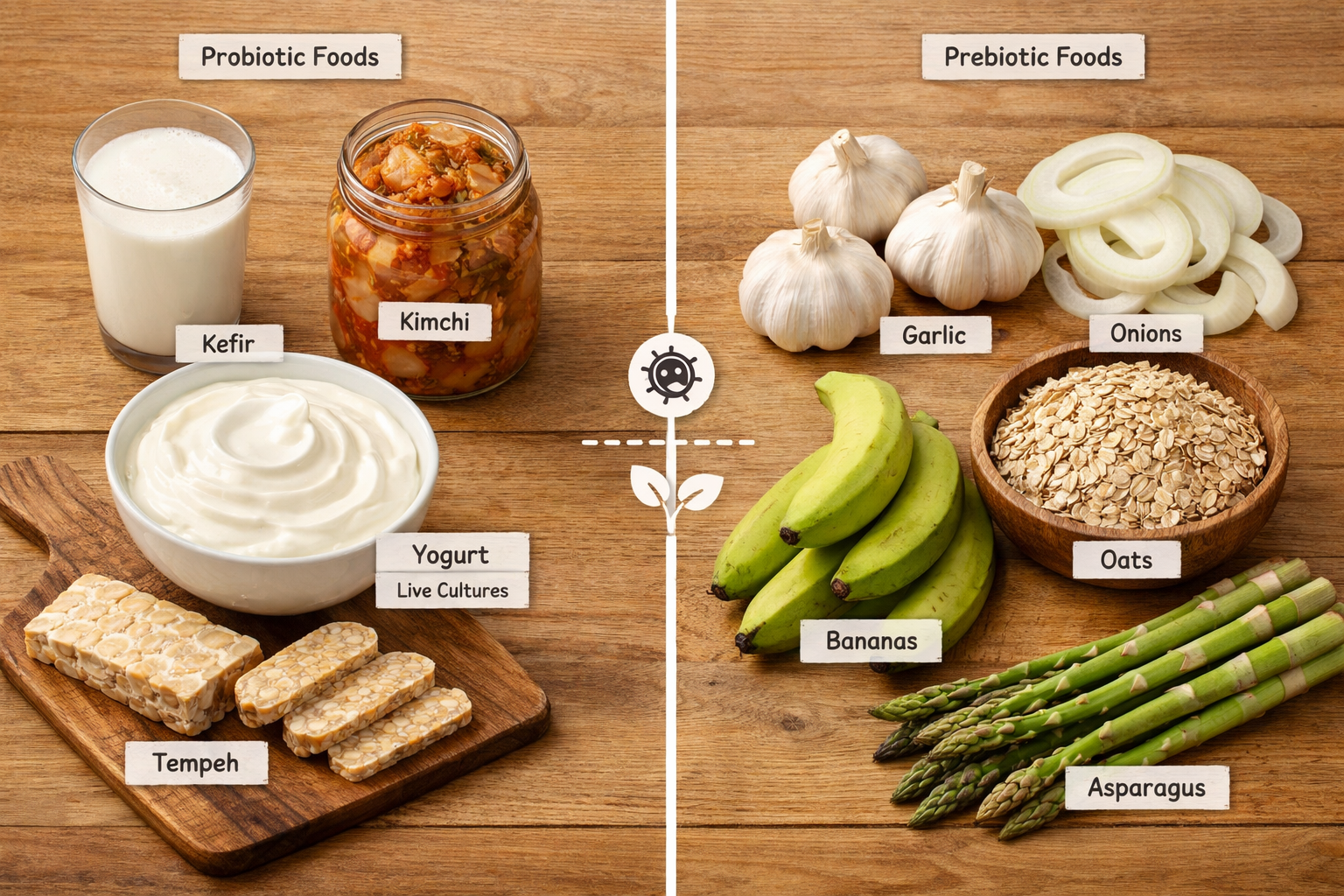
- Yogurt (live and active cultures) — The most accessible entry point. Look for the “Live & Active Cultures” seal. Plain, full-fat versions typically have less added sugar interfering with gut bacteria.
- Kefir — A fermented milk drink with broader strain diversity than most yogurts. Easier to digest for people with mild lactose sensitivity because the fermentation process breaks down much of the lactose.
- Sauerkraut (unpasteurized) — Refrigerated versions from the deli section, not shelf-stable jars. Pasteurized sauerkraut has no live bacteria.
- Kimchi — Fermented cabbage with added fiber from vegetables. A practical synbiotic food in itself.
- Tempeh — Fermented soybeans with a firmer texture than tofu. Also a solid protein source.
- Miso — Fermented soybean paste. Use in soups and dressings, but add it after cooking to preserve the live cultures.
- Kombucha — Fermented tea with modest probiotic content. Strain diversity is low compared to dairy ferments. Fine as a light option, but don’t rely on it as a primary source.
- Traditional aged cheeses (gouda, cheddar, cottage cheese) — Some aged cheeses retain live cultures. Cottage cheese in particular can be a good source if labeled with live cultures.
A sensible starting point is one fermented food per day, preferably with a meal. You don’t need variety every day — consistency matters more.
Best Prebiotic Foods: The List Most People Ignore
Prebiotic foods are plant-based, fiber-rich, and almost certainly under-represented in your current diet. The average Western adult consumes around 15 grams of fiber per day against a recommended 25–38 grams. Most of that gap is prebiotic fiber.
- Garlic — One of the highest inulin concentrations of any common food. Raw garlic has more prebiotic activity than cooked.
- Onions and leeks — Similar prebiotic profile to garlic; easier to eat in larger quantities.
- Asparagus — Rich in inulin and FOS. A small serving provides a meaningful prebiotic dose.
- Bananas (slightly green) — Ripe yellow bananas still contain FOS, but greener bananas have more resistant starch, which is particularly effective as a prebiotic.
- Oats — Contain beta-glucan, a well-researched prebiotic fiber with additional cardiovascular benefits.
- Apples — Pectin in apples acts as a prebiotic and supports SCFA production.
- Jerusalem artichokes — Exceptionally high in inulin. Start with small amounts — they earn their reputation for causing gas in people not used to them.
- Chicory root — The most concentrated natural source of inulin. Often used in prebiotic supplements and added to some coffee alternatives.
- Flaxseed — Provides both soluble and insoluble prebiotic fiber, plus omega-3s.
- Legumes (beans, lentils, chickpeas) — GOS-rich and among the most practical daily prebiotic sources. A half-cup of cooked lentils with dinner is one of the highest-return gut health habits you can build.
What Are Synbiotics? The Combined Approach
Synbiotics combine probiotics and prebiotics together, either in food pairings or in supplement form, with the idea that the prebiotic component supports the survival and activity of the probiotic.
The logic is straightforward: if you introduce beneficial bacteria (probiotic) alongside the fiber those bacteria prefer to eat (prebiotic), you give them a better chance of doing useful work during their time in your gut.
Practical food pairings that work as synbiotics:
- Kefir with oats and a green banana
- Yogurt with apple slices
- Kimchi with a rice and lentil bowl
- Miso soup with garlic and onion base
Synbiotic supplements are also available and growing in popularity. [7] I’d rather see people build synbiotic meals from whole foods before spending money on a combined supplement, but for people who genuinely struggle to eat enough fermented and fiber-rich foods, a well-formulated synbiotic product can be a practical bridge.
One area where the synbiotic approach shows particularly strong evidence is in elderly patients with sarcopenia (muscle loss). A combination of fructooligosaccharides (FOS) with β-hydroxy-β-methylbutyrate (HMB) significantly improved skeletal muscle mass index, grip strength, and markers of gut barrier integrity in clinical trials, while also reducing inflammatory markers including C-reactive protein. [3] That’s a strong signal that the combined approach can do more than either component alone in specific populations.
Who Should Take Probiotics — and Who Should Be Careful
Probiotic supplements are most clearly useful in specific circumstances, not as a daily default for everyone. [6] [8]
Situations where probiotics have stronger evidence:
- During and after a course of antibiotics (take 2 hours apart from the antibiotic dose; continue for at least two weeks after finishing)
- Traveler’s diarrhea prevention, particularly Saccharomyces boulardii
- IBS symptom management — specific strains, not just any product
- Post-illness gut recovery
Use caution or consult a doctor first:
- Immunocompromised individuals — introducing live bacteria carries a small but real risk
- People with SIBO (small leaky gut and intestinal permeability — what the research shows bacterial overgrowth) — probiotics can worsen symptoms in some cases; this is where hype gets in the way of individual reality
- Pregnancy — generally considered safe, but worth confirming with your provider
Probably unnecessary for:
- Healthy adults already eating a varied, fiber-rich whole-food diet
- People with no specific gut complaints
The evidence suggests that for most healthy adults, consistent prebiotic fiber intake through food delivers more reliable gut health benefits than a daily probiotic supplement. [8] That’s not a popular message in a market that sells billions of dollars of probiotic products annually, but I prefer to look at what actually works.
When and How to Take Probiotics for Best Results
Consistency matters more than timing, but a few practical details make a real difference.
Timing: Current evidence leans toward taking probiotics with or just before a meal rather than on an empty stomach. Food — particularly fat and protein — buffers stomach acid and improves bacterial survival through the digestive tract. That said, some strains (particularly Saccharomyces boulardii) are more acid-resistant and less sensitive to timing.
Temperature: Refrigerated probiotics should stay cold until use. Shelf-stable strains are typically freeze-dried and more resilient, but still avoid leaving them in a hot car or near a stove.
After antibiotics: Take your probiotic dose at least two hours away from your antibiotic dose. Continue for two weeks after finishing the antibiotic course — the gut microbiome disruption doesn’t end when the medication does.
How long until you notice something: Be realistic. Most people notice digestive changes within two to four weeks of consistent use. Some people notice nothing, which is also a valid outcome — the absence of symptoms can itself be a sign of a well-functioning gut.
Common mistakes worth avoiding:
- Mixing probiotics into hot coffee or soup (temperatures above 40°C/104°F kill most strains)
- Buying products labeled only with genus names (“Lactobacillus”) without species and strain identification
- Expecting results from inconsistent use — a probiotic taken three times a week is unlikely to do much
- Assuming a higher CFU count means a better product
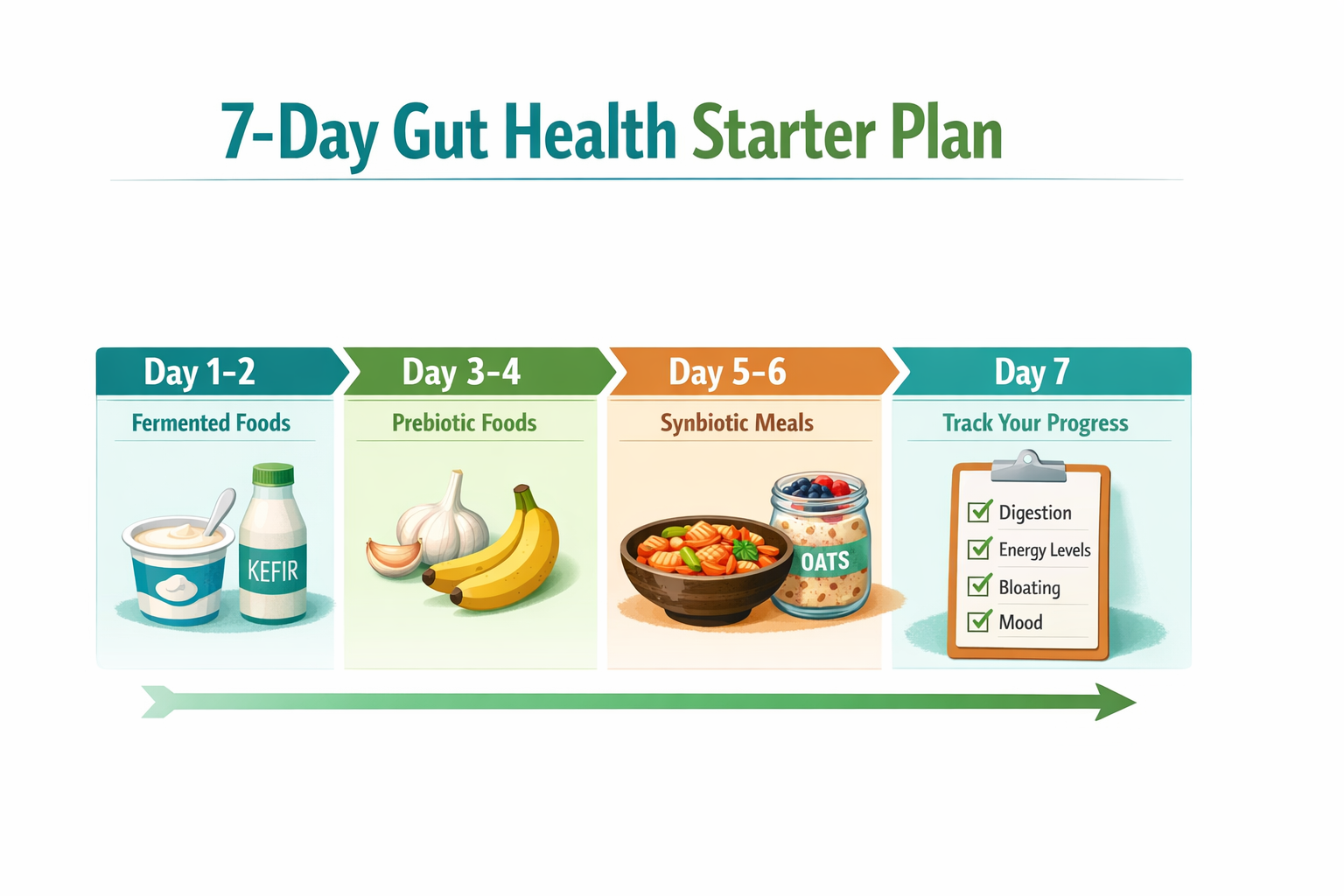
A Simple 7-Day Gut Health Starter Plan
Let’s keep this practical. You don’t need to overhaul your diet in a week. You need to build a few habits that stick.
Days 1–2: Add one fermented food daily
- Breakfast: plain yogurt or kefir with fruit
- Goal: establish one consistent probiotic food source
Days 3–4: Add one prebiotic food daily
- Add garlic to your dinner cooking, or eat a slightly green banana with your oats
- Goal: start feeding the bacteria you already have
Days 5–6: Build one synbiotic meal
- Kefir with oats and a banana for breakfast, or a kimchi and lentil rice bowl for dinner
- Goal: combine both approaches in a single meal
Day 7: Observe and assess
- Notice digestion, energy, and any bloating (some initial gas from increased fiber is normal and temporary)
- Goal: identify what felt manageable and what you’d actually repeat
Week 2 and beyond: Aim for two to three synbiotic-style meals per week as a baseline. Keep it simple and consistent. The basics still do the heavy lifting here — there is no magic in it.
Common Myths: Rapid-Fire Debunks
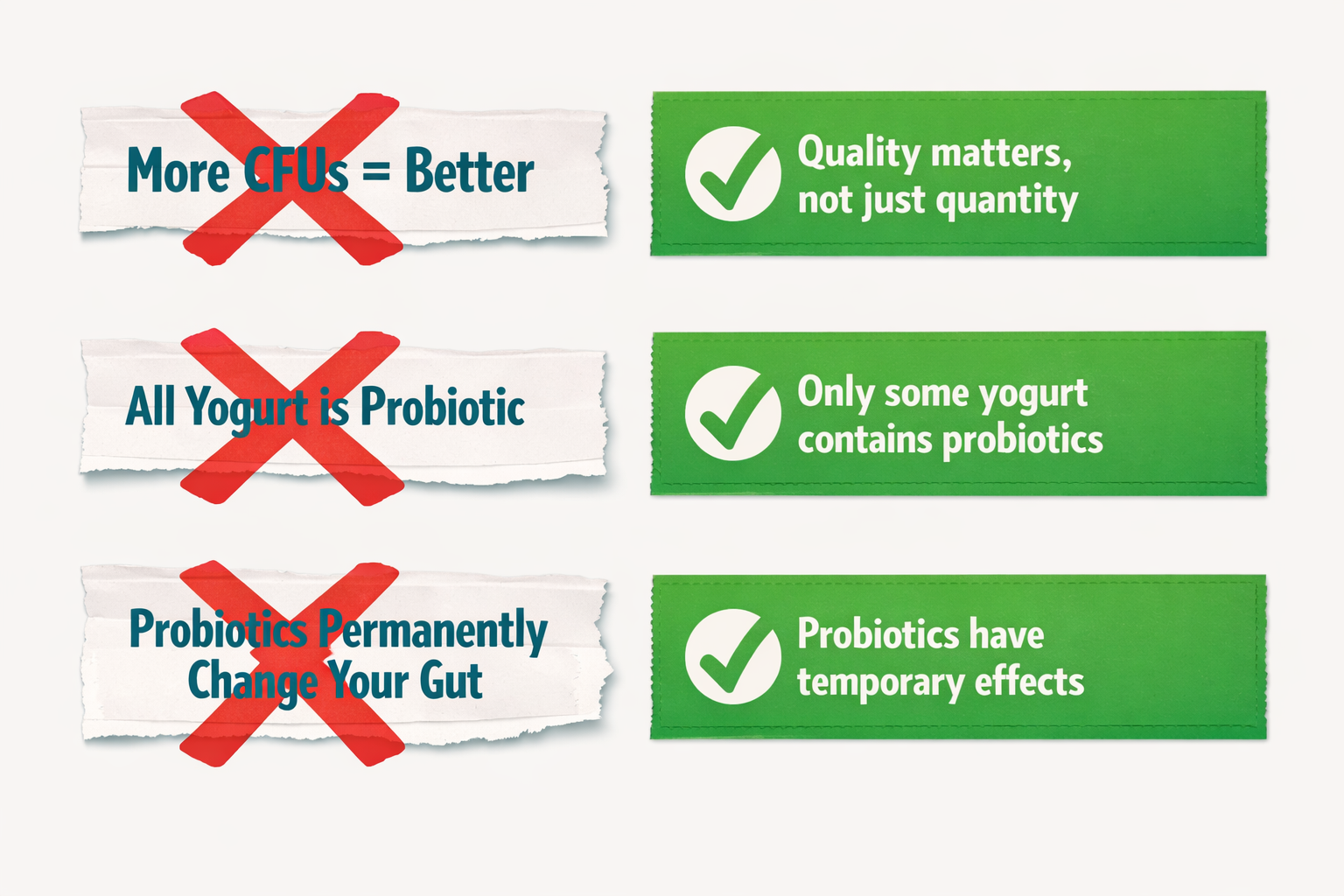
We need to separate fact from hype on a few points that come up constantly.
❌ “More CFUs = better”
Strain identity and research backing matter far more than the number on the label. A well-studied strain at 5 billion CFU outperforms an unstudied one at 100 billion.
❌ “Probiotics permanently change your gut microbiome”
Based on current evidence, most supplemental probiotic strains do not permanently colonize the gut. They influence the environment while present, then pass through. That’s still useful — it’s just not a permanent fix.
❌ “All yogurt is probiotic”
Only yogurt containing live and active cultures qualifies. Heat-treated yogurt (common in shelf-stable products) contains no viable bacteria.
❌ “Kombucha is a major probiotic source”
Kombucha contains live organisms, but strain diversity is low and CFU counts are inconsistent. It’s a fine addition to a varied diet, but not a primary probiotic strategy.
❌ “Everyone needs a daily probiotic supplement”
That is a strong claim and needs strong proof — and the current evidence doesn’t support it as a universal recommendation for healthy adults. [6]
❌ “Fermented = probiotic”
Sourdough bread, wine, vinegar, and many commercially fermented products contain no live bacteria by the time you consume them. Fermentation happened; the bacteria did not survive to your gut.
When to Talk to a Doctor
This guide covers the basics of gut health optimization for generally healthy adults. It is not a diagnostic tool.
See a doctor if you experience:
- Persistent bloating lasting more than three weeks
- Unexplained weight loss or significant weight gain
- Blood in your stool
- Sudden severe food intolerances that weren’t present before
- Chronic diarrhea or constipation that doesn’t respond to dietary changes
- Significant abdominal pain
These symptoms can indicate conditions — including inflammatory bowel disease, celiac disease, colorectal issues, or SIBO — that require proper diagnosis and treatment, not a better probiotic. Context matters, and gut health supplements are not a substitute for medical evaluation when something is genuinely wrong.
Frequently Asked Questions
Q: What’s the main difference between probiotics and prebiotics?
Probiotics are live bacteria you consume; prebiotics are the dietary fibers those bacteria eat. Probiotics add new microbial helpers temporarily; prebiotics feed the beneficial bacteria you already have.
Q: Should I take probiotics and prebiotics together?
Yes, combining them (called a synbiotic approach) is generally more effective than either alone. You can do this through food pairings — like kefir with oats — or through a combined supplement.
Q: Do I need a probiotic supplement if I eat fermented foods?
For most healthy adults eating yogurt, kefir, or other fermented foods regularly, a supplement is probably unnecessary. Supplements are most useful after antibiotics, during travel, or when managing specific conditions.
Q: Which prebiotic foods are easiest to add to a daily diet?
Garlic, onions, oats, and bananas are the most practical starting points. They’re inexpensive, widely available, and easy to incorporate into meals you’re already eating.
Q: How long does it take for probiotics to work?
Most people notice digestive changes within two to four weeks of consistent daily use. Some people notice nothing, which doesn’t necessarily mean the probiotic isn’t doing anything.
Q: Can probiotics cause side effects?
Some people experience temporary bloating or gas when starting probiotics or significantly increasing prebiotic fiber. This usually settles within one to two weeks. If symptoms are severe or persistent, stop and consult a doctor. For a deep dive into this, see our full guide on bloating and how to diagnose your type.
Q: Are probiotics safe during pregnancy?
Generally considered safe, but check with your healthcare provider before starting any new supplement during pregnancy.
Q: What are the best probiotic strains for IBS?
Lactobacillus rhamnosus GG and Bifidobacterium infantis 35624 have the strongest evidence for IBS symptom management. Strain specificity matters — a generic “probiotic blend” is not the same thing.
Q: Do prebiotics help with weight management?
The evidence suggests modest benefits. A 2026 retrospective study found prebiotics achieved BMI reductions of −2.0 ± 0.5 kg/m² compared to −1.6 ± 0.4 kg/m² for probiotics, both outperforming controls — though these results are from supplementation studies, not dietary changes alone. [1]
Q: Is kombucha a good probiotic source?
It contains live organisms, but strain diversity is low and counts are inconsistent. It’s a reasonable addition to a varied diet, not a primary probiotic strategy.
Q: What does “live and active cultures” mean on a yogurt label?
It means the product contains viable probiotic bacteria at the time of manufacture. Look for this label specifically — not all yogurt qualifies.
Q: Can you get enough prebiotics from supplements alone?
You can, but whole food sources are preferable because they come with additional nutrients, fiber types, and compounds that supplements don’t fully replicate. Use supplements to bridge gaps, not replace food.
Conclusion
The core truth is straightforward: probiotics add bacteria to your gut; prebiotics feed the bacteria you already have. Both matter, but most people are spending money on probiotic supplements while chronically under-eating the prebiotic fiber that would actually support their gut bacteria day to day.
The main takeaway is this: start with food. Add one fermented food and one prebiotic-rich food to your daily routine before you consider any supplement. If you’ve recently taken antibiotics, are dealing with IBS, or have a specific reason to use a probiotic supplement, choose one with a researched strain and use it consistently.
There is no magic in it. The gut microbiome responds to what you consistently eat over time, not to a single expensive supplement. Small, sustainable food changes deliver more reliable results than most supplement regimens.
For a deeper look at the full digestive system and what healthy gut signals look like, see our Gut Health and Digestive Wellness guide.
Continue Exploring Gut & Nutrition
- How to Live a Healthy Lifestyle
- Health Benefits of Natural Foods and Herbs
- What Are Polyphenols?
- Bland Diet Recipes for Digestive Recovery
📂 Gut Health & Digestive Wellness
This article is part of the APH cluster. Use the links below to move between the pillar and child articles.
- Read the pillar: Gut Health and Digestive Wellness: The Complete Evidence-Based Guide
- → The Gut Brain Axis: How Your Belly Talks to Your Brain (And What to Do About It)
- → Leaky Gut: What the Science Actually Says (And What It Doesn’t)
- → Fiber Decoded: Soluble vs. Insoluble, Daily Targets, and Why Most People Get It Wrong
- → Bloating: What Causes It and How to Actually Fix It
- → How to Heal Your Gut: A Science-Backed 4-Week Reset
- YOU ARE HERE Probiotics vs Prebiotics: The Complete Gut Health Starter Guide
- → How to Soothe Your Stomach Naturally: 10 Evidence-Based Remedies That Work
References
- [Video] Dr. YouTube. https://www.youtube.com/watch?v=jt5hHb6kzYM