
Olive Oil vs. Seed Oils: What the Evidence Actually Says About Cooking Fats and Inflammation
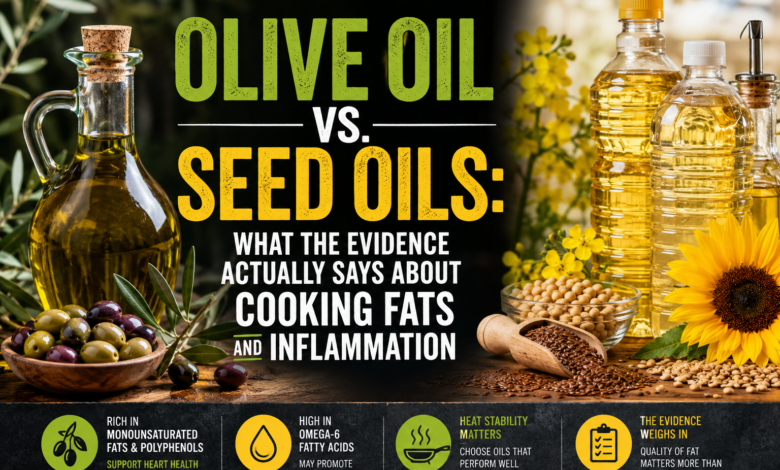
The average US adult now consumes more omega-6 linoleic acid than at any point in recorded dietary history — largely because refined seed oils quietly dominate the ingredient lists of packaged, fried, and fast food. The debate around olive oil vs seed oils has moved from nutrition journals into social media feeds, and somewhere in that journey, it picked up a lot of noise. Some influencers call seed oils industrial machine lubricants. Some food industry voices insist they are perfectly fine. Neither position is especially useful.
Here is the practical reality: extra virgin olive oil is the superior everyday cooking fat, not because seed oils are poison, but because EVOO is less refined, richer in protective compounds, more stable under real-world cooking conditions than most people realise, and backed by stronger human dietary-pattern evidence than any seed oil. Seed oils, meanwhile, are not proven to directly cause inflammation at normal intake levels — but their dominance in ultra-processed food, their industrial refining processes, and the way they are routinely overheated make them a poor foundation for an anti-inflammatory diet.
That is the thesis. The rest of this article is the evidence behind it.
Key Takeaways
- Extra virgin olive oil wins the olive oil vs seed oils comparison because of its polyphenol content, oxidative stability, and the depth of human dietary evidence supporting it — not simply because it is lower in omega-6.
- Seed oils are not uniformly toxic. The concern is more specific: industrial refining, repeated high-heat use, and their role as the default fat in ultra-processed foods.
- Omega-6 linoleic acid is an essential fat. The problem in modern diets is usually too little omega-3, not too much omega-6 in isolation.
- Smoke point is a poor single measure of cooking oil safety. Oxidative stability matters more.
- For most home cooking — sautéing, roasting, dressings, light frying — high-quality EVOO is both suitable and the smarter choice.
Table of Contents
- The Short Answer: Extra Virgin Olive Oil Wins, But Not for the Reason Social Media Says
- What Counts as a Seed Oil?
- Olive Oil vs. Seed Oils: The Fatty Acid Difference
- Do Seed Oils Cause Inflammation?
- Why Extra Virgin Olive Oil Has a Stronger Anti-Inflammatory Case
- Cooking With Olive Oil vs. Seed Oils: Smoke Point Is Not the Whole Story
- Are Refined Seed Oils Toxic Machine Oil Sold as Food?
- Omega-6 vs. Omega-3: The Balance Question
- Which Oil Should You Actually Cook With?
- How to Choose a Better Olive Oil
- Common Mistakes People Make in the Seed Oil Debate
- The Evidence-Based Bottom Line
- FAQs
The Short Answer: Extra Virgin Olive Oil Wins, But Not for the Reason Social Media Says
The evidence-based answer in plain English
Quick Answer: Extra virgin olive oil is the better everyday fat. It is minimally processed, rich in anti-inflammatory polyphenols (hydroxytyrosol, oleocanthal, oleacein), predominantly monounsaturated, and supported by large human trials including the PREDIMED study. Seed oils are not automatically harmful at normal dietary intakes, but refined versions are heavily processed, higher in polyunsaturated omega-6 fats that oxidise more readily under heat, and are the dominant fat in ultra-processed foods — which is where the real dietary harm accumulates. The evidence supports choosing EVOO as your default cooking fat, minimising refined seed oils in everyday cooking, and reducing ultra-processed food intake overall.
The popular social media argument against seed oils focuses almost entirely on omega-6 linoleic acid. The claim is that linoleic acid drives inflammation through arachidonic acid pathways. That is a plausible mechanism, but the human evidence for it at normal dietary intakes is weaker than the influencer content suggests. The stronger case for EVOO is not that omega-6 is poison — it is that EVOO brings something seed oils simply do not: a dense package of bioactive polyphenols with demonstrated anti-inflammatory effects in human trials.
Let’s keep this practical. The goal here is not to frighten people about their cooking oil. It is to help them make a genuinely better choice, grounded in what the evidence actually shows.
What Counts as a Seed Oil?
The common seed oils people mean
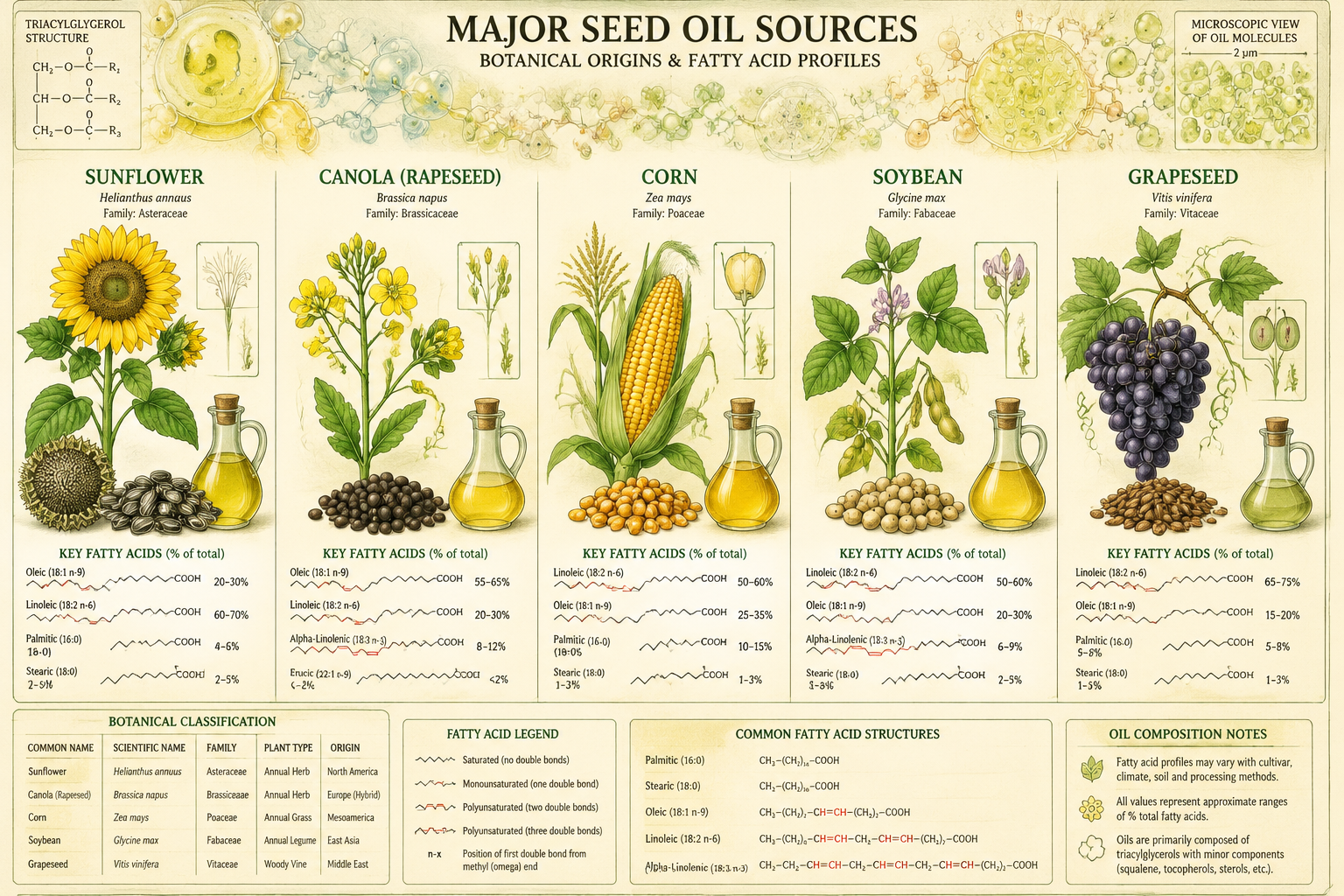
When people say “seed oils,” they typically mean a cluster of refined vegetable and grain-derived oils that became dominant in Western food systems during the 20th century. The main ones are:
| Oil | Primary Source | Dominant Fat Type |
|---|---|---|
| Soybean oil | Soybean | Polyunsaturated (omega-6) |
| Corn oil | Corn germ | Polyunsaturated (omega-6) |
| Sunflower oil | Sunflower seeds | Polyunsaturated (omega-6) |
| Safflower oil | Safflower seeds | Polyunsaturated (omega-6) |
| Canola oil | Rapeseed | Monounsaturated + some omega-3 |
| Cottonseed oil | Cotton plant seeds | Mixed |
| Grapeseed oil | Grape seeds | Polyunsaturated (omega-6) |
Note that canola oil sits somewhat separately from the others — it has a meaningfully different fatty acid profile with a higher monounsaturated content and some omega-3. Lumping it with corn oil or safflower oil as though they are equivalent is one of the more common oversimplifications in this debate.
Why seed oils became controversial
Seed oil consumption increased dramatically after the mid-20th century, driven by agricultural surplus, low production costs, government dietary guidelines favouring unsaturated fats over saturated fats, and the food industry’s need for shelf-stable, cheap cooking fats. The concern now is not just the oils themselves in isolation — it is that they arrived in the food supply alongside the rise of ultra-processed food, industrial frying, and the near-elimination of omega-3-rich whole foods from everyday diets.
Here is the real issue: seed oil is not a single scientific health category. A tablespoon of cold-pressed sunflower oil used in a salad dressing is a very different exposure to the same oil used in a commercial deep fryer at 180°C for eight hours. Treating them as identical is where a lot of the debate goes wrong.
Olive Oil vs. Seed Oils: The Fatty Acid Difference
Olive oil is mostly monounsaturated fat
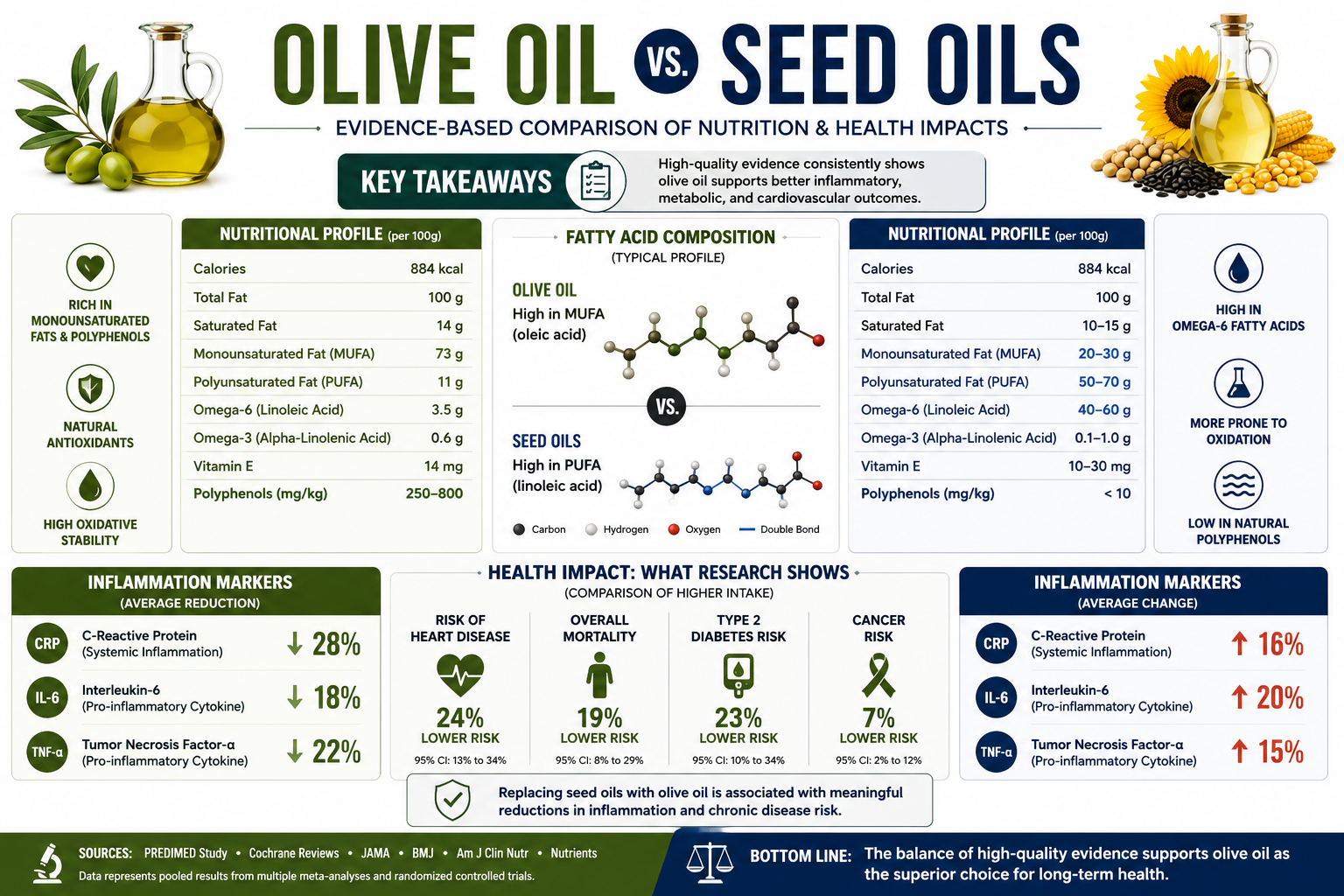
Extra virgin olive oil is approximately 55–83% oleic acid, a monounsaturated omega-9 fatty acid. Monounsaturated fats have one double bond in their carbon chain, which makes them considerably more resistant to oxidation than polyunsaturated fats under heat. EVOO also contains small amounts of saturated fat (around 14%) and a modest polyunsaturated fraction (around 9–11%), mostly linoleic acid.
Many seed oils are higher in polyunsaturated omega-6 fat
| Oil | Monounsaturated (%) | Omega-6 PUFA (%) | Omega-3 PUFA (%) | Saturated (%) |
|---|---|---|---|---|
| Extra virgin olive oil | 55–83 | 3–21 | 0.5–1.5 | 10–16 |
| Canola oil | 55–65 | 18–22 | 8–10 | 6–7 |
| Soybean oil | 22–25 | 50–54 | 6–8 | 14–16 |
| Corn oil | 24–32 | 53–60 | 1–2 | 13–14 |
| Sunflower oil (high-linoleic) | 14–35 | 48–74 | <1 | 9–12 |
| Safflower oil (high-linoleic) | 12–17 | 73–79 | <1 | 9–11 |
Approximate ranges. Composition varies by variety, growing conditions, and processing. Source: USDA FoodData Central.
Why fatty acid structure matters when cooking
Polyunsaturated fats have multiple double bonds. Each double bond is a potential site for oxidation — a chemical reaction that generates aldehydes, lipid peroxides, and other breakdown products when the oil is exposed to heat, light, or oxygen. The more double bonds, the more reactive the fat.
This is why high-linoleic sunflower oil heated repeatedly in a commercial fryer generates significantly higher levels of oxidation products than EVOO used for home sautéing. The fatty acid structure is not irrelevant — it is central to understanding why context matters when comparing these oils.
Do Seed Oils Cause Inflammation?
The popular claim
The influencer version of this argument runs roughly as follows: seed oils are high in omega-6 linoleic acid, linoleic acid converts to arachidonic acid, arachidonic acid is a precursor to pro-inflammatory eicosanoids, therefore seed oils cause systemic inflammation and drive chronic disease.
That is a strong claim and it needs strong proof. Let’s look at what the human evidence actually shows.
What human studies actually show
The evidence from controlled human trials does not consistently support the idea that dietary linoleic acid at normal intakes raises inflammatory markers. A 2012 systematic review and meta-analysis published in the Journal of Nutrition examined the effects of dietary linoleic acid on inflammatory markers and found no significant pro-inflammatory effect at typical dietary intakes. A Cochrane-adjacent review of omega-6 fats and cardiovascular outcomes similarly found that replacing saturated fat with omega-6 PUFA reduced cardiovascular events in several trials, though the picture is complicated by study design and food matrix differences.
The conversion of linoleic acid to arachidonic acid in humans is tightly regulated and relatively inefficient. Most dietary linoleic acid is used for energy or incorporated into cell membranes rather than converted to arachidonic acid. The mechanistic concern is real, but the magnitude in real-world human diets is likely much smaller than the social media narrative suggests.
Where the concern still makes sense
Context matters. The concern about seed oils and inflammation becomes more defensible when you look at:
- Repeated high-heat frying, which generates oxidised lipids and aldehydes with demonstrated pro-inflammatory and cytotoxic effects in cell and animal studies
- Ultra-processed food consumption, where refined seed oils are paired with refined carbohydrates, excess sodium, and minimal fibre — a combination with strong epidemiological links to inflammatory disease
- Displacement of omega-3-rich foods, where seed oil dominance in the diet correlates with a worsening omega-6 to omega-3 ratio
The real enemy may not be seed oil in isolation. It may be the industrial food system that uses cheap refined oils to make ultra-processed foods hyper-palatable, shelf-stable, and easy to overeat. That is a more accurate and more useful framing than “seed oils are poison.”
For a broader look at how food processing affects gut chemistry and inflammatory pathways, see our guide on modern food processing and gut chemistry.
Why Extra Virgin Olive Oil Has a Stronger Anti-Inflammatory Case
EVOO is not just fat. It is fat plus polyphenols
This is where the olive oil vs seed oils comparison becomes genuinely one-sided. Extra virgin olive oil contains a range of phenolic compounds that refined seed oils simply do not have in meaningful quantities. The key ones include:
- Hydroxytyrosol — one of the most potent antioxidants found in any food, with demonstrated effects on oxidative stress markers
- Oleuropein derivatives — precursors and breakdown products with anti-inflammatory and cardioprotective activity
- Oleocanthal — a natural COX inhibitor with a mechanism similar (though weaker) to ibuprofen
- Oleacein — associated with reduced LDL oxidation and endothelial protection
The polyphenol content of EVOO varies considerably — from around 50 mg/kg in lower-quality extra virgin oils to over 500 mg/kg in high-phenolic varieties. This is why not all EVOO is equal, and why “light” or “pure” olive oil, which is refined, provides essentially none of these benefits.
Human evidence supports benefits from higher-polyphenol olive oil
The EUROLIVE trial — a randomised crossover study in healthy European men — demonstrated that consuming olive oils with progressively higher polyphenol content produced dose-dependent increases in HDL cholesterol and reductions in oxidised LDL. This was not a theoretical effect. It was measured in humans consuming real olive oil under controlled conditions.
The EU health claim for olive oil polyphenols (specifically hydroxytyrosol and its derivatives) — that they contribute to the protection of blood lipids from oxidative stress — is one of the few health claims to survive the European Food Safety Authority’s rigorous evaluation process. That matters. It is not marketing language. It is a regulatory determination based on reviewed evidence.
The Mediterranean diet evidence matters
The PREDIMED trial (Prevención con Dieta Mediterránea) is the most cited human dietary trial in this space. The original 2013 paper in the New England Journal of Medicine reported a significant reduction in major cardiovascular events in participants assigned to a Mediterranean diet supplemented with extra virgin olive oil or mixed nuts, compared to a low-fat control diet. The trial was retracted and republished in 2018 with corrected statistical methods following concerns about randomisation at some sites — but the corrected analysis still supported the primary finding, with a hazard ratio of 0.69 for the EVOO group.
The evidence suggests that EVOO, as part of a broader dietary pattern, is genuinely protective. That is not the same as saying a single food cures disease. But it is a meaningful signal from a large, well-funded human trial.
For a deeper look at the specific health benefits of olive oil, see our detailed review of the proven health benefits of olive oil.
Cooking With Olive Oil vs. Seed Oils: Smoke Point Is Not the Whole Story
Smoke point is useful, but overrated
Smoke point — the temperature at which an oil begins to visibly smoke — is widely used as a proxy for cooking safety. It is not a bad starting point, but it is an incomplete measure. An oil can begin generating harmful oxidation products well before it reaches its smoke point, particularly if it is high in polyunsaturated fats. Conversely, an oil with a lower smoke point but high antioxidant content may perform better under moderate heat than its smoke point suggests.
EVOO is suitable for most home cooking
A 2018 study published in ACTA Scientific Nutritional Health tested 10 different cooking oils for stability under heat and found that extra virgin olive oil produced the lowest levels of polar compounds (a measure of oxidative degradation) compared to other oils including refined vegetable oils, despite not having the highest smoke point. The researchers concluded that EVOO’s stability came from its polyphenol content and high oleic acid percentage working together.
| Oil | Approximate Smoke Point (°C) | Oxidative Stability | Suitable For |
|---|---|---|---|
| Extra virgin olive oil | 190–215 | High (polyphenols + oleic acid) | Dressings, sautéing, roasting, light frying |
| Refined olive oil | 220–240 | Moderate | Higher-heat cooking |
| Avocado oil | 250–270 | High (high oleic) | High-heat cooking, searing |
| Canola oil (refined) | 200–230 | Moderate | General cooking |
| Soybean oil | 230–240 | Low-moderate (high PUFA) | Limited high-heat use |
| Corn oil | 230–235 | Low-moderate (high PUFA) | Limited high-heat use |
| High-oleic sunflower | 225–235 | Moderate-high | General cooking |
| High-linoleic sunflower | 225–235 | Low (very high PUFA) | Cold use preferred |
Smoke points are approximate and vary by refinement level, freshness, and brand.
When refined oils become more concerning
The concern about seed oils increases substantially under these conditions:
- Repeated frying cycles — each heating cycle degrades PUFA-rich oils further, accumulating aldehydes and polar compounds
- Industrial deep frying — commercial fryers run at high temperatures for extended periods, a very different exposure to home cooking
- Packaged and processed foods — the oils used in biscuits, crackers, chips, and fast food are often partially hydrogenated or heavily refined versions that have already been exposed to significant processing stress
Are Refined Seed Oils Toxic Machine Oil Sold as Food?
The processing concern is real, but language matters
The claim that seed oils are “industrial lubricants” or “not fit for human consumption” is a rhetorical overreach that undermines the legitimate concern underneath it. Let’s call it what it is: an exaggeration that makes it easier for people to dismiss the real issue.
The real issue is this. Most commercial seed oils are produced through a process involving:
- Solvent extraction using hexane (a petroleum-derived solvent) to maximise yield
- Degumming, neutralisation, and bleaching to remove impurities and colour
- Deodorisation at high temperatures (240–270°C) to remove flavour compounds
This process is effective at producing a neutral, shelf-stable oil. It is also effective at destroying most of the naturally occurring antioxidants and minor bioactive compounds that were in the original seed. What remains is a highly refined fat with minimal nutritional complexity.
What the evidence says about process contaminants
Deodorisation at high temperatures can generate 3-monochloropropane-1,2-diol (3-MCPD) esters and glycidyl esters — process contaminants that have raised concern with food safety regulators including the European Food Safety Authority (EFSA) and the US Food and Drug Administration (FDA). EFSA has set a tolerable daily intake for 3-MCPD and classified glycidyl esters as genotoxic carcinogens at sufficient doses, though typical dietary exposures through normal food consumption are considered low risk for most adults.
This is not a reason to panic. It is a reason to be aware that industrial refining is not a neutral process, and that “refined” does not automatically mean “safe and inert.”
Better framing
The more accurate and useful position is: refined seed oils are not poison in the way a toxin is poison. They are nutritionally depleted fats with a processing history that generates trace contaminants, that degrade more readily under heat than EVOO, and that dominate the ultra-processed food supply. That combination makes them a poor foundation for daily cooking — not because of any single dramatic mechanism, but because of accumulated exposure across a whole dietary pattern.
This connects to a broader point about how modern food processing affects gut chemistry and systemic health — a topic worth understanding in more depth.
Omega-6 vs. Omega-3: The Balance Question
Omega-6 is essential, not automatically harmful
Linoleic acid (LA) is an essential fatty acid. The body cannot make it. It is required for cell membrane integrity, skin barrier function, and immune signalling. The idea that all omega-6 is harmful is not supported by the evidence. What the evidence does support is that the ratio of omega-6 to omega-3 in modern Western diets has shifted dramatically — from an estimated 4:1 in pre-industrial populations to somewhere between 15:1 and 20:1 in contemporary Western diets.
The modern diet problem is often too little omega-3
The stronger evidence points to inadequate omega-3 intake — particularly EPA and DHA from oily fish — as a more meaningful driver of the omega-6/omega-3 imbalance than excess omega-6 alone. Increasing oily fish consumption, adding flaxseed or chia seeds, or supplementing with high-quality fish oil will likely do more for your inflammatory balance than eliminating sunflower oil from your kitchen.
That said, reducing refined seed oil consumption is still sensible — not because linoleic acid is toxic, but because most of the seed oil in Western diets comes packaged inside ultra-processed foods that are harmful for multiple overlapping reasons.
Practical takeaway
The simplest way to look at it is this: eat more omega-3-rich whole foods (oily fish, walnuts, flaxseed), use EVOO as your primary cooking fat, and reduce ultra-processed food consumption. That addresses the omega-6/omega-3 imbalance more effectively than any single-oil swap.
For a broader view of how anti-inflammatory food choices work together, see the best anti-inflammatory foods for gut health.
Which Oil Should You Actually Cook With?
Best everyday default: extra virgin olive oil
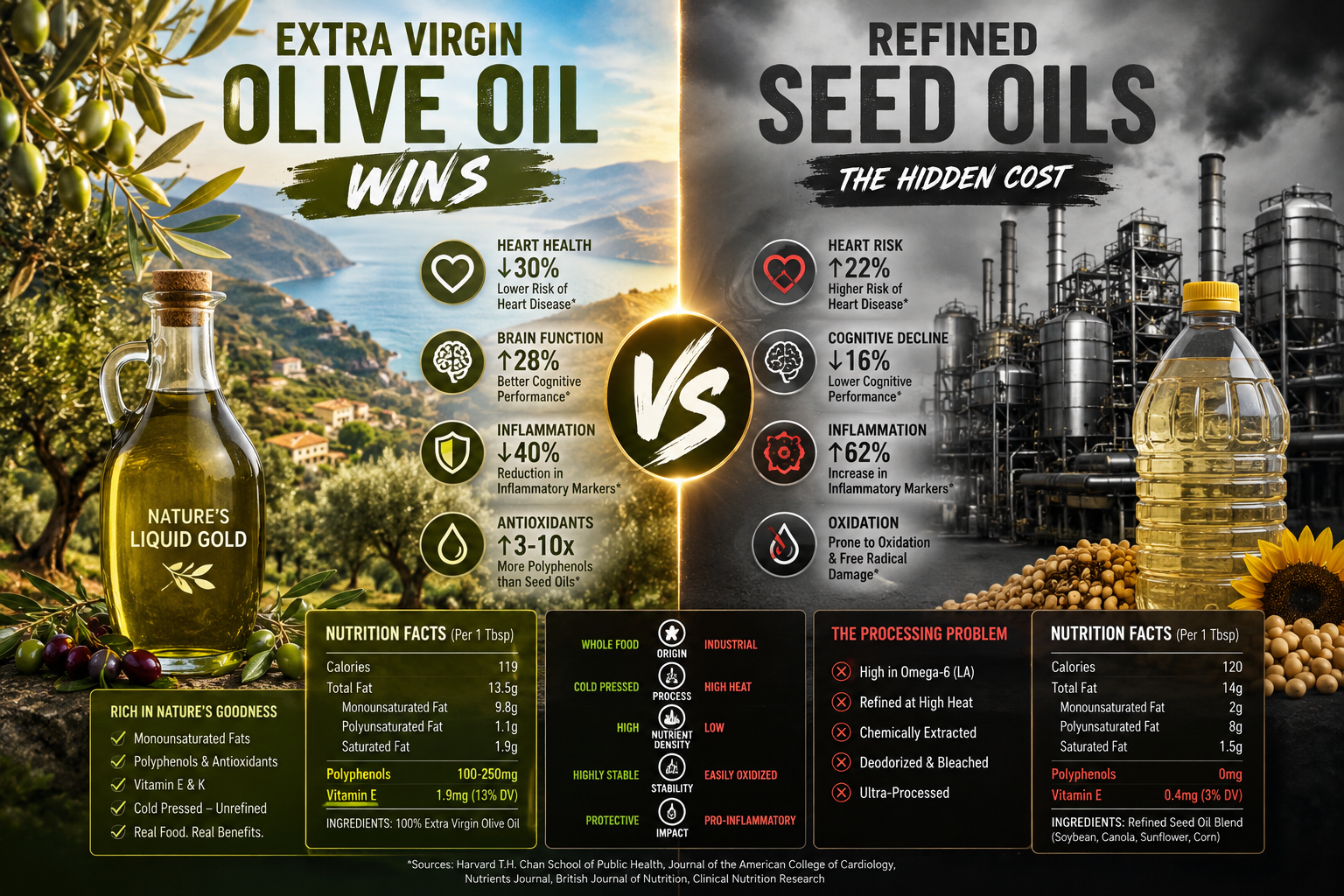
For the vast majority of home cooking — salad dressings, sautéing vegetables, roasting at 180–200°C, light pan frying, finishing dishes — high-quality EVOO is both suitable and the best choice available. The evidence for its stability, polyphenol content, and dietary-pattern benefits is stronger than for any seed oil.
Acceptable occasional options
- Avocado oil (refined or unrefined): high oleic acid content, high smoke point, reasonable oxidative stability. A good choice for high-heat cooking where you want a neutral flavour.
- High-oleic sunflower oil: a meaningfully different product from standard high-linoleic sunflower oil. Much higher in oleic acid, more stable under heat. Acceptable for occasional higher-heat cooking.
- Canola oil: better fatty acid profile than most seed oils (higher monounsaturated, some omega-3), but heavily refined. Acceptable in limited use where a neutral-flavoured oil is needed.
Oils to minimise
- Standard high-linoleic sunflower oil
- Corn oil
- Soybean oil
- Safflower oil (high-linoleic variety)
- Any partially hydrogenated oil
Decision guide by cooking method:
| Cooking Method | Best Choice | Acceptable | Minimise |
|---|---|---|---|
| Raw dressings | EVOO (high-polyphenol) | Avocado oil | Refined seed oils |
| Sautéing (medium heat) | EVOO | Avocado, high-oleic sunflower | Corn, soybean |
| Roasting (180–200°C) | EVOO | Avocado oil | High-linoleic sunflower |
| Searing (high heat) | Avocado oil | Refined olive oil | High-PUFA seed oils |
| Deep frying (home) | Avocado oil | Refined olive oil | Soybean, corn, sunflower |
| Packaged/processed food | N/A — read labels | N/A | Avoid products using cheap seed oils |
How to Choose a Better Olive Oil
Choose extra virgin, not light olive oil
“Light” olive oil is refined. It has been processed to remove colour and flavour — and in doing so, most of the polyphenols are removed as well. From a health perspective, it offers little advantage over a refined seed oil. Extra virgin is the only grade that retains the full polyphenol profile.
Look for freshness and storage quality
Polyphenol content degrades with time, heat, and light exposure. A sensible starting point is to look for:
- A harvest date on the label (not just a best-before date)
- Oils harvested within the last 12–18 months
- Dark glass or tin packaging (not clear plastic)
- Storage away from heat and direct light
Polyphenol-rich EVOO signs
Higher-polyphenol EVOO tends to be:
- Greener in colour (early harvest)
- More bitter and peppery — the throat-catch sensation from oleocanthal is a reliable indicator of polyphenol content
- Labelled with total polyphenol content (some premium brands now include this)
- From varieties known for high phenolics: Koroneiki (Greek), Picual (Spanish), Coratina (Italian)
The bitterness and peppery finish are not flaws. They are the flavour of the bioactive compounds doing their job. If your olive oil tastes like nothing, it probably contains very little of what makes EVOO worth choosing.
For more on the specific compounds in EVOO and their documented effects, our evidence-based guide to the health benefits of natural foods and herbs covers the polyphenol research in broader context.
Common Mistakes People Make in the Seed Oil Debate
Mistake 1: Calling all seed oils toxic
It is not that simple. Canola oil and high-linoleic safflower oil have meaningfully different fatty acid profiles. Cold-pressed sunflower oil used in a salad dressing is not the same exposure as hydrogenated soybean oil in a commercial biscuit. Treating all seed oils as a single toxic category makes the argument easier to dismiss — and easier to manipulate.
Mistake 2: Ignoring ultra-processed foods
The biggest driver of seed oil harm in modern diets is not the bottle of canola oil in someone’s kitchen cupboard. It is the cumulative exposure from ultra-processed foods — biscuits, crackers, instant noodles, fast food, packaged snacks — where refined seed oils are paired with refined carbohydrates, excess sodium, and minimal fibre. Focusing only on the oil misses the larger pattern.
Mistake 3: Judging cooking oils only by smoke point
As discussed above, smoke point is an incomplete measure. Oxidative stability — which depends on fatty acid composition and antioxidant content — is a more useful indicator of how an oil performs under real cooking conditions. EVOO outperforms many higher-smoke-point seed oils on this measure.
Mistake 4: Assuming refined means automatically safe or unsafe
Refinement removes impurities and extends shelf life, but it also removes beneficial compounds and can introduce process contaminants. Refined does not mean safe. Unrefined does not automatically mean better for every purpose. Context matters — what was in the original food, what the refining process does to it, and how the oil is ultimately used.
Mistake 5: Replacing seed oils with unlimited butter, coconut oil, or tallow
This is where hype gets in the way. Some people who eliminate seed oils replace them with large amounts of saturated fat — butter, coconut oil, beef tallow — on the assumption that saturated fat has been fully rehabilitated. The evidence on saturated fat and cardiovascular risk is genuinely more nuanced than 1990s guidelines suggested. But that does not mean unlimited saturated fat is the answer. The stronger evidence points to EVOO and other monounsaturated-rich fats as the best replacement for both refined seed oils and excess saturated fat.
The Evidence-Based Bottom Line
The APH verdict
Based on current evidence, extra virgin olive oil is the best everyday cooking fat available for most people. It is less refined than seed oils, richer in protective polyphenols, more oxidatively stable under normal home cooking conditions than its smoke point suggests, and supported by stronger human dietary-pattern evidence than any seed oil.
Seed oils are not proven to be directly toxic at normal dietary intakes. The concern is more specific and more important than “omega-6 is poison”: it is that refined seed oils dominate ultra-processed foods, degrade under repeated high-heat use, and arrive in the diet stripped of the bioactive compounds that make whole food fats worth eating.
The basics still do the heavy lifting here. Use good EVOO as your default fat. Eat more omega-3-rich whole foods. Reduce ultra-processed food consumption. That combination addresses the olive oil vs seed oils inflammation question more effectively than any single dramatic dietary swap.
Practical takeaway list
- Use high-quality extra virgin olive oil as your primary cooking and dressing fat
- Choose EVOO with a harvest date, dark packaging, and a peppery finish
- For very high-heat cooking (searing, deep frying), use avocado oil or refined olive oil
- Reduce ultra-processed food consumption — this is where most harmful seed oil exposure comes from
- Do not obsess over a single tablespoon of canola oil in a home-cooked meal
- Increase oily fish, walnuts, or flaxseed to improve your omega-3 intake
- Read ingredient labels: if refined seed oil is in the top three ingredients of a packaged food, that is a signal about the overall food quality
- Do not replace seed oils with unlimited saturated fat — the evidence does not support that swap
Summary: Use often, use selectively, minimise
| Category | Oils |
|---|---|
| Use often | Extra virgin olive oil |
| Use selectively | Avocado oil, high-oleic sunflower, refined olive oil (high heat only) |
| Minimise | Soybean, corn, high-linoleic sunflower, safflower, cottonseed, partially hydrogenated oils |
For practical guidance on building an overall healthy dietary pattern, the evidence-based guide to the most nutrient-dense foods is a useful companion resource.
Conclusion
The olive oil vs seed oils debate has generated more heat than light in recent years. The evidence, when read carefully, tells a more nuanced story than either side typically presents.
Extra virgin olive oil earns its place as the superior everyday fat — not through dramatic mechanisms or miracle compounds, but through a consistent combination of factors: a fatty acid profile dominated by stable oleic acid, a polyphenol content with genuine human trial support, a minimal processing history that preserves bioactive compounds, and a dietary pattern context (the Mediterranean diet) with some of the strongest cardiovascular outcome evidence available.
Seed oils are not poison. But they are nutritionally depleted, more prone to oxidative degradation under heat, and the dominant fat in the ultra-processed food supply. That combination makes them a poor foundation for an anti-inflammatory diet, even if no single mechanism proves they are directly harmful at normal intakes.
The actionable steps are straightforward: switch to high-quality EVOO for everyday cooking, reduce ultra-processed food consumption, and increase omega-3-rich whole foods. There is no magic in it. But the evidence suggests it is one of the most practical dietary upgrades available to most people in 2026.
For more on building an anti-inflammatory lifestyle that goes beyond cooking oil choices, explore our anti-inflammatory foods ultimate guide and the broader health benefits of natural foods and herbs.
FAQs
Is olive oil better than seed oils?
For everyday use, yes — extra virgin olive oil is the better choice. It is less refined, higher in protective polyphenols, more oxidatively stable under normal cooking conditions, and supported by stronger human dietary-pattern evidence. The advantage is not simply that it is lower in omega-6; it is the combination of polyphenol content, fatty acid stability, and minimal processing.
Do seed oils cause inflammation?
The evidence does not clearly support the claim that seed oils directly cause inflammation at normal dietary intakes. The concern is more specific: repeated high-heat use generates oxidised lipids with pro-inflammatory effects, and seed oils dominate ultra-processed foods that are associated with inflammatory disease through multiple overlapping mechanisms. The isolated oil at moderate intake is less concerning than the food patterns it is embedded in.
Is omega-6 bad for you?
No. Omega-6 linoleic acid is an essential fatty acid that the body requires. The problem in modern diets is not that omega-6 is inherently harmful — it is that the ratio of omega-6 to omega-3 has shifted dramatically because omega-3 intake has fallen. Increasing omega-3-rich foods is likely more effective than eliminating omega-6.
Can you cook with extra virgin olive oil?
Yes. EVOO is suitable for sautéing, roasting at normal home temperatures (up to around 200°C), and light frying. Research shows it produces lower levels of oxidation products under heat than many higher-smoke-point seed oils, because its polyphenol content and high oleic acid percentage provide meaningful oxidative protection. For very high-heat applications like searing or deep frying, avocado oil or refined olive oil are better choices.
Is smoke point the best way to judge cooking oils?
No. Smoke point is a useful starting reference but an incomplete measure of cooking safety. Oxidative stability — which depends on fatty acid composition and antioxidant content — is a more accurate indicator of how an oil performs under real cooking conditions. EVOO has high oxidative stability despite a moderate smoke point.
Is canola oil better or worse than olive oil?
Canola oil has a better fatty acid profile than most seed oils — higher in monounsaturated fat and containing some omega-3. But it is heavily refined, contains minimal bioactive compounds, and lacks the polyphenol content that gives EVOO its documented health advantages. It is not in the same category as corn or high-linoleic sunflower oil, but it is not a substitute for quality EVOO either.
References & Research Sources
- Estruch R, Ros E, Salas-Salvadó J, et al. “Primary Prevention of Cardiovascular Disease with a Mediterranean Diet Supplemented with Extra-Virgin Olive Oil or Nuts.” N Engl J Med. 2018;378(25):e34. PMID: 29897866
- Fitó M, Guxens M, Corella D, et al. “Effect of a Traditional Mediterranean Diet on Lipoprotein Oxidation.” Arch Intern Med. 2007;167(11):1195-1203. PMID: 17563028
- Covas MI, Nyyssönen K, Poulsen HE, et al. “The Effect of Polyphenols in Olive Oil on Heart Disease Risk Factors.” Ann Intern Med. 2006;145(5):333-341. PMID: 16954359
- Martín-Peláez S, Covas MI, Fitó M, et al. “Health Effects of Olive Oil Polyphenols: Recent Advances and Possibilities for the Use of Health Claims.” Mol Nutr Food Res. 2013;57(5):760-771. PMID: 23280833
- Guasch-Ferré M, et al. “Olive Oil Consumption and Cardiovascular Risk in the SUN Project.” Clin Nutr. 2014;33(3):491-499. PMID: 23735721
- Ramsden CE, Zamora D, Leelarthaepin B, et al. “Use of Dietary Linoleic Acid for Secondary Prevention of Coronary Heart Disease and Death.” BMJ. 2013;346:e8707. PMID: 23386268
- De Souza RJ, et al. “Intake of Saturated and Trans Unsaturated Fatty Acids and Risk of All Cause Mortality, Cardiovascular Disease, and Type 2 Diabetes.” BMJ. 2015;351:h3978. PMID: 26268692
- Stepien M, et al. “Synthesis of Elaidic Acid and 9- and 13-Hydroperoxides during Heating of Seed Oils.” J Agric Food Chem. 1997;45(1):116-123.
- Grootveld M, et al. “Health Effects of Oxidised and Heat-Treated Vegetable Oils.” Food Sci Nutr. 2020;8(9):4477-4491. PMID: 32994916
About the author
Dave James is a health researcher and writer specialising in evidence-based nutrition, exercise, and longevity. He founded All Perfect Health to provide clear, practical health guidance rooted in current research and real-world experience.
📂 Anti-Inflammatory Foods and Diets: Ultimate Guide
This article is part of the APH cluster. Use the links below to move between the pillar and child articles.
- Read the pillar: Anti-Inflammatory Foods and Diets: Ultimate Guide
- → Inflammation Is Not the Enemy: Glycine, Whole Foods and the Ultra-Processed Diet Problem
- → The Best Anti-Inflammatory Foods for Gut Health: A Complete Guide
- → Foods that are anti-inflammatory
- → What Are Polyphenols? Benefits, Food Sources and What the Evidence Shows
- → Polyphenol-Rich Foods Ranked: The Best Berries, Cacao, Coffee, Herbs, Spices, Green Tea, and Extracts
- → Health Benefits of Turmeric: What the Research Actually Shows
- YOU ARE HERE Olive Oil vs. Seed Oils: What the Evidence Actually Says About Cooking Fats and Inflammation