
Inflammation Is Not the Enemy: Glycine, Whole Foods and the Ultra-Processed Diet Problem

Last updated: May 24, 2026
In this article
- Featured Video: Best Food Sources of Glycine for Reducing Chronic Inflammation
- Inflammation Is a Repair Program, Not a Disease
- Why Modern Diets Keep the Fire Burning
- The Missing Traditional Food: Bone Broth and Connective Tissue
- Glycine: The Sweet Amino Acid That Supports Repair
- What Exactly Is Chronic Inflammation and How Does Glycine Help?
- Can Glycine Really Lower Inflammation Markers in Blood Tests?
- Best Food Sources of Glycine for Reducing Chronic Inflammation
- How Much Glycine Should You Take Daily to Reduce Inflammation?
- Glycine Supplements vs Natural Glycine Intake: Which Is Better?
- Does Glycine Help With Specific Inflammatory Conditions Like Arthritis?
- How Quickly Does Glycine Start Working to Reduce Inflammation?
- Are There Side Effects of Taking Glycine for Inflammation?
- Who Should Not Take Glycine for Inflammatory Conditions?
- Common Mistakes People Make When Using Glycine for Inflammation
- The APH Food Pattern for Inflammatory Resolution
- Practical Glycine Routine
- What This Does Not Mean
- Practical Glycine Intake Estimator
Quick Answer
Chronic inflammation is not simply inflammation that has gone wrong — it is inflammation that has not been allowed to resolve. The body’s repair system gets stuck in a low-grade active state, often because modern diets provide constant chemical irritants (seed oils, refined carbohydrates, ultra-processed food additives) while simultaneously removing the repair nutrients the resolution phase actually needs. Glycine — an amino acid found abundantly in bone broth, connective tissue, skin, cartilage and slow-cooked collagen-rich cuts — is one of the most underappreciated of those repair nutrients, and it is almost entirely absent from the modern lean-muscle-meat-only diet.
Key Takeaways
- Inflammation is a repair program, not a disease. Acute inflammation is purposeful and time-limited. Chronic inflammation is what happens when resolution is blocked.
- Modern ultra-processed diets do two damaging things at once: they supply continuous chemical irritants and remove the nutrients needed to resolve inflammation.
- Glycine is a conditionally essential amino acid that plays a central role in collagen synthesis, glutathione production, and the regulation of inflammatory signalling — but it is largely missing from diets built on lean muscle meat and processed foods.
- Humans historically ate the whole animal — bones, joints, skin, cartilage, organ meats, slow-cooked broth — and got substantial glycine from collagen and gelatin compounds as a matter of routine.
- Food-first glycine sources include bone broth, oxtail, chicken feet, slow-cooked shanks, pork skin, beef cheeks, and any cut with visible connective tissue.
- Glycine powder is a practical supplement option with a naturally sweet taste; it can be stirred into tea, coffee, mineral water, yoghurt, kefir or a bedtime drink.
- Seed oils, refined carbohydrates and ultra-processed food matrices are the primary dietary drivers of unresolved chronic inflammatory stress — removing them matters as much as adding glycine.
- The evidence suggests glycine can modulate inflammatory markers and support tissue repair, but it is not a cure for any inflammatory disease.
- Anyone with chronic pain, autoimmune disease, inflammatory bowel disease, kidney or liver disease, or who is pregnant or on medication should work with a clinician before making significant dietary changes or starting supplements.
- The basics still do the heavy lifting: whole animal foods, no seed oils, no ultra-processed foods, minimal sugar, adequate sleep, and moderate daily movement.
Practical tool: If you want to sanity-check your current intake, jump to the Practical Glycine Intake Estimator. It works without scripts, so it remains simple and reliable for readers.
Table of Contents
- Inflammation Is a Repair Program, Not a Disease
- Why Modern Diets Keep the Fire Burning
- The Missing Traditional Food: Bone Broth and Connective Tissue
- Glycine: The Sweet Amino Acid That Supports Repair
- What Exactly Is Chronic Inflammation and How Does Glycine Help?
- Can Glycine Really Lower Inflammation Markers in Blood Tests?
- Best Food Sources of Glycine for Reducing Chronic Inflammation
- How Much Glycine Should You Take Daily to Reduce Inflammation?
- Glycine Supplements vs Natural Glycine Intake: Which Is Better?
- Does Glycine Help With Specific Inflammatory Conditions Like Arthritis?
- How Quickly Does Glycine Start Working to Reduce Inflammation?
- Are There Side Effects of Taking Glycine for Inflammation?
- Who Should Not Take Glycine for Inflammatory Conditions?
- Common Mistakes People Make When Using Glycine for Inflammation
- The APH Food Pattern for Inflammatory Resolution
- Practical Glycine Routine
- What This Does Not Mean
- FAQ
- Practical Glycine Intake Estimator
- References and Further Reading
- Conclusion

Inflammation Is a Repair Program, Not a Disease
Most health content treats inflammation as something to suppress. That framing misses the point entirely. Inflammation is the body’s first-response repair system — a tightly coordinated biological program that clears damaged tissue, fights pathogens, and begins the rebuilding process. Without it, wounds would not heal and infections would not resolve.
The real issue with chronic inflammation and glycine deficiency is not that inflammation exists. It is that the resolution phase — the part where the body actively switches off the inflammatory response and completes the repair — is not happening properly.
Acute Inflammation vs Chronic Unresolved Inflammation
Acute inflammation is precise and time-limited. A cut, a bruise, an infection — the body sends immune cells to the site, clears the problem, and then actively resolves the response. Redness, warmth, swelling and pain are signs the system is working, not failing.
Chronic low-grade inflammation is different in character. It is not a bigger version of acute inflammation — it is a stuck version. The resolution signal never fully arrives. Immune activity continues at a low, persistent level, generating oxidative stress and tissue irritation over months and years without completing the repair cycle.
This distinction matters because it changes what you do about it. Suppressing inflammation with drugs or supplements does not fix a blocked resolution process. It just quiets the signal while the underlying problem continues.
Resolution Is the Missing Phase
The body has a dedicated resolution system — specialised lipid mediators called resolvins and protectins (derived partly from omega-3 fatty acids) that actively switch off inflammatory signalling and promote tissue repair. This is not a passive process where inflammation just fades. Resolution is an active biological program that requires specific inputs.
When those inputs are missing — or when the diet is actively interfering with the resolution machinery — the inflammatory state persists. That is the real story behind chronic low-grade inflammation in most adults eating a modern Western diet.
Why Modern Diets Keep the Fire Burning
The modern Western diet creates a specific double problem: it continuously triggers inflammatory signalling while simultaneously removing the nutrients needed to resolve it. Let’s keep this practical and look at each driver separately.

Ultra-Processed Food Matrices
Ultra-processed foods are not just nutritionally poor — they contain structural and chemical elements that the gut and immune system treat as foreign irritants. Emulsifiers, artificial preservatives, synthetic flavour compounds, and food-grade industrial chemicals disrupt the gut barrier and activate immune responses in ways that whole foods do not.
The gut lining is the largest interface between the immune system and the outside world. When ultra-processed food additives compromise that barrier, bacterial fragments and food antigens cross into the bloodstream, triggering low-grade systemic immune activation. For a deeper look at how this works, see our guide on ultra-processed foods, emulsifiers and gut health.
Here’s the real issue: it is not just one additive causing the problem. It is the cumulative load of a diet built almost entirely on processed food matrices, day after day, year after year.
Seed Oils and Industrial Refined Fats
Seed oils — soybean, sunflower, corn, canola, cottonseed, safflower — are extremely high in omega-6 polyunsaturated fatty acids, particularly linoleic acid. The human body uses fatty acids to produce both pro-inflammatory and pro-resolution signalling molecules. The balance between omega-6 and omega-3 fats in the diet directly influences which direction that signalling goes.
Pre-industrial diets likely had an omega-6 to omega-3 ratio somewhere between 1:1 and 4:1. Modern Western diets, dominated by seed oils, commonly reach ratios of 15:1 to 20:1 or higher. That imbalance tilts the resolution machinery toward persistent inflammatory signalling and away from the resolvins and protectins that shut inflammation down.
Seed oils are also highly susceptible to oxidation during cooking and storage, generating aldehydes and other breakdown products that are directly pro-inflammatory. This is not a fringe position — it is straightforward lipid biochemistry.
Refined Carbohydrates and Sugar
Refined carbohydrates and added sugars drive repeated blood glucose and insulin spikes. Chronically elevated blood glucose promotes the formation of advanced glycation end-products (AGEs), which activate inflammatory receptors on immune cells. Insulin resistance — a downstream consequence of chronic sugar and refined carb excess — is itself a pro-inflammatory metabolic state.
The connection between blood sugar dysregulation and chronic inflammation is well-established. If you want to understand the early warning signs of metabolic stress, our article on diabetes early signs covers the progression clearly.
Poor Amino-Acid Balance and Missing Repair Nutrients
This is the part mainstream nutrition rarely discusses. Modern diets are not just pro-inflammatory — they are also deficient in the specific amino acids and micronutrients that the body needs to complete tissue repair and resolve inflammatory stress.
Glycine is the clearest example. It is the most abundant amino acid in the human body’s connective tissue and collagen, but it is almost absent from the lean muscle meat that makes up the majority of animal protein in modern diets. When the diet is built on chicken breast, lean mince, protein shakes and processed deli meat, glycine intake drops dramatically compared to what a traditional whole-animal diet would have provided.
The result is a body that is chronically short of one of its primary repair building blocks — at exactly the time it needs it most.
The Missing Traditional Food: Bone Broth and Connective Tissue
For most of human history, eating animal foods meant eating the whole animal. Bones were cracked for marrow. Joints were slow-cooked until the cartilage dissolved into the broth. Skin, feet, tails, and cheeks were all part of the regular diet. This was not a health trend — it was practical food culture, driven by the reality that nothing was wasted.
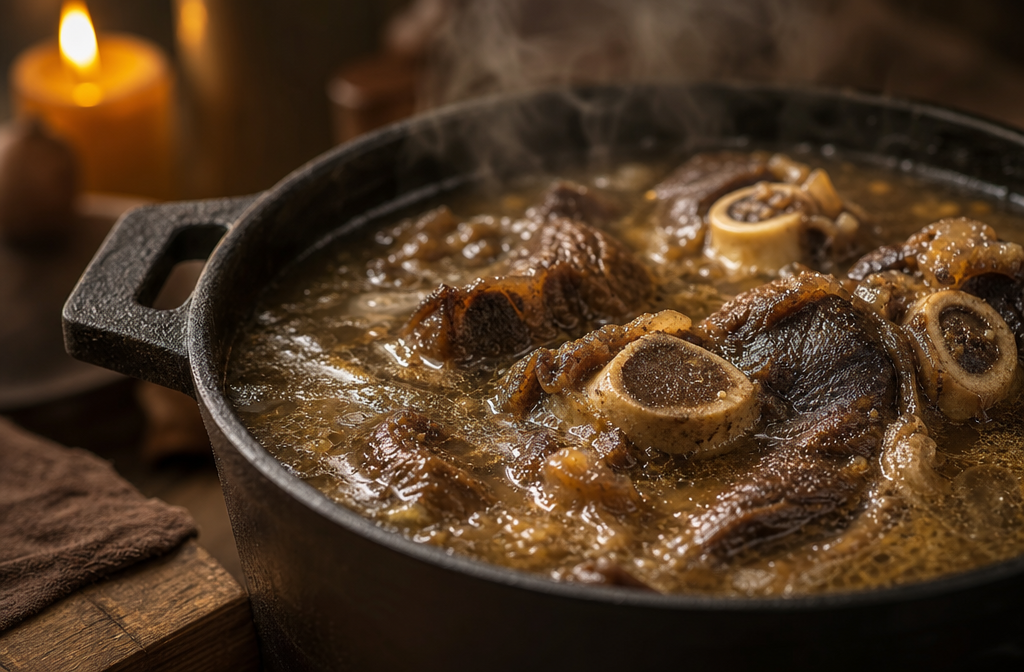
Humans Ate Bones, Joints, Skin, Cartilage and Gelatin-Rich Cuts
Traditional cuisines across every culture reflect this pattern. French pot-au-feu uses marrow bones and cartilage-rich cuts. Vietnamese pho is built on a long-simmered bone broth. Chinese cuisine has always included pig’s feet, chicken feet and slow-cooked tendons. British working-class cooking historically relied on oxtail, trotters, and brawn. South American cultures slow-cook whole carcasses. These are not exotic practices — they were the norm.
What these foods have in common is a high content of collagen, gelatin and the amino acids that come with them — particularly glycine and proline. A properly made bone broth, simmered for six to twelve hours, contains meaningful amounts of gelatin and free amino acids that are almost entirely absent from a diet of boneless, skinless, lean cuts.
Why Lean-Muscle-Meat-Only Eating Is Not True Nose-to-Tail Nutrition
Lean muscle meat is high in methionine (another amino acid) and relatively low in glycine. This matters because methionine and glycine need to be in reasonable balance for the body to manage certain metabolic pathways efficiently. A diet very high in methionine and very low in glycine may place additional demands on the body’s glycine reserves, which are already being drawn on for collagen synthesis, glutathione production, and bile acid conjugation.
In plain English: eating only boneless chicken breast and lean mince is not the same as eating animal foods the way humans have eaten them for most of history. The whole-animal pattern was naturally glycine-rich. The modern lean-meat-only pattern is not.
Bone Broth and Slow-Cooked Connective Tissue as Food-First Glycine
The simplest way to look at it is this: if you want to increase glycine through food, start with the cuts and cooking methods that extract collagen and gelatin.
Practical food-first glycine sources:
| Food | Glycine content (approximate) | Notes |
|---|---|---|
| Bone broth (homemade, 240ml) | 1–3g | Varies with bones used and cook time |
| Pork skin / crackling (30g) | ~2g | High collagen, practical snack |
| Oxtail, slow-cooked (100g) | ~2–3g | Excellent whole-food source |
| Chicken feet (100g) | ~3–4g | Very high collagen content |
| Beef cheeks (100g) | ~2g | Rich, practical cut |
| Gelatin powder (10g) | ~2–3g | Concentrated, food-grade |
| Lean chicken breast (100g) | ~0.7g | Low by comparison |
Note: Glycine values are approximate estimates based on published amino acid composition data for these food categories. Actual content varies by preparation method, animal breed, and cooking time.
Slow cooking is key. Collagen does not simply exist in a form the body can use directly — it needs to be broken down by heat and moisture over time to release gelatin and free amino acids. A two-hour braise releases far more than a quick pan-fry of the same cut.
Glycine: The Sweet Amino Acid That Supports Repair
Glycine is the smallest amino acid and, by mass, the most abundant amino acid in the human body’s connective tissue. It makes up roughly one-third of all amino acids in collagen. Despite this, it rarely gets the attention it deserves in mainstream nutrition discussions about chronic inflammation and repair.
Glycine, Collagen and Connective Tissue
Collagen is the structural protein that holds connective tissue together — tendons, ligaments, cartilage, skin, gut lining, blood vessel walls. The body synthesises collagen continuously, but the rate of synthesis depends on the availability of its building blocks, particularly glycine and proline, along with vitamin C as a cofactor.
When glycine supply is limited, collagen synthesis slows. This matters for tissue repair because damaged connective tissue — whether from mechanical stress, metabolic injury, or inflammatory processes — needs collagen to rebuild. Connective-tissue-rich foods provide collagen, gelatin and glycine-rich amino acids that support tissue repair and may help the body resolve inflammatory stress more effectively.
For some people, improving glycine and collagen intake may be associated with less inflammation-related discomfort, particularly when combined with removing ultra-processed foods, seed oils and excess sugar. This is not a claim that glycine cures pain or disease — it is a reasonable, evidence-aware observation about nutritional support for the body’s own repair processes.
Glutathione, Cytoprotection and Inflammatory Resolution
Glycine’s role extends well beyond collagen. It is one of three amino acids (along with glutamate and cysteine) required to synthesise glutathione — the body’s primary intracellular antioxidant and a key regulator of oxidative stress and inflammatory signalling.
Glycine also has direct cytoprotective effects. Research has shown that glycine can stabilise cell membranes and reduce the activation of certain immune cells (particularly macrophages and neutrophils) that drive inflammatory responses. This is not the same as suppressing immunity — it is more like helping the immune system modulate its own response more efficiently.
The evidence suggests that glycine acts at multiple points in the inflammatory process: supporting the structural repair of damaged tissue, reducing oxidative load through glutathione, and directly moderating the inflammatory signalling of immune cells.
Glycine Powder as a Practical Sweet Daily Add-In

One underappreciated practical detail: glycine tastes mildly sweet. Not artificial-sweet — genuinely pleasant, with a clean sweetness that is about 70–80% as sweet as table sugar by some estimates. This makes it one of the easiest supplements to incorporate into a daily routine without any palatability barrier.
Glycine powder can be stirred into:
- Hot tea or coffee (dissolves easily, adds mild sweetness)
- Mineral water or plain water
- Smoothies or protein drinks
- Plain yoghurt or kefir
- A warm bedtime drink (there is also reasonable evidence that glycine supports sleep quality, which itself has anti-inflammatory effects)
Food-first remains the APH priority. But glycine powder is a practical, low-cost way to close the gap between what a modern diet provides and what the body’s repair processes actually need.
What Exactly Is Chronic Inflammation and How Does Glycine Help?
Chronic inflammation is a state of persistent, low-grade immune activation that continues beyond the normal resolution window. Unlike acute inflammation — which resolves in days — chronic inflammation can persist for months or years, generating ongoing oxidative stress, tissue irritation, and metabolic disruption.
Glycine helps address chronic inflammation through several distinct mechanisms:
- Collagen and connective tissue repair — provides the primary structural amino acid for rebuilding damaged tissue that chronic inflammation erodes
- Glutathione synthesis — supports the body’s main antioxidant defence, reducing oxidative stress that perpetuates inflammatory signalling
- Immune cell modulation — research indicates glycine can reduce the pro-inflammatory activation of macrophages, partly through glycine-gated chloride channels on immune cells
- Gut barrier support — glycine contributes to the integrity of the gut lining, reducing the translocation of bacterial fragments that trigger systemic immune activation
- Sleep quality support — glycine has shown sleep-promoting effects in human studies, and poor sleep is itself a significant driver of chronic inflammatory stress
The connection between chronic inflammation, glycine, and the modern diet deficit is straightforward: the body needs glycine to resolve and repair, modern diets provide very little of it, and the same diets are also continuously triggering the inflammatory response that needs resolving.
Can Glycine Really Lower Inflammation Markers in Blood Tests?
The evidence here is genuinely interesting, though it is important to be measured about what it shows. Several human and animal studies have found associations between glycine supplementation and reductions in markers of inflammatory stress, including C-reactive protein (CRP), interleukin-6 (IL-6), and tumour necrosis factor-alpha (TNF-α).
A 2009 study published in the American Journal of Physiology found that glycine reduced inflammatory cytokine production in macrophages. Research in metabolic syndrome patients has shown that glycine supplementation was associated with reductions in oxidative stress markers and improvements in insulin sensitivity.
That said — and this matters — most studies are relatively short-term, use specific populations, and involve glycine as part of broader dietary interventions. The numbers matter, and so does context. Glycine is not a pharmaceutical intervention that reliably drops CRP by a specific percentage in all people. It is a nutritional input that supports the body’s own resolution machinery.
The stronger evidence points to glycine being most useful when:
- The diet is also being cleaned up (removing ultra-processed foods, seed oils, refined carbs)
- Intake is consistent over weeks to months, not days
- The person has a genuine glycine deficit to begin with (likely in anyone eating a lean-muscle-meat-only modern diet)
That is a strong claim and needs strong proof before it can be made categorically. What can be said with confidence is that the evidence supports glycine as a meaningful nutritional contributor to inflammatory resolution — not a magic bullet, but a genuine gap in most modern diets that is worth addressing.
Best Food Sources of Glycine for Reducing Chronic Inflammation
The best food sources of glycine for reducing chronic inflammation are collagen-rich animal foods that have been largely removed from the modern diet. These are not exotic or expensive — they are traditional, practical cuts and preparations that were standard before the food industry normalised boneless, skinless, processed convenience foods.
Expert insight: Dr. Paul Anderson. Dr. Paul Anderson is an integrative medicine physician with over 30 years of clinical experience. He is recognised for his evidence-based approach to nutritional medicine and detoxification protocols.
Expert insight: Dr. Paul Anderson. Dr. Paul Anderson is an integrative medicine physician with over 30 years of clinical experience. He is recognised for his evidence-based approach to nutritional medicine and detoxification protocols.
Top food-first glycine sources (ranked by practical impact):
- Homemade bone broth — made from beef knuckles, chicken carcasses, pork trotters, or mixed bones, simmered 6–12 hours. The gelatin content is the clearest indicator of glycine-rich collagen extraction. A properly made broth should gel when cooled.
- Oxtail — one of the best whole-food glycine sources, with significant connective tissue that breaks down beautifully in a slow braise
- Chicken feet — high in collagen, widely used in Asian cuisines, very cost-effective
- Pork skin and crackling — practical, high in glycine, works as a snack or cooking ingredient
- Beef cheeks, shanks, and short ribs — connective-tissue-rich cuts that release collagen with slow cooking
- Whole fish — the skin, bones and collagen-rich flesh around the spine provide glycine that fillet-only eating misses
- Gelatin powder — food-grade, unflavoured, can be added to broths, stews, or dissolved in warm drinks; a concentrated food-derived glycine source
For a broader look at how food quality and preparation affect nutrient availability, see our food science and preparation guide.
How Much Glycine Should You Take Daily to Reduce Inflammation?
There is no single established therapeutic dose of glycine for inflammation. A sensible starting point, based on the research literature and practical experience, is 3–5 grams per day from combined food and supplement sources. Some researchers have suggested that the average modern diet may provide only 2–3g of glycine daily, while the body’s biosynthetic and functional demands may be closer to 10g or more.
Practical daily glycine targets:
| Approach | Approximate daily glycine |
|---|---|
| Modern lean-meat diet (baseline) | ~2–3g |
| Adding 1–2 cups bone broth daily | +2–4g |
| Adding 5g glycine powder | +5g |
| Combined food + supplement approach | 9–12g |
For general inflammatory support in adults, a combined food-and-supplement approach providing 5–10g of glycine daily is a reasonable, evidence-aware target. More is not always better — very high doses (above 30–40g/day) have not been well-studied for long-term safety, though glycine is considered generally well-tolerated at supplemental doses of 3–15g per day.
A practical starting point:
- Add one cup of homemade bone broth daily (2–3g glycine)
- Add 3–5g glycine powder to a morning drink or bedtime tea
- Eat one collagen-rich cut (oxtail, shank, pork skin) two to three times per week
Keep it simple and consistent. The cumulative effect over weeks matters more than precise daily measurement.
Glycine Supplements vs Natural Glycine Intake: Which Is Better?
Food-first is always the APH priority, and for good reason. Whole-food sources of glycine come packaged with proline, hydroxyproline, vitamin C cofactors (if the diet also includes some plant foods), minerals from bones, and the full matrix of nutrients that support collagen synthesis and repair. A cup of properly made bone broth is not just glycine — it is a complex food with multiple repair-supporting components.
That said, glycine powder has a legitimate role. The reality is that most people are not making bone broth regularly, are not eating oxtail twice a week, and are not sourcing chicken feet from their local butcher. Glycine powder is pure glycine, derived from natural sources (typically from gelatin hydrolysis), inexpensive, stable, and easy to use.
Choose food-first if:
- You are willing to make bone broth or slow-cook connective-tissue cuts regularly
- You want the full nutritional matrix, not just isolated glycine
- You prefer to get nutrients from whole foods as a matter of principle
Consider glycine powder if:
- Your diet is not providing meaningful amounts of collagen-rich foods
- You want a consistent, measurable daily intake
- You are using it to supplement (not replace) food-based sources
- You want a practical, low-cost way to close a clear dietary gap
The simplest way to look at it is: use food as the foundation and glycine powder as a practical bridge. They are not competing approaches — they work together.
Does Glycine Help With Specific Inflammatory Conditions Like Arthritis?
This is where hype gets in the way of useful information, so let’s call it what it is: the evidence is promising but not conclusive for most specific inflammatory conditions.
What the research suggests:
- Osteoarthritis and joint health: Glycine and collagen peptides have been studied in joint health contexts. Some trials have found that collagen hydrolysate supplementation (which is rich in glycine and proline) was associated with reduced joint discomfort in people with osteoarthritis, though study quality varies. Connective-tissue-rich foods provide the building blocks for cartilage repair and may support joint comfort over time.
- Metabolic inflammation: The evidence is stronger here. Glycine has shown consistent effects on reducing oxidative stress and inflammatory markers in people with metabolic syndrome and type 2 diabetes in several studies.
- Gut inflammation: Glycine supports gut barrier integrity and may reduce the intestinal permeability that drives systemic inflammatory activation. This is relevant to conditions like inflammatory bowel disease, though anyone with IBD should work with a gastroenterologist before making significant dietary changes.
- Autoimmune conditions: There is theoretical rationale for glycine’s role in modulating immune activation, but the evidence base for specific autoimmune diseases is thin. Do not use this article as a basis for managing autoimmune disease without clinical guidance.
The honest summary: For general chronic inflammatory stress driven by a poor diet and glycine deficit, improving glycine intake alongside removing dietary irritants is a sensible, evidence-aware approach. For specific diagnosed inflammatory diseases, glycine may be a useful supportive nutritional strategy — but it is not a treatment, and it does not replace medical care.
For more on foods with established anti-inflammatory properties, see the best anti-inflammatory foods for gut health and our anti-inflammatory foods ultimate guide.
How Quickly Does Glycine Start Working to Reduce Inflammation?
It depends on the conditions. Glycine is not a fast-acting anti-inflammatory drug. It works by supporting the body’s own repair and resolution processes, which operate on biological timescales.
Realistic timelines:
- Sleep quality: Some people report improved sleep within a few days of taking 3g glycine before bed. This is one of the faster effects and is reasonably well-supported by human studies.
- Gut barrier and digestive comfort: Improvements in gut-related inflammatory symptoms may be noticeable within 2–4 weeks of consistent use alongside dietary changes.
- Connective tissue and joint support: Collagen synthesis and tissue repair are slow processes. Meaningful changes in joint comfort or connective tissue integrity typically require 8–12 weeks of consistent glycine and collagen intake.
- Inflammatory markers (CRP, IL-6): In studies where glycine has reduced inflammatory markers, effects were typically measured at 8–16 weeks.
The main takeaway is this: glycine is a long-game nutritional strategy, not a quick fix. Consistency over months matters more than high doses over days. Pair it with removing the dietary drivers of chronic inflammation and the effect compounds.
Are There Side Effects of Taking Glycine for Inflammation?
Glycine is generally well-tolerated at supplemental doses. It is a naturally occurring amino acid that the body both produces and uses continuously. At doses of 3–15g per day, side effects are uncommon.
Reported side effects (rare, typically at higher doses):
- Mild nausea or digestive discomfort, particularly on an empty stomach
- Soft stools at higher doses
- Drowsiness (glycine has mild sleep-promoting effects — this can be a benefit if taken at bedtime, but worth noting if taken during the day)
What has not been shown:
- Glycine does not appear to be toxic at typical supplemental doses in healthy adults
- It does not raise blood sugar (it is not a carbohydrate)
- It does not interact with common medications in ways that are well-documented, though this should not be assumed to mean zero interaction risk
I would be careful with that assumption for anyone with kidney disease, liver disease, or complex medication regimens. The kidneys and liver are involved in amino acid metabolism, and anyone with compromised function in these organs should get clinical guidance before adding supplemental amino acids.
Who Should Not Take Glycine for Inflammatory Conditions?
Glycine is not appropriate as a self-managed supplement for everyone. Seek clinical guidance before using glycine supplements if you have:
- Kidney disease — impaired amino acid metabolism; supplemental amino acids may place additional load on compromised kidneys
- Liver disease — the liver is central to amino acid processing; supplemental glycine should be medically supervised
- Pregnancy or breastfeeding — insufficient safety data for high-dose supplemental glycine in pregnancy
- Autoimmune disease — glycine may modulate immune function; anyone on immunosuppressive medication should discuss this with their specialist
- Inflammatory bowel disease — dietary changes and supplements can significantly affect IBD; work with a gastroenterologist
- Chronic pain conditions — if you are managing chronic pain with medication, significant dietary changes and supplementation should be discussed with your prescribing clinician
- Children — dosing and safety data for children are not established for supplemental glycine
This is not a reason to avoid glycine-rich foods, which are simply traditional whole foods with an excellent safety record. The caution applies specifically to supplemental glycine powder at meaningful doses.
Common Mistakes People Make When Using Glycine for Inflammation
1. Treating glycine as a standalone fix
The most common mistake is adding glycine powder to an otherwise unchanged diet that still includes seed oils, ultra-processed foods and refined sugar. Glycine cannot resolve inflammation that is being continuously triggered by dietary irritants. Remove the drivers first; then the repair nutrients have something to work with.
2. Using store-bought broth instead of homemade
Most commercial bone broths are low in actual gelatin and glycine. A genuine test: does it gel in the fridge? If it stays liquid, it has not extracted meaningful collagen. Make your own or choose a verified high-collagen product.
3. Expecting fast results
Connective tissue repair and inflammatory resolution are slow biological processes. People who try glycine for two weeks, notice nothing dramatic, and stop are not giving it a fair trial. Eight to twelve weeks of consistent use is the minimum meaningful evaluation period.
4. Ignoring sleep
Glycine’s sleep-supporting effects are one of its most consistent findings in human research. Poor sleep is itself a major driver of chronic inflammatory stress. Taking glycine at bedtime addresses both issues simultaneously — and many people miss this by taking it only in the morning.
5. Overlooking the methionine-glycine balance
A diet very high in lean muscle meat (and therefore high in methionine) without corresponding glycine intake may increase the body’s glycine demand. Simply adding more chicken breast to an already lean-meat-heavy diet without also adding glycine-rich cuts or supplements does not solve the amino acid imbalance.
6. Not addressing plant-based irritants
Some people are sensitive to certain plant compounds — lectins, oxalates, phytates — that can contribute to gut irritation and inflammatory stress. If dietary clean-up is not producing results, it may be worth investigating whether specific plant foods are contributing to the problem. Our article on what plant toxins do to your body covers this in detail.
The APH Food Pattern for Inflammatory Resolution
The APH approach to chronic inflammation is not about adding supplements to a poor diet. It is about building a food pattern that removes the drivers of unresolved inflammation and provides the nutrients the resolution process actually needs.
70 Percent Animal-Food Foundation
Approximately 70% of the diet by caloric contribution comes from animal foods, with an emphasis on nutrient density and whole-animal eating:
- Ruminant meats (beef, lamb, bison) — including fattier cuts, not just lean
- Organ meats where tolerated (liver in particular is nutritionally exceptional)
- Eggs — a complete, anti-inflammatory whole food
- Fatty fish (sardines, mackerel, salmon) — omega-3 rich, supports resolution signalling
- Bone broth and collagen-rich cuts — the glycine foundation
- Dairy (full-fat, ideally fermented) — yoghurt, kefir, aged cheese
For more on the nutritional value of simple animal foods, see our as a reference for how nutrient-dense basic animal foods can be.
30 Percent Carefully Chosen Plants
The remaining approximately 30% comes from plants that are well-tolerated, minimally processed, and low in problematic antinutrients:
- Cooked vegetables (cooking reduces lectins, oxalates and enzyme inhibitors)
- Berries (lower sugar, high in polyphenols)
- Avocado (excellent fat profile, well-tolerated by most)
- Fermented vegetables (sauerkraut, kimchi — gut-supportive)
- Herbs and spices — ginger, turmeric, garlic have genuine anti-inflammatory properties
The health benefits of ginger and health benefits of turmeric are worth reading alongside this article for practical plant-based anti-inflammatory additions that have a genuine evidence base.
This is not generic “eat more plants” advice. It is a specific, curated approach that prioritises plant foods that support rather than irritate the gut and immune system.
No Seed Oils, No Ultra-Processed Foods, Minimal Sugar
These are non-negotiable in the APH pattern. No soybean oil, sunflower oil, canola oil, corn oil, or any other industrial seed oil. No ultra-processed foods. Minimal added sugar. Cook with butter, ghee, tallow, lard, or extra-virgin olive oil.
This single change — removing seed oils and ultra-processed foods — is likely to produce more improvement in chronic inflammatory markers than any supplement, including glycine. Start with what gives the biggest return.
Practical Glycine Routine
Food-First Sources
Build the habit of cooking with collagen-rich cuts at least two to three times per week. A slow cooker makes this almost effortless:
- Sunday bone broth: Put beef knuckles or a chicken carcass in a slow cooker with water, apple cider vinegar, and salt. Cook on low for 10–12 hours. Refrigerate. Use throughout the week.
- Weekly oxtail or beef shank braise: Three to four hours in the oven at low heat with vegetables and stock. The collagen melts into the sauce.
- Pork skin as a snack: High glycine, practical, satisfying.
- Whole fish once a week: Eat the skin; consider making a quick broth from the bones.
Supplement Options and Simple Daily Routines
If food-based glycine is not consistently achievable, glycine powder is a practical bridge:
- Morning: 3–5g glycine powder stirred into coffee, tea, or mineral water
- Bedtime: 3g glycine in a warm drink (this also supports sleep quality)
- In food: Stir into plain yoghurt, kefir, or a smoothie
- Gelatin as an alternative: Food-grade unflavoured gelatin (10g) dissolved in warm liquid provides similar glycine content with additional proline
A combined approach — one cup of homemade bone broth plus 3–5g glycine powder — provides a practical daily glycine intake in the range of 5–8g, which is a meaningful improvement on the typical modern diet baseline.
Safety Notes
- Start with lower doses (2–3g/day) and increase gradually
- Take with food if you experience any digestive discomfort
- If you have any of the conditions listed in the “who should not take” section above, get clinical guidance first
- Glycine supplements are not regulated as medicines; choose products from reputable manufacturers with third-party testing
What This Does Not Mean
Let’s be clear about what this article is and is not saying.
This article does not claim that:
- Glycine cures arthritis, autoimmune disease, inflammatory bowel disease, or any other condition
- Bone broth is a medicine or treatment for any disease
- Removing seed oils and ultra-processed foods will resolve all chronic inflammatory conditions
- Glycine supplementation is appropriate without medical supervision for people with serious health conditions
- The APH food pattern is a therapeutic diet for any specific disease
This article does argue that:
- Chronic inflammation is often a problem of blocked resolution, not just excessive activation
- Modern diets create both continuous inflammatory triggers and nutrient deficits that impair resolution
- Glycine is a genuine nutritional gap in most modern diets and has a meaningful role in repair and resolution processes
- Food-first glycine from traditional whole-animal eating is the most practical starting point
- Glycine powder is a useful, low-risk supplement for most healthy adults looking to close a dietary gap
- Removing seed oils, ultra-processed foods and refined sugar is the highest-leverage dietary intervention for chronic inflammatory stress
Anyone managing a diagnosed inflammatory condition, taking prescription medication, or experiencing significant chronic pain should work with a qualified clinician. This content is for general educational purposes and does not constitute medical advice.
📂 Anti-Inflammatory Foods and Diets: Ultimate Guide
This article is part of the APH cluster. Use the links below to move between the pillar and child articles.
- Read the pillar: Anti-Inflammatory Foods and Diets: Ultimate Guide
- YOU ARE HERE Inflammation Is Not the Enemy: Glycine, Whole Foods and the Ultra-Processed Diet Problem
- → The Best Anti-Inflammatory Foods for Gut Health: A Complete Guide
- → Foods that are anti-inflammatory
- → What Are Polyphenols? Benefits, Food Sources and What the Evidence Shows
- → Polyphenol-Rich Foods Ranked: The Best Berries, Cacao, Coffee, Herbs, Spices, Green Tea, and Extracts
- → Health Benefits of Turmeric: What the Research Actually Shows
- → Olive Oil vs. Seed Oils: What the Evidence Actually Says About Cooking Fats and Inflammation
FAQ
Q: Is glycine the same as collagen?
No. Glycine is an amino acid; collagen is a structural protein. Collagen is made up of approximately one-third glycine (by amino acid composition), along with proline, hydroxyproline and other amino acids. When you consume collagen (from bone broth, connective tissue, or collagen supplements), the body breaks it down into its component amino acids, including glycine, which it then uses for its own purposes.
Q: Can I get enough glycine from bone broth alone?
Bone broth is an excellent food-first glycine source, but the glycine content varies significantly depending on the bones used, the cook time, and how concentrated the broth is. A well-made broth that gels in the fridge provides roughly 1–3g of glycine per cup. For people targeting 5–10g daily, combining bone broth with other collagen-rich foods and/or glycine powder is more reliable.
Q: Does glycine interact with any medications?
No well-documented major drug interactions with glycine at typical supplemental doses are established in the literature. However, because glycine has mild effects on the central nervous system (it acts as an inhibitory neurotransmitter in the spinal cord and brainstem), anyone taking medications that affect the nervous system, sleep, or muscle tone should discuss glycine use with their prescribing clinician before starting.
Q: Is collagen powder the same as glycine powder?
No, though both provide glycine. Collagen powder (hydrolysed collagen or collagen peptides) is a protein supplement that contains glycine along with other amino acids (proline, hydroxyproline, etc.). Glycine powder is pure glycine. Collagen powder typically provides about 20–25% of its weight as glycine, so 10g of collagen powder provides roughly 2–2.5g of glycine. Glycine powder provides 100% glycine by weight. Both have a role; glycine powder is more cost-effective for pure glycine delivery.
Q: Will glycine help me lose weight?
Weight loss is not the primary mechanism or focus of glycine research. However, glycine’s role in improving insulin sensitivity, supporting sleep quality, and reducing metabolic inflammatory stress may indirectly support a healthier metabolic environment. The APH food pattern as a whole — removing ultra-processed foods, seed oils and refined carbs — is far more likely to support healthy weight than glycine supplementation alone.
Q: How do I know if my bone broth actually contains meaningful glycine?
The simplest test: refrigerate a batch of your broth overnight. If it sets to a firm or semi-firm gel, it contains meaningful gelatin (and therefore glycine). If it stays liquid, the collagen extraction was insufficient. Use more connective-tissue-rich bones (knuckles, feet, trotters), add a splash of apple cider vinegar to help extract minerals, and cook for longer — at least 8–10 hours for beef bones.
Practical Glycine Intake Estimator
Use this as a simple food-first guide, not a medical calculator. Glycine values vary by animal, cut, preparation method and serving size, but this gives a practical sense of how quickly traditional foods can close the modern glycine gap. This version is intentionally simple and works without scripts, so readers can use it reliably on any device.
Step 1: Add up your usual daily sources
- 1 cup well-gelled bone broth: roughly 1–3 g glycine
- Slow-cooked oxtail, shank, knuckle or connective-tissue-rich stew: roughly 2–4 g per generous serve
- Chicken feet, pork skin, gelatin-rich cuts or skin-on slow-cooked meat: meaningful glycine, depending on portion and preparation
- 10 g collagen peptides: roughly 2–2.5 g glycine
- 5 g glycine powder: 5 g glycine, with a naturally sweet taste
Step 2: Compare your rough total
- 0–2 g/day: likely a low modern-diet baseline, especially if you mostly eat lean muscle meat.
- 3–5 g/day: a meaningful improvement; add bone broth, skin-on cuts, collagen or glycine powder if needed.
- 5–10 g/day: a practical food-plus-supplement range many people use when deliberately closing the glycine gap.
Practical target: think in terms of consistency rather than precision: bone broth or connective-tissue-rich meals several times per week, plus glycine powder if food sources are not consistent.
Safety note: If you have kidney disease, liver disease, inflammatory bowel disease, a diagnosed autoimmune condition, chronic pain, are pregnant, or take regular medication, discuss major dietary changes or supplements with a qualified clinician.
References and Further Reading
These sources support the article’s discussion of glycine, collagen/connective tissue, inflammatory resolution, ultra-processed foods and metabolic inflammation. They are provided for further reading and should not be treated as personal medical advice.
- Zhong Z, Wheeler MD, Li X, et al. Glycine: a new anti-inflammatory immunonutrient. Cellular and Molecular Life Sciences. PubMed: https://pubmed.ncbi.nlm.nih.gov/11212343/
- de Paz-Lugo P, Lupianez JA, Melendez-Hevia E. High glycine concentration increases collagen synthesis by articular chondrocytes in vitro. Amino Acids. PubMed: https://pubmed.ncbi.nlm.nih.gov/20012622/
- Shaw G, Lee-Barthel A, Ross ML, Wang B, Baar K. Vitamin C-enriched gelatin supplementation before intermittent activity augments collagen synthesis. American Journal of Clinical Nutrition. PubMed: https://pubmed.ncbi.nlm.nih.gov/27852613/
- Serhan CN. Pro-resolving lipid mediators are leads for resolution physiology. Nature. PubMed: https://pubmed.ncbi.nlm.nih.gov/24899309/
- Calder PC. Omega-3 fatty acids and inflammatory processes: from molecules to man. Biochemical Society Transactions. PubMed: https://pubmed.ncbi.nlm.nih.gov/28900017/
- Monteiro CA, Cannon G, Levy RB, et al. Ultra-processed foods: what they are and how to identify them. Public Health Nutrition. PubMed: https://pubmed.ncbi.nlm.nih.gov/30744710/
- Hall KD, Ayuketah A, Brychta R, et al. Ultra-processed diets cause excess calorie intake and weight gain: an inpatient randomized controlled trial. Cell Metabolism. PubMed: https://pubmed.ncbi.nlm.nih.gov/31105044/
- Clark KL, Sebastianelli W, Flechsenhar KR, et al. 24-Week study on the use of collagen hydrolysate as a dietary supplement in athletes with activity-related joint pain. Current Medical Research and Opinion. PubMed: https://pubmed.ncbi.nlm.nih.gov/18416885/
Conclusion
Chronic inflammation is not the enemy. The body’s inflammatory response is a purposeful repair program, and the goal is not to suppress it — it is to support the resolution phase that modern diets have quietly undermined.
The evidence points clearly to a two-part problem: ultra-processed foods, seed oils, and refined carbohydrates continuously trigger inflammatory signalling, while the same dietary pattern removes the nutrients — particularly glycine — that the body needs to complete the repair cycle and resolve that signalling.
Glycine is not a magic bullet. There is no magic in it. But it is a genuine nutritional gap in most modern diets, with a meaningful role in collagen synthesis, glutathione production, gut barrier integrity, and the modulation of inflammatory immune activity. And it is almost entirely absent from a diet built on boneless, skinless lean meat and processed convenience foods.
The practical path forward is straightforward:
- Remove the drivers first — seed oils, ultra-processed foods, refined carbohydrates and excess sugar
- Rebuild the food foundation — whole animal foods, including collagen-rich cuts, bone broth, and connective-tissue-rich preparations
- Close the gap with glycine powder if food-based sources are not consistently achievable
- Be patient and consistent — tissue repair and inflammatory resolution are slow biological processes that reward months of consistent effort, not weeks of intense intervention
- Get clinical guidance for any diagnosed inflammatory condition, chronic pain, autoimmune disease, or if you are on medication
The basics still do the heavy lifting. Whole foods, no seed oils, no ultra-processed foods, adequate sleep, and regular movement are the foundation. Glycine — from bone broth, connective-tissue cuts, and practical supplementation — is a meaningful addition to that foundation, not a replacement for it.
For more evidence-aware guidance on food quality, inflammatory drivers, and practical nutrition, explore the and our gut health and digestive wellness guide.
About the author
Dave James is a health researcher and writer specialising in evidence-based nutrition, exercise, and longevity. He founded All Perfect Health to provide clear, practical health guidance rooted in current research and real-world experience.