Affiliate Disclosure: This article contains affiliate links. If you purchase through those links, allperfecthealth.com may earn a small commission at no extra cost to you. See our full disclosure policy for details.
Supplement Disclaimer: The information on this page is for educational purposes only and does not constitute medical advice. Dietary supplements are not intended to diagnose, treat, cure, or prevent any disease or medical condition. Always consult a qualified healthcare provider before starting any new supplement, especially if you take prescription medications or have an existing health condition. See our full site disclaimer for more.
Roughly three in four American adults report experiencing physical or emotional symptoms of stress in any given month. Yet most people have no idea that the supplement aisle now offers dozens of products claiming to help — and that not all of them are backed by the same quality of evidence, or suited to the same kind of stress. Adaptogenic herbs for stress have moved from fringe wellness circles into mainstream pharmacies, but the marketing rarely tells you which herb fits which stress pattern, or what the science actually supports.
This guide cuts through the noise. It compares ashwagandha, rhodiola, and holy basil side by side — covering what each herb may support, who it may suit best, what the evidence actually shows, and what safety concerns to know before buying anything.
Key Takeaways
The best adaptogenic herb for stress depends on your specific stress pattern, not a one-size-fits-all ranking.
Ashwagandha has the most short-term clinical trial data for perceived stress and sleep support, but study preparations vary and long-term safety is not well established.
Rhodiola is often used for daytime fatigue and mental performance pressure, though human evidence is limited and mixed.
Holy basil (tulsi) offers emerging trial data for perceived stress and sleep quality, and suits tea-based daily routines well.
Third-party tested supplements, medication interaction checks, and realistic expectations are essential before starting any adaptogen.
Table of Contents
Quick Answer: Which Adaptogenic Herb Is Best for Your Stress Pattern?
What Are Adaptogenic Herbs?
Ashwagandha vs Rhodiola vs Holy Basil: Quick Comparison Chart
Ashwagandha for Stress, Sleep, and Resilience
Rhodiola for Stress, Fatigue, and Mental Performance Pressure
Holy Basil for Gentle Stress Support and Calm Daily Rituals
How to Choose the Right Adaptogen for Your Stress Type
What to Look for in an Adaptogen Supplement
Who Should Avoid Adaptogenic Herbs or Ask a Doctor First?
Common Mistakes People Make With Adaptogens
Select your stress pattern.
FAQs About Adaptogenic Herbs for Stress
Final Takeaway: Match the Herb to the Stress Pattern
Quick Answer: Which Adaptogenic Herb Is Best for Your Stress Pattern?
Not sure which herb to start with? Here is a plain-English summary:
Expert insight: Thomas DeLauer. Thomas DeLauer is a metabolic health researcher who covers the science behind herbal compounds and how they support stress resilience at the cellular level.
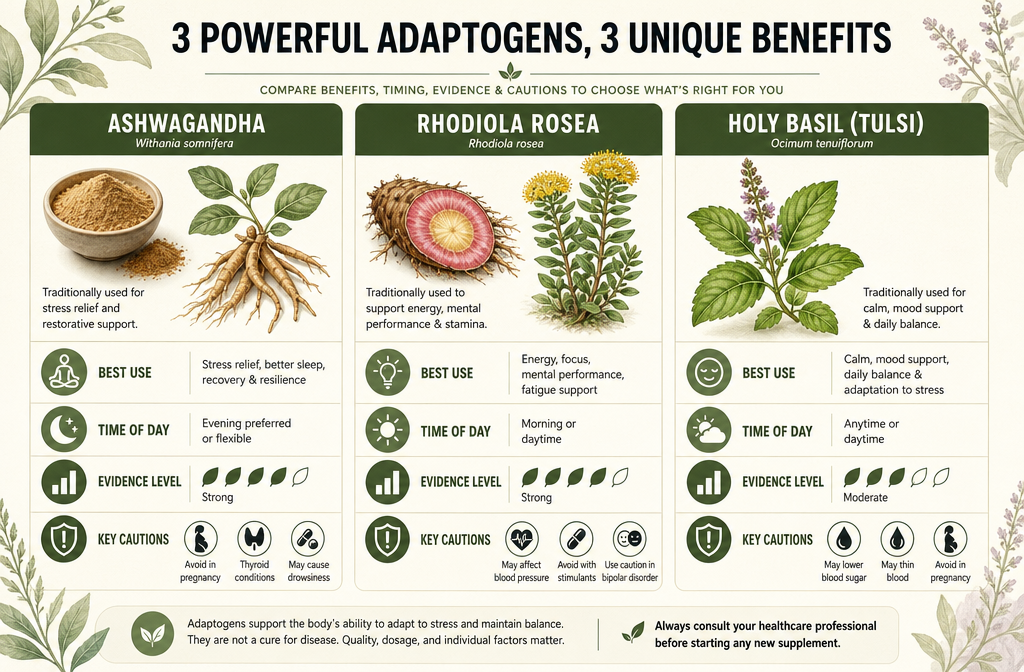
Ashwagandha: Best fit for stress that affects sleep, physical tension, and feeling wired but tired at the same time.
Rhodiola: Best fit for daytime fatigue, mental performance pressure, and burnout-style stress that drains focus.
Holy basil (tulsi): Best fit for gentle daily stress support, calm focus, and tea-friendly routines.
Best overall approach: Choose based on your stress pattern, start with one herb, check medication interactions with a pharmacist or doctor, and look for third-party-tested supplements.
What Are Adaptogenic Herbs?
What “adaptogen” means in plain English
An adaptogen is a plant-derived substance that has been studied for its potential to help the body maintain balance when under stress. The term was coined in the mid-twentieth century and has since been applied to a growing list of herbs, roots, and mushrooms. To be classified as an adaptogen, a substance is generally expected to be non-toxic at normal doses, produce a broad non-specific response to stress, and support the body’s ability to maintain normal function under pressure.
In plain English: adaptogens are herbs that researchers and traditional medicine systems have used with the goal of helping people feel less overwhelmed by stress — not by blocking the stress response entirely, but by potentially supporting the body’s ability to manage it more smoothly.
It is important to note that “adaptogen” is not a regulated medical term in the United States. The FDA does not approve supplements as adaptogens, and no herb in this category is approved to treat, cure, or prevent any medical condition.
How adaptogens may support the stress response
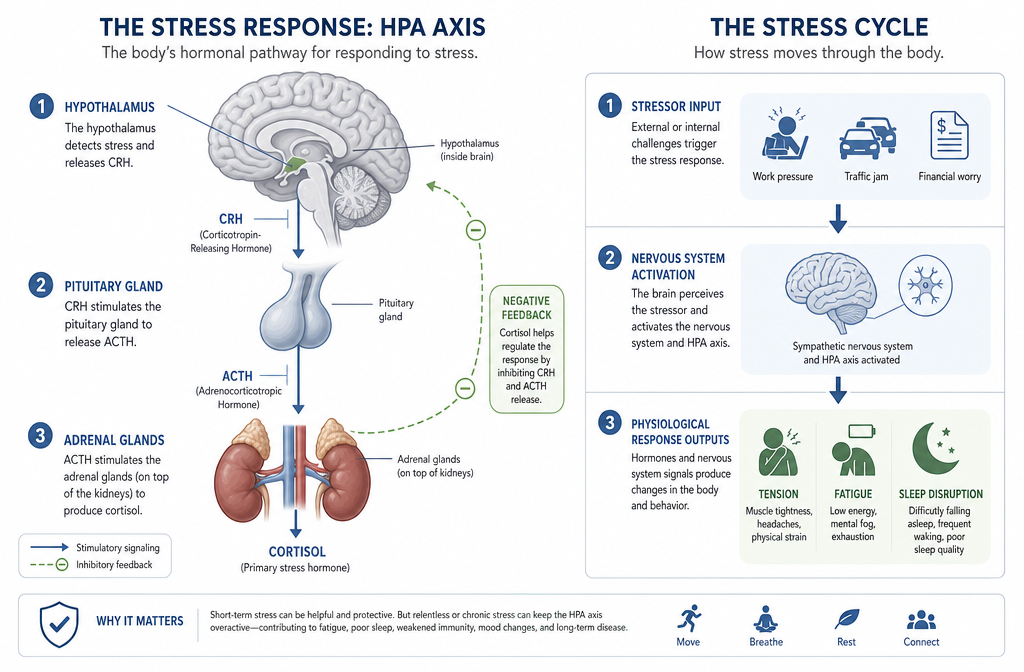
When the body encounters a stressor — whether physical, emotional, or environmental — it activates the hypothalamic-pituitary-adrenal (HPA) axis. This system triggers a cascade of hormonal signals that prepare the body for a stress response. Adaptogenic herbs are thought to interact with this HPA axis pathway, though the exact mechanisms are still being studied and are not fully understood.
Some researchers suggest that certain adaptogens may influence how the body perceives and responds to stress signals. This does not mean adaptogens simply suppress stress hormones or “fix” the adrenal glands. The science is more nuanced than that, and individual responses vary considerably.
For a broader look at how stress affects long-term health and what practical steps support resilience, the guide on how to manage stress for better long-term health offers a solid foundation alongside any supplement approach.
Ashwagandha vs Rhodiola vs Holy Basil: Quick Comparison Chart
May cause insomnia if taken late; headache, dizziness, dry mouth possible
Holy Basil (Tulsi)
Gentle daily calm, mood support, tea routines
Morning or afternoon
Tea, capsules, tincture
Emerging trial data; more research needed
May interact with blood thinners and diabetes medication; avoid in pregnancy
Ashwagandha for Stress, Sleep, and Resilience
What ashwagandha is
Ashwagandha (Withania somnifera) is a root used for centuries in Ayurvedic medicine. The name roughly translates to “smell of horse” in Sanskrit, referencing both its aroma and its traditional association with strength and vitality. The root and root extract are the most commonly studied plant parts. Standardized extracts are often measured by withanolide content, the active compounds most studied in clinical research.
What ashwagandha may help support
Ashwagandha has more short-term clinical trial data behind it than most other adaptogenic herbs for stress. Multiple small randomized controlled trials have examined its effects on perceived stress scores in healthy adults. Across several studies, participants taking ashwagandha root extract reported meaningful reductions in perceived stress compared to placebo groups over periods of 56 to 60 days. Some trials also observed changes in cortisol-related measures, though it is important to understand that these are observed associations in small study populations — not proof that ashwagandha reliably lowers cortisol for everyone, or that it addresses any underlying hormonal condition.
A 2026 clinical trial using a sustained-release ashwagandha root extract at doses of 150 mg and 300 mg found that both dosages produced significant reductions in perceived stress scores from baseline to day 60. A separate meta-analysis covering nine studies with 558 participants found that ashwagandha supplementation was associated with reduced perceived stress, reduced anxiety scores, and lower serum cortisol compared to placebo. These are encouraging signals, but study preparations, doses, and participant populations vary widely, and long-term safety data remains limited.
Some trials have also explored ashwagandha’s effects on sleep quality, with participants reporting improvements in sleep onset and overall sleep scores. This makes it a frequently discussed option for stress that manifests as difficulty winding down at night.
Who ashwagandha may be best for
Ashwagandha may be worth considering for adults who experience stress that shows up as physical tension, difficulty falling asleep, or feeling simultaneously exhausted and unable to relax — sometimes described as feeling “wired but tired.” It is not a sleep medication and should not be treated as one, but its evening-friendly profile makes it a practical fit for those whose stress peaks at night.
Ashwagandha is not appropriate for everyone. Key safety considerations include:
Pregnancy and breastfeeding: Avoid. Ashwagandha has traditionally been associated with uterine stimulant effects and is not considered safe during pregnancy.
Thyroid disorders: Ashwagandha may influence thyroid hormone levels. Those on thyroid medication should consult a doctor before use.
Autoimmune conditions: Ashwagandha may stimulate immune activity, which could be problematic for people with lupus, rheumatoid arthritis, multiple sclerosis, or similar conditions.
Liver disease: There are rare but documented case reports linking ashwagandha supplement use with liver injury, including elevated liver enzymes and, in some cases, more serious hepatotoxicity. Anyone with liver disease or liver enzyme abnormalities should avoid ashwagandha without explicit medical guidance.
Sedatives and sleep medications: Possible additive sedative effects.
Surgery: Stop use at least two weeks before scheduled surgery due to possible sedative interactions.
Hormone-sensitive conditions: Use with caution given possible hormonal activity.
Being labeled “natural” does not make a supplement safe for every person. Always check with a pharmacist or physician before adding ashwagandha to any existing medication regimen.
Rhodiola for Stress, Fatigue, and Mental Performance Pressure
What rhodiola is
Rhodiola rosea is a flowering plant that grows in cold, high-altitude regions of Europe and Asia. Its root has been used in traditional medicine in Russia and Scandinavia for centuries, particularly in contexts involving physical endurance and mental performance under harsh conditions. The primary active compounds studied are rosavins and salidroside, and standardized extracts are typically measured against these markers.
What rhodiola may help support
Rhodiola is most often discussed in the context of fatigue, mental performance under pressure, and what many people describe as burnout-style stress — where the predominant symptom is depletion rather than tension or sleeplessness. Some human trials have explored rhodiola’s effects on mental fatigue, attention, and work capacity, but the evidence base is more limited and mixed compared to ashwagandha. Study sizes tend to be small, methodologies vary, and results have not always been consistent across trials.
A 2026 study examining a multi-herb formula that included rhodiola alongside holy basil and schisandra found that the combination significantly reduced stress levels and improved sleep quality, fatigue, mental alertness, and mood compared to placebo over 60 days. While this is promising, it is difficult to isolate rhodiola’s individual contribution from a multi-herb formula.
Who rhodiola may be best for
Rhodiola is often a better fit for people whose stress pattern looks more like daytime depletion than nighttime tension. Those dealing with heavy cognitive demands — long work hours, high-stakes decision-making, or sustained concentration — sometimes find rhodiola’s morning-friendly profile appealing. It is not a stimulant, but it is generally better suited to daytime use than evening use.
Rhodiola safety notes
Rhodiola’s side effect profile is worth knowing before purchase:
Possible side effects include insomnia (especially if taken in the afternoon or evening), headache, dizziness, dry mouth, and excess saliva production.
Pregnancy and breastfeeding: Insufficient safety data; avoid.
Bipolar disorder and psychiatric conditions: Rhodiola may have stimulating properties that could be problematic for some psychiatric conditions. Consult a doctor.
Diabetes medication: May influence blood sugar levels; use with caution alongside diabetes medications.
Blood pressure medication: Possible interactions; check with a prescriber.
Blood thinners: Use with caution.
Auto-immune conditions: As with other adaptogens, possible immune-stimulating effects.
Holy Basil for Gentle Stress Support and Calm Daily Rituals
What holy basil is
Holy basil (Ocimum tenuiflorum), widely known as tulsi, is a plant revered in Ayurvedic tradition and used across South and Southeast Asia for centuries. It is distinct from the culinary sweet basil used in Italian cooking. The leaves, stems, and seeds have all been used medicinally, and modern supplements typically use leaf extracts. Key active compounds include eugenol, rosmarinic acid, and various flavonoids.
What holy basil may help support
Holy basil has emerging clinical evidence for perceived stress and sleep quality support. A 60-day randomized controlled trial found that a multi-herb formula containing holy basil, rhodiola, and schisandra significantly reduced stress and improved sleep quality, fatigue, and mood compared to placebo. Smaller individual trials on tulsi have also observed improvements in perceived stress scores. However, the evidence base is still developing, and more well-designed, larger trials are needed before strong conclusions can be drawn.
Holy basil is also notable for its accessibility as a tea. Unlike ashwagandha capsules or rhodiola extracts, tulsi tea is widely available, affordable, and easy to incorporate into a daily routine without requiring a supplement purchase. This makes it a practical entry point for people who want to explore adaptogenic herbs for stress without committing to a capsule regimen.
The relationship between gut health and stress response is increasingly recognized in research. For those interested in how the digestive system connects to mood and stress, the article on the gut-brain axis and how your gut affects your brain provides useful context.
Who holy basil may be best for
Holy basil tends to be a good fit for people who want a gentle, everyday approach to stress support rather than a targeted intervention for a specific symptom. It suits those who enjoy ritual-based wellness habits — morning or afternoon tea, for example — and those who prefer a milder starting point before exploring stronger standardized extracts. It is also popular among people who find ashwagandha’s earthy taste or capsule form off-putting.
Holy basil safety notes
Pregnancy: Avoid medicinal doses of holy basil during pregnancy. Traditional use as a culinary herb in small amounts is generally considered different from concentrated supplement use.
Blood thinners: Holy basil may have mild anticoagulant properties; use with caution alongside warfarin or other blood-thinning medications.
Diabetes medication: May influence blood sugar; monitor carefully if taking diabetes medication.
Fertility: Some animal research suggests possible effects on fertility; those trying to conceive should discuss with a doctor.
Children and teens: Insufficient safety data for regular supplement use in minors.
How to Choose the Right Adaptogen for Your Stress Type
Choose ashwagandha if your stress affects sleep
If stress shows up as difficulty unwinding, racing thoughts at bedtime, physical muscle tension, or waking in the night feeling alert despite being tired, ashwagandha is the most clinically studied option for this pattern. Its evening-friendly profile and the available trial data on sleep quality make it a logical first choice for this stress type.
Choose rhodiola if stress makes you tired, foggy, or burned out
If the dominant experience is daytime depletion — mental fog, difficulty concentrating, low motivation, or feeling like the tank is perpetually empty — rhodiola’s traditional and emerging use for fatigue and cognitive performance pressure makes it worth considering. Take it in the morning or early afternoon to avoid potential sleep disruption.
Choose holy basil if you want gentle daily calm
For those who want a low-commitment starting point, prefer tea to capsules, or simply want to add a calming ritual to their day without a strong intervention, holy basil is the most accessible option. It is also a reasonable choice for people who are sensitive to supplements or who want to observe how their body responds to adaptogens before trying stronger extracts.
Start with one herb, not a complicated stack
Multi-herb adaptogen stacks are heavily marketed, but starting with a single herb makes it far easier to assess what is working, identify any side effects, and adjust the dose or timing. Stacking multiple adaptogens from the start also increases the complexity of any medication interactions. Choose one herb based on your stress pattern, give it at least four to eight weeks at a consistent dose, and evaluate before adding anything else.
Stress management is also deeply connected to nutrition and eating behavior. For those whose stress triggers changes in appetite or eating patterns, the article on mindful eating and breaking the stress-eating cycle addresses this overlap directly.
What to Look for in an Adaptogen Supplement
Third-party testing
Because dietary supplements are not pre-approved by the FDA for safety or efficacy before they reach store shelves, third-party testing is one of the most meaningful quality signals available. Look for seals from organizations such as:
USP (U.S. Pharmacopeia)
NSF International
ConsumerLab
These seals indicate that an independent organization has verified that the product contains what the label claims, at the stated dose, and meets standards for contaminants such as heavy metals. However, a quality seal does not guarantee that a supplement will be safe or effective for every individual. It is a manufacturing and purity standard, not a health outcome guarantee.
Clear ingredient form and dose
A trustworthy adaptogen supplement should clearly state:
The full botanical name (e.g., Withania somnifera, not just “ashwagandha blend”)
The plant part used (root, leaf, root extract)
The standardization where relevant (e.g., “standardized to 5% withanolides” for ashwagandha, or “standardized to 3% rosavins and 1% salidroside” for rhodiola)
The exact dose per serving in milligrams
Avoid vague proprietary blends
Proprietary blends that list multiple ingredients under a single combined weight make it impossible to know whether any individual herb is present at a meaningful dose. Skip products that hide individual ingredient amounts behind blend totals.
Affiliate product selection criteria
When recommending adaptogen supplements on this site, the selection criteria include: third-party testing verification, transparent Supplement Facts panels, clear botanical sourcing, no disease claims on the label, allergen and filler transparency, and a clear return policy. Products that make exaggerated claims about “fixing” stress, “healing adrenals,” or “balancing hormones” are excluded from recommendations.
Who Should Avoid Adaptogenic Herbs or Ask a Doctor First?
Adaptogenic herbs for stress are not appropriate for everyone. Consult a qualified healthcare provider before using any adaptogen if any of the following apply:
Pregnancy or breastfeeding — all three herbs lack adequate safety data for these populations
Children and teenagers — supplement use in minors requires medical guidance
Thyroid disorders — ashwagandha in particular may affect thyroid hormone levels
Autoimmune conditions — including lupus, rheumatoid arthritis, and multiple sclerosis
Liver disease or elevated liver enzymes — especially relevant for ashwagandha given rare liver injury reports
High or low blood pressure — possible interactions with blood pressure medications
Diabetes — possible blood sugar effects with rhodiola and holy basil
Seizure disorders — insufficient safety data; possible interactions with anti-seizure medications
Hormone-sensitive conditions — including certain cancers, endometriosis, or PCOS
Psychiatric conditions — rhodiola’s possible stimulating properties may be relevant
Scheduled surgery — stop adaptogen use at least two weeks before surgery
Current medications including: sedatives, thyroid medications, diabetes medications, blood pressure medications, immunosuppressants, anti-seizure medicines, blood thinners, and antidepressants
Adaptogens are supportive tools, not replacements for medical care, therapy, adequate sleep, balanced nutrition, or prescribed medication. If stress is significantly affecting daily functioning, mental health, or physical health, speaking with a doctor or licensed mental health professional is the right first step — not a supplement purchase.
Common Mistakes People Make With Adaptogens
Expecting instant results
Most clinical trials on adaptogenic herbs run for 56 to 60 days. Expecting noticeable results in the first week is unrealistic and leads to early discontinuation before any potential benefit has time to develop. Give a consistent dose at least four to eight weeks before evaluating.
Taking too many at once
The supplement market is full of products combining five, eight, or even twelve adaptogens in a single capsule. More ingredients do not mean more benefit. They mean more variables, more potential interactions, and less ability to know what is actually helping or causing any side effects.
Choosing based only on popularity
Ashwagandha is currently the most popular adaptogen in the US market, but that does not make it the best choice for every stress pattern. Someone dealing primarily with daytime cognitive fatigue may find rhodiola a better fit. Someone who wants a gentle daily ritual may prefer tulsi tea. Popularity is a marketing metric, not a clinical recommendation.
Ignoring medication interactions
This is the most consequential mistake. Many people assume that because adaptogens are plant-based, they cannot interact with prescription medications. This is incorrect. Herb-drug interactions are real, documented, and in some cases clinically significant. Always run any new supplement by a pharmacist, especially if taking medications for thyroid, blood pressure, diabetes, seizures, blood clotting, or mood disorders.
FAQs About Adaptogenic Herbs for Stress
What is the best adaptogenic herb for stress?
There is no single best adaptogenic herb for stress. The most appropriate herb depends on the specific stress pattern. Ashwagandha suits sleep disruption and physical tension. Rhodiola suits daytime fatigue and cognitive performance pressure. Holy basil suits gentle daily calm and tea-based routines. Matching the herb to the stress pattern produces better outcomes than choosing based on popularity alone.
Is ashwagandha better than rhodiola?
Ashwagandha has more short-term clinical trial data for perceived stress and sleep quality than rhodiola. However, “better” depends entirely on the stress pattern. Rhodiola’s daytime, fatigue-focused profile makes it a stronger candidate for burnout-style stress where the dominant symptom is depletion rather than tension or sleeplessness.
Can I take ashwagandha and rhodiola together?
Some people do combine them, and some commercial products include both. However, starting with one herb at a time is strongly recommended. Combining adaptogens makes it harder to identify what is working, what is causing side effects, and what dose is appropriate. If combining, consult a healthcare provider first, particularly regarding any prescription medications.
Is holy basil the same as regular basil?
No. Holy basil (Ocimum tenuiflorum), also called tulsi, is a distinct species from sweet basil (Ocimum basilicum) used in cooking. They are related but have different active compounds, flavors, and traditional uses. Tulsi has an earthier, slightly clove-like flavor and is the variety used in adaptogen research and Ayurvedic medicine.
Do adaptogens lower cortisol?
Some clinical trials have observed lower cortisol levels in participants taking ashwagandha compared to placebo groups. However, it is not accurate to say that adaptogens simply “lower cortisol” as a blanket statement. Cortisol is a complex hormone with many functions, its levels fluctuate throughout the day, and the relationship between supplementation and cortisol is not fully understood. Adaptogens do not “fix” the adrenal glands or correct cortisol dysregulation as a medical treatment.
Are adaptogenic herbs safe to take every day?
Short-term daily use at studied doses appears to be well-tolerated in most healthy adults based on available trial data, which typically runs 60 days. Long-term daily use beyond this window is less well studied for all three herbs. Daily use is not appropriate for everyone — particularly those with the conditions or medication interactions listed in the safety section above.
What time of day should I take adaptogens?
Ashwagandha is generally better suited to evening use given its relaxing profile. Rhodiola is better taken in the morning or early afternoon, as it may cause insomnia if taken later in the day. Holy basil as a tea can be taken morning or afternoon. Always follow the specific product’s dosing instructions and adjust based on individual response.
Final Takeaway: Match the Herb to the Stress Pattern
Adaptogenic herbs for stress are not magic bullets, and no single herb is best for everyone. The most useful framework is matching the herb to the stress pattern: ashwagandha for wired-but-tired stress that disrupts sleep, rhodiola for daytime fatigue and cognitive burnout, and holy basil for gentle daily calm and accessible tea rituals.
The evidence base for all three is still developing. Ashwagandha has the strongest short-term trial data of the group, but study preparations vary and long-term safety is not well established. Rhodiola’s human evidence is limited and mixed. Holy basil’s emerging trial data is encouraging but needs more research. None of these herbs replaces sleep, nutrition, exercise, therapy, or medical care as foundations of stress resilience.
Before purchasing, prioritize third-party-tested products with transparent ingredient labels, check for medication interactions with a pharmacist, and start with one herb at a consistent dose for at least four to eight weeks before evaluating results.
Compare our recommended third-party-tested adaptogen supplements for stress support — selected based on label transparency, independent testing verification, and clear botanical sourcing.
For those looking to build a broader foundation of stress resilience through lifestyle habits, the guide on daily habits of people who live past 90 and the overview of how to live a healthy lifestyle offer practical, evidence-grounded starting points that complement any supplement approach.
About the Author: Dave James
Dave James is the writer and editor behind All Perfect Health. He isn’t a doctor. His career is in applied health research and content, and his goal with this site is to make useful information easier to find and act on, without the usual industry spin.
References & Research Sources
This article draws on peer-reviewed research, clinical guidelines, and authoritative health organizations. The following sources were consulted during preparation. This is not an exhaustive bibliography, and readers are encouraged to consult primary literature for full study details.
Pratte MA, Nanavati KB, Young V, Morley CP. An alternative treatment for anxiety: a systematic review of human trial results reported for the Ayurvedic herb ashwagandha (Withania somnifera). J Altern Complement Med. 2014;20(12):901-908. https://pubmed.ncbi.nlm.nih.gov/25405876/
Chandrasekhar K, Kapoor J, Anishetty S. A prospective, randomized double-blind, placebo-controlled study of safety and efficacy of a high-concentration full-spectrum extract of ashwagandha root in reducing stress and anxiety in adults. Indian J Psychol Med. 2012;34(3):255-262. https://pubmed.ncbi.nlm.nih.gov/23439798/
Lopresti AL, Smith SJ, Malvi H, Kodgule R. An investigation into the stress-relieving and pharmacological actions of an ashwagandha (Withania somnifera) extract: A randomized, double-blind, placebo-controlled study. Medicine (Baltimore). 2019;98(37):e17186. https://pubmed.ncbi.nlm.nih.gov/31517876/
Panossian A, Wikman G. Effects of adaptogens on the central nervous system and the molecular mechanisms associated with their stress—protective activity. Pharmaceuticals. 2010;3(1):188-224. https://pubmed.ncbi.nlm.nih.gov/27713248/
Ishaque S, Shamseer L, Bukutu C, Vohra S. Rhodiola rosea for physical and mental fatigue: a systematic review. BMC Complement Altern Med. 2012;12:70. https://pubmed.ncbi.nlm.nih.gov/22643043/
Mishra LC, Singh BB, Dagenais S. Scientific basis for the therapeutic use of Withania somnifera (ashwagandha): a review. Altern Med Rev. 2000;5(4):334-346. https://pubmed.ncbi.nlm.nih.gov/10956379/
Saxena RC, Singh R, Kumar P, et al. Efficacy of an extract of ocimum tenuiflorum (OciBest) in the management of general stress: a double-blind, placebo-controlled study. Evidence-Based Complementary and Alternative Medicine. 2012;2012:894509. https://pubmed.ncbi.nlm.nih.gov/21977056/
Olsson EMG, von Schéele B, Panossian AG. A randomised, double-blind, placebo-controlled, parallel-group study of the standardised extract shr-5 of the roots of Rhodiola rosea in the treatment of subjects with stress-related fatigue. Planta Med. 2009;75(2):105-112. https://pubmed.ncbi.nlm.nih.gov/19016404/
Darbinyan V, Kteyan A, Panossian A, Gabrielian E, Wikman G, Wagner H. Rhodiola rosea in stress induced fatigue — a double blind cross-over study of a standardized extract SHR-5. Phytomedicine. 2000;7(5):365-371. https://pubmed.ncbi.nlm.nih.gov/11081987/
📂 10 Best Herbs for Eye Health
This article is part of the APH cluster. Use the links below to move between the pillar and child articles.