
10 Best Herbs for Headaches: Migraine, Tension and Sinus Relief

Last updated: May 20, 2026
Around 15% of the global population lives with migraine, and tension-type headaches are even more common — affecting nearly half of all adults at some point each year. It is no surprise that so many people are looking for natural options alongside or instead of reaching straight for a painkiller. The question is: which herbs for headaches are actually worth your attention, and which ones are more hype than help?
Let’s keep this practical. Some herbs have genuine, peer-reviewed evidence behind them. Others have a long history of traditional use but limited clinical data. A few need real caution — not because they are useless, but because they carry meaningful risks that are often glossed over in wellness content.
This guide covers the 10 best herbs for headaches, what the evidence actually says, how to use them sensibly, and when to stop and see a doctor instead.
⚠️ Medical Safety Notice — Read This First
Herbs may support mild headache relief or prevention for some people. They are not a replacement for urgent medical care, diagnosis or prescribed treatment.
Seek urgent medical attention if your headache:
• Comes on suddenly and severely, often called a thunderclap headache
• Is accompanied by weakness, numbness, confusion, slurred speech, fainting, seizure or vision loss
• Follows a head injury
• Occurs with fever, stiff neck or a rash
• Is new and you are over 50
• Occurs during pregnancy or soon after giving birth
• Is progressively worsening over days or weeks
• Is the worst headache of your lifeThese are red flags. Do not manage them with herbs, teas or supplements. Call your local emergency number, go to an emergency department, or seek urgent medical advice.
Quick Answer: Best Herbs for Headaches
| Goal | Best Herb(s) |
|---|---|
| Migraine prevention | Feverfew, PA-free butterbur |
| Tension headache relief | Peppermint oil (topical) |
| Migraine nausea | Ginger |
| Stress-related headache | Lavender, lemon balm |
| Sleep-related headache | Chamomile, lemon balm |
| General inflammation support | Turmeric, ginger |
| Mild pain relief | Willow bark (with caution) |
Key Takeaways
- Feverfew and PA-free butterbur have the strongest evidence for migraine prevention — not acute relief.
- Peppermint oil applied to the temples (diluted) has solid evidence for tension headache relief.
- Ginger is useful for nausea associated with migraine and may help at the early onset of a headache.
- Several herbs carry real safety risks — especially willow bark, undiluted essential oils, and any butterbur product that is not certified PA-free.
- Herbs work best as part of a broader headache management approach: hydration, sleep, stress management and trigger tracking all matter.
Table of Contents
- Featured Video: Dr. Josh Axe — 11 Evidence-Based Headache Remedies
- How Herbs May Help Headaches
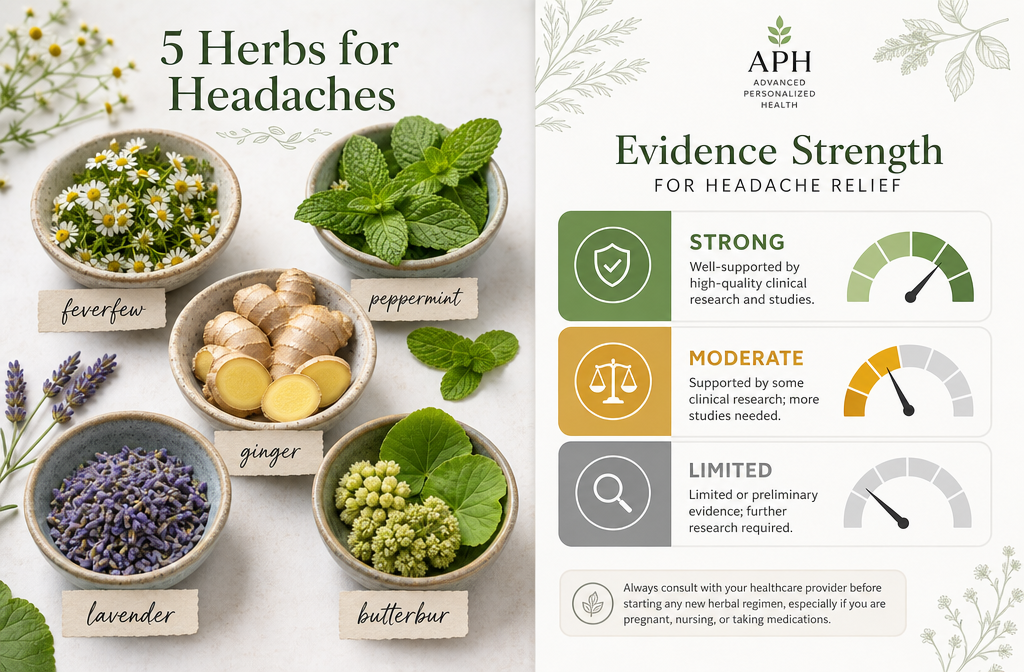
- Evidence Guide: What We Mean by Strong, Moderate and Limited
- Herb Comparison Table
- 1. Feverfew for Migraine Prevention
- 2. PA-Free Butterbur for Migraine Prevention
- 3. Peppermint for Tension Headaches
- 4. Ginger for Headache-Related Nausea
- 5. Lavender for Stress-Related Headaches
- 6. Chamomile for Stress and Sleep-Related Headaches
- 7. Lemon Balm for Stress and Tension Support
- 8. Willow Bark for Pain Relief: Useful but Risky
- 9. Turmeric for Inflammation Support
- 10. Rosemary for Circulation and Mild Headache Support
- Best Herbal Teas for Headaches
- Which Herb Fits Which Headache Type?
- Herbs to Avoid or Use Carefully
- Practical Headache Relief Routine
- FAQs
How Herbs May Help Headaches
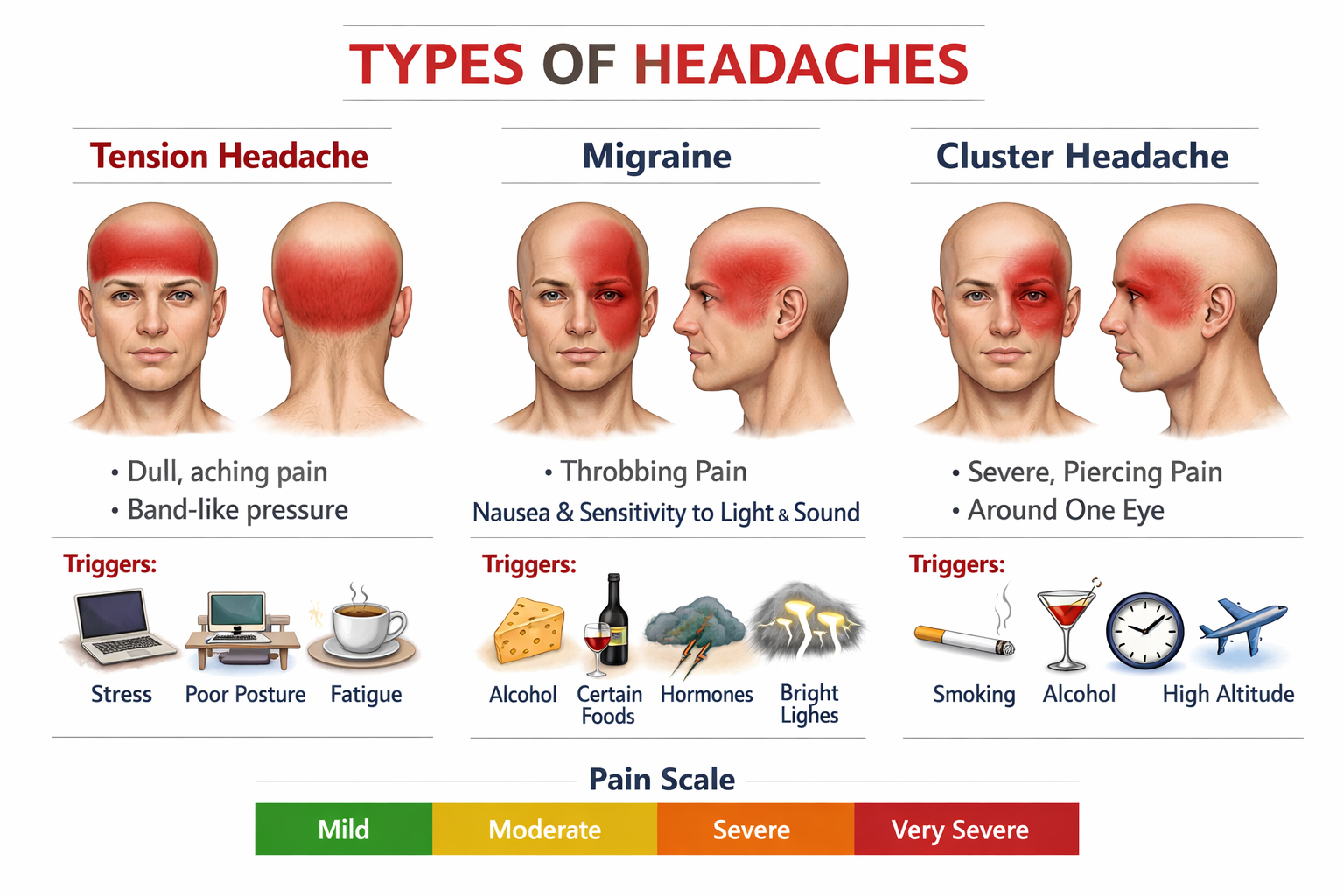
Here is the real issue with most herb-for-headache content: it treats headaches as a single thing. They are not. A migraine involves neurological changes, inflammation, and vascular shifts. A tension headache is largely muscular and stress-driven. A sinus headache involves pressure and congestion. A sleep-deprivation headache is a different animal again.
Different herbs act through different mechanisms. Understanding that is what makes this practical rather than just a list.
The main pathways where herbs may have an effect:
- 🌿 Inflammation — Some herbs contain compounds that may reduce inflammatory signalling. Turmeric’s curcumin and ginger’s gingerols are the clearest examples.
- 🧠 Platelet activity and serotonin — Feverfew contains parthenolide, which may inhibit platelet aggregation and serotonin release — both relevant to migraine.
- 💆 Muscle tension and nervous system calming — Lavender, chamomile and lemon balm may reduce stress-related tension through mild sedative or adaptogenic effects.
- 🤢 Nausea — Ginger has well-documented anti-nausea properties, which is particularly useful given that nausea accompanies many migraines.
- 🩸 Circulation and vascular tone — Butterbur’s petasins may help regulate vascular tone in the brain, which is relevant to migraine pathophysiology.
- 😴 Sleep quality — Poor sleep is one of the most consistent headache triggers. Herbs that support sleep quality may reduce headache frequency indirectly.
I would be careful with any source that claims herbs cure headaches. The evidence suggests they can support management — particularly prevention and mild relief — in some people, under the right conditions. That is a more honest framing.
Evidence Guide: What We Mean by Strong, Moderate and Limited
In plain English, here is how I grade evidence throughout this article:
| Evidence Level | What It Means |
|---|---|
| ✅ Strong | Multiple randomised controlled trials (RCTs) or systematic reviews support the claim. Results are reasonably consistent. |
| 🟡 Moderate | Some good-quality studies exist, but evidence is limited in size, consistency or replication. Promising but not definitive. |
| 🔶 Limited | Mostly traditional use, animal studies, small pilot trials or mixed results. Worth knowing, but do not rely on it. |
This matters because a lot of herbal health content treats “a study found” and “the evidence is clear” as equivalent. They are not. That is a strong claim and needs strong proof.
Herb Comparison Table
| Herb | Best Suited For | Evidence Strength | Best Form | Key Safety Warning |
|---|---|---|---|---|
| Feverfew | Migraine prevention | ✅ Strong | Standardised capsule | Stop 2 weeks before surgery; rebound headache if stopped abruptly |
| PA-Free Butterbur | Migraine prevention | ✅ Strong | Certified PA-free extract | Never use non-PA-free products; liver toxicity risk |
| Peppermint | Tension headache | ✅ Strong | Diluted topical oil | Avoid eyes, mucous membranes, children under 2 |
| Ginger | Nausea, early migraine | 🟡 Moderate | Tea, capsule, fresh | Caution with blood thinners; high doses may cause GI upset |
| Lavender | Stress headache, migraine | 🟡 Moderate | Aromatherapy, diluted topical | Do not ingest without professional guidance |
| Chamomile | Stress, sleep headache | 🔶 Limited | Tea | Avoid if allergic to ragweed or daisy family |
| Lemon Balm | Stress, tension | 🔶 Limited | Tea, tincture | May interact with thyroid medications and sedatives |
| Willow Bark | Mild pain relief | 🟡 Moderate | Standardised capsule | Avoid with aspirin allergy, blood thinners, ulcers, pregnancy, children |
| Turmeric | Inflammation support | 🔶 Limited (for headache) | Capsule with piperine | Caution with blood thinners; not a fast-acting remedy |
| Rosemary | Circulation, mild tension | 🔶 Limited | Tea, diluted aroma | Avoid concentrated oil in pregnancy or epilepsy |
1. Feverfew for Migraine Prevention
What it is: Tanacetum parthenium — a herb in the daisy family used for centuries for headache and fever.
What the evidence says: Feverfew is one of the best-studied herbs for headaches, specifically for migraine prevention. A Cochrane review found that feverfew was more effective than placebo in reducing migraine frequency, though the evidence was described as modest and more high-quality trials are needed. The active compound parthenolide is thought to inhibit platelet aggregation and reduce the release of serotonin and prostaglandins — both implicated in migraine. The National Centre for Complementary and Integrative Health (NCCIH) acknowledges this evidence base while noting that results across trials are not entirely consistent.
Evidence level: ✅ Strong (for migraine prevention; not for acute treatment)
How to use it:
- Standardised capsules or tablets (standardised to 0.2–0.6% parthenolide) are the most reliable form.
- Fresh leaf preparations exist but are inconsistent in potency.
- Typically taken daily for prevention — not as an acute rescue remedy.
- Allow 2–3 months before judging effectiveness.
Who should avoid it:
- Pregnant or breastfeeding women (may stimulate uterine contractions).
- People on blood-thinning medications (warfarin, aspirin, clopidogrel).
- Stop at least two weeks before any surgery.
- Do not stop suddenly after long-term use — gradual tapering avoids rebound headache.
- Allergy to plants in the daisy/chrysanthemum family.
2. PA-Free Butterbur for Migraine Prevention
What it is: Petasites hybridus — a plant extract used for migraine prevention and, historically, for spasms and pain.
A critical safety point first: Raw butterbur contains pyrrolizidine alkaloids (PAs) — compounds that are toxic to the liver and potentially carcinogenic. Only certified PA-free extracts should ever be considered. I would be careful with any butterbur product that does not clearly state PA-free on the label. In fact, several European health authorities have restricted or banned butterbur products entirely due to liver toxicity cases, including from products that were labelled PA-free. This is not a herb to use casually.
What the evidence says: The evidence for PA-free butterbur extract (particularly the Petadolex brand used in clinical trials) is among the strongest for any herb in migraine prevention. Multiple RCTs have shown significant reductions in migraine frequency. The American Academy of Neurology previously gave it a Level A recommendation, though this was later withdrawn due to safety concerns about the product category — not because the efficacy evidence disappeared.
Evidence level: ✅ Strong (efficacy) — but with serious safety caveats
How to use it:
- Only use certified PA-free standardised extract.
- Typical trial doses were 75mg twice daily.
- Consult a doctor or qualified herbalist before use.
- Not recommended for long-term unsupervised use.
Who should avoid it:
- Anyone with liver disease or elevated liver enzymes.
- Pregnant or breastfeeding women.
- Children and adolescents (unless under specialist supervision).
- Anyone taking hepatotoxic medications.
Bottom line: The efficacy evidence is real. The safety concerns are also real. This is not a herb to self-prescribe. If you are considering it, talk to a doctor first.
3. Peppermint for Tension Headaches
What it is: Mentha × piperita — the menthol in peppermint oil is the active compound of interest here.
What the evidence says: Topical peppermint oil is one of the better-supported herbs for headache relief, specifically for tension-type headaches. A well-cited German study found that a 10% peppermint oil solution applied to the forehead and temples was as effective as 1,000mg of paracetamol for tension headache relief. The cooling effect of menthol appears to activate cold receptors and inhibit serotonin receptors, which may reduce pain signalling. Research published in Cephalalgia supports its use as a non-pharmacological option for tension headaches.
Evidence level: ✅ Strong (topical use for tension headache)
How to use it:
- Dilute peppermint essential oil in a carrier oil (such as coconut or almond oil) — typically 3–5 drops per teaspoon of carrier oil.
- Apply to the forehead, temples and back of the neck.
- Avoid the eyes, nostrils and mucous membranes.
- Peppermint tea is pleasant and hydrating but the evidence for oral use in headache is much weaker than topical.
Who should avoid it:
- Children under 2 years old (menthol can cause breathing difficulties).
- Do not apply near the face of infants or young children.
- People with G6PD deficiency.
- Do not ingest peppermint essential oil unless under professional supervision.
4. Ginger for Headache-Related Nausea
What it is: Zingiber officinale — one of the most studied culinary and medicinal herbs in the world.
What the evidence says: Ginger has well-established anti-nausea properties, which makes it particularly relevant for migraine sufferers who experience nausea and vomiting. A small but notable study published in Phytotherapy Research found that ginger powder (250mg) was comparable to sumatriptan for migraine relief, with fewer side effects — though this was a small trial and should not be overstated. The broader evidence for ginger’s anti-inflammatory effects via inhibition of prostaglandin synthesis is more robust. For more on what ginger actually does, see our detailed article on the health benefits of ginger for digestion, inflammation and immunity.
Evidence level: 🟡 Moderate (for nausea and early headache support)
How to use it:
- Fresh ginger tea: steep 1–2 teaspoons of freshly grated ginger in hot water for 10 minutes.
- Ginger capsules (standardised extracts) are more consistent in dose.
- Ginger at the first sign of a migraine may be more effective than waiting.
- Ginger ale made from real ginger (not artificial flavouring) can help with nausea.
Who should be cautious:
- People on blood-thinning medications (ginger has mild antiplatelet effects).
- High doses may cause heartburn, reflux or GI discomfort.
- Speak to your doctor if you take warfarin or other anticoagulants.
5. Lavender for Stress-Related Headaches
What it is: Lavandula angustifolia — widely used in aromatherapy for relaxation and anxiety reduction.
What the evidence says: A study published in European Neurology found that inhaling lavender essential oil during a migraine attack reduced headache severity significantly compared to placebo. The proposed mechanism involves linalool and linalyl acetate — compounds that may modulate the central nervous system and reduce stress-related tension. Lavender is not going to stop a severe migraine in its tracks, but for stress-triggered or mild tension headaches, the evidence is reasonably encouraging.
Evidence level: 🟡 Moderate (aromatherapy for stress-related and mild migraine headaches)
How to use it:
- Add 2–3 drops to a diffuser.
- Dilute in a carrier oil and apply to temples or wrists.
- A few drops on a pillow or in a warm bath can support relaxation and sleep.
- Lavender tea is mild and pleasant for evening use.
Who should be cautious:
- Do not ingest lavender essential oil — it is not safe for internal use without professional guidance.
- Some people experience skin irritation — always patch test diluted oil first.
- Avoid concentrated lavender oil during pregnancy.
6. Chamomile for Stress and Sleep-Related Headaches
What it is: Matricaria chamomilla (German chamomile) — one of the most widely consumed herbal teas in the world.
What the evidence says: Direct evidence for chamomile specifically in headache treatment is limited. However, chamomile has reasonably good evidence for reducing anxiety and improving sleep quality — both of which are significant headache triggers. The active compound apigenin binds to GABA receptors in the brain, producing a mild calming effect. Context matters here: if your headaches are driven by poor sleep or chronic stress, chamomile tea as part of an evening routine is a sensible, low-risk support tool.
Evidence level: 🔶 Limited (for headache directly); 🟡 Moderate (for sleep and anxiety support)
How to use it:
- Steep 1–2 teaspoons of dried chamomile flowers (or a tea bag) in hot water for 5–10 minutes.
- Best used in the evening as part of a wind-down routine.
- Combine with good sleep hygiene practices for best results.
Who should avoid it:
- People allergic to plants in the Asteraceae/Compositae family (ragweed, chrysanthemums, marigolds, daisies).
- Chamomile may have mild blood-thinning effects — caution with anticoagulants.
- Avoid in pregnancy in large amounts.
7. Lemon Balm for Stress and Tension Support
What it is: Melissa officinalis — a member of the mint family, traditionally used for anxiety, sleep and digestive discomfort.
What the evidence says: Lemon balm has modest but consistent evidence for reducing anxiety and improving sleep quality. A review in Nutrients found that lemon balm extract reduced anxiety symptoms in several small trials. Like chamomile, its relevance to headaches is largely indirect — through stress and sleep pathways rather than direct pain relief. The rosmarinic acid in lemon balm may also have mild anti-inflammatory properties.
Evidence level: 🔶 Limited (for headache); 🟡 Moderate (for stress and sleep)
How to use it:
- Lemon balm tea: steep 1–2 teaspoons of dried herb in hot water for 10 minutes.
- Tinctures and capsules are available for more consistent dosing.
- Pairs well with chamomile for an evening calming blend.
Who should be cautious:
- Lemon balm may interact with thyroid medications — if you take thyroxine or antithyroid drugs, check with your doctor.
- May enhance the effects of sedative medications — do not combine with sleeping tablets without advice.
- Avoid high doses during pregnancy.
8. Willow Bark for Pain Relief: Useful but Risky
What it is: Salix species — the bark contains salicin, which the body converts to salicylic acid. This is the precursor to aspirin.
What the evidence says: Willow bark has a long history as a pain reliever, and the evidence for general pain relief (particularly lower back pain) is moderate. Its relevance to headaches is plausible given the aspirin-like mechanism, but direct headache-specific trials are limited. The NCCIH notes that willow bark may be helpful for pain but carries similar risks to aspirin.
Evidence level: 🟡 Moderate (general pain relief); 🔶 Limited (specifically for headaches)
How to use it:
- Standardised capsules or tablets (standardised to salicin content) are more reliable than raw bark tea.
- Typical doses used in trials: 120–240mg salicin daily.
⚠️ This is not a casual remedy. Avoid willow bark if you:
- Are allergic to aspirin or salicylates.
- Take blood-thinning medications (warfarin, heparin, aspirin, clopidogrel).
- Have a history of peptic ulcers or gastric bleeding.
- Have kidney disease.
- Are pregnant or breastfeeding.
- Are giving it to children or teenagers (risk of Reye’s syndrome, as with aspirin).
- Have surgery scheduled within two weeks.
Let’s call it what it is: willow bark is essentially a plant-based aspirin. Treat it with the same respect you would give aspirin. The risks are real and the same population warnings apply.
9. Turmeric for Inflammation Support
What it is: Curcuma longa — the active compound curcumin is one of the most studied anti-inflammatory plant compounds.
What the evidence says: Turmeric’s anti-inflammatory properties are well-documented, and there is some emerging research on curcumin’s potential role in migraine prevention through its effects on inflammatory pathways. However, the evidence specifically for headache relief is limited and mostly preliminary. Curcumin has poor bioavailability on its own — it is absorbed much better when combined with piperine (from black pepper). The broader evidence for turmeric’s anti-inflammatory effects on gut health and general inflammation is more robust.
Evidence level: 🔶 Limited (specifically for headaches); 🟡 Moderate (for general inflammation)
How to use it:
- Capsules with standardised curcumin and piperine are the most effective form.
- Golden milk (turmeric in warm milk with black pepper) is a traditional preparation.
- This is a slow-acting, cumulative support tool — not an acute headache remedy.
Who should be cautious:
- People on blood-thinning medications.
- High doses may interact with diabetes medications.
- Avoid therapeutic doses during pregnancy.
- Gallstone sufferers should seek advice before use.
10. Rosemary for Circulation, Focus and Mild Headache Support
What it is: Salvia rosmarinus (formerly Rosmarinus officinalis) — a culinary herb with a long history of use for improving circulation and mental clarity.
What the evidence says: The evidence for rosemary specifically in headache treatment is limited. Traditionally, it has been used to improve circulation and reduce tension — both relevant to headache. Some small studies suggest rosemary aromatherapy may reduce stress and improve cognitive function. Rosmarinic acid has demonstrated anti-inflammatory properties in laboratory studies, but translating that to clinical headache relief in humans requires more research.
Evidence level: 🔶 Limited
How to use it:
- Rosemary tea: steep 1 teaspoon of dried rosemary in hot water for 5–10 minutes.
- Aromatherapy: a few drops of diluted rosemary essential oil diffused or applied to the neck.
- Culinary use is safe and enjoyable.
Who should be cautious:
- Concentrated rosemary essential oil should be avoided during pregnancy (may stimulate uterine contractions).
- People with epilepsy should avoid concentrated rosemary oil — it may lower the seizure threshold at high doses.
- Do not ingest rosemary essential oil.
Best Herbal Teas for Headaches
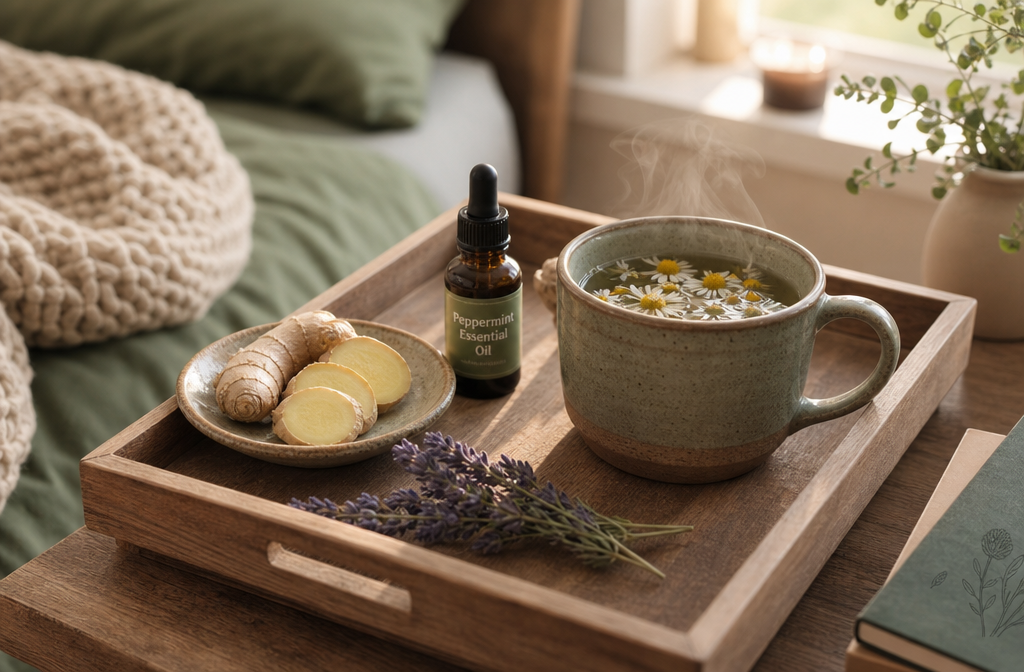
Herbal tea is one of the simplest, most accessible ways to incorporate herbs for headache support. It also helps with hydration — which matters more than most people realise, since dehydration is a common headache trigger.
Here is a practical guide to the best herbal teas for headaches:
🍵 Ginger Tea
- Best for: Nausea with migraine, early headache onset
- How to make it: Grate 1–2 teaspoons of fresh ginger root into a mug. Add boiling water and steep for 10 minutes. Strain. Add honey and lemon if desired.
- When to drink it: At the first sign of a headache or migraine.
🌼 Chamomile Tea
- Best for: Stress-related headaches, sleep-related headaches, evening wind-down
- How to make it: Steep 1–2 teaspoons of dried chamomile flowers (or a good-quality tea bag) in boiling water for 5–10 minutes.
- When to drink it: 30–60 minutes before bed, or when stress is building.
🌿 Peppermint Tea
- Best for: Mild tension headaches, nausea, sinus pressure
- How to make it: Steep 1 teaspoon of dried peppermint leaves (or a tea bag) in boiling water for 5–7 minutes.
- When to drink it: During a mild headache or as a refreshing alternative to coffee.
- Note: Peppermint tea is hydrating and pleasant, but the topical oil has stronger evidence for tension headache relief.
🌸 Feverfew Tea
- Best for: Migraine prevention (as part of a daily routine)
- How to make it: Steep 1 teaspoon of dried feverfew leaves in boiling water for 10 minutes. The taste is quite bitter — add honey.
- Note: Standardised capsules are more reliable for consistent parthenolide dosing. Tea is an option but potency varies.
💜 Lavender Tea
- Best for: Stress headaches, relaxation, sleep support
- How to make it: Steep 1 teaspoon of dried lavender flowers in boiling water for 5 minutes. Do not over-steep — it becomes bitter.
- When to drink it: Evening, as part of a relaxation routine.
A sensible starting point is to pick one or two teas that match your headache type and build them into your daily routine rather than cycling through all five at once.
Which Herb Fits Which Headache Type?
| Headache Type | First-Choice Herb(s) | Supporting Options | What to Avoid |
|---|---|---|---|
| Migraine (prevention) | Feverfew, PA-free butterbur | Ginger, lavender | Unsupervised butterbur, combining multiple blood-thinning herbs |
| Migraine (acute nausea) | Ginger | Peppermint tea | Expecting herbs to replace triptans |
| Tension headache | Peppermint oil (topical) | Lavender, lemon balm | Ingesting essential oils |
| Stress headache | Lavender, lemon balm | Chamomile, rosemary tea | Relying on herbs without addressing the stress source |
| Sleep-related headache | Chamomile, lemon balm | Lavender | Sedative combinations without advice |
| Sinus pressure headache | Peppermint (steam/tea) | Ginger tea | Expecting herbs to treat a sinus infection |
| Nausea with headache | Ginger | Peppermint tea | — |
| Inflammation-driven | Turmeric + ginger (long-term) | Willow bark (with caution) | Treating as a quick fix |
Important: Sinus headaches caused by bacterial infection need medical treatment. Herbs may ease discomfort but they do not treat the underlying infection. If you have persistent sinus pain, fever, or coloured discharge, see a doctor.
Herbs to Avoid or Use Carefully
The simplest way to look at it is this: herbs are not automatically safe because they are natural. Many of the most potent medicines in history come from plants — and so do some of the most dangerous compounds.
Here is a practical safety summary:
🚫 Avoid or seek professional advice if you are:
- Pregnant or breastfeeding: Avoid feverfew, willow bark, concentrated rosemary oil, high-dose ginger, butterbur, and most essential oils internally. Many herbs have not been studied in pregnancy and the precautionary principle applies.
- Taking blood-thinning medications: Willow bark, ginger, feverfew, and turmeric all have antiplatelet or anticoagulant properties. Combining them with warfarin, aspirin or clopidogrel increases bleeding risk.
- Taking prescription migraine medications: Some herbs may interact with triptans or other headache drugs. Always check with your prescribing doctor.
- Taking thyroid medications: Lemon balm may interfere with thyroid function and medication.
- Taking sedatives or anti-anxiety medications: Chamomile, lemon balm and lavender may enhance sedative effects.
- With liver disease: Avoid butterbur entirely. Turmeric in high doses may also be problematic.
- With kidney disease: Willow bark and high-dose herbal supplements should be avoided.
- With aspirin allergy: Willow bark contains salicylates — avoid completely.
- Before surgery: Stop willow bark, feverfew, ginger and turmeric at least two weeks before any surgical procedure.
- Children under 12: Most herbal supplements have not been studied in children. Peppermint oil near the face of young children is particularly dangerous.
For a broader look at how natural compounds can interact with the body in unexpected ways, see our guide on what plant toxins actually do to your body.
Practical Headache Relief Routine
There is no magic in it. The basics still do the heavy lifting when it comes to headache prevention and management. Herbs are a useful addition to a sensible routine — not a substitute for it.
Frequently Asked Questions
What herbs are good for headaches?
The best-evidenced herbs for headaches are feverfew (migraine prevention), PA-free butterbur (migraine prevention), peppermint oil (tension headache relief), and ginger (nausea and early migraine support). Lavender, chamomile and lemon balm are useful for stress and sleep-related headaches.
What is the best herb for migraines?
For migraine prevention, feverfew and PA-free butterbur have the strongest clinical evidence. Ginger is useful for migraine-associated nausea. No herb reliably stops an acute migraine the way prescription triptans do — be realistic about what herbs can and cannot achieve.
What tea is good for tension headaches?
Peppermint tea is the most relevant for tension headaches, though topical peppermint oil has stronger evidence than drinking it. Chamomile and lemon balm teas support relaxation and stress reduction, which are common tension headache drivers. Ginger tea is a good option if nausea is also present.
Is peppermint good for headaches?
Yes — topical peppermint oil (diluted in a carrier oil and applied to the forehead and temples) has solid clinical evidence for tension headache relief. It is one of the better-supported herbs for headaches in the research literature. Do not apply it near the eyes or use it undiluted on skin.
Is ginger good for headaches?
Ginger has moderate evidence for reducing nausea associated with migraine and may help at the early onset of a headache. It has anti-inflammatory properties that are relevant to headache pathways. Use it as ginger tea or standardised capsules. Be cautious if you take blood-thinning medications.
Are herbs safe during pregnancy?
Most herbal remedies for headaches are not recommended during pregnancy. Feverfew, willow bark, concentrated rosemary oil and butterbur should all be avoided. Ginger in culinary amounts is generally considered safe, but therapeutic doses need medical advice. Always consult your doctor or midwife before using any herbal remedy during pregnancy.
Can herbs interact with headache medication?
Yes. Willow bark and feverfew may interact with blood thinners and NSAIDs. Ginger and turmeric have antiplatelet effects. Lemon balm may interact with sedatives and thyroid medications. If you take prescription migraine medication (triptans, beta-blockers, antidepressants), check with your doctor before adding herbal supplements.
What natural remedy helps a headache quickly?
The fastest natural options are: topical peppermint oil applied to the temples and forehead (effective within 15–30 minutes for tension headaches in some people), a large glass of water (if dehydration is a factor), and lying in a cool, dark, quiet room. Ginger tea at the very first sign of a migraine may also help. These are supportive measures — they are not substitutes for medical treatment if your headache is severe or unusual.
Related guide: For the role of light sensitivity in migraine, see Light Sensitivity and Migraine Photophobia: What It Is, Why It Happens, and What Actually Helps.
This article is part of the APH headaches and natural support cluster. Use these guides to explore related questions without treating one symptom pattern as a diagnosis.
References
- [Video] Dr. Josh Axe. “Headache Remedies: Top 11 Tips for Headache Relief.” YouTube, 2024.
- Pittler MH, Ernst E. “Feverfew for preventing migraine.” Cochrane Database of Systematic Reviews, 2004.
- Lipton RB, et al. “Petasites hybridus extract (butterbur) is an effective preventive treatment for migraine.” Neurology, 2004.
- Gobel H, et al. “Effectiveness of peppermint oil and paracetamol in the treatment of tension-type headache.” Cephalalgia, 1996.
- National Centre for Complementary and Integrative Health. “Headaches and Complementary Health Approaches: What the Science Says.” NCCIH, 2023.