
Sauna Health Benefits: What the Evidence Shows About Heat Therapy

Last updated: September 27, 2026
Quick Answer: Do Saunas Have Health Benefits?
Sauna research includes observational Finnish cohort studies and smaller experimental studies. The Finnish cohorts found associations between reported traditional-sauna habits and later cardiovascular or mortality outcomes, but those designs cannot prove that sauna use caused the difference or prescribe a frequency. Experimental work is smaller and often studies a specific protocol or sauna combined with exercise. Sauna use is not a replacement for exercise, prescribed treatment or clinical care.
For the practical buying, installation and equipment context, see our complete home sauna guide. For the precautions and people who need extra care, read our home sauna safety guide.
Key Takeaways
- Frequent sauna use was associated with lower cardiovascular mortality in large Finnish cohort studies, but these observational findings do not prove that sauna use caused the difference [2]
- The cardiovascular response during a sauna session resembles moderate-intensity exercise: heart rate rises, blood vessels dilate, and core temperature increases
- One randomized trial reported a reduction in systolic blood pressure after eight weeks of regular sauna sessions; this finding needs replication and should not be treated as equivalent to prescribed treatment
- Evidence for muscle recovery, sleep improvement, and pain relief is promising but comes from smaller studies and needs more replication
- Infrared cabins and traditional saunas are different modalities. Lower air temperature does not make their health effects interchangeable, and infrared-specific outcome evidence is limited.
- Sauna does not meaningfully detoxify the body, and any weight lost during a session is water weight, not fat
- People with unstable heart conditions, severe aortic stenosis, decompensated heart failure, recent cardiac events, pregnancy, acute illness or medication-related heat concerns should seek individual medical advice before using a sauna [1]
- Research protocols are not universal home-use prescriptions. Follow the exact equipment guidance, leave if unwell and seek individual advice where health history, medicines, pregnancy, illness or fluid restrictions may matter.
Table of Contents
- What Happens to the Body During Sauna Use?
- Relaxation and Stress
- Cardiovascular Responses and Blood Pressure
- Exercise Recovery and Muscle Soreness
- Sleep and Wellbeing
- Pain and Joint Comfort
- Traditional vs Infrared Sauna Evidence
- What Observational Studies Can and Cannot Prove
- Detox and Weight-Loss Myths
- Safety Limits and Who Should Seek Medical Advice
- A Safer Sauna Session Plan
- FAQ: Sauna Health Benefits
- Related Reading
- Medical Disclaimer
- References
What Happens to the Body During Sauna Use?
Within minutes of entering a sauna, the body responds to heat in predictable, measurable ways. Core temperature and heart rate rise during sauna use, while blood vessels near the skin dilate to help dissipate heat. The size of the response varies with temperature, humidity, session length and the individual; it can resemble some cardiovascular features of exercise, but sitting in a sauna is not a substitute for active exercise [1].
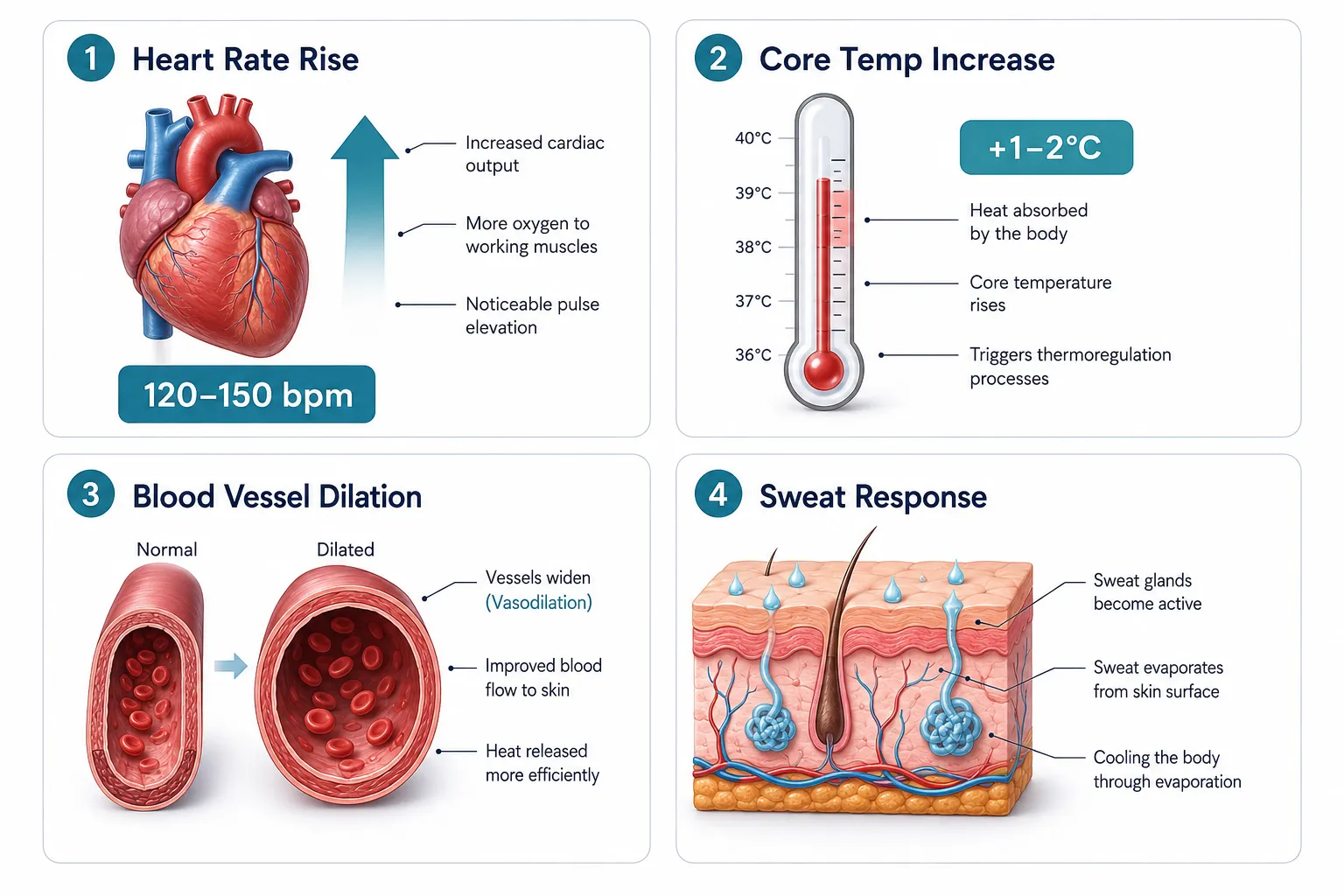
These are acute physiological responses. They happen every session and they are the mechanism through which longer-term adaptations may develop. Heat shock proteins and other short-term physiological responses have been proposed as possible pathways, but a plausible mechanism does not by itself demonstrate a long-term health outcome. None of this is magic, it is the body doing what it is designed to do when exposed to controlled thermal stress.
Key acute responses:
- Heart rate elevation (comparable to a brisk walk or light jog)
- Peripheral vasodilation (blood vessels widen, reducing vascular resistance)
- Core temperature increase of 1-2°C
- Significant sweat production and fluid loss
- Release of endorphins and growth hormone
A sauna changes heart rate, skin blood flow and temperature regulation during use. Those acute responses do not make it a substitute for physical activity or establish a long-term cardiovascular benefit for an individual.
Relaxation and Stress
Sauna use has a well-documented acute effect on stress and mood. The heat triggers endorphin release and activates the parasympathetic nervous system after the session ends, producing a calm, settled feeling that most regular users describe clearly [6].
From a practical standpoint, this is one of the most consistent and immediate sauna health benefits. You do not need to wait weeks to notice it. A single session tends to reduce perceived stress and muscle tension within the hour that follows.
Small studies of therapeutic heat and mood are interesting, but they do not establish sauna use as a treatment for depression. Anyone experiencing persistent low mood should seek qualified clinical care; sauna should not replace assessment or treatment.
For everyday stress management, the evidence is more settled. Regular sauna use may improve subjective relaxation and wellbeing for some people, although longer-term hormone findings are less certain. If you are looking for additional evidence-based approaches to stress, our guide on how to manage stress for better long-term health covers the broader picture.
Cardiovascular Responses and Blood Pressure
This is where the sauna health benefits evidence is strongest. A large Finnish prospective study followed over 2,000 middle-aged men for roughly 20 years and found cardiovascular mortality rates of 10.1, 7.6, and 2.7 per 1,000 person-years for men using saunas once, two to three times, and four to seven times weekly, respectively [2]. The pattern is notable, but it remains an observational association and cannot remove the possibility of healthy-user or other confounding factors.

The same cohort reported a substantially lower rate of sudden cardiac death among men using saunas four to seven times weekly than among once-weekly users [2][6]. The size of the association is notable, but the observational design still leaves room for healthy-user and other confounding factors.
A 2022 randomized trial tested exercise plus post-exercise sauna, exercise alone and control over eight weeks. It reported a lower systolic blood-pressure result for the combined programme than exercise alone. That study does not establish sauna alone as blood-pressure treatment, does not justify comparison with prescribed medicine and needs replication [7].
What this means in practical terms:
- One eight-week trial tested exercise plus sauna, not sauna alone. Its findings do not justify using sauna to manage blood pressure or changing prescribed care.
- Mechanisms have been proposed, but a plausible mechanism does not establish a durable clinical outcome
- People with uncontrolled or severe hypertension should discuss sauna use with their doctor before starting
Can you use a sauna if you have high blood pressure? Whether sauna use is appropriate with hypertension or cardiovascular disease is individual. A person’s clinician is the right source for personal clearance, particularly after a recent event, with unstable symptoms or when medicines are changing.
Exercise Recovery and Muscle Soreness
Some small studies suggest sauna use after exercise may reduce perceived soreness or support recovery, but the evidence is less established than the cardiovascular observational literature. Several mechanisms have been proposed, including altered blood flow and heat-related cellular responses, but proposed mechanisms are not proof of a meaningful recovery benefit [1][6].
Does sauna help with muscle recovery after workouts? The small studies available suggest possible short-term recovery effects in specific settings, but they are not enough to guarantee less soreness or improved training adaptation for the general public.
After exercise, avoid turning a study protocol into a personal heat prescription. Account for your hydration, recent heat exposure, medical context and the manufacturer guidance; stop if you feel unwell.
For adults aged 45-65 who are managing joint load alongside their training, combining sauna use with structured exercise is a practical approach. Our exercise guide for better health covers the broader framework for this age group.
Sleep and Wellbeing
The relationship between sauna use and sleep quality is plausible and supported by user-reported data, though the controlled trial evidence is thinner than for cardiovascular outcomes. The mechanism mirrors what happens with a warm bath before bed: core body temperature rises during the session, then drops afterward, and this cooling signal is associated with the onset of sleep.
UK survey data from more than 1,900 regular sauna users in 2026 showed associations between frequent sauna use and better self-reported physical and mental wellbeing, as well as stronger feelings of social connection [9]. These are observational findings and may reflect healthy-user effects, but they are consistent with what the physiology would predict.
In real-world terms, many people report sleeping more deeply on sauna days. Evening sessions appear to work well for sleep onset, provided the session ends at least 60-90 minutes before bed to allow core temperature to fall. For a broader look at sleep hygiene and recovery, see our complete guide to better sleep for health and longevity.
Pain and Joint Comfort
A 2018 clinical review found that dry sauna bathing was associated with benefits for chronic pain, rheumatic conditions, and musculoskeletal discomfort [1]. Heat increases tissue extensibility, reduces joint stiffness, and promotes muscle relaxation, all of which are relevant for the kinds of pain that become more common in midlife and beyond.
Is sauna good for arthritis or joint pain? The evidence suggests it can help with comfort and stiffness, particularly for conditions like rheumatoid arthritis and fibromyalgia [1]. It is not a treatment for the underlying condition, but as a complementary approach to managing symptoms, the evidence is reasonable.
People managing joint health through exercise may also find value in combining sauna use with targeted strength work. Our article on resistance band training for joint health explains what the evidence shows for that approach.
Traditional vs Infrared Sauna Evidence
Traditional Finnish dry saunas operate at 70-100°C with low humidity. Infrared saunas use radiant heat at much lower air temperatures, typically 45-60°C, but still raise core body temperature and heart rate through direct tissue heating rather than hot air [1][3].
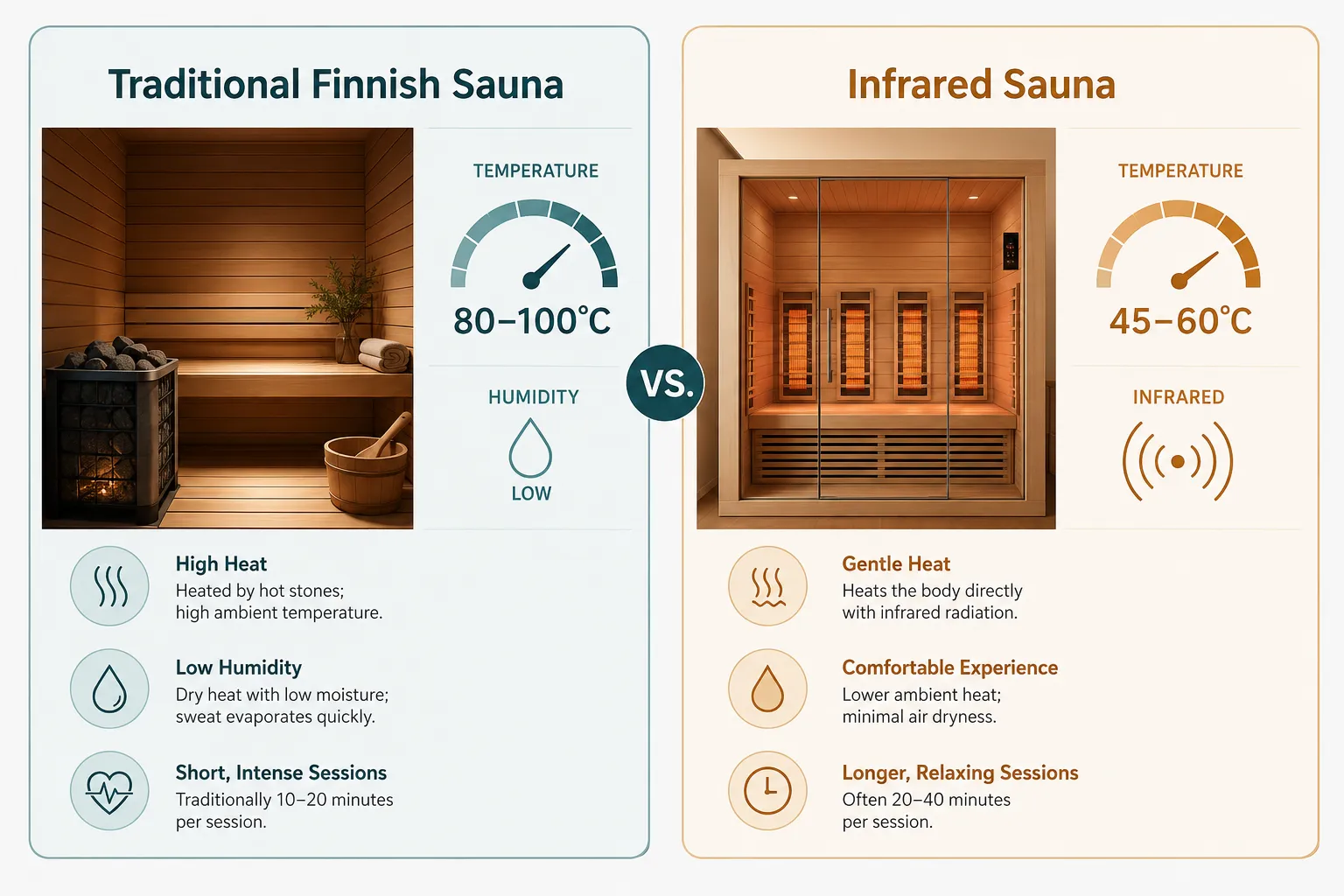
The stronger evidence points to traditional saunas. Almost all the large cohort studies and most of the randomized trials have used traditional Finnish-style dry heat [1][2]. Infrared sauna research is growing, and the physiological responses are broadly similar, but the evidence base is less developed and the studies are generally smaller.
Infrared sauna vs traditional sauna, what the evidence shows:
| Feature | Traditional Sauna | Infrared Sauna |
|---|---|---|
| Air temperature | 70-100°C | 45-60°C |
| Humidity | Low (10-20%) | Very low |
| Core temp increase | Yes | Yes |
| Heart rate response | Yes | Yes |
| Evidence base | Large cohort studies | Smaller, fewer trials |
| Tolerability | Intense heat | Easier for some users |
From a practical point of view, if you have access to a traditional sauna, the evidence supports using it. If you are using an infrared sauna, apply the same safety principles and session durations, the physiological stress is real even if the air feels cooler.
What Observational Studies Can and Cannot Prove
Here is the real issue with most sauna research: the largest and most impressive studies are observational. They show association, not causation. Finnish men who use saunas four to seven times per week may also exercise more, drink less alcohol, have stronger social connections, and have higher incomes than those who use saunas once a week [2][10].
Researchers adjust for many of these factors statistically, and the associations remain strong after adjustment. But residual confounding, the influence of unmeasured variables, can never be fully eliminated in observational data [10].
We need to separate fact from hype on this point. The Finnish cohort data is genuinely impressive and consistent across multiple studies and outcomes [2][5][8]. The dose-response relationship strengthens the case. But the randomized controlled trial evidence, while growing, is still limited in scope and sample size [7].
The main takeaway is this: the evidence is strong enough to take seriously and weak enough to stay honest about. Regular sauna use is associated with meaningful health benefits in well-designed studies. Whether it causes those benefits directly, or whether it is partly a marker of a broader healthy lifestyle, is a question the current evidence cannot fully answer.
Detox and Weight-Loss Myths
Let’s call it what it is: the detox claim does not hold up. The liver and kidneys handle the body’s actual detoxification continuously. Sweat contains trace amounts of some compounds, but the quantities are not clinically meaningful in terms of removing toxins from the body. No credible peer-reviewed study supports sauna use as a meaningful detoxification strategy [6].
Can you lose weight in a sauna? You will lose weight during a session, but it is water weight from sweat, not fat. Once you rehydrate, that weight returns. There is no evidence that sauna use causes meaningful fat loss on its own [6]. Any claim to the contrary is marketing, not medicine.
That said, sauna use may support weight management indirectly: it can reduce stress (which affects cortisol and appetite), improve sleep (which influences hunger hormones), and complement an active lifestyle. Those are real, if indirect, contributions.
This is where hype gets in the way of genuinely useful information. The sauna health benefits that are well-supported, cardiovascular, blood pressure, recovery, stress, are worth talking about. Detox and guaranteed fat loss are not.
Safety Limits and Who Should Seek Medical Advice
For questions about health conditions or medicines, see our clinician-discussion guide.
A study schedule is not a universal home-use prescription. Heat, humidity, equipment, illness, medicines and individual tolerance all change risk. Follow the current guidance for the exact sauna, leave if unwell and do not override prescribed fluid, salt or medication instructions.
When individual advice matters
Individual clinical advice is appropriate when there are cardiovascular symptoms or a recent cardiovascular event, a history of fainting with heat, pregnancy, acute illness, fluid restrictions, or medicines that may affect heat tolerance, hydration or blood pressure. This list is not a clearance checklist and does not replace clinical assessment.
Dizziness, nausea, chest discomfort, unusual weakness, confusion or a feeling of impending fainting are reasons to leave the heat. Collapse, altered mental status or suspected heatstroke requires urgent emergency assessment; sweating does not rule out heatstroke.
A Safer Sauna Session Plan
Use this as a planning checklist—not a medical protocol. The right temperature, duration and frequency depend on the sauna, your experience and your health. Start conservatively rather than trying to copy the most intense research schedule.
If you are new to sauna use
- Choose a comfortable, lower setting and begin with about 5–10 minutes.
- Stay seated, keep water available and avoid alcohol.
- Cool down gradually and notice how you feel for the rest of the day.
- If you tolerate several short sessions well, increase time gradually—but never treat the upper limit as a target.
What the research context means
| Planning factor | Practical approach |
|---|---|
| Duration | Shorter sessions first; many studies use roughly 10–20 minutes, but this is not a personal prescription. |
| Frequency | Begin with occasional sessions and build only if well tolerated; observational studies are not instructions to use a sauna daily. |
| Temperature | Follow the manufacturer’s limits and choose a setting you can tolerate without symptoms. |
| After exercise | Rehydrate and allow your body to settle first; heat is not a replacement for recovery basics. |
Before you enter
- Do not use the sauna if you are ill, feverish, dizzy, dehydrated or affected by alcohol.
- If you have a cardiovascular condition, take medication that may affect heat tolerance or blood pressure, are pregnant, or have another health concern, ask a qualified healthcare professional first.
- Plan an easy exit, keep your phone or another means of calling for help nearby, and do not use a home sauna alone if there is a meaningful risk of fainting.
Stop immediately for dizziness, nausea, confusion, chest discomfort, unusual weakness, palpitations or faintness. Leave the sauna, sit or lie down somewhere cool, and seek urgent help for chest pain, loss of consciousness, persistent confusion or suspected heat stroke.
FAQ: Sauna Health Benefits
How often should you use a sauna to see health benefits?
The research suggests two to four sessions per week is a practical target for most adults. The largest benefits in Finnish cohort studies were seen at four to seven sessions per week, but even two to three sessions weekly was associated with meaningfully lower cardiovascular mortality compared with once weekly [2]. Start with two sessions and build from there.
How long should you stay in a sauna at a time?
Most research protocols use 10-20 minutes per session [1][2]. Beginners should start at the lower end, 10 minutes, and increase gradually. Staying longer than 20-30 minutes in a single session adds risk without clear additional benefit.
Is sauna safe for people with heart problems?
It depends on the condition. For people with stable, well-managed cardiovascular disease, sauna use is generally considered safe and may be beneficial [1]. For those with unstable coronary disease, severe valve problems, or recent cardiac events, medical clearance is essential before using a sauna [1][6].
Does sauna help with cold and flu symptoms?
Observational data suggests frequent sauna users have lower rates of respiratory infections [4][9]. The proposed mechanism involves improved mucociliary clearance and vascular function in the airways [1]. However, using a sauna when you already have a fever or acute illness is not recommended, the additional thermal stress is not appropriate when the body is already fighting infection.
Is sauna good for your skin?
Sauna temporarily increases skin blood flow, but evidence for lasting improvements in skin tone, texture or acne is limited. Sweating is not a substitute for established skin care or medical treatment. However, the evidence for specific skin conditions like acne is limited. For people with sensitive or inflammatory skin conditions, heat can sometimes aggravate symptoms, so caution is warranted. See our article on Modern Skin Care Routine for evidence-based approaches to skin health.
Sauna vs steam room: which is better for health?
Most of the strong evidence is for dry Finnish saunas, not steam rooms. Steam rooms operate at lower temperatures (40-50°C) with near-100% humidity. Both produce cardiovascular responses, but the research base for dry saunas is substantially larger. Steam rooms may be preferable for people who find dry heat difficult to tolerate, but direct comparative trial data is limited.
Does sauna help with dementia risk?
Several Finnish prospective studies suggest an association between frequent sauna use and lower dementia and Alzheimer’s risk, with one study reporting approximately 66% lower dementia risk in those using saunas four to seven times weekly compared with once weekly [8]. This is observational data and should be interpreted cautiously, but the association is consistent and biologically plausible given sauna’s effects on cardiovascular and cerebrovascular health [5].
Related Reading
- How to manage stress for better long-term health, evidence-based strategies for stress reduction that complement regular sauna use
- Sleep hygiene: the complete guide to better sleep for health and longevity, how sleep quality connects to recovery and cardiovascular health
- Exercise guide for better health, building the exercise foundation that sauna use works alongside
- Resistance band training for joint health, practical joint-focused training for adults managing musculoskeletal health
- Common health symptoms guide: when to worry and when to wait, useful context for understanding when symptoms during or after sauna use need attention
Conclusion
The evidence for sauna health benefits is more substantial than casual observers might expect, and more nuanced than enthusiasts sometimes acknowledge. The cardiovascular data from Finnish cohort studies is consistent, large-scale, and shows a clear dose-response pattern [2][10]. The blood pressure findings from randomized trials add a layer of causal plausibility [7]. The benefits for stress, sleep, recovery, and pain management are supported by smaller but credible evidence.
What the evidence does not support is the idea that sauna is a standalone solution, a detox tool, or a guaranteed weight-loss method. It works best as part of a broader approach that includes regular exercise, good nutrition, adequate sleep, and stress management.
For a healthy adult new to sauna use, shorter sessions at a comfortable temperature are a more sensible starting point than copying the most intense research protocols. Frequency and duration should be increased only if well tolerated. If you have any cardiovascular conditions, are on blood pressure medication, or are new to sauna use, a conversation with your doctor before starting is the right move.
The basics still do the heavy lifting. Sauna is a useful addition to a healthy lifestyle, not a shortcut around one.

Dave James has spent 30+ years reading health and longevity research, and has run All Perfect Health for the past five. His background is in Australian mining and industrial engineering — disciplines built on questioning claims, measuring outcomes, and respecting evidence. He writes about what the research actually says, including where the experts disagree.
📂 Home Saunas & Heat Therapy
This article is part of the APH Home Saunas & Heat Therapy cluster. Use the links below to move between the main guide and supporting child articles.
- Read the pillar: The Complete Home Sauna Guide: Types, Costs, Safety and How to Choose
- → Home Sauna Safety: Risks, Precautions and Who Should Be Careful
- YOU ARE HERE Sauna Health Benefits: What the Evidence Shows About Heat Therapy
Medical Disclaimer
This article is for informational purposes only and is not medical advice. Always consult a qualified healthcare provider before making changes to your diet, exercise, supplements, or medications. The information presented here is based on published research and is intended to help readers make informed decisions, not to diagnose, treat, or prevent any health condition.