
Modern Skin Care Routine: Essential Steps, Ingredients and Product Choices
Last updated: September 19, 2026
Quick Answer
A practical skin care routine for most adults needs just four steps in the morning: a gentle cleanser, a treatment serum (such as vitamin C), a moisturiser, and a sensible sun-exposure strategy based on timing, shade and clothing. At night, cleanse again, apply one or two targeted actives such as a retinoid or peptide serum, and finish with moisturiser. Start with three products, build slowly, and stay consistent. That is where most of the real benefit comes from. [8]
A Basic Skin Care Routine for Beginners
Direct answer: Start with a gentle cleanser, a simple moisturiser and a sun-exposure strategy based on timing, shade and clothing. Add one active only after the basics are comfortable and consistent.
Morning vs Night Skin Care Routine
Direct answer: Morning care is mainly about cleansing, hydration and sensible light exposure. Evening care is about removing products and pollution, supporting the skin barrier and using one carefully chosen active if your skin tolerates it.
Key Takeaways
- The core daily skin care routine is: cleanse, treat, moisturise, protect through sensible exposure, shade and clothing.
- Sensible sun exposure and physical protection are important parts of caring for the skin.
- Vitamin C, retinoids and barrier-support ingredients can be useful targeted options, depending on skin type and tolerance.
- Copper peptides, niacinamide, ceramides, and hyaluronic acid all have plausible to good evidence and are well-tolerated by most skin types.
- Glutathione has genuine biological relevance, but topical and oral evidence is limited; injectable glutathione for skin lightening is not routine skincare and carries unresolved safety questions.
- Glycine and NAC are nutritional compounds connected to collagen and glutathione biology, but they are not proven cosmetic treatments.
- Introduce one new product at a time, patch test first, and give any new routine at least six weeks before judging results.
- More products is not always better. A three-step routine done consistently outperforms a ten-step routine done sporadically.
- Persistent skin concerns, including acne, rosacea, pigmentation, or any changing lesion, need a dermatologist, not more products.
Table of Contents
- What a modern skin care routine actually needs
- Start by understanding your skin type and main concern
- Morning skin care routine: the essential order
- Evening skin care routine: cleanse, treat and support the barrier
- Skin care routine order and how much product to use
- Modern active ingredients: what they do and how strong the evidence is
- Glycine, NAC and the skin, collagen, glutathione connection
- Adapting a routine for dry, oily, combination and sensitive skin
- Anti-wrinkle and healthy-ageing skin care without the hype
- Affordable versus luxury skin care products
- Natural, vegan and cruelty-free claims
- Common routine mistakes
- When persistent skin problems need a dermatologist
- Frequently asked questions
- References
What a Modern Skin Care Routine Actually Needs
A modern skin care routine does not need to be complicated. The fundamentals are cleansing, moisturising, and sun protection, applied consistently. Everything else is optional, targeted, and should be introduced gradually.
That is not a minimalist opinion. It reflects what dermatology and the evidence actually support. Multiple dermatologist sources in 2026 agree that the core daily routine is: gentle cleanser, moisturiser, and broad-spectrum SPF 30 or higher in the morning, and gentle cleanser plus moisturiser at night. [6][8] Vitamin C serum in the morning and a retinoid at night are the most consistently recommended actives for those who want to go further. [3][12]
The basics still do the heavy lifting. Sunscreen prevents the UV-driven collagen breakdown and pigmentation that no serum can fully reverse. A good cleanser removes pollutants and excess oil without stripping the skin barrier. A moisturiser maintains hydration and supports barrier function. These three steps, done twice a day, deliver more measurable benefit than any trending ingredient applied to a compromised or unprotected skin.
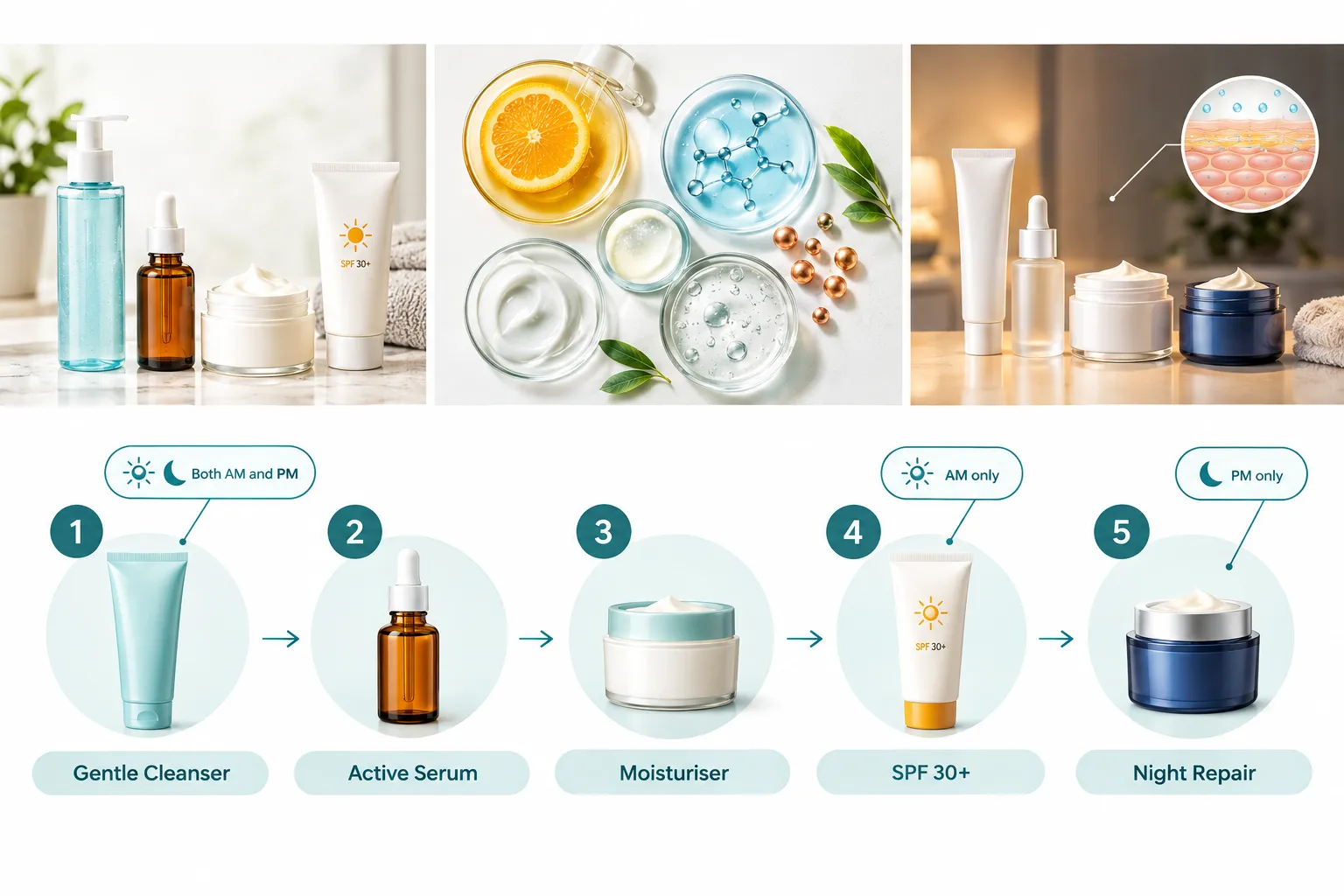
The current trend in 2026 is firmly toward minimalist, multi-functional routines: three steps in the morning and three in the evening, with one or two targeted treatments layered in. [2][5] That is a sensible direction. Skin does not benefit from being overwhelmed with actives. The barrier needs support, not stress.
Start by Understanding Your Skin Type and Main Concern
Before choosing any products, identify your skin type and your main concern. These two factors determine which products are worth your time and money.
The four main skin types:
- Dry skin: feels tight, may flake, fine lines appear more visible. Needs richer moisturisers and gentle, non-stripping cleansers.
- Oily skin: shiny, enlarged pores, prone to congestion and breakouts. Benefits from lightweight, non-comedogenic products and oil-balancing actives.
- Combination skin: oily in the T-zone (forehead, nose, chin), drier on cheeks. May need different products for different zones, or one balanced product.
- Sensitive skin: reacts easily to fragrance, alcohol, and new products. Needs fragrance-free, minimal-ingredient formulas and careful patch testing.
Common concerns to address:
| Concern | Most relevant actives | Evidence level |
|---|---|---|
| Premature ageing / fine lines | Retinoids, vitamin C, peptides | Strong to moderate |
| Uneven pigmentation | Vitamin C, niacinamide, retinoids | Moderate |
| Dryness and dehydration | Hyaluronic acid, ceramides, glycerin | Strong |
| Acne and breakouts | Salicylic acid (BHA), niacinamide, retinoids | Moderate to strong |
| Redness and sensitivity | Ceramides, niacinamide, azelaic acid | Moderate |
| Dull or uneven texture | AHAs (glycolic, lactic acid), vitamin C | Moderate |
Start with what gives the biggest return: cleansing, SPF, and a moisturiser suited to your skin type. Add one targeted active once you have a stable base.
For those dealing with dietary factors that affect skin, the connection between antinutrients and skin conditions such as eczema is worth understanding. See our article on antinutrients and skin health, including how tannins and phytoestrogens may trigger eczema flares.
Morning Skin Care Routine: The Essential Order
The morning skin care routine follows a simple logic: start clean, apply treatments from thinnest to thickest, and always finish with SPF.
Cleanser
Use a gentle, low-pH cleanser suited to your skin type. In the morning, most people do not need a full deep cleanse because the skin has not been exposed to makeup, heavy pollution, or sunscreen overnight. A gentle rinse or a mild gel or cream cleanser is enough. [12]
Avoid foaming cleansers with sulphates if your skin is dry or sensitive. They strip the skin’s natural oils and compromise the barrier, which makes every subsequent product less effective.
Treatment Serum or Active Ingredient
This is where vitamin C earns its place. A 10-20% vitamin C serum applied after cleansing and before moisturiser provides antioxidant protection against UV-generated free radicals, supports collagen synthesis, and helps even skin tone over time. [12] Apply it to clean, dry skin, allow it to absorb for 30-60 seconds, then continue.
Other morning-appropriate actives include hyaluronic acid (for hydration), niacinamide (for barrier support and pore appearance), and growth factor or peptide serums. Avoid acids or retinoids in the morning routine unless specifically directed otherwise, as they can increase photosensitivity.
Moisturiser
Apply moisturiser while skin is still slightly damp to lock in hydration. For dry or mature skin, look for formulas containing ceramides, glycerin, and peptides. For oily skin, a lightweight gel moisturiser with hyaluronic acid is usually sufficient. For combination skin, a balanced lotion works for most people.
If you have dry skin and are considering oil-based products, our guide to the best oil for dry skin covers the evidence behind common options.
Sun Exposure, Timing and Physical Protection
Sunlight is not something to fear or avoid completely. The practical question is timing, dose and protection. Morning sunlight and the softer light around sunset are generally easier to tolerate than prolonged exposure during the strongest part of the day. If the sun is intense, shorten the exposure rather than pushing through it.
Covering the skin is the first line of protection: a hat, sunglasses, a loose long-sleeved shirt and shade can reduce exposure without asking you to apply products you do not want on your skin. The skin is the body’s largest organ, so treating its barrier with care matters.
Topical sunscreens are an individual choice, not a compulsory part of every routine. Some readers prefer to avoid them because of concerns about ingredients, absorption, irritation or environmental effects. If you do use one, read the ingredients, patch test it and do not treat the label as permission for unlimited sun exposure.
Astaxanthin is best viewed as additional general antioxidant support, not a cure-all and not a replacement for shade, clothing or sensible sun exposure. Supplement doses vary by product; follow the label and discuss supplements with a clinician if you take medication or have a medical condition.
Infrared light is one component of natural sunlight and is being studied for possible effects on tissue biology. That does not make deliberate overexposure, sunburn or painful skin a healing strategy. Listen to your skin and cover up before it becomes uncomfortable.
Evening Skin Care Routine: Cleanse, Treat and Support the Barrier
The evening skin care routine is where most of the active treatment work happens. At night, the skin is in repair mode, cell turnover increases, and there is no UV exposure to worry about, making it the ideal time for retinoids and stronger actives.
Evening routine structure:
- Double cleanse if you wore sunscreen, makeup, or both. Start with a cleansing oil or micellar water to dissolve product, then follow with a gentle water-based cleanser. If you wore no makeup and a light SPF, a single gentle cleanse is usually sufficient.
- Apply a targeted active. The most evidence-supported evening active is a retinoid (retinol, retinaldehyde, or prescription tretinoin). Start with the lowest available concentration, use it two nights per week, and increase frequency gradually over several weeks as tolerance builds. [12]
- Peptide or hydrating serum (optional). If your skin tolerates it, a peptide serum or a hyaluronic acid serum can be layered under moisturiser on retinoid nights, or used on alternate nights.
- Moisturiser. Finish with a moisturiser that supports the barrier. On retinoid nights, a richer moisturiser helps buffer any dryness or irritation.
What to avoid in the evening routine:
- Do not use a retinoid and a chemical exfoliant (AHA or BHA) on the same night. This combination significantly increases the risk of irritation and barrier damage.
- Limit chemical exfoliation to one or two nights per week, separately from retinoid use. [3][12]
- Avoid fragrance-heavy products at night if your skin is reactive. Fragrance is one of the most common causes of contact dermatitis.
Skin Care Routine Order and How Much Product to Use
The general rule for skin care routine order is thinnest to thickest: water-based serums before oils, oils before creams, and SPF last in the morning. This ensures each product can penetrate effectively without being blocked by a heavier layer.
Standard morning order:
Cleanser → Toner (optional) → Vitamin C serum → Hyaluronic acid or peptide serum → Moisturiser → sensible exposure strategy
Standard evening order:
First cleanse (oil) → Second cleanse (gentle wash) → Retinoid or active treatment → Peptide or hydrating serum → Moisturiser
How much product to use:
| Product | Amount |
|---|---|
| Cleanser | Pea to marble-sized amount |
| Serum | 2-4 drops or a pea-sized pump |
| Moisturiser | Pea to hazelnut-sized amount |
| Sunscreen | Quarter-teaspoon for face and neck |
| Retinoid | Pea-sized amount (less is more) |
More product does not mean more benefit. With retinoids especially, using more than a pea-sized amount increases irritation without improving results. With SPF, the opposite applies: most people under-apply and get far less protection than the label suggests.
On the topic of toners: they are optional, not essential. If you use one, apply it after cleansing and before serums. A well-formulated toner can add hydration, balance pH, or deliver a light active (such as niacinamide or glycolic acid). For guidance on choosing one suited to dry skin, see our article on the best toner for dry skin.
Modern Active Ingredients: What They Do and How Strong the Evidence Is
This is where hype gets in the way. The skincare market is full of ingredients with compelling marketing and variable evidence. Let’s separate what is established from what is plausible and what is mostly marketing.
Vitamin C
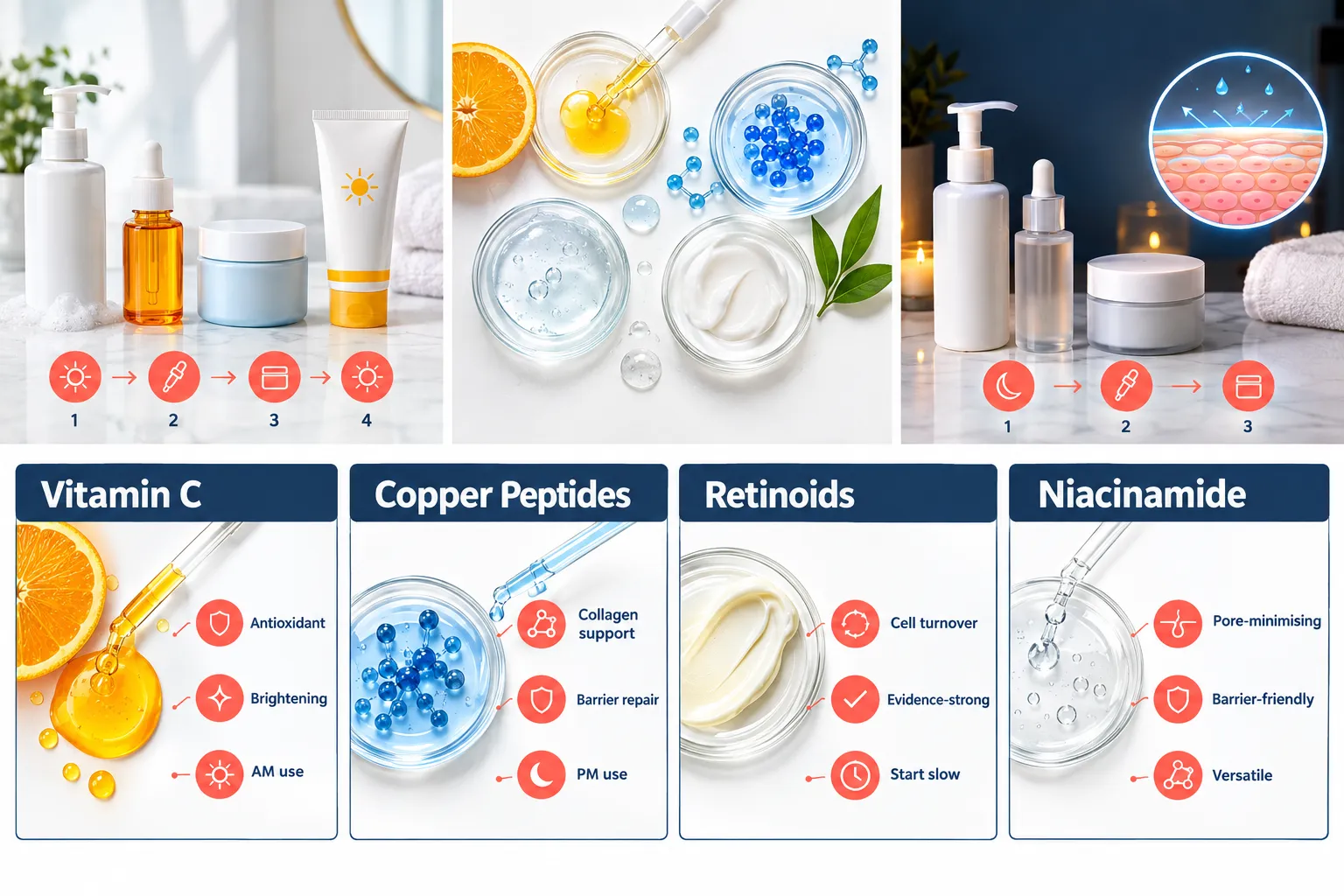
Vitamin C (L-ascorbic acid) is one of the best-supported topical actives available. The evidence for its role as an antioxidant, its ability to inhibit melanin production (reducing hyperpigmentation), and its support of collagen synthesis is well-established in peer-reviewed literature. A 10-20% concentration in a stable, low-pH formula is the most effective form. [12]
The main practical issue is stability. Vitamin C oxidises quickly on exposure to air and light. Look for products in opaque or airless packaging, and discard them if the serum turns orange or brown. Ascorbyl glucoside and sodium ascorbyl phosphate are more stable derivatives with somewhat weaker but still meaningful activity.
Copper Peptides
Copper peptides (particularly GHK-Cu) have attracted serious scientific interest for their role in wound healing, collagen and elastin production, and antioxidant activity. In vitro and some in vivo studies suggest they can support skin repair and reduce the appearance of fine lines. [5][13]
The evidence is plausible and growing, but most studies are small or industry-funded. That is a strong claim and needs strong proof, which we do not yet have at scale. Copper peptides are worth considering, particularly for mature or barrier-compromised skin, but they should not be marketed as a guaranteed anti-ageing solution. They are generally well-tolerated and work well in evening routines.
Astaxanthin
Astaxanthin is a carotenoid with antioxidant activity and a possible role in supporting the skin’s response to oxidative stress. It is better understood as additional general protection than as a cure-all, sunscreen replacement or guaranteed anti-ageing treatment. Human evidence is still developing, and supplement products vary, so follow the label rather than assuming that two capsules means the same dose for every product.
A sensible skin-health approach combines internal support with sensible exposure: favour morning or late-day sunlight, use shade and clothing when the sun is strong, and stop before the skin becomes painful or visibly damaged.
Glutathione
Glutathione deserves careful treatment here because the claims around it vary enormously depending on the delivery method.
Topical glutathione: Some evidence suggests topical glutathione can act as an antioxidant and may have a modest brightening effect on skin tone, likely through inhibition of melanin synthesis. However, glutathione is a large molecule and penetrates the skin barrier poorly. Most topical products deliver limited active concentrations to the dermis. The evidence is preliminary.
Oral glutathione supplements: A small number of randomised controlled trials have shown modest skin-lightening effects with oral glutathione supplementation over 4-12 weeks, primarily in Asian populations. The results are interesting but not yet consistent across larger, more diverse studies. Oral supplements are generally considered safe at typical doses, though long-term safety data is limited.
Injectable glutathione: This is where the line needs to be drawn clearly. Injectable glutathione is used in some countries for skin lightening, but it is not approved for this purpose by major regulatory agencies including the US FDA, and serious adverse effects including nerve damage, kidney injury, and infection risk have been reported. Injectable glutathione for skin lightening is not routine skincare. It should not be treated as a cosmetic option without specialist medical oversight.
The broader glutathione topic, including its role in cellular antioxidant defence and how it connects to nutrition, is a subject we plan to cover in a dedicated article. For now, the main takeaway is: topical and oral glutathione have plausible mechanisms and limited but emerging evidence; injectable use is a different matter entirely and carries real risk.
Retinoids
Retinoids (retinol, retinaldehyde, adapalene, tretinoin) are the most evidence-supported anti-ageing topical ingredients available. Tretinoin (prescription-only in most countries) has decades of randomised controlled trial data supporting its ability to increase cell turnover, stimulate collagen production, and reduce the appearance of fine lines and pigmentation.
Over-the-counter retinol converts to retinoic acid in the skin and is less potent but still effective with consistent use. Start at 0.025-0.05%, use two nights per week, and increase gradually. Expect some initial dryness and flaking (called retinisation) in the first four to six weeks. This is normal and usually resolves.
Retinoids are not recommended during pregnancy. If you are pregnant or planning to become pregnant, discuss alternatives with your doctor or midwife.
Niacinamide
Niacinamide (vitamin B3) is one of the most versatile and well-tolerated actives in skincare. The evidence supports its role in improving barrier function, reducing transepidermal water loss, minimising the appearance of pores, and reducing hyperpigmentation. It is suitable for all skin types and can be used morning or evening. [5]
At concentrations of 2-5%, niacinamide is effective and unlikely to cause irritation. At 10% or higher, some people experience flushing. It is compatible with most other actives, including vitamin C (despite older claims to the contrary, modern formulation science has largely resolved this issue).
Hyaluronic Acid
Hyaluronic acid is a humectant, meaning it draws water from the environment and deeper skin layers to the surface. It does not add moisture to the skin; it holds it there. Applied to damp skin and sealed with a moisturiser, it is effective for improving surface hydration and plumping the appearance of fine lines. [8]
It does not penetrate deeply enough to replace lost dermal hyaluronic acid, so the effect is surface-level and temporary. That does not make it useless. It is gentle, well-tolerated, and works well across all skin types.
Ceramides
Ceramides are lipids that make up a significant portion of the skin barrier. As skin ages, ceramide levels decline, which compromises barrier function and increases water loss. Topical ceramides (ceramide NP, AP, EOP) help restore barrier integrity and are particularly useful for dry, sensitive, or eczema-prone skin. [5][8]
They are not actives in the treatment sense. Think of them as maintenance and repair. A moisturiser with ceramides is a sensible choice for anyone over 45.
Peptides
Peptides are short chains of amino acids that act as signalling molecules in the skin. Different peptides have different proposed mechanisms: some are thought to signal collagen production (matrikines), some inhibit muscle contraction (neurotransmitter-inhibiting peptides), and some support barrier repair (carrier peptides, including copper peptides).
The evidence for peptides is generally positive but often based on small or industry-sponsored studies. From a practical standpoint, a well-formulated peptide serum is unlikely to cause harm and may provide meaningful benefit, particularly for mature skin. They are best used in the evening routine and are compatible with most other actives.
Glycine, NAC and the Skin, Collagen, Glutathione Connection
Glycine and N-acetylcysteine (NAC) are nutritional compounds with a plausible connection to skin health, but they are not proven cosmetic treatments and should not be positioned as replacements for topical skincare.
Here is the real issue: collagen is made primarily from three amino acids, one of which is glycine. Glycine is therefore relevant to the structure and repair of connective tissue, although the size of any benefit from supplementation depends on the person, diet, dose and outcome being measured.
There is also a practical observation worth recording without turning it into a universal promise: some people report that glycine reduces discomfort after strong sun exposure. Dave’s own experience is that glycine reduces this type of sunshine-related pain very well. That is a useful lead for further research, but it does not establish that glycine prevents sunburn, blocks ultraviolet damage or replaces physical protection. A dedicated evidence review should examine the human studies directly.
NAC is a precursor to cysteine, which is a precursor to glutathione. By raising intracellular glutathione levels, NAC may support the body’s antioxidant defences, which in theory could benefit skin health. NAC has a reasonably strong safety record in clinical use for other purposes, but its specific effects on skin ageing in healthy adults are not well established.
The connection is biologically coherent: glutathione protects against oxidative stress, collagen supports skin structure, and both glycine and NAC feed into these pathways. But a plausible mechanism is not the same as a proven treatment. The evidence suggests these are interesting nutritional pathways worth watching, not guaranteed skin interventions.
If you are interested in nutrition and skin health more broadly, our article on natural skin care approaches covers some of the dietary and lifestyle factors that support skin from the inside.
Adapting a Routine for Dry, Oily, Combination and Sensitive Skin
A good skin care routine adapts to your skin type without becoming a completely different routine. The structure stays the same; the product choices change.
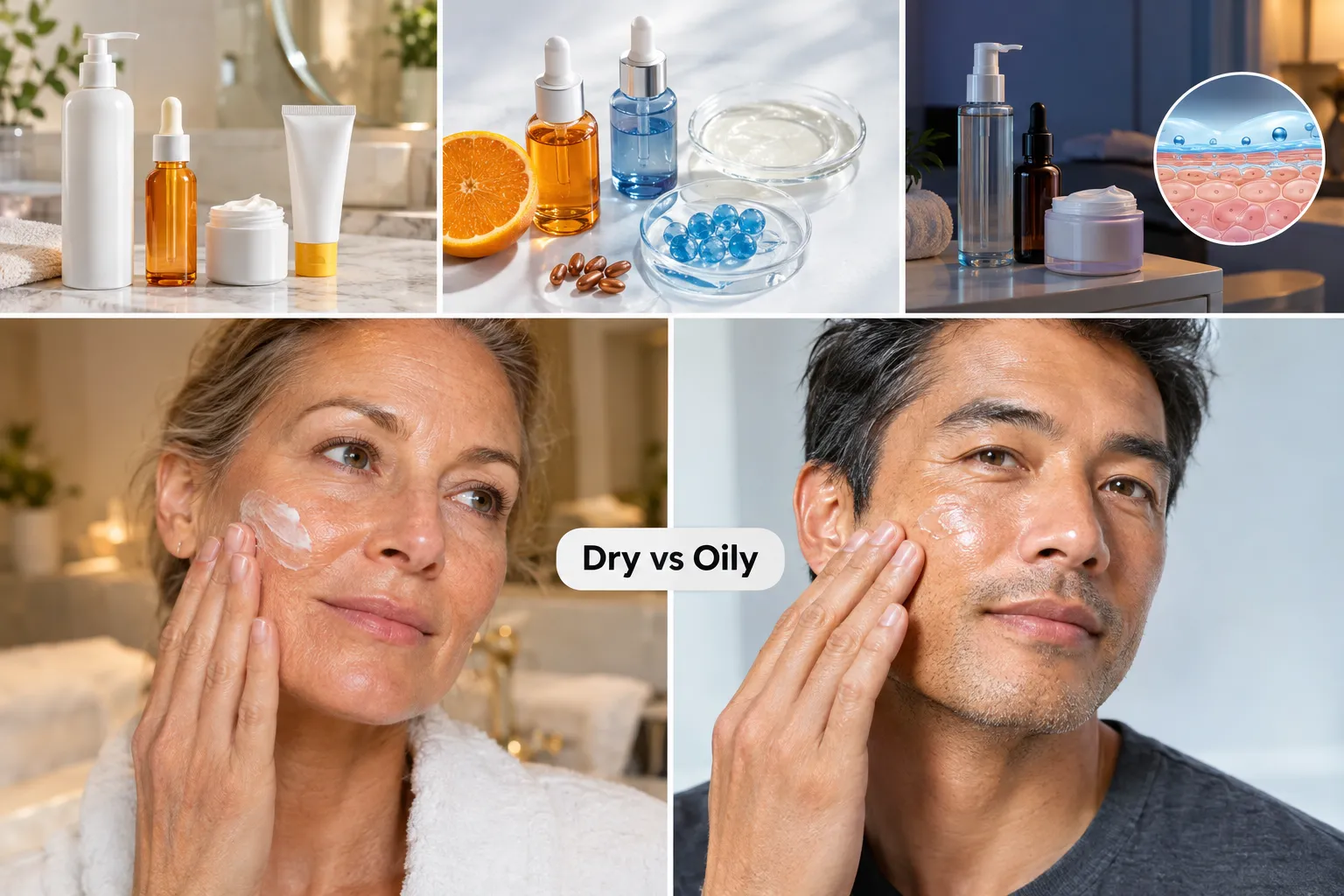
Dry skin: Use a cream or oil-based cleanser. Add a hydrating toner or essence. Choose a richer moisturiser with ceramides, shea butter, or squalane. Layer hyaluronic acid serum under your moisturiser. Avoid alcohol-based products and harsh exfoliants. For a deeper look at oil-based options for dry skin, see our guide to the best oil for dry skin.
Oily skin: Use a gentle gel or foaming cleanser (without stripping sulphates). Choose a lightweight, oil-free moisturiser. Niacinamide is particularly useful for managing sebum and pore appearance. Salicylic acid (BHA) one to two nights per week helps keep pores clear. Avoid heavy creams and occlusive oils.
Combination skin: Use a balanced gel-cream moisturiser. Apply lighter products to the T-zone and richer ones to dry areas if needed. Niacinamide works well across both zones.
Sensitive skin: Fragrance-free is essential. Introduce one product at a time and patch test every new product on the inner arm for 24-48 hours before applying to the face. Avoid high concentrations of acids and retinoids until tolerance is established. Ceramide-rich, minimal-ingredient formulas are the safest starting point.
For those with skin conditions such as eczema, dietary factors can matter as much as topical products. Our article on antinutrients and skin health explores how certain food compounds may contribute to flares.
Anti-Wrinkle and Healthy-Ageing Skin Care Without the Hype
The strongest evidence for slowing visible skin ageing points to three things: consistent sun protection, a retinoid, and a vitamin C serum. Everything else is supporting cast.
Let’s call it what it is: no topical product reverses ageing. What the best products can do is slow the rate of visible change, support barrier function, reduce pigmentation, and improve skin texture. Those are real, meaningful outcomes, but they require consistent use over months, not weeks.
The most evidence-supported anti-ageing skin care routine for adults over 45 looks like this:
Morning: Gentle cleanser → 10-20% vitamin C serum → ceramide-rich moisturiser → SPF 30-50
Evening: Double cleanse → retinoid (start low, increase slowly) → peptide or ceramide moisturiser
This is what a 2026 dermatologist anti-ageing protocol describes as a short, “boring” routine. [12] Boring is not a criticism. Boring means consistent. Consistent is what produces results.
A few additional evidence-aware additions worth considering for those over 45:
- Copper peptides in an evening serum, alternated with retinoid nights
- Niacinamide in a morning or evening serum for pigmentation and barrier support
- Chemical exfoliation (AHA or BHA) one to two nights per week, never on the same night as a retinoid
What to be sceptical of:
- Products claiming to “reverse” or “erase” wrinkles
- Single-ingredient products priced at a significant premium over similar-concentration alternatives
- Devices and treatments marketed as home alternatives to clinical procedures without independent evidence
For men specifically, the fundamentals are the same. Our article on top skin care tips for men covers practical adaptations for male skin, which tends to be thicker and oilier but ages in similar ways.
Skin Care Products That Actually Work
Direct answer: The products with the clearest practical value are a gentle cleanser, a barrier-supporting moisturiser and a carefully chosen active matched to your concern. Vitamin C, retinoids, niacinamide, ceramides and hyaluronic acid have different evidence levels; no ingredient works equally well for everyone.
How Much Does a Good Skin Care Routine Cost?
Direct answer: A useful routine does not need to be expensive. Spend first on a product you will use consistently and on the active that matches your main concern. Premium branding is not proof of superior results.
Affordable Versus Luxury Skin Care Products
Price is not a reliable indicator of effectiveness. A cleanser that costs three times more does not clean three times better. What matters is the formulation: the concentration of active ingredients, the stability of those ingredients, and the quality of the delivery system.
That said, some higher-cost products do justify their price through better stability packaging (airless pumps for vitamin C), higher concentrations of actives, or more elegant formulas that improve adherence. The question is always whether the premium is for the ingredient or for the brand.
Where spending more can make sense:
- Vitamin C serums (stability matters; cheap packaging often means oxidised product)
- Retinoid formulations with encapsulation technology (reduces irritation)
- SPF products with elegant textures (if cost is the reason you skip it, spend more)
Where affordable options work just as well:
- Cleansers (active contact time is short)
- Basic moisturisers with ceramides and glycerin
- Hyaluronic acid serums (the molecule is the molecule)
A sensible starting point is to invest in your SPF and your one or two targeted actives, and keep cleansing and basic moisturising simple and affordable.
Natural, Vegan and Cruelty-Free Claims
These labels carry real meaning in some cases and marketing weight in others. Let’s separate them.
Cruelty-free means the product and its ingredients were not tested on animals. This is a meaningful ethical choice and is verifiable through certification bodies such as Leaping Bunny or PETA’s Beauty Without Bunnies programme.
Vegan means no animal-derived ingredients. This rules out ingredients such as lanolin (from sheep’s wool), beeswax, and collagen derived from animal sources. It does not automatically mean the product is gentler or more effective.
Natural has no regulated definition in most markets. A product can label itself natural while containing synthetic preservatives, fragrance, and processing aids. Conversely, some synthetic ingredients (such as niacinamide and ceramides) are safer and better-evidenced than their natural alternatives.
We need to separate fact from hype here: natural does not mean safe, and synthetic does not mean harmful. Poison ivy is natural. Niacinamide is synthetic. Evidence and formulation quality matter more than origin.
If you are interested in plant-derived ingredients with genuine evidence behind them, our article on cinnamon benefits for skin is a useful example of how to evaluate a natural ingredient with a realistic lens.
Skin Care Routine Mistakes to Avoid
Direct answer: The biggest mistakes are overcomplicating the routine, adding several actives at once, ignoring irritation and assuming more product means better results. Introduce changes slowly and use shade and clothing when sunlight is strong.
Common Routine Mistakes
Most skin care routines fail not because the products are wrong but because the approach is wrong. These are the patterns worth avoiding.
Introducing too many products at once. If you add three new products in a week and your skin reacts, you cannot identify which one caused the problem. Introduce one product at a time and wait at least two weeks before adding another. [8]
Changing products too quickly. Most actives take six to twelve weeks to show measurable results. Switching products every three to four weeks means you never give anything time to work. [4]
Over-exfoliating. Chemical exfoliants are effective, but more is not always better. Using AHAs or BHAs daily, or combining them with retinoids on the same night, strips the barrier and causes chronic low-grade inflammation. One to two nights per week is enough for most people. [3][12]
Skipping moisturiser on oily skin. Oily skin still needs hydration. Skipping moisturiser can trigger the skin to produce more oil to compensate. Use a lightweight, non-comedogenic formula.
Applying products in the wrong order. Heavier products applied before lighter ones block absorption. Always go thinnest to thickest.
Not patch testing. Even well-tolerated ingredients can cause reactions in some people. Apply a small amount to the inner arm or behind the ear for 24-48 hours before using a new product on your face.
Using SPF only on sunny days. UVA radiation penetrates cloud cover and glass. Daily SPF use is the evidence-based standard, not a fair-weather habit. [6][9]
Expecting results in days. Skin cell turnover takes approximately 28 days in younger adults and longer as we age. Meaningful changes in pigmentation, texture, or fine lines take a minimum of six to twelve weeks of consistent use.
When Persistent Skin Problems Need a Dermatologist
A skin care routine is not a substitute for medical care. There are situations where products alone are not the right answer, and continuing to try new products without professional input can delay effective treatment or cause harm.
See a dermatologist if:
- Acne is moderate to severe, cystic, or leaving scars. Prescription retinoids, antibiotics, or other treatments are significantly more effective than over-the-counter options for these cases.
- You have rosacea. Many common skincare actives (including some acids and vitamin C at high concentrations) can worsen rosacea. A dermatologist can guide safe product choices and prescribe targeted treatments.
- A mole, lesion, or patch of skin has changed in size, shape, colour, or texture. This needs professional assessment, not a new serum.
- Persistent redness, itching, or flaking does not resolve with a gentle, fragrance-free routine after four to six weeks. This may indicate eczema, psoriasis, or contact dermatitis.
- You are pregnant and want to use active ingredients. Retinoids are contraindicated in pregnancy. Some other actives also warrant caution. A GP or dermatologist can advise safe alternatives.
- You are taking medications that affect skin sensitivity (such as certain antibiotics, diuretics, or immunosuppressants). Some drugs increase photosensitivity or interact with topical treatments.
Context matters. A routine that works well for one person may be entirely wrong for another with a different skin condition or medication history. When in doubt, professional advice is the right next step.
Skin Care Routine: A Six-Week Build Plan
For those starting from scratch or rebuilding after a reaction, a phased approach reduces risk and builds lasting habits. [4][8]
| Weeks | Morning | Evening |
|---|---|---|
| 1-2 | Cleanser, moisturiser, SPF | Cleanser, moisturiser |
| 3-4 | Add vitamin C serum | Add hyaluronic acid serum |
| 5-6 | Continue | Add retinoid (2 nights/week) |
| 7+ | Assess and adjust | Add exfoliant (1-2 nights/week, not retinoid nights) |
This timeline is a guide, not a rule. If your skin is reactive or sensitive, extend each phase. If your skin tolerates everything well, you can progress slightly faster, but there is no benefit to rushing.
Frequently Asked Questions
What is a basic skin care routine?
A basic skin care routine has three steps: a gentle cleanser, a moisturiser, and a sensible sun-exposure strategy based on timing, shade and clothing in the morning. At night, cleanse and moisturise. These three steps, done consistently, provide the foundation for healthy skin. Everything else is optional and targeted. [8]
How often should I do a skin care routine?
Twice daily: once in the morning and once at night. The American Academy of Dermatology recommends washing the face morning and night with an appropriate cleanser. [6] Active treatments like retinoids are used less frequently, starting at two nights per week.
What is the difference between a morning and evening skin care routine?
The morning routine focuses on protection: antioxidants (vitamin C), hydration, and SPF. The evening routine focuses on repair and treatment: retinoids, peptides, and barrier-supporting moisturisers. SPF is only needed in the morning. Chemical exfoliants and retinoids are evening-only actives. [3][12]
How long before I see results from a skin care routine?
For basic hydration, you may notice improvement within a few days. For pigmentation and fine lines, expect six to twelve weeks of consistent use before meaningful change is visible. Retinoids typically show noticeable results after eight to twelve weeks. Skin cell turnover takes approximately 28 days, and longer in older adults.
Why is my skin care routine not working?
The most common reasons are: not giving products enough time (less than six to eight weeks), introducing too many products at once, using incompatible actives together (such as retinoids and acids on the same night), or skipping SPF, which allows UV damage to undo any progress. Simplify your routine, be consistent, and give it at least six weeks. [4][8]
Can I use all these products together in one routine?
Not all at once, and not all on the same night. Vitamin C, hyaluronic acid, niacinamide, and SPF work well together in the morning. Retinoids, ceramides, and peptide moisturisers work well together in the evening. Avoid combining retinoids with AHAs or BHAs on the same night. When in doubt, use fewer products rather than more. [3][12]
What is the best skin care routine for acne-prone skin?
A gentle, non-comedogenic cleanser, a niacinamide serum, a lightweight oil-free moisturiser, and SPF in the morning. In the evening, a low-concentration retinoid or salicylic acid (BHA) one to two nights per week, alternated with a simple moisturiser. Avoid heavy oils, fragrance, and over-exfoliation. Moderate to severe or cystic acne needs a dermatologist.
What is a minimalist skin care routine that still works?
Three products: a gentle cleanser, a moisturiser, and SPF 30 or higher. Used consistently, morning and night (SPF in the morning only), this routine is what most dermatologists recommend as a starting point. [8] It outperforms a ten-step routine done inconsistently. Once this is stable, add one targeted active based on your main concern.
Conclusion
A well-built skin care routine does not need to be expensive, complicated, or time-consuming. The evidence points clearly to a small number of steps that deliver most of the benefit: cleansing, moisturising, and daily sun protection as the non-negotiable foundation, with vitamin C in the morning and a retinoid at night as the most consistently supported actives for those who want to go further.
Modern ingredients like copper peptides, niacinamide, and ceramides add genuine value for specific concerns. Glutathione is a biologically interesting compound with emerging evidence for topical and oral use, but injectable glutathione for skin lightening sits outside routine skincare and carries real risk. Glycine and NAC are nutritional pathways worth watching, not proven cosmetic treatments.
The practical steps are straightforward:
- Start with a gentle cleanser, a moisturiser suited to your skin type, and a sensible sun-exposure strategy every morning.
- Add one targeted active at a time, starting with vitamin C in the morning or a low-dose retinoid two nights per week.
- Patch test every new product. Give each one at least six weeks before deciding whether it works.
- Keep the routine consistent. A simple routine done every day beats a complex one done occasionally.
- If you have persistent acne, rosacea, changing skin lesions, or are pregnant, see a dermatologist before adding actives.
There is no magic in it. The basics still do the heavy lifting. Start there, stay consistent, and build slowly. That is what the evidence supports, and it is the most practical advice available in 2026.
For further reading on skin health from a natural and nutritional perspective, see our article on natural skin care approaches.
References
[1] What Skincare Routine Are You Planning To Stick – https://www.reddit.com/r/40PlusSkinCare/comments/1pygxts/what_skincare_routine_are_you_planning_to_stick/
[2] Smart Skincare In 2026 Minimalist Routines Multi-functional Products – https://www.aboutskinderm.com/smart-skincare-in-2026-minimalist-routines-multi%E2%80%91functional-products/
[3] Simple Skincare Routine 2026 Morning Night And Weekly Care Guide – https://globalbeautynews.org/2026/06/11/simple-skincare-routine-2026-morning-night-and-weekly-care-guide/
[4] Complete Skincare Routine Guide 2026 – https://starabeautyusa.com/2026/05/13/complete-skincare-routine-guide-2026/
[5] Skin Longevity Basics The 2026 Routine That Doesnt Take Over Your Life – https://wellnessagelessbeauty.com/skin-longevity-basics-the-2026-routine-that-doesnt-take-over-your-life/
[6] Skin Care In Your 20s – https://www.aad.org/public/everyday-care/skin-care-basics/care/skin-care-in-your-20s
[7] Anti Ageing Skincare Routine Guide – https://www.loreal-paris.co.uk/anti-ageing-skincare-routine-guide
[8] Skin Care Routine For Beginners – https://www.ulta.com/discover/beauty-education/skin-care-routine-for-beginners
[9] 5 Essential Skincare Routine Steps – https://www.newsgram.com/lifestyle/2026/09/13/5-essential-skincare-routine-steps
[10] Editors Skincare Routines – https://www.nbcnews.com/select/shopping/editors-skincare-routines-rcna138177
Affiliate Disclosure: All Perfect Health may earn a commission from qualifying purchases made through links in this article. This does not affect editorial decisions.

Dave James writes for thoughtful adults who want practical, evidence-aware health information without hype. He separates established evidence from plausible mechanisms, marketing claims and unanswered questions.
📂 Modern Skin Care
This article is part of the Modern Skin Care cluster. The pillar and supporting guides are listed below.
- Pillar: YOU ARE HERE Modern Skin Care Routine: Essential Steps, Ingredients and Product Choices
- → What to Eat for Better Skin: Protein, Collagen Peptides, Vitamin C and More
- → Skin Care for Men
- → Cinnamon Benefits for Skin
- → Best Toner for Dry Skin
- → Best Oils for Dry Skin