
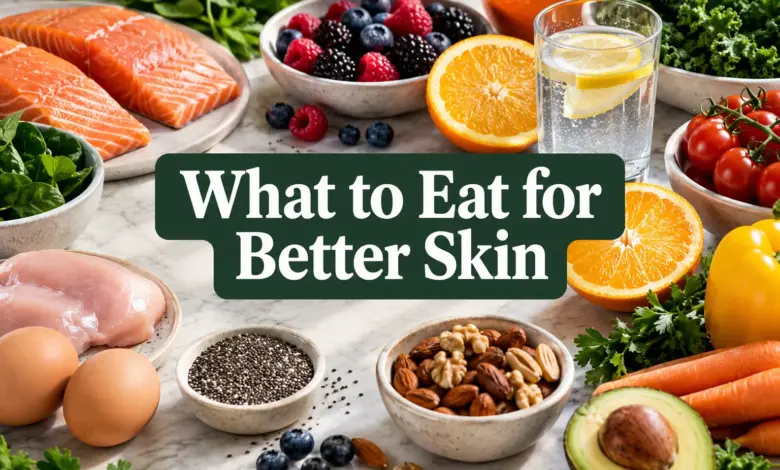
What to Eat for Better Skin: Protein, Collagen Peptides, Vitamin C and More
Last updated: September 19, 2026
Quick Answer
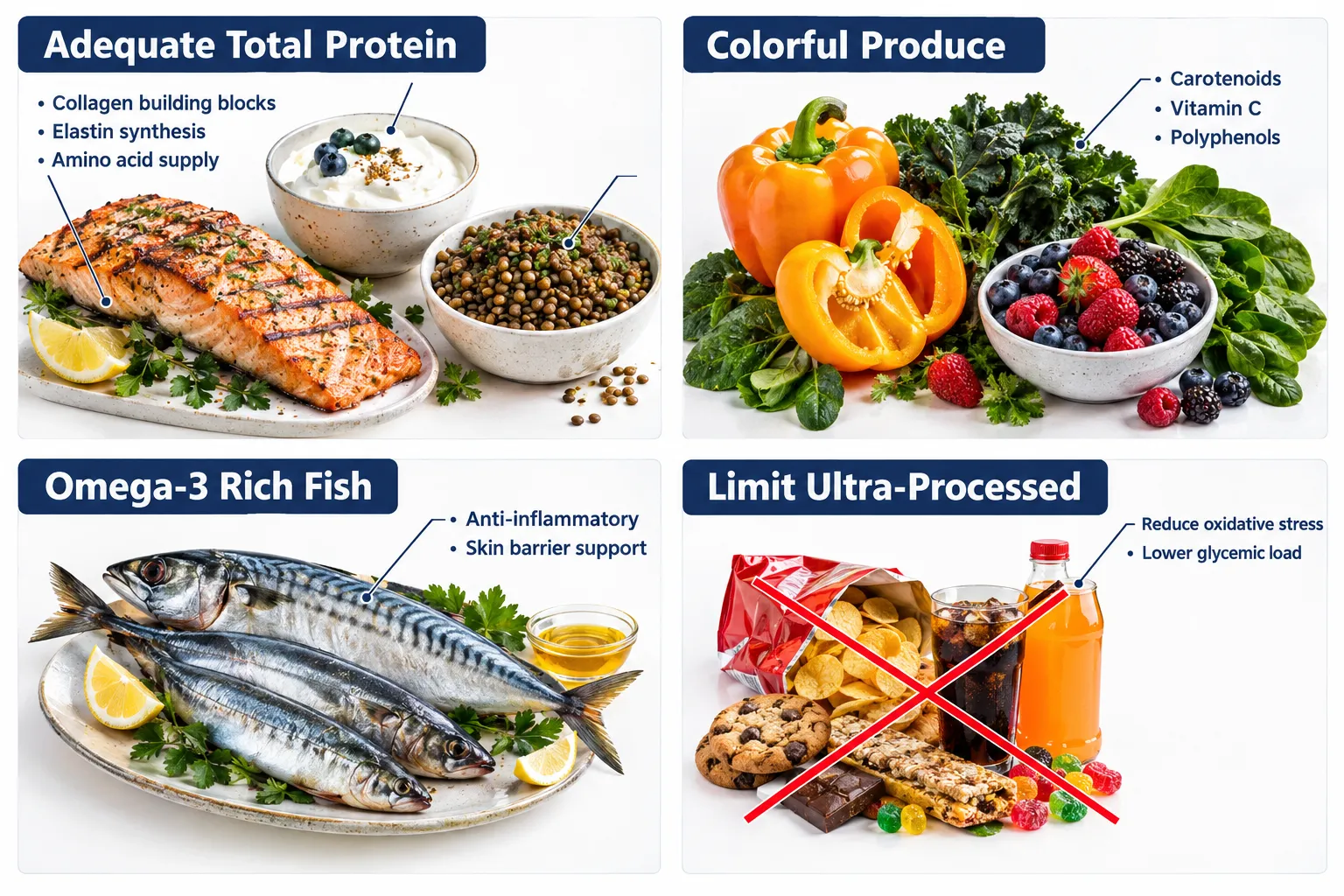
Knowing what to eat for better skin comes down to a consistent dietary pattern, not a list of miracle foods. The strongest evidence points to adequate total protein, colorful fruits and vegetables, omega-3-rich fish, healthy fats, and fermented foods, while limiting ultra-processed foods, added sugars, and excess alcohol. No single food or supplement guarantees results, but a well-structured eating pattern maintained over months can meaningfully support skin structure, hydration, and resilience. [1][6][9]
Medical Disclaimer
This article is for general informational purposes only and does not constitute medical advice, diagnosis, or treatment. Nutritional needs vary by individual health status, age, and medical history. If you have kidney disease, diabetes, an eating disorder, are pregnant, or take medications that interact with supplements, consult a qualified healthcare professional before making significant dietary changes.
Key Takeaways
- Adequate total protein is the foundation. Skin needs amino acids to produce and maintain collagen, elastin, and other structural proteins.
- Colorful produce, especially orange, red, and dark green vegetables and fruits, supplies carotenoids, vitamin C, and polyphenols that protect against oxidative damage. [4][8]
- Fatty fish eaten one to two times per week provides EPA and DHA omega-3 fats that reduce inflammation and support skin cell membranes. [6][11]
- Fermented foods and high-fiber plant foods support the gut-skin axis, which influences acne, eczema, and rosacea risk. [3][9]
- Reducing high-glycemic processed foods and added sugars likely matters more than adding any specific “skin superfood.” [2][9]
- Collagen peptides for skin show modest, early-stage evidence for some outcomes but are optional, not essential if overall protein intake is adequate.
- Vitamin C from food supports normal collagen synthesis. Megadosing is not necessary and adds cost without clear additional benefit. [5]
- Adequate fluid intake, roughly 2 liters per day from water, tea, and other low-sugar drinks, supports normal skin cell function. It does not directly rebuild collagen. [6]
- Lifestyle factors, smoking, excess alcohol, chronic stress, poor sleep, and UV exposure, can contribute to poorer skin outcomes and are not fully offset by diet alone. [6][11]
- No supplement replaces a sound overall eating pattern. Food first is still the most practical and evidence-supported approach. [6][12]
Table of Contents
- What to Eat for Better Skin: The Short Answer
- What Collagen Is and How the Body Makes It
- Why Total Protein Matters for Skin
- Collagen Peptides for Skin: What the Evidence Shows
- Natural Vitamin C Foods and Collagen Formation
- Foods to Eat for Better Skin: A Practical Food Framework
- Vegan and Carnivore Diets: Meeting Collagen-Supporting Nutrient Needs
- Water, Electrolytes and Skin Hydration
- What Not to Eat for Better Skin, or at Least Limit
- Smoking, Alcohol, Sugar, Stress, UV Exposure and Pollution
- A Simple One-Day Skin-Supportive Eating Pattern
- Safety, Supplements and When to Speak With a Professional
- Frequently Asked Questions
- Conclusion
What to Eat for Better Skin: The Short Answer
The simplest way to look at it is this: skin is a living tissue that depends on the same nutrients as every other organ in the body. What to eat for better skin is not a specialty diet, it is a well-balanced eating pattern that consistently delivers protein, healthy fats, micronutrients, and antioxidants, while keeping inflammation-promoting foods low. [1][9]
There is no magic in it. The evidence does not support a single food that transforms skin. What it does support is a pattern: fatty fish, colorful vegetables and fruit, fermented foods, adequate protein, healthy fats, and low added sugar, maintained over months, not days. [8][9]
What Collagen Is and How the Body Makes It
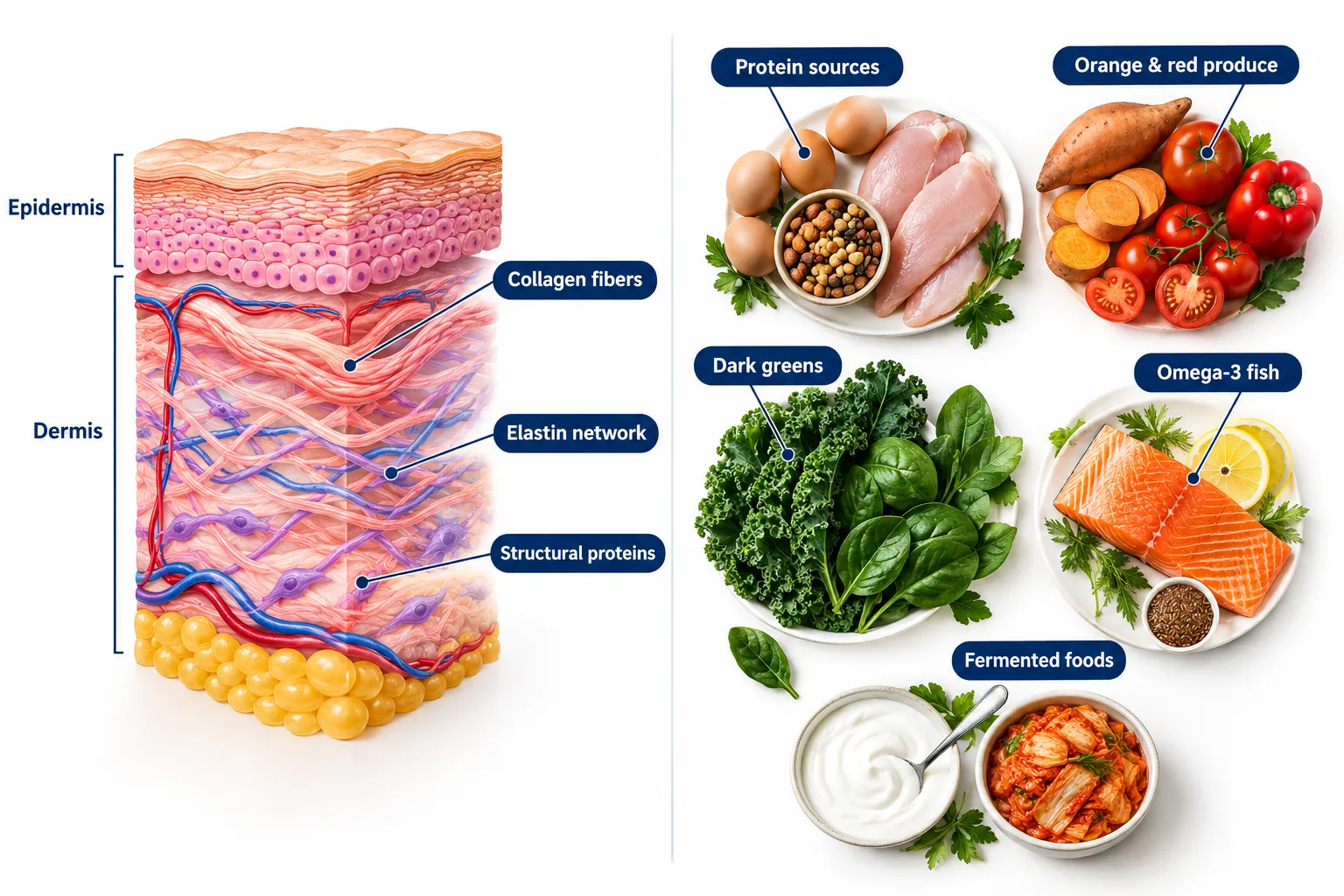
Collagen is the most abundant structural protein in human skin. It forms the scaffolding of the dermis, the layer responsible for firmness, elasticity, and wound repair. The body assembles collagen from amino acids, primarily glycine, proline, and hydroxyproline, in a process that requires vitamin C as an essential cofactor.
Here is the real issue: the body cannot store collagen from food and transfer it directly to skin. Dietary collagen, whether from bone broth, supplements, or collagen-rich cuts of meat, is broken down into amino acids during digestion, just like any other protein. Those amino acids then become available for the body to use in collagen synthesis, among other functions.
What this means practically:
- Collagen production depends on having enough amino acids available from total dietary protein.
- Vitamin C is required for the enzymes that stabilize the collagen triple-helix structure.
- Zinc, copper, and manganese also play supporting roles in collagen cross-linking and skin repair. [6][9]
The body’s collagen synthesis naturally slows with age. Diet cannot fully reverse that process, but consistent nutritional support can help maintain the conditions in which the body continues to produce collagen at a reasonable rate.
Why Total Protein Matters for Skin
Adequate protein intake is the most fundamental dietary factor for skin structure. Skin is largely made of protein, collagen, elastin, keratin, and various structural and signaling proteins all depend on a steady supply of amino acids from the diet.
Most adults need roughly 0.8 grams of protein per kilogram of body weight per day as a baseline, and many nutrition researchers now suggest that adults over 50 may benefit from slightly higher intakes, closer to 1.0 to 1.2 grams per kilogram, to offset age-related muscle and tissue changes. If total protein intake is consistently low, the body prioritizes more critical functions over skin maintenance.
Good protein sources for skin support include:
- Fatty fish (salmon, mackerel, sardines, tuna), protein plus omega-3s [6][11]
- Eggs, complete protein plus biotin and zinc [3][6]
- Legumes (lentils, chickpeas, black beans), protein plus fiber for gut health [9]
- Greek yogurt and kefir, protein plus probiotics [3][8]
- Poultry and lean meats, complete amino acid profiles
- Tofu and tempeh, plant-based complete protein options
The main takeaway is this: before reaching for a collagen supplement, check whether total protein intake is actually adequate. For most people eating a varied diet, it is. For those eating very low-calorie or highly restrictive diets, it may not be.
Collagen Peptides for Skin: What the Evidence Shows
Collagen peptides for skin have attracted genuine research interest, and the evidence is more nuanced than either enthusiasts or skeptics tend to admit.
Several randomized controlled trials have found modest improvements in skin hydration, elasticity, and the appearance of fine lines in adults taking hydrolyzed collagen peptide supplements, typically 2.5 to 10 grams per day over 8 to 12 weeks. A number of these trials are small, industry-funded, or short in duration, which limits how confident we can be in the findings.
That is a strong claim and needs strong context: the effect sizes reported are generally modest, not dramatic. Collagen peptides appear to be safe for most healthy adults, and they may provide a small benefit for some skin outcomes, particularly hydration and elasticity, especially in people whose overall protein intake is borderline or who are older.
From a practical point of view:
- Collagen peptides are optional, not essential.
- They are not a substitute for adequate total protein from whole foods.
- If you choose to try them, look for hydrolyzed collagen (collagen peptides), as this form is more readily absorbed.
- Pair them with a vitamin C-containing food or drink, since vitamin C is required for collagen synthesis. [3][5]
- Give it at least 8 to 12 weeks before drawing conclusions.
The evidence suggests collagen peptides may offer a modest, incremental benefit, not a transformation. Keep expectations proportionate.
Natural Vitamin C Foods and Collagen Formation
Vitamin C is not optional for collagen synthesis, it is biochemically required. The enzymes that hydroxylate proline and lysine during collagen assembly cannot function without it. Severe deficiency (scurvy) causes collagen to break down visibly. Maintaining adequate vitamin C status is genuinely important for skin.
The good news is that achieving sufficient vitamin C through diet is straightforward. A 2025 analysis noted that optimal blood levels in healthy adults are achievable with around 250 mg per day, which is well within reach from food alone or food plus a modest supplement. [5]
Megadosing vitamin C, common in some wellness circles, is not supported by evidence as a skin treatment. More is not always better, and very high doses can cause gastrointestinal discomfort and interact with certain medications.
Practical, high-vitamin C foods to eat for better skin:
- Red and yellow bell peppers (one medium pepper: roughly 150 mg)
- Citrus fruits, oranges, grapefruit, kiwi
- Strawberries, blackcurrants, guava
- Broccoli, Brussels sprouts, kale
- Tomatoes and tomato-based sauces
Eating two to three servings of these daily is sufficient for most healthy adults. There is no need to supplement aggressively if the diet is reasonably varied. [5][6]
Foods to Eat for Better Skin: A Practical Food Framework
The foods to eat for better skin are not exotic or expensive. The stronger evidence points to a Mediterranean-style pattern: colorful produce, oily fish, healthy fats, whole grains, legumes, and fermented foods, with minimal ultra-processed food and added sugar. [6][9][12]

Fatty fish (1-2 times per week)
Salmon, mackerel, sardines, and tuna provide EPA and DHA omega-3 fatty acids. These reduce systemic inflammation, support skin cell membrane integrity, and have been linked to improvements in dryness, blemishes, and fine lines in observational and clinical data. [6][11]
Colorful vegetables and fruit (daily)
Orange and red produce, carrots, sweet potatoes, red peppers, tomatoes, supply carotenoids including beta-carotene, which the body converts to vitamin A. Vitamin A supports skin cell turnover and barrier function. Berries, citrus, and leafy greens add vitamin C, polyphenols, and folate. [4][8][9]
Fermented foods (daily or most days)
Yogurt, kefir, kimchi, sauerkraut, and miso support the gut microbiome. The gut-skin axis is an active area of research: microbiome diversity appears to influence inflammation levels that manifest as acne, eczema, and rosacea. [3][9][13]
Healthy fats (daily)
Avocado, extra-virgin olive oil, walnuts, and chia seeds provide vitamin E, monounsaturated fats, and plant-based omega-3s. Fat-soluble antioxidants like vitamins A and E require dietary fat for absorption. [3][6][9]
Legumes and high-fiber foods (daily)
Lentils, beans, oats, chia seeds, and cruciferous vegetables feed beneficial gut bacteria, support hormone and waste elimination, and contribute to the low-glycemic eating pattern associated with clearer skin. [9]
Green tea (in place of sugary drinks)
Green tea provides polyphenols, particularly EGCG, with antioxidant and mild anti-inflammatory properties. It is a sensible swap for sugary beverages. [8]
Eggs and nuts
Eggs contribute biotin, zinc, and complete protein. Walnuts and Brazil nuts add selenium and additional omega-3s. [6][9]
A sensible starting point is to build meals around these categories rather than tracking individual nutrients. Pattern matters more than precision.
Vegan and Carnivore Diets: Meeting Collagen-Supporting Nutrient Needs
Vegan and carnivore diets approach collagen support from opposite directions. A well-planned vegan diet can provide the protein, vitamin C and minerals needed for normal collagen biology, while a carnivore diet may provide abundant protein and collagen-related amino acids but requires separate consideration of vitamin C and broader micronutrient adequacy.
Vegan diets: protein, glycine and vitamin C
Plant foods do not contain animal collagen, but that does not mean a vegan diet cannot support normal collagen production. The body makes collagen from amino acids and requires vitamin C for key steps in the process. Tofu, tempeh, edamame, legumes, seitan, nuts, seeds and whole grains can contribute protein and amino acids, including glycine. Peppers, kiwi, citrus, berries, broccoli and leafy greens provide vitamin C.
Some plant-based diets may provide less glycine than diets containing collagen-rich animal foods, but vegans are not automatically glycine-deficient. The body synthesizes glycine, and overall protein intake and dietary variety matter more than treating one amino acid in isolation. People following a vegan diet should also plan deliberately for nutrients such as vitamin B12, iron, zinc, iodine and calcium according to their individual needs.
Carnivore diets: protein-rich, but vitamin C still matters
Animal foods can provide abundant protein, glycine, proline and hydroxyproline. Collagen-rich cuts, gelatin, skin and connective tissue contain more collagen-related amino acids than muscle meat alone. However, ordinary muscle meat is not a dependable source of vitamin C, and a carnivore diet should not automatically be described as meeting every nutrient requirement for collagen formation.
Liver and other organs contain vitamin C, although amounts vary and cooking can reduce it. Anyone following a highly restrictive animal-based diet should pay attention to signs of deficiency and discuss the diet with a qualified healthcare professional, particularly during pregnancy or when managing kidney disease, diabetes or another medical condition.
Practical takeaway: vegans should build meals around adequate plant protein, vitamin-C-rich produce and appropriate mineral and B12 planning. Carnivore dieters may obtain plenty of protein and collagen-related amino acids, but vitamin C and overall micronutrient adequacy deserve separate attention. Neither dietary pattern guarantees better skin, and neither replaces a varied, medically appropriate eating pattern for the individual.
Water, Electrolytes and Skin Hydration
Adequate hydration supports normal skin cell function and turgor, the plumpness that comes from well-hydrated cells. Let’s keep this practical: drinking enough fluid does not directly rebuild collagen or reverse wrinkles, but chronic under-hydration can make skin appear dull and accentuate fine lines.
Most mainstream nutrition guidance recommends around 2 liters of fluid per day for adults in temperate climates, from water, herbal tea, coffee, milk, and low-sugar drinks. [6][11] Needs increase with exercise, heat, illness, or high-protein diets.
Electrolytes, sodium, potassium, magnesium, support fluid balance at the cellular level. For most people eating a varied diet, electrolyte intake is adequate without supplementation. If you exercise heavily or sweat a lot, replenishing electrolytes through food (bananas, leafy greens, dairy, nuts) or a low-sugar electrolyte drink is reasonable.
What matters most is this: hydration is a baseline, not a treatment. Drink enough fluid consistently, but do not expect it to substitute for the dietary pattern described above.
What Not to Eat for Better Skin, or at Least Limit
Reducing certain foods may matter as much as adding skin-supportive ones. The evidence on what not to eat for better skin is, in some ways, clearer than the evidence for specific “superfoods.” [2][9]
High-glycemic foods and added sugars
Foods that spike blood glucose rapidly, white bread, sugary drinks, pastries, processed cereals, promote a process called glycation, where sugar molecules attach to proteins including collagen, reducing their flexibility. High-glycemic dietary patterns are consistently linked to higher acne risk and increased systemic inflammation in clinical and observational data. [2][9][10]
Ultra-processed foods (UPFs)
UPFs are associated with higher systemic inflammation and poorer skin outcomes in nutritional dermatology research. They tend to be low in the micronutrients skin needs and high in additives, refined fats, and sugar. [2][9]
Dairy (context-dependent)
The relationship between dairy and acne is genuinely uncertain. Some studies find an association between high dairy intake, particularly skim milk, and acne, possibly via insulin-like growth factor 1 (IGF-1). The evidence is not strong enough to recommend eliminating dairy universally. If you notice a consistent pattern between dairy consumption and breakouts, reducing intake is worth trying for 4 to 6 weeks. [2][9]
Refined vegetable oils high in omega-6
Diets very high in omega-6 fats relative to omega-3 fats may promote a pro-inflammatory state. This does not mean avoiding all vegetable oils, but shifting toward olive oil and reducing ultra-processed fried foods is a reasonable move. [9]
The practical rule: start with what gives the biggest return. Cutting sugary drinks and ultra-processed snacks is likely to have more impact on skin than adding any single superfood.
Smoking, Alcohol, Sugar, Stress, UV Exposure and Pollution
These factors are worth addressing directly because diet cannot fully compensate for them.
Smoking is associated with accelerated skin aging, reduced skin blood flow, and impaired collagen production. The mechanisms are well-documented. Quitting smoking is one of the highest-return actions for long-term skin health, no dietary strategy comes close to matching it. [6][11]
Excess alcohol contributes to dehydration, disrupts sleep, depletes B vitamins and zinc, and promotes systemic inflammation. Moderate intake (within national guidelines) is less clearly harmful, but heavy or frequent drinking is associated with poorer skin outcomes. [6][11]
Chronic high sugar intake, beyond the glycation point already made, also contributes to inflammation and disrupts the gut microbiome over time. [2][9]
Chronic stress and poor sleep elevate cortisol, which can impair skin barrier function, slow wound healing, and worsen inflammatory skin conditions like acne, eczema, and psoriasis. Diet supports resilience but does not neutralize the effects of persistent stress or consistent sleep deprivation.
UV exposure and pollution generate free radicals that damage skin cells and degrade structural proteins over time. Antioxidant-rich foods help the body manage oxidative stress, but they are not a substitute for physical sun protection. [6]
The honest position: these lifestyle factors interact with diet. Addressing them alongside a skin-supportive eating pattern gives a better outcome than diet alone.
How to Eat for Better Skin Alongside a Modern Skin Care Routine
Diet and topical skincare work on different levels and are genuinely complementary. Topical products address the skin surface, moisture barrier, exfoliation, targeted actives. Diet supports the skin from within, providing the raw materials for cell renewal, collagen synthesis, and inflammation management.
A few practical principles for combining both:
- Consistency over intensity. A steady, varied diet maintained for months produces more reliable skin benefits than short-term “skin detoxes.”
- Protein timing matters modestly. Spreading protein intake across meals, rather than eating most of it at one meal, may support more consistent amino acid availability for tissue repair.
- Fat-soluble nutrients need fat. Vitamins A and E, and carotenoids, absorb better when eaten with a source of dietary fat. Adding olive oil to a salad or avocado to a meal is a practical way to improve absorption.
- Gut health connects to skin health. A fermented food each day, yogurt, kefir, or a small serving of kimchi, is a low-effort addition with plausible benefit for inflammatory skin conditions. [3][9]
- Green tea as a daily habit. Replacing one or two sugary drinks with green tea reduces glycemic load and adds polyphenols. [8]
How to eat for better skin is not about perfection. A consistent, varied, whole-food-oriented pattern is the goal, not a rigid protocol.
A Simple One-Day Skin-Supportive Eating Pattern
This is not a meal plan, it is an illustration of how the principles above translate into a realistic day of eating.
| Meal | What it provides |
|---|---|
| Breakfast | Greek yogurt with mixed berries and a handful of walnuts |
| Mid-morning | Green tea, a kiwi or orange |
| Lunch | Grilled salmon on a large salad with leafy greens, red peppers, avocado, olive oil dressing |
| Snack | A small handful of Brazil nuts or almonds |
| Dinner | Lentil and vegetable soup or stew with a side of fermented vegetables (kimchi or sauerkraut) |
| Drinks | Water throughout the day, herbal tea in the evening |
This pattern is not expensive or complicated. It covers protein, healthy fats, colorful produce, fermented foods, fiber, and adequate hydration, the core of what to eat for better skin based on current evidence. [1][6][8]
Safety, Supplements and When to Speak With a Professional
A few important caveats apply, and they are worth taking seriously.
Kidney disease: High-protein diets and some supplements, including collagen peptides, may not be appropriate for people with impaired kidney function. Consult a nephrologist or registered dietitian before increasing protein intake significantly.
Diabetes: High-dose vitamin C supplements can interfere with some blood glucose monitoring methods. The low-glycemic dietary pattern described here is generally compatible with diabetes management, but specific changes should be discussed with a healthcare provider.
Pregnancy: Some supplements, including high-dose vitamin A (retinol), are contraindicated in pregnancy. Dietary sources of beta-carotene (from vegetables) are safe. Prenatal nutrition guidance from a qualified professional is essential.
Eating disorders: Any dietary guidance that focuses heavily on restriction, including “what not to eat” frameworks, can be harmful for people with a history of disordered eating. A registered dietitian with experience in eating disorders is the appropriate resource.
Supplement interactions: Collagen peptides, zinc, and high-dose vitamin C can all interact with medications or affect lab results. Disclose all supplements to your prescribing clinician.
When to see a professional: If skin changes are sudden, persistent, or accompanied by other symptoms, see a dermatologist. Dietary changes are supportive, they are not a substitute for medical evaluation of skin conditions.
The basics still do the heavy lifting. For most healthy adults, a varied whole-food diet covers the nutritional needs of skin without requiring a supplement protocol. Supplements are optional additions, not the foundation.
Frequently Asked Questions
How long does it take to see skin improvements from diet changes?
Most nutrition researchers and dermatologists suggest allowing at least 8 to 12 weeks before expecting visible changes. Skin cell turnover takes roughly 28 to 40 days, and structural changes in the dermis take longer. Consistent dietary habits over 3 to 6 months produce more reliable results than short-term interventions. [1][8]
Does diet actually affect acne and breakouts?
Yes, with some nuance. High-glycemic diets and ultra-processed foods are consistently linked to higher acne risk in clinical and observational studies. Low-glycemic eating patterns have shown improvement in acne severity in several trials. The dairy-acne relationship exists in some studies but is not universal. [2][9][10]
Can drinking more water really help your skin?
Adequate hydration supports normal skin cell function and reduces the appearance of dullness associated with dehydration. However, drinking extra water beyond adequate intake does not directly plump skin or rebuild collagen. It is a baseline, not a treatment. [6]
Are supplements better than food for skin health?
No. Food provides nutrients in a matrix of cofactors, fiber, and phytochemicals that isolated supplements cannot replicate. The evidence base for whole dietary patterns is stronger than for most individual supplements. Collagen peptides are the partial exception, they show modest evidence for some skin outcomes, but they work best alongside, not instead of, a sound diet. [6][12]
What are the best foods for sensitive skin or rosacea?
Anti-inflammatory dietary patterns, high in omega-3 fats, colorful produce, and fermented foods, low in ultra-processed food and alcohol, are the most evidence-supported approach for inflammatory skin conditions including rosacea and atopic dermatitis. Individual triggers vary, so a food-symptom diary can help identify personal patterns. [9][10]
What foods cause inflammation and trigger breakouts?
High-glycemic foods (white bread, sugary drinks, pastries), ultra-processed snacks, and possibly high dairy intake are the most consistently identified dietary triggers in the acne literature. Alcohol and foods high in refined omega-6 oils may also contribute to systemic inflammation. [2][9]
Conclusion
The evidence on what to eat for better skin points in a consistent direction: a varied, whole-food dietary pattern built around adequate protein, colorful produce, omega-3-rich fish, healthy fats, and fermented foods, while keeping ultra-processed foods, added sugars, and excess alcohol low.
There is no single food that transforms skin. No supplement is mandatory. And no diet fully compensates for smoking, chronic UV exposure, or persistent poor sleep. But a well-structured eating pattern, maintained consistently over months, creates the internal conditions in which skin can function, repair, and renew as well as it is able to at any given age.
Start with what gives the biggest return: cut sugary drinks and ultra-processed snacks, add a portion of oily fish each week, eat more colorful vegetables, and include a fermented food most days. That is a practical, evidence-aware foundation.
Diet is one layer of a complete skin health approach. For the topical side of the equation, cleansers, moisturizers, actives, and sun protection, Modern Skin Care Routine guide covers the evidence on what actually works at the surface level and how to build a routine that complements the nutritional foundation described here.
References
[1] Skin Health – https://precis.health/foods-for/skin-health [2] Pmc11723311 – https://pmc.ncbi.nlm.nih.gov/articles/PMC11723311/ [3] Glowing Skin Diet – https://harvestheal.com/protocols/glowing-skin-diet/ [4] sciencedaily – https://www.sciencedaily.com/releases/2007/11/071109201438.htm [5] sciencedaily – https://www.sciencedaily.com/releases/2025/12/251226045343.htm [6] 23 Foods Good Skin – https://health.clevelandclinic.org/23-foods-good-skin [8] Best Foods For Glowing Skin What The Evidence Actually Supports – https://newonlineproducts.com/2026/03/27/best-foods-for-glowing-skin-what-the-evidence-actually-supports/ [9] Rpn 06 03 017 – https://www.lidsen.com/journals/rpn/rpn-06-03-017 [10] Joid – https://jintegrativederm.org/doi/10.64550/joid.6xqjpf49 [11] The Best Foods To Eat For Healthy Skin – https://patient.info/features/skin-conditions/the-best-foods-to-eat-for-healthy-skin [12] 23 Foods Good Skin (Cleveland Clinic) – https://health.clevelandclinic.org/23-foods-good-skin
Dave James writes for thoughtful adults who want practical, evidence-aware health information without hype. He separates established evidence from plausible mechanisms, marketing claims and unanswered questions.
📂 Modern Skin Care
This article is part of the Modern Skin Care cluster. The pillar and supporting guides are listed below.
- Pillar: Modern Skin Care Routine: Essential Steps, Ingredients and Product Choices
- YOU ARE HERE What to Eat for Better Skin: Protein, Collagen Peptides, Vitamin C and More
- → Skin Care for Men
- → Cinnamon Benefits for Skin
- → Best Toner for Dry Skin
- → Best Oils for Dry Skin