
Resistance Band Training for Joint Health: What the Evidence Actually Shows
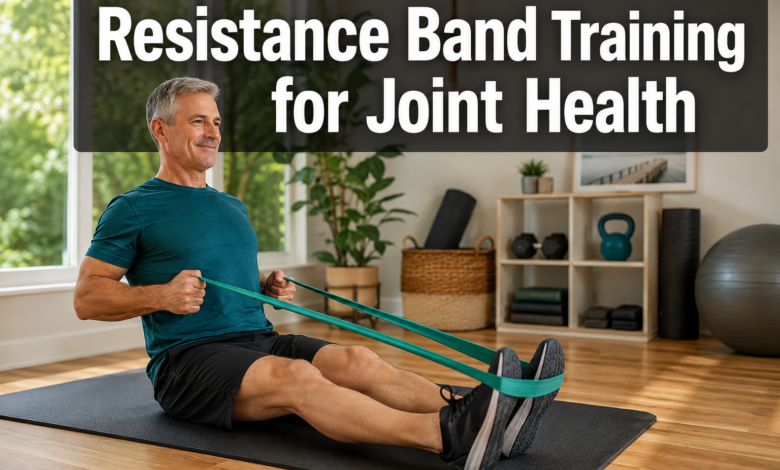
Most people assume joint pain is something you manage by doing less. That assumption is costing them mobility, strength, and quality of life. Resistance band training for joint health challenges that thinking directly, and the evidence behind it is more compelling than most people realise. This article breaks down what resistance bands actually do for your joints, which exercises give the biggest return, and how to build a practical routine that works for adults who want to stay mobile and strong well into their 60s and beyond.
Table of Contents
Key Takeaways
- Resistance band training for joint health works by strengthening the muscles that support and stabilise joints, not by putting excessive load through damaged tissue.
- Bands allow controlled, low-impact movement through a range of motion that can be adjusted to match your current capacity.
- The evidence supports resistance training as a primary strategy for managing osteoarthritis symptoms, improving joint stability, and reducing pain.
- Starting light, moving consistently, and progressing gradually is the approach that produces lasting results.
- If you have an existing joint condition, getting a physiotherapist or healthcare provider involved before starting is a sensible step.
Why Joint Health Matters More After 50
Here is the real issue with joint health as we age: it is not just about pain. It is about the cascade of problems that follows when joints become unreliable. You move less. The muscles around the joint weaken. The joint becomes less stable. Pain increases. You move even less. That cycle is well documented and, importantly, it is largely preventable.
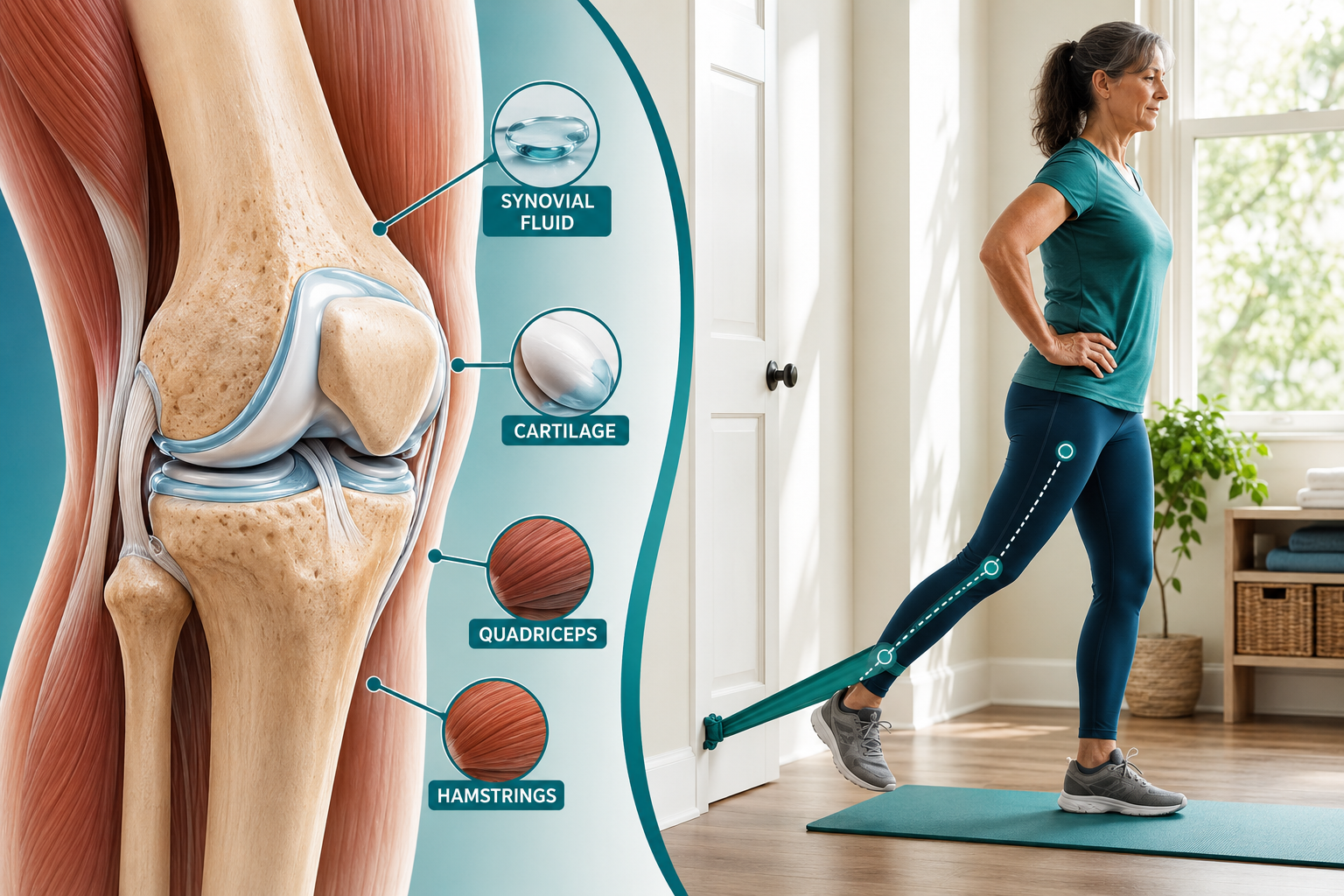
After the age of 45, several things happen simultaneously. Cartilage becomes less resilient. Synovial fluid production can decline. Muscle mass decreases at roughly 1 to 2 percent per year without active resistance training, a process called sarcopenia. The tendons and ligaments that support joints lose some of their elasticity. None of this is catastrophic on its own, but together these changes make joints more vulnerable to injury and more sensitive to load.
The good news is that muscle is the joint’s best protection. Strong muscles absorb force, reduce stress on cartilage, and improve the mechanical alignment of the joint during movement. This is why resistance training, done correctly, is one of the most evidence-supported interventions for joint health in older adults.
Resistance bands sit in a particularly useful position here. They are low-impact, adjustable, inexpensive, and effective. For adults who are new to resistance training, returning after injury, or managing a condition like osteoarthritis, they offer a way to build strength without the intimidating load of free weights or gym machines.
For a broader look at staying active and strong as you age, the guide on how to exercise when you’re over 50 covers the full picture in practical terms.
What Resistance Band Training Actually Does for Your Joints
Let’s keep this practical. To understand why resistance band training for joint health works, you need to understand what a joint actually needs to stay healthy.
Joints need three things:
- Adequate muscle support and stability
- Regular, controlled movement to maintain synovial fluid distribution
- Load that is challenging enough to stimulate adaptation but not so heavy it causes damage
Resistance bands address all three. Here is how.
Muscle Strengthening Without Compressive Overload
When you use a resistance band, the load is applied through tension rather than compression. This is an important distinction. Compressive load, like the kind produced by heavy squats or running on hard surfaces, can aggravate already-sensitive cartilage. Tensile load from a band still creates enough mechanical stimulus to build muscle, but it does so with a more forgiving force profile.
The muscles most important for joint health are the stabilisers: the glutes for the hip and knee, the rotator cuff for the shoulder, the quadriceps and hamstrings for the knee, and the deep spinal muscles for the lumbar spine. Resistance bands are particularly well suited to targeting these stabilising muscles because they allow movement in multiple planes and require the body to control the load throughout the full range of motion.
Synovial Fluid and Joint Nutrition
Cartilage has no direct blood supply. It receives nutrients through synovial fluid, the lubricating fluid inside the joint capsule. This fluid is distributed through movement. When a joint is loaded and moved through its range, the cartilage compresses and releases, drawing in synovial fluid like a sponge.
This is why controlled, repetitive movement is genuinely beneficial for cartilage health, not harmful, as long as the load is appropriate. Resistance band exercises, performed with proper form and moderate resistance, provide exactly this kind of movement.
Proprioception and Joint Stability
Proprioception is the body’s ability to sense where it is in space. After injury or with age, proprioceptive accuracy declines, which increases the risk of falls and further joint damage. Resistance band exercises, particularly those performed in standing or single-leg positions, actively challenge and improve proprioception.
The variable resistance profile of a band, which increases as the band stretches, also trains the neuromuscular system to respond dynamically to changing loads. In plain English: your muscles learn to react faster and more accurately to protect the joint.
“The evidence suggests that progressive resistance training, including band-based training, improves both pain and function in adults with knee osteoarthritis, often more effectively than passive treatments.”
What the Research Shows
Based on current evidence, resistance training is one of the most consistently supported interventions for osteoarthritis of the knee and hip. Multiple systematic reviews have found that strengthening the muscles around affected joints reduces pain, improves physical function, and slows the progression of symptoms. Resistance bands have been specifically studied in rehabilitation contexts and show comparable results to machine-based training for improving muscle strength and reducing joint pain in older adults.
The stronger evidence points to progressive overload as the key variable. That means gradually increasing resistance over time, not staying at the same light band indefinitely. This is where many people plateau, and it is worth addressing directly in your routine.
The Best Resistance Band Exercises for Joint Health

Expert insight: Dr. Mike Ormsby. Dr. Mike Ormsby is a nutrition and body composition researcher specialising in resistance training and protein metabolism. His work supports evidence-based approaches to joint-friendly strength training.
Not all resistance band exercises are equally useful for joint health. The following exercises are selected based on their ability to target joint-stabilising muscles, their low injury risk when performed correctly, and their practical value for adults aged 45 to 65.
For the Knee
Terminal Knee Extension (TKE)
Anchor a band at knee height. Step into the loop so the band sits behind your knee. Stand with a slight bend in the knee, then straighten it fully against the band’s resistance. This targets the VMO (vastus medialis oblique), the teardrop-shaped muscle on the inner quad that is critical for knee tracking and stability.
Clamshells
Lie on your side with a loop band above your knees. Keep your feet together and rotate your top knee upward like a clamshell opening. This targets the gluteus medius, which controls hip and knee alignment during all weight-bearing activities.
Seated Leg Extension
Anchor a band at ankle height, loop it around your ankle, and sit in a chair. Straighten the knee against the band’s resistance. This is a controlled, low-impact way to build quad strength without joint compression.
For the Hip
Standing Hip Abduction
Stand with a loop band around your ankles. Hold a wall or chair for balance. Lift one leg out to the side against the band’s resistance. This directly targets the gluteus medius and minimus, which are essential for hip stability and reducing knee valgus (inward collapse).
Banded Hip Hinge
Anchor a band at hip height. Stand facing the anchor point with the band around your hips. Hinge at the hips, pushing them back against the band’s pull, then drive forward. This builds posterior chain strength, including the glutes and hamstrings, which protect both the hip and knee joints.
For the Shoulder
External Rotation
Hold a band with both hands, elbows bent at 90 degrees and tucked to your sides. Rotate your forearms outward against the band’s resistance. This targets the infraspinatus and teres minor, the rotator cuff muscles most responsible for shoulder stability.
Face Pull
Anchor a band at face height. Hold the band with both hands and pull it toward your face, separating your hands as you pull. This targets the rear deltoids and rotator cuff, which counteract the forward-rounded posture that contributes to shoulder impingement.
For the Lower Back and Spine
Pallof Press
Anchor a band at chest height. Stand sideways to the anchor, hold the band at your chest with both hands, and press it straight out in front of you. Resist the band’s pull to rotate you. This is an anti-rotation exercise that builds deep spinal stability without loading the spine in flexion.
Banded Good Morning
Stand on a band with feet shoulder-width apart, holding the other end behind your neck. Hinge at the hips with a neutral spine. This builds erector spinae and glute strength with minimal spinal compression.
Adapting Resistance-Band Training for Joint Concerns

This guide focuses on how joint symptoms, capacity and recovery can affect exercise choices. For general band setup, exercise technique, loading and progression, use Resistance Band Workouts for Strength.
Adaptation is usually about choosing a manageable range of motion, starting with a tolerable resistance, allowing recovery and avoiding movements that cause sharp or worsening symptoms. It is not a substitute for an individual assessment when pain, swelling, a recent procedure or an active inflammatory flare is part of the picture.
Practical considerations
- Use the strength guide’s setup and exercise cues, then adjust range, resistance and volume to what you can control comfortably.
- Prioritise stable positions and deliberate movement rather than trying to match another person’s load or tempo.
- Stop a movement that causes sharp or worsening joint pain and seek individual guidance for persistent symptoms, swelling, recent surgery or a diagnosed condition.
Keep the starting point simple. A gradual, tolerable approach is more useful than forcing a generic full-body schedule.
Common Mistakes and How to Avoid Them
Staying at the same resistance level indefinitely
The body adapts. If the challenge does not increase, the adaptation stops. More is not always better, but some progression is necessary.
Ignoring the stabilising muscles
Many people focus on the large, visible muscles and skip the stabilisers. For joint health, the stabilisers are the priority. Clamshells, external rotations, and Pallof presses are not glamorous, but they are where the real joint protection work happens.
Moving too fast through the range of motion
Resistance band training for joint health requires controlled, deliberate movement. A two-second concentric phase and a three-second eccentric phase (the return) is a practical standard. Rushing through reps reduces the training stimulus and increases injury risk.
Using a band that is too long or poorly anchored
Band safety is straightforward but important. Always inspect bands for cracks or tears before use. Anchor points should be solid and at the correct height. A band that snaps or slips can cause injury.
Skipping warm-up
Five minutes of gentle movement, such as walking, leg swings, and arm circles, before resistance work prepares the synovial fluid and increases tissue temperature. This is not optional for adults over 50.
FAQ
Can resistance band training help with osteoarthritis?
Based on current evidence, yes. Strengthening the muscles around an arthritic joint reduces the mechanical stress on the joint surface and consistently improves pain and function scores in clinical studies. It does not reverse cartilage damage, but it does meaningfully reduce symptoms and slow progression. Always work within a pain-free or near-pain-free range and consult your healthcare provider before starting.
How long before I see results from resistance band training for joint health?
Most people notice improved stability and reduced discomfort within 6 to 8 weeks of consistent training. Measurable strength gains typically appear at 8 to 12 weeks. Joint health improvements are gradual and cumulative, not dramatic or overnight.
Are resistance bands safe for people with knee replacements?
Many physiotherapists use resistance bands as part of post-surgical rehabilitation for knee replacements. However, the timing, exercise selection, and load must be guided by your surgical team or physiotherapist. Do not start independently without that guidance.
What resistance level should I start with?
A light band, typically yellow or red in most colour-coded systems, is a reasonable starting point for most adults new to resistance band training. The right level is one where you can complete 12 to 15 reps with good form but feel genuine effort in the last few repetitions.
Can I use resistance bands every day?
For joint health purposes, three to four sessions per week with rest days between is more effective than daily training. Joints and muscles need recovery time to adapt. Daily light movement, such as walking, is fine and beneficial, but resistance training sessions should allow for recovery.
Do resistance bands work as well as weights for building joint-supporting muscle?
For the stabilising muscles most relevant to joint health, resistance bands are highly effective and comparable to machine-based training in most studies. For building maximum overall muscle mass, free weights and machines have an edge. But for the specific goal of joint stability and pain reduction in adults over 45, bands are a practical and evidence-supported choice.
Conclusion
Resistance band training for joint health is not a workaround or a compromise. It is a well-supported, practical approach to keeping joints stable, reducing pain, and maintaining mobility through the decades when it matters most.
The main takeaway is this: joints need muscle support, regular movement, and appropriate load. Resistance bands deliver all three in a format that is accessible, adjustable, and genuinely effective. The evidence does not require you to lift heavy or train like an athlete. It requires you to be consistent, progressive, and patient.
Practical next steps:
- Start with three sessions per week using a light resistance band and the exercises listed in this article.
- Focus on the stabilising muscles first: glutes, rotator cuff, and deep spinal muscles.
- Progress the resistance level every two to three weeks as your strength improves.
- If you have an existing joint condition, involve a physiotherapist in your programme design.
- Track how your joints feel after each session and adjust load accordingly.
For a complete framework on staying strong and mobile as you age, the guide on how to exercise when you’re over 50 is a practical companion to everything covered here.
There is no magic in it. Start simple, stay consistent, and let the adaptation do the work.
Back to cluster: Explore the full Joint-Friendly & Age-Specific Exercise hub for more practical guides, or browse all exercise articles.
References
These sources represent independent peer-reviewed research on resistance training, joint health, and band-based rehabilitation. PubMed and PMC links are provided where available.
- Lange AK, Vanwanseele B, Fiatarone Singh MA. Strength training for treatment of osteoarthritis of the knee: a systematic review. Aging Clin Exp Res. 2008;20(4):289-97.
- Kriska AM, et al. Physical activity and joint health in older adults: a review of the evidence. J Aging Phys Act. 2013;21(3):368-84.
- Hurst J, Hassan AB. Resistance exercise training as a primary countermeasure to age-related sarcopenia. J Frailty Sarcopenia Falls. 2021;6(1):1-9.
- Segal NA, et al. Efficacy of resistance exercise in knee osteoarthritis: systematic review and meta-analysis. PM R. 2019;11(12):1345-1355.
- Liu C, et al. Effects of elastic band resistance training on muscle strength and physical performance in older adults: a systematic review and meta-analysis. Int J Environ Res Public Health. 2021;18(13):6915.
- Featured video: resistance-band exercise demonstration on YouTube.
📂 Joint-Friendly & Age-Specific Exercise
A practical reader path through the over-50 exercise cluster.
- Pillar: How to Exercise When You’re Over 50
- → Strength Training for Women Over 50: A Beginner Plan for Home or Gym
- → Weight-Bearing Exercises for Bone Health
- → What Is Tai Chi? A Beginner’s Guide to the Practice and How to Start
- → Low Impact Cardio for Bad Knees and Hips: What Actually Works
- → Yoga Modifications for Arthritis and Joint Pain: A Practical Guide That Actually Works
- YOU ARE HERE Resistance Band Training for Joint Health: What the Evidence Actually Shows
- → Returning to Exercise After Joint Surgery: A Practical, Evidence-Aware Guide
- → Balance and Fall Prevention Exercises for Seniors: A Practical, Evidence-Aware Guide
- → Best Exercise Bike for Knee Issues: A Complete 2026 Buying Guide