
Magnesium Glycinate for Sleep: Benefits, Safety, and How to Choose a Supplement

Last updated: September 14, 2026
Quick Answer Magnesium glycinate may modestly improve subjective sleep quality, particularly in people with low dietary magnesium or mild sleep difficulties. The best available evidence shows a real but small effect, not a cure for insomnia. It is one of the better-tolerated magnesium forms, but it works best as part of a broader approach to sleep, not as a standalone fix.
Key Takeaways
- Magnesium glycinate (also called magnesium bisglycinate) is a chelated form of magnesium bound to the amino acid glycine, offering good bioavailability and a gentler effect on the digestive system than cheaper forms like magnesium oxide.
- A 2025 randomized controlled trial found a statistically significant improvement in insomnia scores with magnesium bisglycinate versus placebo, but the effect size was small and participants still remained in the “subthreshold insomnia” range after four weeks of use.
- Any benefit likely reflects both magnesium’s role in GABA and melatonin pathways and the independent sleep-supporting properties of glycine itself, separating the two effects is not yet possible.
- Supplement labels list the total compound weight, not the elemental magnesium content. Always check the elemental magnesium figure when comparing products.
- Magnesium glycinate is not appropriate for everyone. People with kidney disease, those taking certain medications (including antibiotics, bisphosphonates, and diuretics), and those who are pregnant should seek medical advice before use.
- Persistent insomnia, especially when accompanied by daytime impairment, mood changes, or other symptoms, warrants professional assessment, not self-supplementation.
- Cognitive behavioral therapy for insomnia (CBT-I) remains the most evidence-backed treatment for chronic insomnia. A supplement is not a substitute.
- Good sleep hygiene is the foundation. No supplement closes the gap left by inconsistent sleep schedules, excessive screen exposure, or high evening stress.
Table of Contents
- Medical Disclaimer
- What Magnesium Glycinate and Bisglycinate Actually Are
- Why Magnesium Status May Matter for Sleep and Relaxation
- What Human Research Says About Magnesium Glycinate for Sleep
- Magnesium, Anxiety, and Sleep Quality
- Magnesium Glycinate Supplement for Sleep: How to Read the Label
- Magnesium Glycinate Compared With Citrate and Other Forms
- Timing and Practical Considerations Without Prescriptive Dosing
- Safety, Side Effects, Medication Interactions, and Who Needs Medical Advice
- When Sleep Problems Need More Than a Supplement
- FAQ
- References
Medical Disclaimer
Medical disclaimer: This article is for general educational purposes only. It does not constitute medical advice, diagnosis, or treatment. The information here should not be used to start, stop, or change any supplement, medication, or treatment plan. Always consult a qualified healthcare professional before making decisions that affect your health, particularly if you have a medical condition, take prescription medications, are pregnant, or are considering supplements for a child or older adult.
What Magnesium Glycinate and Bisglycinate Actually Are
Magnesium glycinate is magnesium bound to glycine, a non-essential amino acid. In plain English: it is a chelated form, meaning the mineral is chemically attached to an organic molecule rather than sitting alongside an inorganic salt. “Bisglycinate” simply means each magnesium ion is bound to two glycine molecules. The two terms are used interchangeably in most research and on most labels, and for practical purposes they refer to the same compound [1][7].
This chelated structure matters for two reasons. First, it tends to improve absorption in the gut compared with forms like magnesium oxide, which have lower bioavailability and a stronger laxative effect. Second, it delivers a meaningful dose of glycine alongside the magnesium, a detail that turns out to be relevant when interpreting the sleep research, as glycine itself has independent evidence for supporting relaxation and sleep quality [2][7].
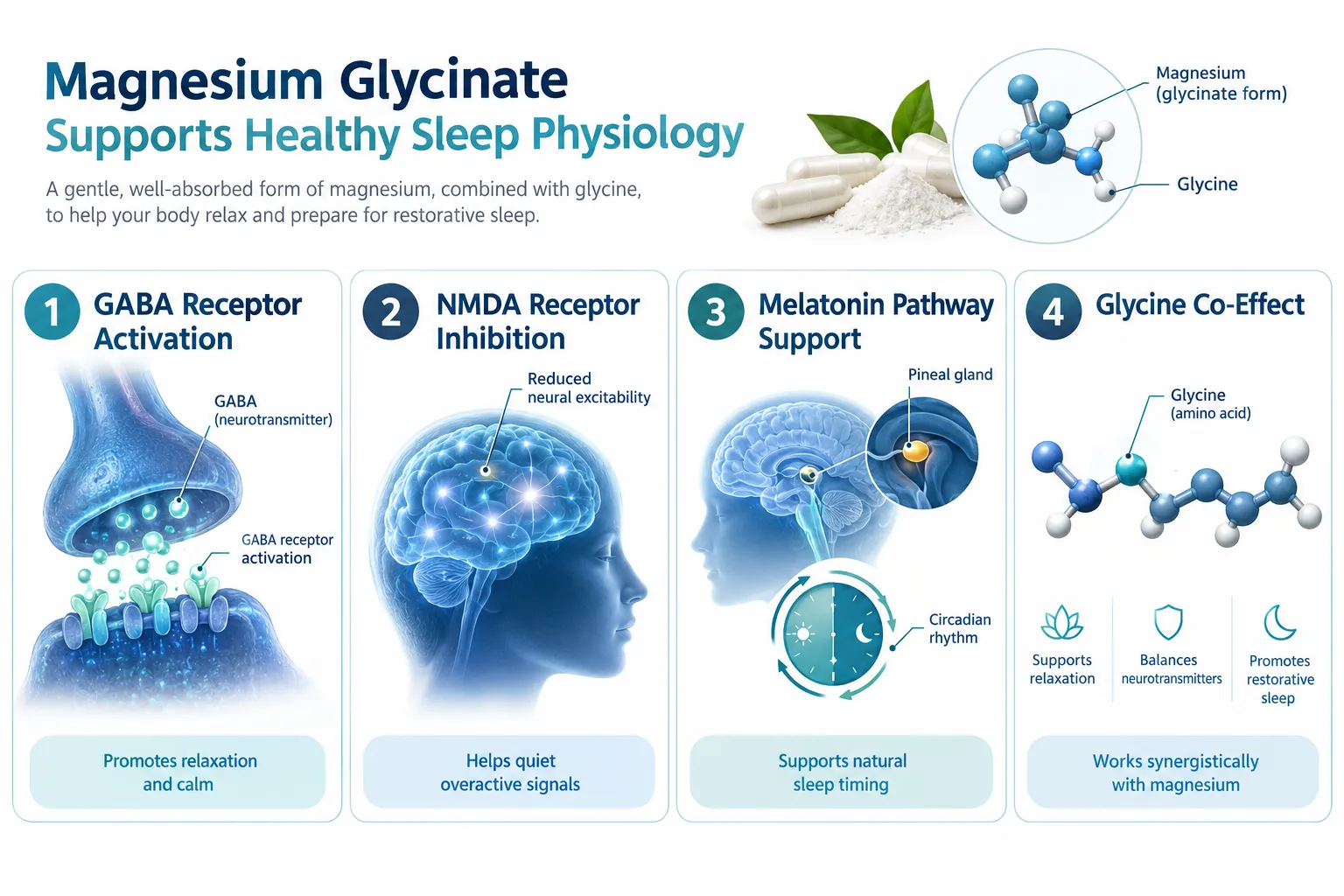
Magnesium is an essential mineral involved in more than 300 enzymatic reactions in the body. It plays a documented role in muscle relaxation, nerve signaling, protein synthesis, and energy metabolism. Deficiency is not rare, surveys consistently suggest that a meaningful proportion of adults in Western countries do not meet recommended dietary intakes through food alone, though outright clinical deficiency (hypomagnesemia) is less common than inadequate intake [4][9].
Why Magnesium Status May Matter for Sleep and Relaxation
Magnesium’s connection to sleep is physiologically plausible, even if the clinical evidence is still catching up. The strongest evidence points to three mechanisms:
1. GABA receptor activity. Magnesium supports the function of gamma-aminobutyric acid (GABA), the brain’s primary inhibitory neurotransmitter. GABA promotes the shift from wakefulness to sleep. Low magnesium may reduce GABA receptor sensitivity, making it harder for the brain to quiet down at night [4][9].
2. NMDA receptor inhibition. Magnesium blocks N-methyl-D-aspartate (NMDA) receptors, which are involved in neural excitation. By dampening excessive excitatory signaling, adequate magnesium may reduce the kind of mental restlessness that delays sleep onset [7][9].
3. Melatonin and circadian regulation. Magnesium is involved in the enzymatic pathways that produce melatonin, the hormone that signals nighttime to the body. Some research suggests that low magnesium may impair melatonin synthesis, though this link is less firmly established in humans than the GABA connection [4][5].
Here’s the real issue: these mechanisms are well-supported in basic science, but translating them into reliable clinical outcomes in humans is where the evidence gets more complicated. Mechanistic plausibility is not the same as proven benefit, and the size of any real-world effect matters as much as whether one exists at all.
What Human Research Says About Magnesium Glycinate for Sleep
The evidence suggests a modest, real benefit, but context matters considerably.
The most relevant recent trial is a 2025 randomized, double-blind, placebo-controlled study of 155 adults aged 18 to 65 with self-reported poor sleep quality. Participants received 250 mg of elemental magnesium daily as magnesium bisglycinate for four weeks. Insomnia Severity Index (ISI) scores fell by an average of 3.9 points in the magnesium group versus 2.3 points in the placebo group, a statistically significant difference (p=0.049), but with a small effect size (Cohen’s d approximately 0.2). Importantly, participants in both groups remained in the “subthreshold insomnia” range after treatment [1][4][7].
What that means in practical terms: the supplement produced a measurable improvement over placebo, but the gap between the two groups was not large, and a substantial portion of the improvement in the magnesium group also occurred in the placebo arm. Most of the benefit appeared within the first 14 days and plateaued by week four [7][10].
An earlier trial (2021) testing 400 mg per day of magnesium glycinate for eight weeks in 126 generally healthy adults without confirmed deficiency found no significant improvement in objectively measured sleep using actigraphy, despite some positive changes on questionnaires [6]. That discrepancy between subjective and objective measures is worth noting, it suggests that some of the reported benefit may reflect how people feel about their sleep rather than measurable changes in sleep architecture.
The main takeaway is this: magnesium glycinate for sleep has more form-specific evidence behind it than most other magnesium supplements, largely because it is the only form with a dedicated modern RCT in healthy adults. But the effect is small, and it is most likely to be meaningful for people who have low dietary magnesium intake rather than for the general population [10][5].
A larger pre-registered trial at the University of Milan (ClinicalTrials.gov NCT05873920) is testing 400 mg elemental magnesium glycinate versus placebo in approximately 240 adults with diagnosed chronic insomnia, using polysomnography alongside questionnaire measures. As of September 2026, no results have been published. This study should provide the most definitive data yet on whether the supplement affects objective sleep architecture [10].
Magnesium, Anxiety, and Sleep Quality
Anxiety and poor sleep are closely linked, and magnesium’s potential role in both is worth separating carefully. The evidence suggests that magnesium may help reduce physiological markers of stress, including cortisol and HPA axis reactivity, and that this could indirectly support sleep in people whose sleep difficulties are driven by anxiety or hyperarousal [4][9].
However, that is not the same as saying magnesium glycinate treats anxiety or anxiety-related insomnia. The clinical trials are not strong enough to support that claim, and it is important to separate what is mechanistically plausible from what has been demonstrated in well-designed human studies [5][9].
If stress and anxiety are significant contributors to your sleep difficulties, addressing those directly, through stress management strategies, therapy, or medical assessment, is likely to produce more reliable results than relying on a supplement. For a broader look at the relationship between stress and sleep, the Stress Management guide at All Perfect Health covers this in more depth.
The glycine component of magnesium glycinate also deserves a mention here. Glycine has its own body of evidence suggesting it can lower core body temperature and promote sleep onset, and some researchers have noted that a 250 mg elemental magnesium dose from bisglycinate delivers roughly 1,500 mg of glycine, a quantity that approaches the doses used in glycine-specific sleep trials [2][7][13]. Whether the sleep benefit in the 2025 trial reflects magnesium, glycine, or both acting together remains an open question.
Magnesium Glycinate Supplement for Sleep: How to Read the Label
This is where a lot of confusion happens, and it is worth getting clear on.
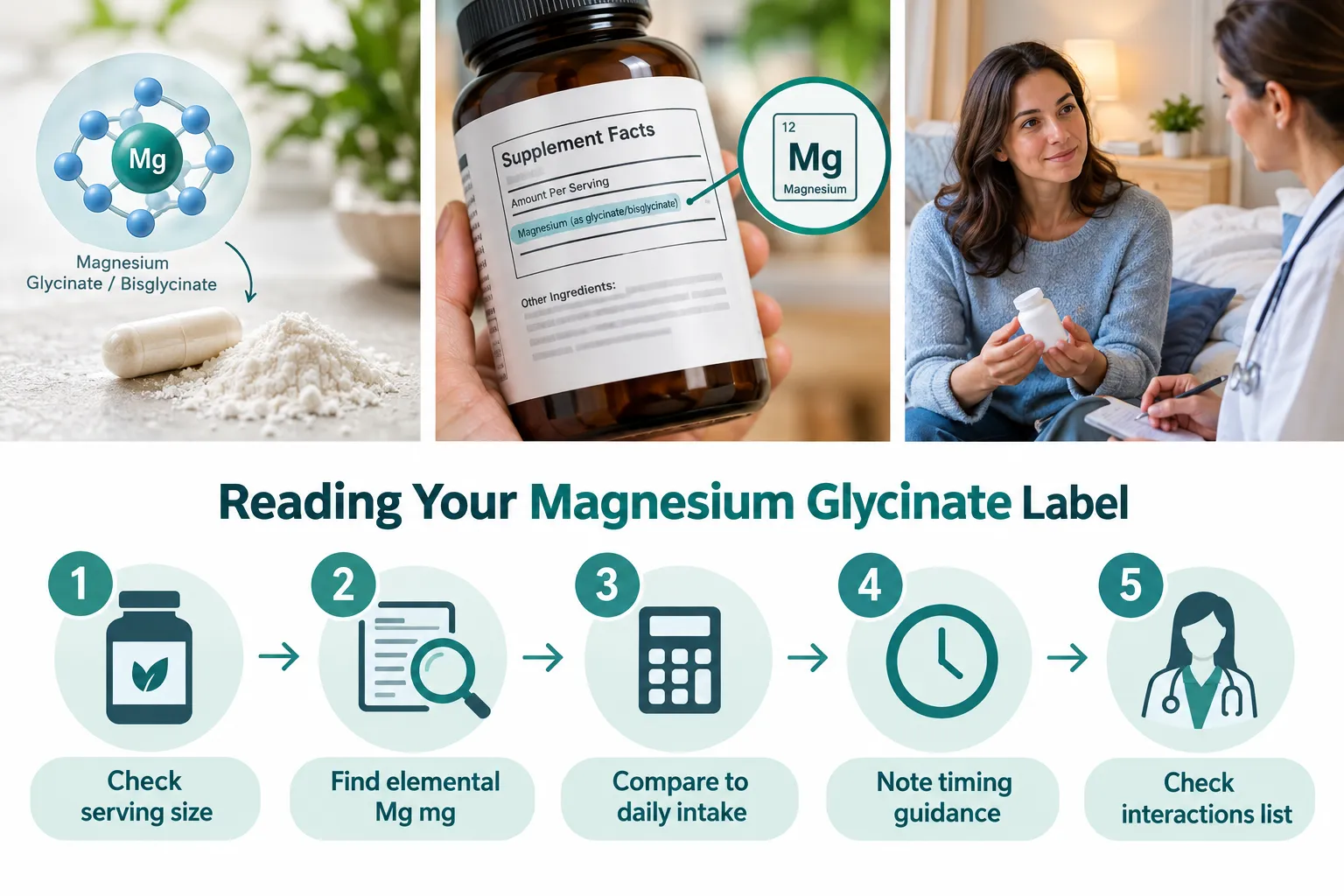
When a label says “Magnesium Glycinate 1,000 mg,” that is the weight of the entire compound, magnesium plus glycine combined. The elemental magnesium content is considerably lower, typically around 100 to 140 mg per 1,000 mg of magnesium glycinate, depending on the exact form [2][9].
What to look for on the label:
- Serving size: How many capsules or tablets make up one serving.
- Elemental magnesium (mg): This is the figure that matters for comparing products and assessing your total daily intake. It should be listed separately on the Supplement Facts panel.
- Form: Look for “magnesium glycinate” or “magnesium bisglycinate”, these are the same thing.
- Other ingredients: Some products add B6, zinc, or herbal extracts. These change the product profile and may affect interactions.
The Tolerable Upper Intake Level (UL) for supplemental magnesium set by the National Institutes of Health is 350 mg of elemental magnesium per day for adults from supplements alone (not counting food sources). This is a safety threshold, not a target dose, and it applies to supplements specifically because the kidneys manage excess dietary magnesium efficiently in healthy people, but supplemental magnesium bypasses some of that regulation [9].
For broader context on dietary magnesium sources, the Magnesium-Rich Foods guide covers which foods contribute most to daily intake, useful if you are trying to assess whether a supplement is genuinely filling a gap.
Magnesium Glycinate Compared With Citrate and Other Forms
Not all magnesium supplements are equivalent, and the form matters for both tolerability and, to a lesser extent, evidence.

| Form | Bioavailability | GI Tolerance | Sleep-Specific Evidence | Common Use |
|---|---|---|---|---|
| Glycinate / Bisglycinate | High | Excellent | Strongest (one RCT) | Sleep, general use |
| Citrate | Moderate-High | Good | Limited | Constipation, general |
| Malate | Moderate | Good | Minimal | Muscle, fatigue |
| Oxide | Low | Poor (laxative) | Minimal | Laxative, cheap filler |
| L-Threonate | Moderate | Good | Cognitive focus | Brain health claims |
| Taurate | Moderate | Good | Minimal | Cardiovascular |
The stronger evidence points to glycinate as the most studied form specifically for sleep. That said, the advantage over other well-absorbed forms like citrate or malate may be smaller than supplement marketing suggests, the main difference is that glycinate has been tested in a dedicated sleep RCT, not necessarily that it works dramatically better [10][11].
Magnesium oxide is the form most commonly found in low-cost supplements and multivitamins. Its bioavailability is poor, studies suggest absorption as low as 4%, and it is more likely to cause loose stools or GI discomfort. For sleep support specifically, it is the least well-supported choice [10].
If you are interested in how magnesium relates to other health outcomes beyond sleep, the Magnesium for Headaches and Migraine article covers an area where the evidence is actually somewhat stronger.
Timing and Practical Considerations Without Prescriptive Dosing
The best time to take magnesium glycinate for sleep is generally in the evening, typically one to two hours before bed. This timing aligns with the supplement’s proposed mechanisms, supporting GABA activity and melatonin pathways as the body prepares for sleep, and is the approach used in most clinical trials [2][9].
A sensible starting point is to take it consistently at the same time each evening, as the 2025 trial data suggests most benefit accumulates over the first two weeks and continues through four to eight weeks of nightly use [7][10]. Sporadic use is less likely to be meaningful.
Practical points worth keeping in mind:
- Taking magnesium glycinate with a small amount of food may reduce the chance of mild stomach discomfort, though it is generally well-tolerated on an empty stomach.
- Total daily magnesium intake from food plus supplements combined matters. If your diet already includes plenty of nuts, seeds, leafy greens, and whole grains, your supplemental needs may be lower. See the Magnesium-Rich Foods guide for dietary context.
- Combining a magnesium glycinate supplement for sleep with other sleep-supporting habits, consistent sleep and wake times, reduced evening light exposure, a cool bedroom, is likely to produce better results than the supplement alone. The Sleep Hygiene: The Complete Guide to Better Sleep covers these foundations in detail.
- More is not always better. Exceeding the supplemental UL of 350 mg elemental magnesium per day without medical supervision is not recommended, particularly given cumulative intake from food and other supplements.
Safety, Side Effects, Medication Interactions, and Who Needs Medical Advice
Magnesium glycinate is among the best-tolerated magnesium forms. Across clinical trials, adverse events have mostly been mild, occasional GI upset, loose stools at higher doses, and serious adverse events are rare [5][11]. That said, “well-tolerated in trials” does not mean risk-free for everyone.
Who should seek medical advice before using magnesium glycinate:
- People with kidney disease. The kidneys regulate magnesium excretion. Impaired kidney function can lead to magnesium accumulation, which at high levels can cause serious cardiac and neuromuscular effects. This is the most important safety consideration with any magnesium supplement.
- Pregnant or breastfeeding women. Magnesium needs change during pregnancy, and supplementation should be guided by a healthcare provider.
- Children and adolescents. Supplemental magnesium doses for children differ significantly from adult doses, and self-supplementation in this group is not appropriate without medical guidance.
- Older adults. Kidney function declines with age, and older adults are more likely to be taking medications that interact with magnesium. Extra caution is warranted.
Medication interactions to be aware of:
- Antibiotics (quinolones and tetracyclines): Magnesium can bind to these antibiotics in the gut, reducing their absorption and effectiveness. If taking these medications, timing separation of several hours is typically recommended, but confirm with a pharmacist or physician.
- Bisphosphonates (e.g., alendronate for osteoporosis): Similar binding issue. Magnesium can reduce bisphosphonate absorption if taken too close together.
- Diuretics: Loop diuretics (e.g., furosemide) can increase magnesium excretion, potentially worsening deficiency. Potassium-sparing diuretics may have the opposite effect, raising magnesium levels. Either way, concurrent use warrants medical oversight.
- Proton pump inhibitors (PPIs): Long-term PPI use is associated with hypomagnesemia. Supplementation may be appropriate but should be guided by a clinician.
- Diabetes medications and insulin: Magnesium influences insulin sensitivity. People with diabetes managing blood glucose should discuss magnesium supplementation with their care team.
- Calcium channel blockers and other cardiac medications: Magnesium has cardiovascular effects, and interactions with cardiac drugs are possible.
Signs of magnesium excess (hypermagnesemia), most likely only in people with kidney impairment or very high supplemental doses, include nausea, flushing, low blood pressure, muscle weakness, and in severe cases, cardiac arrhythmia. These warrant immediate medical attention.
When Sleep Problems Need More Than a Supplement
A magnesium glycinate supplement for sleep is a reasonable low-risk adjunct for adults with mild, occasional sleep difficulties who have already addressed the basics. It is not a treatment for chronic insomnia, sleep apnea, restless legs syndrome, circadian rhythm disorders, or sleep problems driven by underlying medical or psychiatric conditions.
Seek professional assessment if:
- Sleep difficulties have persisted for more than three months.
- Poor sleep is causing significant daytime impairment, affecting work, relationships, or safety (including driving).
- You are experiencing symptoms that suggest sleep apnea: loud snoring, witnessed breathing pauses, waking with a choking sensation, or excessive daytime sleepiness.
- Sleep problems are accompanied by low mood, persistent anxiety, or other mental health symptoms.
- You are already taking sleep medications and considering adding supplements.
- You have tried improving sleep hygiene consistently for several weeks without meaningful improvement.
Cognitive behavioral therapy for insomnia (CBT-I) has the strongest evidence base of any insomnia treatment, including prescription medications, and its effects are more durable. Sleep medicine specialists and clinical psychologists trained in CBT-I are the appropriate first port of call for chronic insomnia [4][5][9].
If you want to track whether your sleep is actually improving, objectively rather than just by how you feel, the Sleep Trackers Explained guide covers what consumer devices can and cannot reliably measure. And for those who find their environment is affecting sleep quality, the Best Sleep Optimization Gear article covers practical tools for temperature, light, and noise management.
There is no magic in it. Magnesium glycinate may help at the margin for the right person. But the basics, consistent sleep schedule, a dark and cool room, managing evening stress, limiting caffeine and alcohol, still do the heavy lifting.
Frequently Asked Questions
Does magnesium glycinate actually work for insomnia?
The evidence suggests a real but modest effect on subjective sleep quality, particularly in people with low dietary magnesium. A 2025 RCT found a statistically significant improvement in insomnia scores versus placebo, but the effect size was small and participants did not move out of the subthreshold insomnia range. It is not a treatment for clinical insomnia [1][4].
How long does it take magnesium glycinate to work for sleep?
Most of the benefit in clinical trials appeared within the first 14 days, with effects plateauing by four weeks. Broader reviews suggest measurable improvements may continue to accrue up to eight weeks of nightly use. Sporadic or short-term use is less likely to produce noticeable results [7][10].
Is it safe to take magnesium glycinate every night?
For most healthy adults with normal kidney function who stay within the supplemental upper intake level of 350 mg elemental magnesium per day, nightly use appears safe based on current trial data. However, people with kidney disease, those on certain medications, and older adults should seek medical advice first [5][9].
What is the best time to take magnesium glycinate for sleep?
One to two hours before bed is the most common recommendation and aligns with the timing used in clinical research. Taking it at the same time each evening supports consistency, which matters more than precise timing [2][9].
Magnesium glycinate vs melatonin: which is better for sleep?
They work differently. Melatonin primarily signals circadian timing and is most useful for jet lag or shift work. Magnesium glycinate may support the underlying neurological conditions for sleep, GABA activity, reduced excitability, and also delivers glycine, which has its own sleep evidence. Neither is a treatment for chronic insomnia. For most people with general sleep difficulties, neither alone is as effective as CBT-I [4][5][9].
Can I take magnesium glycinate with other sleep supplements?
Some combinations, such as magnesium with glycine or L-theanine, are low-risk for most healthy adults, but combining multiple supplements increases the complexity of interactions and the risk of exceeding safe intake levels. Combining magnesium with melatonin, valerian, or prescription sleep aids warrants a conversation with a pharmacist or doctor [5][9].
Why is magnesium glycinate not working for me?
Several possibilities: your sleep difficulties may have causes that magnesium does not address (anxiety, sleep apnea, poor sleep hygiene, circadian disruption); you may already have adequate magnesium from diet; or the effect simply may not be large enough to be noticeable for your situation. If sleep problems persist despite trying a supplement and improving sleep habits, professional assessment is the appropriate next step [6][9].
Who should not take magnesium glycinate?
People with kidney disease, those taking antibiotics (quinolones, tetracyclines), bisphosphonates, diuretics, or certain cardiac medications, pregnant women, and children should all seek medical advice before using magnesium supplements. This is not an exhaustive list, if you take any regular medications, check with a pharmacist [5][9].
Conclusion
Magnesium glycinate for sleep sits in a reasonable but modest position in the evidence landscape. The 2025 RCT gives it the strongest form-specific clinical support of any magnesium supplement for sleep, and its tolerability profile makes it a low-risk option for most healthy adults. But the effect is small, the benefit is most likely in people with genuine dietary shortfalls, and it is not a substitute for addressing the real drivers of poor sleep.
Practical next steps:
- Start with sleep hygiene. Consistent sleep and wake times, a dark and cool bedroom, and reduced evening screen exposure are the highest-return interventions. The Sleep Hygiene: The Complete Guide to Better Sleep is a good starting point.
- Assess your dietary magnesium intake before reaching for a supplement. Nuts, seeds, legumes, and leafy greens are rich sources. If your diet already covers your needs, the case for supplementation weakens.
- If you do try a magnesium glycinate supplement for sleep, check the elemental magnesium content on the label, take it consistently in the evening, and give it at least four weeks before drawing conclusions.
- If sleep problems persist beyond three months, cause daytime impairment, or are accompanied by other symptoms, see a healthcare professional. CBT-I is the most evidence-backed treatment for chronic insomnia and should be the first conversation, not a last resort.
Keep it simple and consistent. Evidence first. And be honest with yourself about whether a supplement is addressing the real problem or just making it easier to avoid the harder work.
References
[1] PMC12412596 – https://pmc.ncbi.nlm.nih.gov/articles/PMC12412596/
[2] Magnesium Glycinate Sleep – https://magnesiumglycinate.org/magnesium-glycinate-sleep
[3] Magnesium Glycinate Sleep Real Small – https://www.aol.com/articles/magnesium-glycinate-sleep-real-small-170801000.html
[4] Magnesium And Sleep Research – https://healthbritannica.com/articles/guides/magnesium-and-sleep-research/
[5] Do Supplements Like Magnesium Glycinate For Sleep Work – https://welltory.com/blog/do-supplements-like-magnesium-glycinate-for-sleep-work
[6] Magnesium For Sleep – https://www.evidentianutrition.org/articles/magnesium-for-sleep
[7] Magnesium Sleep RCT – https://wellnessradar.ca/articles/magnesium-sleep-rct
[8] Magnesium Glycinate Sleep Research 2026 – https://yourhealthier.com/blogs/blog/magnesium-glycinate-sleep-research-2026
[9] Is Magnesium Glycinate Effective For Sleep – https://healthrx.com/sleep-medicine/is-magnesium-glycinate-effective-for-sleep
[10] Best Magnesium For Sleep – https://www.blackswanp.com/best/best-magnesium-for-sleep
📂 Sleep Optimization
This article is part of the APH sleep optimization cluster. Use the links below to move between the pillar and supporting guides.
- Pillar: Sleep Hygiene: The Complete Guide to Better Sleep for Health and Longevity
- → Best Sleep Optimization Gear for Hot, Light and Noise-Sensitive Sleepers
- → Sleep Trackers Explained: What Wearables Can—and Cannot—Tell You About Your Sleep
- YOU ARE HERE Magnesium Glycinate for Sleep: Benefits, Safety, and How to Choose a Supplement