
Magnesium-Rich Foods: The Complete Guide for Sleep, Stress, and Muscle Recovery
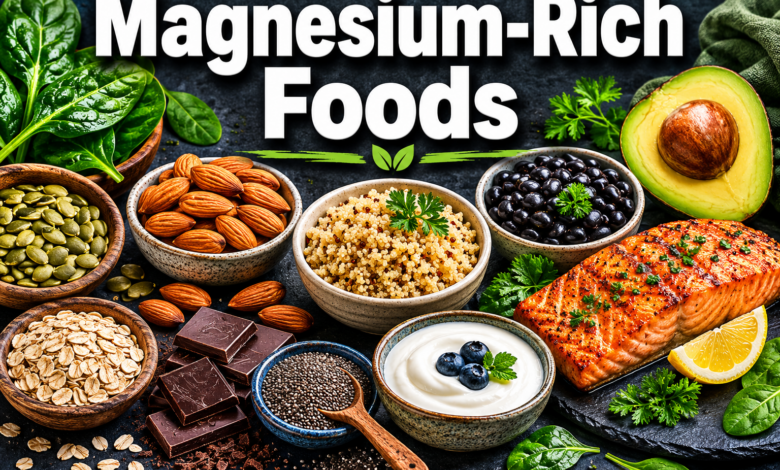
Quick Answer: The best magnesium-rich foods include pumpkin seeds, chia seeds, hemp seeds, almonds, cashews, spinach, Swiss chard, black beans, edamame, lentils, quinoa, oats, dark chocolate, cocoa, mackerel, salmon, avocado, and yogurt. Most adults need 310 to 420 mg of magnesium per day, and a varied whole-food diet can get most people close to that target without supplements.
Roughly half of adults in the United States do not meet the estimated average requirement for magnesium from food alone. That is not a minor gap. Magnesium is involved in more than 300 enzymatic reactions in the body, including energy production, muscle contraction, nerve signalling, and the regulation of blood glucose and blood pressure. Yet it rarely gets the attention it deserves. This guide cuts through the noise and gives a clear, practical picture of which magnesium-rich foods actually deliver, how much they provide in realistic serving sizes, what affects how well the body absorbs magnesium, and how to build a diet that supports your goals — whether that is better sleep, calmer energy, or faster muscle recovery.
Key Takeaways
- Pumpkin seeds, chia seeds, almonds, black beans, and dark chocolate are among the most concentrated magnesium food sources available.
- Most adults need 310 to 420 mg of magnesium daily; many fall short, but a varied whole-food diet can close that gap meaningfully.
- Magnesium absorption averages 30 to 40 percent from food and is influenced by phytates, oxalates, vitamin D status, and gut health.
- Magnesium is involved in sleep, stress regulation, muscle function, and heart rhythm — but it is one factor among many, not a single cure.
- Food should come first. Supplements may be worth discussing with a healthcare professional if intake is consistently low or symptoms suggest a shortfall.
Table of Contents
- What Is Magnesium and Why Does Your Body Need It?
- The Best Magnesium-Rich Foods, Ranked
- Quick Magnesium Food Chart: Best Choices by Goal
- How Magnesium May Support Sleep
- How Magnesium Fits Into Stress and Mood Support
- Magnesium and Muscle Recovery: What Athletes and Active Adults Should Know
- Magnesium Absorption: Why the Food Matrix Matters
- Food vs Magnesium Supplements: Which Is Better?
- Simple Ways to Eat More Magnesium Every Day
- Common Signs You May Not Be Getting Enough Magnesium
- Sample One-Day Magnesium-Rich Meal Plan
- FAQs About Magnesium-Rich Foods
- The Bottom Line: Build a Magnesium-Rich Diet, Not a One-Food Fix
What Is Magnesium and Why Does Your Body Need It?
Magnesium supports muscles, nerves, energy, and heart rhythm
Magnesium is the fourth most abundant mineral in the human body. About 60 percent of it is stored in bone, around 25 percent sits in muscle tissue, and the remainder is distributed across soft tissues and blood. It acts as a cofactor in over 300 enzyme systems — which is a technical way of saying it helps the body carry out hundreds of essential processes.
Expert insight: Dave Asprey. Dave Asprey is the founder of Bulletproof and host of The Human Upgrade. His practical approach to supplement optimisation has helped millions improve their sleep, stress levels, and recovery.
In plain English: without adequate magnesium, the body struggles to produce energy efficiently, muscles have difficulty contracting and relaxing properly, nerve signals become harder to regulate, and blood sugar control can be compromised. Magnesium is also involved in maintaining normal heart rhythm, which is why magnesium for heart rhythm is a legitimate clinical concern — not just a wellness talking point.
The Linus Pauling Institute at Oregon State University notes that magnesium is required for the active transport of calcium and potassium ions across cell membranes, a process critical to nerve impulse conduction, muscle contraction, and normal heart rhythm. That is worth understanding, because it explains why magnesium deficiency can show up in so many different ways across different body systems.
How much magnesium do adults need per day?
The Recommended Dietary Allowance (RDA) for magnesium varies by age and sex:
| Group | RDA (mg/day) |
|---|---|
| Adult men 19-30 | 400 mg |
| Adult men 31+ | 420 mg |
| Adult women 19-30 | 310 mg |
| Adult women 31+ | 320 mg |
| Pregnant women | 350-360 mg |
| Breastfeeding women | 310-320 mg |
The Tolerable Upper Intake Level (UL) for supplemental magnesium is set at 350 mg per day for adults. This limit applies only to supplements and fortified foods, not magnesium from whole food sources, which the body regulates more effectively through normal digestive processes.
The Best Magnesium-Rich Foods, Ranked
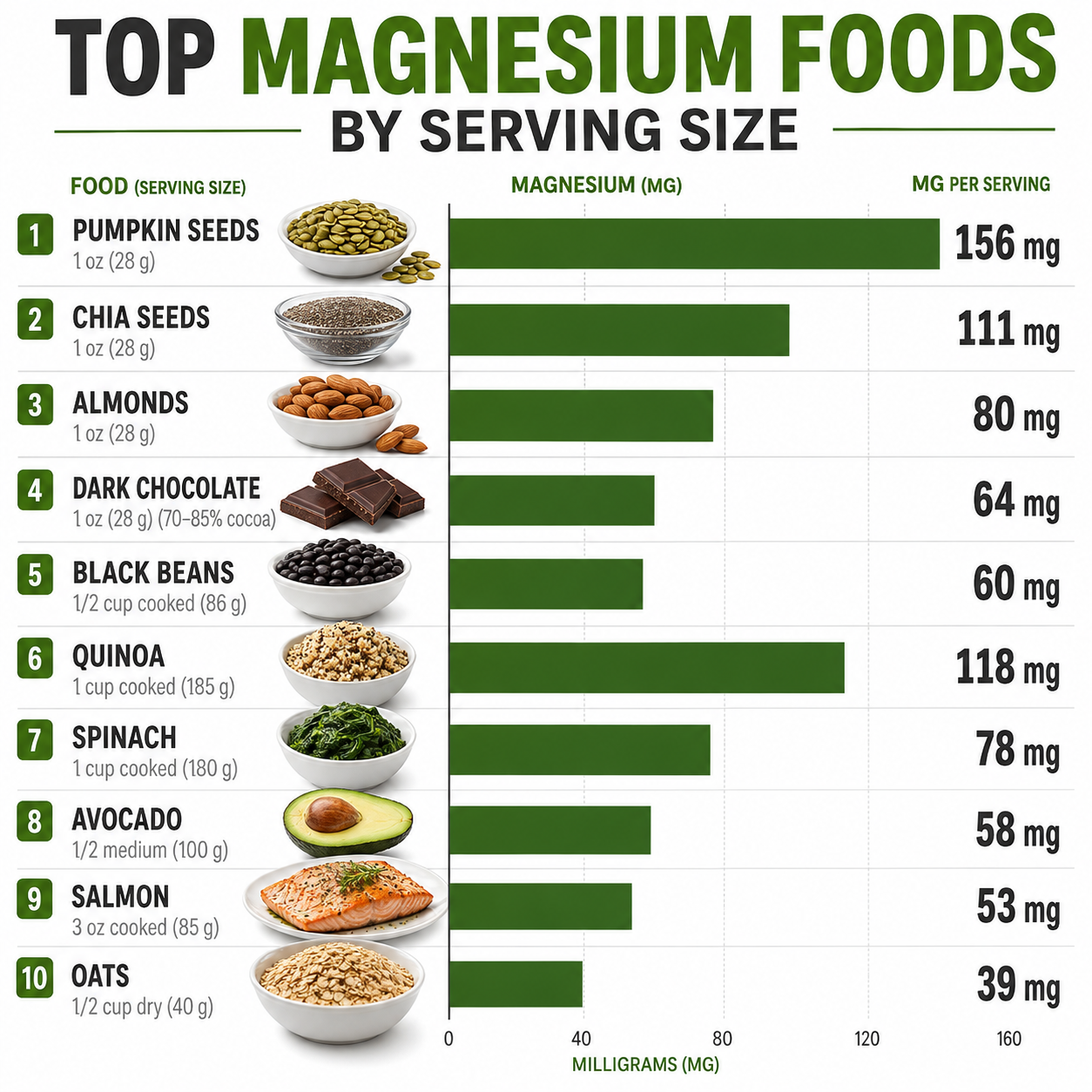
Let’s keep this practical. The numbers below are based on realistic serving sizes — not the inflated portions sometimes used to make a food look better than it is.
Seeds: pumpkin, chia, hemp, flax, and sesame
Seeds are the most concentrated magnesium food sources available gram for gram.
- Pumpkin seeds (pepitas): 1 oz (28g) roasted — approximately 156 mg magnesium. Pumpkin seeds magnesium content makes them the standout performer in this category.
- Chia seeds: 1 oz (28g) — approximately 111 mg
- Hemp seeds: 3 tablespoons (30g) — approximately 100 mg
- Flaxseeds: 1 oz (28g) — approximately 110 mg
- Sesame seeds: 1 oz (28g) — approximately 101 mg
A small handful of pumpkin seeds added to oatmeal, salads, or yogurt is one of the simplest ways to raise daily magnesium intake without changing much else.
Nuts: almonds, cashews, Brazil nuts, peanuts, and hazelnuts
- Almonds: 1 oz (28g) — approximately 80 mg
- Cashews: 1 oz (28g) — approximately 74 mg
- Brazil nuts: 1 oz (28g, about 6 nuts) — approximately 107 mg
- Peanuts: 1 oz (28g) — approximately 49 mg
- Hazelnuts: 1 oz (28g) — approximately 46 mg
Nuts also provide healthy fats, protein, and fibre, which makes them useful beyond their magnesium content alone. See also the broader discussion of nutrient-dense natural foods and herbs for context on how these foods fit into an evidence-based diet.
Leafy greens: spinach, Swiss chard, beet greens, and kale
- Cooked spinach: 1/2 cup — approximately 78 mg
- Cooked Swiss chard: 1/2 cup — approximately 75 mg
- Cooked beet greens: 1/2 cup — approximately 49 mg
- Cooked kale: 1 cup — approximately 23 mg
Spinach is often cited first, but it also contains oxalates, which can reduce how much magnesium the body actually absorbs. More on that in the absorption section. The point is that spinach is a useful contributor, but it should not be treated as the only answer.
Legumes: black beans, lentils, chickpeas, soybeans, and edamame
- Black beans (cooked): 1/2 cup — approximately 60 mg
- Edamame (cooked): 1/2 cup — approximately 50 mg
- Lentils (cooked): 1/2 cup — approximately 36 mg
- Chickpeas (cooked): 1/2 cup — approximately 39 mg
- Soybeans (cooked): 1/2 cup — approximately 74 mg
Legumes are also excellent sources of fibre and plant protein. For readers interested in how fibre and gut health interact, the APH guide on high-fibre foods and daily needs covers the broader picture well.
Whole grains: oats, quinoa, brown rice, buckwheat, and shredded wheat
- Oats (dry rolled, 1/2 cup): approximately 55 mg
- Quinoa (cooked, 1 cup): approximately 118 mg
- Brown rice (cooked, 1 cup): approximately 84 mg
- Buckwheat (cooked, 1 cup): approximately 86 mg
- Shredded wheat (2 biscuits): approximately 61 mg
Quinoa stands out here. It provides a meaningful magnesium contribution alongside complete protein, which makes it a particularly practical choice for a magnesium-rich diet.
Dark chocolate and cocoa
- Dark chocolate (70-85% cocoa, 1 oz/28g): approximately 64 mg
- Cocoa powder (1 tablespoon, 5g): approximately 27 mg
Dark chocolate is a legitimate magnesium food source, not just a treat. The health benefits of dark chocolate extend beyond magnesium, but the mineral content is a real and measurable contribution. Stick to 70 percent cocoa or higher for the best return.
Fish, seafood, and animal foods
- Mackerel (cooked, 3 oz/85g): approximately 82 mg
- Salmon (cooked, 3 oz/85g): approximately 26 mg
- Halibut (cooked, 3 oz/85g): approximately 91 mg
- Chicken breast (cooked, 3 oz/85g): approximately 22 mg
Fatty fish contributes meaningfully to magnesium intake and also provides omega-3 fatty acids, vitamin D, and high-quality protein — all of which support the same physiological systems that magnesium helps regulate.
Avocado, bananas, potatoes, and dairy
- Avocado (half, ~100g): approximately 29 mg
- Banana (medium): approximately 32 mg
- Potato (baked with skin, medium): approximately 48 mg
- Plain yogurt (1 cup): approximately 47 mg
- Milk (1 cup): approximately 24 mg
Avocado is a useful contributor and brings potassium and healthy fats alongside magnesium. The health benefits of avocado for heart health and brain function are worth reading alongside this article for a fuller picture.
Quick Magnesium Food Chart: Best Choices by Goal
Best magnesium-rich foods for sleep
Pumpkin seeds, almonds, oats, banana, yogurt, and dark chocolate. These foods also provide tryptophan, glycine, and other compounds associated with relaxation. A small magnesium-rich bedtime snack combining two or three of these may support sleep quality in some people.
Best magnesium-rich foods for stress support
Brazil nuts, pumpkin seeds, dark chocolate, black beans, quinoa, and leafy greens. Magnesium is involved in regulating the hypothalamic-pituitary-adrenal (HPA) axis, which governs the stress response. Regular intake from food is a sensible starting point.
Best magnesium-rich foods for muscle recovery
Quinoa, salmon, black beans, edamame, pumpkin seeds, and brown rice. Recovery meals that combine magnesium, protein, and carbohydrates are more effective than any single nutrient alone.
Best magnesium-rich foods for cramps
Pumpkin seeds, almonds, spinach, black beans, and banana. Cramps have multiple causes — including hydration status, sodium, potassium, calcium, and training load — so magnesium is one piece of a larger picture, not a guaranteed fix.
How Magnesium May Support Sleep
Magnesium, relaxation, and the nervous system
Magnesium is involved in regulating the activity of GABA receptors, the primary inhibitory neurotransmitter system in the brain. In simple terms, GABA helps calm neural activity, and magnesium appears to support that process. It also plays a role in regulating melatonin, the hormone that signals the body it is time to sleep.
A 2023 systematic review by Arab et al., published in BMC Complementary Medicine and Therapies, examined the relationship between magnesium supplementation and sleep quality. The review found that magnesium supplementation was associated with improvements in some subjective sleep measures, particularly in older adults. The evidence was considered promising but not yet definitive enough to make strong clinical recommendations.
Why a magnesium-rich bedtime snack may help some people
For people whose magnesium intake is consistently low, improving dietary intake through magnesium foods for sleep — such as a small bowl of oats with pumpkin seeds, or yogurt with almonds and a banana — may support relaxation and sleep onset. This is not a cure for insomnia. Sleep is affected by dozens of factors including stress, light exposure, caffeine, sleep hygiene, and underlying health conditions. For a thorough evidence-based approach to sleep, the APH complete guide to sleep hygiene covers the full picture.
What the article should not say about sleep
Insomnia has many causes. Magnesium-rich foods will not resolve sleep disorders driven by anxiety, pain, sleep apnoea, or poor sleep habits. If sleep problems are persistent or severe, professional guidance matters.
How Magnesium Fits Into Stress and Mood Support
Magnesium and the stress loop
Here is the real issue with magnesium and stress: it appears to work in both directions. Chronic stress increases urinary excretion of magnesium, which means ongoing stress can deplete magnesium stores. Lower magnesium levels, in turn, may amplify the stress response. This bidirectional relationship has been described in the research literature for some years.
A systematic review by Boyle, Lawton, and Dye (2017), published in Nutrients, examined the evidence for magnesium supplementation and subjective anxiety and stress. The authors concluded that existing evidence does suggest a beneficial effect of magnesium on subjective anxiety, but noted that study quality was variable and more robust trials were needed. The evidence suggests a real relationship, but we need to separate fact from hype: magnesium is not an anti-anxiety treatment.
Magnesium-rich meals for calmer energy
Magnesium foods for stress are best understood as part of a broader dietary pattern — not a shortcut. A Mediterranean-style diet, which is naturally rich in legumes, nuts, seeds, leafy greens, and whole grains, provides consistent magnesium alongside other nutrients that support nervous system health. The complete guide to Mediterranean food at APH gives practical meal ideas that align well with a high-magnesium eating pattern.
Position magnesium as one piece of the stress puzzle
Sleep quality, physical activity, social connection, and professional support all play larger roles in managing chronic stress than any single nutrient. Magnesium is worth getting right, but it is not the whole answer.
Magnesium and Muscle Recovery: What Athletes and Active Adults Should Know
Magnesium helps muscles contract, relax, and use energy
Magnesium is required for ATP synthesis — the process by which cells produce usable energy. It is also involved in muscle contraction and relaxation, protein synthesis, and electrolyte balance. A 2025 review by Liguori et al. examined magnesium’s role in skeletal muscle health and noted that adequate magnesium status is associated with better muscle function, reduced exercise-induced inflammation, and potentially improved recovery markers. The review also highlighted that physically active individuals may have higher magnesium requirements due to increased losses through sweat and urine.
For magnesium foods for muscle cramps, the evidence is more cautious. A Cochrane review by Garrison et al. found limited evidence that magnesium supplementation reduces skeletal muscle cramps in most healthy adults, though there may be specific populations — such as pregnant women — where it shows more benefit. Cramps are multifactorial. Hydration, sodium, potassium, calcium, training load, and fatigue all contribute. Magnesium matters, but it is not a standalone solution.
Recovery meals that combine magnesium, protein, and carbs
A sensible starting point for post-exercise recovery is a meal that brings together magnesium, quality protein, and carbohydrates within a reasonable window after training. Examples:
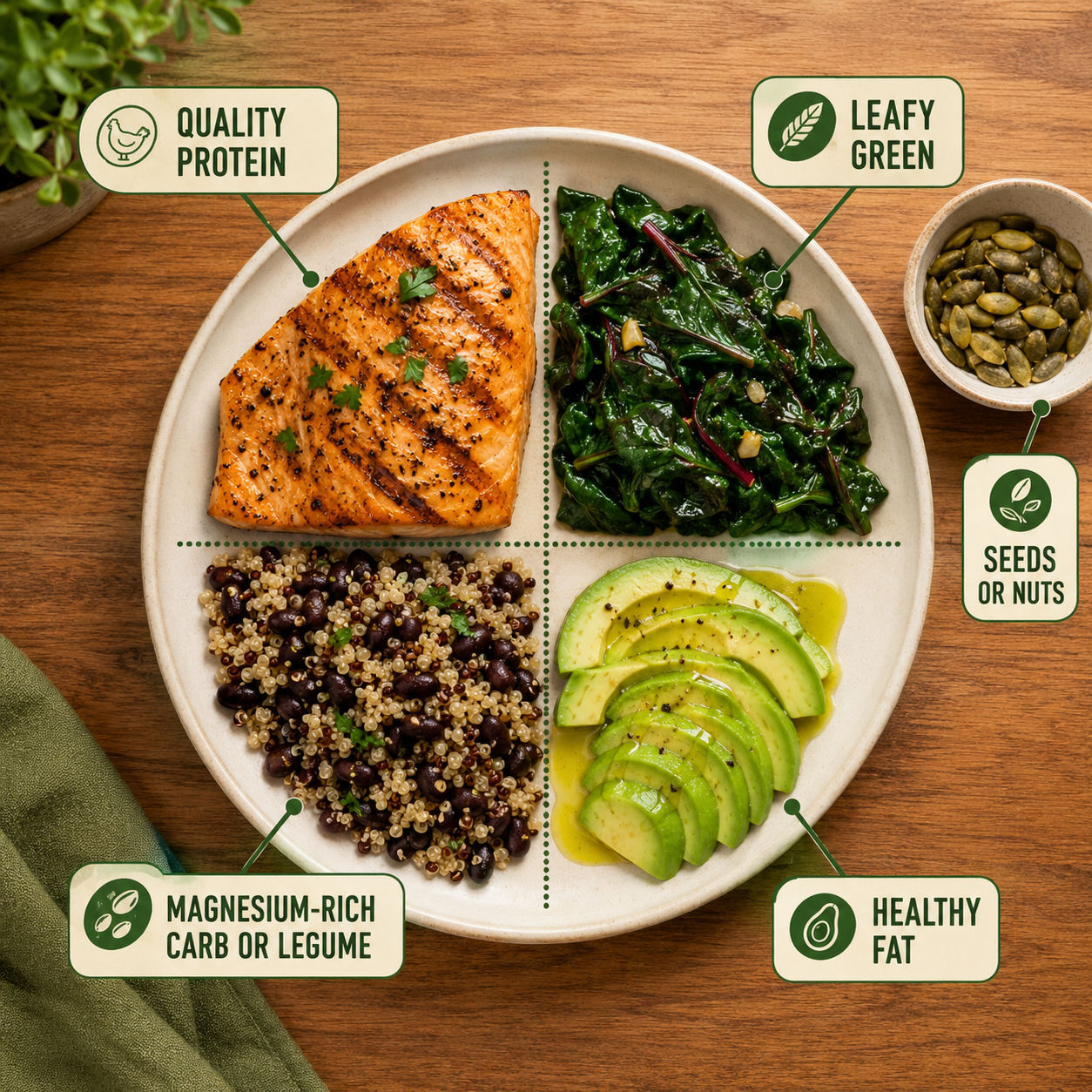
- Salmon with quinoa and sauteed spinach
- Black bean and brown rice bowl with avocado
- Greek yogurt with oats, pumpkin seeds, and banana
These meals support glycogen replenishment, muscle protein synthesis, and electrolyte restoration simultaneously. More is not always better — the basics still do the heavy lifting.
Where collagen and glycine fit
Collagen synthesis requires glycine, proline, and vitamin C. Magnesium and glycine are both involved in supporting connective tissue health and sleep quality, and some research suggests glycine may support muscle recovery through its role in creatine synthesis. If collagen and glycine are priorities for you, foods like bone broth, fish, and eggs complement a magnesium-rich diet well.
Magnesium Absorption: Why the Food Matrix Matters
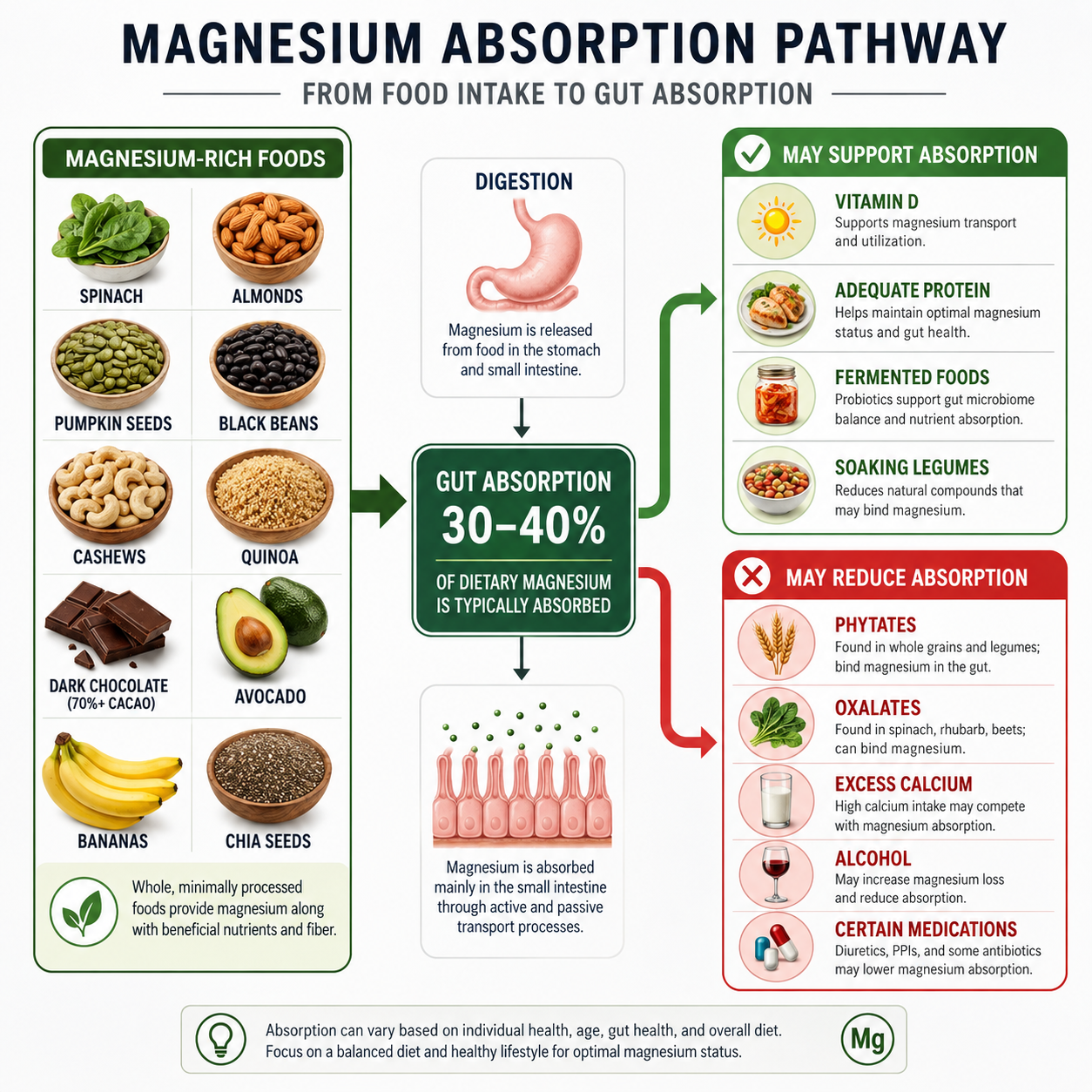
Magnesium absorption is not just about the number on the chart
Magnesium absorption from food averages around 30 to 40 percent, but this figure varies considerably depending on the food source, the overall composition of the meal, individual gut health, and magnesium status. Schuchardt and Hahn (2017), in a review published in Current Nutrition and Food Science, outlined the key factors affecting magnesium bioavailability and noted that the food matrix — meaning the full context of what surrounds the magnesium in a food — plays a significant role in how much is actually absorbed.
In real-world terms: the magnesium number on a nutrition label tells you what is in the food, not necessarily what your body will use.
Foods and compounds that may reduce magnesium absorption
- Phytates: Found in whole grains, legumes, and seeds. Phytates bind to minerals including magnesium, reducing absorption. Soaking, sprouting, or fermenting these foods can reduce phytate content meaningfully. The APH article on enzyme inhibitors in raw plant foods explains this process in detail.
- Oxalates: Found in spinach, Swiss chard, and beet greens. Oxalates bind calcium and magnesium in the gut, reducing their absorption. This is why cooked spinach, while a useful magnesium source, is not the most bioavailable option.
- Excess calcium: Very high calcium intake can compete with magnesium for absorption through shared transport mechanisms.
- Alcohol: Regular alcohol consumption increases magnesium excretion through the kidneys.
- Certain medications: Proton pump inhibitors (PPIs), diuretics, and some antibiotics can reduce magnesium absorption or increase excretion.
Factors that may support magnesium absorption
- Adequate vitamin D status: Vitamin D appears to support magnesium transport in the gut.
- Sufficient dietary protein: Amino acids may enhance magnesium absorption.
- Fermented foods: Fermentation reduces phytate content and may improve mineral bioavailability.
- Balanced overall intake: Avoiding extreme dietary imbalances in calcium, zinc, and fibre supports more consistent magnesium absorption.
Food vs Magnesium Supplements: Which Is Better?
Why food should usually come first
Food-based magnesium comes packaged with fibre, polyphenols, protein, and other minerals that work together. The body regulates absorption from food more efficiently than from supplements, and there is no risk of the laxative effect that high-dose supplemental magnesium can cause. Harvard T.H. Chan School of Public Health notes that most people can meet magnesium needs through a varied diet and that supplements are not necessary for everyone.
From a practical point of view, building a magnesium-rich diet is the most sustainable and lowest-risk approach for the majority of adults.
When a supplement may be worth discussing
Supplements may be worth considering if:
- Dietary intake is consistently and significantly below the RDA
- A healthcare professional has identified low serum magnesium or related symptoms
- Conditions such as type 2 diabetes, gastrointestinal disorders (Crohn’s, coeliac), or chronic alcohol use are present
- Certain medications are reducing magnesium absorption or increasing excretion
- Pregnancy (always under medical supervision)
I would be careful with that framing though: low serum magnesium does not always reflect total body magnesium status, as most magnesium is stored in bone and tissue rather than blood. A healthcare professional can help interpret results in context.
Supplement forms readers may see
Common forms include magnesium glycinate, magnesium citrate, magnesium malate, and magnesium oxide. Magnesium glycinate combines magnesium with glycine and is generally well tolerated. Magnesium citrate is well absorbed and commonly used. Magnesium oxide has lower bioavailability. For a detailed comparison of forms and evidence, a dedicated evidence-based magnesium supplement guide would be the right next step — that is a topic that deserves its own thorough treatment.
Safety note
The Tolerable Upper Intake Level for supplemental magnesium is 350 mg per day for adults. Exceeding this from supplements can cause diarrhoea, nausea, and abdominal cramping. Very high doses can cause more serious effects, particularly in people with kidney disease. Anyone with kidney disease, heart arrhythmia, or who is taking medications should consult a healthcare professional before supplementing.
Simple Ways to Eat More Magnesium Every Day
Magnesium-rich breakfast ideas
- Oatmeal topped with pumpkin seeds, chia seeds, and a sliced banana
- Greek yogurt with almonds and a drizzle of dark cocoa powder
- Scrambled eggs with sauteed spinach and a slice of whole grain toast
Magnesium-rich lunch ideas
- Quinoa salad with black beans, avocado, and a lemon-olive oil dressing
- Lentil soup with whole grain bread
- Salmon salad with mixed greens, hemp seeds, and cucumber
Magnesium-rich dinner ideas
- Grilled mackerel or halibut with brown rice and steamed Swiss chard
- Black bean and sweet potato bowl with pumpkin seeds
- Chicken with buckwheat and roasted beet greens
Magnesium-rich snacks
- A small handful of almonds or cashews
- Dark chocolate (70 percent or higher) with a few Brazil nuts
- Edamame with sea salt
- Pumpkin seeds on their own or mixed into a trail mix
Keep it simple and consistent. Small additions across multiple meals add up more reliably than one large magnesium-focused meal per day.
Common Signs You May Not Be Getting Enough Magnesium
Possible low magnesium symptoms
Mild or moderate magnesium insufficiency often produces no obvious symptoms, which is part of why it goes unnoticed. When symptoms do appear, they may include:
- Muscle twitches, cramps, or spasms
- Fatigue and low energy
- Poor sleep quality
- Increased sensitivity to stress or anxiety
- Irregular heartbeat (in more significant deficiency)
- Numbness or tingling
These symptoms are non-specific and can have many other causes. They are not diagnostic of magnesium deficiency on their own.
Who may be more likely to fall short
- Older adults (reduced absorption and dietary intake)
- People with type 2 diabetes
- People with gastrointestinal conditions affecting absorption
- Regular alcohol consumers
- People taking PPIs, diuretics, or certain antibiotics long-term
- Athletes with high sweat losses
When to talk to a healthcare professional
If symptoms are persistent, severe, or involve heart rhythm irregularities, professional assessment is essential. Cramps, insomnia, anxiety, and arrhythmias all have multiple potential causes that need proper evaluation. Do not self-diagnose or self-treat with high-dose supplements without guidance. This is particularly important during pregnancy, for anyone with kidney disease, or for anyone on regular medication.
Sample One-Day Magnesium-Rich Meal Plan
This plan is illustrative, not prescriptive. It gives a realistic picture of what a magnesium-rich diet looks like in practice.
Breakfast
Rolled oats (1/2 cup dry) cooked with water or milk, topped with 1 tablespoon chia seeds, 1 oz pumpkin seeds, and half a banana.
Estimated magnesium: approximately 180-200 mg
Lunch
Quinoa bowl (1 cup cooked) with 1/2 cup black beans, half an avocado, cherry tomatoes, cucumber, and a lemon-olive oil dressing.
Estimated magnesium: approximately 150-170 mg
Snack
1 oz almonds and two squares of 85% dark chocolate.
Estimated magnesium: approximately 90-100 mg
Dinner
Grilled halibut (3 oz) with 1 cup cooked brown rice and 1/2 cup sauteed spinach with garlic.
Estimated magnesium: approximately 160-180 mg
Bedtime option
Small bowl of plain Greek yogurt with a teaspoon of cocoa powder and a few walnuts.
Estimated magnesium: approximately 50-60 mg
Day total: approximately 630-710 mg from food — well above the RDA for most adults, demonstrating that a varied whole-food diet can deliver substantial magnesium without supplements.
FAQs About Magnesium-Rich Foods
What food is highest in magnesium?
By weight, pumpkin seeds (pepitas) are among the highest. One ounce of roasted pumpkin seeds provides approximately 156 mg of magnesium, which is roughly 37-50 percent of the adult daily requirement. Chia seeds, hemp seeds, and Brazil nuts are close behind.
What fruit is highest in magnesium?
Avocado is the most magnesium-rich commonly eaten fruit, providing around 29 mg per half fruit. Banana provides around 32 mg per medium fruit. Dried figs and guava also contribute meaningfully. Fruit is not the primary source of magnesium in most diets, but it contributes to overall intake.
Are magnesium-rich foods good for sleep?
Magnesium is involved in GABA receptor activity and melatonin regulation, both of which are relevant to sleep. A 2023 systematic review (Arab et al.) found associations between magnesium supplementation and improved subjective sleep quality, particularly in older adults. Magnesium foods for sleep — such as oats, almonds, pumpkin seeds, and yogurt — may support relaxation and sleep onset for people with low magnesium intake, but they will not resolve sleep disorders with other underlying causes.
Can magnesium-rich foods help anxiety or stress?
The evidence suggests a relationship between magnesium status and stress response regulation, and a systematic review (Boyle, Lawton, and Dye, 2017) found some support for magnesium’s effect on subjective anxiety. That is a strong claim in the wellness space, and it needs to be kept in proportion: magnesium foods for stress are a sensible part of a well-rounded diet, not a treatment for anxiety disorders. Anyone experiencing significant anxiety should seek professional support.
Can magnesium foods stop muscle cramps?
Magnesium is involved in muscle contraction and relaxation, and magnesium foods for muscle cramps are a reasonable dietary consideration. However, a Cochrane review (Garrison et al.) found limited evidence that magnesium supplementation reduces ordinary skeletal muscle cramps in most adults. Cramps have many causes. Hydration, electrolyte balance, training load, and fatigue all play roles. It is not that simple.
Is spinach a good magnesium food if it contains oxalates?
Cooked spinach is a useful magnesium source, but its oxalate content does reduce how much magnesium is absorbed. It is still worth eating — the overall nutrient contribution is significant — but it should be one of several magnesium food sources in the diet rather than the primary one. Pairing it with lower-oxalate sources like pumpkin seeds, black beans, and quinoa gives a more reliable magnesium intake overall.
Is it better to get magnesium from food or supplements?
Food first, for most people. Whole food magnesium comes with fibre, polyphenols, and cofactors that work together. Supplements may be appropriate when dietary intake is consistently low or when a health condition impairs absorption, but they should be discussed with a healthcare professional rather than self-prescribed.
Should magnesium be taken at night?
Magnesium before bed is a common practice, particularly with forms like magnesium glycinate, based on its potential role in relaxation and sleep support. From a food perspective, a small magnesium-rich evening snack is a reasonable habit. There is no strong evidence that timing matters as much as consistent daily intake, but for those who find it helpful, evening consumption is a sensible choice.
The Bottom Line: Build a Magnesium-Rich Diet, Not a One-Food Fix
The main takeaway is this: magnesium is a foundational mineral that most adults in the United States are not getting enough of, and the fix is not complicated. A varied diet built around seeds, nuts, legumes, whole grains, leafy greens, fatty fish, and dark chocolate can reliably deliver the 310 to 420 mg that adults need each day — without supplements, without overhauling everything, and without chasing any single superfood.
The stronger evidence points to consistent, varied intake over time rather than any one food or any one meal. Pumpkin seeds on your oatmeal, black beans in your lunch bowl, a square of dark chocolate in the afternoon, salmon with quinoa at dinner — these are not dramatic changes. They are practical, sustainable habits that add up.
Magnesium supports sleep, stress regulation, muscle function, and heart rhythm. It does not cure insomnia, anxiety, cramps, or arrhythmias. Context matters. Those conditions have multiple causes and deserve proper attention. What magnesium does — when intake is consistent and the diet is varied — is give the body the raw material it needs to function well across all of those systems.
Start with what gives the biggest return: seeds and legumes are the most practical, affordable, and concentrated sources available. Build from there. If you have reason to believe your intake is significantly low, or if you have a health condition that affects absorption, that conversation belongs with a healthcare professional, not a supplement label.
For more on how whole foods contribute to long-term health, the APH guide to health benefits of natural foods and herbs provides a broader evidence-based context. And if you are interested in how anti-inflammatory eating patterns support overall health, the complete guide to anti-inflammatory foods is a natural companion read.
There is no magic in it. The basics still do the heavy lifting.
References & Research Sources
- Abbasi B, Kimiagar M, Sadeghniat K, et al. “The effect of magnesium supplementation on primary insomnia in elderly: A double-blind placebo-controlled clinical trial.” J Res Med Sci. 2012;17(12):1161-1169. PMID: 23853635
- Arab A, Rafie N, Askari G, Taghi H. “The Role of Magnesium in Sleep Health: A Systematic Review of Available Literature.” Biol Trace Elem Res. 2023;201(1):121-128. PMID: 35610329
- Breus MJ, et al. “Effectiveness of Magnesium Supplementation on Sleep Quality and Mood for Adults with Poor Sleep Quality: A Randomized Double-Blind Placebo-Controlled Crossover Pilot Trial.” Med Res Arch. 2024;12(7). DOI: 10.18103/mra.v12i7.5410
- Cao Y, et al. “Magnesium Intake and Sleep Disorder Symptoms: Findings from the Jiangsu Nutrition Study of Chinese Adults at Five-Year Follow-Up.” Nutrients. 2018;10(10):1354. PMID: 30241459
- De Baaij JHF, Hoenderop JGJ, Bindels RJM. “Magnesium in Man: Implications for Health and Disease.” Physiol Rev. 2015;95(1):1-46. PMID: 25540137
- Nielsen FH. “Relation Between Magnesium Deficiency and Sleep Disorders and Associated Pathological Changes.” In: Magnesium in Human Health and Disease. Springer; 2014:291-303.
About the author
Dave James is a health researcher and writer specialising in evidence-based nutrition, exercise, and longevity. He founded All Perfect Health to provide clear, practical health guidance rooted in current research and real-world experience.
📂 The Most Nutrient-Dense Foods
This article is part of the APH cluster. Use the links below to move between the pillar and child articles.
- Read the pillar: The Most Nutrient-Dense Foods: An Evidence-Based Guide for 2026
- → Health Benefits of Natural Foods and Herbs
- → Foods Rich in Calcium: Best Sources, Daily Needs and Absorption Tips
- YOU ARE HERE Magnesium-Rich Foods: The Complete Guide for Sleep, Stress, and Muscle Recovery