
Evening Light Hygiene: How Household LED Bulbs and Dimming Affect Melatonin and Sleep (With Real-World Spectrum Testing)
Last updated: October 2026
Most evening-light advice points straight at your phone. That misses half the room. If bright overhead LEDs stay on until bed, shifting your screen warmer may not change the overall light environment very much.
This guide shows a practical way to make evenings dimmer and warmer without turning your home into a cave. It also shares my two-month test of a three-mode circadian bulb and a simple phone-and-paper comparison you can repeat with your own lights.
Quick Answer
Evening light hygiene for sleep means lowering the brightness, warming the light, and reducing unnecessary overhead illumination as bedtime gets closer. Light spectrum, brightness at the eye, timing, and duration all work together; no single bulb or setting does the whole job. Consensus recommendations for healthy adults use melanopic light measured at the eye and emphasise brighter days, lower evening exposure, and a dark sleep environment.[1]
Key Takeaways
- Phones aren’t the only consideration. Room lighting, fixture brightness, distance, and time of use all contribute to what reaches your eyes.
- Warm-looking light isn’t automatically blue-free. In my home comparison, Dusk Mode looked cosy while its relative blue camera trace remained visible.
- A low table or floor lamp is often an easier late-evening setup than leaving every overhead light on.
- The Cine Meter II test below is a repeatable home indicator, not laboratory spectrum testing.
- You don’t need perfect lighting. A consistent, realistic wind-down routine beats an expensive setup you never use.
Table of Contents
- Why Evening Light Hygiene Matters as Much as Morning Sunlight
- The Three Lighting Variables That Matter in the Evening
- Real-World Test: Three Modes on a Circadian LED Bulb
- A Practical 90-Minute Evening Light Wind-Down
- Frequently Asked Questions
Why Evening Light Hygiene Matters as Much as Morning Sunlight
Morning outdoor light helps give the body clock a useful daytime cue. Morning sunlight for sleep covers that half of the picture. The evening half is simpler: give the day a visible off-ramp.
Your eyes contain rods and cones for vision, plus intrinsically photosensitive retinal ganglion cells (ipRGCs). These cells use melanopsin and contribute to circadian timing. Shorter-wavelength light is relevant, but the real response depends on the whole dose: spectrum, brightness at the eye, duration, timing, and individual sensitivity.[3]
That is why the practical target isn’t panic about one phone screen or a single warm bulb. It’s reducing needless bright room light in the lead-up to bed. In one controlled study, ordinary room light before bed delayed melatonin onset compared with very dim light; it did not show that every lamp produces the same effect for every person.[2]
The useful pattern is bright days and quieter evenings—not obsession. For the wider foundation, see our complete sleep hygiene guide.
The Three Lighting Variables That Matter in the Evening
1. Colour temperature: useful, but not the whole answer
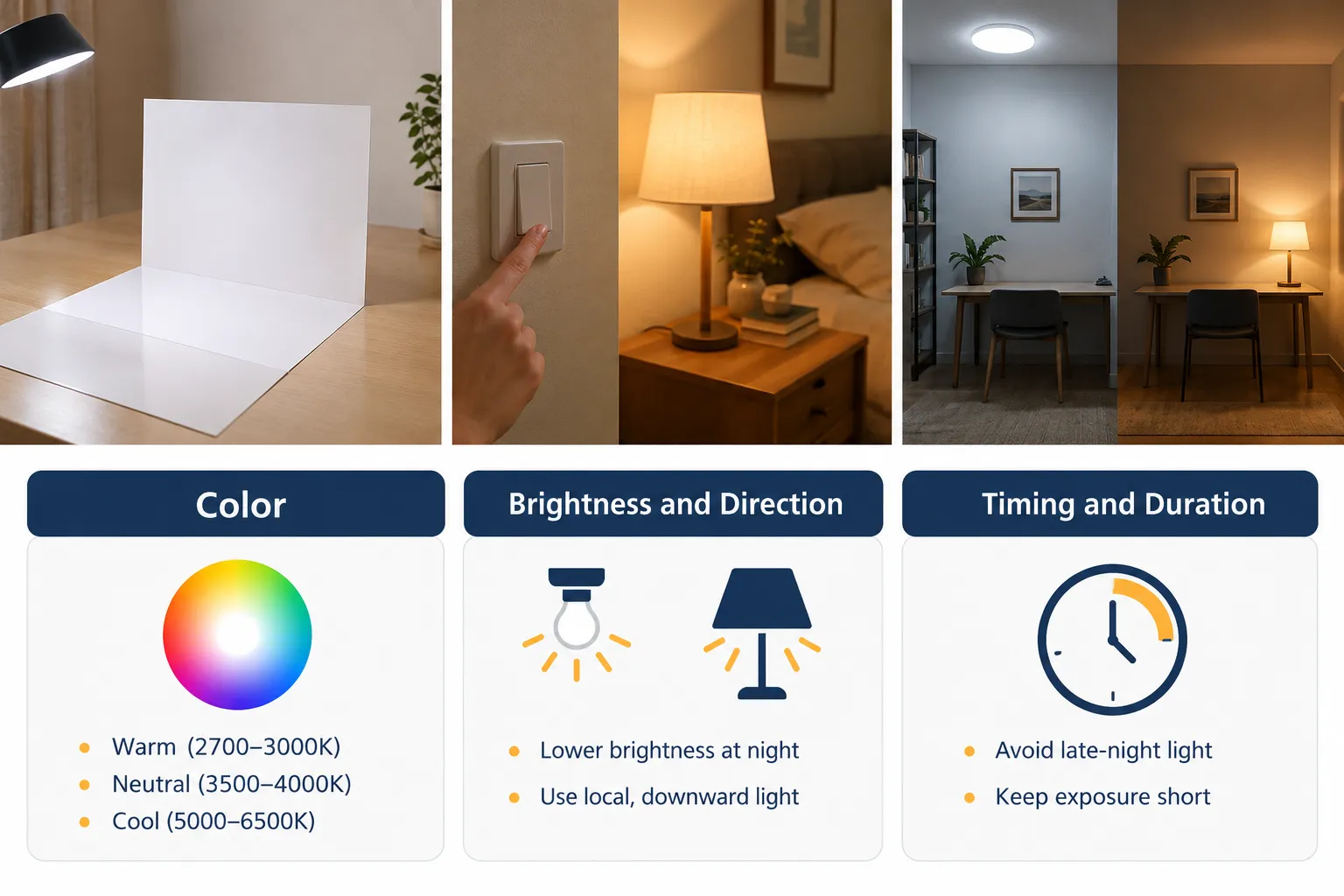
Kelvin tells you how warm or cool a bulb appears. Cool white and daylight bulbs often look crisp and blue-white; 2700K–3000K bulbs look warmer. But Kelvin alone doesn’t reveal the full spectrum or melanopic exposure. Two bulbs can have a similar colour temperature and still differ in output.
So, does 2700K warm white light block blue light? No. It usually looks warmer than daylight white, but warm-looking does not mean blue-free. That is precisely what made the Dusk Mode comparison below useful.
2. Brightness and direction: light at the eye matters
A bright ceiling fitting can illuminate the whole room and remain in your direct field of view. A table lamp or floor lamp can put light on the book, bench, or chair you are using without filling every corner of the room.
That doesn’t make every lamp harmless or every ceiling light a disaster. It simply gives you an easy way to use less light, in a more localised way, once the main jobs of the evening are done.
3. Timing and duration: make the routine livable
Research-based recommendations often discuss lower evening light for the final few hours before bed. A 90-minute routine is a practical starting point, not a rigid biological deadline. Try it for a week, then adjust the timing to the routine you can actually keep.
4. Make the room do the work, not just the phone
It helps to think about the light you actually live under. A phone held at arm’s length may be the most obvious screen in the room, but a kitchen downlight, ceiling fan light, television surround, or bright hallway can keep the whole space looking like daytime. The useful question is not whether every light is perfect. It is whether the final part of the evening is brighter than it needs to be.
Start with the room where you spend the last hour before bed. Finish kitchen jobs before changing the lighting if you need clear task light. Then turn off the general overhead fitting and leave one lower lamp on near the chair, sofa, or bedside. This lets you read, talk, or watch something without lighting every surface in the room. If you share a home, one adjustable lamp is often an easier experiment than asking everyone to change their whole routine at once.
Think of the change as a gradual handover rather than an all-or-nothing rule: useful bright light for tasks, softer local light once those tasks are finished, then a darker bedroom for sleep. It is a small environmental cue that can work alongside a regular wake time, daytime outdoor light, and the other basics of sleep hygiene.
Real-World Test: Three Modes on a Circadian LED Bulb
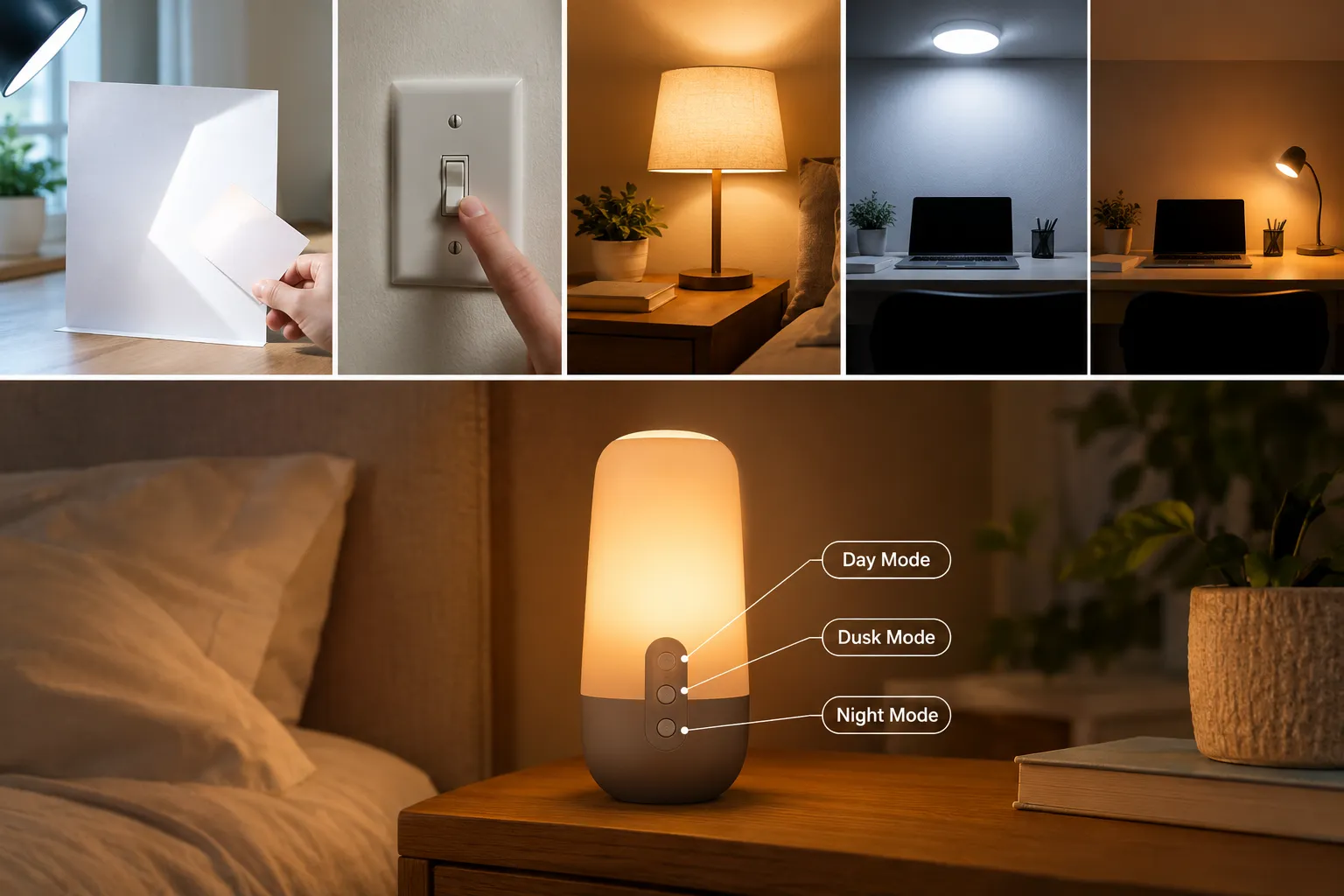
I used the BlockBlueLight BioLight in a daily lamp for two months. Its appeal is simple: the ordinary wall or lamp switch cycles through Day, Dusk, and Night modes. No Wi-Fi. No app. No extra controller.
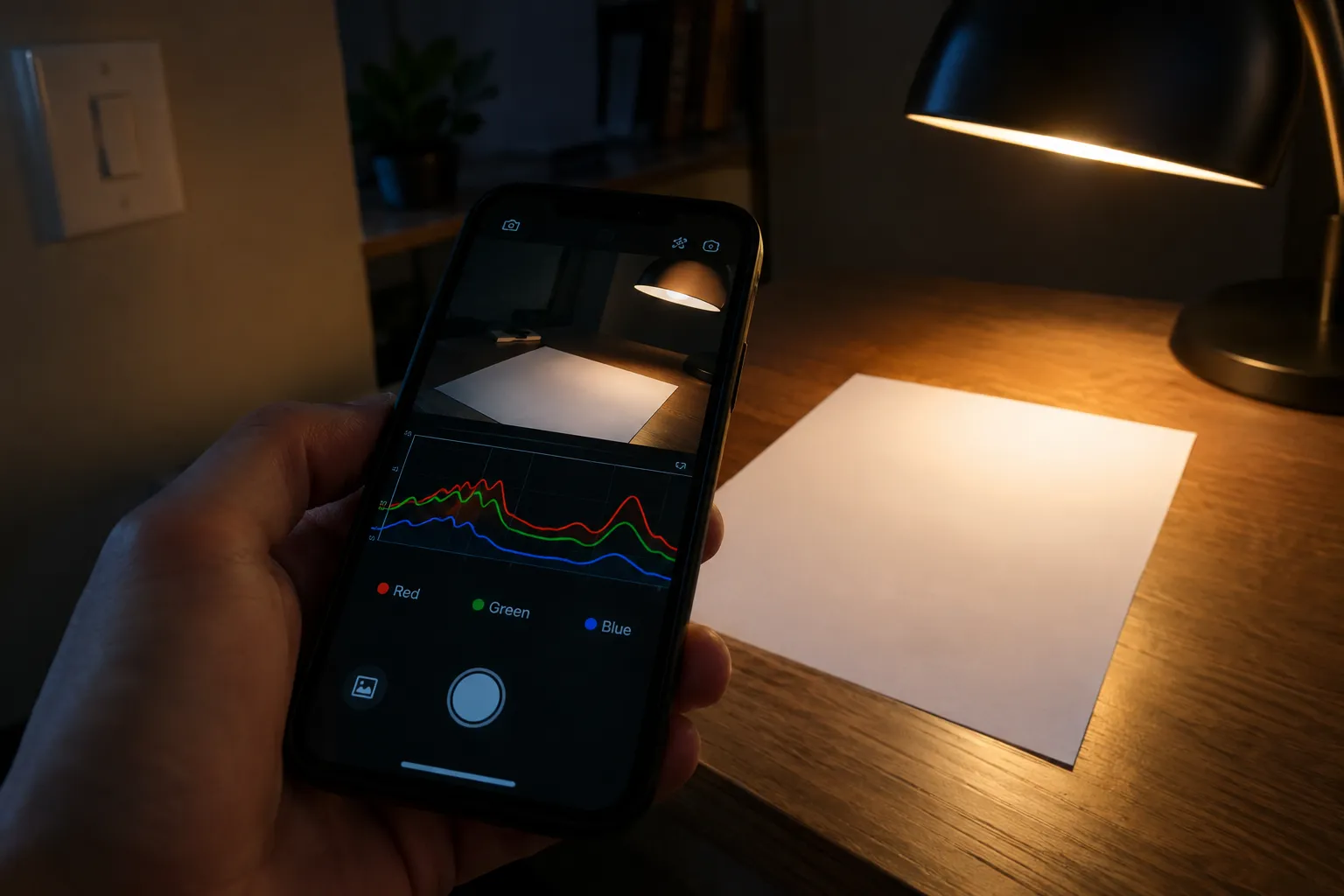
To compare those modes, I lit a plain sheet of white printer paper in a darkened room and viewed the reflected paper in Cine Meter II on an iPhone. I kept the same position, ISO 160, and 1/48-second shutter display across the three screenshots, then compared the YRGB waveform.
This is a simple home experiment, not a laboratory result. It gives a useful visual indicator of the change between modes under the same setup. It does not measure a full spectrum, melanopic EDI, EMF, flicker, an exact blue-light percentage, or anybody’s sleep outcome. Cine Meter II’s own documentation makes the same distinction: its waveform is a relative camera visualisation, not a laboratory instrument.[4]
Result 1: Day Mode
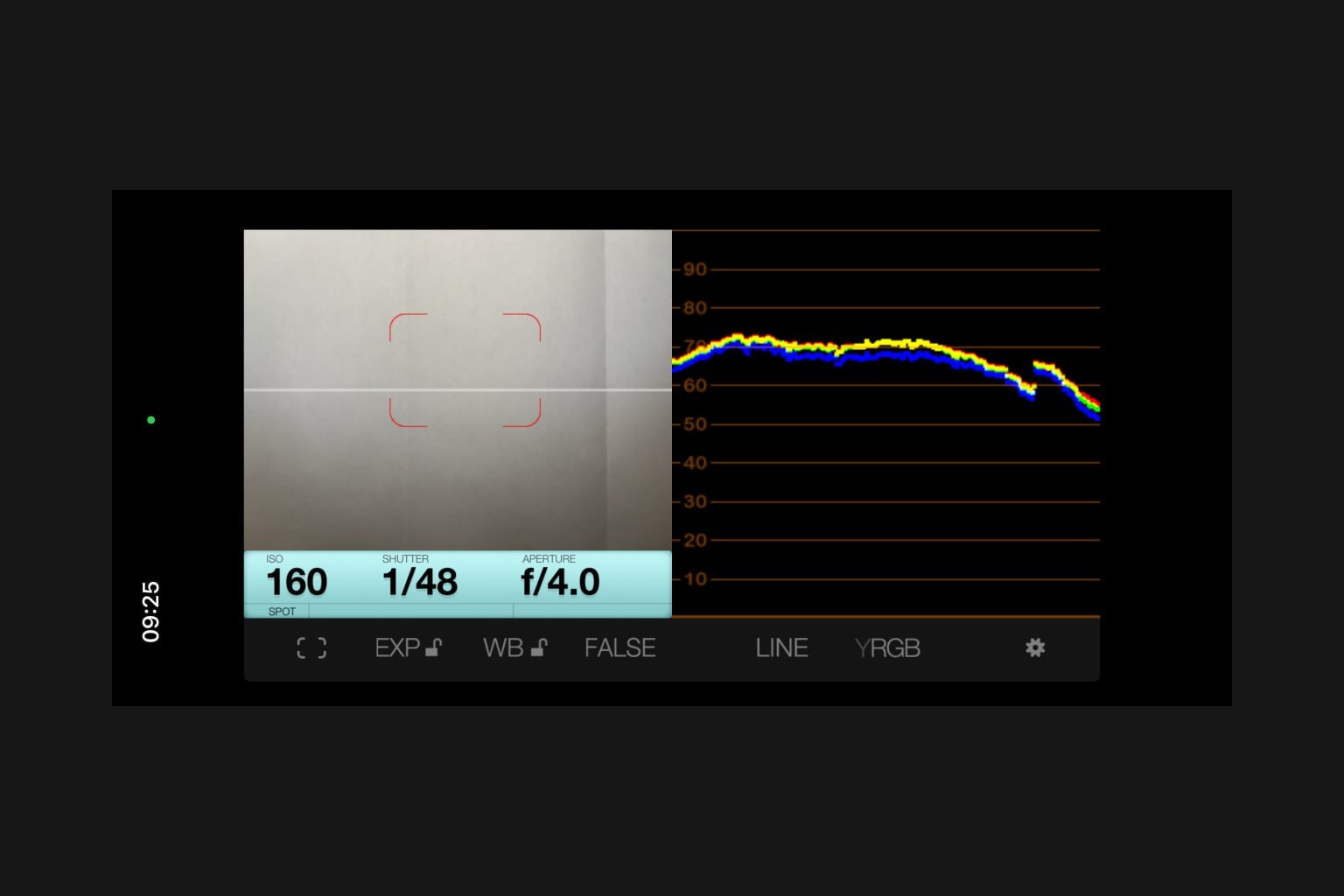
Day Mode showed the closest grouping of the three camera traces. The reflected paper looked bright and comparatively neutral. That’s the setting I found most useful when I wanted proper light for daytime reading or work.
Result 2: Dusk Mode
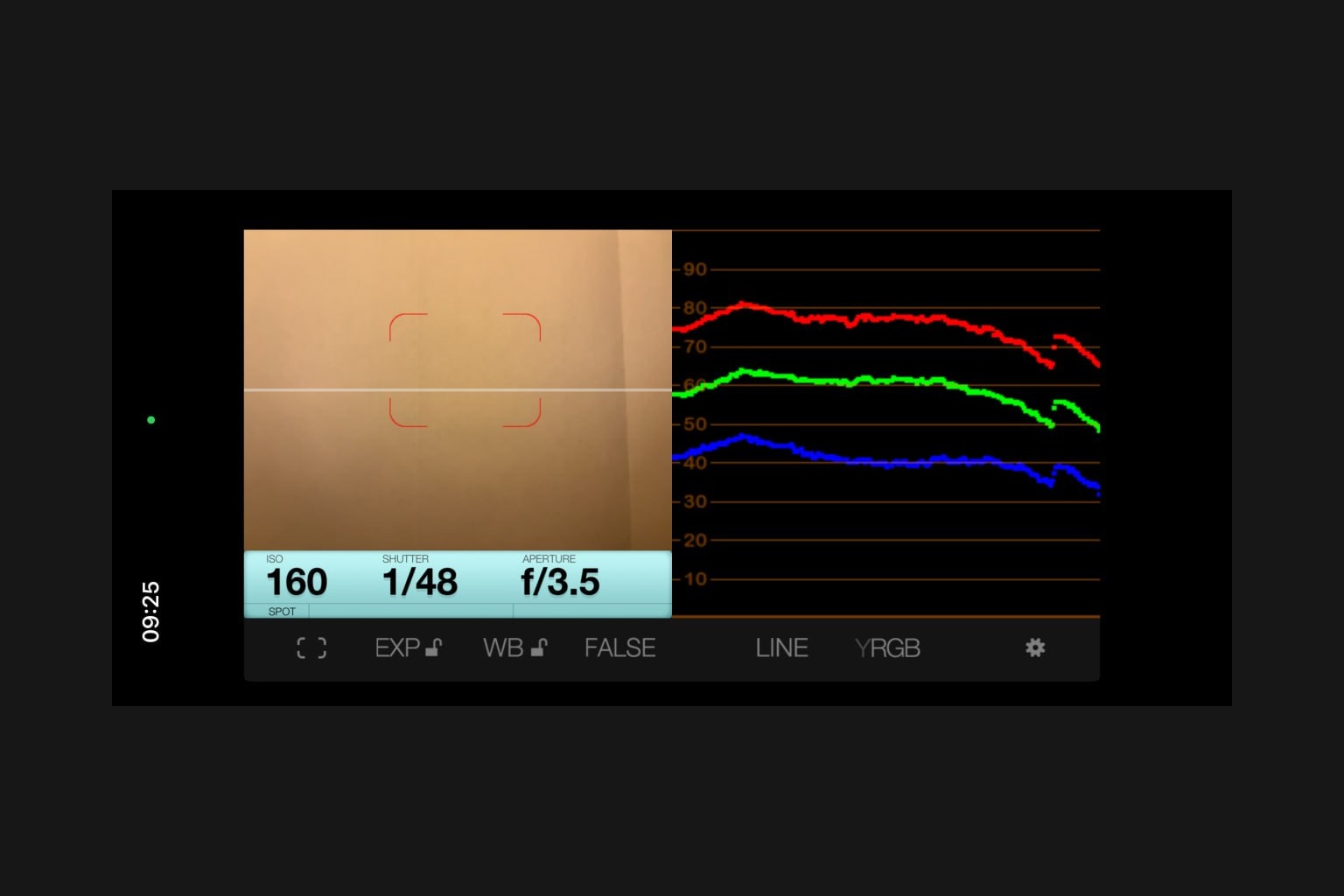
With the lamp switched into Dusk Mode, the room looked warm and comfortable. On the waveform, red sat around 75–80, green around 60, and blue around 40–45. That is the eye-opener: a bulb can look warm while still showing a relative blue-camera trace.
It is not a percentage measurement. It is a visual comparison that makes the shift easy to understand and easy to test at home.
Result 3: Night Mode
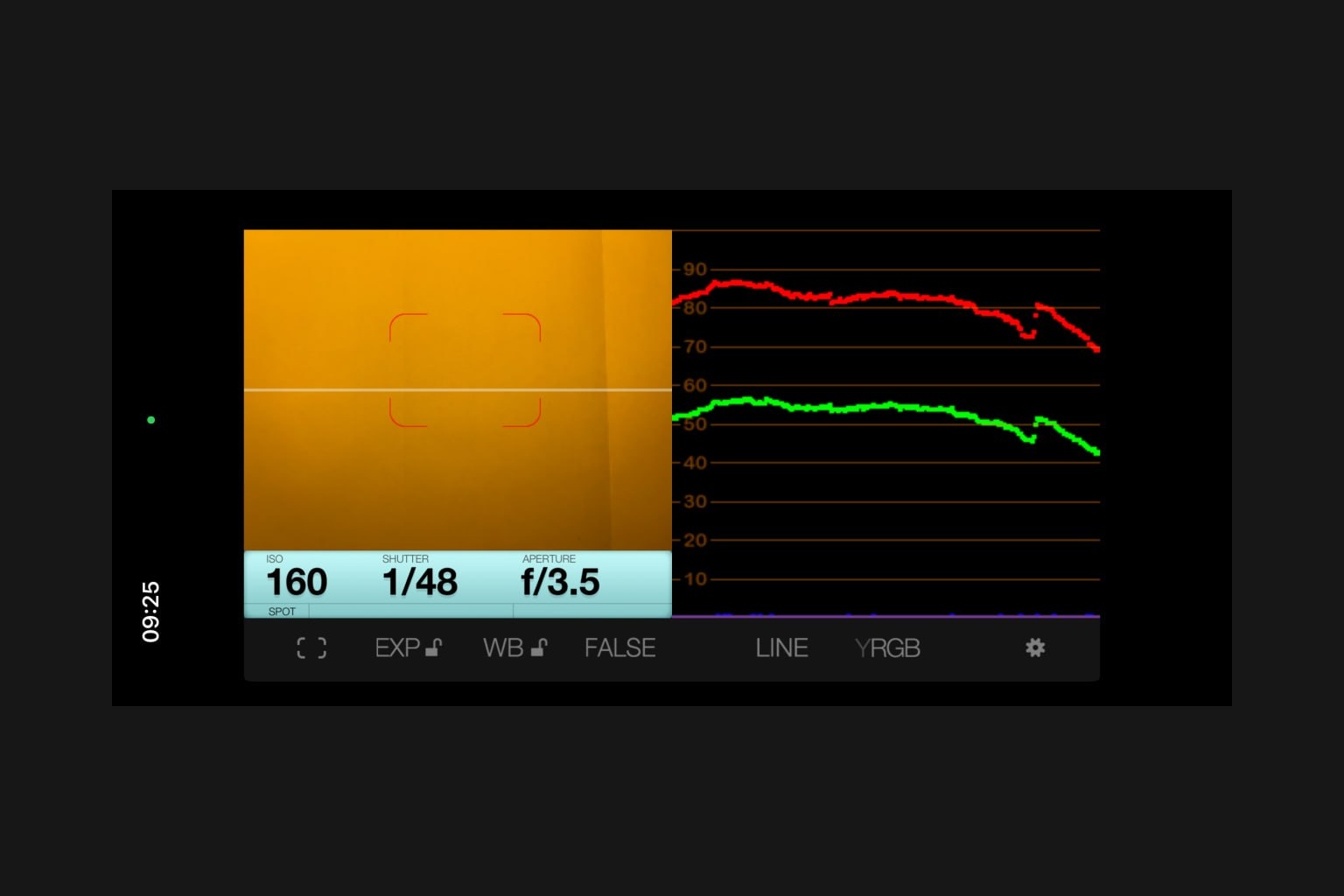
Night Mode gave the lamp a deep amber, candlelight-like look. The blue/purple trace sat close to the waveform floor while red and green remained visible. That is consistent with the manufacturer’s positioning of this mode as its amber night setting.
BlockBlueLight describes the BioLight as full spectrum in Day Mode, low blue in its middle mode, and no blue light in Night Mode; it also describes the bulb as low-EMF and flicker-free. Those are manufacturer claims. My use and home comparison support the practical difference between the modes, but they do not independently certify those specifications.[5]
My Two-Month Practical Verdict
What I like is the lack of friction. One lamp can be bright when I need it, warmer after dinner, then properly amber for the final part of the night. I found the Night Mode more comfortable for bedtime reading than leaving a bright white lamp on.
Comfort is personal. If light sensitivity or migraine-related photophobia is part of your picture, brightness, glare, flicker, contrast, and colour can all matter. Our guide to light sensitivity and migraine photophobia explains that broader issue without pretending one lighting change is a treatment.
Try the Home Comparison With the Light You Already Own
You do not need a special bulb to learn from this experiment. The value is seeing how your own daylight, cool-white, warm-white, dimmed, and amber settings compare when the camera conditions stay the same. A plain sheet of white paper is helpful because it gives the camera one reflected surface to compare instead of pointing the lens straight at a bright bulb.
- Choose a repeatable target: place a white sheet of printer paper where it receives light from the lamp you want to compare. Keep other room lights off or unchanged for every image.
- Keep the geometry fixed: leave the paper, lamp, phone, and distance in the same positions. A small change in angle can change the reflected image.
- Lock the camera settings: use the same exposure and white balance for every comparison if the app allows it. In my test, I kept the iPhone at ISO 160 and a 1/48-second shutter display.
- Compare the change, not a single number: capture your brightest setting first, then your warmer or dimmer setting. Look at how the broad camera traces move between images instead of treating them as calibrated spectral measurements.
- Use the result to make one practical change: perhaps that means moving evening reading to a lamp, choosing a warmer bulb, dimming a fixture, or leaving the overhead lights off after dinner.
This is a hands-on learning exercise, not a test of whether a bulb passes or fails. Different phones, apps, camera processing, bulb distances, and room surfaces can produce different-looking waveforms. What makes the comparison useful is keeping your own setup steady and looking at the relative change between modes.
If a single three-mode bulb appeals because it makes that sequence easy to repeat, the BioLight is the one I used for this article. If a regular warm bulb and a lower lamp achieve the same comfortable routine for you, that is a perfectly reasonable starting point too.
A Practical Comparison of Common Evening Setups
| Setup | Typical visual feel | Practical use |
|---|---|---|
| Cool or neutral overhead LED | Crisp, bright white | Useful for tasks; often more light than you need late at night |
| Fixed warm-white bulb | Softer, yellow-white | A sensible early-evening step-down |
| Three-mode bulb | Day, warm, then amber | One lamp can follow the way the evening changes |
| Phone or tablet at full brightness | Bright and close to the eyes | Lower brightness and use the warmer display mode if it helps |
| Dark bedroom | Minimal light | The simplest overnight target |
A Practical 90-Minute Evening Light Wind-Down
- About 90 minutes before bed: turn off overhead lighting when you no longer need it; use one or two lower lamps instead.
- About 60 minutes before bed: shift the main lamp warmer or dim it to the lowest comfortable level.
- For screens: lower brightness and use the device’s warmer evening setting if it feels comfortable. Fix the room lighting too; don’t make the phone the only villain.
- At bedtime: make the bedroom as dark as reasonably practical and avoid switching on a bright bathroom ceiling light for a brief overnight trip.
Lighting is only one part of a wind-down. Readers who want to understand the separate supplement topic can read Magnesium Glycinate for Sleep; it is not a substitute for assessing persistent sleep problems. For a broader room-by-room view, see Best Sleep Optimization Gear for Hot, Light, and Noise-Sensitive Sleepers.
Affiliate disclosure: This article contains affiliate links. If you purchase through them, I may earn a commission at no extra cost to you.
If you want to try the paper-and-phone comparison first, do it. It costs nothing and makes the difference between settings easier to see. If you want the all-in-one bulb I used for this test, [ ].
Frequently Asked Questions
What are the best colour-temperature light bulbs for bedroom sleep?
Warm bulbs are often a comfortable choice for evening use, but colour temperature alone cannot tell you the whole circadian-light story. Brightness, timing, and the light reaching your eyes also matter.
Are overhead lights worse for sleep than lamps before bed?
Not automatically. A bright ceiling fitting often provides more whole-room light, while a local lamp can light only the area you are using. The practical goal is a dimmer, less glaring evening environment.
Does 2700K warm-white light block blue light completely?
No. Warm white describes how the light looks; it does not mean blue-free. My Dusk Mode home comparison showed a lower relative camera blue trace than Day Mode, but not an absent trace.
Can I test my own bulbs with a phone?
Yes—as a comparison. Keep the bulb position, paper target, camera position, exposure, white balance, and room conditions the same for every mode. Look for the change between modes, not a laboratory-grade number.
What should I do if I wake up during the night?
Keep the light you use for a brief trip as low and local as practical. A warm nightlight or a dim lamp can be less jarring than switching on the brightest ceiling fitting. The goal is simply to make the return to bed feel quiet and uneventful; persistent night waking deserves its own discussion with a qualified clinician.
Is the BlockBlueLight BioLight clinically proven to improve sleep?
I did not run a sleep trial, and I am not claiming that I did. I used the bulb for two months and ran a simple comparative home test. The manufacturer’s performance claims remain its claims.
References
- Brown TM, et al. Recommendations for daytime, evening, and nighttime indoor light exposure to best support physiology, sleep, and wakefulness in healthy adults. PLOS Biology.
- Gooley JJ, et al. Exposure to Room Light before Bedtime Suppresses Melatonin Onset and Shortens Melatonin Duration in Humans. Journal of Clinical Endocrinology & Metabolism.
- Spitschan M, et al. Melanopsin contributions to non-visual and visual function. Current Biology.
- Adam J. Wilt. Cine Meter II: Details & Info.
- BlockBlueLight. BioLight™ – Full Spectrum Light (manufacturer product page).

About the author
Dave James has spent 30+ years reading health and longevity research, and has run All Perfect Health for the past five. His background is in Australian mining and industrial engineering—disciplines built on questioning claims, measuring outcomes, and respecting evidence. He writes about what the research actually says, including where the experts disagree. Dave is not a physician.
📂 Sleep Hygiene & Circadian Health
This article is part of the APH cluster. Use the links below to move between the pillar and related support articles.
- Read the pillar: Sleep Hygiene: The Complete Guide to Better Sleep for Health and Longevity
- YOU ARE HERE Evening Light Hygiene: How Household LED Bulbs and Dimming Affect Melatonin and Sleep
- → Morning Sunlight for Sleep: How Light Timing Affects Your Body Clock
- → Magnesium Glycinate for Sleep: Benefits, Safety, and How to Choose a Supplement
- → Sleep Trackers Explained: What Wearables Can—and Cannot—Tell You About Your Sleep
- → Best Sleep Optimization Gear for Hot, Light and Noise-Sensitive Sleepers
- → Light Sensitivity and Migraine Photophobia: What It Is, Why It Happens, and What Actually Helps