
Light Sensitivity and Migraine Photophobia: What It Is, Why It Happens, and What Actually Helps
Last updated: September 4, 2026
Quick Answer: Why Does Light Hurt During a Migraine?
During a migraine attack, the brain’s pain-processing system becomes hypersensitive. Light signals that would normally be processed without discomfort instead activate the same trigeminal pain pathways that drive migraine pain, making even ordinary indoor lighting feel unbearable. This is called photophobia, and it affects between 80 and 90 percent of people who experience migraines [2]. It is not an eye problem in the conventional sense. It is often a neurological response, although eye and other medical conditions can also cause photophobia. That distinction helps explain why the right next step depends on the wider symptom pattern.
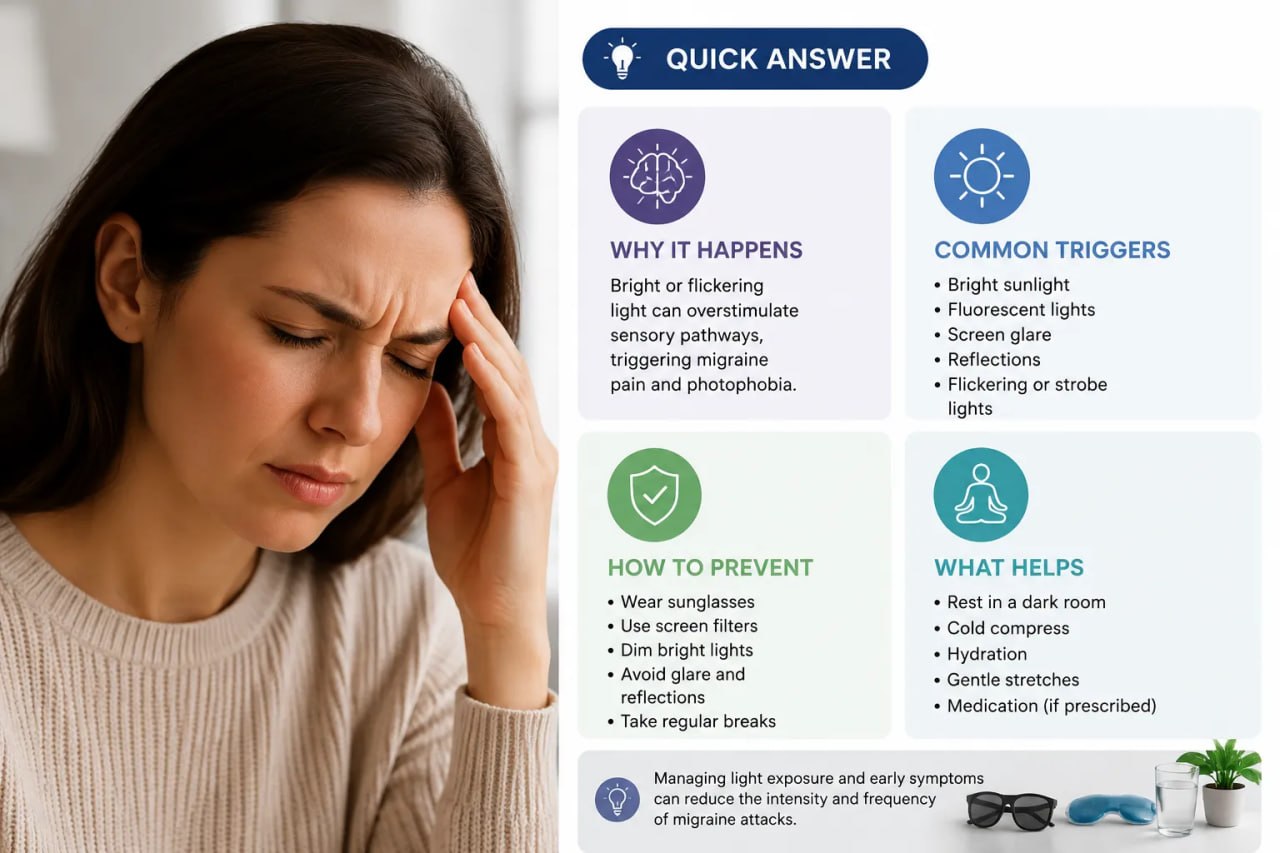
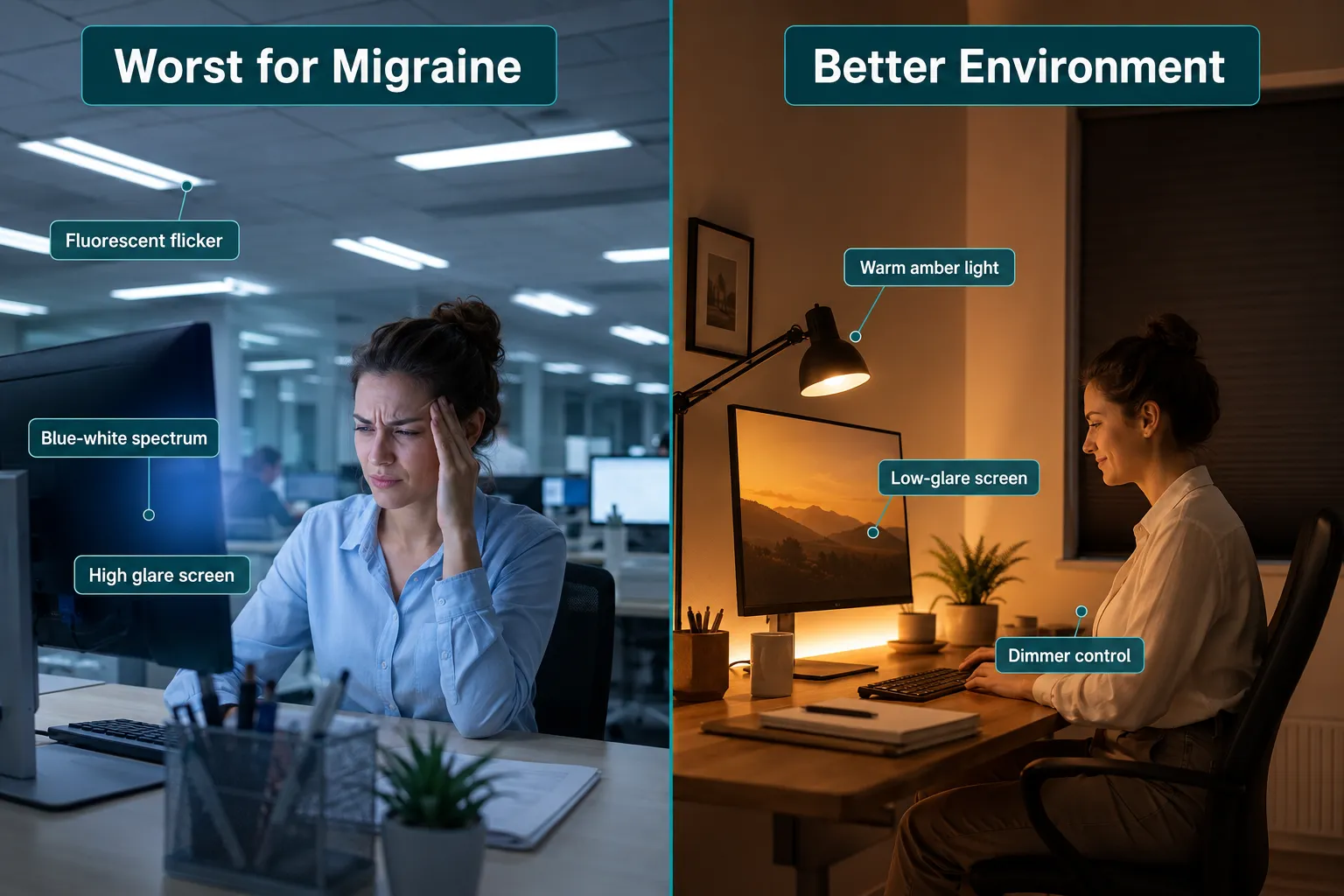
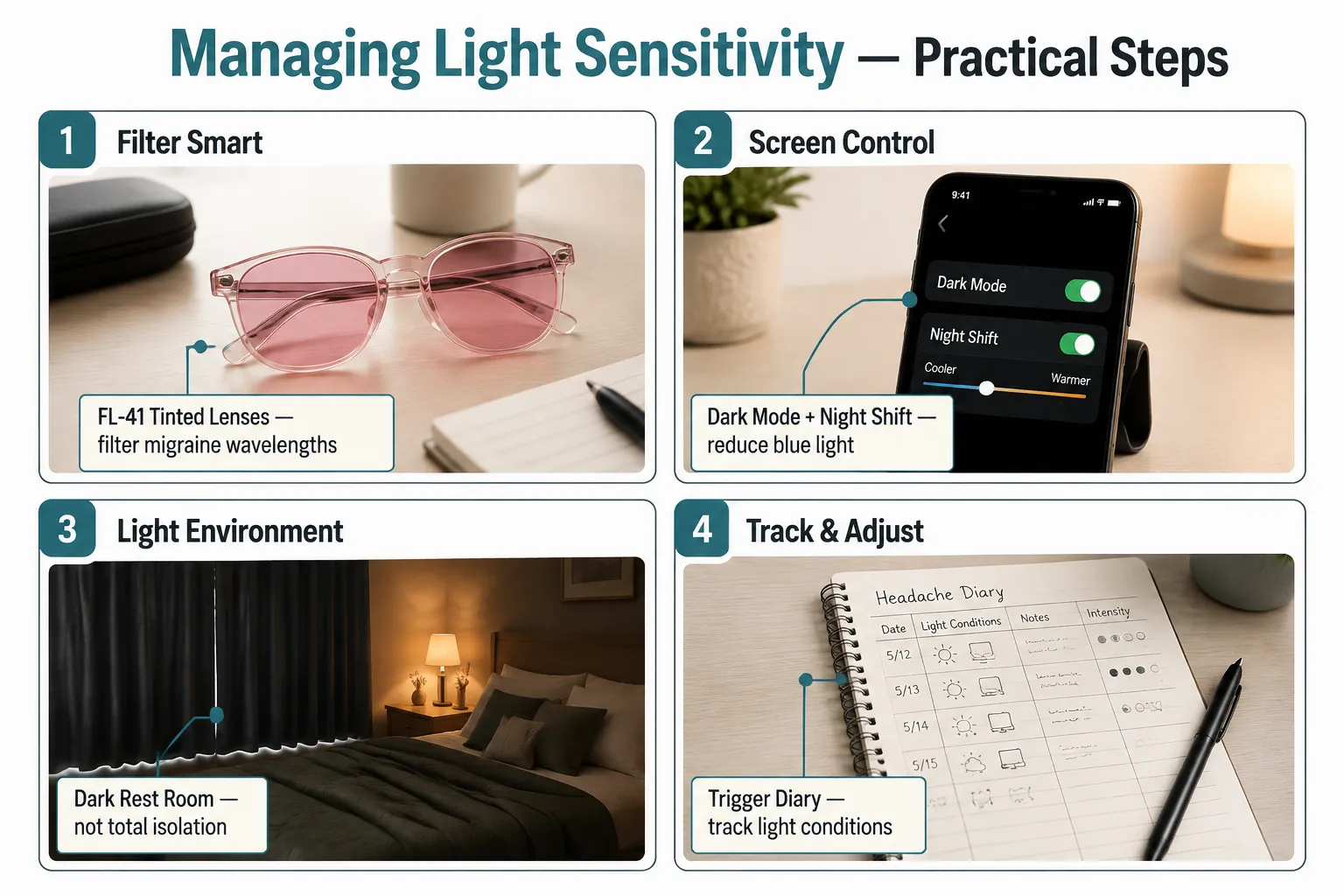
The infographic summarises common patterns and practical options. Individual triggers and responses vary; these steps are not certain to prevent an attack.
Key Takeaways
- Light sensitivity and migraine photophobia affect up to 90% of migraine sufferers and are considered a core feature of the condition, not a side symptom [2][6]
- The mechanism is neurological: light activates pain pathways in the brain via specialised retinal cells and the trigeminal system, not through eye damage
- Some laboratory and clinical research suggests that blue and cyan wavelengths can be especially uncomfortable during migraine, while lower-intensity green light may be better tolerated in some settings [5][10]
- Fluorescent lighting, LED glare, screens, flicker, and high-contrast visual patterns are among the most commonly reported environmental triggers
- FL-41 tinted lenses may reduce light-triggered discomfort for some people, although study results and individual responses vary; some newer precision optical filters have also received regulatory authorisation for migraine-associated light sensitivity [6]
- Photophobia can persist between migraine attacks, not only during them, and more persistent light sensitivity is linked to a higher risk of chronic migraine [1]
- Practical management includes warm-toned lighting, screen adjustments, tinted lenses, trigger tracking, and working with a clinician on migraine prevention
- Sudden severe headache with light sensitivity, fever, stiff neck, confusion, or vision loss requires immediate emergency assessment, these are red flags, not migraine
- Light sensitivity after a concussion or head injury is common but should be assessed by a clinician, as it signals neurological disruption
- Photophobia can occasionally indicate serious eye conditions; new, severe, or unexplained light sensitivity with eye pain or vision changes warrants prompt review
What Is Photophobia and How Does It Relate to Migraines?
Photophobia literally means an aversion to light, but in clinical terms it describes a condition in which normal or even low-level light causes discomfort or pain. It is not a fear of light in the psychological sense. In the context of migraine, photophobia is one of the most consistent and disabling symptoms a person can experience during an attack.
The relationship between light sensitivity and migraine photophobia is well established. Clinical diagnostic criteria for migraine include photophobia as a defining feature, and research consistently shows it affects the large majority of people with the condition [2][8]. In plain English: if you have migraine, there is a very high probability that light will bother you during an attack, and possibly between attacks too.
What makes migraine-related photophobia distinct from, say, the temporary light sensitivity you might feel after sitting in a dark cinema is the intensity and the neurological basis. The discomfort is not simply about brightness. It involves sensitivity to colour, flicker, spatial patterns, and contrast, which is why a striped shirt or a flickering fluorescent tube can be just as provocative as direct sunlight [9].
Photophobia is also not limited to the migraine attack itself. Many people report ongoing light sensitivity between attacks, and this interictal photophobia (the term used for sensitivity outside of an active headache) appears to be linked to a higher risk of migraine becoming chronic over time [1]. That matters, because it means managing light sensitivity is not just about surviving the next attack. It is part of a longer-term strategy.
Why Do Bright Lights Trigger Migraines?
Bright light does not cause migraine from scratch in most people, but it is a well-documented trigger that can initiate or worsen an attack in those who are already susceptible. Research suggests that light or glare may trigger up to 60% of migraine attacks in people with the condition [6][7].
Here is the real issue: the migraine brain is not processing sensory input the same way a non-migraine brain does. During and around migraine attacks, the brain enters a state of heightened sensory excitability. Touch, smell, sound, and light are all processed with greater intensity. On days with higher headache intensity, people with migraine report significantly increased sensitivity to light alongside increased sensitivity to touch and smell, which confirms that photophobia is part of a broader pattern of sensory hyperexcitability rather than an isolated visual phenomenon [12].
Bright light, particularly in the blue-white spectrum produced by fluorescent tubes and many LED lights, provides a strong sensory input that the sensitised migraine brain struggles to dampen. The result is pain, discomfort, and a strong urge to retreat to darkness.
From a practical point of view, this means that managing the light environment during a migraine is not about being overly cautious. It is about reducing a genuine neurological stressor.
What Happens in the Eye, Optic Pathway, and Brain During Migraine Photophobia?
The mechanism behind light sensitivity and migraine photophobia is neurological, not purely ophthalmological. Understanding it in plain English helps explain why standard eye drops or sunglasses alone are rarely enough.
The role of intrinsically photosensitive retinal ganglion cells (ipRGCs)
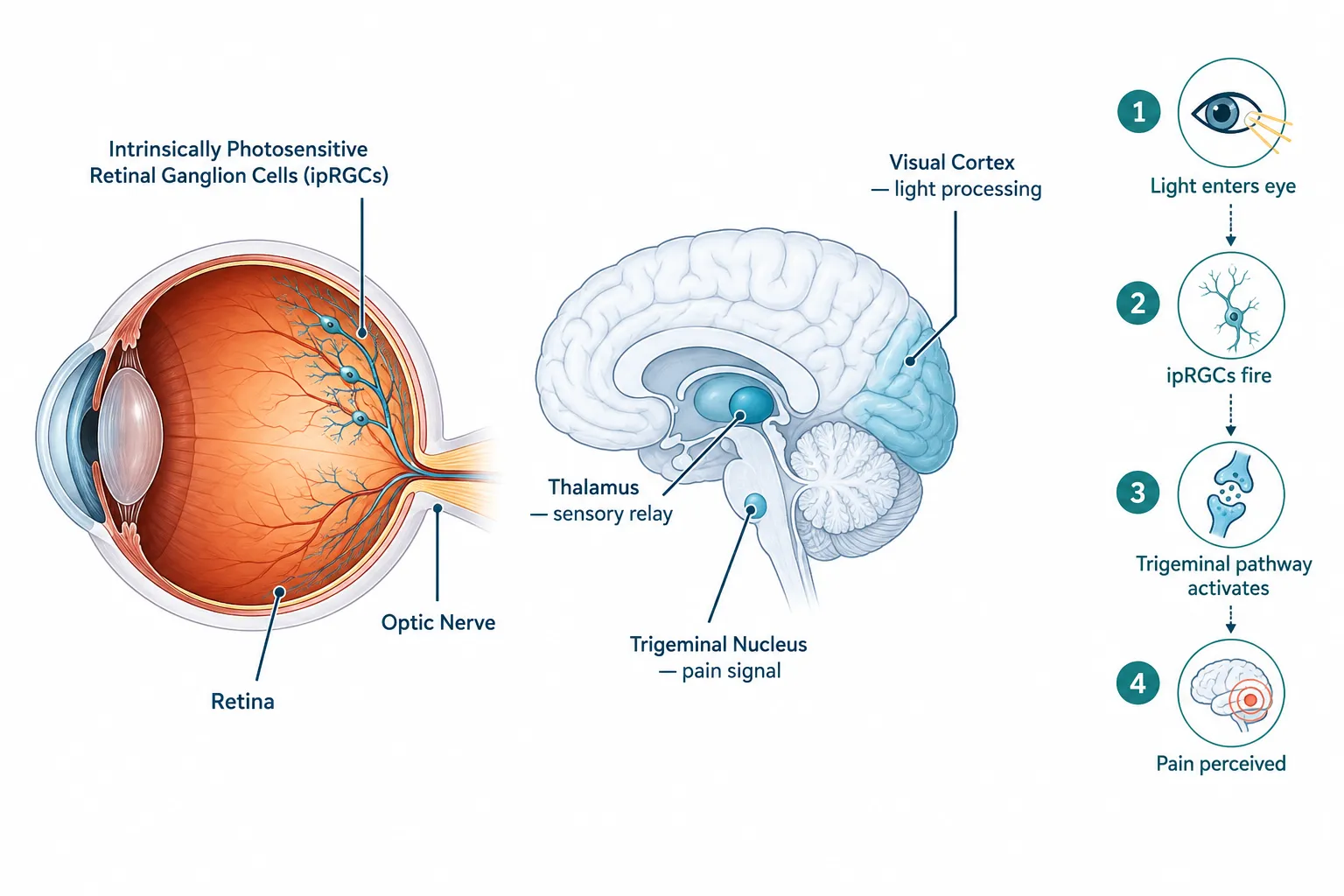
The retina contains several types of light-sensitive cells. Most people know about rods and cones. But there is a third type: intrinsically photosensitive retinal ganglion cells, or ipRGCs. These cells do not primarily contribute to vision in the conventional sense. Instead, they regulate circadian rhythms, pupil constriction, and, critically, they appear to play a significant role in photophobia.
ipRGCs are especially sensitive to short-wavelength blue light. They project signals not only to the visual cortex but also to brain regions involved in pain processing. Experimental work targeting ipRGC-mediated signalling in a randomised double-blind trial found that modulating this pathway can reduce both headache pain and light sensitivity in migraine, which supports further study of ipRGC-related signalling as a possible treatment target, rather than proving that it is the sole cause of photophobia [4].
The trigeminal pathway
The trigeminal nerve is the main pain-sensing nerve of the head and face. In migraine, this system becomes activated and sensitised. Signals from ipRGCs connect to the trigeminal nucleus in the brainstem, which means light input can directly amplify pain signals during a migraine attack. This is why looking at a bright screen during a migraine does not just feel unpleasant to the eyes. It can intensify the headache itself [9].
What is proposed versus what is proven
The evidence suggests that ipRGC activation and trigeminal pathway sensitisation are central to migraine photophobia. What is less clear is the precise sequence of events and why some people’s systems are more reactive than others. Genetic factors, hormonal influences, and prior migraine frequency all appear to play a role, but the full picture remains an active area of research [11].
Recent animal research published in 2025 identified a long non-coding RNA called NEAT1 and its interaction with a channel called TRPM3 as potential regulators of photophobia behaviour. Blocking these in mice significantly reduced light-induced sensitivity, pointing to possible future treatment targets [3]. This is early-stage science, not a treatment recommendation, but it illustrates that the field is moving beyond symptom management toward understanding the molecular basis of the problem.
How Common Is Light Sensitivity With Migraines?
The numbers here are striking. Between 80 and 90% of people with migraine experience photophobia during attacks [2][6]. Migraine itself affects more than one billion people worldwide, with over 45 million in the United States alone [6][7]. That makes migraine-related light sensitivity one of the most common neurological symptoms globally.
Light sensitivity is also reported in approximately 80% of young people with migraine, confirming that this is not a symptom that develops only with age or chronicity [2]. It is present across the lifespan of migraine sufferers.
What is less widely appreciated is that light sensitivity frequently persists between attacks. The severity of interictal photophobia is associated with sleep problems and a higher risk of migraine becoming chronic [1]. In real-world terms, this means many people with migraine are managing some degree of light sensitivity most of the time, not just during the headache phase.
The public health burden of this is substantial. People modify their work environments, avoid social settings, limit screen use, and restrict outdoor activity because of light sensitivity. These are not trivial lifestyle adjustments. They represent a significant reduction in quality of life that is often underestimated in clinical settings.
What Types of Light Are Worst for Migraine Sufferers?
Not all light is equally problematic. The evidence suggests that the spectral composition (the wavelengths of light), intensity, and flicker characteristics all influence how much discomfort a person with migraine experiences [5][10].
Blue and cyan wavelengths
Blue and cyan light in the short-wavelength range may worsen photophobia and headache intensity in some experimental and clinical settings, but the response is not identical for everyone. This aligns with what is known about ipRGC sensitivity, since these cells are maximally responsive in the blue part of the spectrum. Research published in 2026 found that blue- and cyan-enriched white light was associated with worse visual discomfort and higher headache intensity during migraine attacks [5][10].
Fluorescent lighting
Fluorescent tubes produce a spectral output that is heavy in blue and green wavelengths, and many older fluorescent lights also flicker at a frequency that the human eye may not consciously detect but the brain does. Both the spectral composition and the flicker contribute to why fluorescent-lit environments (offices, supermarkets, hospitals) are frequently reported as particularly difficult for migraine sufferers [9].
LED lighting
Modern LED lighting varies considerably. Cool-white LEDs with a high colour temperature may be harder for some people to tolerate, while warm-white LEDs generally produce less short-wavelength output. Comfort still depends on brightness, glare, flicker and individual response. The intensity and directionality of LED light also matter: bare LED bulbs without diffusers create glare that is harder on a sensitised visual system.
Sunlight and glare
Direct sunlight and reflected glare (from water, glass, snow, or wet roads) are among the most commonly reported outdoor triggers. The combination of high intensity and broad-spectrum light, including significant blue content, makes outdoor environments challenging during or around a migraine.
Screens and digital devices
Screens are a particular concern because of the combination of blue-weighted light emission, flicker from refresh rates, and the visual demands of reading or tracking movement. This is covered in more detail in the section below.
Visual patterns
High-contrast striped patterns, such as venetian blinds creating alternating light and dark bands, or text on a very bright white background, can trigger discomfort even at moderate overall brightness. This is sometimes called pattern glare, and it reflects the brain’s difficulty in processing high-contrast spatial information during a state of sensory hyperexcitability [9].
| Light Type | Key Problem | Relative Impact |
|---|---|---|
| Fluorescent (cool white) | Blue spectrum + flicker | High |
| LED (cool white, >5000K) | Blue-weighted spectrum, glare | High |
| Direct sunlight / glare | High intensity + broad spectrum | High |
| LED (warm white, <3000K) | Lower blue output | Moderate |
| Incandescent / halogen | Warm spectrum, minimal flicker | Lower |
| Green-wavelength light (narrow) | Least ipRGC activation | Lowest reported [5][10] |
Blue Light and Screens: What Is Known, What Is Uncertain, and Practical Adjustments
Blue light from screens is a genuine concern for migraine sufferers, but this is also an area where hype gets in the way of practical decision-making. Let’s keep this practical.
What the evidence actually shows
The stronger evidence points to blue and cyan wavelengths worsening photophobia and headache intensity during migraine attacks [5][10]. This is not the same as saying that blue light from a phone screen causes migraine in otherwise healthy people. The evidence for that is much weaker.
For people with migraine, screens present a compound problem: blue-weighted light emission, the visual demand of focusing on moving or changing content, and often the posture and duration of use. It is not that simple to separate these factors in everyday life.
What is uncertain
Blue-light-blocking glasses are widely marketed, but the evidence that they meaningfully reduce migraine frequency in the general population is limited. The more specific and better-supported intervention is FL-41 tinted lenses (discussed in the management section), which filter a broader range of migraine-triggering wavelengths rather than just blue light.
Practical screen adjustments that make sense
- Enable dark mode on all devices to reduce overall screen brightness and shift background colour from white to dark
- Use the built-in night mode or warm-colour shift setting (Night Shift on Apple devices, Night Light on Windows) to reduce blue-wavelength output in the evening and during attacks
- Reduce screen brightness to the lowest comfortable level for the task
- Apply the 20-20-20 rule: every 20 minutes, look at something 20 feet away for 20 seconds, to reduce visual fatigue
- Increase text size and line spacing to reduce the visual effort required for reading
- Use matte screen protectors to reduce glare from ambient light
- Position screens to avoid reflected light from windows behind you
These are sensible, low-cost adjustments with no meaningful downside. They do not replace medical management of migraine, but they reduce one of the more controllable environmental stressors [7].
Light Sensitivity During and Between Migraine Attacks
Light sensitivity and migraine photophobia do not switch on and off cleanly with the headache phase. This is one of the most practically important things to understand about the condition.
During an attack
During the headache phase, photophobia is typically at its most severe. Even dim indoor lighting can be intolerable. The premonitory phase (the hours before the headache begins) can also involve increased light sensitivity, which some people learn to recognise as an early warning sign. The postdrome phase (the period after the headache resolves) often involves continued, though usually milder, light sensitivity that can last for several hours or a day.
Between attacks
A significant proportion of people with migraine experience some degree of light sensitivity even when they do not have an active headache. This interictal photophobia is not simply residual discomfort. Research suggests it reflects ongoing changes in how the brain processes visual information between migraine episodes [1][9]. People with more frequent or severe interictal photophobia appear to be at higher risk of migraine becoming chronic, which makes managing the between-attack period as important as managing the attack itself.
In practical terms, this means that environmental modifications (lighting choices at home and work, screen settings, outdoor habits) are worth maintaining consistently, not just during attacks.
Light Sensitivity After Concussion or Traumatic Brain Injury
Light sensitivity after a concussion or traumatic brain injury (TBI) is common and deserves its own consideration, because the mechanism and management differ from migraine photophobia in important ways.
After a head injury, the brain’s ability to filter and regulate sensory input is disrupted. Photophobia is one of the most frequently reported post-concussion symptoms, alongside headache, dizziness, and cognitive difficulties. In some cases, post-concussion headaches share features with migraine, and the two conditions can overlap.
The key practical point is this: light sensitivity following a head injury should be assessed by a clinician. It is not safe to assume it is simply a migraine variant without proper evaluation. The severity and duration of post-concussion photophobia can inform decisions about return to activity, screen use, and work or school demands.
If light sensitivity after a head injury is worsening rather than improving, or if it is accompanied by other neurological symptoms, that requires prompt medical review. Do not manage it in isolation.
How to Reduce Light Sensitivity During a Migraine
During a migraine attack, aim for comfortable reduction rather than complete sensory shutdown. Move away from direct sunlight, glare, flickering bulbs and bright screens; lower the brightness of nearby devices; and use a quiet space with soft, indirect lighting if that feels better than total darkness. A cool compress, hydration and any migraine treatment already recommended by a clinician may also be useful for some people, but no single measure works for everyone.
Once the worst of the attack has passed, return gradually to normal light rather than staying in darkness for prolonged periods. If light sensitivity is becoming more severe, lasting between attacks, or interfering with work and daily life, discuss the pattern with a healthcare professional.
Blue Light vs Fluorescent Light: Which Is Worse for Migraines?
There is no universal winner because the effect depends on intensity, flicker, glare and individual sensitivity. Fluorescent lighting can be difficult because of its brightness, spectral output and flicker. Blue-rich light from screens and cool-white LEDs may also aggravate symptoms for some people, particularly during an attack. The practical approach is to reduce the factors that can be controlled: use warm, diffused lighting, reduce glare, avoid visible flicker, and adjust screen brightness and color temperature to a comfortable level.
Research on wavelength-specific filters is promising but does not mean every blue-light product will prevent migraine. Treat tinted lenses and screen filters as optional tools to test cautiously, not proven treatments.
Practical Ways to Cope With Light Sensitivity and Migraine Photophobia
The goal of practical management is to reduce the sensory load on a sensitised nervous system without creating new problems. One of those potential new problems is light avoidance becoming so extreme that it actually lowers your threshold for photophobia over time. Complete darkness for extended periods can paradoxically increase light sensitivity when you re-emerge. A sensible starting point is reducing light to a comfortable level, not eliminating it entirely.
Environment and lighting
- Replace cool-white fluorescent or LED bulbs with warm-white LEDs (2700 to 3000 Kelvin) at home and, where possible, at work
- Use dimmer switches to allow light levels to be adjusted gradually rather than switching between bright and dark abruptly
- Use blackout blinds or curtains in the bedroom to control natural light, particularly during an attack or in the postdrome phase
- Avoid sitting directly under overhead fluorescent lighting; position yourself to the side where possible
- Use a desk lamp with a warm-toned bulb rather than relying on overhead lighting
Sunglasses and tinted lenses
Standard dark sunglasses provide some relief outdoors, but they are not designed to filter the specific wavelengths most associated with migraine photophobia. Wearing very dark sunglasses indoors can also be counterproductive, as the eyes adapt to the reduced light and become more sensitive when the glasses are removed.
FL-41 tinted lenses
FL-41 is a rose-tinted optical filter originally developed to reduce sensitivity to fluorescent lighting. Some clinical evidence supports its use for reducing light-triggered discomfort, but the size and reliability of the benefit remain uncertain. FL-41 lenses filter a range of wavelengths in the blue-green part of the spectrum that are associated with migraine triggering, and they are light enough to be worn indoors without excessive light reduction.
FDA-cleared precision optical filters
In August 2026, the U.S. FDA granted De Novo marketing authorisation to Avulux precision optical filter lenses, creating a formal medical-device authorisation related to migraine-associated light sensitivity. These lenses are cleared for people aged 12 and over with episodic migraine and are available over the counter. The clearance was supported by multi-centre double-blind, placebo-controlled trials reporting reductions in photophobia impact compared with sham lenses; the size and practical importance of the benefit should be interpreted alongside the full evidence and product-specific limitations [6]. This is a meaningful development because it represents the first time a light-filtering lens has met the FDA’s standard for a medical device in this indication.
Screen and device settings
Apply the screen adjustments described in the blue light section above. These are practical, free, and worth implementing consistently rather than only during attacks.
Sleep, hydration, and trigger tracking
Poor sleep and dehydration are well-established migraine triggers that also lower the threshold for sensory sensitivity. Maintaining consistent sleep schedules and adequate hydration are not glamorous recommendations, but the basics still do the heavy lifting in migraine management. For a broader look at sleep and its role in neurological health, the complete guide to better sleep for health and longevity covers the evidence in practical terms.
Keeping a headache diary that records light conditions, screen use, sleep quality, and hydration alongside headache frequency and severity is one of the most useful things a person with migraine can do. It transforms vague impressions into usable data that both the patient and their clinician can act on [7].
Diet and anti-inflammatory considerations
There is emerging interest in the role of diet in migraine management, particularly around inflammation and nutrient status. Magnesium deficiency has been associated with migraine susceptibility, and anti-inflammatory dietary patterns may reduce overall migraine burden. For practical guidance on foods that support an anti-inflammatory approach, see the foods that are anti-inflammatory overview. The health benefits of ginger and health benefits of turmeric articles also cover the evidence on natural compounds with anti-inflammatory properties that are sometimes discussed in the context of migraine. These are supportive measures, not treatments, and should be considered alongside, not instead of, medical care.
Can You Develop Photophobia From Chronic Migraines?
Yes, and this is an important point. The relationship between migraine frequency and photophobia is bidirectional. More frequent migraines appear to increase the sensitivity of the trigeminal and visual processing systems over time, making photophobia more persistent and potentially more severe [1][9].
Research on the relationship between photophobia, sleep disturbances, and migraine chronicity found that more severe or persistent light sensitivity is linked to sleep problems and a higher risk of migraine transitioning from episodic (fewer than 15 headache days per month) to chronic (15 or more headache days per month) [1]. This is not inevitable, but it underscores why managing migraine frequency matters beyond just reducing individual attacks.
The practical implication is that if photophobia seems to be getting worse over time, or if light sensitivity is present on most days rather than only around attacks, that is worth discussing with a clinician. It may indicate that the migraine pattern is changing and that prevention strategies need to be reviewed.
Best Lighting for Migraine Sufferers at Home and Work
The evidence suggests that the ideal lighting environment for someone with migraine photophobia has three main characteristics: warm colour temperature, low intensity with dimmer control, and minimal flicker.
At home
- Replace all overhead cool-white bulbs with warm-white LEDs rated at 2700 to 3000 Kelvin
- Install dimmer switches in rooms where you spend the most time, particularly the bedroom and main living area
- Use blackout or heavy curtains in the bedroom
- Avoid bare LED bulbs; use diffused or frosted fittings to reduce glare
- Position lamps to light work surfaces indirectly rather than shining directly into the visual field
- Consider a small amber or red-toned night light for navigating at night without triggering a bright-light response
At work
- Request a desk position away from direct overhead fluorescent lighting where possible
- Use a desk lamp with a warm-toned bulb as your primary light source
- Apply anti-glare screen filters to monitors
- Discuss workplace adjustments with an employer if light sensitivity is significantly affecting your ability to work; in many countries, migraine-related disability qualifies for reasonable workplace accommodations
Outdoor environments
- Wear wraparound sunglasses with polarised lenses to reduce glare from reflective surfaces
- FL-41 tinted lenses or the Avulux precision filter lenses provide more targeted protection than standard dark lenses
- Avoid prolonged exposure to direct sunlight, particularly in the hours around midday when intensity is highest
- A hat with a brim provides additional shading without requiring the eyes to adapt to tinted lenses
Is Light Sensitivity a Sign of a Serious Condition?
In a person with an established, familiar migraine pattern, light sensitivity during or around a headache is often part of that migraine. However, a new or changing pattern should not automatically be assumed to be migraine. But there are situations where photophobia signals a condition that requires urgent attention.
Conditions other than migraine that can cause photophobia
- Meningitis (bacterial or viral): photophobia combined with fever, severe headache, and stiff neck is a medical emergency
- Encephalitis: brain inflammation that can cause headache, fever, confusion, and light sensitivity
- Subarachnoid haemorrhage: sudden, severe “thunderclap” headache with photophobia requires immediate emergency assessment
- Corneal abrasion or ulcer: eye pain, redness, and photophobia without headache suggests an eye problem
- Uveitis (inflammation inside the eye): eye pain, redness, and light sensitivity, sometimes with blurred vision
- Acute angle-closure glaucoma: severe eye pain, halos around lights, nausea, and sudden vision change
- Multiple sclerosis: photophobia can occur as part of optic neuritis, often with eye pain on movement and reduced colour vision
- Concussion and TBI: as described above
The main takeaway is this: if light sensitivity is new, is accompanied by symptoms outside the usual migraine pattern, or occurs with any of the red-flag features described below, it should not be assumed to be migraine without proper assessment.
For a broader perspective on how herbs and natural compounds are being studied for eye health support, the 10 best herbs for eye health article covers the evidence in practical terms, though it is not a substitute for clinical assessment of eye symptoms.
When Light Sensitivity Needs Urgent Medical Care
Some combinations of symptoms alongside light sensitivity require immediate emergency assessment. Do not wait to see if these resolve on their own.
Seek emergency care immediately if photophobia occurs with any of the following:
- Sudden, severe headache that reaches peak intensity within seconds or a minute or two (“the worst headache of your life” or a thunderclap headache)
- Fever and stiff neck (difficulty touching chin to chest)
- Confusion, altered consciousness, or unusual behaviour
- Weakness, numbness, or paralysis on one side of the body
- Difficulty speaking, understanding speech, or finding words
- Sudden vision loss in one or both eyes
- Severe eye pain, especially with redness and halos around lights
- Headache following a head injury, particularly if worsening
- A new pattern of light sensitivity that has no prior history of migraine to explain it
These are not migraine features. They are red flags for conditions including meningitis, subarachnoid haemorrhage, stroke, and acute glaucoma. Context matters: someone with a 20-year history of migraine who develops their usual photophobia during a typical attack is in a very different situation from someone who has never had migraine and suddenly develops severe headache with light sensitivity.
I would be careful with the tendency to reassure yourself that it is “just a migraine” if the pattern is different from your normal experience. When in doubt, get it assessed.
Treatment and Prevention: Working With a Clinician on Migraine Photophobia
Managing light sensitivity and migraine photophobia effectively requires separating two distinct goals: treating the acute attack and preventing future attacks. These require different approaches and, in most cases, clinician involvement.
Acute management
During an active migraine, the priority is to reduce sensory input and treat the headache. This typically involves:
- Moving to a quiet, dimly lit room (not complete darkness for extended periods)
- Taking prescribed acute migraine medication as directed by a clinician (triptans, gepants, or other agents depending on individual circumstances)
- Applying the environmental and lens strategies described above
- Staying hydrated
Photophobia often improves as the headache resolves, though the postdrome phase may involve continued sensitivity for some hours.
Prevention
For people with frequent or severe migraine, prevention is where the most meaningful long-term improvement in photophobia can be achieved. Preventive approaches include pharmacological options (beta-blockers, anticonvulsants, antidepressants, CGRP antagonists, and botulinum toxin injections, among others) and non-pharmacological strategies (regular sleep, stress management, dietary consistency, and trigger avoidance).
The choice of preventive strategy depends on individual factors including migraine frequency, other health conditions, and medication tolerability. This is not a decision to make from an article. It requires a conversation with a GP, neurologist, or headache specialist.
Photophobia-specific treatment developments
Beyond lenses, research into ipRGC-targeted therapies and the NEAT1/TRPM3 molecular pathway suggests that more specific pharmacological treatments for photophobia may eventually become available [3][4][11]. As of 2026, these remain in early research phases. The FDA clearance of Avulux lenses represents the most significant recent clinical development in photophobia-specific management [6].
For people interested in the broader role of diet and natural compounds in supporting overall health alongside medical migraine management, the health benefits of natural foods and herbs hub covers the evidence on a range of relevant topics. The inflammation and whole foods article is also worth reading for context on how dietary patterns interact with inflammatory processes that may be relevant to migraine biology.
A note on supplements
Magnesium supplementation is one of the better-supported nutritional interventions for migraine prevention, with some clinical guidelines recommending it as a first-line option for people who prefer to avoid pharmaceutical preventives or as an adjunct. The evidence is not definitive, but it is more substantial than for most other supplements in this area. Any supplementation should be discussed with a clinician, particularly for people with kidney disease or those taking other medications.
Can You Prevent Light Sensitivity Triggered Migraines?
Preventing light-triggered migraines involves two parallel strategies: reducing exposure to the more provocative light conditions, and reducing overall migraine susceptibility so that the threshold for triggering an attack is higher.
Reducing light exposure
- Implement the warm-lighting changes described above consistently, not just during attacks
- Wear FL-41 or precision optical filter lenses in known high-risk environments (offices with fluorescent lighting, outdoor settings with strong glare)
- Apply screen settings and take regular breaks
- Keep a trigger diary to identify which specific light conditions consistently precede your attacks
Reducing overall migraine susceptibility
- Work with a clinician on appropriate preventive medication if migraine frequency warrants it
- Maintain consistent sleep and wake times (sleep disruption is one of the most reliable migraine triggers)
- Stay well hydrated
- Manage stress through whatever approach is sustainable for you
- Avoid known dietary triggers (common ones include alcohol, particularly red wine; aged cheeses; processed meats; and excessive caffeine, though individual triggers vary considerably)
The evidence suggests that no single intervention eliminates photophobia entirely for most people. The goal is meaningful reduction in frequency and severity, which is achievable with a consistent, multi-pronged approach.
Photophobia Treatment Options Besides Avoiding Light
Avoidance is the most instinctive response to light sensitivity, but it is not the only option and should not be the primary long-term strategy. Prolonged avoidance can increase sensitivity over time.
Evidence-supported options beyond avoidance
- FL-41 tinted lenses: filter migraine-triggering wavelengths; supported by clinical evidence for reducing photophobia-related discomfort
- Avulux precision optical filter lenses: FDA-cleared (August 2026) for migraine-associated light sensitivity; supported by double-blind, placebo-controlled trial data [6]
- Preventive migraine medication: by reducing the frequency and severity of attacks, these indirectly reduce the burden of photophobia; options include CGRP pathway antagonists, which have shown particular promise in reducing overall migraine burden
- Botulinum toxin injections: for chronic migraine, these are an established preventive option that can reduce attack frequency and associated symptoms including photophobia
- Behavioural and environmental modification: consistent application of lighting and screen adjustments as a long-term habit rather than a crisis response
- Cognitive and pain management approaches: some people with chronic migraine benefit from pain psychology input to manage the disability associated with photophobia without reinforcing avoidance behaviours
What does not have strong evidence
Standard blue-light-blocking glasses (the kind marketed for general screen use) have limited evidence for specifically reducing migraine photophobia. They are not harmful, but they should not be relied upon as a primary intervention. The more targeted FL-41 and precision optical filter options have a stronger evidence base for this specific application.
There is no magic in it. The interventions with the best evidence are also the most straightforward: reduce the more provocative wavelengths of light, treat migraine effectively, and maintain the lifestyle foundations (sleep, hydration, consistency) that keep the migraine threshold as high as possible.
Light Sensitivity Without Migraine: What Could It Mean?
Photophobia without migraine is less common but clinically important. If light sensitivity occurs without headache, or with a headache that does not fit the usual migraine pattern, other causes should be considered.
Common non-migraine causes of photophobia
- Eye conditions: corneal abrasion, uveitis, conjunctivitis, dry eye syndrome, and acute glaucoma can all cause significant light sensitivity, usually accompanied by eye pain, redness, or vision changes
- Meningitis: photophobia with fever and neck stiffness is a classic triad requiring emergency assessment
- Concussion: as discussed, post-concussion photophobia can occur without prominent headache
- Medication side effects: some medications, including certain antibiotics, diuretics, and antipsychotics, can increase light sensitivity
- Optic neuritis: inflammation of the optic nerve, which can be a feature of multiple sclerosis, often causes eye pain on movement and colour desaturation alongside photophobia
- Albinism and other conditions affecting pigmentation: reduced pigment in the iris allows more light to enter the eye, causing chronic photophobia
- Severe anxiety: in some cases, heightened autonomic arousal can increase perceived light sensitivity, though this is a diagnosis of exclusion
The practical rule is straightforward: new photophobia without a clear migraine history, or photophobia that is changing in character, should be assessed by a clinician. An eye examination is a reasonable first step when eye symptoms are present. Neurological assessment is appropriate when headache, cognitive symptoms, or other neurological features accompany the light sensitivity.
FAQ
What is photophobia?
Photophobia is abnormal sensitivity to light that causes discomfort or pain. It is not a fear of light in the psychological sense. In the context of migraine, it describes the experience of ordinary or bright light feeling painful or overwhelming during or around an attack. It is a neurological phenomenon involving the trigeminal pain system and specialised retinal cells, not primarily an eye condition.
Why does migraine cause light sensitivity?
During migraine, the brain enters a state of heightened sensory excitability. Light signals from the retina, particularly via intrinsically photosensitive retinal ganglion cells (ipRGCs), activate the trigeminal pain pathway that drives migraine pain. This means light input directly amplifies the headache rather than simply being unpleasant. The process involves both the eye and the brain, which is why standard eye drops do not resolve it [4][9].
Can blue light make migraine photophobia worse?
Yes, based on current evidence. Blue and cyan wavelengths of light appear to worsen photophobia and headache intensity during migraine attacks, consistent with the known sensitivity of ipRGCs to short-wavelength light [5][10]. Practical screen adjustments (dark mode, night mode, reduced brightness) are worth implementing, particularly during and around attacks.
Do FL-41 lenses actually help with light sensitivity?
The evidence supports FL-41 tinted lenses as a useful tool for reducing light-triggered discomfort in migraine. They filter a range of blue-green wavelengths associated with migraine triggering and are light enough to be worn indoors. In August 2026, the FDA also cleared Avulux precision optical filter lenses as the first medical device specifically for migraine-associated light sensitivity, supported by double-blind trial data [6]. These are not established cures, but they are among the better-supported non-pharmacological options for managing photophobia.
Can screens trigger a migraine?
Screens can contribute to triggering or worsening a migraine in susceptible people, through a combination of blue-weighted light emission, visual demand, and duration of use. The evidence that screen use alone causes migraine in people without the condition is weaker. For people with migraine, managing screen use through the adjustments described in this article is a practical and worthwhile step.
Is photophobia a symptom of MS or other serious illness?
Photophobia can occur in multiple sclerosis, typically as part of optic neuritis (inflammation of the optic nerve), which often presents with eye pain on movement and reduced colour vision alongside light sensitivity. It can also occur in meningitis, encephalitis, and other neurological conditions. However, in the vast majority of people who experience photophobia, the cause is migraine. New, unexplained photophobia, or photophobia with neurological symptoms outside the usual migraine pattern, warrants clinical assessment.
When is light sensitivity an emergency?
Seek emergency care immediately if light sensitivity occurs with any of the following: sudden severe “thunderclap” headache, fever and stiff neck, confusion or altered consciousness, weakness or speech difficulty, sudden vision loss, severe eye pain with redness, or headache following a head injury. These combinations can indicate meningitis, subarachnoid haemorrhage, stroke, or acute glaucoma, all of which are medical emergencies.
How long does photophobia last after a migraine?
During the postdrome phase (after the headache resolves), light sensitivity may persist for several hours and, in some people, may continue into the following day. Between attacks, many people with migraine experience some degree of ongoing light sensitivity. If photophobia persists for more than a day or two after an attack, or if it is present most of the time, that is worth discussing with a clinician as it may indicate a pattern of chronic migraine [1].
Related Headache Resources
For related, evidence-aware guidance, see our complete guide to herbs for headaches, our article on magnesium for headaches and migraine, and our practical guide to dehydration and electrolytes for headaches.
About This Information
This article is written for general information purposes and does not constitute medical advice. It is intended to help you understand light sensitivity and migraine photophobia and to support informed conversations with your healthcare provider. It does not replace professional assessment, diagnosis, or treatment.
If you are experiencing new, severe, or unexplained light sensitivity, or if your symptoms are changing, please seek medical advice. If you have any of the emergency red-flag symptoms described in this article, seek emergency care immediately.
The information in this article reflects evidence available as of September 2026. Medical understanding of migraine and photophobia continues to develop, and guidance may change as new research emerges.
Conclusion
Light sensitivity and migraine photophobia are not minor inconveniences at the edge of migraine experience. They affect up to 90% of people with migraine, they can persist between attacks, and they carry a real burden on daily life, work, and wellbeing [2][6]. The evidence is sufficient to justify practical experiments with lighting, glare and screen settings. Blue and cyan wavelengths, fluorescent environments and cool-white LEDs can be difficult for some people, while tinted or precision optical filters may help selected individuals. Managing migraine frequency may also reduce the overall burden of photophobia, but these approaches are may not work for everyone.
What matters most is this: do not manage light sensitivity in isolation from migraine management as a whole. The two are inseparable. Environmental modifications help, but they work best alongside appropriate medical care, consistent sleep, adequate hydration, and trigger tracking. Start with what gives the biggest return: change the lighting in the spaces where you spend the most time, apply screen settings consistently, and keep a diary to identify your specific triggers.
If your light sensitivity is new, worsening, or accompanied by any symptoms outside your normal migraine pattern, get it assessed. And if you recognise any of the emergency red flags described in this article, do not wait.
The basics still do the heavy lifting. Manage the environment, manage the migraine, and work with a clinician who takes photophobia seriously as a clinical target, rather than treating it as a symptom to dismiss.
This article is part of the APH headaches and natural support cluster. Use these guides to explore related questions without treating one symptom pattern as a diagnosis.
References
[1] PMC13093560 – https://pmc.ncbi.nlm.nih.gov/articles/PMC13093560/
[2] PubMed 40654847 – https://pubmed.ncbi.nlm.nih.gov/40654847/
[3] Brain Molecule Insights Migraine Sensitivity (2025) – https://medicalxpress.com/news/2025-05-brain-molecule-insights-migraine-sensitivity.html
[4] ScienceDirect S0967586823000954 – https://www.sciencedirect.com/science/article/abs/pii/S0967586823000954
[5] PubMed 42323789 – https://pubmed.ncbi.nlm.nih.gov/42323789/
[6] Avulux FDA De Novo Authorization Migraine Light Sensitivity Lens – https://hitconsultant.net/2026/08/25/avulux-fda-de-novo-authorization-migraine-light-sensitivity-lens/
[7] Migraine and Light Sensitivity – https://www.pfizerforall.com/migraine/education/migraine-and-light-sensitivity
[8] Photophobia Migraine Headache Relation – https://ubiehealth.com/doctors-note/photophobia-migraine-headache-relation
[9] PMC8497413 – https://pmc.ncbi.nlm.nih.gov/articles/PMC8497413/
[10] PubMed 41983992 – https://pubmed.ncbi.nlm.nih.gov/41983992/

About the author
Dave James is a health researcher and writer specialising in evidence-based nutrition, exercise, and longevity. He founded All Perfect Health to provide clear, practical health guidance rooted in current research and real-world experience.