
Riboflavin B2 and CoQ10 for Migraine Prevention: Evidence, Safety and Practical Questions

Last updated: September 4, 2026
Quick Answer
Riboflavin B2 and CoQ10 have been studied in migraine prevention, including the combination of B2 and CoQ10 for migraine. Both are discussed in major headache guidance, including the 2025 Canadian Headache Society guideline. Neither is a cure, and neither works for everyone, but both have a reasonable evidence base, a good safety profile, and are worth a serious conversation with your doctor if you experience frequent migraines. Expect a trial period of at least two to three months before judging whether either supplement is helping. Consider discussing B2 and CoQ10 for Migraine Prevention with your healthcare provider.
Key Takeaways
- Riboflavin (vitamin B2) at 400 mg/day and CoQ10 at 100-300 mg/day are both recommended by the Canadian Headache Society as migraine prevention options when patients prefer a supplement-based approach.
- The evidence for riboflavin is rated moderate quality; CoQ10 evidence is rated low-to-moderate, but both carry strong clinical recommendations due to safety and tolerability.
- A 2026 Frontiers in Nutrition meta-analysis of 22 randomized controlled trials confirmed that both supplements significantly reduced migraine frequency and severity.
- Neither supplement provides acute relief during an attack. They work over weeks to months as preventive agents only.
- A fair trial often requires two to three months of consistent daily use before its effect on migraine frequency can be judged.
- Riboflavin’s main side effect is bright yellow-orange urine, which is harmless. CoQ10 can occasionally cause mild gastrointestinal discomfort.
- Pregnant women, people on blood thinners or chemotherapy, and those with kidney or liver disease should consult a clinician before starting either supplement.
- Tracking a headache diary is essential for judging whether prevention is working.
- These supplements do not replace prescription migraine medications for severe or frequent attacks. They are adjuncts, not substitutes.
- Cost is low to moderate: riboflavin is generally inexpensive; CoQ10 costs more, especially in the ubiquinol form.
What Are Riboflavin B2 and CoQ10, and Why Are They Discussed for Migraine Prevention?
Riboflavin (vitamin B2) is a water-soluble B vitamin essential for energy metabolism. CoQ10 (coenzyme Q10) is a fat-soluble compound found in every cell of the body, with the highest concentrations in energy-demanding tissues like the heart and brain. Both are involved in cellular energy production, including processes within mitochondria. That biological role is one reason researchers have examined them in migraine prevention; it does not by itself prove that supplementation prevents migraine.
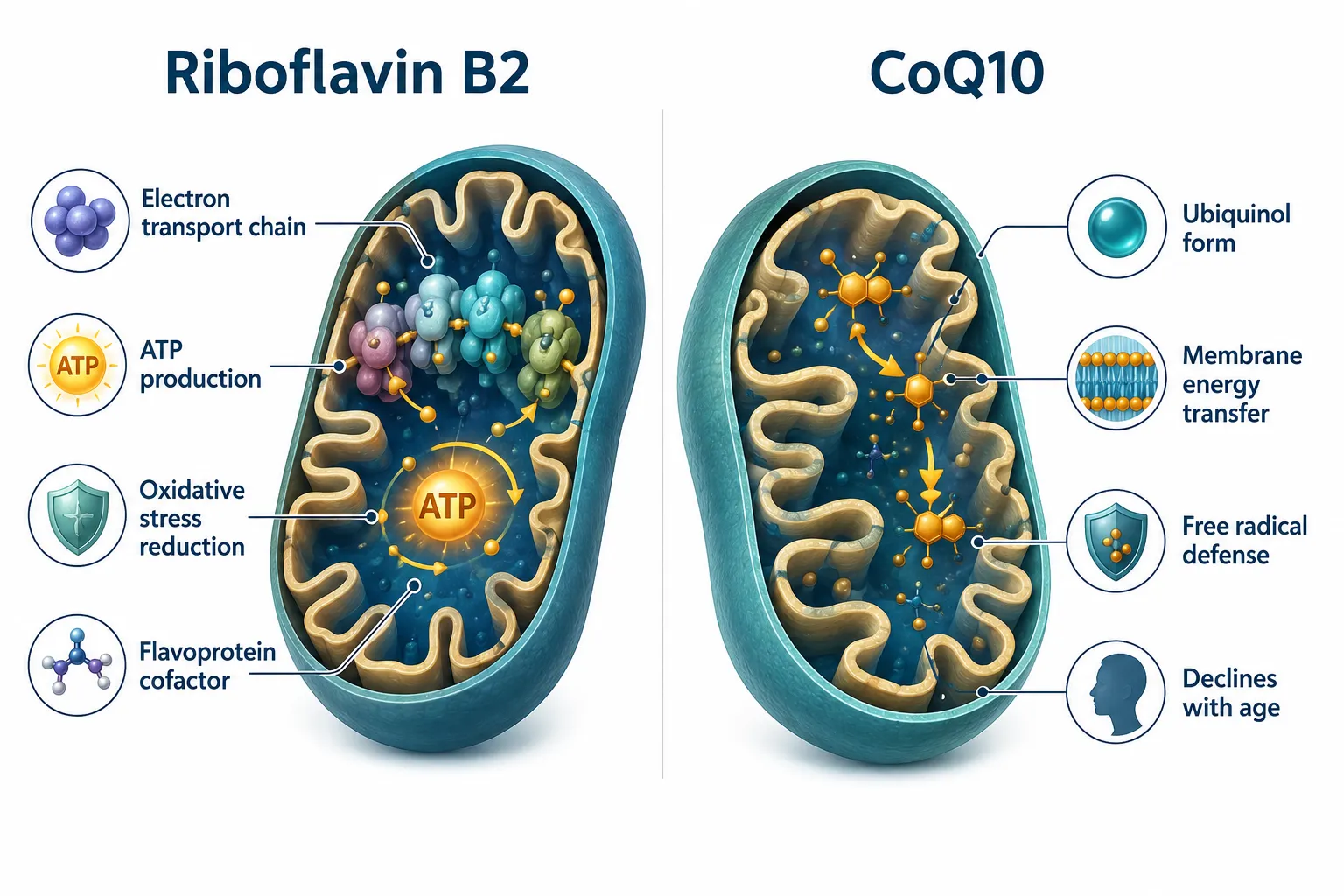
The connection to migraine comes from research suggesting that some people with migraine may show differences in brain energy metabolism. This is a proposed mechanism, not a diagnostic test or proof that a supplement will work for an individual. The theory, supported by neuroimaging studies, is that impaired mitochondrial efficiency in cortical neurons may lower the threshold for the spreading electrical disturbance (cortical spreading depression) that triggers a migraine attack [1].
In plain English: if the brain’s energy supply is running inefficiently, it may become more vulnerable to migraine triggers. Riboflavin and CoQ10 both support the mitochondrial machinery that keeps that energy supply stable.
This is not a fringe theory. It is the basis for why both supplements appear in mainstream headache guidelines alongside prescription preventives. For anyone interested in the broader role of nutritional approaches to headache, our guide on magnesium for headaches and migraine covers a third mitochondria-related nutrient with its own strong evidence base.
What Does the Evidence Say About Riboflavin B2 for Migraine Prevention?
The evidence for riboflavin is moderate quality and consistently positive. Several randomized controlled trials have reported lower migraine frequency with riboflavin, although study quality, response and tolerability vary between people.
The landmark early trial, published in Neurology, found that 400 mg/day of riboflavin reduced migraine attack frequency by more than 50% in a significant proportion of participants compared to placebo [4]. A Cochrane-style review and subsequent meta-analyses have broadly confirmed this direction of effect [1].
The 2025 Canadian Headache Society guideline gives riboflavin a strong recommendation with moderate-quality evidence, a relatively favorable rating for a supplement, where evidence quality is often low [17]. Kaiser Permanente’s 2026 migraine guideline similarly states there is moderate-strength evidence that 400 mg daily reduces migraine frequency, duration, and disability over three months, with therapeutic effect beginning at one to three months [19].
The 2026 Frontiers in Nutrition meta-analysis, which analyzed 22 randomized controlled trials using GRADE methodology, confirmed that riboflavin significantly reduced both migraine frequency and severity in a dose-response relationship [29].
What the evidence does not show: Riboflavin does not appear to reliably shorten the duration of individual attacks once they start. It is a preventive agent, not an acute treatment.
Research dose used in studies: 400 mg/day. This is substantially higher than the recommended dietary allowance (which is around 1.1-1.3 mg/day for adults), and it should be treated as a therapeutic dose discussed with a clinician, not a casual supplement decision.
Does CoQ10 Really Prevent Migraines, or Is It Just Hype?
CoQ10 has genuine evidence behind it, but the evidence base is smaller and rated lower quality than riboflavin. That said, the clinical recommendation remains strong because the safety profile is excellent and the biological rationale is sound.
A key early trial published in Neurology found that CoQ10 at 300 mg/day (in three 100 mg doses) significantly reduced migraine frequency compared to placebo, with approximately 47% of participants achieving a 50% or greater reduction in attack frequency [9]. A pediatric and adolescent study found that many young migraine patients had low CoQ10 levels, and supplementation improved outcomes [8].
The 2025 Canadian Headache Society guideline gives CoQ10 a strong recommendation but rates the evidence as low quality, meaning the trials are fewer, smaller, or less rigorous than ideal [17]. The 2026 Frontiers in Nutrition meta-analysis grouped CoQ10 alongside riboflavin and magnesium as mitochondrial-related nutraceuticals that significantly reduced migraine frequency and severity [29].
Here is the real issue with CoQ10 research: most trials are small, and the supplement market includes both ubiquinone (the oxidized form) and ubiquinol (the reduced, more bioavailable form). Most clinical trials used ubiquinone. Whether ubiquinol performs better in practice is biologically plausible but not yet confirmed by large trials.
The bottom line: CoQ10 is not hype, but it is not as well-studied as riboflavin. The evidence suggests it works for a meaningful proportion of migraine sufferers, but it remains unclear whether people with a measured CoQ10 deficiency respond better. Larger and more consistent trials are still needed.
Riboflavin B2 vs CoQ10: Which Is Better for Migraine Prevention?
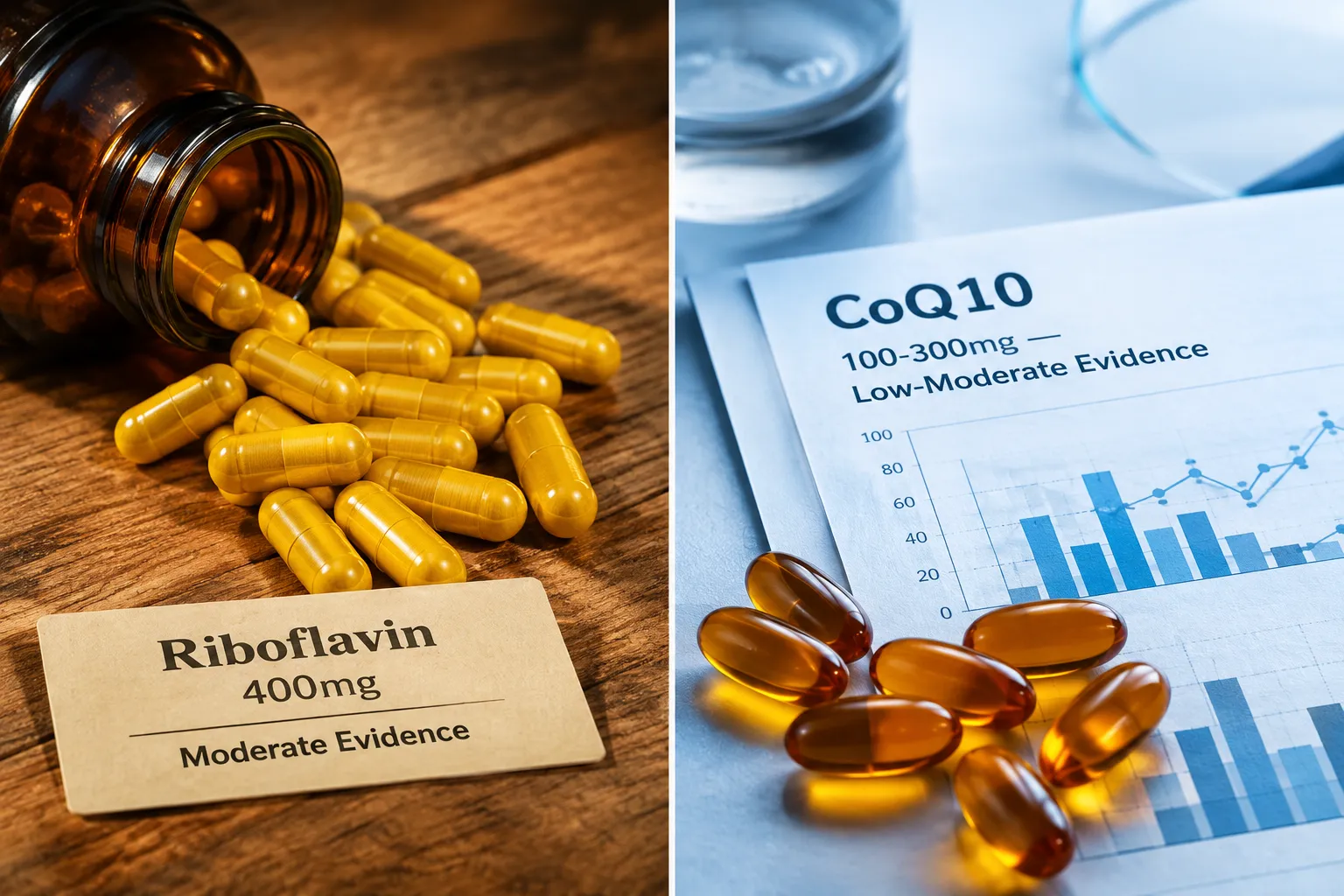
Neither supplement is definitively superior. The choice depends on individual factors, not a simple ranking.
| Factor | Riboflavin B2 | CoQ10 |
|---|---|---|
| Evidence quality | Moderate | Low-to-moderate |
| Guideline recommendation | Strong | Strong |
| Typical research dose | 400 mg/day | 100-300 mg/day |
| Cost | Low | Moderate to higher |
| Key side effect | Yellow-orange urine | Mild GI discomfort |
| Time to effect | 1-3 months | 1-3 months |
| Water or fat soluble | Water-soluble | Fat-soluble (take with food) |
Choose riboflavin if: you want the supplement with the larger and more consistent evidence base, you are on a tight budget, or your clinician prefers starting with the better-studied option.
Choose CoQ10 if: you have had your CoQ10 levels tested and they are low, you are taking a statin (which reduces CoQ10 production), or riboflavin has not produced results after a proper trial.
Consider both together only under clinician guidance. There is no strong evidence that combining them produces better results than either alone, but the combination is used in practice and the safety profiles do not conflict.
The stronger evidence points to riboflavin as the first-line supplement choice when a clinician and patient decide to try a nutraceutical approach. CoQ10 is a reasonable alternative or addition, not a replacement for proper medical evaluation.
For a broader look at nutritional approaches to headache, the guide on herbs for headaches covers several plant-based options with their own evidence profiles.
How Much Riboflavin B2 and CoQ10 Should You Take for Migraine Prevention?
Do not self-prescribe doses based on this article. The amounts used in research are substantially higher than standard dietary supplement doses, and a clinician should be involved in any decision to use these as migraine preventives.
With that said, here is what the research and guidelines report:
Riboflavin (B2), research doses:
- Most trials and guidelines reference 400 mg/day as the therapeutic dose [4][17]
- The Canadian Headache Society recommends starting in the range of 200-400 mg/day [17]
- Kaiser Permanente’s 2026 guideline cites 400 mg daily as the dose with moderate-strength evidence [19]
- Riboflavin is water-soluble, so excess is excreted in urine (hence the yellow discoloration)
CoQ10, research doses:
- The Canadian Headache Society recommends 100-300 mg/day, starting at 100 mg [17]
- The key trial used 300 mg/day in three divided doses [9]
- CoQ10 is fat-soluble: take it with a meal containing fat for better absorption
- Ubiquinol (the reduced form) may require lower doses for equivalent blood levels, but this has not been confirmed in migraine-specific trials
How long does it take to work? Both supplements typically require one to three months of consistent daily use before a meaningful reduction in migraine frequency becomes apparent [17][19]. Four weeks may not be long enough to judge a preventive approach, so agree on a review point with a clinician rather than abandoning it or continuing it indefinitely without assessment.
Can You Take Riboflavin B2 and CoQ10 Together Safely?
Riboflavin and CoQ10 do not have a well-established direct interaction, but that does not make the combination appropriate for everyone. Anyone considering both should review the plan with a clinician, especially when taking medicines or managing a health condition.
Both are involved in cellular energy processes, but there is not strong evidence that combining them produces better migraine outcomes than using one alone. The 2026 meta-analysis noted that magnesium, CoQ10, and riboflavin are often grouped as complementary mitochondrial-support nutraceuticals [29].
From a practical point of view, taking CoQ10 with a meal (for fat absorption) and riboflavin at any time of day is a reasonable approach. Neither supplement has a strong evidence base for specific timing beyond the fat-solubility consideration for CoQ10.
Side Effects, Safety, and Drug Interactions
Riboflavin B2 side effects:
- Bright yellow-orange urine is the most common and most reported effect. It is harmless and expected at therapeutic doses.
- High doses rarely cause diarrhea or increased urination.
- Riboflavin is water-soluble, which limits toxicity risk, excess is excreted.
- There are no well-documented serious drug interactions at therapeutic doses, though very high doses may theoretically affect the metabolism of some medications.
CoQ10 side effects and interactions:
- Generally well-tolerated. Mild gastrointestinal effects (nausea, stomach upset, diarrhea) occur in some people, usually at higher doses [6].
- CoQ10 may affect blood pressure in some people. Anyone taking antihypertensive medication should discuss it with a clinician before starting CoQ10 rather than changing medication independently [6].
- CoQ10 may interact with warfarin (blood thinners). Some case reports suggest it can reduce warfarin’s anticoagulant effect. Anyone on warfarin should not start CoQ10 without medical supervision [6][10].
- Statins reduce the body’s natural CoQ10 production, which is why CoQ10 is sometimes discussed alongside statin use, but this does not mean everyone on a statin needs CoQ10 supplementation.
Who Should Ask a Clinician First Before Taking These Supplements?
Some groups need a clinician’s input before starting riboflavin or CoQ10 for migraine prevention. This is not about excessive caution, it is about real interactions and gaps in evidence.
Consult a clinician first if you:
- Are pregnant or breastfeeding. There is insufficient safety data on high-dose riboflavin (400 mg) or CoQ10 during pregnancy. Standard dietary amounts are safe, but therapeutic doses are a different matter.
- Are taking warfarin or other anticoagulants. CoQ10 may reduce warfarin’s effectiveness.
- Are undergoing chemotherapy. CoQ10’s antioxidant properties may theoretically interfere with some chemotherapy agents, this remains debated, but the interaction warrants discussion with an oncologist.
- Have kidney or liver disease, or another condition that could affect supplement safety. The evidence for high-dose preventive use in these groups is limited, so individual advice matters.
- Are taking antihypertensive medications. CoQ10 may add to blood-pressure-lowering effects.
- Have children with migraines. Pediatric dosing is different from adult dosing, and a pediatric neurologist should guide any supplement use in children.
- Are already on prescription migraine preventives. Adding supplements without informing your prescribing clinician is not a good idea.
The main takeaway is this: these supplements have good safety profiles for most healthy adults, but “generally safe” is not the same as “safe for everyone in every situation.”
Tracking Migraine Prevention: How to Know If It Is Working
A headache diary is not optional if you are trying to evaluate whether a preventive supplement is working. Without a baseline record, it is nearly impossible to judge whether the frequency or severity of migraines has actually changed.
What to track:
- Date and time of each migraine
- Duration (hours)
- Severity (1-10 scale)
- Associated symptoms (aura, nausea, light sensitivity)
- Any potential triggers (sleep, stress, food, menstrual cycle)
- Any medications taken and their effect
How long to track: Record at least four weeks before starting a supplement to establish a baseline. Then track throughout the two-to-three-month trial period. Compare the last four weeks of the trial to the baseline.
A reduction of 50% or more in migraine days per month is generally considered a clinically meaningful response in research trials. In real-world terms, even a 30-40% reduction in a condition as disruptive as migraine represents a meaningful quality-of-life improvement.
For context on how nutrition and hydration intersect with headache patterns, the article on dehydration and electrolytes for headaches is worth reading alongside any supplement trial.
When to Seek Medical Care for Migraines
Supplements are not a substitute for medical evaluation, particularly for new or changing headache patterns.
Seek urgent medical attention if you experience:
- A sudden, severe headache described as “the worst of your life” (this can indicate a serious vascular event)
- A headache accompanied by fever, stiff neck, confusion, or rash
- A headache following a head injury
- Progressive worsening of headaches over days or weeks
- New neurological symptoms: vision loss, weakness, slurred speech, difficulty walking
- Headaches that consistently wake you from sleep
See a doctor (non-urgent) if:
- Your migraines are occurring more than four days per month, at this frequency, prescription preventives should be discussed
- Over-the-counter or supplement approaches are not producing adequate relief
- Your headache pattern has changed significantly
- You are using acute headache medication more than two days per week (medication overuse headache is a real and common complication)
The basics still do the heavy lifting here: a proper diagnosis, lifestyle review, and clinician-guided treatment plan matter far more than any single supplement.
Frequently Asked Questions
Can riboflavin B2 and CoQ10 stop a migraine once it has started?
No. Both supplements are preventive agents only. They are taken daily over months to reduce how often migraines occur and how severe they are. Neither provides acute relief during an attack. For acute treatment, speak with a clinician about appropriate options.
How long before riboflavin B2 or CoQ10 starts working for migraines?
Most clinical trials and guidelines cite one to three months of consistent daily use before a meaningful reduction in migraine frequency becomes apparent. Some people notice improvement earlier; others may need the full three months. Four weeks may be too early to judge the result; the appropriate review period depends on the individual plan and clinical advice.
Is the yellow urine from riboflavin dangerous?
No. Bright yellow or orange urine is a normal and harmless result of riboflavin being excreted by the kidneys at high doses. It is expected and does not indicate a problem.
Can children take riboflavin or CoQ10 for migraines?
Some pediatric studies have examined CoQ10 in adolescent migraines with positive results [8]. However, dosing for children is different from adult dosing, and a pediatric neurologist or physician should guide any supplement use in this age group. Do not apply adult doses to children.
Is CoQ10 safe to take with statins?
Statins reduce the body’s natural CoQ10 synthesis, and CoQ10 supplementation is sometimes discussed in this context. However, CoQ10 does not reverse statin-associated muscle symptoms in all studies, and the evidence is mixed. Inform your prescribing clinician before adding CoQ10 to any existing medication regimen.
Where is the best place to buy riboflavin B2 and CoQ10 supplements?
Both are widely available in pharmacies, health food stores, and reputable online retailers. Look for products that have been third-party tested (USP Verified, NSF Certified, or ConsumerLab approved) to ensure the dose on the label matches what is in the capsule. CoQ10 in ubiquinol form costs more than ubiquinone but may have better bioavailability, particularly for people over 50.
Conclusion
The evidence for using riboflavin B2 and CoQ10 for migraine prevention is real, and it is strong enough to earn recommendations from major headache guidelines. Riboflavin has the more consistent evidence base; CoQ10 is a solid alternative, particularly for those on statins or with demonstrated deficiency. Neither is a magic solution, and neither replaces proper medical care for frequent or severe migraines.
Practical next steps:
- Start a headache diary now, before making any supplement changes. You need a baseline.
- Discuss riboflavin and CoQ10 with your clinician, particularly if you are on any medications or have kidney, liver, or cardiovascular conditions.
- If a clinician agrees that a trial is appropriate, discuss the amounts used in research and agree how progress will be assessed over two to three months.
- Take CoQ10 with a fat-containing meal for best absorption.
- Do not stop prescription migraine medications without medical guidance.
- Revisit your headache diary at the eight-week and twelve-week marks and compare to your baseline.
For a broader look at nutritional strategies that support brain and body health, the most nutrient-dense foods evidence-based guide is a useful companion resource. And if you are exploring multiple headache prevention strategies, the guide on herbs for headaches covers additional evidence-based options worth knowing about.
Keep it simple and consistent: pick one approach, track it properly, and give it enough time to show results before drawing conclusions.
| Factor | Riboflavin B2 | CoQ10 |
|---|---|---|
| Evidence quality | Moderate | Low, Moderate |
| Guideline recommendation | Strong (CHS 2025) | Strong (CHS 2025) |
| Research dose | 400 mg/day | 100-300 mg/day |
| Time to effect | 1-3 months | 1-3 months |
| Main side effect | Yellow-orange urine | Mild GI discomfort |
| Take with food? | Optional | Yes (fat-soluble) |
| Key interaction risk | Low | Warfarin, antihypertensives |
Source: Canadian Headache Society Guideline 2025; Frontiers in Nutrition meta-analysis 2026. For general information only, not medical advice.
This article is part of the APH headaches and natural support cluster. Use these guides to explore related questions without treating one symptom pattern as a diagnosis.
About the author
Dave James is a health researcher and writer specialising in evidence-based nutrition, exercise, and longevity. He founded All Perfect Health to provide clear, practical health guidance rooted in current research and real-world experience.