
Weight-Bearing Exercises for Bone Health: What Counts, What Helps, and When to Get Individual Advice
Last updated: October 2026
Quick Answer
Weight-bearing exercises for bone health are activities where the body is supported through the feet and legs against gravity. Walking, climbing stairs, dancing and many standing strength movements all count. Resistance training adds a different kind of load: muscles pull on bone as they work.
Key Takeaways
- Weight-bearing and resistance training overlap, but they are not the same thing. One loads the skeleton through the ground; the other through muscular effort.
- Walking matters, but it is not the whole answer. Familiar walking is useful activity; strength and balance work broaden the stimulus and support day-to-day capability.
- Bone-density changes are usually slow and variable. The more immediate wins from training are often strength, movement confidence and balance.
- Diagnosed osteoporosis or osteopenia changes the conversation. It does not mean “do nothing”; it means a general web article should not be the source of a personal exercise plan.
Table of Contents
- What counts as weight-bearing exercise?
- Four useful movement categories
- How strength training fits in
- Is walking enough?
- A practical way to think about a week
- When individual advice matters
- FAQ
- References
What Counts as Weight-Bearing Exercise?
When people hear “weight-bearing,” they often think it simply means holding a dumbbell. It is broader than that. An activity is weight-bearing when the skeleton carries body weight against gravity while upright. Brisk walking, hiking, stair climbing, dancing and racquet sports are everyday examples. Swimming and cycling are excellent forms of exercise, but water or equipment supports much of the body weight, so they do not load bone in the same way.
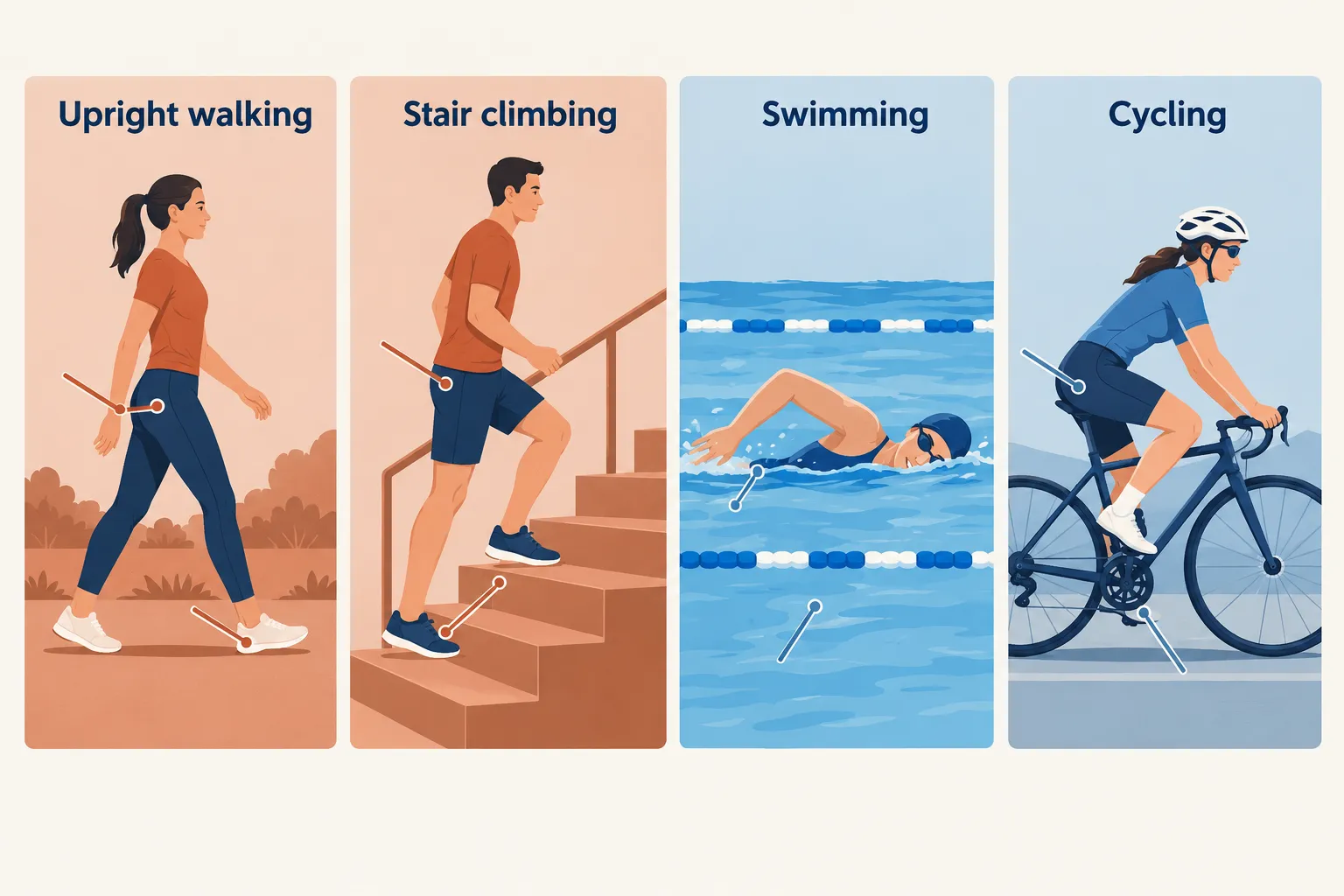
That distinction is useful, not a reason to dismiss cycling or swimming. Both can support fitness, confidence and joint-friendly activity. The sensible question is whether the rest of a person’s week also includes some upright loading and strength work if bone health is a priority.
Four Movement Categories That Do Different Jobs
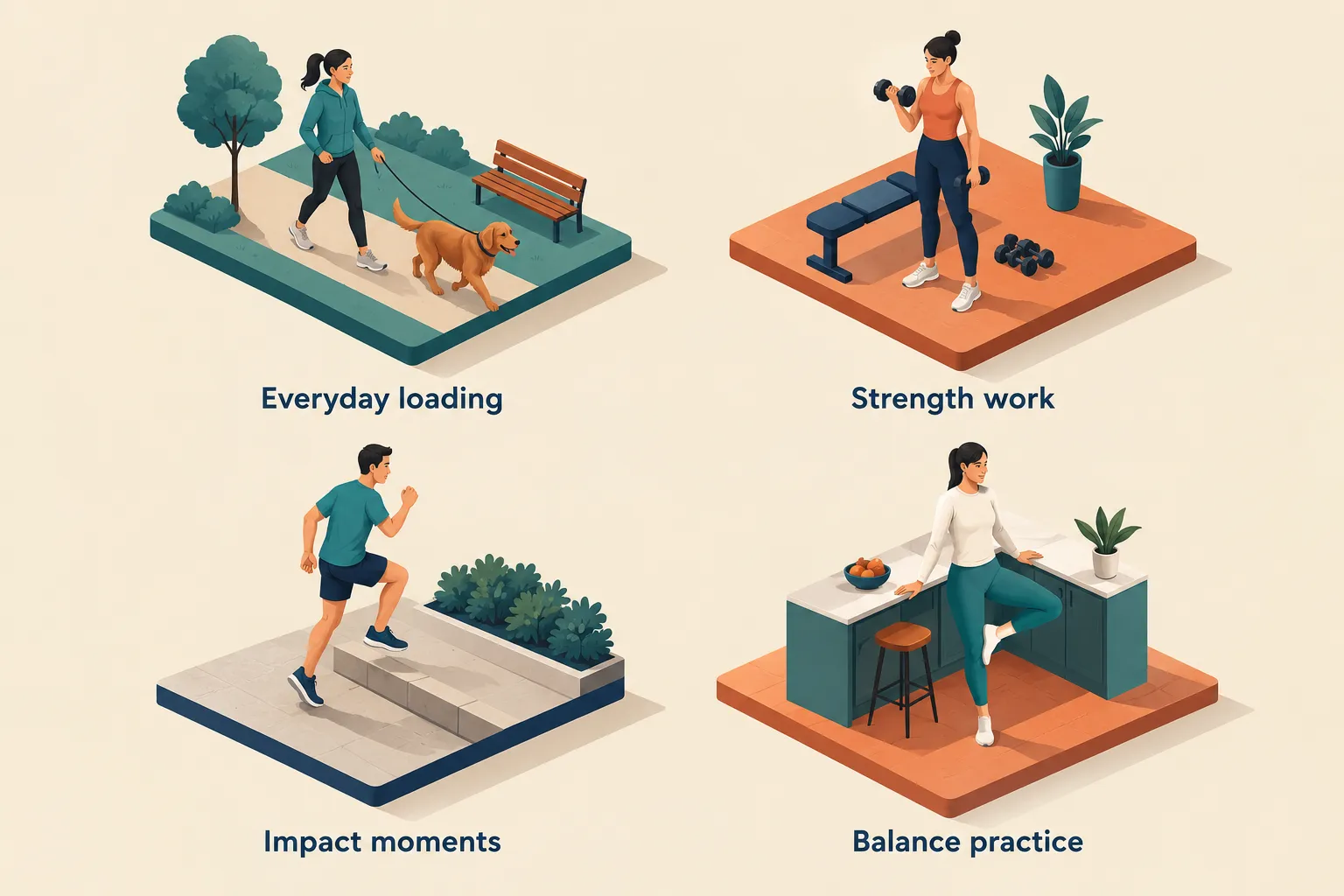
Bone health gets oversimplified when every activity is pushed into the same bucket. A clearer approach separates four roles:
| Category | Examples | Why it belongs in the picture |
|---|---|---|
| Everyday upright activity | Walking, stairs, hiking, dancing | Keeps regular loading and movement part of daily life. |
| Resistance training | Weights, machines, bands or challenging bodyweight movements | Builds strength and loads bone through working muscle. |
| Impact, where suitable | Faster walking, jogging, hopping or some sports | Can provide a different loading signal, but is not a universal starting point. |
| Balance and movement skill | Tai chi, direction changes, controlled balance work | Supports steadier movement and may help address fall risk. |
None of these categories is a magic bullet. Their value is that they cover different pieces of the real-world problem: how bones are loaded, how strong people are, and how confidently they move.
How Strength Training Fits Into Bone Health
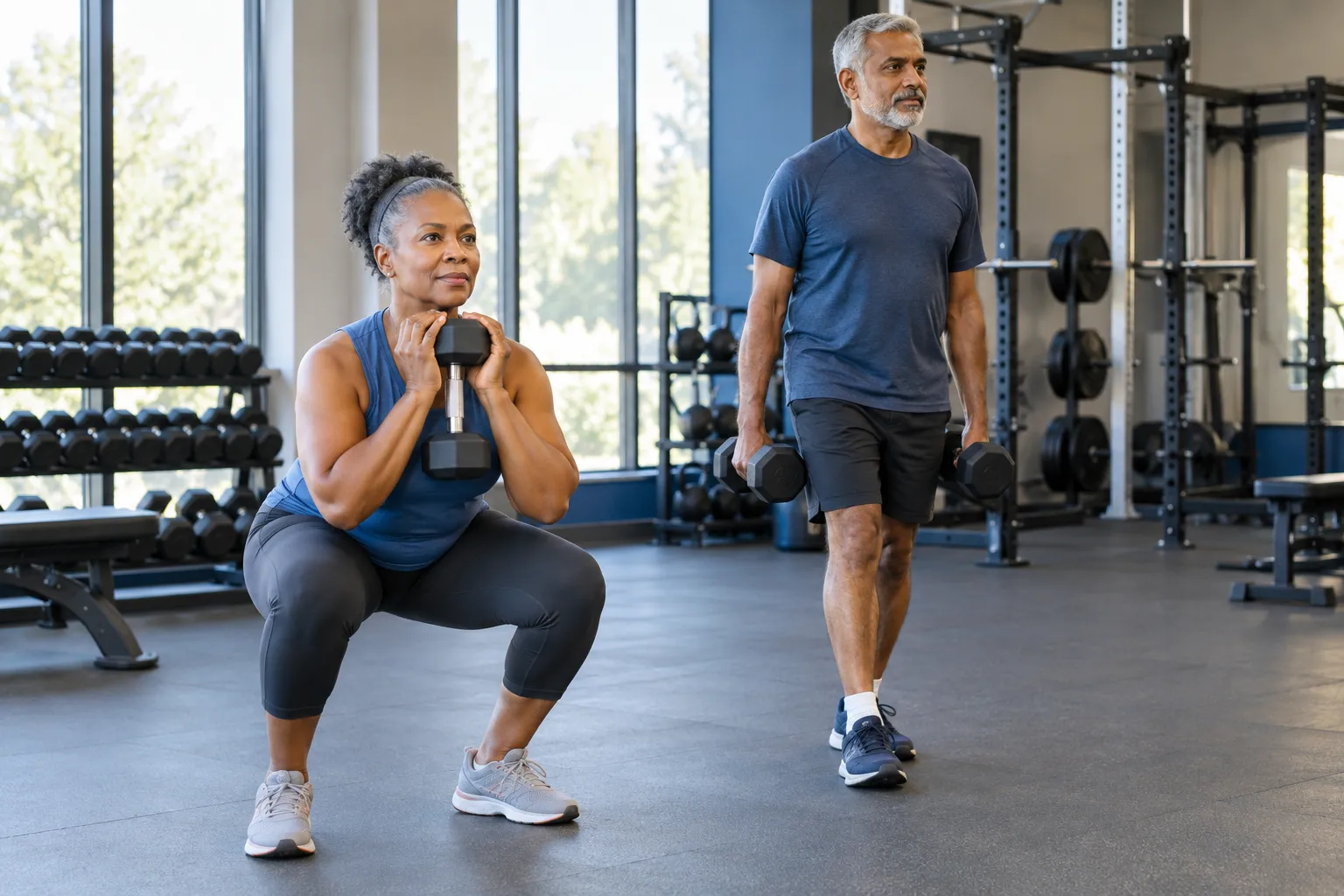
Strength training is not separate from bone health; it is part of it. When muscles work against resistance, the force is transmitted through tendons to bone. That is why resistance training belongs in a broad bone-health conversation even when the exercises are not high impact.
What the research supports is measured rather than dramatic. Systematic reviews in older adults and postmenopausal women suggest exercise programmes can support bone mineral density at some sites, but results vary by population, training design, skeletal site and study quality. Gains in strength and physical function are often clearer than changes on a bone-density scan. [1–3]
That is still useful. A stronger person can often manage stairs, carrying, rising from a chair and everyday tasks more confidently. For a beginner-focused, women-specific introduction, see Strength Training for Women Over 50. The broader principles in How to Exercise When You’re Over 50 apply to everybody.
Is Walking Enough for Bone Health?
Walking counts. It is accessible, weight-bearing and worth keeping. But someone who has walked at the same comfortable pace for years may need more than that if the goal is to challenge strength, balance or the range of loading they experience.
That does not mean turning every walk into a workout. Hills, stairs, a slightly quicker section, a different route or a class that adds variety may be practical options for many people. The right choice depends on fitness, joints, confidence and medical context. The main exercise guide is a useful place to build the wider weekly picture.
A Practical Way to Think About a Week
A useful first audit is simple: is there regular upright activity, some form of progressive strength work, and a little attention to balance or movement confidence? If one area is missing, that is usually a better place to start than chasing a complicated routine.
Progression matters, but it does not have to be dramatic. It can mean gradually moving from a very easy version of a movement to one that feels meaningfully challenging while control is maintained. The aim is consistency over months, not a heroic week followed by a long layoff.
Balance work deserves its own place because bone density is not the only factor in a fracture. Staying active, building lower-body strength and practising balance can support steadier movement. Our Balance and Fall Prevention guide covers that side of the picture in more detail.
When Individual Advice Matters
This page is deliberately a broad guide, not an osteoporosis exercise plan. If a person has osteoporosis or osteopenia, a previous fragility fracture, marked balance difficulty, a new or unexplained pain problem, or has been given movement restrictions, exercise choices should be tailored with a qualified clinician or appropriately trained professional.
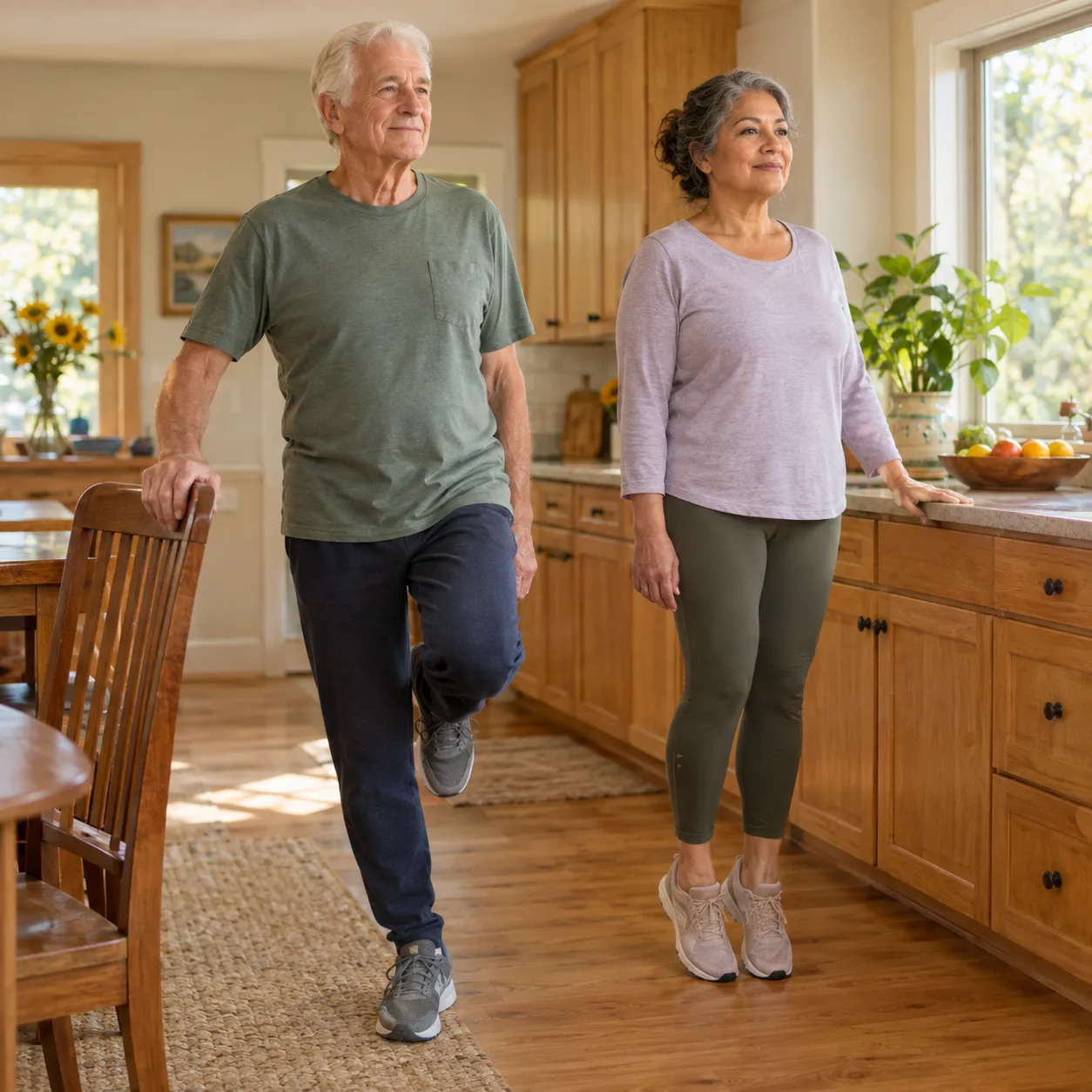
This is not about wrapping people in cotton wool. Modern osteoporosis guidance emphasises the value of staying active and avoiding unnecessary restriction. It is about matching the activity to the person rather than copying a generic routine from the internet. [2]
Men and women both benefit from staying active. Menopause is one period when bone change can accelerate for many women, which makes it a sensible reason to pay attention to strength and bone health; it does not change the basic fact that training should be built around the individual rather than a label.
FAQ
Does walking count as weight-bearing exercise?
Yes. Walking is weight-bearing because the body is supported through the feet and legs. It is a worthwhile base, especially when it is regular and enjoyable, but it is only one part of a broader activity picture.
Does lifting weights increase bone density?
Resistance training can contribute to a bone-health programme, and research suggests it may support bone mineral density at some sites in some groups. It cannot guarantee a specific result for an individual, and strength, function and balance may change sooner than a scan result.
How long do bone changes take?
Bone adapts slowly. Studies assessing bone density usually run for months rather than weeks, and individual results vary. Focusing only on a scan can miss earlier, useful changes in strength, movement confidence and physical function.
Should people with osteoporosis avoid exercise?
Not automatically. Activity is usually important, but the safest and most useful type of exercise depends on fracture history, symptoms, balance, medical care and current capability. Individual guidance is sensible when a diagnosis or fracture history is involved.
The Bottom Line
The useful question is not “Which single exercise fixes bones?” There is no such exercise. The better question is whether a week includes enough upright movement, resistance work and balance practice to keep building capability over time.
Start with the part that is missing, keep it sustainable, and let progress be gradual.
References
- National Institute of Arthritis and Musculoskeletal and Skin Diseases. Exercise for Your Bone Health.
- Brooke-Wavell K, et al. Strong, steady and straight: UK consensus statement on physical activity and exercise for osteoporosis.
- Effect of Resistance Training on Bone Mineral Density in Older Adults: a systematic review and meta-analysis.
- Exercise training and bone mineral density in postmenopausal women: an updated systematic review and meta-analysis.
Medical Disclaimer

About the author
Dave James writes practical, evidence-aware health guides for adults who want to stay strong, mobile and independent without hype or complicated routines.
📂 Joint-Friendly & Age-Specific Exercise
A practical reader path through the over-50 exercise cluster.
- Pillar: How to Exercise When You’re Over 50
- → Strength Training for Women Over 50: A Beginner Plan for Home or Gym
- YOU ARE HERE Weight-Bearing Exercises for Bone Health
- → What Is Tai Chi? A Beginner’s Guide to the Practice and How to Start
- → Low Impact Cardio for Bad Knees and Hips: What Actually Works
- → Yoga Modifications for Arthritis and Joint Pain: A Practical Guide That Actually Works
- → Resistance Band Training for Joint Health: What the Evidence Actually Shows
- → Returning to Exercise After Joint Surgery: A Practical, Evidence-Aware Guide
- → Balance and Fall Prevention Exercises for Seniors: A Practical, Evidence-Aware Guide
- → Best Exercise Bike for Knee Issues: A Complete 2026 Buying Guide