
Metabolic Flexibility: Train Your Body to Burn Fat for Fuel — A Practical Guide to the Metabolic Flexibility Diet

Most adults burn through carbohydrates reasonably well. The problem is what happens when carbohydrates run low. For a large portion of the population, the body struggles to switch cleanly to fat as its primary fuel source — and that single limitation has measurable consequences for energy, weight, and long-term health. This is the core issue behind metabolic flexibility, and it is why the metabolic flexibility diet has attracted serious attention from researchers and clinicians over the past several years. Understanding how to improve your body’s ability to switch fuel sources is not a niche biohacking concept. Based on current evidence, it is one of the more practical levers available for improving how you feel and function day to day [1].
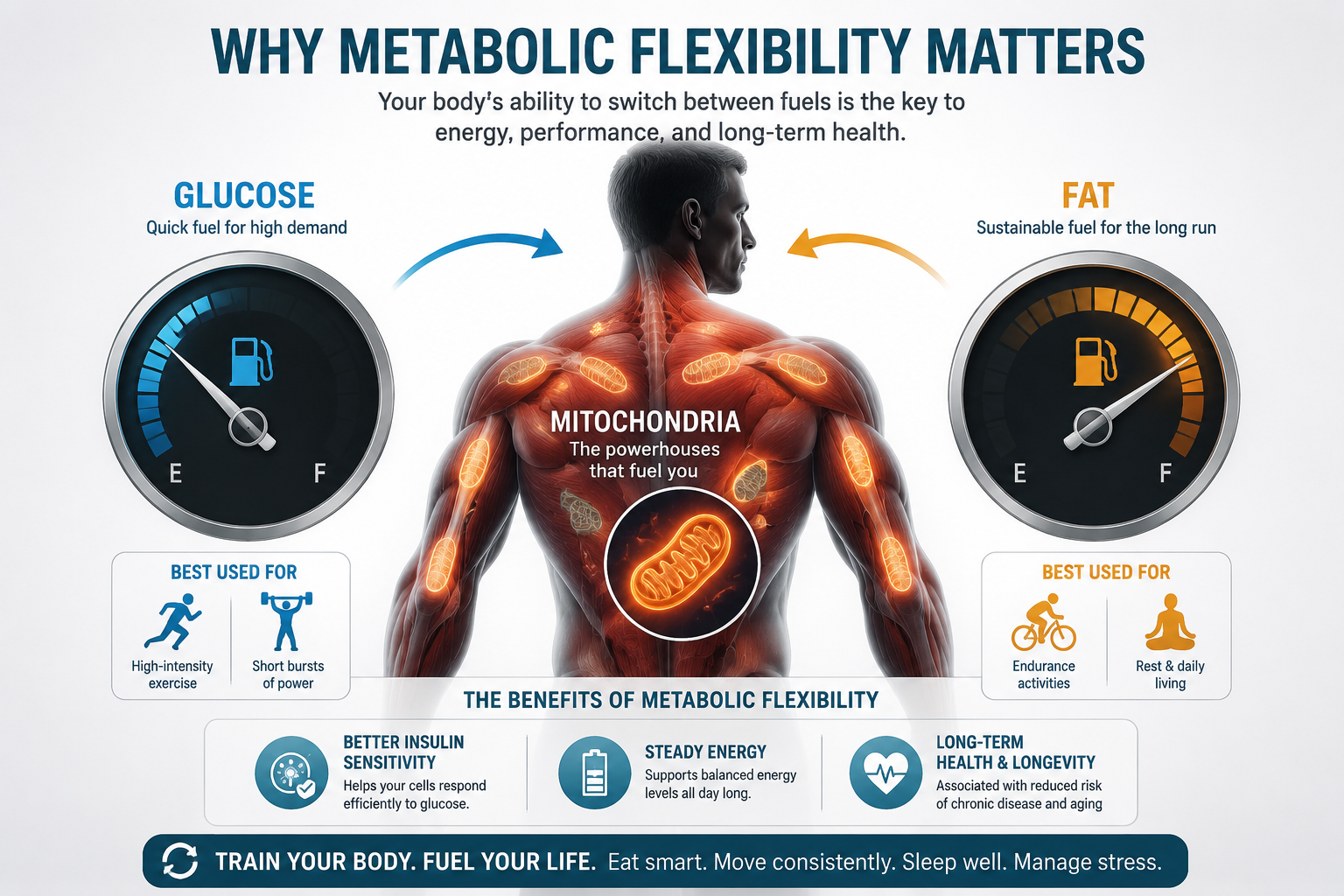
Table of Contents
- Why Metabolic Flexibility Matters for Weight, Energy, and Longevity
- Featured Video: How Specific Foods Support Mitochondrial Health and Metabolic Flexibility
- Exercise Protocols That Build Metabolic Flexibility
- How to Tell If You Are Metabolically Flexible — Signs and Self-Assessment
- Practical Steps to Improve Your Metabolic Flexibility
- Common Mistakes That Wreck Metabolic Flexibility
- Frequently Asked Questions
Key Takeaways
- Metabolic flexibility is your body’s ability to efficiently switch between burning carbohydrates and fat depending on availability and demand.
- Impaired fuel switching is closely linked to insulin resistance, weight gain, and reduced energy stability.
- Mitochondrial health is the biological foundation of metabolic flexibility — without healthy mitochondria, efficient fat oxidation is not possible.
- Specific foods, Zone 2 cardio, and HIIT training are the most evidence-supported tools for improving metabolic flexibility.
- Reducing sedentary time, improving sleep, and managing meal composition are practical daily levers that measurably support fuel-switching capacity.
Why Metabolic Flexibility Matters for Weight, Energy, and Longevity
The simplest way to look at it is this: a metabolically flexible person can run on glucose after a carbohydrate-rich meal, then shift smoothly to burning fat during a fast, overnight, or during low-intensity exercise. A metabolically inflexible person stays stuck in glucose-burning mode even when carbohydrates are not available, leading to energy crashes, increased hunger, and a greater tendency to store fat rather than burn it.
This is not just a theoretical concern. Research shows that impaired metabolic flexibility — specifically a reduced ability to increase fat oxidation in response to a high-fat meal or overnight fast — predicts future weight gain in otherwise healthy adults [10]. The body’s failure to adapt its fuel use to changing conditions is an early warning signal, not just a consequence of existing metabolic problems.
The connection to insulin sensitivity is direct. When cells respond poorly to insulin, glucose uptake is impaired and fat oxidation is suppressed. The result is a body that neither burns carbohydrates efficiently nor switches to fat when it should. This is the metabolic trap that underlies type 2 diabetes risk, and it is one reason why early warning signs of insulin resistance deserve attention. Our guide to diabetes early signs covers this in more detail.
From a longevity standpoint, the evidence suggests that maintaining metabolic flexibility into older age is associated with better cardiovascular outcomes, lower systemic inflammation, and more stable body weight over time [4]. The numbers matter here: adults with better fuel-switching capacity show measurably better responses to lifestyle interventions, including diet and exercise programs, compared to those with impaired flexibility [2].
Three practical reasons metabolic flexibility matters:
- Steady energy: Fewer energy crashes between meals when fat oxidation is available as a backup fuel.
- Weight maintenance: Efficient fat burning during rest and low-intensity activity reduces fat accumulation over time.
- Resilience: The body handles dietary variation, fasting periods, and exercise demands more effectively.
How Specific Foods Support Mitochondrial Health and Metabolic Flexibility
4 Foods to Make New Mitochondria
Speaker: Dr. William Li
Dr. William Li is a physician, scientist, author of Eat to Beat Disease, and president of the Angiogenesis Foundation. His work focuses on how food influences angiogenesis, metabolism, immunity, regeneration, and cellular health.
Here is the real issue with most diet advice on this topic: it focuses on what to eat without explaining why certain foods matter at the cellular level. The foundation of metabolic flexibility is mitochondrial health. Mitochondria are the organelles responsible for fat oxidation, and their density, efficiency, and responsiveness to fuel signals determine how well the body switches between energy sources [1].
Emerging research is now examining organelle-targeted approaches — specifically mitochondria, the endoplasmic reticulum, and peroxisomes — as future therapeutic angles for restoring metabolic flexibility [5]. For practical purposes in 2026, the most useful takeaway is that dietary choices that support mitochondrial biogenesis (the creation of new mitochondria) and reduce mitochondrial damage are directly relevant to improving fuel-switching capacity.
Extra-Virgin Olive Oil
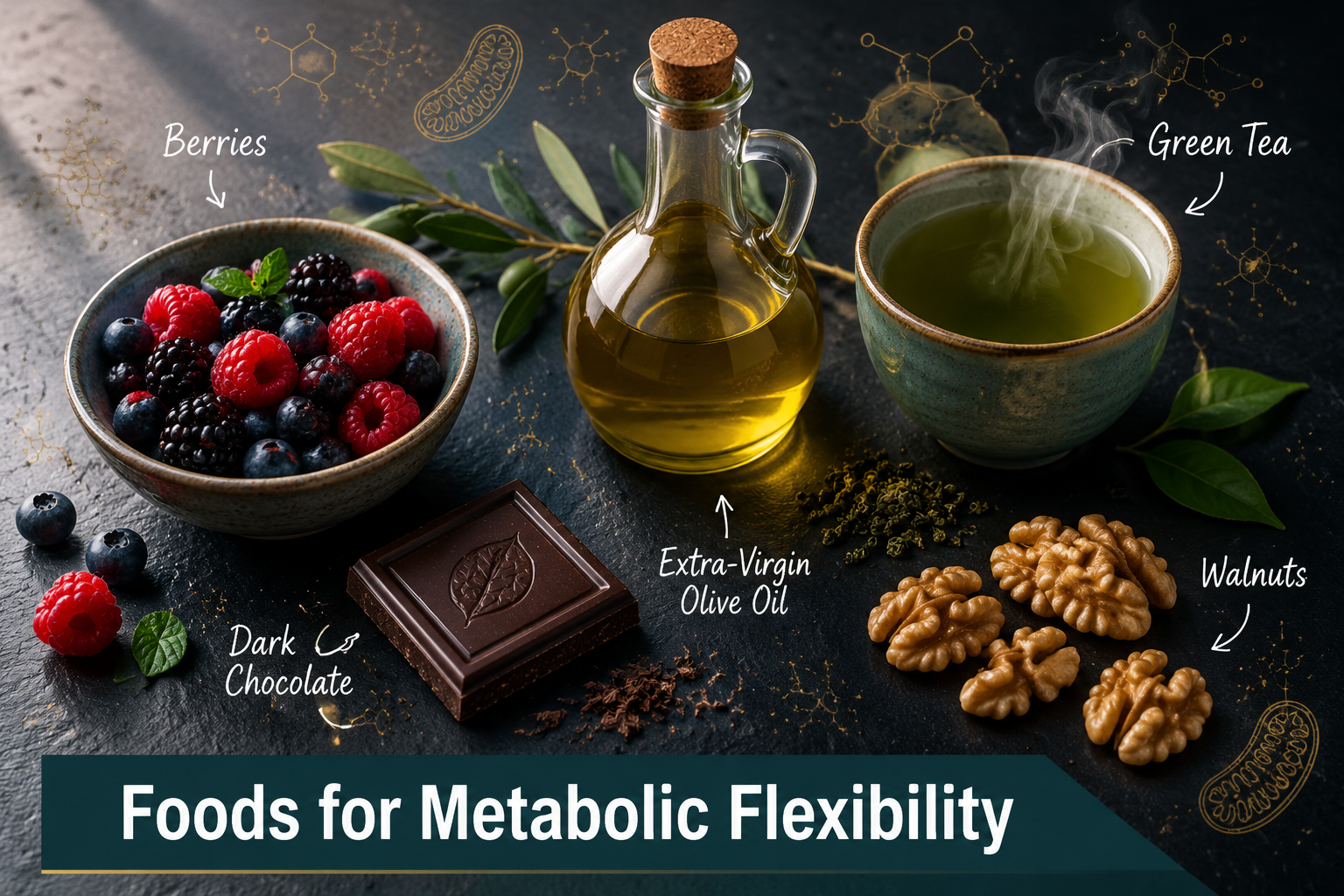
Extra-virgin olive oil contains oleocanthal and oleic acid, both of which have demonstrated anti-inflammatory and mitochondria-protective effects. Oleic acid supports the integrity of mitochondrial membranes, which is relevant to how efficiently these organelles process fat. The health benefits of olive oil extend well beyond cooking convenience — the polyphenol content is a meaningful part of the picture.
Dark Chocolate and Berries
Polyphenols — particularly flavonoids found in dark chocolate and mixed berries — activate pathways associated with mitochondrial biogenesis, including PGC-1 alpha, a key regulator of how many mitochondria cells produce. More mitochondria means greater capacity for fat oxidation. The health benefits of dark chocolate are grounded in this polyphenol activity rather than marketing claims. A useful broader reference is our guide to polyphenol-rich foods ranked by evidence.
Green Tea
Green tea catechins, particularly EGCG, have been studied for their role in supporting fat oxidation and insulin sensitivity. The evidence is not conclusive enough to call green tea a metabolic cure, but the direction of the research is consistent: regular consumption supports the cellular environment in which metabolic flexibility operates.
Magnesium-Rich Foods
Magnesium is a cofactor in over 300 enzymatic reactions, including those involved in ATP production and glucose metabolism. Low magnesium status is associated with insulin resistance and impaired fat oxidation. Practical sources include leafy greens, nuts, seeds, and legumes. Our detailed guide to magnesium-rich foods for sleep and recovery covers this in full.
Foods to prioritise for mitochondrial support:
| Food | Key Compound | Relevant Mechanism |
|---|---|---|
| Extra-virgin olive oil | Oleocanthal, oleic acid | Mitochondrial membrane integrity |
| Dark chocolate (70%+) | Flavonoids | PGC-1 alpha activation |
| Mixed berries | Anthocyanins | Mitochondrial biogenesis |
| Green tea | EGCG | Fat oxidation, insulin sensitivity |
| Leafy greens, nuts, seeds | Magnesium | ATP production, glucose metabolism |
Exercise Protocols That Build Metabolic Flexibility
There is no magic in it. Exercise improves metabolic flexibility primarily by increasing mitochondrial density in skeletal muscle and improving insulin sensitivity — both of which expand the body’s capacity to oxidise fat. The type and intensity of exercise, however, matters more than most people realise.
Zone 2 Cardio
Zone 2 refers to low-to-moderate intensity aerobic exercise — roughly 60 to 70 percent of maximum heart rate — where fat is the primary fuel source. Training consistently in this zone builds the mitochondrial infrastructure needed for fat oxidation. Aerobic training has been shown to improve 24-hour metabolic flexibility and substrate oxidation patterns, including in people with type 2 diabetes [7]. For practical guidance on finding and training in this zone, the fat burn heart rate guide is a useful reference.
Practical Zone 2 targets:
- 3 to 4 sessions per week, 30 to 60 minutes each
- Brisk walking, cycling, swimming, or light jogging
- You should be able to hold a conversation throughout
High-Intensity Interval Training (HIIT)
HIIT creates metabolic stress that forces the body to rapidly switch between fuel sources — exactly the kind of challenge that builds flexibility over time. Short bursts of high-intensity effort followed by recovery periods improve insulin sensitivity and post-exercise fat oxidation. More is not always better here; two HIIT sessions per week alongside Zone 2 work is a sensible starting point for most adults over 45.
Reducing Sedentary Time
This is where hype gets in the way of a genuinely important finding. Reducing sitting time by approximately 30 minutes per day over six months has been shown to measurably improve metabolic flexibility and insulin sensitivity in clinical trials [6]. You do not need to overhaul your exercise routine to see meaningful gains — breaking up long periods of sitting with short walks or standing has a real, measurable effect on fuel-switching capacity.
For adults looking to build a structured approach to exercise alongside dietary changes, the exercise guide for better health provides a practical framework.
How to Tell If You Are Metabolically Flexible — Signs and Self-Assessment
There are no standardised clinical tests for metabolic flexibility in routine practice — the Obesity Medicine Association acknowledged this gap in recent guidance while still supporting lifestyle strategies as the primary intervention [2]. That said, there are practical indicators worth paying attention to.
Signs of good metabolic flexibility:
- Energy remains relatively stable between meals without urgent hunger or brain fog
- You can skip a meal or fast for 12 to 16 hours without significant distress
- Energy levels during low-intensity exercise feel sustained rather than rapidly depleted
- Weight is relatively stable without constant dietary restriction
Signs that metabolic flexibility may be impaired:
- Strong energy crashes 2 to 3 hours after meals
- Intense carbohydrate cravings, especially in the afternoon
- Difficulty losing weight despite reasonable calorie control
- Fatigue during fasting periods that feels disproportionate
A useful indirect measure is overnight fasting. Research published in 2025 validated a method using overnight substrate oxidation after a high-fat dinner as a way to assess fat-burning flexibility — essentially, how well the body shifts to fat burning during sleep [3]. While this is not a home test, it reinforces the idea that night-time fat oxidation is a meaningful dimension of metabolic health that lifestyle choices can influence.
Practical Steps to Improve Your Metabolic Flexibility
Let’s keep this practical. The metabolic flexibility diet is not a rigid eating plan — it is a set of consistent habits that support the body’s fuel-switching machinery.
1. Extend your overnight fast
Aim for at least 12 hours between your last meal and breakfast. This is not extreme fasting — it is simply allowing the body time to deplete liver glycogen and shift to fat oxidation overnight. Our intermittent fasting guide covers the evidence and practical approaches in detail.
2. Reduce refined carbohydrate load
This does not mean eliminating carbohydrates. It means reducing the frequency and quantity of rapidly digested carbohydrates — white bread, sugary drinks, processed snacks — that keep insulin elevated and suppress fat oxidation throughout the day.
3. Prioritise protein and fibre at each meal
Both slow glucose absorption and support satiety, reducing the blood sugar spikes that impair fuel switching. The soluble vs insoluble fibre guide is a practical resource for getting fibre targets right.
4. Add Zone 2 cardio three times per week
Start with 30-minute sessions at a pace where conversation is easy. Build to 45 to 60 minutes over 8 to 12 weeks.
5. Break up sitting time
Set a reminder to stand or walk for 5 minutes every hour. The evidence for this simple habit is stronger than most people expect [6].
6. Prioritise sleep
Sleep deprivation impairs insulin sensitivity and disrupts the hormonal signals that regulate fuel use. Seven to nine hours of quality sleep is not optional in a metabolic flexibility strategy.
Common Mistakes That Wreck Metabolic Flexibility
Eating too frequently
Constant snacking keeps insulin elevated, which chronically suppresses fat oxidation. The body never gets a signal to switch fuels. Structured meal timing — even without strict fasting — allows insulin to fall between meals and fat burning to resume.
Exercising only at high intensity
It is not that simple. High-intensity exercise is valuable, but without sufficient Zone 2 work, the mitochondrial base needed for efficient fat oxidation does not develop. Balance matters.
Ignoring sleep and stress
Cortisol elevation from chronic stress and poor sleep directly impairs insulin sensitivity and fat oxidation. Managing stress effectively is a metabolic intervention, not just a wellness platitude. Our guide on how to manage stress for better long-term health addresses this practically.
Expecting rapid results
Metabolic flexibility is built over months, not days. Impaired flexibility that has developed over years of dietary patterns and sedentary behaviour takes consistent effort to reverse. That is a strong claim and needs strong proof — and the long-term prospective data support it [10].
Relying on supplements before fixing the basics
The basics still do the heavy lifting. No supplement replaces consistent sleep, regular movement, and a diet built around whole foods. Context matters when evaluating any supplement claim in this space.
Frequently Asked Questions
What is the metabolic flexibility diet, exactly?
It is not a single prescribed diet. The metabolic flexibility diet refers to an eating approach — typically lower in refined carbohydrates, higher in healthy fats and protein, with structured meal timing — designed to train the body to switch efficiently between burning glucose and fat for energy.
How long does it take to improve metabolic flexibility?
Most people notice early improvements in energy stability within 4 to 8 weeks of consistent dietary and exercise changes. Measurable improvements in insulin sensitivity and fat oxidation capacity typically develop over 3 to 6 months of sustained effort.
Is intermittent fasting necessary for metabolic flexibility?
No. It can help by extending the overnight period during which fat oxidation occurs, but it is not mandatory. Reducing refined carbohydrates, improving sleep, and adding regular aerobic exercise will move the needle without strict fasting protocols.
Can people with type 2 diabetes improve metabolic flexibility?
Yes. Aerobic training has been shown to improve 24-hour metabolic flexibility and substrate oxidation patterns in people with type 2 diabetes [7]. Dietary changes that reduce postprandial glucose spikes also support fuel-switching capacity. Medical supervision is important when making significant changes in this context.
Does age affect metabolic flexibility?
Yes. Metabolic flexibility tends to decline with age, partly due to reductions in mitochondrial density and function, and partly due to reduced physical activity. However, the evidence shows that lifestyle interventions remain effective in older adults — the capacity to improve does not disappear with age.
Are GLP-1 weight loss drugs relevant here?
Emerging research suggests that GLP-1 and related drugs may support fuel switching as part of their broader metabolic effects, but their specific role in training metabolic flexibility is still under investigation [5]. I would be careful with claims that position these drugs as a direct metabolic flexibility intervention — the evidence is not there yet.
The Bottom Line
Metabolic flexibility — the ability to switch cleanly between burning carbohydrates and fat — is one of the more meaningful and trainable aspects of metabolic health. The metabolic flexibility diet is not about eliminating food groups or following a rigid protocol. It is about creating the conditions in which the body’s fuel-switching machinery can work as it was designed to.
The stronger evidence points to a consistent set of strategies: reduce refined carbohydrate load, extend the overnight fast, prioritise mitochondria-supporting foods, add regular Zone 2 cardio, break up sitting time, and protect sleep. None of these are complicated. All of them are supported by evidence. And in combination, they produce measurable improvements in insulin sensitivity, fat oxidation capacity, and energy stability over time [1][2][7].
Start with what gives the biggest return. For most people, that is reducing refined carbohydrates, adding three Zone 2 sessions per week, and extending the overnight fast to at least 12 hours. Build from there. Keep it simple and consistent.
References
- [Video] Speaker. YouTube. https://www.youtube.com/watch?v=mYSpdMjkdMM
- Goodpaster BH, Sparks LM. Metabolic flexibility in health and disease. Cell Metabolism, 2017.
- Holloszy JO. Regulation by exercise of skeletal muscle content of mitochondria and GLUT4. Journal of Biological Chemistry, 2008.
- Sutton EF, et al. Early time-restricted feeding improves insulin sensitivity and blood pressure. Cell Metabolism, 2018.
📂 Diet Frameworks
This article is part of the APH cluster. Use the links below to move between the pillar and child articles.
- Read the pillar: The Comprehensive Guide to Modern Diets: What Actually Works in 2026
- → The Carnivore Diet: A Complete Evidence-Based Guide
- → Elimination Diet: A Step-by-Step Guide to Identifying Food Sensitivities
- → Intermittent Fasting for Beginners: A Practical Evidence-Based Guide
- YOU ARE HERE Metabolic Flexibility: Train Your Body to Burn Fat for Fuel — A Practical Guide to the Metabolic Flexibility Diet
- → Vegan Diet Weight Loss: What the Evidence Actually Shows
- → The Complete Guide to Mediterranean Food: Dishes, Health Benefits, and What to Eat
- → Low Carb Diet for Weight Loss
- → The Ultimate Seasonal Eating Guide: Nourish Your Body Naturally Year-Round
- → The Ultimate Guide to the Liver Shrinking Diet (2026)