
Polyphenol-Rich Foods Ranked: The Best Berries, Cacao, Coffee, Herbs, Spices, Green Tea, and Extracts
← Back to Health Benefits overview
Most people who care about eating well have heard the word polyphenol. Far fewer know which foods actually deliver meaningful amounts, or how to think about the difference between what looks impressive on a chart and what actually matters in a real day of eating. This article fixes that.
The short answer is below. The full ranking, with practical serving context, follows.
Direct Answer
The highest polyphenol foods by concentration are dried herbs and spices, particularly cloves, dried peppermint, and star anise. For everyday eating, cacao powder, dark berries, brewed coffee, and green tea deliver the most practical polyphenol value per realistic serving. Variety across food groups matters more than megadosing any single source.
This article is the practical companion to the foundational guide What Are Polyphenols? Benefits and Food Sources Explained. That piece covers the science of what polyphenols are and how they work. This one ranks the best sources and tells you what to do with that information.
Key Takeaways
- Herbs and spices are the most concentrated polyphenol sources per 100 g, but coffee, berries, cacao, and green tea deliver more polyphenols in realistic daily servings.
- Whole polyphenol-rich foods consistently outperform isolated extracts in research on blood pressure and cardiovascular markers.
- Dark berries are the best everyday polyphenol-rich fruits, with anthocyanins being the key compound class to prioritise.
- Green tea extract carries meaningful safety concerns at high doses and should not be treated as equivalent to brewed tea.
- Variety across the polyphenol foods list matters more than any single superfood. The basics still do the heavy lifting.
Table of Contents
- Polyphenol-Rich Foods Ranked at a Glance
- How This Ranking Works: Highest Polyphenols vs Best Everyday Sources
-
- Herbs and Spices: The Most Concentrated Polyphenol Sources
-
- Cacao and Dark Chocolate: Best Sweet-Spot Polyphenol Food
-
- Berries: The Best Polyphenol-Rich Fruits for Everyday Eating
-
- Coffee: One of the Most Practical Daily Polyphenol Sources
-
- Green Tea, Matcha, and Extracts: High-Interest but Needs Safety Context
-
- Nuts, Seeds, and Legumes: The Overlooked Polyphenol Foods
-
- Olives, Olive Oil, Vegetables, and Everyday Fruits
- Best Polyphenol-Rich Foods by Goal
- How to Build a High-Polyphenol Day
- Are Polyphenol Extracts Worth It?
- Common Mistakes When Choosing Polyphenol-Rich Foods
- Frequently Asked Questions
- Final Takeaway
Polyphenol-Rich Foods Ranked at a Glance
This table gives you the full picture fast. It ranks food categories by a combination of polyphenol density and real-world serving value, not just raw concentration per 100 g.
Expert insight: Dr. William Li. Dr. William Li is a world-renowned physician and researcher whose work on how specific foods support mitochondrial health and reduce inflammation has reshaped nutritional science.
| Rank | Food Category | Best Examples | Main Polyphenol Types | Best Use | Serving-Size Reality |
|---|---|---|---|---|---|
| 1 | Herbs and Spices | Cloves, dried peppermint, star anise, oregano, rosemary, cinnamon, turmeric | Phenolic acids, flavonoids, terpenes | Cooking, teas, spice blends | Small amounts; high density per gram |
| 2 | Cacao and Dark Chocolate | Unsweetened cacao powder, 70%+ dark chocolate, cacao nibs | Flavanols, procyanidins | Breakfast, snacks, smoothies | 1–2 tbsp powder; 1–2 squares chocolate |
| 3 | Dark Berries | Aronia, elderberry, black currant, blueberry, blackberry, strawberry | Anthocyanins, flavonols, ellagitannins | Fresh, frozen, or powder daily | Half-cup to one cup fresh or frozen |
| 4 | Coffee | Brewed black coffee, cold brew | Chlorogenic acids, hydroxycinnamic acids | Daily beverage | 1–3 cups brewed |
| 5 | Green Tea and Matcha | Brewed green tea, matcha powder | Catechins, EGCG, flavonols | Daily beverage | 2–3 cups brewed; 1–2 tsp matcha |
| 6 | Nuts and Seeds | Flaxseed meal, chestnuts, hazelnuts, pecans, almonds, walnuts | Lignans, phenolic acids, flavonoids | Snacks, toppings | Small handful; 1–2 tbsp ground flax |
| 7 | Legumes and Soy Foods | Black beans, white beans, tempeh, soy flour, tofu | Isoflavones, phenolic acids, flavonoids | Meals, protein base | Half to one cup cooked |
| 8 | Olives and Extra Virgin Olive Oil | Kalamata olives, EVOO | Secoiridoids, hydroxytyrosol, oleocanthal | Cooking, dressings | 1–2 tbsp EVOO; small serving olives |
| 9 | Colourful Vegetables | Artichoke, red onion, spinach, red cabbage, broccoli | Flavonols, anthocyanins, glucosinolates | Meals, sides | Half to one cup cooked or raw |
| 10 | Everyday Fruits | Plums, cherries, apples with skin, pomegranate, grapes | Anthocyanins, flavonols, ellagitannins | Snacks, meals | One medium piece or half-cup |
How This Ranking Works: Highest Polyphenols vs Best Everyday Sources
Let’s keep this practical. There are two very different ways to rank foods high in polyphenols, and conflating them is one of the most common mistakes in this space.
Polyphenol Density Per 100 g
Raw concentration data, such as that compiled in the Phenol-Explorer database and the landmark 2010 analysis by Pérez-Jiménez and colleagues, consistently places dried herbs and spices at the top. Cloves can contain over 15,000 mg of polyphenols per 100 g. Dried peppermint comes in around 11,900 mg per 100 g. Star anise is similarly concentrated.
These numbers are real. They are also somewhat misleading if you stop there.
Polyphenols Per Realistic Serving
Nobody eats 100 g of cloves. A realistic serving of cloves is perhaps half a teaspoon, which is roughly 1.5 g. That still delivers a useful amount, but it is a fraction of what the raw concentration figure suggests.
Coffee, by contrast, contains a relatively modest amount of polyphenols per 100 ml. But most people drink 300–500 ml per day. That volume adds up. The same logic applies to green tea, berries eaten by the cupful, and beans eaten by the half-cup.
The numbers matter, but context matters more.
Bioavailability and Food Matrix
Here is the real issue with polyphenol rankings: absorption varies considerably depending on the food matrix, gut microbiome composition, food preparation method, and the specific polyphenol class involved. Some polyphenols are absorbed in the small intestine. Others reach the colon largely intact, where gut bacteria convert them into bioactive metabolites. Neither route is inherently better, but they are different.
This is why the ranking in this article weights both density and serving-size practicality. It is not that simple to say food A is better than food B purely on the basis of a number in a database.
For a broader look at how food processing and preparation affect these compounds, the food science and preparation guide at APH covers the relevant detail.
1. Herbs and Spices: The Most Concentrated Polyphenol Sources
Best Herbs and Spices for Polyphenols
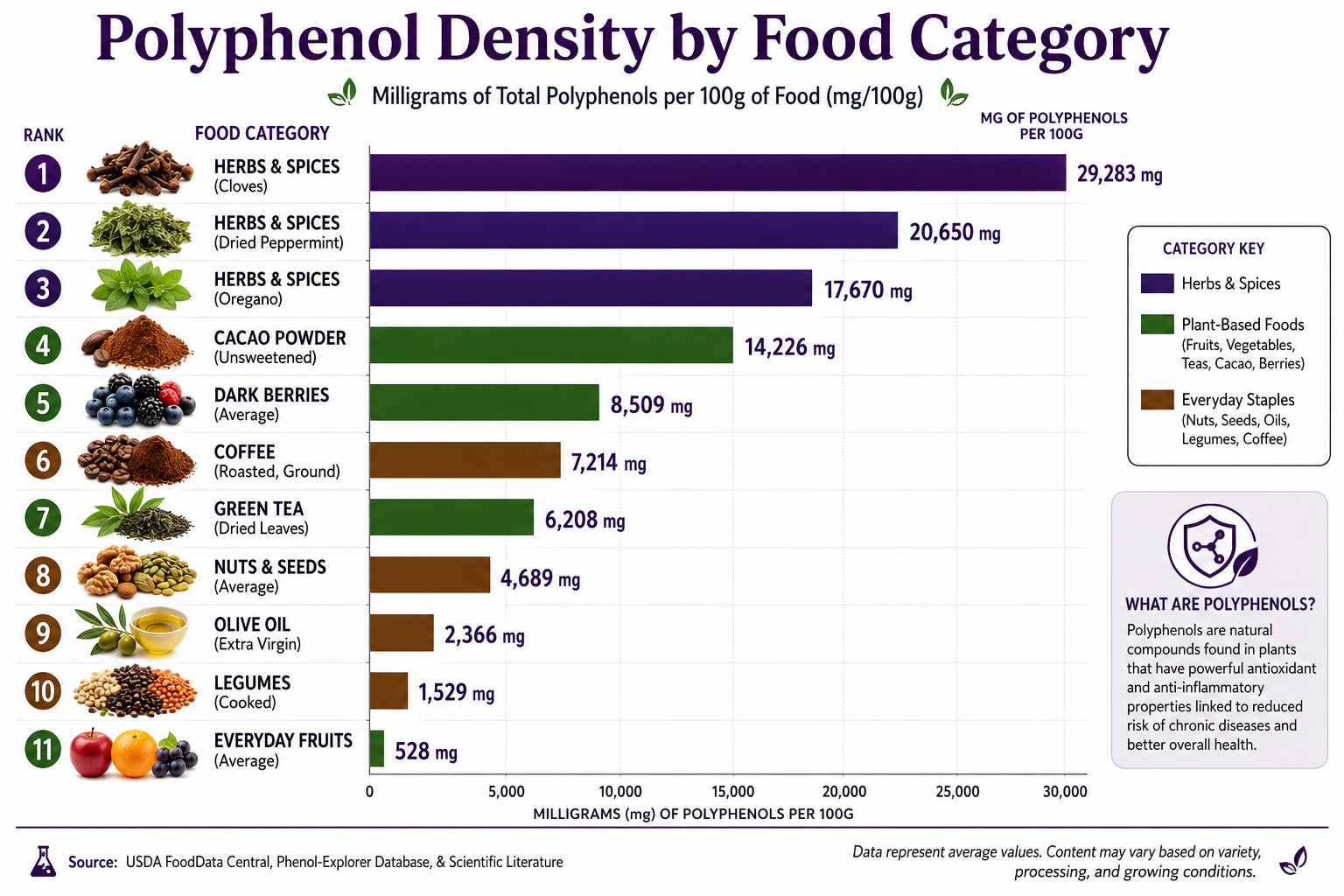
By raw concentration, this category is in a league of its own. The evidence suggests that herbs and spices high in polyphenols include:
- Cloves: Approximately 15,188 mg per 100 g. The single most polyphenol-dense food in the database. Rich in eugenol and gallic acid derivatives.
- Dried peppermint: Around 11,960 mg per 100 g. Practical as a herbal tea or added to smoothies.
- Star anise: Approximately 5,460 mg per 100 g. Used in cooking and herbal teas.
- Dried oregano: Around 2,319 mg per 100 g. One of the most accessible herbs high in polyphenols for everyday cooking.
- Rosemary: Approximately 1,018 mg per 100 g. Contains rosmarinic acid and carnosic acid, both well-studied.
- Thyme and sage: Similar ranges to rosemary, both rich in phenolic acids and flavonoids.
- Cinnamon: A practical spice with meaningful polyphenol content and a well-established role in everyday cooking. For a deeper look, the health benefits of turmeric article covers the curcuminoid family in detail.
- Turmeric: Contains curcuminoids, which are among the most studied polyphenol-adjacent compounds in the literature.
- Cumin: Often overlooked, but a solid contributor when used regularly in cooking.
How to Use Them Daily
The simplest way to look at it is this: herbs and spices are the easiest polyphenol upgrade most people are not making. Add dried oregano or thyme to roasted vegetables. Use cinnamon in oats or coffee. Brew peppermint or rosemary tea in the evening. Use turmeric and cumin in soups, stews, and grain dishes.
A sensible starting point is one or two additional herbs or spices per meal, consistently. That adds up faster than any supplement.
What to Avoid
Avoid relying on heavily processed spice blends that contain significant amounts of salt, sugar, or anti-caking agents. Look for single-ingredient dried herbs and spices, ideally organic where practical. Freshness matters: polyphenol content declines as herbs age, so replace dried herbs at least annually.
2. Cacao and Dark Chocolate: Best Sweet-Spot Polyphenol Food
Why Cacao Ranks So High
Cacao polyphenols are dominated by flavanols, specifically epicatechin and procyanidins. Unsweetened cacao powder contains approximately 3,448 mg of polyphenols per 100 g according to Phenol-Explorer data. Dark chocolate at 70% or higher cocoa content contains roughly 1,664 mg per 100 g.
These are meaningful numbers, and unlike herbs and spices, people actually eat cacao in portions that deliver a real dose. Two tablespoons of unsweetened cacao powder in a smoothie or breakfast bowl is a practical, repeatable habit.
The evidence suggests that regular consumption of flavanol-rich cacao is associated with improvements in blood flow markers and blood pressure in several controlled trials. The stronger evidence points to whole cacao foods rather than isolated flavanol extracts.
One important note: heavy metal contamination, particularly cadmium and lead, has been identified in some cacao products in independent testing. Where possible, choose brands that publish third-party heavy-metal testing results. This is not a reason to avoid cacao, but it is a reason to be selective about sourcing.
Best Choices
- Unsweetened organic cacao powder: Highest polyphenol content, no added sugar, versatile. Look for raw or lightly processed options.
- Natural cocoa powder (non-Dutched): Dutch processing (alkalization) significantly reduces flavanol content. Natural cocoa powder retains more.
- 70%+ dark chocolate: A practical daily option. Check the label: the first ingredient should be cacao or cocoa mass, not sugar.
- Cacao nibs: Essentially crushed cacao beans. Low sugar, high flavanol content, good for topping yoghurt or oats.
- Third-party tested products: Brands that publish Certificates of Analysis for heavy metals are the better choice.
Practical Serving Ideas
- Two tablespoons of cacao powder stirred into morning oats or yoghurt.
- One to two squares of 70%+ dark chocolate as an afternoon snack.
- Cacao nibs on a berry smoothie bowl.
- Unsweetened cacao blended into a banana-almond milk smoothie.
A Note on Product Choices
There is no magic in it: a standard milk chocolate bar is not a polyphenol-rich food in any meaningful sense. The sugar content is high, the cacao percentage is low, and the flavanol content is a fraction of what you get from quality dark chocolate or cacao powder. Let’s call it what it is.
3. Berries: The Best Polyphenol-Rich Fruits for Everyday Eating
Highest-Polyphenol Berries
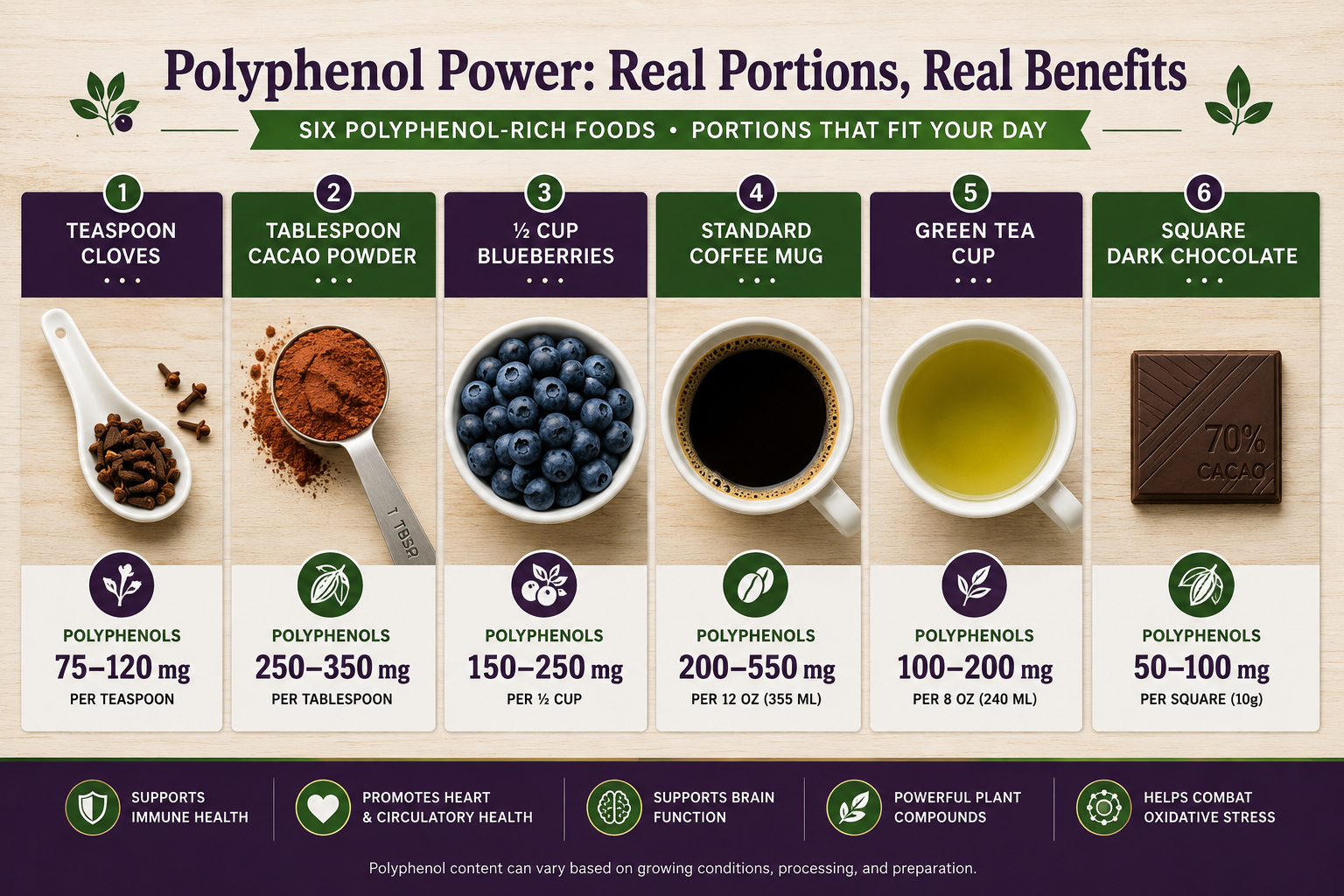
Polyphenol-rich berries are among the most practical foods high in polyphenols for daily eating. The data from Phenol-Explorer and related analyses ranks them approximately as follows:
- Black chokeberry (aronia): One of the highest polyphenol berries available, at roughly 1,752 mg per 100 g. Tart, often consumed as juice or powder.
- Elderberry: Around 1,950 mg per 100 g in some analyses. Commonly used in syrups and teas.
- Black currant: Approximately 758 mg per 100 g. Excellent anthocyanin content.
- Blueberries: Around 560 mg per 100 g. The most accessible high-polyphenol berry for most U.S. consumers.
- Blackberries: Similar range to blueberries, with strong ellagitannin content.
- Strawberries: Lower concentration than the above, but eaten in larger quantities, which compensates.
- Raspberries: Moderate concentration with a good ellagitannin profile.
A half-cup to one cup of frozen blueberries or mixed berries daily is one of the most cost-effective polyphenol habits available. Frozen berries retain polyphenol content well and are often more affordable than fresh out of season.
Why Dark Berries Stand Out
In plain English, the dark colour of berries is a direct signal of anthocyanin content. Anthocyanins are a subclass of flavonoids responsible for the deep red, purple, and blue pigments in fruit. They are among the most studied polyphenol compounds for their association with reduced oxidative stress and inflammatory markers.
The evidence suggests that regular anthocyanin intake from food sources is associated with lower markers of systemic inflammation in observational studies. This is not a cure for inflammation, but it is a consistent finding across multiple study designs. For more on the anti-inflammatory picture, the best anti-inflammatory foods for gut health guide covers this in detail.
Fresh, Frozen, Dried, or Powder?
- Fresh: Best when in season and locally sourced. Polyphenol content is highest at peak ripeness.
- Frozen: Retains polyphenols well. Often picked at peak ripeness and frozen immediately. A practical default.
- Freeze-dried: Concentrated, long shelf life, useful as a topping or mixed into yoghurt. Check for added sugar.
- Berry powders: Can be convenient, but quality varies significantly. Look for products with no fillers, no added sugar, and ideally third-party tested.
- Dried berries: Often contain added sugar. Read the label carefully.
4. Coffee: One of the Most Practical Daily Polyphenol Sources
Why Coffee Matters
Coffee polyphenols do not top any concentration chart. But coffee is consumed daily by a large proportion of the U.S. adult population, and that frequency is what makes it one of the most significant contributors to total polyphenol intake in Western diets.
A 2025 study from King’s College London, which followed over 3,100 adults for more than a decade, found that people who regularly consumed polyphenol-rich foods including coffee had measurably lower predicted cardiovascular disease risk scores. Coffee was part of a broader dietary pattern, not a standalone intervention, but its consistent presence in high-polyphenol diets is notable.
Main Polyphenols in Coffee
Coffee is primarily a source of chlorogenic acids, a family of hydroxycinnamic acid compounds. These are chlorogenic acid foods in the truest sense. Chlorogenic acids are associated with antioxidant activity and have been studied for their potential role in glucose metabolism and blood pressure regulation. The evidence is associational, not conclusive, but it is consistent across multiple large studies.
A standard 240 ml (8 oz) cup of brewed coffee contains approximately 200–550 mg of chlorogenic acids depending on roast level, bean origin, and brewing method. Lighter roasts tend to retain more chlorogenic acids than dark roasts.
Best Coffee Choices
- Lightly roasted, single-origin coffee: Higher chlorogenic acid retention than dark roasts.
- Cold brew: Typically lower acidity, reasonable polyphenol content.
- Organic, clean-label coffee: Reduces pesticide exposure, which matters when consuming daily.
- Plain brewed coffee: No added sugar, syrups, or creamers that dilute the benefit and add calories.
What Weakens the Benefit
Adding significant amounts of sugar or flavoured syrups to coffee does not eliminate its polyphenol content, but it does add a metabolic load that works against the broader goal of anti-inflammatory eating. A sugary latte is a different product from a well-sourced black coffee. This is where hype gets in the way of clear thinking.
Caffeine tolerance also matters. More is not always better. Two to three cups per day is a reasonable range for most adults. People who are sensitive to caffeine, pregnant, or on medications that interact with caffeine should adjust accordingly.
5. Green Tea, Matcha, and Extracts: High-Interest but Needs Safety Context
Why Green Tea Is Polyphenol-Rich
Green tea polyphenols are dominated by catechins, particularly epigallocatechin gallate, better known as EGCG. This makes green tea one of the most studied catechin-rich foods in the research literature. A standard 240 ml cup of brewed green tea contains approximately 50–150 mg of catechins depending on steeping time, water temperature, and tea grade.
The evidence suggests that regular green tea consumption is associated with lower markers of oxidative stress and may support healthy blood pressure over time. These are associations from observational and some controlled trial data, not proof of a specific clinical outcome.
Brewed Green Tea vs Matcha
Matcha is powdered green tea made from shade-grown leaves. Because you consume the whole leaf rather than a water extract, matcha delivers significantly more polyphenols per serving than standard brewed green tea. One teaspoon of matcha powder contains roughly 2–3 times the catechin content of a standard brewed cup.
From a practical point of view, one to two cups of brewed green tea or one cup of matcha daily is a sensible, evidence-consistent habit for most adults. The flavour profile is different from coffee, and for people reducing caffeine, green tea offers a lower-caffeine alternative with a meaningful polyphenol contribution.
Green Tea Extracts: Useful or Risky?
This is where the conversation requires care. Brewed green tea and concentrated green tea extract are not the same thing. The NIH Office of Dietary Supplements has noted that some green tea extracts, particularly ethanolic extracts, have been linked to liver damage in case reports. The risk appears dose-dependent and is associated with concentrated EGCG supplements rather than brewed tea.
Green tea extract is marketed aggressively as a weight-loss and detox product. That is a strong claim and needs strong proof. The current evidence does not support using high-dose EGCG supplements as a weight-loss tool, and the safety profile at high doses is genuinely concerning.
Who Should Be Cautious
The following groups should speak with a healthcare provider before using green tea extracts or high-dose EGCG supplements:
- People with liver disease or elevated liver enzymes
- Pregnant or breastfeeding women
- Anyone taking blood thinners, stimulants, or medications metabolised by the liver
- Anyone with a history of caffeine sensitivity or heart arrhythmia
Brewed green tea at moderate amounts is a different matter. For most healthy adults, two to three cups daily is well within a safe range and is consistent with the dietary patterns studied in long-term health research.
6. Nuts, Seeds, and Legumes: The Overlooked Polyphenol Foods
Best Nuts and Seeds
This category is consistently underrated in polyphenol conversations. Foods high in polyphenols from the nut and seed category include:
- Flaxseed meal: One of the richest plant sources of lignans, a class of polyphenols associated with hormonal balance and gut health. Ground flaxseed is more bioavailable than whole seeds.
- Chestnuts: Surprisingly high in polyphenols relative to other tree nuts.
- Hazelnuts: Good flavonoid content, practical as a daily snack.
- Pecans: Among the highest antioxidant capacity of commonly consumed nuts.
- Almonds: Moderate polyphenol content, mostly in the skin. Blanched almonds lose a significant portion.
- Walnuts: Contain ellagitannins and other phenolic compounds. Also a notable source of omega-3 fatty acids.
Best Legumes and Soy Foods
Legumes are among the most underappreciated polyphenol-rich foods in everyday diets. Key options include:
- Black beans: High in anthocyanins from their dark seed coat.
- White beans: Good phenolic acid content.
- Tempeh: Fermented soy with isoflavone content and added benefit from fermentation.
- Soy flour: Concentrated source of isoflavones.
- Tofu: Moderate isoflavone content, widely available and versatile.
Why These Matter
Beyond polyphenols, nuts, seeds, and legumes deliver fibre, minerals, and plant protein. These are not isolated polyphenol vehicles; they are nutrient-dense whole foods that contribute to gut microbiome diversity, satiety, and metabolic health as a package. The prebiotic foods guide covers how fibre from these foods feeds the gut microbiome in detail.
7. Olives, Olive Oil, Vegetables, and Everyday Fruits
Olives and Extra Virgin Olive Oil
Extra virgin olive oil (EVOO) is a cornerstone of the Mediterranean dietary pattern, one of the most consistently evidence-supported eating patterns for long-term health. Its key polyphenols include hydroxytyrosol, oleocanthal, and secoiridoids. Oleocanthal has attracted research interest for its structural similarity to ibuprofen in terms of COX enzyme inhibition, though the doses involved in food are far lower than a pharmaceutical dose.
The polyphenol content of EVOO varies significantly by harvest date, olive variety, and processing method. Fresh, cold-pressed, early-harvest EVOO from a reputable producer tends to have the highest polyphenol content. Look for a harvest date on the label, not just a best-before date. For a detailed breakdown of the evidence, the health benefits of olive oil guide covers this well.
Best Vegetables
Colourful vegetables are a reliable source of flavonoid-rich foods and phenolic acids. The strongest options include:
- Artichoke: One of the highest polyphenol vegetables, particularly rich in cynarin and chlorogenic acid.
- Red onion: Significantly higher quercetin content than white or yellow onions.
- Spinach: Good flavonoid content alongside iron and magnesium.
- Red cabbage: Anthocyanin-rich, practical, and affordable.
- Broccoli: Contains kaempferol and other flavonoids alongside sulforaphane.
Best Everyday Fruits
Beyond berries, several common fruits contribute meaningfully to a polyphenol foods list:
- Plums and prunes: Underrated. Good chlorogenic acid and anthocyanin content.
- Cherries: Rich in anthocyanins. Associated with reduced markers of exercise-induced inflammation in some trials.
- Apples with skin: The skin contains the majority of the polyphenols. Peeling an apple removes much of the benefit.
- Pomegranate: Rich in ellagitannins, which gut bacteria convert to urolithins. Emerging research on urolithins and muscle health is interesting, though still early-stage.
- Grapes: Particularly red and purple varieties. Contain resveratrol, though in modest amounts compared to what is used in supplement research.
Why Variety Beats Chasing One Superfood
The main takeaway is this: different polyphenol classes work through different mechanisms, affect different tissues, and interact with the gut microbiome in different ways. A diet built around one or two high-polyphenol foods is not as effective as a diet that draws from multiple categories. The evidence on polyphenols and longevity, gut health, and cardiovascular risk consistently points to dietary patterns, not individual foods.
Best Polyphenol-Rich Foods by Goal
Best for Anti-Inflammatory Eating
The stronger evidence points to dark berries, cacao, extra virgin olive oil, and a variety of herbs and spices as the most practical anti-inflammatory foods within the polyphenol category. These are also the foods most consistently featured in anti-inflammatory dietary patterns supported by current research.
Best for Longevity-Focused Diets
The association between polyphenol-rich dietary patterns and markers of healthy ageing is emerging and interesting, but it is not proof of lifespan extension. The Mediterranean and green-Mediterranean diets, both of which are high in polyphenol-rich foods, are associated with lower all-cause mortality in large observational studies. The daily habits of people who live past 90, covered in the longevity habits guide, consistently include plant-rich diets with these characteristics.
That is a strong association. It is not a guarantee. Context matters.
Best Low-Caffeine Options
For those reducing caffeine: herbal teas (peppermint, rosemary, hibiscus), cacao, berries, nuts, legumes, and vegetables all deliver meaningful polyphenols without caffeine. Decaffeinated coffee retains a significant portion of its chlorogenic acids.
Best Budget Options
Frozen blueberries, dried herbs and spices, canned black beans, ground flaxseed, and regular brewed coffee or green tea are among the most cost-effective polyphenol-rich foods available. There is no requirement to spend heavily on superfoods.
Best Affiliate-Friendly Products
Quality markers to look for: organic cacao powder with third-party heavy-metal testing; 70%+ dark chocolate with cacao as the first ingredient; freeze-dried berry powders with no added sugar or fillers; single-origin lightly roasted coffee; ceremonial-grade matcha; spice blends without salt or sugar as primary ingredients; and green tea extracts, if used at all, from brands with clear dosage labelling and third-party testing.
How to Build a High-Polyphenol Day
Simple Daily Example
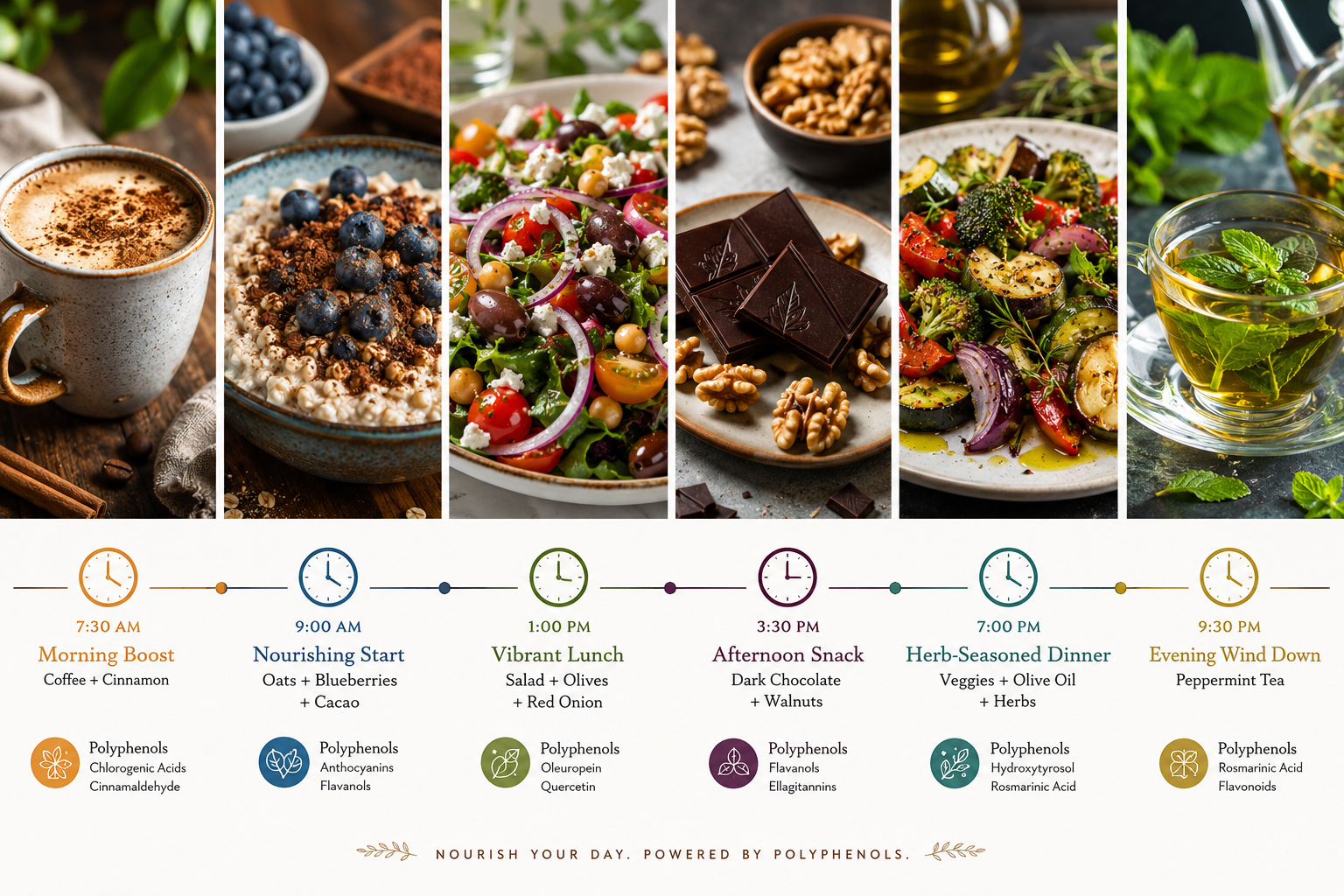
This is not a rigid meal plan. It is a practical illustration of how polyphenol-rich foods can be distributed across a normal day without significant effort.
- Morning: Brewed coffee (lightly roasted, black or with a small amount of milk) with a pinch of cinnamon.
- Breakfast: Oats or plain yoghurt with half a cup of frozen blueberries and one tablespoon of unsweetened cacao powder. Optional: one tablespoon of ground flaxseed.
- Lunch: A salad or grain bowl with red onion, olives, canned black beans, fresh herbs, and a drizzle of extra virgin olive oil.
- Snack: One to two squares of 70%+ dark chocolate, or a small handful of walnuts or pecans.
- Dinner: Roasted or steamed vegetables seasoned with oregano, rosemary, and turmeric, cooked in EVOO.
- Evening: A cup of brewed peppermint or green tea.
This pattern requires no supplements, no exotic ingredients, and no significant cost increase over a standard grocery shop.
Easy Swaps
| Instead of… | Try… | Polyphenol upgrade |
|---|---|---|
| Milk chocolate | 70%+ dark chocolate | Higher flavanol content, less sugar |
| Sugary flavoured latte | Brewed coffee with cinnamon | Chlorogenic acids, no added sugar |
| Plain white rice as a side | Beans with dried herbs | Adds isoflavones, phenolic acids, fibre |
| Sweet packaged snack | Berries with cacao yoghurt | Anthocyanins, flavanols |
| Soda or juice | Green tea or berry herbal tea | Catechins or anthocyanins, no sugar |
Are Polyphenol Extracts Worth It?
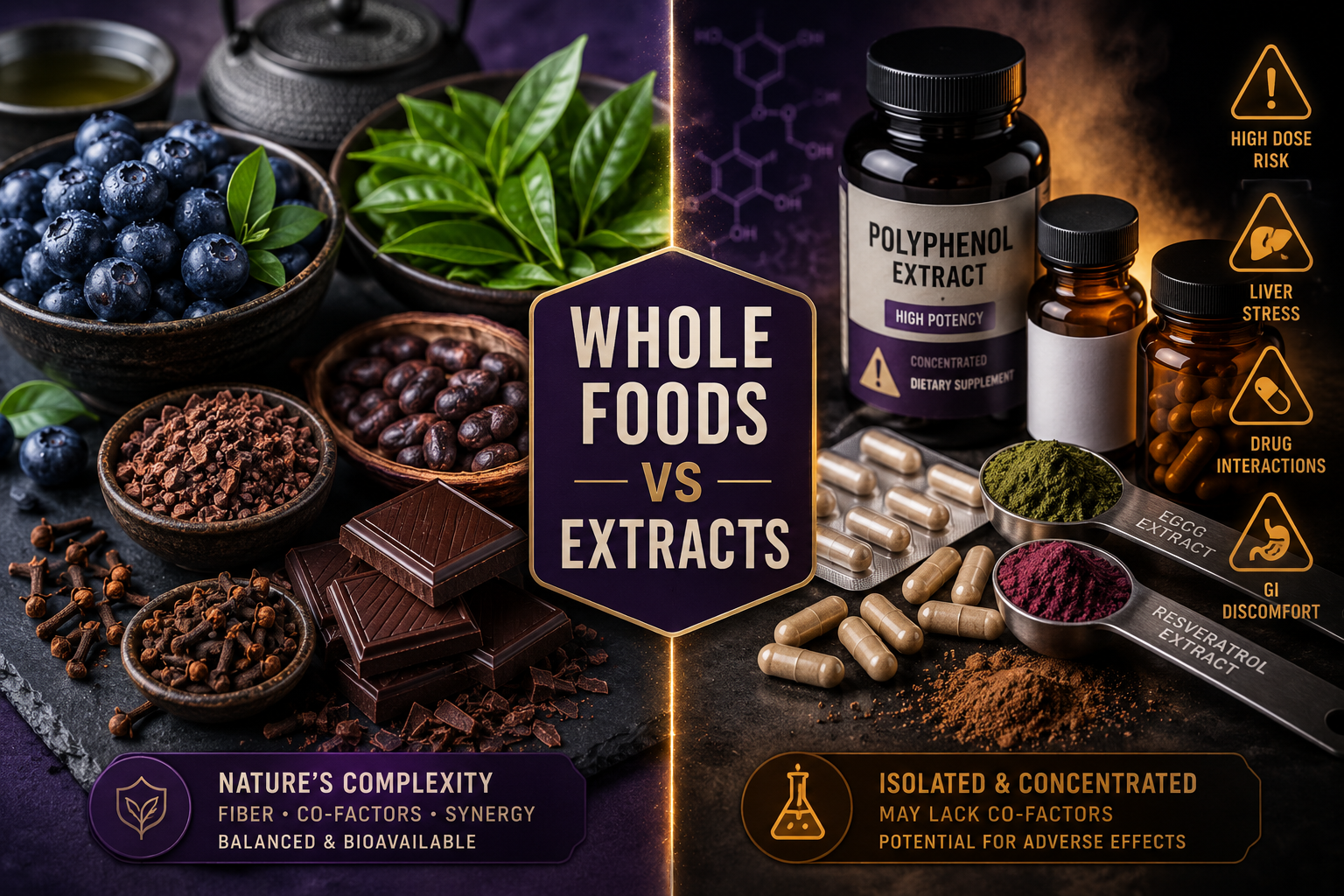
Food-First Is the Safest Default
A meta-analysis of randomised controlled trials found that whole polyphenol-rich foods significantly reduced systolic and diastolic blood pressure, while purified polyphenol extracts did not show the same effect. This is an important finding. It suggests that the food matrix, the combination of fibre, co-factors, and other phytochemicals present in whole foods, contributes to the effect in ways that isolated extracts do not replicate.
The simplest way to look at it is this: food first, always. Extracts are not automatically better because they are more concentrated.
When Extracts May Make Sense
There are specific situations where a well-sourced, appropriately dosed extract may be a reasonable addition under professional guidance: people with very restricted diets, those with specific documented deficiencies in polyphenol intake, or those in clinical settings where a standardised dose is required for a specific therapeutic purpose.
These are not the same as buying a green tea extract because it promises fat burning.
Extract Risks and Quality Issues
The quality of polyphenol supplements varies enormously. Common issues include:
- Inaccurate labelling of polyphenol content
- Contamination with heavy metals or undisclosed ingredients
- No standardisation of the active compound
- Absence of third-party testing
- Misleading health claims
I would be careful with that category as a whole. If choosing an extract, look for products with a Certificate of Analysis from an independent laboratory, clear dosage information, and no unsupported health claims.
Common Mistakes When Choosing Polyphenol-Rich Foods
We need to separate fact from hype in this space. Here are the most common errors:
- Ranking only by 100 g concentration. Cloves are extraordinary by this measure. They are not a practical daily food in large amounts. Serving-size reality matters.
- Treating supplements as automatically superior to food. The evidence does not support this. Whole foods outperform extracts in most controlled trials on cardiovascular markers.
- Choosing sugar-heavy chocolate or coffee drinks. A mocha with three pumps of syrup is not a polyphenol-rich food in any meaningful sense. The sugar load works against the goal.
- Ignoring caffeine tolerance. Green tea and coffee are genuinely useful polyphenol sources. They are also stimulants. More is not always better, and individual tolerance varies significantly.
- Eating the same superfood every day. Blueberries every morning is a good habit. Blueberries every morning and nothing else from the polyphenol foods list is a missed opportunity. Variety matters.
- Forgetting herbs and spices. These are the most concentrated polyphenol sources available and the most underused. A few pinches of dried oregano or a teaspoon of cinnamon costs almost nothing and delivers a real dose.
- Assuming polyphenols cancel out a poor diet. They do not. The basics still do the heavy lifting. Sleep, movement, reduced ultra-processed food intake, and adequate fibre all matter more than any single polyphenol food. For context on what ultra-processed foods actually do to the gut, the ultra-processed foods and gut health guide is worth reading.
📂 Anti-Inflammatory Foods and Diets: Ultimate Guide
This article is part of the APH cluster. Use the links below to move between the pillar and child articles.
- Read the pillar: Anti-Inflammatory Foods and Diets: Ultimate Guide
- → Inflammation Is Not the Enemy: Glycine, Whole Foods and the Ultra-Processed Diet Problem
- → The Best Anti-Inflammatory Foods for Gut Health: A Complete Guide
- → Foods that are anti-inflammatory
- → What Are Polyphenols? Benefits, Food Sources and What the Evidence Shows
- YOU ARE HERE Polyphenol-Rich Foods Ranked: The Best Berries, Cacao, Coffee, Herbs, Spices, Green Tea, and Extracts
- → Health Benefits of Turmeric: What the Research Actually Shows
- → Olive Oil vs. Seed Oils: What the Evidence Actually Says About Cooking Fats and Inflammation
Frequently Asked Questions
What food is highest in polyphenols?
By raw concentration per 100 g, cloves are the highest polyphenol food in the database, at approximately 15,000 mg per 100 g. In terms of practical daily contribution, coffee, berries, cacao, and green tea tend to matter more because they are consumed in larger, more regular amounts.
Which berries have the most polyphenols?
Black chokeberry (aronia), elderberry, and black currant rank highest by concentration. For everyday eating in the U.S., blueberries and blackberries are the most accessible high-polyphenol berry options. Frozen versions retain polyphenols well.
Is coffee high in polyphenols?
Yes. Coffee is one of the most significant sources of polyphenols in the average Western diet, primarily through chlorogenic acids. Its contribution comes from daily volume rather than high concentration per serving.
Is green tea or coffee higher in polyphenols per cup?
It depends on the conditions. Coffee generally contains more total polyphenols per cup by weight, primarily chlorogenic acids. Green tea is richer in catechins, particularly EGCG. Both are valuable, and the choice between them often comes down to caffeine tolerance and personal preference.
Is cacao powder better than dark chocolate for polyphenols?
Yes, by a significant margin. Unsweetened cacao powder contains roughly twice the polyphenol content of 70% dark chocolate per 100 g, and it has no added sugar. Dark chocolate is still a good option, but cacao powder delivers more per serving.
Are polyphenol supplements safe?
It depends on the type, dose, and individual. Brewed teas and whole food sources are safe for most adults. Concentrated extracts, particularly high-dose EGCG supplements, carry real risks including liver damage in case reports. Anyone considering polyphenol supplements should consult a healthcare provider, especially if they have liver disease, are pregnant, or take medications.
What is the easiest way to eat more polyphenols every day?
Add cinnamon to coffee or oats. Eat half a cup of frozen berries daily. Use dried herbs generously in cooking. Swap milk chocolate for 70%+ dark chocolate. Drink one to two cups of green tea. These five habits, done consistently, deliver a meaningful polyphenol intake without supplements.
Do polyphenols help with inflammation?
The evidence suggests an association between higher polyphenol intake from food and lower markers of systemic inflammation in observational and some controlled trial data. This is not the same as saying polyphenols cure or eliminate inflammation. They appear to be one useful dietary tool within a broader anti-inflammatory eating pattern.
Are polyphenols linked to longevity?
There is an association between polyphenol-rich dietary patterns, particularly the Mediterranean diet, and lower all-cause mortality in large observational studies. That is a strong association. It is not proof that polyphenols extend lifespan, and it should not be presented as such.
Should I choose foods or extracts?
Foods first, consistently. The evidence favours whole polyphenol-rich foods over isolated extracts for most health outcomes studied to date. Extracts may have a role in specific clinical contexts, but they are not a shortcut to the benefits seen in dietary pattern research.
Final Takeaway: The Best Polyphenol Foods Are the Ones You Will Eat Consistently
Here is what the evidence actually supports, stated plainly.
Herbs and spices are the most concentrated polyphenol sources per gram. Cacao, dark berries, coffee, and green tea are the most practical daily options for most people. Nuts, seeds, legumes, olive oil, and colourful vegetables fill out a comprehensive polyphenol foods list that covers multiple compound classes and supports gut microbiome diversity.
Variety matters more than megadosing any single food. Whole foods consistently outperform extracts in the research on cardiovascular and metabolic markers. Green tea extract, in particular, requires careful handling and is not equivalent to brewed tea.
The main takeaway is this: a consistent, varied diet built around real polyphenol-rich foods is more useful than any supplement stack, and it is achievable without significant cost or complexity.
Start with one easy upgrade. Add a tablespoon of organic cacao powder to breakfast. Swap one sugary drink for brewed green tea or peppermint tea. Build a simple berry-and-cacao snack. Keep it simple and consistent, and let the cumulative effect do its work.
For the full scientific background on what polyphenols are and how they function in the body, the foundational guide What Are Polyphenols? Benefits and Food Sources Explained is the right next read. For how these foods fit into a broader anti-inflammatory approach, the foods that are anti-inflammatory guide covers the wider picture.
Truth over hype. Evidence first. Common sense backed by evidence.
More in This Cluster
- Nutrient-Dense Food Basics
- Prebiotic Foods & Gut Health
- Anti-Inflammatory Foods
- Herbs for Digestion
- Olive Oil vs. Seed Oils
- Polyphenol-Rich Foods
References & Research Sources
- Krikorian R, Shidler MD, Nash TA, et al. “Blueberry Supplementation Improves Memory in Older Adults.” J Agric Food Chem. 2010;58(7):3996-4000. PMID: 20047325
- Desideri G, Kwik-Uribe C, Grassi D, et al. “Benefits in Cognitive Function, Blood Pressure, and Insulin Resistance with Cocoa Flavanols.” Hypertension. 2012;60(3):794-801. PMID: 22892818
- Fisher ND, Hughes M, Gerhard-Herman M, Hollenberg NK. “Flavanol-Rich Cocoa Induces Nitric-Oxide-Dependent Vasodilation in Healthy Humans.” J Hypertens. 2003;21(12):2281-2286. PMID: 14654748
- Scholey A, et al. “Acute Neurocognitive Effects of Epigallocatechin Gallate (EGCG).” Appetite. 2012;58(2):767-770. PMID: 22230578
- Del Rio D, Rodriguez-Mateos A, Spencer JPE, et al. “Dietary (Poly)phenolics in Human Health.” Antioxid Redox Signal. 2013;18(14):1818-1892. PMID: 22794143
- Perez-Jimenez J, et al. “Identification of the 100 Richest Dietary Sources of Polyphenols.” Eur J Clin Nutr. 2010;64(Suppl 3):S112-S120. PMID: 20351781
- Chiva-Blanch G, et al. “Effects of Polyphenol Intake on Metabolic Syndrome.” Curr Pharm Des. 2013;19(34):6156-6163. PMID: 23448443
- Mateos R, et al. “Antioxidant Activity of Rosemary and Thyme Extracts in Virgin Olive Oil.” JAOCS. 2003;80(7):665-670.
About the author
Dave James is a health researcher and writer specialising in evidence-based nutrition, exercise, and longevity. He founded All Perfect Health to provide clear, practical health guidance rooted in current research and real-world experience.