
Health Benefits of Swimming: The Complete Guide
In this guide
- What Makes Swimming Such an Effective Full-Body Workout?
- What Are the Cardiovascular Health Benefits of Swimming?
- How Does Swimming Benefit Mental Health?
- Is Swimming Good for People With Arthritis, Joint Pain, or Injuries?
- Can Swimming Help With Weight Management?
- Does Swimming Improve Sleep Quality?
- What Are the Benefits of Swimming for People With Chronic Conditions?
- What Are the Four Main Swimming Strokes and Which Is Best for Beginners?
- How Do You Get Started With Swimming Safely and Effectively?
- Comparison: Swimming vs. Other Popular Forms of Exercise
- FAQ: Health Benefits of Swimming
Last updated: March 28, 2026
Quick Answer
Swimming delivers a full-body, low-impact workout that simultaneously builds cardiovascular fitness, muscular strength, and mental resilience. It’s one of the few forms of exercise suitable for nearly every age group and fitness level — including people recovering from injury, managing chronic conditions like arthritis or asthma, or simply looking for a sustainable way to stay active. Regular swimming (as little as 150 minutes per week) is associated with meaningful improvements in heart health, sleep quality, mood, and weight management.
Key Takeaways
- Swimming engages virtually every major muscle group simultaneously, making it one of the most efficient full-body workouts available
- Water’s natural buoyancy reduces joint stress by up to 90% compared to land-based exercise, making swimming ideal for people with arthritis, injuries, or mobility limitations
- Regular aerobic swimming stimulates the release of dopamine and serotonin, which can reduce symptoms of anxiety and depression
- Swimming has been shown to lower resting heart rate and blood pressure, reducing cardiovascular disease risk over time
- People with conditions like multiple sclerosis, asthma, and chronic pain often find swimming uniquely accessible compared to other forms of exercise
- Children who learn to swim early develop water safety skills, coordination, and a lifelong habit of physical activity
- Proper warm-up, technique, and pool safety practices significantly reduce the risk of injury or fatigue
- Swimming burns roughly 400–700 calories per hour depending on stroke type and intensity — comparable to running, with far less impact on joints
- You don’t need to be a strong swimmer to benefit; even water walking and gentle lap swimming produce measurable health gains
- Swimming supports better sleep by raising core body temperature and releasing endorphins that promote post-exercise relaxation
What Makes Swimming Such an Effective Full-Body Workout?
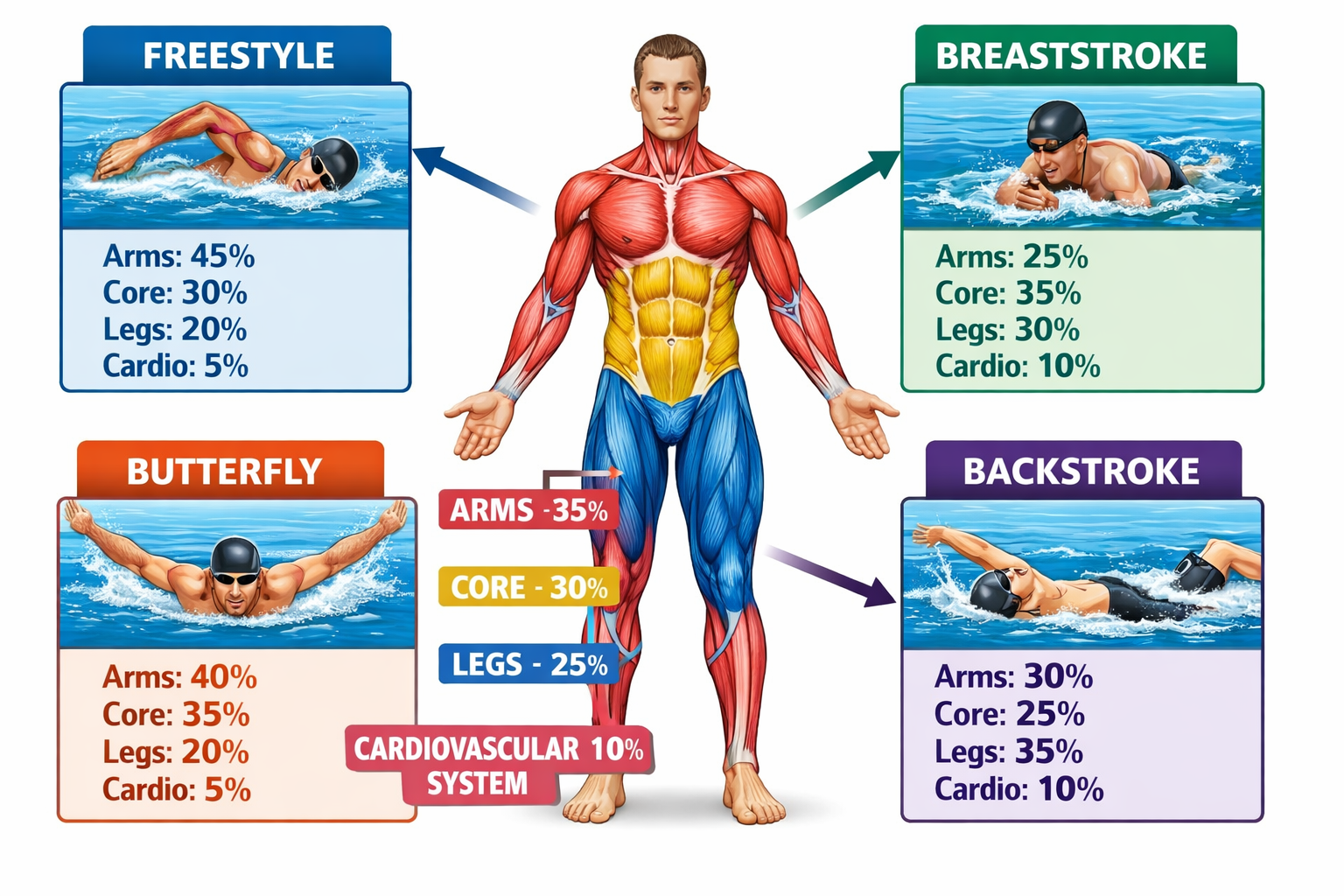
Swimming is uniquely effective because it demands simultaneous effort from your upper body, lower body, and core — while your cardiovascular system works hard to supply oxygen throughout. Unlike most gym exercises that isolate specific muscle groups, every stroke in the pool recruits multiple systems at once.
Here’s what’s happening in your body during a typical swim session:
- Arms and shoulders: The pull phase of freestyle and backstroke builds deltoids, biceps, triceps, and latissimus dorsi
- Core: Constant rotational stabilization through the torso engages the obliques, transverse abdominis, and lower back muscles
- Legs: Flutter kicks and breaststroke frog kicks work the quadriceps, hamstrings, glutes, and calves
- Cardiovascular system: Sustained aerobic effort strengthens the heart muscle itself, improving stroke volume and resting heart rate over time
- Lungs: Controlled breathing patterns against water resistance gradually increase lung capacity and respiratory efficiency
Water provides roughly 12 times more resistance than air, meaning your muscles work harder with each movement than they would during equivalent land-based exercise — without the pounding stress on bones and joints.
Choose swimming if: You want a workout that builds strength, endurance, and cardio fitness simultaneously without the wear-and-tear associated with running or high-impact training.
What Are the Cardiovascular Health Benefits of Swimming?
Swimming is one of the most effective exercises for heart health. Sustained aerobic swimming challenges the heart to pump blood efficiently to working muscles, and over time, this stress produces measurable adaptations: a stronger heart muscle, lower resting heart rate, and improved blood pressure regulation.
According to research published in the International Journal of Aquatic Research and Education, swimmers have roughly half the risk of dying from cardiovascular disease compared to sedentary individuals. Regular swimming also improves lipid profiles — raising HDL (“good”) cholesterol while reducing LDL and triglyceride levels.
Key cardiovascular benefits include:
- Lower resting heart rate after consistent training (a marker of improved cardiac efficiency)
- Reduced blood pressure in both hypertensive and normotensive adults
- Improved circulation throughout the body, including peripheral blood vessels
- Better blood sugar regulation, which reduces long-term cardiovascular risk
Even moderate-intensity swimming — think comfortable lap swimming where you can still hold a conversation — produces these benefits. You don’t need to train like a competitive swimmer to protect your heart. For more on understanding your fat-burning heart rate zones during aerobic exercise, that context applies directly to swimming workouts.
Common mistake: Many beginners swim too intensely at first, burn out after a few sessions, and quit. Starting at 60–70% of your maximum heart rate and building gradually over several weeks produces better long-term results.
How Does Swimming Benefit Mental Health?
Swimming reduces symptoms of stress, anxiety, and depression through several overlapping mechanisms — and the effect is well-documented enough to be taken seriously by sports medicine researchers.
The mental health benefits of swimming come from:
- Neurochemical release: Aerobic exercise increases blood flow to the brain and triggers the release of dopamine, serotonin, and endorphins — neurotransmitters that regulate mood, motivation, and pain perception
- Rhythmic movement and focus: The repetitive, meditative quality of lap swimming quiets mental chatter in a way similar to mindfulness practices. Counting strokes, focusing on breath timing, and maintaining form all redirect attention away from anxious thoughts
- Sensory immersion: Submersion in water reduces external sensory input and has a measurable calming effect on the nervous system — sometimes described as “blue mind,” a concept studied by marine biologist Wallace J. Nichols
- Social connection: Group swim classes, masters swimming programs, and community pools create social environments that combat isolation, a significant contributor to poor mental health
A 2022 survey by Swim England found that 1.4 million people in England reported swimming helped them manage a mental health condition. While this is self-reported data, it aligns with controlled studies showing aerobic exercise as a clinically meaningful intervention for mild to moderate depression.
Swimming is also one of the few exercises that forces you to breathe rhythmically — you literally cannot hyperventilate, which makes it particularly calming for people prone to anxiety.
Is Swimming Good for People With Arthritis, Joint Pain, or Injuries?
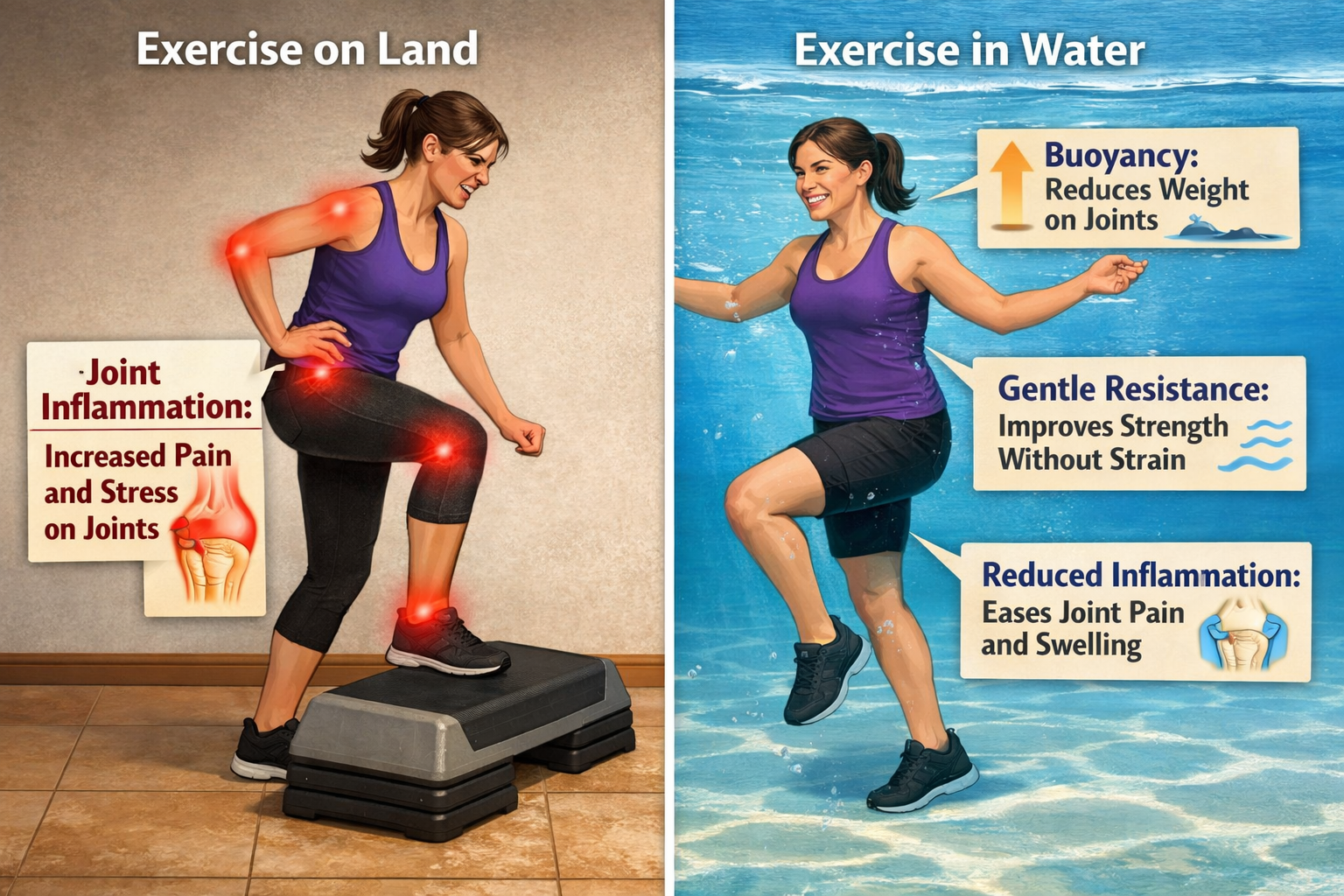
Yes — swimming is widely considered one of the best exercises for people with arthritis, joint pain, or musculoskeletal injuries. The reason comes down to buoyancy.
When you’re submerged to the neck in water, your body bears only about 10% of its normal weight. That dramatic reduction in gravitational load means your joints — knees, hips, spine — experience far less compressive force than they would during walking, running, or weight training. You can move through a full range of motion, build strength, and elevate your heart rate, all without aggravating inflamed or damaged tissue.
Specific benefits for joint and injury conditions:
- Osteoarthritis: Water exercise consistently outperforms land exercise for pain reduction and functional improvement in people with knee and hip osteoarthritis, according to multiple Cochrane reviews
- Rheumatoid arthritis: Warm-water pools (around 88–92°F / 31–33°C) are especially effective, as heat reduces joint stiffness before movement begins
- Post-surgical rehabilitation: Aquatic therapy is commonly used after knee replacements, hip replacements, and ACL repairs because it allows early weight-bearing movement without dangerous joint loading
- Chronic back pain: Swimming strengthens the core and paraspinal muscles that support the spine, often reducing pain over time
If you’re managing joint issues and looking for complementary approaches, pairing swimming with anti-inflammatory foods in your diet can further reduce systemic inflammation and support recovery.
Edge case: Breaststroke can aggravate knee pain in some people due to the rotational stress of the frog kick. Freestyle or backstroke are generally safer starting points for those with knee problems.
Can Swimming Help With Weight Management?
Swimming burns a meaningful number of calories — roughly 400–700 per hour depending on your stroke, pace, and body weight — while also building lean muscle mass that raises your resting metabolic rate. That combination makes it an effective tool for weight management, though it works best when paired with a sensible diet.
Calorie burn estimates by stroke (moderate intensity, 155 lb / 70 kg adult):
| Stroke | Approx. Calories/Hour |
|---|---|
| Freestyle (moderate) | 500–600 |
| Breaststroke | 550–650 |
| Butterfly | 600–700 |
| Backstroke | 450–550 |
| Water aerobics | 350–450 |
One nuance worth knowing: some research suggests that swimming in cool water can stimulate appetite more than land-based exercise, potentially leading people to eat back the calories they burned. Being aware of this tendency — and eating protein-rich meals post-swim — helps prevent it from undermining your goals.
For people who find high-impact exercise difficult due to excess body weight, swimming is particularly valuable. The buoyancy effect means a 250-pound person can move comfortably in water in ways that would be painful or impossible on land, making it an accessible entry point into regular exercise. If weight loss is a specific goal, pairing swimming with structured nutrition guidance — such as the strategies outlined in this weight loss guide — produces better results than exercise alone.
Does Swimming Improve Sleep Quality?
Swimming can meaningfully improve sleep quality, particularly for adults who struggle with insomnia or disrupted sleep patterns. The mechanism involves several factors working together.
Aerobic exercise like swimming raises your core body temperature during the session. As your body cools down in the hours afterward, it mimics the natural temperature drop that signals your brain to initiate sleep. This thermal effect, combined with the endorphin release and physical fatigue from a solid swim session, creates conditions that make falling asleep faster and staying asleep longer more likely.
The rhythmic, repetitive nature of swimming also has a meditative quality that reduces the mental hyperarousal — racing thoughts, rumination — that keeps many people awake at night.
A few practical points:
- Morning or afternoon swims tend to work better for sleep than late-evening sessions, since vigorous exercise within 2–3 hours of bedtime can delay sleep onset in some people
- Consistency matters more than intensity — swimming 3–4 times per week produces more reliable sleep improvements than occasional intense sessions
- Warm-water swimming (such as in a heated pool) may enhance the relaxation effect compared to cold-water swimming
What Are the Benefits of Swimming for People With Chronic Conditions?
Swimming is particularly valuable for people managing chronic conditions because it provides meaningful exercise stimulus without the risks associated with high-impact or high-intensity activities.
Multiple Sclerosis (MS)
MS causes the immune system to attack the myelin sheath protecting nerve fibers, leading to fatigue, muscle weakness, spasticity, and balance problems. Heat sensitivity is common — many people with MS find that overheating worsens symptoms temporarily.
Swimming in a cool or thermoneutral pool (around 82–86°F / 28–30°C) allows people with MS to exercise vigorously without triggering heat-related symptom flares. The buoyancy supports limbs that may be weak or spastic, and the resistance builds strength gradually. Research consistently shows that aquatic exercise improves fatigue, mood, and functional mobility in people with MS.
Asthma
Swimming is often recommended for people with asthma because the warm, humid air directly above pool water is less likely to trigger bronchospasm than cold, dry outdoor air. The controlled breathing patterns required in swimming also train respiratory muscles and improve lung efficiency over time.
That said, chlorine sensitivity is a real concern — some people with asthma find that heavily chlorinated indoor pools irritate their airways. Saltwater pools or outdoor swimming may be better options for those individuals.
Type 2 Diabetes
Aerobic swimming improves insulin sensitivity and helps regulate blood glucose levels. It also supports the weight management that is central to type 2 diabetes management. People with diabetic peripheral neuropathy should take extra care with foot protection and water temperature awareness, as reduced sensation can mask injuries or burns.
Pregnancy
Swimming is one of the safest and most recommended forms of exercise during pregnancy. The buoyancy relieves pressure on the lower back and pelvis — areas that bear increasing load as pregnancy progresses — while the cardiovascular workout supports healthy weight gain and reduces the risk of gestational diabetes. Always consult your OB or midwife before starting or continuing a swimming program during pregnancy.
What Are the Four Main Swimming Strokes and Which Is Best for Beginners?
There are four competitive swimming strokes, each with distinct technique demands, muscle recruitment patterns, and difficulty levels. For most beginners, freestyle is the best starting point.
Freestyle (Front Crawl)
The most common and generally fastest stroke. Your body lies face-down, arms alternate in an overhead pull-and-recovery cycle, and legs perform a flutter kick. Freestyle is efficient, relatively easy to learn at a basic level, and the best stroke for building cardiovascular fitness quickly.
Backstroke
Performed on your back with alternating arm pulls and a flutter kick. Backstroke is easy on the shoulders and spine, making it a good option for people with shoulder impingement or lower back issues. The main challenge for beginners is navigation — you can’t see where you’re going.
Breaststroke
A simultaneous arm pull combined with a frog kick. Breaststroke is the slowest competitive stroke but is often the most intuitive for beginners because the head naturally comes out of the water to breathe. It places more demand on the inner knee ligaments, so people with knee problems should approach it cautiously.
Butterfly
The most technically demanding and physically demanding stroke. Both arms move simultaneously in a windmill motion while the legs perform a dolphin kick. Not recommended for beginners — master freestyle first.
For beginners: Start with freestyle and backstroke. Take at least 4–6 lessons with a qualified instructor before attempting breaststroke, and leave butterfly until you’re comfortable with the others.
How Do You Get Started With Swimming Safely and Effectively?
Getting started with swimming doesn’t require elite fitness or expensive equipment, but a few fundamentals make the difference between an enjoyable habit and a frustrating experience.
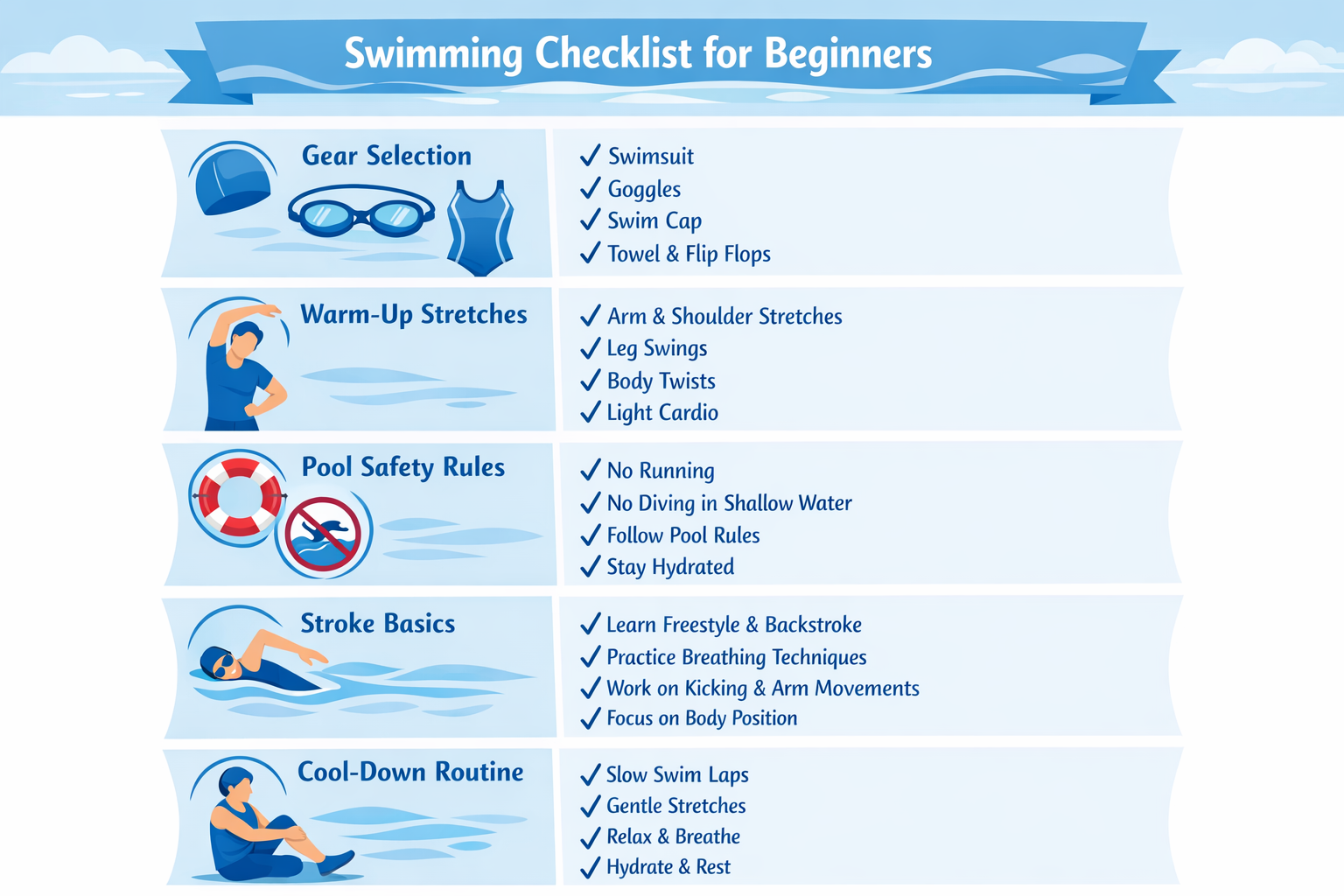
Essential gear
- A well-fitting swimsuit (drag-reducing for lap swimming; comfort-focused for leisure)
- Goggles (non-negotiable for lap swimming — clear lenses for indoor pools, tinted for outdoor)
- Swim cap (optional but helpful for hair protection and reducing drag)
- Kickboard and pull buoy (useful training aids available at most pools)
Before you swim: warm up properly
Cold muscles and joints entering cold water is a recipe for strain. Spend 5–10 minutes on:
- Arm circles and shoulder rolls
- Leg swings (forward/back and lateral)
- Torso rotations
- Light aerobic movement to raise heart rate (jogging in place, jumping jacks)
Building a beginner routine
Week 1–2: Swim 2–3 times per week, 20–30 minutes per session. Focus on technique over speed. Rest 30–60 seconds between lengths.
Week 3–4: Increase to 30–40 minutes. Begin reducing rest intervals. Introduce a second stroke.
Month 2 onward: Aim for 3–4 sessions per week, 45–60 minutes each. Incorporate interval sets (e.g., 4 x 50m with 20 seconds rest).
Pool safety rules that matter
- Always swim in a supervised pool or with a buddy in open water
- Never swim after consuming alcohol
- Enter unfamiliar water feet-first to check depth
- Know where the pool’s emergency equipment is located (ring buoys, reaching poles)
- If you feel cramps or exhaustion, signal a lifeguard immediately — don’t push through it
Pairing your swimming habit with good nutrition — including foods rich in calcium to support bone density and anti-inflammatory foods to aid muscle recovery — accelerates the health benefits you’ll see from regular training.
Comparison: Swimming vs. Other Popular Forms of Exercise
| Factor | Swimming | Running | Cycling | Walking |
|---|---|---|---|---|
| Joint impact | Very low | High | Low | Low-moderate |
| Full-body engagement | High | Moderate | Lower body focus | Lower body focus |
| Calorie burn (moderate, 1 hr) | 500–650 | 550–700 | 450–600 | 250–350 |
| Suitable for arthritis | Excellent | Poor-moderate | Good | Good |
| Skill requirement | Moderate | Low | Low-moderate | Very low |
| Equipment cost | Low-moderate | Low | Moderate-high | Very low |
| Mental health benefit | High | High | Moderate | Moderate |
| Year-round accessibility | Depends on pool access | Weather-dependent | Weather-dependent | Weather-dependent |
Choose swimming over running if you have joint pain, are recovering from injury, are significantly overweight, or want a workout that combines strength and cardio without impact stress.
Choose running over swimming if you don’t have pool access, prefer outdoor exercise, or are specifically training for running-based events.
FAQ: Health Benefits of Swimming
How often should I swim to see health benefits?
Most health guidelines recommend at least 150 minutes of moderate aerobic activity per week. For swimming, that translates to roughly 3–5 sessions of 30–50 minutes each. Beginners will see measurable improvements in fitness and mood within 4–6 weeks of consistent swimming at this frequency.
Is swimming good for losing belly fat?
Swimming burns calories and reduces overall body fat, including visceral (abdominal) fat, when combined with a calorie-appropriate diet. You can’t spot-reduce fat from the belly specifically, but regular aerobic swimming contributes to whole-body fat loss over time.
Can elderly people swim safely?
Yes — swimming is one of the most recommended exercises for older adults. The low-impact nature protects aging joints, and the buoyancy reduces fall risk compared to land-based exercise. Many community pools offer senior-specific aqua aerobics classes that are particularly well-suited to older adults.
Does swimming build muscle?
Swimming builds lean muscle, particularly in the shoulders, back, core, and legs. It won’t produce the same hypertrophy as weightlifting because water resistance, while significant, doesn’t allow for progressive overload in the same way. Swimmers tend to be lean and muscular rather than bulky.
Is outdoor swimming (open water) as beneficial as pool swimming?
Open-water swimming provides the same cardiovascular and muscular benefits as pool swimming, with some additional challenges: variable currents, colder temperatures, and no lane structure. Cold-water swimming (below 60°F / 15°C) has gained attention for potential immune and mood benefits, but it also carries real risks of cold shock and hypothermia. Always swim with a buddy in open water.
Can swimming help with back pain?
For most types of chronic back pain, swimming is beneficial. It strengthens the core and paraspinal muscles that support the spine without compressive loading. Freestyle and backstroke are generally safest; breaststroke can aggravate lumbar pain in some people due to the arching motion. Consult a physiotherapist if you have a specific diagnosis before starting.
How does swimming compare to water aerobics?
Both are low-impact aquatic exercises with similar joint-protection benefits. Swimming burns more calories per hour and provides greater cardiovascular and muscular challenge. Water aerobics is more accessible for non-swimmers and older adults, and the upright position makes breathing easier. Both are valid — choose based on your fitness level and goals.
Does swimming help with anxiety?
Yes. The combination of rhythmic movement, controlled breathing, and sensory immersion makes swimming particularly effective for anxiety management. Many people describe lap swimming as meditative. The neurochemical effects of aerobic exercise — increased serotonin and reduced cortisol — are well-established.
What should I eat before and after swimming?
Before swimming, eat a light, easily digestible meal 1–2 hours prior — something like a banana with peanut butter or oatmeal with fruit. Avoid heavy meals immediately before swimming. After swimming, prioritize protein and carbohydrates within 30–60 minutes to support muscle repair and glycogen replenishment.
Is chlorine in pools harmful to health?
Chlorinated pools are generally safe for regular use. Some people experience skin dryness, eye irritation, or mild respiratory irritation, particularly in poorly ventilated indoor pools. Rinsing off immediately after swimming, using a moisturizer, and choosing pools with good ventilation minimizes these effects. Saltwater pools are a gentler alternative for those with sensitivities.
Sources
- Swim England. The Health and Wellbeing Benefits of Swimming. 2022. swimengland.org
- Colwin, C.M. Breakthrough Swimming. Human Kinetics, 2002.
- Nichols, W.J. Blue Mind. Little, Brown and Company, 2014.
- Cochrane Database of Systematic Reviews. Aquatic exercise for the treatment of knee and hip osteoarthritis. 2016.
- Centers for Disease Control and Prevention (CDC). Physical Activity and Health. cdc.gov
- American Heart Association. Recommendations for Physical Activity in Adults. 2023. heart.org
Related reading:
- Exercise guide for better health — If you’re just getting started, our exercise guide for beginners covers the best types of exercise, how much you need, and how to build a routine that lasts.
- Best Exercise Bike for Knee Issues
- Good Morning Exercise Routines
Related Reading
- Exercise guide for better health
- How to Exercise When You’re Over 50
- Best Exercise Bike for Knee Issues: A Complete 2026 Buying Guide
- How to Start Walking for Exercise
- Best Exercises for Skiing: You Should Do in (2026)
- How Live a Healthy Lifestyle

Dave James has spent 30+ years reading health and longevity research, and has run All Perfect Health for the past five. His background is in Australian mining and industrial engineering — disciplines built on questioning claims, measuring outcomes, and respecting evidence. He writes about what the research actually says, including where the experts disagree.