
Exercise guide for better health
Last updated: April 8, 2026
Quick Answer: A well-structured exercise guide for better health doesn’t require daily gym sessions or extreme workouts. Health professionals recommend 150 minutes of moderate activity per week, spread across cardio, strength, flexibility, and balance work. For adults aged 30 to 60, including those with joint concerns, the evidence is clear: consistent, moderate movement delivers the biggest health returns. Start simple, build gradually, and stay consistent.
Key Takeaways
- 150 minutes of moderate exercise per week is the evidence-backed minimum for meaningful health benefits — that’s about 22 minutes a day [3]
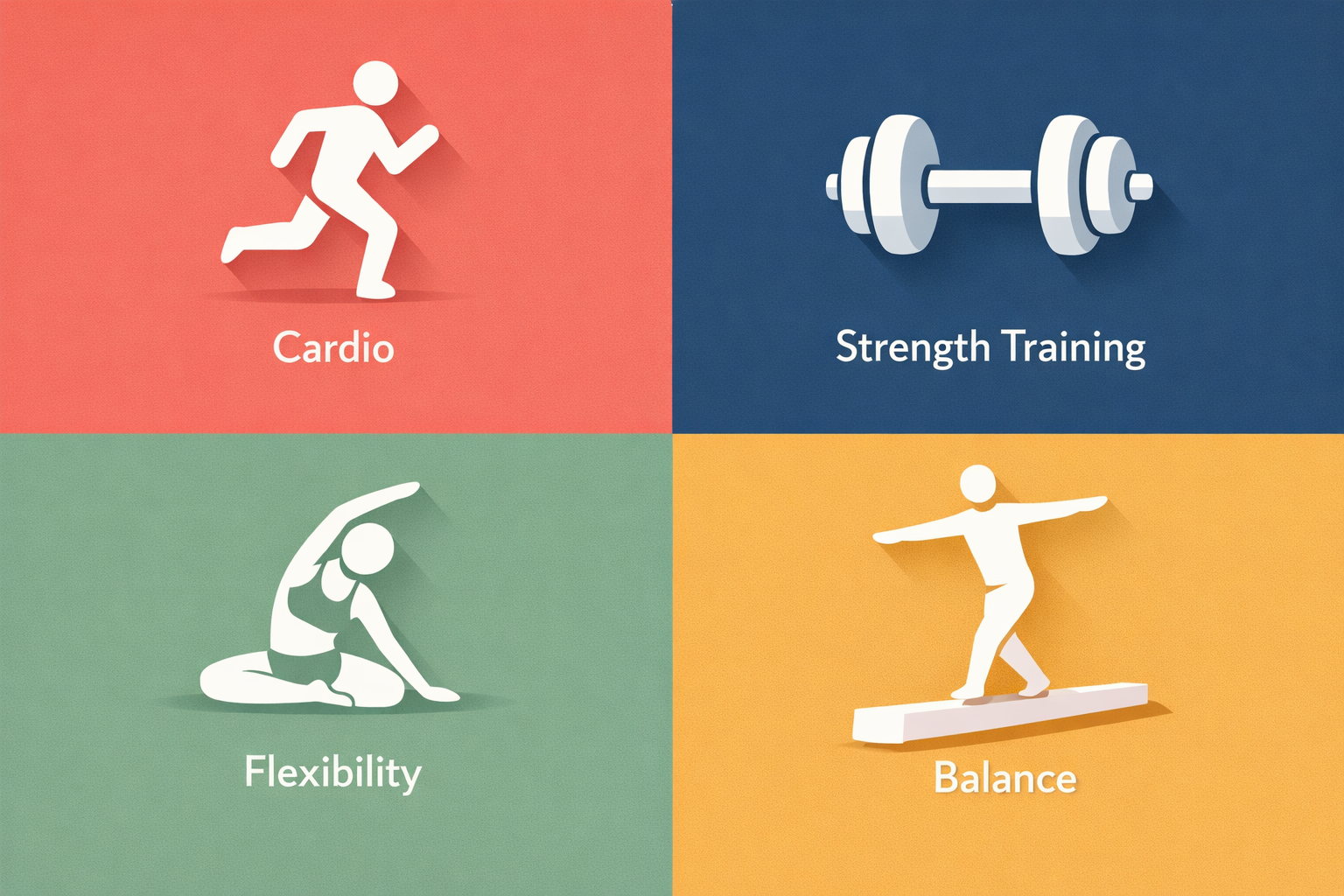
- Four types of exercise matter: cardio, strength training, flexibility, and balance — skipping any one of them leaves a gap
- Strength training after 30 is not optional — muscle mass declines roughly 3-8% per decade from your 30s without resistance work
- Short sessions count — even 12-15 minute structured workouts build fitness meaningfully over time [2]
- Low-impact options exist for every joint issue — swimming, cycling, walking, and yoga can all deliver solid results without grinding your knees
- Consistency beats intensity — three moderate sessions per week, done reliably, outperform sporadic hard efforts
- The 4-week plan in this article is designed for beginners and returners: no equipment needed for the first two weeks
- Exercise and nutrition work together — pairing movement with sensible eating habits accelerates every health goal
- Mental health benefits are real and measurable — regular movement reduces anxiety, improves sleep, and supports mood regulation
- You do not need to start big — the evidence supports starting small and building from there
Why Exercise Is the #1 Investment in Your Health
Regular physical activity is one of the few interventions with strong evidence across almost every major health outcome — cardiovascular disease, metabolic health, mental wellbeing, bone density, and longevity. No supplement, diet trend, or wellness gadget comes close to matching its breadth of benefit.
Let’s keep this practical. You don’t need to become an athlete. You need to move consistently, at a reasonable intensity, across a range of movement types. That’s the whole framework.
Physical Benefits
The physical case for regular exercise is well-established and worth stating clearly.
Cardiovascular health: Brisk walking for 150 minutes per week can meaningfully reduce the risk of heart disease, improve sleep quality, and support mood regulation — with no special equipment required [3]. The American Heart Association’s Move More Month initiative, launched in April 2026, puts walking at the centre of its public health message precisely because the evidence behind it is so strong [3].
Metabolic health: Regular movement improves insulin sensitivity, supports healthy blood sugar regulation, and helps maintain a healthy body weight. If weight management is a goal, pairing exercise with a sensible approach to nutrition gives you the best foundation.
Inflammation: Consistent physical activity helps reduce chronic low-grade inflammation over time [3]. This matters because chronic inflammation is linked to a wide range of conditions including type 2 diabetes, cardiovascular disease, and certain cancers. Our anti-inflammatory foods guide covers the dietary side of this equation if you want to go deeper.
Bone density: Outdoor exercise, particularly in spring and summer, supports vitamin D production through sunlight exposure, which in turn supports bone health [1]. Weight-bearing exercise adds a direct mechanical stimulus for bone maintenance.
Body composition: Resistance training preserves and builds lean muscle, which supports a healthier metabolic rate as you age. This matters more than most people realise after 40.
Mental Health Benefits
Here’s the real issue with how we talk about exercise and mental health: people often treat it as a secondary benefit, a nice bonus. The evidence doesn’t support that framing.
Regular exercise has measurable effects on:
- Anxiety and stress: Moderate aerobic exercise reduces cortisol levels and activates the body’s natural stress-regulation systems
- Depression: Multiple meta-analyses support exercise as an effective intervention for mild to moderate depression, comparable in some studies to medication for certain populations
- Sleep quality: Even a single session of moderate exercise improves sleep onset and duration for most adults
- Cognitive function: Regular movement is associated with better memory, sharper focus, and a reduced risk of cognitive decline in later life
- Mood: The mood-lifting effect of exercise is not hype — it’s a consistent, reproducible finding across a large body of research
The main takeaway is this: exercise is a mental health tool as much as a physical one. If you’re time-poor and stressed, that’s exactly when movement matters most — not least.
The 4 Types of Exercise Everyone Needs
A complete exercise guide for better health covers all four movement categories. Most people default to one or two and neglect the rest. That’s where problems start.
Cardio
Cardio — any activity that raises your heart rate and keeps it elevated for a sustained period — is the foundation of cardiovascular fitness and endurance.
What it does: Strengthens the heart and lungs, improves circulation, supports fat metabolism, and builds aerobic capacity.
Options for beginners: Brisk walking, cycling, swimming, light jogging, dancing, rowing.
How much: At least two to three sessions per week, totalling 150 minutes of moderate intensity [3]. Moderate intensity means you can hold a conversation but wouldn’t want to sing.
Cardio variety matters: Mixing one moderate steady-state session with one shorter interval session weekly teaches the cardiovascular system to recover efficiently between efforts [1]. You don’t need to go hard every time — in fact, you shouldn’t.
“More is not always better. Two well-structured cardio sessions per week, done consistently, will outperform five chaotic ones.”
Strength Training — Why It Matters After 30
This is the one most adults in the 30-60 age group underestimate. From your early 30s, muscle mass begins to decline — a process called sarcopenia — unless you actively work against it through resistance training.
What it does: Preserves and builds lean muscle, supports bone density, improves posture, boosts resting metabolic rate, and reduces injury risk.
Options: Bodyweight exercises (push-ups, squats, lunges), resistance bands, dumbbells, gym machines, or cable systems.
How much: Two sessions per week is a sensible starting point. Three is better once you’ve built the habit.
For body composition specifically, compound movements — squats, deadlifts, rows, presses — give the biggest return per minute of effort. See our body composition exercise guide for more on movement selection.
Common mistake: Avoiding strength training because of joint pain. In most cases, the right resistance exercises actually support joint health rather than harm it. The key is choosing appropriate loads and movements — which we cover in the low-impact section below.
Flexibility and Mobility
Flexibility refers to how far a muscle can lengthen. Mobility refers to how well a joint moves through its range of motion. Both matter, and both decline with age if you don’t work on them.
What it does: Reduces injury risk, relieves muscle tension, improves posture, and supports better movement quality in all other exercise [1].
Options: Static stretching (held 20-30 seconds), dynamic stretching (controlled movement through range), yoga, Pilates, foam rolling.
How much: Even 10 minutes of controlled stretching after each session makes a meaningful difference over time. Consistency here is more important than duration.
Practical note: Stretching cold muscles is less effective and carries higher injury risk. Do your flexibility work after a warm-up or at the end of a session.
Balance Training
Balance is the most neglected of the four — and the one that becomes most consequential as you age. Falls are a leading cause of serious injury in adults over 50, and balance training directly reduces that risk.
What it does: Improves proprioception (your body’s sense of its own position), strengthens stabilising muscles, and reduces fall risk.
Options: Single-leg stands, heel-to-toe walking, balance boards, yoga poses (tree pose, warrior III), and stability ball exercises.
How much: Even five minutes at the end of two sessions per week is enough to maintain and improve balance for most adults.
How Much Exercise Do You Actually Need?
The short answer: more than most people currently do, but less than many people fear.
WHO Guidelines Simplified
The World Health Organization recommends:
| Activity Type | Weekly Target | Notes |
|---|---|---|
| Moderate aerobic activity | 150–300 minutes | Brisk walking, cycling, swimming |
| Vigorous aerobic activity | 75–150 minutes | Running, fast cycling, aerobics |
| Muscle-strengthening | 2+ days | All major muscle groups |
| Balance/flexibility | Not formally specified | Recommended, especially 50+ |
Health professionals advise most patients to aim for three to four hours of moderately intense exercise per week — and importantly, there’s no requirement for daily gym attendance or high-impact workouts [4].
In plain English: 30 minutes of brisk walking five days a week gets you there. So does three 50-minute mixed sessions. The format is flexible. What matters is hitting the weekly total.
Breaking It Into Realistic Daily Chunks
This is where most exercise guides lose people. They present the weekly target as a single block, and it feels overwhelming. It doesn’t work that way.
Short bursts of activity distributed throughout the day contribute meaningfully to overall fitness [4]. A 10-minute walk in the morning, 10 minutes of bodyweight exercises at lunch, and a 10-minute stretch in the evening adds up to 30 minutes — and that counts.
A sensible starting point is this: if you’re currently doing very little, aim for 20 minutes of movement three times per week. Build from there. The evidence doesn’t support jumping from zero to five sessions — that’s how people get injured and quit.
The Best Exercises for Beginners at Home
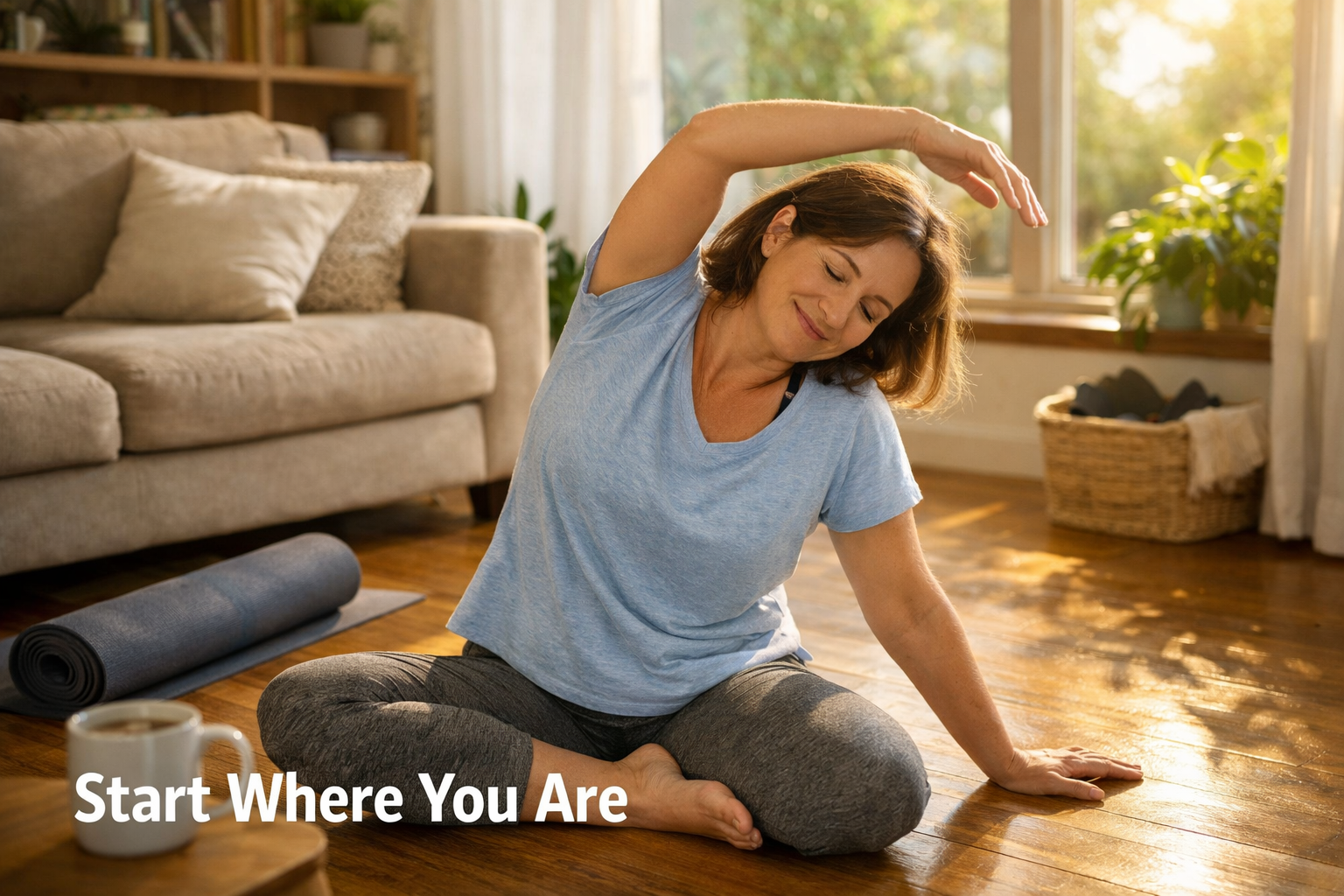
You don’t need a gym membership to start. The best exercise guide for better health at the beginner level is one that removes every possible barrier to getting started.
No-Equipment Morning Routine
Starting your day with movement sets a positive tone and builds the habit faster than evening-only exercise for most people. Our good morning exercise guide goes into more detail, but here’s a practical starting framework:
10-Minute Morning Starter (no equipment)
- March in place — 2 minutes, moderate pace, arms swinging
- Bodyweight squats — 3 sets of 10, slow and controlled
- Wall push-ups or floor push-ups — 3 sets of 8-10
- Glute bridges — 3 sets of 12 (lying on back, feet flat, hips up)
- Standing hip circles — 30 seconds each direction
- Gentle neck and shoulder rolls — 1 minute
This takes 10-12 minutes. It covers strength, mobility, and light cardiovascular activation. Done five mornings a week, it’s 50-60 minutes of structured movement you’ve added without rearranging your day.
Current structured programs — such as Better5’s April 2026 fitness challenge — use 12-15 minute sessions with a warm-up, main workout, and cool-down format, and report meaningful fitness gains over a 4-week period [2]. The session length is deliberate: short enough to be non-negotiable, structured enough to be effective.
Body Composition Exercises to Start With
If improving body composition — more muscle, less fat — is a goal, compound movements give the biggest return. These are exercises that work multiple muscle groups simultaneously.
Top five for beginners:
- Goblet squat (or bodyweight squat) — targets quads, glutes, core
- Push-up (wall, incline, or floor depending on ability) — chest, shoulders, triceps, core
- Dumbbell row (or resistance band row) — upper back, biceps, core
- Hip hinge / Romanian deadlift — hamstrings, glutes, lower back
- Plank — core stability, shoulders, full-body tension
Start with two sets of each, two to three times per week. Add a third set after two weeks. Add load (resistance bands, dumbbells) when the current level feels manageable, not before.
For a more detailed breakdown of exercises specifically targeting body composition, see our body composition exercise resource.
Low-Impact Exercise for Joints, Knees, and Bad Backs
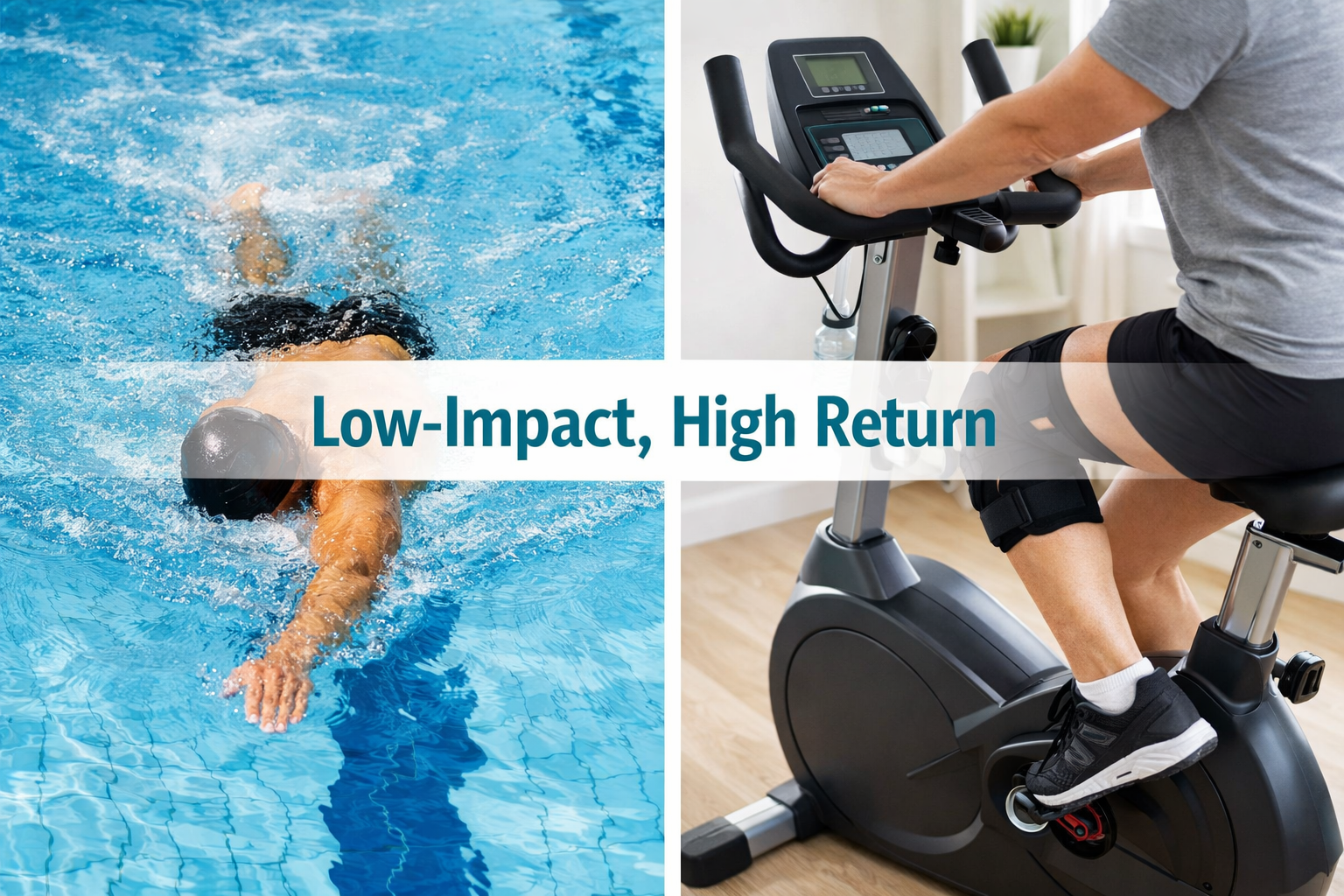
Joint pain doesn’t mean exercise is off the table. It means you need to be smarter about which exercises you choose. This section of the exercise guide for better health is specifically for adults dealing with knee issues, lower back problems, or general joint sensitivity.
Swimming — The Ultimate Low-Impact Workout
Water supports roughly 90% of your body weight, which means swimming and water-based exercise put minimal stress on joints while still delivering a full cardiovascular and muscular workout.
What the evidence shows: Swimming improves cardiovascular fitness, builds muscular endurance, supports flexibility, and is associated with reduced joint pain in people with arthritis. It’s one of the few exercises that works the entire body without compressive load on the spine or knees.
For a thorough look at what swimming specifically offers, our health benefits of swimming guide covers the evidence in detail.
Practical note: You don’t need to swim laps. Water walking, aqua aerobics, and gentle floating movement all count. Start with 20-30 minutes and build from there.
Exercise Bikes for Knee Issues
Cycling — particularly on a stationary bike — is one of the best options for people with knee pain. The circular motion is low-impact, the seat supports your weight, and you control the resistance precisely.
Key considerations for knee health:
- Seat height matters: If the seat is too low, knee flexion angle increases and pain can worsen. The knee should have a slight bend (not fully extended) at the bottom of the pedal stroke
- Resistance level: Start low. Grinding a heavy gear with a slow cadence puts more stress on the knee than spinning a lighter gear faster
- Recumbent vs. upright: Recumbent bikes reduce lower back strain and may be more comfortable for people with both knee and back issues
We’ve put together a detailed comparison of options in our best exercise bike for knee issues guide — worth reading before you buy.
Walking, Yoga, and Water Aerobics
Walking: Brisk walking is the most accessible low-impact exercise available. It requires no equipment, no gym, and no skill. For most adults with mild joint issues, walking on flat or gently varied surfaces is safe and effective. Avoid steep downhill sections if knee pain is present — the compressive force increases significantly on descents.
Yoga: Controlled, slow yoga practice improves joint range of motion, builds stabilising muscle strength, and reduces tension in the muscles surrounding problem joints. Choose a beginner or gentle yoga class rather than hot yoga or power yoga if you’re managing joint issues.
Water aerobics: Similar benefits to swimming, but more structured and social. Classes are widely available and appropriate for all fitness levels. The buoyancy effect makes movements that would be painful on land completely manageable in water.
Choose based on your situation:
- Knee pain + want cardio → stationary bike or swimming
- Back pain + want flexibility → yoga or gentle walking
- General joint sensitivity + want social exercise → water aerobics
- Limited time + want simplicity → walking, every time
Exercise by Age Group
The fundamentals don’t change much across decades, but the emphasis does. Here’s how to think about it.
In Your 30s — Build the Habit
Your 30s are the best time to establish an exercise habit that will carry you through the decades ahead. Your body is still highly adaptable, recovery is relatively fast, and the health consequences of inactivity haven’t fully accumulated yet.
Focus on:
- Building a consistent weekly routine (3-4 sessions)
- Learning good movement patterns before adding load
- Including strength training — this is when muscle-building is most efficient
- Establishing cardio as a regular habit, not an occasional event
Common mistake in your 30s: Treating exercise as something to do when life is calm. Life rarely gets calmer. Build the habit now, even if sessions are short.
In Your 40s — Prioritise Strength
By your 40s, the muscle loss process (sarcopenia) is underway if you haven’t been doing resistance training. Recovery takes a little longer, and the body is less forgiving of poor movement mechanics.
Focus on:
- Two to three strength sessions per week as a non-negotiable
- Maintaining cardio fitness with moderate intensity sessions
- Adding deliberate mobility work — 10 minutes after each session
- Paying attention to sleep and recovery, not just training volume
The evidence suggests that adults in their 40s who maintain strength training have significantly better metabolic health markers, bone density, and functional capacity into their 50s and 60s. This is the decade where the investment pays the biggest long-term dividend.
In Your 50s+ — Mobility and Consistency
In your 50s and beyond, the goal shifts slightly. It’s less about building peak fitness and more about maintaining function, managing joint health, and staying active for the long term.
Focus on:
- Consistency over intensity — three moderate sessions per week, reliably
- Balance training as a genuine priority (not an afterthought)
- Low-impact cardio options if joints are an issue
- Strength training with appropriate loads — lighter weights, more controlled movement
- Mobility work daily, even if brief
From a practical point of view, the adults who maintain the best health outcomes in their 60s and 70s are not the ones who trained hardest in their 50s — they’re the ones who trained most consistently. Keep it simple and consistent.
How to Stay Consistent: Making Exercise a Habit
The biggest gap between knowing what to do and actually doing it is habit formation. This is where most exercise guides fall short — they tell you what to do, not how to keep doing it.
The basics still do the heavy lifting here:
1. Anchor exercise to an existing habit
The most reliable way to build a new behaviour is to attach it to something you already do reliably. Morning coffee → 10-minute walk. Lunch break → 15-minute bodyweight session. Evening TV → stretching on the floor. The anchor makes the new behaviour automatic over time.
2. Make it easy to start
Lay out your workout clothes the night before. Keep a resistance band on your desk. Have a default 15-minute routine you can do anywhere. The harder it is to start, the more willpower it requires — and willpower is unreliable.
3. Track completion, not performance
Don’t measure how fast you ran or how much you lifted in the first month. Just track whether you showed up. A simple tick on a calendar works. Streaks create momentum.
4. Plan for disruption
Life will interrupt your routine. Travel, illness, work pressure, family demands. The people who stay consistent are not the ones who never miss — they’re the ones who have a plan for getting back on track quickly. A 10-minute session when you’re tired beats zero.
5. Start with what gives the biggest return
If you can only do one thing, walk. If you can do two things, add strength training. Don’t try to do everything at once in the first week. Build layers.
6. Pair exercise with something you enjoy
A podcast you only listen to during walks. A playlist reserved for workouts. A friend who joins you twice a week. Enjoyment is an underrated driver of consistency.
Your 4-Week Beginner Exercise Plan
This plan is designed for adults who are new to structured exercise or returning after a long break. It requires no gym membership and minimal equipment for the first two weeks.
Before you start: If you have existing medical conditions, joint problems, or haven’t exercised in over a year, check with your GP or a qualified physiotherapist before beginning.
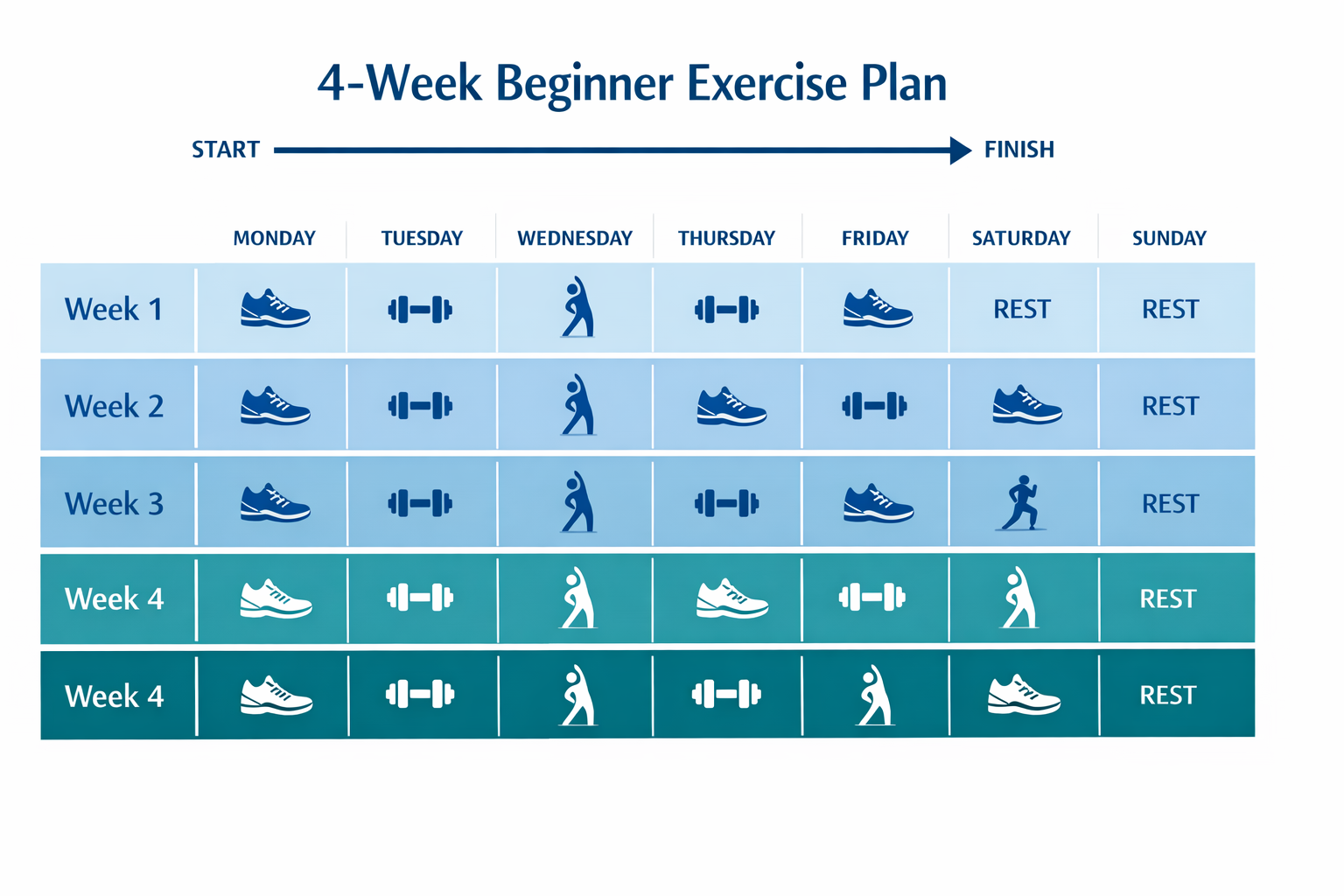
How to use this plan:
- Sessions marked “Rest” are genuine rest days — don’t fill them with extra training
- If a session is missed, don’t double up the next day. Just continue from where you left off
- The plan is progressive: each week adds a small amount of volume or intensity
- After week 4, repeat the plan with slightly heavier resistance or longer cardio sessions
Pairing exercise with nutrition accelerates results. If you’re also working on your diet, our guide to healthy meals for weight loss and high-protein diet guide are practical next steps.
Frequently Asked Questions
How often should I exercise to see results?
Three sessions per week of moderate exercise is enough to see meaningful improvements in cardiovascular fitness, strength, and mood within four to six weeks. You don’t need to train daily. Consistency over three to four sessions per week outperforms sporadic daily efforts [4].
What is the best exercise for weight loss?
There is no single best exercise. The strongest evidence points to a combination of moderate cardio (for calorie expenditure) and resistance training (to preserve muscle mass during weight loss). Walking is the most sustainable starting point for most adults. Pairing movement with a sensible eating approach gives better results than exercise alone.
How do I start working out after a long break?
Start at roughly 50-60% of what you think you can handle. The biggest mistake returners make is doing too much in the first week and getting injured or exhausted. Begin with two to three short sessions (15-20 minutes), focus on movement quality, and add volume in week two. The 4-week plan above is built specifically for this situation.
Is 30 minutes of exercise a day enough?
Yes, for most adults. Thirty minutes of moderate activity daily meets the WHO’s 150-minute weekly recommendation. If 30 consecutive minutes isn’t realistic, three 10-minute bouts spread through the day produce comparable benefits [4].
What exercise is best for bad knees?
Swimming, stationary cycling, and water aerobics are the top three options for people with knee pain. All three provide cardiovascular and muscular benefits with minimal compressive load on the knee joint. See our exercise bike for knee issues guide for specific equipment recommendations.
Can I lose weight just by walking?
Walking alone can support weight loss, particularly if you’re currently sedentary. Brisk walking for 150 minutes per week burns a meaningful number of calories and supports metabolic health [3]. Results are faster when combined with dietary changes, but walking is a legitimate and underrated tool.
Do I need to go to a gym?
No. The first two weeks of the plan above require no equipment at all. A resistance band (around £10-15) extends what’s possible significantly. A gym adds variety and access to heavier loads, but it’s not a prerequisite for meaningful fitness gains.
What time of day is best to exercise?
The best time is the time you’ll actually do it consistently. Morning exercise has some evidence behind it for habit formation and mood benefits, and our good morning exercise guide covers this in detail. But an evening session done consistently beats a morning session done occasionally.
How long before I notice a difference?
Most people notice improved energy and mood within two weeks. Visible changes in body composition typically take six to eight weeks of consistent training. Cardiovascular fitness improvements are measurable within four weeks. Strength gains begin within two to three weeks, even before muscle size changes.
Is strength training safe for people with joint problems?
In most cases, yes — with appropriate exercise selection and load. Resistance training strengthens the muscles around joints, which often reduces pain over time. The key is starting light, using controlled movement, and avoiding exercises that produce sharp pain. A physiotherapist can help identify the right starting point for your specific situation.
What should I eat before and after exercise?
Before: a light carbohydrate-based snack 30-60 minutes before moderate exercise (banana, oat bar, toast). After: a protein-containing meal or snack within 60-90 minutes to support muscle recovery. For longer or more intense sessions, timing matters more. For 20-30 minute moderate sessions, it matters less.
How does exercise affect sleep?
Regular moderate exercise improves sleep onset (how quickly you fall asleep) and sleep quality. The effect is well-documented across multiple studies. Vigorous exercise within 90 minutes of bedtime can delay sleep for some people, so timing matters if you’re a late-evening trainer.
Conclusion
The evidence on exercise is not complicated. It just requires you to act on it.
A complete exercise guide for better health doesn’t ask you to overhaul your life. It asks you to move consistently, across a range of movement types, at a moderate intensity that’s sustainable for the long term. Three to four hours per week, spread across cardio, strength, flexibility, and balance work, is enough to produce meaningful and lasting health benefits [4].
The main takeaway is this: start where you are, not where you think you should be. The 4-week plan above is designed to be achievable for adults who are busy, time-poor, or returning after a break. Sessions are short. The progression is gradual. The goal is to build a habit that lasts years, not just weeks.
Your next steps:
- Save the 4-week plan using the button above — print it or save as PDF
- Pick your first session from Week 1 and schedule it in your calendar today
- Explore related reading — our health benefits of swimming guide and good morning exercise routines are practical next steps
- Subscribe to the newsletter for weekly exercise tips, evidence-based health guidance, and new plan releases
- Pair your movement with sensible eating — our healthy living guide covers the full picture
There is no magic in it. The basics still do the heavy lifting. Move more, move consistently, and build from there.