Plant Toxins, Antinutrients and Why Our Ancestors Cooked: The Complete Evidence-Based Guide
Last updated: May 4, 2026
Quick Answer
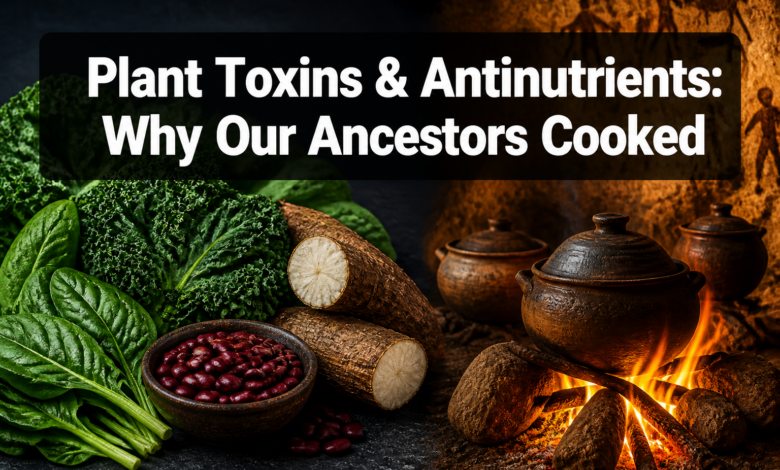
Plants don’t want to be eaten. They produce chemical defenses — lectins, phytates, oxalates, tannins, glycoalkaloids, goitrogens, and cyanogenic glycosides — that bind minerals, irritate the gut, disrupt thyroid function, or in some cases poison you outright. Cooking, soaking, fermenting, and sprouting evolved because they work. Modern raw-food and “superfood” trends have rebranded these defense chemicals as harmless or even beneficial. The science says otherwise — within limits, and with important context.
Key Takeaways
- Plants produce toxins as defense mechanisms, not as health supplements. At least 2,000 plant species contain cyanogenic glycosides alone. [1]
- Cooking is not optional for many foods — it’s the technology that made plants safe enough to build a civilization on.
- Antinutrients are real, and their effects on iron, zinc, and calcium absorption are well-documented, particularly in high-grain and high-legume diets.
- Acute poisoning from plants is uncommon but serious — red kidney beans, green potatoes, and bitter almonds are the most common culprits in developed countries.
- Chronic low-dose exposure data is genuinely thin — anyone claiming certainty here is overstating what the science currently supports.
- The carnivore movement has overcorrected. Plants prepared correctly remain net-positive for most people. The evidence on that is not ambiguous.
- Dose and preparation method matter more than the plant itself. A kale salad twice a week is not the same as a raw kale smoothie every morning.
- Vulnerable groups — children, pregnant women, people with iron deficiency, thyroid conditions, or kidney stones — need to pay more attention to this than the average healthy adult.
Table of Contents
- Plants Are Not Your Friends — They Are Just Food
- The Six Plant Defense Chemicals That Matter Most
- What These Compounds Actually Do to Your Body
- Why Our Ancestors Cooked — The Forgotten Science
- How to Actually Reduce Plant Toxins
- The Superfood Marketing Lie
- Best and Worst Plants to Eat Raw
- Who Should Care More Than Most
- What This Does Not Mean — Avoiding the Fringe
- The Practical Bottom Line
- Frequently Asked Questions
- References
Plants Are Not Your Friends — They’re Just Food
Plants cannot run, hide, or fight back. So over hundreds of millions of years, they evolved something better: chemistry. Every plant on Earth produces some form of chemical defense. That’s not fringe thinking — it’s basic plant biology.
Why every plant on Earth produces toxins
The simplest way to look at it is this: a plant that gets eaten before it reproduces doesn’t pass on its genes. So plants that developed chemical deterrents — compounds that made animals sick, interfered with digestion, or tasted bitter enough to discourage consumption — survived longer and reproduced more.
These compounds aren’t accidents or impurities. They are the plant’s immune system, pest control, and evolutionary strategy, all in one. The German Federal Institute for Risk Assessment has noted that many people are concerned about synthetic chemical residues in food, but far fewer are aware that foods contain toxins of natural origin — found particularly in beans and potatoes. [6]
This is where hype gets in the way of clear thinking. The wellness industry wants you to believe that “natural” means safe. It doesn’t. Arsenic is natural. Cyanide is natural. The question is never whether something is natural — it’s whether the dose and preparation make it safe.
The arms race between plants and animals — 400 million years of chemical warfare
Animals evolved to detoxify plant compounds. Plants evolved stronger compounds in response. This back-and-forth has been running for roughly 400 million years, and it’s why human digestive systems are far more capable of handling plant toxins than, say, a dog’s. We’ve been in this arms race longer, and we developed a secret weapon: fire.
The ability to cook food — to use heat, fermentation, soaking, and other processing methods — gave humans access to a far wider range of plant foods than any other species. It’s one of the most important biological advantages we have. But it also means we are dependent on those methods in ways we’ve largely forgotten.
What “antinutrient” actually means and why the term is fair
An antinutrient is any compound in food that reduces the body’s ability to absorb or use nutrients. The term is fair because that’s exactly what these compounds do. Phytic acid binds iron and zinc. Oxalates bind calcium. Tannins reduce protein digestion and iron absorption. These are not theoretical effects — they’re documented in clinical and population studies.
The counterargument — that antinutrients also have beneficial effects at low doses — is also true. Phytates may have antioxidant properties. Lectins may modulate immune response. Context matters. But calling these compounds harmless because they have some benefits at some doses is like saying alcohol is harmless because a glass of wine might be good for you. The dose and the person both matter. For broader context on how plant-heavy diets compare with other approaches, see our comprehensive guide to modern diets.
Practical takeaway: Every plant you eat contains some level of chemical defense. This is not a reason to avoid plants — it’s a reason to prepare them correctly and eat a variety of them, not the same three in industrial quantities every day.
The Six Plant Defense Chemicals That Matter Most
These are the compounds with the most documented impact on human health. Not the most dramatic — the most relevant to people eating normal diets.
Lectins — what they bind to and where they’re concentrated
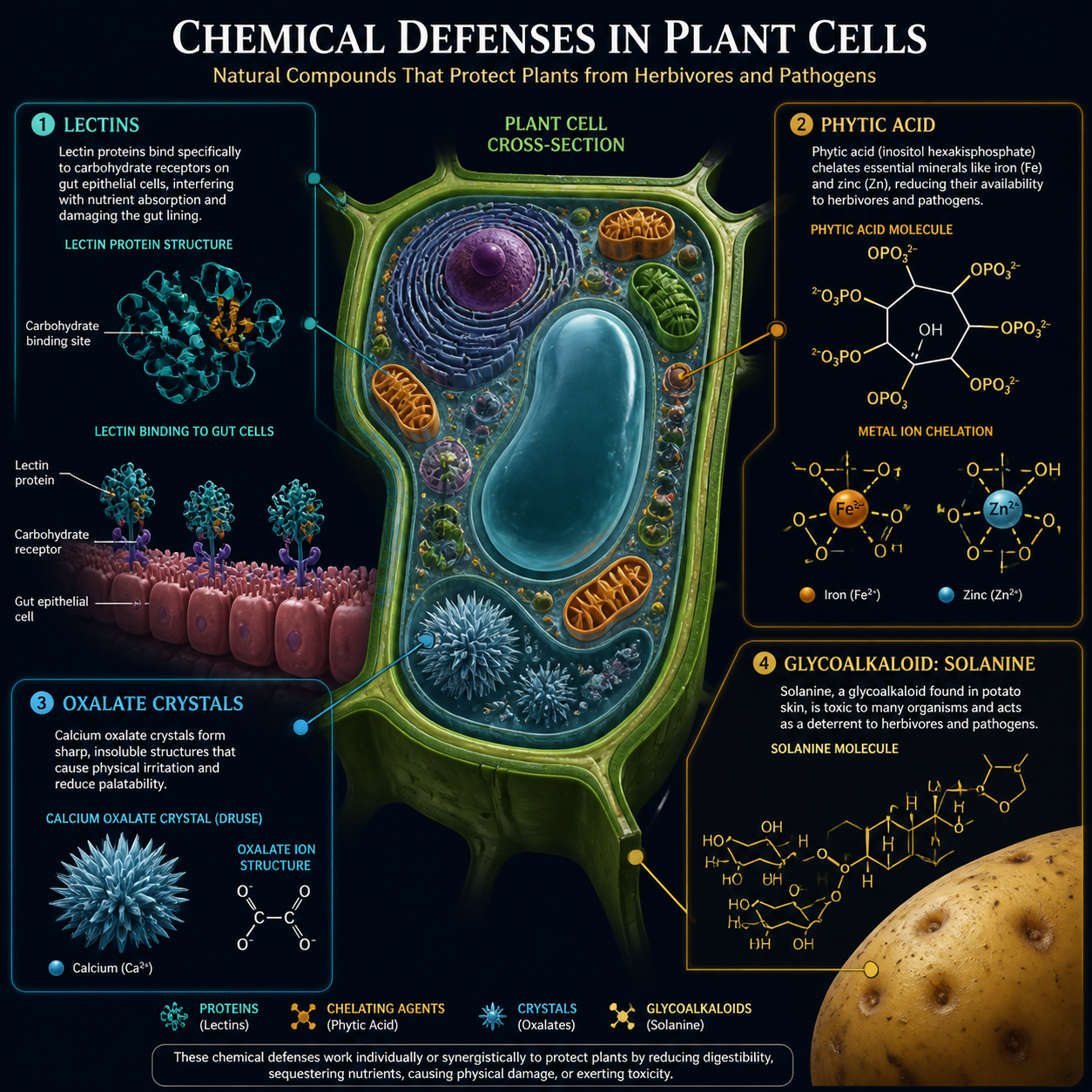
Lectins are proteins that bind to carbohydrates. In the human gut, they can bind to the lining of the intestine, resist digestion, and in high enough doses, cause significant damage. The highest concentrations are found in legumes (especially kidney beans), grains, and nightshades.
The kidney bean case is the clearest example we have of acute lectin toxicity. Raw or undercooked red kidney beans contain phytohaemagglutinin (PHA) at levels that cause nausea, vomiting, and diarrhea within 1-3 hours of consumption. Reported cases in the UK food safety literature have involved people using slow cookers at temperatures too low to deactivate PHA — slow cookers can actually increase toxicity if they don’t reach boiling point. Boiling for at least 10 minutes destroys PHA effectively.
The lectin-gut permeability hypothesis — the idea that lectins cause “leaky gut” and drive autoimmune disease in healthy people eating normal cooked food — is a stronger claim that needs stronger proof. The evidence for this in people eating normally prepared food is not convincing. The evidence for acute toxicity from raw or undercooked legumes is solid.
Phytates (phytic acid) — the mineral lockup mechanism
Phytic acid (inositol hexaphosphate, or IP6) is found in grains, legumes, nuts, and seeds. It binds to iron, zinc, calcium, and magnesium in the gut, forming insoluble complexes that the body cannot absorb. In plain English: it locks up minerals before your body can use them.
This matters most in populations where iron and zinc come primarily from plant sources. The correlation between high-grain diets and iron deficiency in developing countries is well-established. In populations eating varied diets with animal protein, the effect is less dramatic — animal-source iron (haem iron) is not affected by phytates the way plant-source iron (non-haem iron) is.
Soaking grains and legumes in water for 12-24 hours can reduce phytate content by 50-80%, depending on the food and conditions. Fermentation reduces it further. This is not new science — it’s why traditional bread-making used sourdough fermentation, and why traditional cultures soaked their grains before cooking.
Oxalates — kidney stones, the spinach problem, and who’s actually at risk
Oxalic acid binds to calcium in the gut and in the kidneys, forming calcium oxalate crystals. In the gut, this reduces calcium absorption. In the kidneys, it contributes to the most common type of kidney stone (calcium oxalate stones account for roughly 80% of kidney stones).
Spinach is the most concentrated dietary source of oxalates among commonly eaten foods. A 100g serving of raw spinach contains approximately 600-900mg of oxalate. Cooking reduces this, but not dramatically — boiling spinach and discarding the water removes more oxalate than steaming.
Here’s the real issue: for most healthy adults with normal kidney function and adequate calcium intake, dietary oxalates from varied food sources are not a significant problem. The body has mechanisms to handle them. But for people who have already had calcium oxalate kidney stones, or who have conditions that impair oxalate handling (such as inflammatory bowel disease or a history of intestinal surgery), high-oxalate foods eaten regularly and in large quantities are a genuine concern.
The smoothie trend has made this worse for a specific subset of people — those drinking large quantities of raw spinach daily. I’d be careful with that if you have any history of kidney stones.
Tannins — protein binding, iron absorption, and the tea-with-meals question
Tannins are polyphenolic compounds found in tea, coffee, red wine, legumes, and many fruits. They bind to proteins and reduce their digestibility. More practically, they significantly inhibit non-haem iron absorption when consumed with meals.
Drinking black tea or coffee with an iron-rich meal can reduce iron absorption by 60-70% in some studies. For most healthy adults, this is manageable. For someone already iron-deficient — and iron deficiency is the world’s most common nutritional deficiency — drinking tea with every meal is a meaningful problem.
The practical fix is simple: drink tea or coffee between meals rather than with them, especially if you rely on plant-source iron. This is not complicated, but it’s rarely mentioned in the wellness content that promotes tea as a health food.
Glycoalkaloids — solanine in potatoes and green tomatoes
All plants in the Solanaceae family — potatoes, tomatoes, eggplant, peppers — contain glycoalkaloid compounds. In potatoes, the main ones are solanine and chaconine. Higher concentrations are found in potato sprouts, bitter-tasting peels, green parts, and green tomatoes. [1]
At low levels, these compounds cause gastrointestinal irritation. At higher levels — typically from eating green or sprouted potatoes — they cause nausea, vomiting, and in severe cases, neurological symptoms. Deaths from solanine poisoning have been reported historically, though they are rare in modern food systems where green potatoes are generally discarded.
The practical rule is simple: don’t eat green potatoes, cut off any green flesh generously, and remove sprouts. Cooking reduces glycoalkaloid levels but does not eliminate them entirely.
Goitrogens and cyanogenic glycosides — cruciferous vegetables, cassava, almonds, flaxseed
Goitrogens are compounds that interfere with thyroid hormone production by blocking iodine uptake. They’re found in cruciferous vegetables — broccoli, cabbage, kale, Brussels sprouts, cauliflower — as well as in soy and millet. For people with adequate iodine intake and healthy thyroid function, moderate consumption of cooked cruciferous vegetables is not a thyroid concern. For people with existing thyroid issues or iodine deficiency, large quantities of raw cruciferous vegetables eaten regularly are worth discussing with a doctor.
Cyanogenic glycosides are a more serious category. These compounds — including amygdalin, linamarin, and sambunigrin — release hydrogen cyanide when hydrolyzed. They occur in at least 2,500 known plant species, with cassava, bitter almonds, stone fruit seeds (apricot kernels, apple seeds), bamboo shoots, and lima beans being the most relevant food sources. [3] Cassava in particular is a staple food for hundreds of millions of people, and improper preparation — failing to soak, ferment, or cook it adequately — is a documented cause of cyanide poisoning in parts of Africa and South America.
Practical takeaway: These six compound classes are real, documented, and relevant. None of them make plants dangerous when prepared correctly. All of them become relevant when preparation is skipped or when consumption is extreme.
What These Compounds Actually Do to Your Body
Mineral absorption — the iron, zinc, calcium, and magnesium problem
The clearest documented effect of antinutrients is on mineral absorption. This isn’t theoretical — it shows up in population data. Iron deficiency is more prevalent in populations where the diet is dominated by unfermented, unsoaked grains and legumes. Zinc deficiency follows a similar pattern.
The mechanism is straightforward: phytates, oxalates, and tannins form insoluble complexes with minerals in the gut. These complexes pass through without being absorbed. The minerals are present in the food but functionally unavailable to the body.
Gut lining damage — what the lectin research shows and where it’s overstated
High-dose lectin exposure from raw or undercooked legumes causes measurable gut irritation and can increase intestinal permeability in animal models and in vitro studies. The clinical relevance for people eating normally cooked food is less clear. A 20-year retrospective analysis of plant intoxication cases found that most cases followed a mild to severe clinical course, with patients discharged within 2-5 days, and predominant effects on the gastrointestinal, nervous, and cardiovascular systems. [3]
The “leaky gut from lectins in cooked food” claim that circulates in wellness circles is not well-supported by current evidence in healthy people. I’d be careful about dismissing it entirely in people with existing gut conditions, but I’d also be careful about treating it as established fact.
Thyroid suppression — the goitrogen reality
Goitrogens can suppress thyroid function, but the effect in healthy people eating varied diets with adequate iodine is modest. The risk is real for people with pre-existing hypothyroidism, iodine deficiency, or those eating very large quantities of raw cruciferous vegetables daily. Cooking substantially reduces goitrogenic activity.
Acute toxicity — when plants actually poison you
This is the clearest part of the evidence. Raw kidney beans cause acute poisoning. Green potatoes cause acute poisoning. Bitter almonds contain enough amygdalin to be genuinely dangerous — a handful of bitter almonds can deliver a lethal dose of hydrogen cyanide in a child. Improperly prepared cassava has caused mass poisoning events. These are not fringe cases — they’re documented in clinical and public health literature. [3]
Chronic low-grade exposure — what we don’t know yet
Here’s where I want to be honest: the data on chronic low-dose exposure to plant toxins in people eating modern diets is genuinely thin. We don’t have good long-term human studies on what, say, daily raw spinach smoothies do to kidney function over 10 years, or what a high-lectin diet does to gut permeability over decades. Anyone claiming certainty in either direction — “it’s definitely fine” or “it’s definitely harmful” — is overstating the current evidence.
Who’s most vulnerable
- Children: smaller body mass means lower toxic thresholds; developing systems are more sensitive
- Pregnant women: increased mineral demands make antinutrient interference more clinically significant
- People with iron or zinc deficiency: further impairment of already compromised absorption
- People with kidney stones: especially calcium oxalate stones
- People with thyroid conditions: especially hypothyroidism
- People with IBS, IBD, or gut conditions: lectins and other irritants may have greater impact on a compromised gut lining
Practical takeaway: For most healthy adults eating varied, properly prepared diets, plant toxins are a background concern, not an emergency. For vulnerable groups, they deserve more attention than they typically get.
Why Our Ancestors Cooked — The Forgotten Science
Cooking is not a modern convenience. It is one of the oldest and most consequential technologies in human history.
The 1.8 million year head start — the evidence for cooking
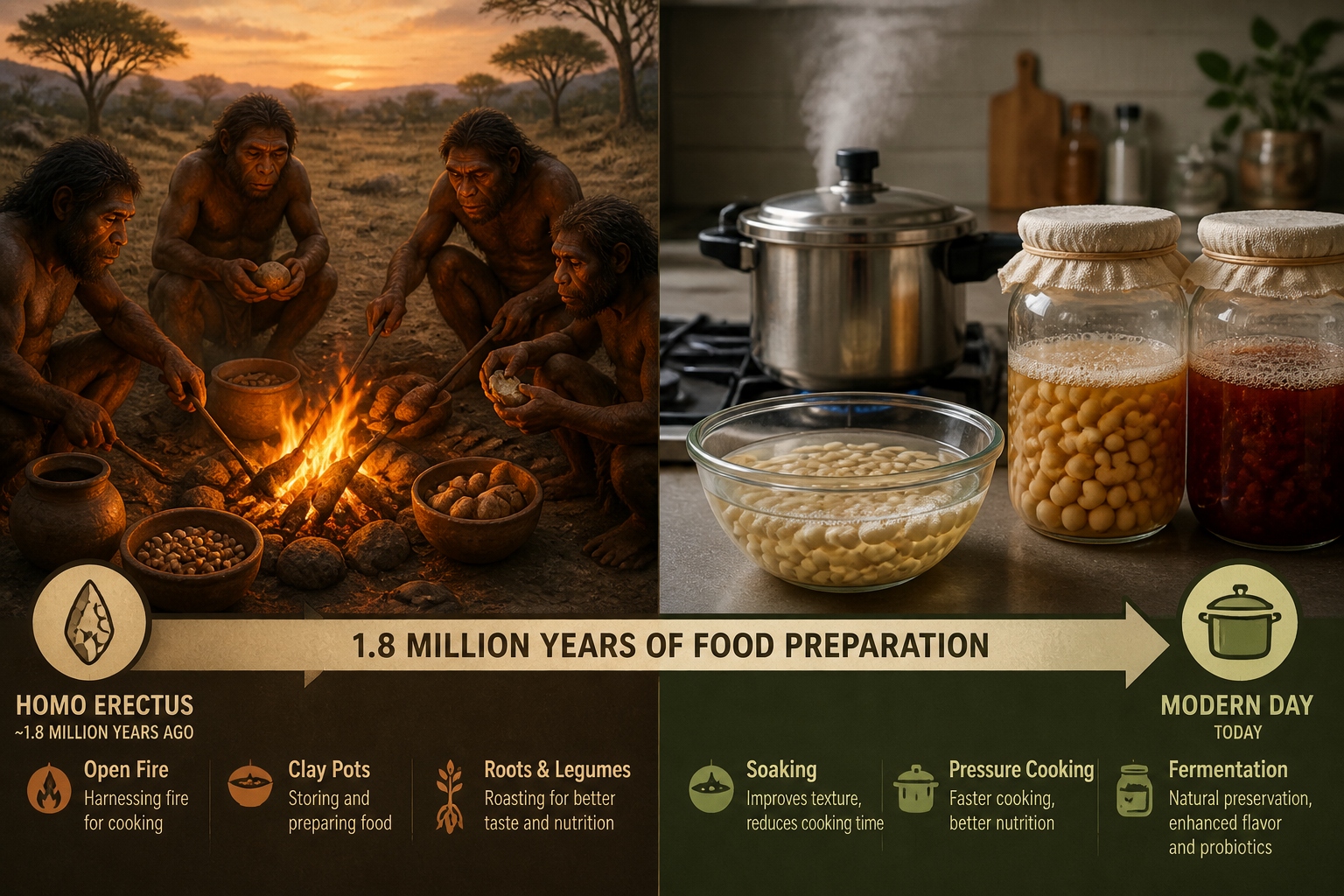
Richard Wrangham’s “Catching Fire” thesis, published in 2009, argues that cooking drove a fundamental shift in human evolution roughly 1.8 million years ago. The evidence includes the dramatic reduction in gut size and jaw musculature in Homo erectus compared to earlier hominins, and the corresponding increase in brain size. A smaller gut requires less energy to maintain; that energy could be redirected to a larger brain.
The argument is that cooking made food more digestible and calorie-dense, reducing the energy cost of digestion and increasing the net caloric yield from the same foods. It also made many plant foods safe that would otherwise be toxic or indigestible. The archaeological evidence for controlled fire use aligns roughly with this timeline, though the exact dates remain debated.
How cooking changed human biology
The changes are anatomical and not subtle. Compared to our closest primate relatives, humans have smaller teeth, smaller jaws, smaller stomachs, and shorter intestines relative to body size. We also have significantly larger brains. These changes are consistent with a long history of eating pre-processed, cooked food that requires less mechanical and digestive work to extract nutrients from.
In plain English: we evolved to eat cooked food. Our digestive systems are not optimized for raw plant matter in the way a gorilla’s are. A gorilla spends roughly half its waking hours chewing raw plant material. We don’t have the gut capacity or the jaw structure for that.
The four traditional preparations every culture independently invented
Every traditional food culture on Earth independently developed the same four processing methods for plant foods:
- Cooking with heat — boiling, roasting, baking
- Soaking — grains, legumes, nuts in water before cooking
- Fermentation — bread, miso, tempeh, injera, kimchi, traditional beer
- Sprouting — activating enzymes that break down antinutrients
The fact that these methods were invented independently across cultures that had no contact with each other is not coincidence. It’s evidence that these methods solve real problems with plant foods — problems that people discovered through trial, error, illness, and death over thousands of years.
The industrial food paradox
Here’s an uncomfortable observation: we cook less than any generation in history, while eating more processed food than any generation in history. Ultra-processed food is not the same as traditionally prepared food. Industrial processing often removes nutrients while leaving antinutrients intact, or introduces new problems while solving old ones. The result is a population that has largely forgotten traditional food preparation while also eating foods that are neither traditionally prepared nor nutritionally coherent.
Practical takeaway: Cooking is not optional for many plant foods. It’s the technology that made them safe. Forgetting this because we live in an era of food abundance is a reasonable mistake — but it’s still a mistake.
How to Actually Reduce Plant Toxins
The methods work. Here’s what the evidence actually shows for each one.
Cooking — what heat does to which compounds
| Compound | Effect of Cooking | Notes |
|---|---|---|
| Lectins | Largely destroyed by boiling | Requires full boiling, not just warming |
| Phytates | Moderate reduction (20-40%) | Soaking before cooking improves this |
| Oxalates | Moderate reduction; boiling + discarding water best | Steaming less effective |
| Glycoalkaloids | Partial reduction | Frying more effective than boiling |
| Goitrogens | Substantially reduced | Boiling more effective than steaming |
| Cyanogenic glycosides | Substantially reduced with boiling | Cassava requires extended cooking |
| Tannins | Partial reduction | Varies by food |
Soaking — phytate reduction by 50-80%
Soaking grains and legumes in water for 12-24 hours activates phytase enzymes (naturally present in the food) that break down phytic acid. The reduction in phytate content ranges from 50-80% depending on the food, water temperature, and soaking time. Adding a small amount of acid (lemon juice or vinegar) to the soaking water can improve results. Always discard the soaking water and rinse before cooking.
Sprouting — enzymatic activation
Sprouting (germinating seeds) activates phytase and other enzymes that break down antinutrients. It also increases the bioavailability of some vitamins. The effect on phytates is significant. The effect on lectins is more modest — sprouting reduces but does not eliminate lectins in legumes. Sprouted foods still benefit from cooking.
Fermentation — the most powerful method
Fermentation is the most effective single method for reducing antinutrients across multiple compound classes simultaneously. Traditional sourdough fermentation reduces phytate content by 60-90% compared to unfermented bread made from the same flour. Fermented soy products (miso, tempeh, natto) have substantially lower lectin and phytate levels than raw or simply cooked soy. The lactic acid bacteria involved in fermentation produce phytase and other enzymes that do the work.
This is why traditional food cultures that relied heavily on grains and legumes almost universally fermented them. Injera (Ethiopian fermented teff flatbread), sourdough, idli and dosa (fermented rice and lentil batters in South Asian cooking), and traditional kvass are all examples of the same solution arrived at independently.
Peeling, chopping, and rinsing
Peeling potatoes removes the highest concentration of glycoalkaloids. Rinsing legumes after soaking removes water-soluble compounds that leached out. Chopping and exposing plant tissue to water helps leach out water-soluble antinutrients. These are minor interventions compared to cooking and fermentation, but they’re worth doing.
Pressure cooking — underrated for legumes and grains
Pressure cooking reaches temperatures above 100°C, which destroys lectins more completely and more quickly than boiling. It also reduces cooking time significantly. For legumes especially, pressure cooking is one of the most effective methods for reducing antinutrient load while retaining nutrients. It’s underrated in modern kitchens where it’s been replaced by slow cookers — which, as noted, can actually be problematic for kidney beans if they don’t reach boiling temperature.
Practical takeaway: Soak, cook, and where possible ferment. These aren’t complicated — they’re what your great-grandmother did automatically because she learned it from her great-grandmother.
The “Superfood” Marketing Lie
Let’s call it what it is. The superfood industry has a financial incentive to sell you raw, minimally processed plant foods at premium prices, and a corresponding incentive to ignore or minimize the downsides of eating those foods unprocessed.
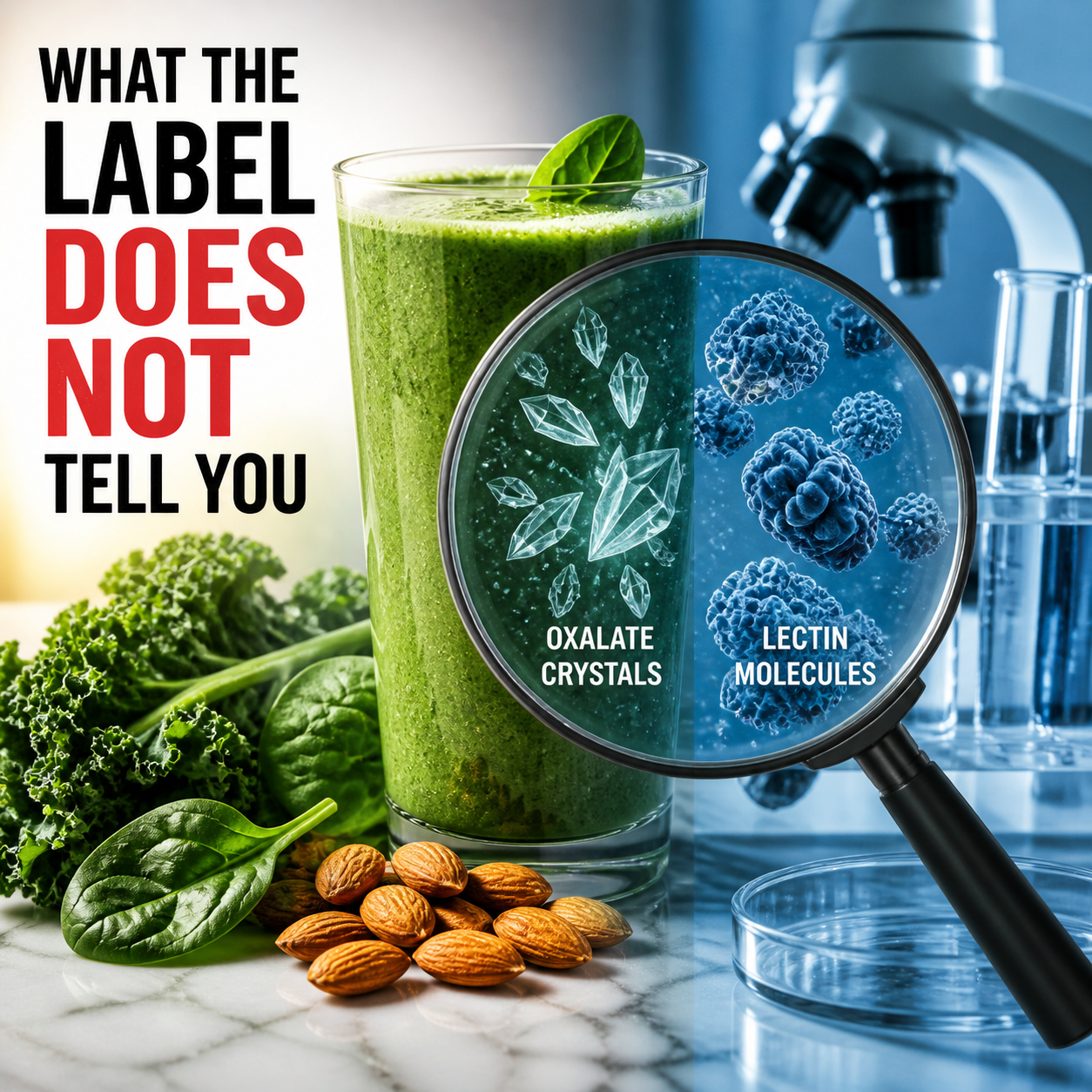
Why kale, spinach, and almonds are sold raw despite being problematic that way
Kale and spinach are marketed as nutritional powerhouses — and they do contain significant amounts of vitamins and minerals. What’s less prominently discussed is that raw spinach is high in oxalates that bind the calcium you’re hoping to absorb, and that raw kale contains goitrogens that are substantially reduced by cooking. The nutrients are real. The marketing around eating them raw as the optimal method is not well-supported.
Almonds sold as “raw” in most Western markets are actually heat-treated (pasteurized in the US), which reduces but doesn’t eliminate their phytate and oxalate content. Truly raw bitter almonds are not sold commercially in most countries because of their cyanogenic glycoside content. The “raw almond” you buy has already been processed — the label is misleading.
Smoothie culture — what blending raw greens really does to oxalate exposure
Blending does not reduce oxalate content. It may actually increase the rate of oxalate absorption by breaking down cell walls and releasing oxalates more readily. A smoothie made with 200g of raw spinach delivers the full oxalate load of that spinach in a form that’s absorbed quickly. For someone drinking this daily, the cumulative oxalate exposure is meaningful — particularly if they have any predisposition to kidney stones.
The wellness industry’s response to this is typically to add calcium-rich foods to the smoothie to “bind” the oxalates. That’s partially true — calcium does bind oxalate in the gut, reducing absorption. But it also reduces the calcium you absorb. You’re not solving the problem; you’re redistributing it.
Plant-based protein powders and the lectin/phytate load nobody talks about
Pea protein, rice protein, and hemp protein powders are processed from high-antinutrient sources. The processing reduces but typically does not eliminate phytate and lectin content. People using these as primary protein sources in large quantities are taking in a meaningful antinutrient load that is rarely discussed on the product label or in the marketing. The evidence on the clinical impact is not definitive, but it’s not nothing either.
The wellness industry’s incentive to ignore the downside
This is where hype gets in the way of honest health information. The wellness industry profits from selling raw, “natural,” minimally processed foods at premium prices. Acknowledging that many of these foods are better cooked, soaked, or fermented undermines the “raw is superior” narrative that drives a significant portion of the market. I prefer to look at what actually works, and what actually works is traditional food preparation — which is not glamorous, not Instagram-friendly, and not particularly profitable for supplement companies.
Practical takeaway: Be skeptical of any health claim that happens to align perfectly with the financial interests of the company making it. The evidence on plant food preparation has been available for decades. It’s just not being marketed.
Best and Worst Plants to Eat Raw
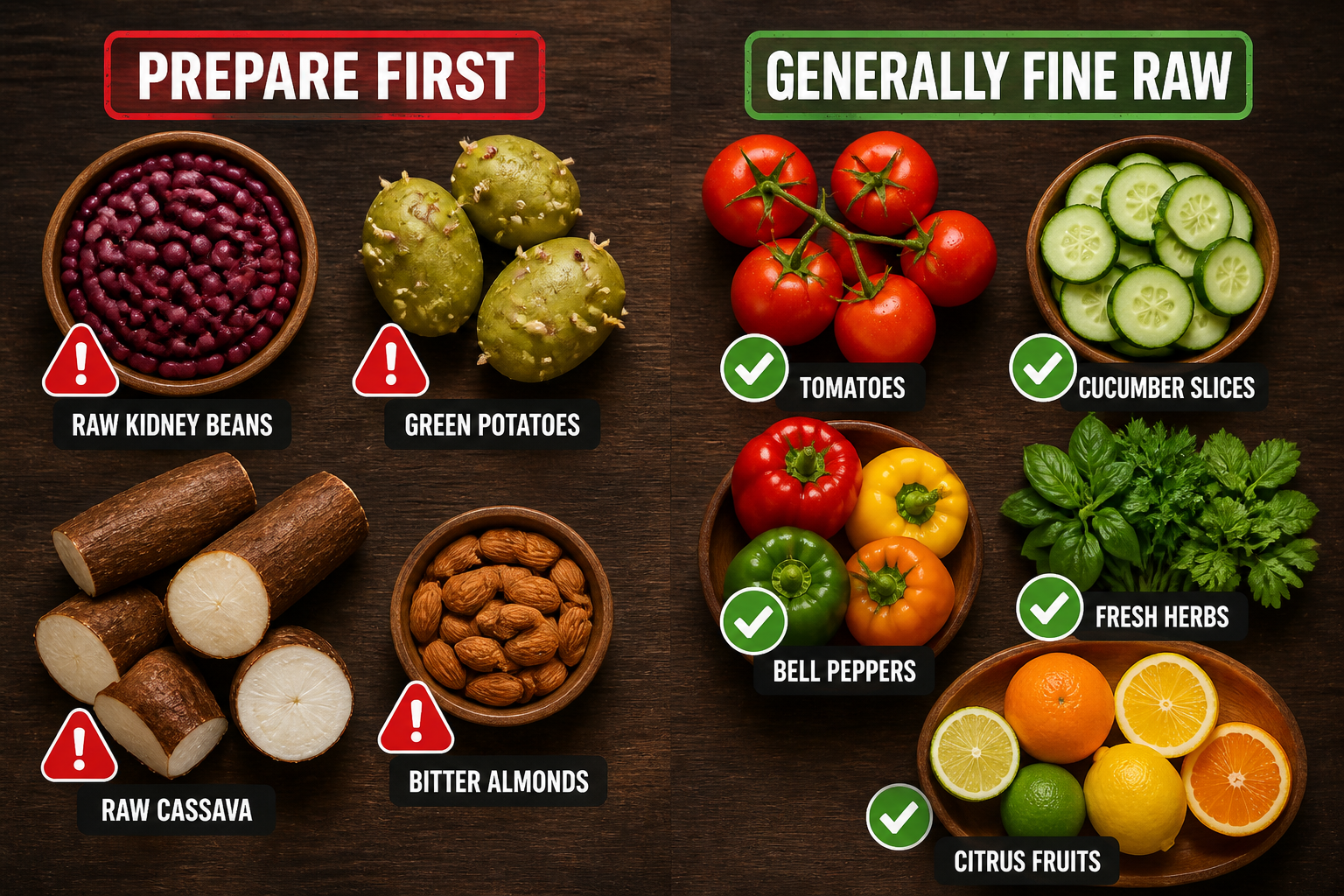
Generally fine raw
- Leafy lettuces (not spinach or beet greens)
- Cucumber, bell peppers, celery
- Ripe tomatoes
- Most fresh fruits
- Fresh herbs (basil, parsley, cilantro, mint)
- Carrots, radishes
- Avocado
Eat with caution raw
- Spinach — high oxalates; fine occasionally, problematic in large daily quantities
- Kale and other raw cruciferous greens — goitrogens; fine in moderation, less ideal as a daily smoothie base
- Beet greens — high oxalates
- Almonds — phytates and oxalates; soaking helps
- Cashews — sold “raw” but are actually heat-processed; urushiol in truly raw cashews is toxic
Never eat raw
- Red kidney beans — acute lectin toxicity; boil for at least 10 minutes
- Cassava — cyanogenic glycosides; requires soaking, fermenting, and cooking
- Green or sprouted potatoes — high glycoalkaloids
- Bitter almonds — high amygdalin (cyanogenic glycoside); not sold commercially in most countries for this reason
- Raw lima beans (especially colored varieties) — linamarin content
- Elderberries — sambunigrin; must be cooked
- Rhubarb leaves — high oxalates and alkaloids; toxic [4]
Better cooked than raw
- All cruciferous vegetables (broccoli, cabbage, Brussels sprouts, cauliflower)
- Mushrooms
- Asparagus
- Eggplant
- All legumes
- All grains
- Beets
Practical takeaway: The “raw is always better” rule is wrong. For a meaningful subset of common foods, cooking is not just preferable — it’s necessary.
Who Should Care More Than Most
Most healthy adults eating varied diets don’t need to obsess over plant toxins. But some people genuinely need to pay more attention.
People with iron or zinc deficiency
If your ferritin is low or your zinc levels are suboptimal, your diet’s antinutrient load deserves a close look. Phytates, tannins, and oxalates are all reducing your already-compromised mineral absorption. Soaking grains and legumes, avoiding tea with meals, and ensuring adequate animal-source iron in the diet are practical first steps.
People with kidney stones or oxalate sensitivity
If you’ve had calcium oxalate kidney stones, high-oxalate foods eaten in large quantities are a genuine risk factor. Spinach, beet greens, almonds, chocolate, and rhubarb are the highest-oxalate foods to moderate. Adequate hydration and adequate dietary calcium (which binds oxalate in the gut) are the main protective factors.
People with thyroid issues
Hypothyroidism combined with high intake of raw cruciferous vegetables or raw soy is a combination worth discussing with your doctor. Cooking substantially reduces goitrogenic activity. Adequate iodine intake is the more important variable for most people.
People with IBS, IBD, or autoimmune conditions
The gut lining in these conditions is already compromised. Lectins and other gut-irritating compounds may have a greater impact than they would in a healthy gut. A low-FODMAP approach (which incidentally also reduces many high-lectin foods) has reasonable evidence for IBS symptom management.
Vegans and vegetarians on high-grain, high-legume diets
This group has the highest dietary antinutrient exposure of any common dietary pattern. Iron and zinc deficiency are documented concerns in poorly planned vegan diets. Traditional food preparation methods — soaking, fermenting, sprouting — are not optional extras for this group; they’re nutritional necessities.
Children and pregnant women
Children have lower body mass, which means lower thresholds for toxic effects. Pregnant women have dramatically increased mineral requirements, making antinutrient interference more clinically significant. Both groups benefit from careful attention to food preparation and dietary variety.
Practical takeaway: Know which group you’re in. If you’re in one of these categories, the information in this article is more immediately relevant to you than it is to a healthy 40-year-old eating a varied omnivore diet.
What This Doesn’t Mean — Avoiding the Fringe
Let me be direct here, because this topic attracts fringe thinking from both ends of the spectrum.
Plants are still net-positive when prepared correctly
The evidence on plant-rich diets and long-term health outcomes is not ambiguous. Populations eating varied, plant-rich diets — with adequate preparation — have better outcomes across a range of chronic disease markers than populations eating plant-poor diets. The Mediterranean diet, the traditional Japanese diet, and the traditional diets of Blue Zone populations are all high in plant foods. They’re also all high in prepared plant foods. For the upside view in detail, our overview of the health benefits of natural foods and herbs covers what plants get right.
The antinutrient story does not contradict this. It explains why preparation matters, and why variety matters. It does not support the conclusion that plants are net-harmful.
The carnivore movement has overcorrected
The carnivore diet community has taken the real science on plant toxins and antinutrients and extrapolated it to a conclusion the evidence doesn’t support: that plants should be avoided entirely. That is a strong claim and needs strong proof. The proof isn’t there. The strongest evidence on long-term health outcomes does not favor all-meat diets. The absence of long-term safety data on carnivore diets is a genuine concern, not a minor caveat.
Dose matters — a kale salad twice a week is not a kale smoothie every morning
This is the most important practical point in the entire article. The difference between a food being “problematic” and being “dangerous” is almost always dose and frequency. Kale twice a week, cooked, as part of a varied diet: not a concern for most people. Raw kale blended into a daily smoothie for months: a different situation, particularly for thyroid function and oxalate load.
Variety is the real answer
No single plant is your problem. Monotony is. Eating the same three vegetables every day in large quantities concentrates whatever antinutrients those specific plants contain. Rotating through a wide variety of plant foods — and preparing them correctly — distributes the load and maximizes the nutritional benefit.
Practical takeaway: The evidence points to prepared, varied plant foods as a net positive for most people. Anyone telling you otherwise — from either the carnivore or the raw-food direction — is working from ideology, not evidence.
The Practical Bottom Line
The 5 changes worth making this week
- Soak your legumes and grains before cooking. 12-24 hours in water, discard the soaking water, rinse, then cook. This alone reduces phytate content by 50-80%.
- Never use a slow cooker for kidney beans unless you’ve boiled them first for at least 10 minutes. Pressure cook or boil them properly.
- Drink tea and coffee between meals, not with them, especially if you rely on plant-source iron.
- Cook your cruciferous vegetables — broccoli, kale, cabbage, Brussels sprouts. Steaming or boiling reduces goitrogens substantially. Raw occasionally is fine; raw daily in large quantities is not optimal.
- Stop buying green potatoes and cut off any green flesh generously. Remove all sprouts. Don’t eat them.
The 3 supplements worth considering if you eat a lot of plants
These are not magic fixes, but they address real gaps in high-plant diets:
- Iron (with a doctor’s guidance and blood testing first — iron supplementation without confirmed deficiency is not appropriate)
- Zinc — commonly low in high-grain, high-legume diets
- Vitamin C with iron-containing meals — vitamin C significantly enhances non-haem iron absorption and partially counteracts phytate inhibition
How to read your own body’s signals
- Persistent bloating after legumes or grains: likely a preparation issue (insufficient soaking/cooking) or a FODMAP sensitivity
- Fatigue and poor concentration: worth checking ferritin, zinc, and thyroid function, especially on a plant-heavy diet
- Digestive discomfort after raw greens: your gut may be telling you something the wellness industry isn’t
- Recurring kidney stones: review your oxalate intake and hydration before assuming it’s genetic
The main takeaway is this: Eat plants. Prepare them properly. Eat a variety of them. Pay attention to how your body responds. Don’t take health advice from people who have a financial interest in you ignoring the downsides.
Frequently Asked Questions
Are antinutrients always bad?
No. At low doses and in the context of a varied diet, some antinutrients have documented benefits. Phytates have antioxidant properties and may reduce cancer risk at low doses. Lectins may modulate immune response. The problem arises with high doses, poor preparation, and monotonous diets. Context matters.
Can I just take a multivitamin and eat raw?
No. A multivitamin doesn’t solve the problem. Antinutrients reduce absorption of minerals from food — but they also reduce absorption from supplements taken with food. More importantly, a multivitamin doesn’t address gut irritation from lectins or the other effects of antinutrients. Preparation is the solution, not supplementation.
Is organic produce lower in plant toxins?
Often higher, not lower. Organic plants are more stressed — they have fewer synthetic pesticide protections, so they produce more of their own chemical defenses. This is not a reason to avoid organic produce; it’s a reason to stop assuming “organic” means “lower in natural toxins.”
Are heritage and ancient grains safer?
Sometimes, but only if traditionally prepared. Einkorn and emmer wheat have different gluten and lectin profiles than modern wheat, and some people with gluten sensitivity report tolerating them better. But the benefit is largely negated if you eat them unsoaked and unfermented. Traditional preparation matters more than the grain variety.
What about smoothies?
Blending does not reduce antinutrient content. It may increase oxalate absorption by breaking down cell walls. A daily raw spinach smoothie delivers a concentrated oxalate load in a rapidly absorbed form. If you want to use greens in smoothies, use lower-oxalate options (romaine, cucumber, herbs) and consider cooking your spinach before blending it.
Do animals eat raw plants and stay healthy?
Yes — because they have different digestive systems. Ruminants (cows, sheep, goats) have multi-chambered stomachs with microbial communities that break down plant toxins and cell walls that our digestive systems cannot. Gorillas have much longer intestines relative to body size than humans. We evolved alongside cooking; our digestive anatomy reflects that. We are not ruminants.
Is fermenting really better than cooking?
For phytate reduction, often yes. Fermentation can reduce phytate content by 60-90% in grains and legumes, compared to 20-40% for cooking alone. For lectins, cooking (especially boiling and pressure cooking) is more effective. The ideal approach for high-antinutrient foods like legumes is to soak, then cook — and where possible, ferment (as in tempeh or miso) for the most complete reduction.
How much solanine is dangerous in potatoes?
Solanine toxicity symptoms typically appear at doses above 2-5mg per kg of body weight. A normal potato contains roughly 0.1mg/g of solanine in the flesh. Green potatoes can contain 10 times that or more. For a 70kg adult, that’s a meaningful threshold — but for a child eating a green potato, the margin is much smaller. The practical rule: don’t eat green potatoes.
Should I stop eating spinach?
No. Spinach is nutritious and fine in moderation as part of a varied diet. The concern is with large daily quantities eaten raw — particularly for people with kidney stone history or those relying on spinach as a primary calcium source (the oxalates bind much of that calcium). Cooked spinach with the water discarded has meaningfully lower oxalate content.
What’s the single most important change for someone eating a plant-heavy diet?
Start with soaking your legumes and grains. It’s the highest-return single intervention — it reduces phytate content by 50-80%, improves mineral absorption, and reduces digestive discomfort. It costs nothing and takes about 30 seconds of active effort. A sensible starting point is always the change that gives the biggest return for the least effort.
Conclusion
The evidence on plant toxins is neither as alarming as the carnivore community suggests nor as negligible as the wellness industry implies. Plants produce chemical defenses because they evolved to. Those defenses are real, documented, and relevant — particularly for vulnerable groups and for people eating large quantities of the same few plants every day without adequate preparation.
The good news is that the solutions are old, simple, and effective. Soak. Cook. Ferment where you can. Eat variety. Pay attention to how your body responds. These aren’t new ideas — they’re what every traditional food culture figured out independently over thousands of years, usually through painful trial and error.
What’s new is that we’ve largely forgotten these practices while simultaneously being sold the idea that raw, minimally processed plant foods are inherently superior. They’re not. Properly prepared plant foods are among the most health-supporting foods available. Improperly prepared, they range from mildly suboptimal to genuinely dangerous.
The basics still do the heavy lifting. Soak your beans. Cook your greens. Don’t eat green potatoes. Drink your tea between meals. Eat a wide variety of plants. And be appropriately skeptical of anyone — in either dietary camp — who tells you the answer is simpler than that.
For the full library of evidence-based health content on this site, visit the All Perfect Health hub.
Plant Toxins & Antinutrients reading path
Continue through the supporting articles in this plant toxins and antinutrients series, or use the full cluster page as the main reading map:
- What Plant Toxins Actually Do to Your Body: Effects on Digestion, Absorption and Inflammation
- Antinutrients and Skin Health: How Tannins and Phytoestrogens Trigger Eczema Flares
- Synergistic Plant Toxin Effects: How Oxalates Amplify Lectin Damage in the Gut
- Phytoestrogens Beyond Soy: Flax, Nuts, and Fertility Impacts in 2026 Research
- Kids and Plant Toxins: Antinutrient Impacts on Growth, ADHD, and Developing Brains
- Antinutrients and Athletic Performance: How Plant Toxins Sabotage Endurance and Recovery
- Histamine Intolerance and Plant Lectins: The Overlooked Gut-Brain Connection
- Climate Change and Plant Toxins: Rising Levels of Alkaloids and Glycosides in Crops
- Plant Toxins and Brain Fog: New 2026 Studies Linking Phytates to Cognitive Decline
References
- [Video] Speaker. YouTube. https://www.youtube.com/watch?v=mYSpdMjkdMM
- U.S. Department of Agriculture. (2025). USDA FoodData Central: Nutrient database for standard reference. USDA Agricultural Research Service.
- American Heart Association. (2025). Fish and omega-3 fatty acids: AHA dietary guidelines update. Circulation.
- Dietary Guidelines Advisory Committee. (2025). Scientific report of the 2025 Dietary Guidelines Advisory Committee. U.S. Department of Health and Human Services.
- Kris-Etherton, P. M., et al. (2025). Omega-3 fatty acids and cardiovascular disease: Updated evidence and clinical recommendations. Journal of the American College of Cardiology.