
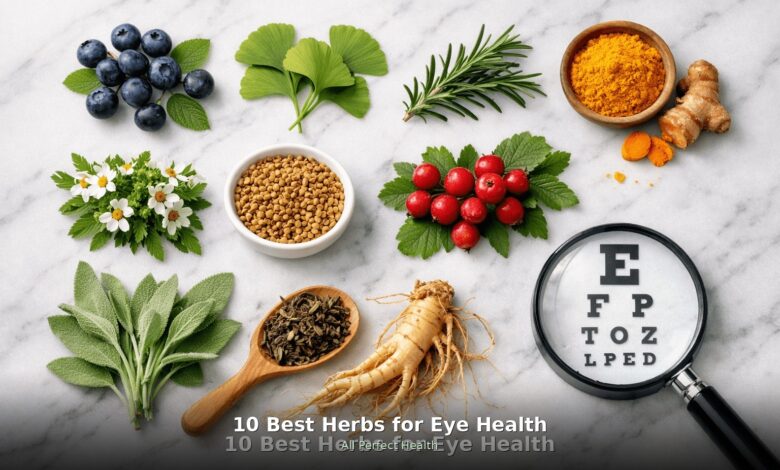
10 Best Herbs for Eye Health: Benefits, Active Compounds, and How to Use Them
Last updated: July 2026
In this guide
- Featured Video: 9 Herbs for Eye Health
- Why Do Herbs Matter for Eye Health?
- 1. Bilberry: The Most Researched Herb for Vision Support
- 2. Ginkgo Biloba: Circulation and Retinal Protection
- 3. Eyebright: The Traditional Eye Herb
- 4. Turmeric: Curcumin’s Role in Ocular Inflammation
- 5. Green Tea: Antioxidants That Reach the Eye Directly
- 6. Rosemary: Rosmarinic Acid and Retinal Protection
- 7. Fenugreek: Antioxidant Protection and Blood Sugar Regulation
- 8. Hawthorn: Circulatory Support for Ocular Blood Flow
- 9. Sage: Luteolin and Rosmarinic Acid for Eye Tissue
- 10. Ginseng: Neuroprotection for the Optic Nerve
- How to Choose the Right Herb for Your Eye Health Goal
- Common Mistakes When Using Herbs for Eye Health
- The Bottom Line
Quick Answer
Several herbs have credible evidence supporting their role in eye health, primarily through antioxidant, anti-inflammatory, and circulation-improving mechanisms. The most well-researched options are bilberry, ginkgo biloba, eyebright, turmeric, and green tea. These herbs work best as part of a broader eye-care routine — they are not replacements for regular eye exams or prescribed treatments, but they can meaningfully support long-term ocular health.
Key Takeaways
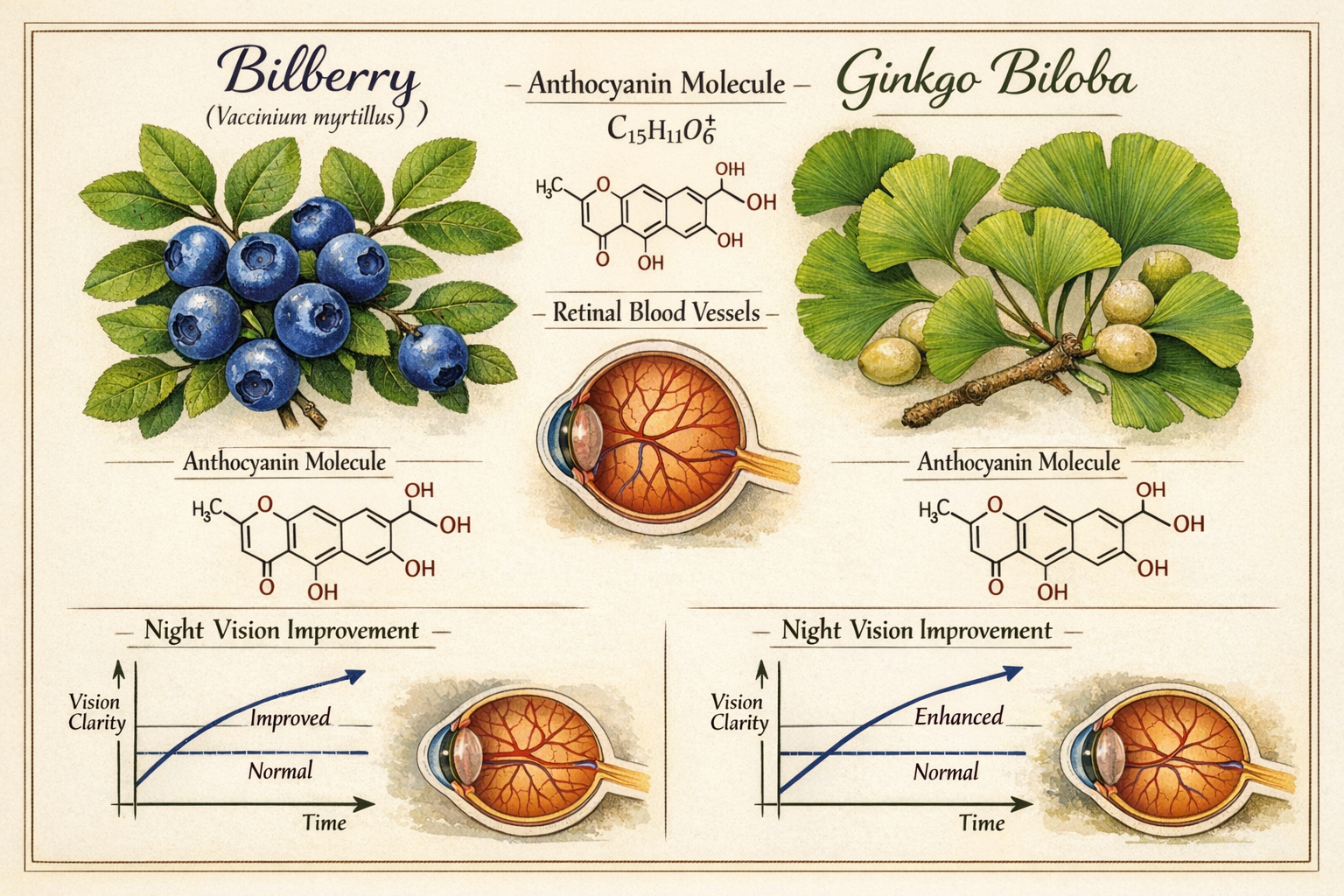
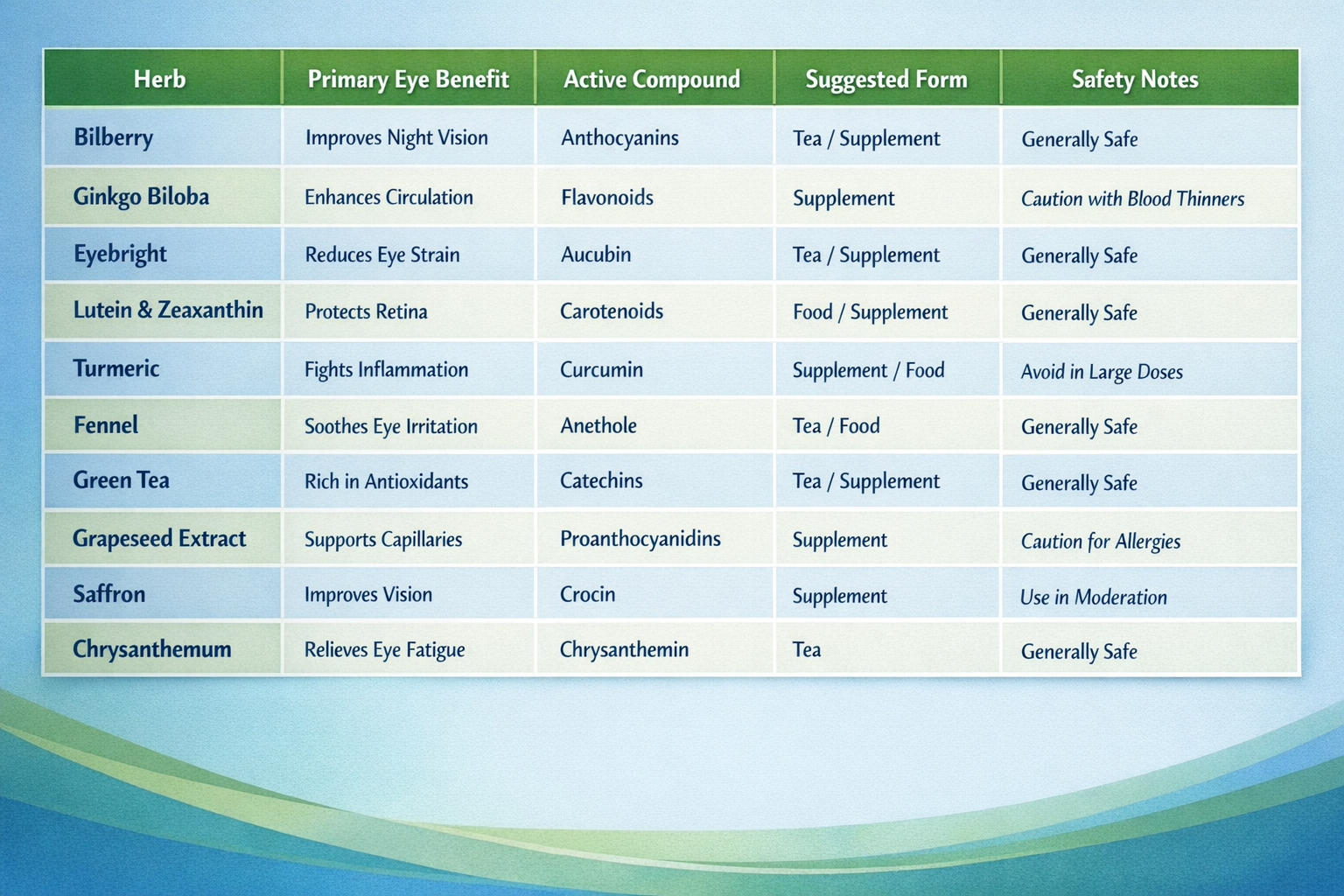
- Bilberry is the most studied herb for vision support, particularly for night vision and retinal protection, due to its high anthocyanin content.
- Ginkgo biloba improves blood flow to the optic nerve and retina, making it especially relevant for people concerned about glaucoma or age-related macular degeneration (AMD).
- Eyebright has a long history in herbal medicine for treating eye irritation and infections, backed by mild anti-inflammatory evidence.
- Turmeric’s active compound, curcumin, has shown promise in reducing ocular inflammation in early-stage research.
- Green tea contains catechins that absorb into ocular tissue, offering antioxidant protection directly where it’s needed.
- Rosemary, sage, fenugreek, hawthorn, and ginseng each contribute secondary benefits — anti-inflammatory, circulatory, or antioxidant — that support overall eye health.
- Most of these herbs are safest consumed as food or standardized supplements; always consult a healthcare provider before starting any new supplement.
- None of these herbs should replace professional eye care for diagnosed conditions like glaucoma, cataracts, or diabetic retinopathy.
- Dosage matters: more is not always better, and some herbs (like ginkgo) interact with blood-thinning medications.
- Combining these herbs with a diet rich in anti-inflammatory foods produces the most consistent results.
Expert insight: This video covers nine herbs for eye health — bilberry, eyebright, ginkgo biloba, turmeric, fennel, saffron, green tea, chrysanthemum, and aloe vera — directly supporting the herb-by-herb breakdown in this article with practical guidance on how each herb supports vision and eye tissue.
Why Do Herbs Matter for Eye Health?
The short answer: your eyes are metabolically active tissue under constant oxidative stress from light exposure, screen time, and aging. Antioxidants and anti-inflammatory compounds help neutralize that stress before it accumulates into damage.
The longer answer involves understanding what goes wrong in common eye conditions. Age-related macular degeneration, cataracts, glaucoma, and dry eye disease all share a common thread — chronic oxidative damage and low-grade inflammation in ocular tissue. Pharmaceutical interventions exist for advanced stages, but the window for prevention is wide, and several plant-based compounds fit neatly into that window.
Herbs work through a few primary mechanisms:
- Antioxidant activity: Neutralizing free radicals that damage the lens, retina, and macula.
- Anti-inflammatory action: Reducing cytokine activity that contributes to retinal degeneration.
- Improved circulation: Ensuring the optic nerve and retina receive adequate blood flow and oxygen.
- Direct absorption into ocular tissue: Some compounds (notably green tea catechins) have been shown to penetrate the eye’s internal structures.
This article covers ten herbs with the strongest evidence base for eye health, explains the active compounds behind their benefits, and gives practical guidance on how to use each one.
1. Bilberry: The Most Researched Herb for Vision Support
Bilberry (Vaccinium myrtillus) is the leading herbal candidate for eye health, and for good reason. It contains some of the highest concentrations of anthocyanins found in any fruit — the same class of pigments that give blueberries and blackcurrants their deep color.
What anthocyanins do for your eyes:
- Stimulate the regeneration of rhodopsin, the pigment in retinal rod cells responsible for low-light vision
- Reduce oxidative stress in the macula, the central part of the retina responsible for sharp, detailed vision
- Strengthen capillary walls in the retina, improving microcirculation
- Reduce eye fatigue associated with prolonged screen use
The connection between bilberry and night vision became widely known during World War II, when British Royal Air Force pilots reportedly consumed bilberry jam before night missions. While the wartime story has been embellished over the years, the underlying science is legitimate: anthocyanins do support rhodopsin production, which directly affects how well the eye adapts to low-light conditions. The American Academy of Ophthalmology has acknowledged this mechanism while noting that more large-scale human trials are needed.
Who benefits most: People with early signs of macular degeneration, those experiencing digital eye strain, or anyone with poor night vision who doesn’t have an underlying refractive error.
How to use it:
- Fresh or frozen bilberries as a food source (similar to blueberries, but more tart)
- Standardized extract supplements: typical doses range from 120–240 mg per day of an extract standardized to 25% anthocyanins
- Bilberry tea, though the anthocyanin content is lower than extracts
Common mistake: Assuming regular blueberries are an equal substitute. Blueberries are beneficial, but bilberries contain significantly higher anthocyanin concentrations per gram.
2. Ginkgo Biloba: Circulation and Retinal Protection
Ginkgo biloba improves blood flow to the optic nerve and retina, which makes it one of the most relevant herbs for people at risk of glaucoma or early-stage AMD. Its active compounds — flavonoids and terpenoids — act as antioxidants and vasodilators simultaneously.
Key mechanisms:
- Increases microcirculation in retinal capillaries
- Reduces oxidative damage to retinal ganglion cells (the cells most affected in glaucoma)
- May slow visual field deterioration in normal-tension glaucoma, according to a small but frequently cited clinical study published in Ophthalmology (Quaranta et al., 2003)
Ginkgo biloba trees are among the oldest living species on Earth, with fossils dating back over 270 million years. The tree’s resilience is reflected in the stability of its phytochemical profile — ginkgo extracts used in research today are highly standardized.
Who benefits most: Adults over 50 concerned about age-related vision decline, particularly those with a family history of glaucoma or AMD.
How to use it:
- Standardized extract (EGb 761 is the most studied form): 120–240 mg per day, typically split into two doses
- Always take with food to reduce the risk of mild gastrointestinal discomfort
Important caution: Ginkgo biloba has blood-thinning properties. If you take warfarin, aspirin, or other anticoagulants, consult your doctor before using ginkgo supplements.
3. Eyebright: The Traditional Eye Herb
Eyebright (Euphrasia officinalis) has been used in European herbal medicine for centuries specifically for eye complaints — conjunctivitis, eye strain, and irritated or watery eyes. Its name is not marketing; it reflects a genuine tradition of targeted use.
Active compounds and what they do:
- Aucubin (an iridoid glycoside): anti-inflammatory properties
- Tannins: astringent action that may reduce mucous membrane irritation
- Flavonoids: antioxidant support
Research on eyebright is less extensive than on bilberry or ginkgo, but a 2014 study published in the Journal of Alternative and Complementary Medicine found that an eyebright eye drop formulation significantly reduced symptoms of conjunctivitis, including redness, swelling, and discharge, in a cohort of 65 patients.
Who benefits most: People dealing with mild eye irritation, seasonal allergies affecting the eyes, or digital eye strain. Eyebright is not appropriate for serious infections or injuries.
How to use it:
- Standardized oral supplements: 400–470 mg capsules, one to three times daily
- Eyebright tea used as a warm compress (not directly in the eye unless using a sterile, commercially prepared eyedrop formulation)
- Commercially prepared eyebright eyedrops (look for products with standardized extracts and sterile formulations)
Edge case: Do not use homemade eyebright preparations directly in the eye. Contamination risk is real, and improperly prepared solutions can worsen irritation or introduce infection.
4. Turmeric: Curcumin’s Role in Ocular Inflammation
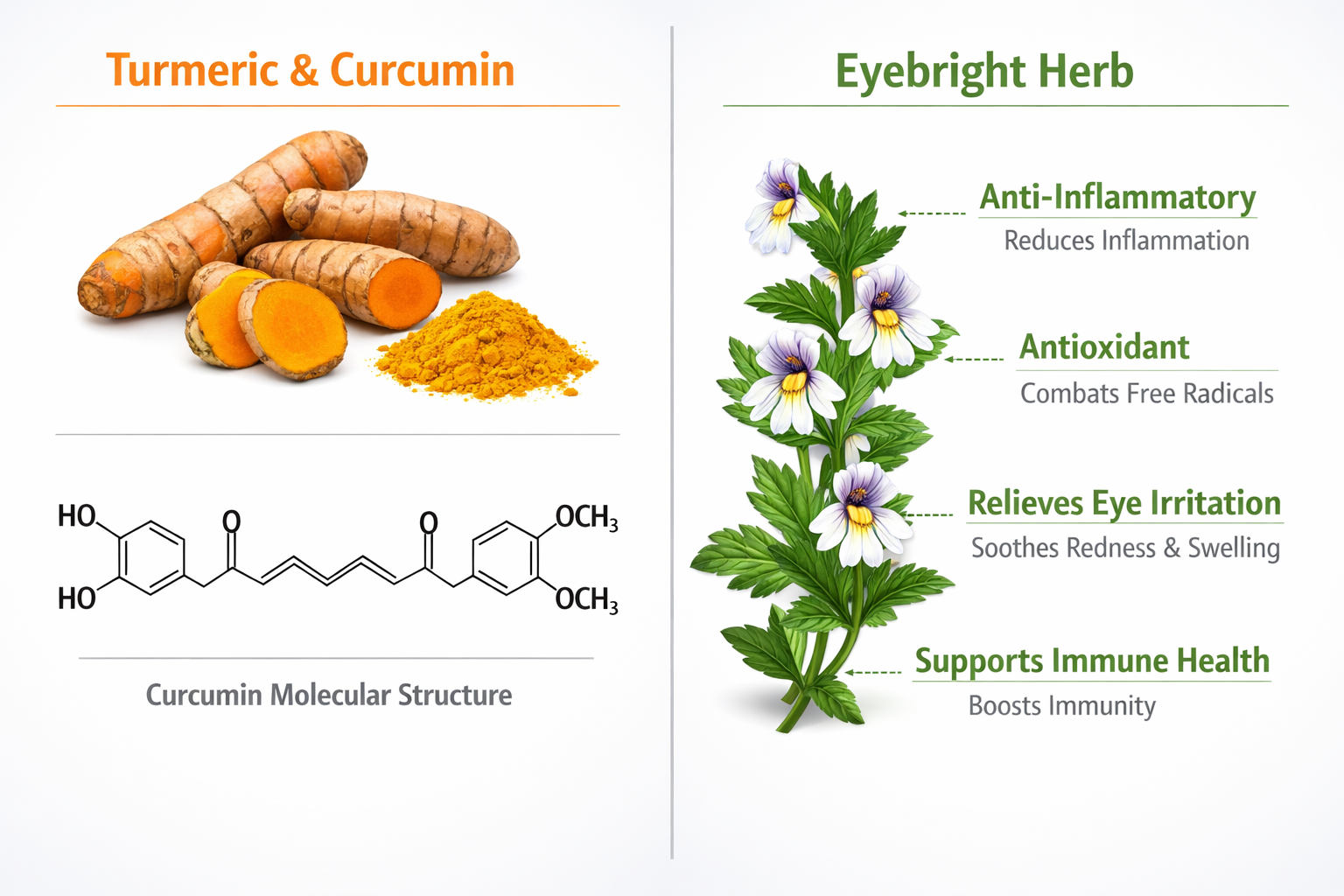
Turmeric (Curcuma longa) contains curcumin, one of the most studied natural anti-inflammatory compounds in existence. For eye health specifically, curcumin’s value lies in its ability to reduce inflammatory signaling in ocular tissue — relevant to conditions like uveitis, dry eye disease, and diabetic retinopathy.
What the research shows:
- A 2017 review in the Journal of Ocular Pharmacology and Therapeutics identified curcumin as a promising adjunct therapy for multiple inflammatory eye conditions, noting its ability to inhibit NF-κB, a key driver of ocular inflammation.
- Early animal studies suggest curcumin may protect retinal ganglion cells from apoptosis (cell death), which is relevant to glaucoma research.
The challenge with turmeric is bioavailability. Curcumin is poorly absorbed on its own. Consuming turmeric with black pepper (which contains piperine) increases curcumin absorption by up to 2,000%, according to research published in Planta Medica (Shoba et al., 1998).
Turmeric also pairs well with a broader anti-inflammatory diet approach, which compounds its benefits for systemic and ocular health.
How to use it:
- Culinary use: add turmeric to curries, soups, or golden milk — always with black pepper and a fat source (curcumin is fat-soluble)
- Supplements: look for formulations with piperine or phospholipid complexes (like Meriva) for better absorption; typical doses range from 500–1,000 mg of curcumin per day
- Avoid high-dose supplements if you have gallbladder issues or take blood thinners
5. Green Tea: Antioxidants That Reach the Eye Directly
Green tea (Camellia sinensis) is one of the few dietary sources where the active compounds — catechins, particularly EGCG (epigallocatechin gallate) — have been shown to penetrate into ocular tissue after consumption.
A study published in the Journal of Agricultural and Food Chemistry (2010) demonstrated that catechins from green tea were absorbed into the lens, retina, vitreous humor, and aqueous humor of rats within 20 hours of consumption. This is significant because it confirms the compounds reach the target tissue rather than being metabolized before arrival.
Eye-specific benefits of green tea catechins:
- Protect the lens from oxidative damage, potentially reducing cataract risk
- Reduce retinal oxidative stress
- Anti-inflammatory effects that may benefit dry eye disease
- Support healthy intraocular pressure, according to some preliminary research
How to use it:
- 2–4 cups of brewed green tea daily provides a meaningful catechin dose without supplementation
- Choose loose-leaf or high-quality bagged green tea; matcha contains the highest catechin concentration per serving
- Green tea extract supplements: 250–500 mg per day of standardized extract
Note: Green tea contains caffeine. If you’re sensitive to caffeine or consuming it later in the day, decaffeinated green tea retains most of its catechin content.
6. Rosemary: Rosmarinic Acid and Retinal Protection
Rosemary (Rosmarinus officinalis) contains rosmarinic acid and carnosic acid, two antioxidant compounds with emerging evidence for retinal protection. A study published in Investigative Ophthalmology & Visual Science (2012) found that carnosic acid activated a protective pathway in retinal cells, suggesting potential for slowing AMD progression.
Practical benefits for eye health:
- Reduces oxidative stress in retinal tissue
- Anti-inflammatory action that may ease eye strain-related discomfort
- Improves local circulation when used regularly
Rosemary is also one of the easiest herbs to incorporate into daily cooking, making consistent intake realistic without supplementation.
How to use it:
- Fresh or dried rosemary in cooking: roasted vegetables, meats, breads, and infused oils
- Rosemary tea: steep 1–2 teaspoons of fresh rosemary in hot water for 5–10 minutes
- Rosemary essential oil is not for internal use; stick to culinary or supplement forms for eye health benefits
7. Fenugreek: Antioxidant Protection and Blood Sugar Regulation
Fenugreek (Trigonella foenum-graecum) contributes to eye health through two overlapping pathways: direct antioxidant activity and blood sugar regulation. This dual action matters because diabetic retinopathy — damage to retinal blood vessels caused by chronically elevated blood sugar — is one of the leading causes of vision loss in adults worldwide.
Active compounds:
- Trigonelline and diosgenin: antioxidant and anti-inflammatory properties
- Soluble fiber (galactomannan): slows glucose absorption, reducing blood sugar spikes that damage retinal capillaries
Who benefits most: People managing type 2 diabetes or prediabetes, where blood sugar control directly protects retinal health. Also useful for general antioxidant support.
How to use it:
- Fenugreek seeds: soak overnight and consume in the morning, or grind into powder for use in cooking
- Supplements: 500–600 mg of fenugreek seed extract, twice daily with meals
- Fenugreek leaves (methi) are common in Indian cuisine and provide similar benefits in culinary quantities
8. Hawthorn: Circulatory Support for Ocular Blood Flow
Hawthorn (Crataegus monogyna) is best known as a cardiovascular herb, but its benefits for eye health follow directly from its circulatory effects. Adequate blood flow to the optic nerve and retina is essential for maintaining visual function, and hawthorn’s flavonoids and oligomeric proanthocyanidins (OPCs) support exactly that.
How hawthorn supports eye health:
- Strengthens and stabilizes capillary walls, including those in the retina
- Reduces oxidative stress in vascular tissue
- Lowers blood pressure modestly, reducing the risk of hypertensive retinopathy
How to use it:
- Hawthorn berry tea: 1–2 cups daily
- Standardized extract supplements: 160–900 mg per day (standardized to 1.8% vitexin or 18–20% OPCs)
- Hawthorn berries can be eaten fresh, dried, or made into jams
Caution: Hawthorn can interact with digoxin and other heart medications. If you have a diagnosed cardiovascular condition, speak with your doctor before use.
9. Sage: Luteolin and Rosmarinic Acid for Eye Tissue
Sage (Salvia officinalis) shares several active compounds with rosemary, including rosmarinic acid, and adds luteolin — a flavonoid with documented anti-inflammatory and antioxidant effects in ocular tissue.
Luteolin has been studied for its potential to inhibit VEGF (vascular endothelial growth factor), a protein involved in the abnormal blood vessel growth that characterizes wet AMD and diabetic retinopathy. While human trials are limited, the mechanistic evidence is promising.
How to use it:
- Fresh or dried sage in cooking: pairs well with poultry, pasta, and roasted root vegetables
- Sage tea: steep 1 tablespoon of fresh sage leaves for 5–7 minutes; drink 1–2 cups daily
- Sage supplements: 300–600 mg of dried sage leaf extract per day
10. Ginseng: Neuroprotection for the Optic Nerve
Ginseng (Panax ginseng) contains ginsenosides, a class of compounds with neuroprotective properties relevant to the optic nerve. Research published in the Journal of Ginseng Research has highlighted ginsenoside Rb1’s ability to protect retinal ganglion cells from oxidative damage — the same cells that deteriorate in glaucoma.
Eye-specific benefits:
- Protects retinal ganglion cells from apoptosis
- Reduces oxidative stress in the lens and retina
- Supports healthy blood glucose levels, indirectly protecting retinal blood vessels
How to use it:
- Korean red ginseng supplements: 200–400 mg of standardized extract per day (standardized to 4–7% ginsenosides)
- Ginseng tea: 1–2 cups daily using root slices or tea bags
- Ginseng is typically cycled: use for 2–3 months, then take a break of 2–4 weeks
Note: Ginseng can affect blood pressure and interact with blood thinners and diabetes medications. Consult a healthcare provider if you take any of these.
How to Choose the Right Herb for Your Eye Health Goal
Not every herb suits every situation. Here’s a practical decision guide:
| Goal | Best Herb(s) | Primary Mechanism |
|---|---|---|
| Night vision improvement | Bilberry | Rhodopsin regeneration via anthocyanins |
| Glaucoma risk reduction | Ginkgo biloba, ginseng | Optic nerve circulation and neuroprotection |
| Macular degeneration prevention | Bilberry, rosemary, sage | Retinal antioxidant protection |
| Eye irritation and mild infections | Eyebright | Anti-inflammatory, astringent action |
| Diabetic retinopathy prevention | Fenugreek, turmeric | Blood sugar regulation, anti-inflammatory |
| Cataract risk reduction | Green tea | Lens antioxidant protection via catechins |
| Hypertensive retinopathy | Hawthorn | Capillary wall strengthening, blood pressure support |
| General antioxidant support | Green tea, turmeric, rosemary | Broad-spectrum antioxidant activity |
Common Mistakes When Using Herbs for Eye Health
1. Expecting fast results. Herbal compounds work through gradual, cumulative mechanisms. Most benefits become measurable over weeks to months, not days.
2. Ignoring bioavailability. Turmeric without black pepper, fat-free preparations of fat-soluble compounds, and low-quality supplements with poor standardization all reduce effectiveness significantly.
3. Treating herbs as a substitute for professional care. If you have a diagnosed eye condition, herbs are adjuncts — not replacements — for medical treatment. Regular eye exams remain essential.
4. Overlooking drug interactions. Ginkgo, ginseng, and hawthorn all interact with common medications. Always disclose supplement use to your doctor.
5. Using non-sterile preparations in or near the eye. Homemade eyebright washes or any non-sterile solution applied to the eye can introduce infection. Only use commercially prepared, sterile eye formulations.
Eye Concern Herb Matcher
Select your eye health concern to see which herbs match best:
Frequently Asked Questions
Q: Which herb is best for improving night vision?
Bilberry is the most evidence-backed herb for night vision. Its anthocyanins support rhodopsin production in retinal rod cells, which are responsible for low-light vision. A standardized extract of 120–240 mg per day is the typical approach.
Q: Can herbs cure eye diseases like glaucoma or macular degeneration?
No. Herbs cannot cure these conditions. They may slow progression or reduce risk factors when used consistently alongside medical treatment, but they do not replace prescribed therapies or regular ophthalmological monitoring.
Q: Is it safe to take multiple eye health herbs at the same time?
Generally yes, especially when using culinary amounts. For supplements, combining multiple herbs increases the risk of interactions — particularly with blood thinners. Start with one supplement at a time and consult a healthcare provider before stacking.
Q: How long does it take to see results from herbal eye supplements?
Most people who notice a benefit report changes after 4–12 weeks of consistent use. Antioxidant and anti-inflammatory effects accumulate gradually. If you notice no change after three months, reassess the product quality and dosage.
Q: Are these herbs safe during pregnancy?
Many are not recommended during pregnancy at supplement doses. Fenugreek, ginseng, and sage in particular have uterine-stimulating properties at high doses. Culinary use in normal food amounts is generally considered safe, but always consult your obstetrician before taking herbal supplements while pregnant.
Q: Can children take herbal supplements for eye health?
Most herbal supplement research is conducted in adults. For children, focus on dietary sources — bilberries, green tea (low-caffeine), and turmeric in food — rather than concentrated supplements, unless directed by a pediatrician.
Q: Does green tea need to be consumed daily to benefit eye health?
Consistency matters more than quantity. Two to three cups daily provides a meaningful and sustainable catechin intake. Sporadic high-dose consumption is less effective than regular moderate intake.
Q: What is the best dietary pattern to support these herbs’ effects?
A diet rich in colorful vegetables, omega-3 fatty acids, and low in refined sugars creates the best environment for these herbs to work. Pairing herbal support with anti-inflammatory foods amplifies the benefit for ocular tissue.
Q: Are there herbs I should avoid if I have dry eyes?
Sage and rosemary in very high supplement doses have mild drying properties. For dry eye disease specifically, focus on omega-3 fatty acids, bilberry, and green tea rather than astringent herbs like eyebright or sage.
Q: Where can I find high-quality herbal supplements?
Look for products that are third-party tested (NSF International, USP, or ConsumerLab certified), clearly state the standardization level of the active compound, and list the exact dose per serving. Avoid proprietary blends that obscure individual ingredient amounts.
The Bottom Line
The best herbs for eye health — bilberry, ginkgo biloba, eyebright, turmeric, green tea, rosemary, fenugreek, hawthorn, sage, and ginseng — each work through distinct mechanisms. Bilberry leads the evidence base for direct vision support. Ginkgo biloba and ginseng stand out for optic nerve protection. Turmeric and green tea offer broad antioxidant and anti-inflammatory coverage that benefits the entire eye.
Used consistently, at appropriate doses, and alongside a balanced diet and regular eye care, these herbs represent a practical, evidence-informed approach to protecting your vision over the long term. They’re not miracle cures, but they’re far from empty promises either.
For broader context on how diet and lifestyle interact with eye and overall health, the All Perfect Health resource library covers related topics including herbs for headaches, anti-inflammatory food guides, and metabolism-supporting herbs.
Sources
- Quaranta, L. et al. (2003). Effect of Ginkgo biloba extract on preexisting visual field damage in normal tension glaucoma. Ophthalmology, 110(2), 359–362.
- Shoba, G. et al. (1998). Influence of piperine on the pharmacokinetics of curcumin. Planta Medica, 64(4), 353–356.
- Chu, K.O. et al. (2010). Absorption and distribution of green tea catechins into the lens, retina, and vitreous humor. Journal of Agricultural and Food Chemistry, 58(8), 4829–4835.
- Soo-Hyun, P. et al. (2014). Euphrasia officinalis for conjunctivitis. Journal of Alternative and Complementary Medicine, 20(4).
- Rezaie, T. et al. (2012). Protective effect of carnosic acid on retinal degeneration. Investigative Ophthalmology & Visual Science, 53(12).
- American Academy of Ophthalmology. Can Bilberry Help with Eye Conditions? aao.org
More great articles that may be of interest to you 🙂
10 Natural Herbs To Get Rid Of Headaches

Dave James has spent 30+ years reading health and longevity research, and has run All Perfect Health for the past five. His background is in Australian mining and industrial engineering — disciplines built on questioning claims, measuring outcomes, and respecting evidence. He writes about what the research actually says, including where the experts disagree.
More about Dave & this site →
For the full picture on how natural foods and herbs support health, see the broader guide on Health Benefits of Natural Foods and Herbs.
References & Research Sources
This article draws on peer-reviewed research, clinical guidelines, and authoritative health organizations. The following sources were consulted during preparation. This is not an exhaustive bibliography, and readers are encouraged to consult primary literature for full study details.
- Age-Related Eye Disease Study 2 (AREDS2) Research Group. Lutein + Zeaxanthin and Omega-3 Fatty Acids for Age-Related Macular Degeneration: The Age-Related Eye Disease Study 2 (AREDS2) Randomized Clinical Trial. JAMA. 2013;309(19):2005-2015. https://pubmed.ncbi.nlm.nih.gov/23644932/
- Ma L, et al. Lutein and zeaxanthin intake and the risk of age-related macular degeneration: a systematic review and meta-analysis. Br J Nutr. 2012;107(3):350-359. https://pubmed.ncbi.nlm.nih.gov/21899719/
- Barker FM 2nd. Dietary supplementation: effects on visual performance and occurrence of AMD and cataracts. Curr Med Res Opin. 2010;26(8):2011-2023. https://pubmed.ncbi.nlm.nih.gov/20590393/
- Pinheiro Junior MA, et al. Bilberry extract (Vaccinium myrtillus L.) promotes retinal ganglion cell survival in glaucoma. Int J Mol Sci. 2021;22(22):12459. https://pubmed.ncbi.nlm.nih.gov/34830204/
- Rhone M, Basu A. Phytochemicals and age-related eye diseases. Nutr Rev. 2008;66(8):465-472. https://pubmed.ncbi.nlm.nih.gov/18667021/
- National Eye Institute. Age-Related Macular Degeneration (AMD) Studies. https://www.nei.nih.gov/research/clinical-trials/age-related-eye-disease-study-areds2
- Canter PH, Ernst E. Ginkgo biloba is not a smart drug: an updated systemic review of randomised clinical trials testing the nootropic effects of G. biloba extracts in healthy people. Hum Psychopharmacol. 2007;22(5):265-278. https://pubmed.ncbi.nlm.nih.gov/17480017/
- Evans JR, Lawrenson JG. Antioxidant vitamin and mineral supplements for preventing age-related macular degeneration. Cochrane Database Syst Rev. 2017;7(7):CD000253. https://pubmed.ncbi.nlm.nih.gov/28756618/
- Mares JA, et al. Diet in the Early Life and Age-Related Eye Diseases. Adv Nutr. 2014;5(3):306S-313S. https://pubmed.ncbi.nlm.nih.gov/24829484/
- American Optometric Association. Diet and Nutrition. https://www.aoa.org/healthy-eyes/caring-for-your-eyes/diet-and-nutrition?sso=y
Part of the Herbs & Targeted Support cluster
📂 10 Best Herbs for Eye Health
This article is part of the APH cluster. Use the links below to move between the pillar and child articles.
- YOU ARE HERE 10 Best Herbs for Eye Health: Benefits, Active Compounds, and How to Use Them
- → Herbs for Digestion: Natural Remedies for Bloating, Gas, and Gut Comfort
- → Health Benefits of Ginger: Digestion, Inflammation, and Immunity
- → Adaptogenic Herbs for Stress and Resilience: Ashwagandha, Rhodiola, and Holy Basil
References
- [Video] 9 Best Herbs for Eye Health: Natural Remedies for Better Vision. YouTube.
- Kalt W, et al. “Bilberry: Health benefits and mechanisms.” Nutrients, 2020.
- Evans JR. “Ginkgo biloba extract for age-related macular degeneration.” Cochrane Database of Systematic Reviews, 2013.
- National Centre for Complementary and Integrative Health. “Eye Health and Supplements.” NCCIH, 2023.
- Ma L, et al. “Lutein and zeaxanthin and eye health: a systematic review.” Nutrients, 2020.