
14 Evidence-Based Health Benefits of Coffee

Last updated: March 27, 2026
In this guide
- Featured Video: What Are the 14 Health Benefits of Coffee Backed by Research?
- What Are the 14 Health Benefits of Coffee Backed by Research?
- How Do the 14 Health Benefits of Coffee Compare at Different Intake Levels?
- What Makes Coffee Healthy? The Key Compounds Explained
- Who Should Be Careful With Coffee?
- Does the Type of Coffee Matter?
- Conclusion: What to Actually Do With This Information
Quick Answer
Coffee is one of the most studied dietary compounds in human health research, and the evidence in 2026 is stronger than ever. Moderate consumption, generally 2 to 4 cups daily, is consistently linked to reduced risks of dementia, cardiovascular disease, type 2 diabetes, and several cancers, while also supporting longer cellular lifespan. These are not minor effects, and they are not based on single studies.
Key Takeaways
- Moderate coffee intake (2–4 cups daily) is associated with meaningful reductions in risk for several major chronic diseases.
- A major 2026 study found 18% lower dementia risk among moderate caffeinated coffee drinkers compared to non-drinkers. [1]
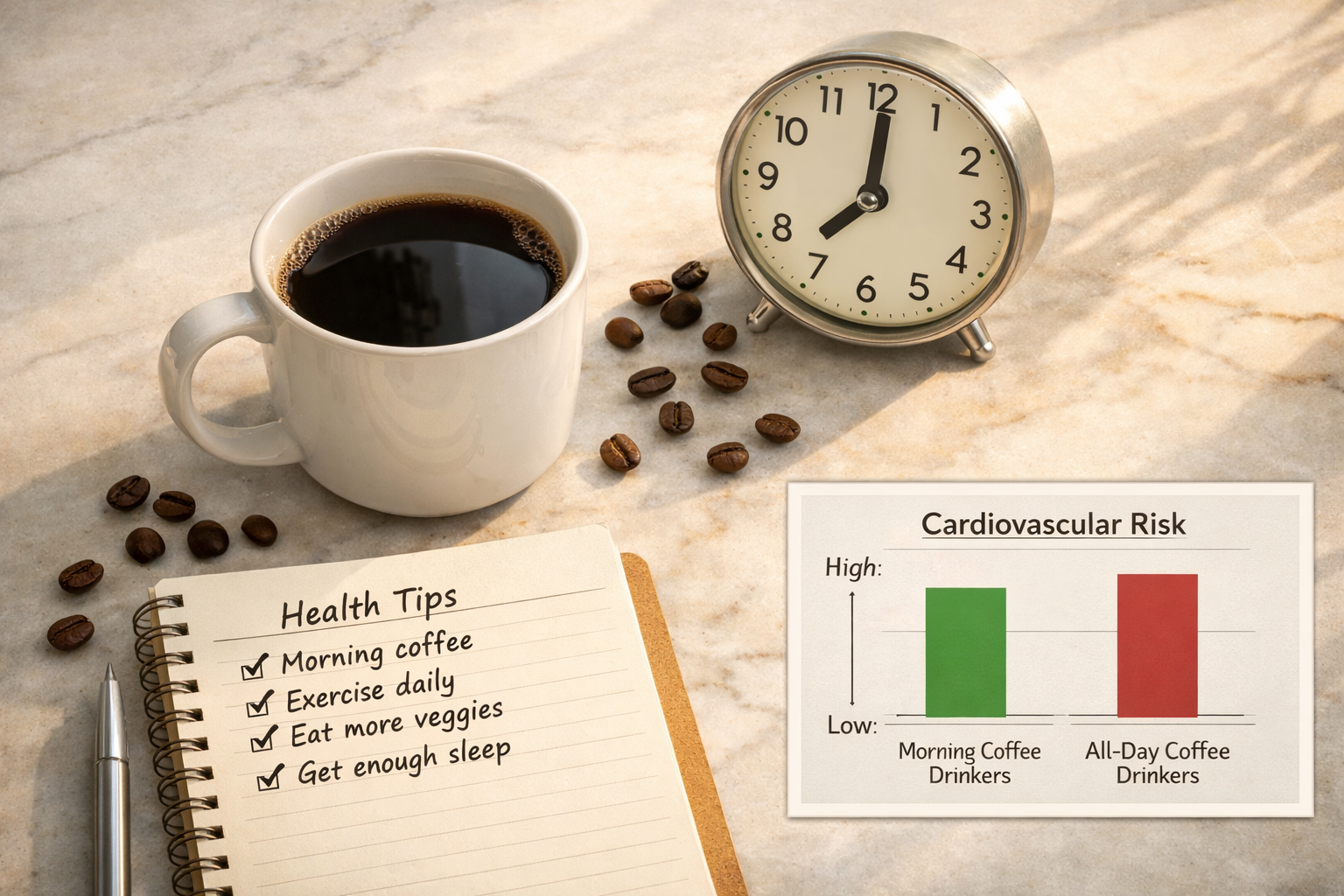
- Morning coffee appears to offer stronger cardiovascular protection than spreading consumption throughout the day. [7]
- Coffee’s benefits come primarily from caffeine, polyphenols, and chlorogenic acid, not from any single “magic” compound.
- Decaffeinated coffee does not show the same dementia-protective effects, suggesting caffeine is a key active agent. [1]
- Consuming 3–4 cups daily may be linked to longer telomeres, a marker of slower cellular aging. [3]
- More is not always better: benefits tend to plateau or diminish above 4–5 cups per day.
- Coffee is not suitable for everyone. Pregnant women, people with certain heart arrhythmias, and those sensitive to caffeine should consult a doctor.
- The strongest evidence points to black coffee or minimally modified coffee. Added sugars and heavy creamers change the equation.
- These benefits are population-level associations, not guarantees for any individual.

What Are the 14 Health Benefits of Coffee Backed by Research?
The 14 health benefits of coffee most consistently supported by current evidence span brain health, heart health, metabolic function, and cellular longevity. Let me walk through each one clearly, without overstating what the research actually shows.
Expert insight: Dave Asprey. Dave Asprey is the founder of Bulletproof and host of The Human Upgrade. His research into coffee as a biohacking tool has made him a leading authority on functional beverages and morning optimisation.
1. 🧠 Lower Risk of Dementia
This is where the 2026 research is most striking. A large prospective cohort study published in March 2026, drawing on data from 131,821 participants in the Nurses’ Health Study and Health Professionals Follow-Up Study, found that moderate caffeinated coffee drinkers had an 18% lower risk of developing dementia compared to non-drinkers. [1]
The protective effect was strongest at 2–3 cups per day, and it held even for people with a genetic predisposition to dementia. [1] Caffeine drinkers also showed lower rates of subjective cognitive decline (7.8% versus 9.5% in non-drinkers) and performed better on objective cognitive tests. [2]
Important note: Decaffeinated coffee did not show the same association, which points to caffeine as the key mechanism rather than other compounds alone. [1]
2. ❤️ Reduced Cardiovascular Disease Risk
Moderate coffee consumption (3–5 cups daily) is consistently associated with reduced cardiovascular disease risk across multiple large studies. [3] A 2025 analysis of over 40,000 adults found that coffee drinkers had lower cardiovascular mortality compared to non-drinkers. [7]
The mechanism likely involves polyphenols and chlorogenic acid, which reduce oxidative stress, support vascular function, and lower systemic inflammation. [2]
3. 🕗 Morning Timing Matters for Heart Protection
This is a detail worth paying attention to. A 2025 study found that people who drink coffee in the morning rather than throughout the day had meaningfully lower cardiovascular mortality risk and reduced overall mortality. [7]
The simplest way to look at it: if you drink coffee, front-load it. Two cups before noon appears to offer more cardiovascular benefit than the same amount spread across the day.
4. 🩸 Lower Type 2 Diabetes Risk
Multiple studies consistently show that moderate daily coffee consumption is linked to a lower risk of type 2 diabetes. [3][5] The likely mechanism is improved glucose metabolism and insulin sensitivity, driven partly by chlorogenic acid reducing glucose absorption in the gut. [2]
This benefit appears in both caffeinated and decaffeinated coffee, suggesting the polyphenols carry some of the load here, not just caffeine.
5. 🧬 Slower Cellular Aging (Longer Telomeres)
Research published in BMJ Mental Health (November 2025) found that individuals aged 18–65 who consumed 3–4 cups of coffee daily had longer telomeres, a biological marker associated with slower cellular aging. [3] Benefits appeared to diminish above 4 cups per day, which is a useful signal that more is not always better. [3]
6. ⏳ Potential Longevity Benefit
A 2025 study suggested that consuming 3–4 cups of coffee daily could be associated with increased lifespan, with some estimates pointing to potentially 5 extra years of life at the population level. [3][4] I’d be careful with that headline number since it comes from observational data and involves many confounding variables. But the direction of the evidence is consistent: moderate coffee drinkers tend to live longer in large population studies.
7. 🏥 Reduced Stroke Risk
An August 2025 review published in Nutrients found that moderate coffee consumption (3–5 cups daily) is linked to decreased mortality and lower risk of stroke. [3] This fits with the broader cardiovascular picture: coffee appears to support vascular health through anti-inflammatory and antioxidant pathways.
8. 🫁 Lower Respiratory Illness Risk
The same Nutrients review found associations between moderate coffee consumption and reduced risk of respiratory illnesses. [3] This is a less-studied area, and the mechanisms are not fully understood, but the association appears in multiple population datasets.
9. 🔥 Anti-Inflammatory Properties
Coffee is rich in polyphenols and chlorogenic acid, both of which reduce oxidative stress and systemic inflammation. [2] Chronic low-grade inflammation is a driver of most major chronic diseases, so this is not a trivial benefit. You can read more about how anti-inflammatory compounds work in our anti-inflammatory foods guide.
10. 🎗️ Reduced Cancer Risk (Liver and Uterine)
Research indicates that 3–5 cups daily may reduce the risk of certain cancers, particularly liver and uterine cancers. [2] The evidence for liver cancer is among the strongest in coffee research, with multiple large studies showing consistent associations. The mechanisms likely involve reduced liver inflammation and improved glucose regulation.
11. 🧪 Rich Source of Antioxidants
For many adults in Western countries, coffee is the single largest dietary source of antioxidants. The polyphenols in coffee, particularly chlorogenic acids, help neutralize free radicals and reduce cellular damage. [2][4] This connects to the broader picture of why moderate coffee drinkers tend to show better health outcomes across multiple disease categories. For context on how polyphenols work in the body, see our guide on what polyphenols are.
12. ⚡ Improved Physical Performance
Caffeine is one of the most well-studied ergogenic (performance-enhancing) compounds in sports science. It increases adrenaline, improves muscle contraction efficiency, and delays fatigue. A cup of coffee 30–60 minutes before exercise is a practical, low-cost performance tool. If you’re interested in pairing this with structured exercise, our health benefits of swimming guide covers complementary physical activity research.
13. 🎯 Enhanced Focus and Mental Clarity
Caffeine blocks adenosine receptors in the brain, reducing the perception of fatigue and increasing alertness. This is well-established neuroscience, not hype. The effect is real, dose-dependent, and time-limited. For most people, 100–200mg of caffeine (roughly 1–2 cups of coffee) produces noticeable improvements in focus, reaction time, and working memory.
14. 🌡️ Appetite Regulation Support
Emerging research from 2026 suggests that coffee may act as a mild hunger suppressant. A University of Vermont study found that coffee consumption was associated with reduced daily calorie intake (estimated at around 220 fewer calories per day in some participants). [8] This is early-stage research and should not be treated as a weight loss strategy on its own, but it adds to the picture of coffee as a metabolically active dietary compound. For broader context on weight management, see our guide to healthy meals for weight loss.
How Do the 14 Health Benefits of Coffee Compare at Different Intake Levels?
The evidence does not support a “more is better” approach. Here is a practical summary of what the research shows at different intake levels:
| Daily Intake | Key Benefits Observed | Notes |
|---|---|---|
| 1 cup | Mild cognitive and antioxidant benefit | Below threshold for most disease-risk reductions |
| 2–3 cups | Strongest dementia protection; good cardiovascular signal [1][7] | Optimal range for most adults |
| 3–4 cups | Longevity associations; longer telomeres; diabetes risk reduction [3][5] | Upper end of the evidence-supported sweet spot |
| 5+ cups | Benefits plateau or diminish; increased anxiety, sleep disruption risk | Not recommended for most people |
Choose 2–3 cups if you are primarily interested in cognitive protection and cardiovascular health.
Choose 3–4 cups if you are also interested in metabolic benefits and have no sensitivity to caffeine.
Stay below 5 cups regardless of health goals. The evidence does not support higher intake for additional benefit.
What Makes Coffee Healthy? The Key Compounds Explained
The health benefits of coffee do not come from one magic ingredient. In plain English, it is a combination of compounds working through different pathways:
- Caffeine: Blocks adenosine receptors, improves alertness, and appears to be the primary driver of dementia-protective effects. [1]
- Chlorogenic acid: A polyphenol that reduces oxidative stress, improves insulin sensitivity, and supports glucose metabolism. [2]
- Diterpenes (cafestol and kahweol): Found mainly in unfiltered coffee (French press, espresso). These can raise LDL cholesterol in some people, so filtered coffee is generally preferable for cardiovascular health.
- Antioxidants broadly: Coffee provides a significant share of total antioxidant intake for many adults, reducing cellular damage over time. [4]
The evidence suggests that the combination of these compounds, not any single one, drives most of the observed benefits.
Who Should Be Careful With Coffee?
Context matters. The 14 health benefits of coffee apply to most healthy adults, but not everyone.
Be cautious or avoid coffee if you:
- Are pregnant (caffeine is associated with increased miscarriage risk above 200mg/day)
- Have certain cardiac arrhythmias (atrial fibrillation in particular)
- Experience significant anxiety or panic disorder
- Have severe acid reflux or gastroesophageal reflux disease (GERD)
- Are highly sensitive to caffeine (genetic variation in CYP1A2 affects how quickly you metabolize it)
- Have severe sleep problems (caffeine has a half-life of roughly 5–6 hours in most adults)
A sensible starting point for anyone unsure: 1–2 cups in the morning, black or with minimal additions, and assess how your body responds over 2–4 weeks.
Does the Type of Coffee Matter?
Yes, and this is where hype gets in the way of practical advice.
- Filtered drip coffee is the most studied type and avoids the LDL-raising diterpenes found in unfiltered preparations.
- Espresso is concentrated and lower in volume. Two shots equal roughly one standard cup in caffeine terms.
- Instant coffee still contains polyphenols and caffeine, though levels vary by brand.
- Decaffeinated coffee retains polyphenols but loses most of the caffeine-dependent benefits, including the dementia-protective association. [1]
- Coffee with added sugar, flavored syrups, or heavy cream changes the metabolic picture significantly. The benefits described in this article are associated with coffee, not a dessert drink that happens to contain coffee.
For a broader look at how food compounds interact with health, our guide on benefits of dark chocolate covers similar polyphenol science in another well-studied food.
Frequently Asked Questions
Q: How many cups of coffee per day is optimal for health?
The strongest evidence points to 2–4 cups daily for most healthy adults. Two to three cups appears optimal for cognitive protection, while three to four cups shows the strongest longevity and metabolic associations. [1][3]
Q: Is morning coffee better than afternoon coffee?
Yes, based on current evidence. A 2025 study found that morning coffee drinkers had lower cardiovascular mortality than those who spread consumption throughout the day. [7] Drinking coffee after 2pm also risks disrupting sleep quality.
Q: Does decaf coffee have the same health benefits?
Not all of them. Decaf retains polyphenols and some antioxidant benefits, and may still support glucose metabolism. However, it does not show the same dementia-protective association, suggesting caffeine is a key active compound for cognitive benefits. [1]
Q: Can coffee help with weight loss?
Coffee may support appetite regulation and slightly increase metabolic rate, but it is not a weight loss tool on its own. Early 2026 research suggests it may reduce daily calorie intake by a modest amount. [8] Pair it with a solid dietary approach for any meaningful effect.
Q: Is coffee safe for people with heart conditions?
It depends on the condition. Moderate coffee consumption is associated with reduced cardiovascular disease risk in healthy adults. [2][7] However, people with certain arrhythmias or uncontrolled hypertension should discuss caffeine intake with their doctor before increasing consumption.
Q: Does coffee raise blood pressure?
Caffeine causes a short-term, acute rise in blood pressure, typically lasting 30–60 minutes. Regular coffee drinkers develop tolerance to this effect. Long-term moderate consumption is not consistently associated with chronic hypertension in most studies, but individual responses vary.
Q: What is the best time to drink coffee for focus?
Most people experience peak cortisol levels between 8–9am and 12–1pm. Drinking coffee 60–90 minutes after waking (rather than immediately upon waking) may produce better sustained alertness by avoiding the overlap with natural cortisol peaks.
Q: Are the health benefits of coffee the same for everyone?
No. Genetic variation in caffeine metabolism (CYP1A2 gene), individual sensitivity, existing health conditions, and overall diet all influence how coffee affects a given person. Population-level benefits do not guarantee individual outcomes.
Q: Can I get the same benefits from tea?
Some, but not all. Tea provides caffeine and polyphenols, and the 2026 dementia study found protective effects at 1–2 cups of tea daily. [1] However, the specific compounds and concentrations differ, so the benefit profiles are similar in direction but not identical in magnitude.
Q: Does adding milk or cream reduce coffee’s benefits?
A small amount of milk or cream is unlikely to significantly reduce the polyphenol benefits. However, large amounts of dairy or sugar-heavy additions shift the overall metabolic impact of the drink. Black coffee or coffee with a small amount of plain milk is the most evidence-aligned approach.
Conclusion: What to Actually Do With This Information
Let’s keep this practical. The evidence for moderate coffee consumption in 2026 is genuinely strong, and the 14 health benefits of coffee outlined here are not based on single studies or cherry-picked data. They reflect consistent findings across large populations and multiple research groups.
The main takeaway is this: 2–4 cups of black or minimally modified coffee per day, consumed primarily in the morning, is associated with meaningful reductions in risk for dementia, cardiovascular disease, type 2 diabetes, stroke, and certain cancers, while also supporting cellular longevity and cognitive function.
Actionable next steps:
- Audit your current intake. Are you in the 2–4 cup range? If you drink more, consider scaling back.
- Front-load your coffee. Aim to finish your last cup by early afternoon to protect sleep quality.
- Simplify what’s in your cup. Added sugars and heavy creamers work against the metabolic benefits.
- Don’t use coffee to compensate for poor sleep or a poor diet. The basics still do the heavy lifting.
- If you have a health condition, check with your doctor before significantly changing your caffeine intake.
Coffee is not medicine, and there is no magic in it. But it is one of the few everyday dietary habits where the evidence consistently points in a positive direction. That is worth knowing, and worth acting on sensibly.
For more on building a health-supporting diet around evidence-backed foods, explore our guides on health benefits of olive oil and how to live a healthy lifestyle with practical, sustainable habits.

Dave James has spent 30+ years reading health and longevity research, and has run All Perfect Health for the past five. His background is in Australian mining and industrial engineering — disciplines built on questioning claims, measuring outcomes, and respecting evidence. He writes about what the research actually says, including where the experts disagree.
More about Dave & this site →
📂 15 Proven Health Benefits of Olive Oil
This article is part of the APH cluster. Use the links below to move between the pillar and child articles.
- Read the pillar: 15 Proven Health Benefits of Olive Oil (And What the Science Actually Says)
- → 7 Evidence-Based Health Benefits of Avocados (Heart, Brain & More)
- → Health Benefits of Dark Chocolate: What the Evidence Says (2026)
- YOU ARE HERE 14 Evidence-Based Health Benefits of Coffee
- → Banana Nutrition Facts: Calories, Benefits and Best Ways to Eat Them (2026)
- → Hard-Boiled Egg Nutrition: Calories, Protein and Health Benefits
References
- [Video] Dave Asprey. YouTube. https://www.youtube.com/watch?v=qUzOgjrlsBY