
Hard-Boiled Egg Nutrition: Calories, Protein and Health Benefits
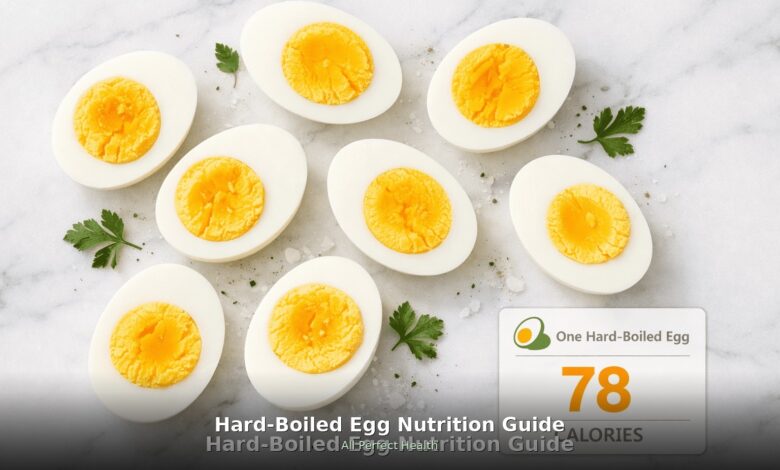
Last updated: July 2026
In this guide
- Featured Video: Dr. William Li — The Truth About Eggs
- How Many Calories Are in a Hard-Boiled Egg?
- What Is the Full Nutritional Profile of a Hard-Boiled Egg?
- How Do Hard-Boiled Eggs Compare to Other Cooking Methods?
- Are Hard-Boiled Eggs Good for Weight Loss?
- Do Hard-Boiled Eggs Raise Cholesterol or Increase Heart Disease Risk?
- What Vitamins and Minerals Make Eggs Nutritionally Valuable?
- How to Hard-Boil Eggs Perfectly Every Time
- What Are the Different Types of Eggs and Does It Affect Calories?
- Who Should Be Cautious About Eating Hard-Boiled Eggs?
- How to Incorporate Hard-Boiled Eggs Into a Healthy Diet
-
Egg Protein Calculator
Enter the number of eggs to see your protein and nutrient totals:
Enter your egg counts and click Calculate.FAQ
- Other Articles that may be of interest to you 🙂
Last updated: April 3, 2026
Quick Answer
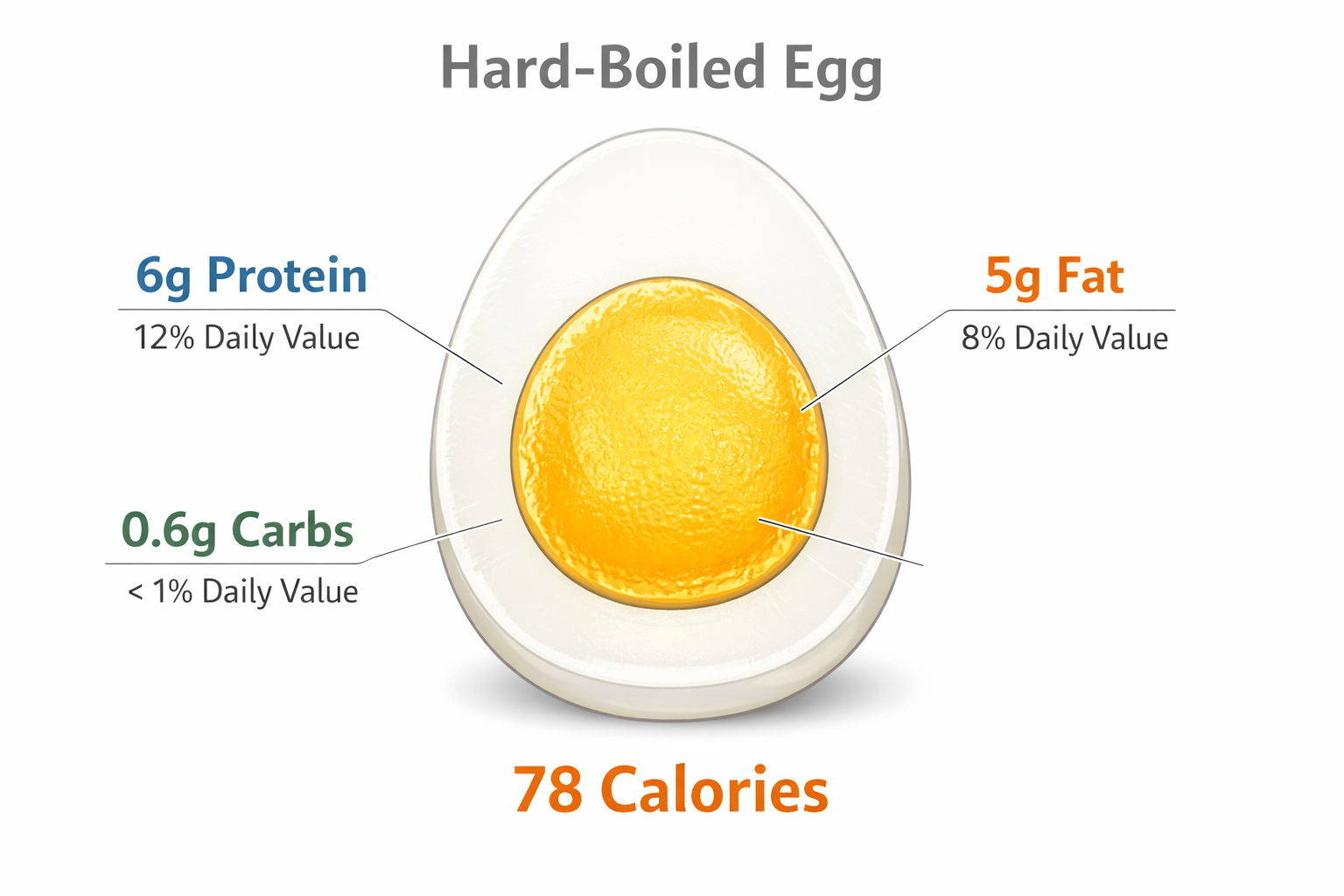
A large hard-boiled egg contains approximately 77–78 calories, along with 6 grams of protein, 5 grams of fat, and less than 1 gram of carbohydrates. The calorie count stays consistent because boiling adds no oil or butter. Hard-boiled eggs are one of the most calorie-efficient high-protein foods available. Understanding the Hard Boiled Egg Nutrition is essential for those looking to maintain a healthy diet. The Hard Boiled Egg Nutrition is beneficial for muscle building and overall health.
Key Takeaways
- A large hard-boiled egg has roughly 77–78 calories, making it a low-calorie, high-satiety snack
- Each egg delivers 6 grams of complete protein — all nine essential amino acids are present
- The yolk contains most of the fat (about 4.5g), all of the cholesterol, and the majority of the micronutrients
- Hard-boiled eggs have fewer calories than fried eggs because no cooking fat is added
- Eggs contain lutein and zeaxanthin, two antioxidants that support eye health
- Choline in eggs (about 147mg per large egg) plays a key role in brain function and fetal development
- Dietary cholesterol from eggs does not significantly raise cardiovascular risk for most healthy adults, according to current nutritional science
- Egg size matters: a small egg has about 54 calories, while a jumbo egg can reach 90+ calories
- Hard-boiled eggs are suitable for low-carb, ketogenic, high-protein, and calorie-controlled diets
- Eggs are one of the few whole foods that naturally contain vitamin D
Expert insight: Dr. William Li is a physician, scientist, and author of “Eat to Beat Disease.” In this video, he breaks down the real science behind eggs and other breakfast foods — including how eggs support muscle, brain health, and metabolic function at the cellular level.
How Many Calories Are in a Hard-Boiled Egg?
A large hard-boiled egg contains approximately 77–78 calories. The exact number shifts slightly depending on the size of the egg — not the cooking method, since boiling uses no added fat.
In summary, the Hard Boiled Egg Nutrition provides a wealth of benefits, making it a staple in many diets.
The Hard Boiled Egg Nutrition profile highlights its essential nutrients, making it a staple for health-conscious individuals.
Here’s a breakdown by egg size (USDA reference values):
| Egg Size | Weight | Calories |
|---|---|---|
| Small | 38g | ~54 |
| Medium | 44g | ~63 |
| Large | 50g | ~78 |
| Extra-Large | 56g | ~86 |
| Jumbo | 63g | ~90 |
Decision rule: If you’re tracking calories precisely, always check the size of the eggs you’re buying. A carton of jumbo eggs versus medium eggs can mean a 30+ calorie difference per egg — that adds up quickly if you eat two or three daily.
Incorporating the Hard Boiled Egg Nutrition into your diet ensures a balanced intake of protein and essential vitamins.
Most nutritional databases (including the USDA FoodData Central) use the large egg as the standard reference point, so that’s the number you’ll see most often cited: 78 calories per hard-boiled egg.
What Is the Full Nutritional Profile of a Hard-Boiled Egg?
One large hard-boiled egg (50g) provides a broad range of nutrients for its calorie cost. That’s what makes it a genuinely useful food for health-conscious eaters rather than just a convenient snack.
The Hard Boiled Egg Nutrition is crucial for maintaining energy levels throughout the day.
Macronutrients (per large egg):
- Calories: 78
- Protein: 6g
- Total fat: 5g
- Saturated fat: 1.6g
- Monounsaturated fat: 2.0g
- Polyunsaturated fat: 0.7g
- Carbohydrates: 0.6g
- Fiber: 0g
- Sugar: 0.6g
Micronutrients (per large egg, approximate % of Daily Value):
- Vitamin A: 6%
- Vitamin B2 (Riboflavin): 15%
- Vitamin B5 (Pantothenic acid): 7%
- Vitamin B12: 9%
- Vitamin D: 6%
- Selenium: 22%
- Phosphorus: 9%
- Choline: 147mg (about 27% of the Adequate Intake for adults)
- Iron: 5%
- Zinc: 4%
Where the nutrients live:
The egg white holds most of the protein (about 3.6g) and is virtually fat-free. The yolk contains the remaining protein plus nearly all of the fat, cholesterol, vitamins, and minerals. Eating only egg whites saves calories and fat but sacrifices most of the micronutrient value.
How Do Hard-Boiled Eggs Compare to Other Cooking Methods?
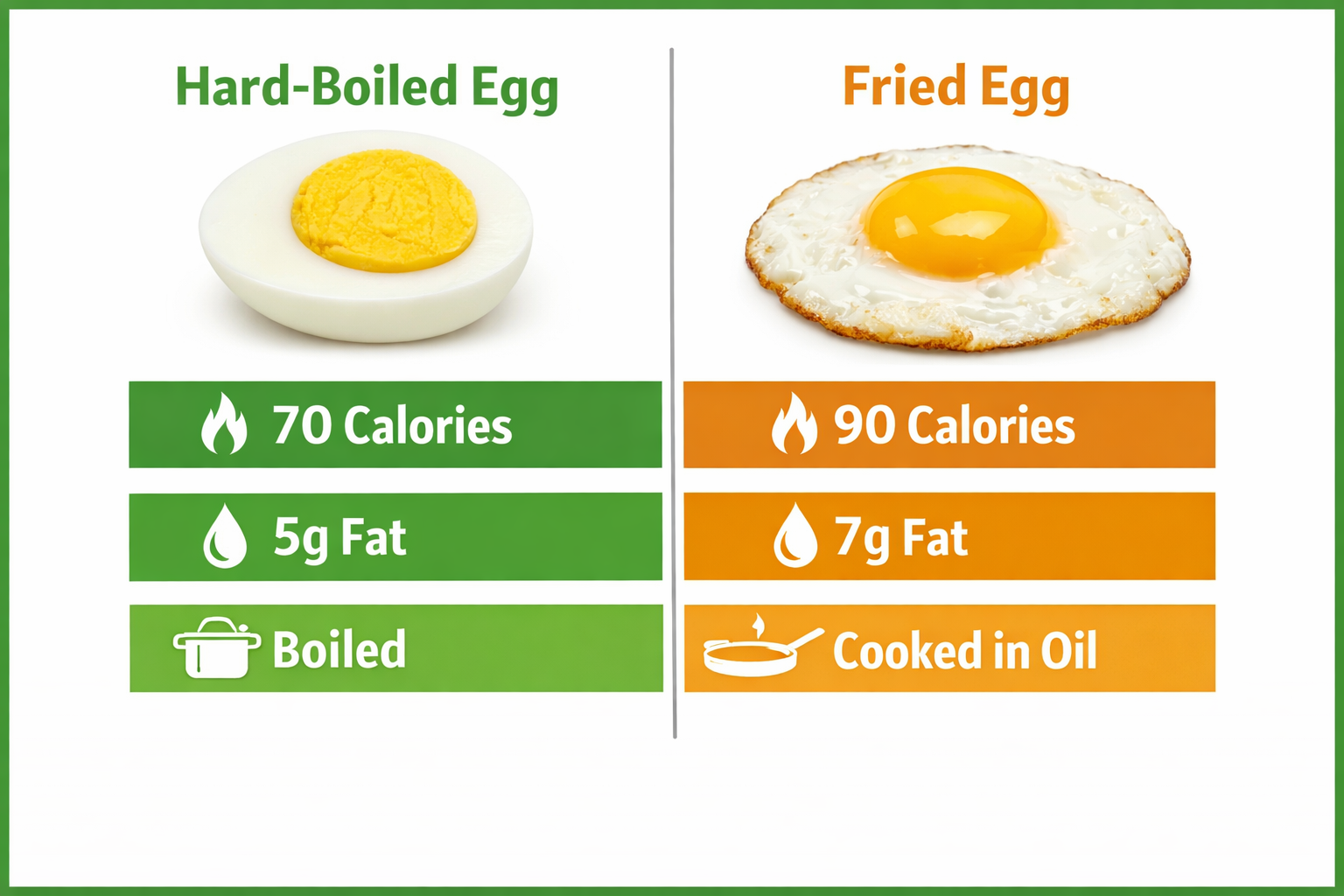
Hard-boiled eggs are the lowest-calorie version of cooked eggs because the cooking method adds nothing to the egg itself. Frying, scrambling, or making an omelette typically requires oil or butter, which adds calories fast.
Calorie comparison (one large egg, different preparations):
Understanding the Hard Boiled Egg Nutrition can enhance your dietary choices effectively.
| Preparation | Approx. Calories | Added Fat? |
|---|---|---|
| Hard-boiled | 78 | No |
| Soft-boiled | 71–78 | No |
| Poached | 72 | No |
| Scrambled (with 1 tsp butter) | 102 | Yes |
| Fried (in 1 tsp oil) | 90–100 | Yes |
| Omelette (with 1 tsp oil) | 95–110 | Yes |
Common mistake: Many people assume a “plain” fried egg is similar in calories to a boiled egg. Even a light coating of oil or butter in the pan adds 35–45 calories per teaspoon. If you’re eating eggs daily for weight management, the cooking method genuinely matters.
If you’re exploring other healthy meals for weight loss, hard-boiled eggs are one of the most practical and portable options available.
Are Hard-Boiled Eggs Good for Weight Loss?
By focusing on the Hard Boiled Egg Nutrition, you can optimize your weight loss journey.
Yes, hard-boiled eggs support weight loss for most people, primarily because of their high protein content relative to their calorie count. Protein is the most satiating macronutrient — it slows gastric emptying and reduces appetite hormones, which means you’re likely to eat less at the next meal.
Why hard-boiled eggs work for weight management:
- High protein-to-calorie ratio: 6g of protein for 78 calories is efficient. By comparison, a slice of bread delivers about 80 calories but only 2–3g of protein.
- Low carbohydrate content: Less than 1g of carbs per egg makes them compatible with low-carb and ketogenic approaches.
- Portable and prep-friendly: You can hard-boil a batch at the start of the week and have ready-to-eat snacks for four to five days.
- No blood sugar spike: Eggs have a negligible glycemic impact, which helps maintain steady energy levels and reduces cravings.
A practical example: Two hard-boiled eggs as a mid-morning snack provide 156 calories and 12g of protein. That’s enough to bridge a four-to-five hour gap between meals without reaching for processed snacks.
Edge case: Hard-boiled eggs alone won’t drive weight loss if the rest of your diet is poorly structured. They work best as part of a calorie-controlled eating pattern. For more context on building that structure, see this guide to weight loss techniques.
Do Hard-Boiled Eggs Raise Cholesterol or Increase Heart Disease Risk?
This is one of the most common concerns about eggs, and the current scientific consensus is more reassuring than the advice from 20–30 years ago. For most healthy adults, eating eggs in moderate amounts does not significantly increase the risk of cardiovascular disease.
Here’s what the evidence shows:
- A large hard-boiled egg contains approximately 186mg of dietary cholesterol, located entirely in the yolk
- The liver produces cholesterol on its own and typically adjusts its output in response to dietary intake — so eating more cholesterol doesn’t automatically mean more cholesterol in your blood
- Eggs tend to raise HDL (“good”) cholesterol alongside LDL, which means the ratio — a stronger predictor of heart disease risk than total cholesterol alone — often stays favorable
- Saturated and trans fats have a larger effect on blood cholesterol levels than dietary cholesterol for most people
Who should be more cautious:
People with type 2 diabetes, familial hypercholesterolemia, or those classified as “hyper-responders” (a minority of the population whose LDL rises significantly with dietary cholesterol) may need to moderate egg intake. If you fall into one of these categories, consult your doctor or a registered dietitian for personalized guidance.
Common mistake: Avoiding eggs entirely because of cholesterol concerns while continuing to eat processed foods high in trans fats and refined sugar. The latter are far more damaging to cardiovascular health for the average person.
What Vitamins and Minerals Make Eggs Nutritionally Valuable?
Beyond protein and fat, hard-boiled eggs contain a concentrated set of micronutrients that are difficult to obtain from many other single foods.
Choline
Choline is an essential nutrient that most people don’t get enough of. One large egg provides about 147mg, roughly 27% of the daily adequate intake for adults. Choline is critical for:
Choline, a component of Hard Boiled Egg Nutrition, is essential for cognitive function.
- Building and maintaining cell membranes
- Producing acetylcholine, a neurotransmitter involved in memory and muscle control
- Supporting fetal brain and spinal cord development during pregnancy
Lutein and Zeaxanthin
These two carotenoids are found in the egg yolk and are directly linked to eye health. They accumulate in the macula of the eye and help filter harmful blue light. Regular intake of lutein and zeaxanthin is associated with a reduced risk of age-related macular degeneration. For more on protecting your vision through diet, see this guide to herbs and nutrients for eye health.
Vitamin D
Vitamin D found in Hard Boiled Egg Nutrition contributes to bone health.
Eggs are one of the few foods that naturally contain vitamin D — a nutrient that a significant portion of the global population is deficient in. One large egg provides roughly 6% of the daily value, which isn’t a large amount on its own but contributes meaningfully to overall intake.
Selenium
At about 22% of the daily value per egg, selenium is one of the standout minerals in eggs. It acts as an antioxidant, supports thyroid function, and plays a role in immune response.
B Vitamins
Eggs contain riboflavin (B2), pantothenic acid (B5), and B12 — all involved in energy metabolism and nervous system function. B12 is particularly important for people who eat limited animal products, and eggs are a practical source.
How to Hard-Boil Eggs Perfectly Every Time
Getting the texture right on a hard-boiled egg is straightforward once you understand what affects the outcome. The two main variables are starting temperature (cold water vs. already boiling water) and cook time.
Learning how to prepare hard-boiled eggs enhances the Hard Boiled Egg Nutrition experience.
The Cold-Start Method (Recommended)
This method produces consistently cooked whites and yolks with less risk of the rubbery, overcooked texture that comes from high heat.
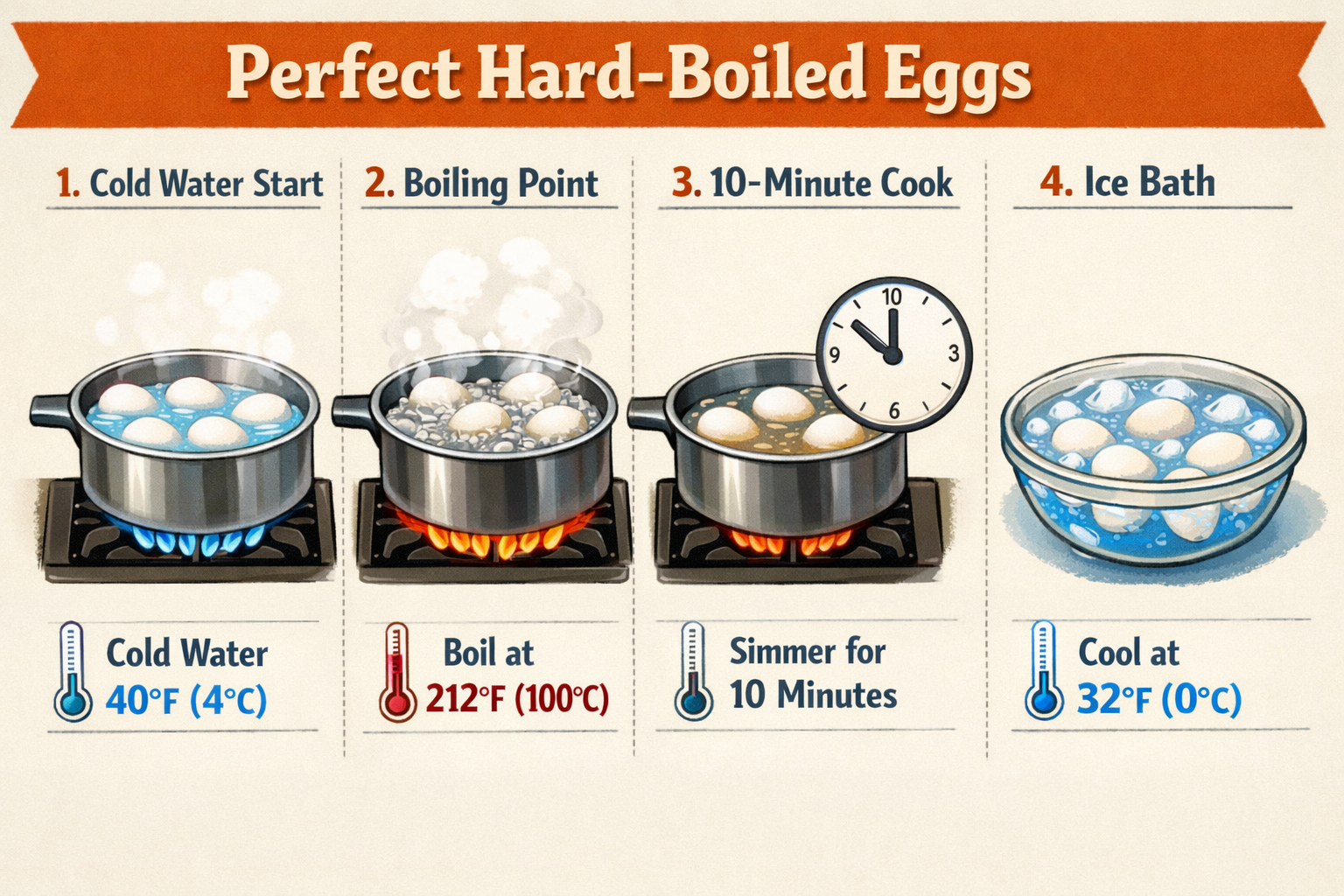
- Place eggs in a single layer in a saucepan
- Cover with cold water by about 1 inch
- Bring to a full rolling boil over medium-high heat
- Once boiling, reduce heat to a gentle simmer and start your timer:
- Soft-boiled (runny yolk): 6 minutes
- Medium-boiled (jammy yolk): 8 minutes
- Hard-boiled (fully set yolk): 10–12 minutes
- Transfer eggs immediately to a bowl of ice water
- Let sit for at least 5 minutes before peeling
Why the Ice Bath Matters
The ice bath stops the cooking process immediately. Without it, residual heat continues cooking the egg inside the shell, which can push a perfectly timed egg into overcooked territory. It also contracts the egg slightly inside the shell, making peeling easier.
Utilizing the Hard Boiled Egg Nutrition is a simple way to boost your protein intake.
Microwave Method (Quick Option)
Place eggs in a microwave-safe bowl, cover completely with water, and microwave on high for 12 minutes. Let sit in the hot water for 3 minutes, then transfer to ice water. Results vary by microwave wattage, so treat this as a starting point and adjust.
Common mistake: Boiling eggs at a rapid, aggressive boil the entire time. This causes the whites to become tough and rubbery. A gentle simmer after the initial boil gives you better texture.
What Are the Different Types of Eggs and Does It Affect Calories?
The calorie count of a hard-boiled egg is primarily determined by size, not by the type of egg or the hen’s diet. That said, egg variety does affect flavor, shell thickness, and some nutritional details.
Common egg types:
Different egg types can also vary in Hard Boiled Egg Nutrition, so choose wisely.
- Chicken eggs — the standard. Most widely available, versatile, and what all the calorie figures in this article refer to
- Duck eggs — larger than chicken eggs (roughly 130 calories each), with a richer yolk and higher fat content. Often used in baking
- Quail eggs — very small (about 14 calories each), with a delicate flavor. Popular as a garnish or appetizer
- Goose eggs — large, mild-flavored, and less commonly available (approximately 266 calories each)
Brown vs. white eggs:
Shell color is determined by the breed of hen, not the nutritional content. Brown eggs and white eggs from the same size category have virtually identical calorie counts, protein levels, and micronutrient profiles. The price difference comes down to the breed of hen typically raised, not any nutritional advantage.
Organic, free-range, and pasture-raised:
Some research suggests that pasture-raised eggs may have slightly higher levels of omega-3 fatty acids and vitamin D compared to conventional eggs, likely because the hens have access to a more varied diet. The calorie difference, however, is minimal. Choose based on your priorities — animal welfare, nutrition, or budget.
Who Should Be Cautious About Eating Hard-Boiled Eggs?
For most, the benefits of Hard Boiled Egg Nutrition outweigh the potential risks.
Hard-boiled eggs are safe and beneficial for most people, but there are specific situations where caution is warranted.
Egg allergies:
Egg allergy is one of the most common food allergies, particularly in children. Reactions can range from mild (hives, digestive discomfort) to severe (anaphylaxis). Both the white and yolk can trigger reactions, though the white is the more common culprit. If you suspect an egg allergy, seek evaluation from a qualified allergist rather than self-diagnosing.
People with specific cardiovascular conditions:
As noted earlier, those with familial hypercholesterolemia or type 2 diabetes may need to moderate intake. Current dietary guidelines generally suggest up to one egg per day is reasonable for healthy adults, but individual responses vary.
Digestive sensitivity:
Some people find hard-boiled eggs harder to digest than other preparations, particularly the yolk. If eggs cause bloating or discomfort, it may be worth trying poached or soft-boiled versions, which some people tolerate better. For broader digestive support, this guide on soothing your stomach naturally covers practical strategies.
How to Incorporate Hard-Boiled Eggs Into a Healthy Diet
Hard-boiled eggs are one of the most flexible foods you can keep on hand. Here are practical, specific ways to use them:
As a standalone snack:
Two hard-boiled eggs with a pinch of sea salt and black pepper = 156 calories, 12g protein. Add a piece of fruit for a complete, balanced snack under 250 calories.
In salads:
Sliced hard-boiled eggs add protein and richness to green salads, grain bowls, and Niçoise-style dishes without requiring dressing adjustments.
As part of a high-protein breakfast:
Pair two hard-boiled eggs with half an avocado on whole-grain toast. This combination provides protein, healthy fats, and complex carbohydrates — a genuinely balanced morning meal. For more ideas, explore these healthy choice meals that work well across different dietary goals.
Hard-boiled eggs can easily fit into a balanced diet focused on Hard Boiled Egg Nutrition.
Meal prep:
Hard-boiled eggs keep in the refrigerator for up to one week when stored unpeeled. Peel only what you need to preserve freshness.
In anti-inflammatory eating patterns:
Eggs pair naturally with anti-inflammatory foods like leafy greens, olive oil, and tomatoes. If you’re building a diet around inflammation reduction, this anti-inflammatory foods guide is a useful companion resource.
FAQ
How many calories are in 2 hard-boiled eggs?
Two large hard-boiled eggs contain approximately 156 calories, 12g of protein, and 10g of fat. This makes a two-egg serving a filling, low-calorie snack or light meal component.
Does removing the yolk significantly reduce calories?
Yes. The yolk of a large egg contains about 55 calories and nearly all of the fat. The white contains roughly 17 calories. Eating only the white cuts calories by about 70% but also removes most of the vitamins, minerals, and choline.
Are hard-boiled eggs good before or after a workout?
Hard-boiled eggs are a practical post-workout protein source. The 6g of complete protein per egg supports muscle repair. For pre-workout fuel, they’re lighter than most options but may not provide enough fast-acting carbohydrates on their own.
How long do hard-boiled eggs last in the fridge?
Unpeeled hard-boiled eggs keep for up to one week in the refrigerator. Peeled eggs should be stored in a bowl of cold water (changed daily) or in an airtight container and used within five days.
Including hard-boiled eggs in your meals maximizes the benefits of Hard Boiled Egg Nutrition.
Can you eat hard-boiled eggs every day?
For most healthy adults, eating one to two hard-boiled eggs daily is considered safe and nutritionally beneficial. Current dietary guidelines do not set a strict upper limit on egg consumption for healthy individuals, though individual health conditions may warrant different advice.
How many calories are in 4 hard-boiled eggs?
Four large hard-boiled eggs contain approximately 312 calories, 24g of protein, and 20g of fat. This is a substantial protein serving — comparable to a medium chicken breast — at a relatively modest calorie cost.
Do hard-boiled eggs have more protein than scrambled eggs?
The protein content is the same regardless of cooking method — about 6g per large egg. The difference is in calories: scrambled eggs made with butter or milk contain more calories than hard-boiled eggs.
Are hard-boiled eggs keto-friendly?
Yes. With less than 1g of carbohydrates per egg, hard-boiled eggs are one of the most keto-compatible foods available.
What’s the difference between a soft-boiled and hard-boiled egg in terms of calories?
The calorie difference is negligible — roughly 71–78 calories for a large egg either way. The distinction is texture and yolk consistency, not caloric value.
Can eating hard-boiled eggs help with mindful eating?
Eggs are a high-satiety food, which makes them useful for people working on portion control or reducing impulsive snacking. The protein and fat content slow digestion and extend the feeling of fullness. For more on building a sustainable relationship with food, this piece on mindful eating and stress eating offers practical guidance.
Mindful eating with hard-boiled eggs can enhance your understanding of Hard Boiled Egg Nutrition.
📂 15 Proven Health Benefits of Olive Oil
This article is part of the APH cluster. Use the links below to move between the pillar and child articles.
- Read the pillar: 15 Proven Health Benefits of Olive Oil (And What the Science Actually Says)
- → 7 Evidence-Based Health Benefits of Avocados (Heart, Brain & More)
- → Health Benefits of Dark Chocolate: What the Evidence Says (2026)
- → 14 Evidence-Based Health Benefits of Coffee
- → Banana Nutrition Facts: Calories, Benefits and Best Ways to Eat Them (2026)
- YOU ARE HERE Hard-Boiled Egg Nutrition: Calories, Protein and Health Benefits
References
- [Video] Dr. William Li. Before You Eat Breakfast. YouTube, 2025.
- Richardson DP, et al. Eggs and heart health. Nutrients, 2020.
- Puglisi MJ, Fernandez ML. Health benefits of egg protein. Nutrients, 2019.
- USDA FoodData Central. Egg, whole, cooked, hard-boiled. USDA, 2026.
- Katz DL, et al. Eggs and dietary cholesterol. J Am Coll Nutr, 2016.