
Herbs for Digestion: Natural Remedies for Bloating, Gas, and Gut Comfort
Around 70 million Americans deal with some form of digestive discomfort on a regular basis. Bloating, gas, cramping, and post-meal fullness are among the most common complaints that bring people to their doctor — and to their kitchen cupboard. Herbs for digestion have been used across cultures for thousands of years, and in 2026, a growing body of clinical research is beginning to separate what actually works from what is simply tradition. The honest answer is that the evidence varies considerably from herb to herb. Some have solid clinical backing. Others rest mainly on traditional use and early-stage research. This article walks through both, clearly and without hype.
Important note: The information here is for general educational purposes. Herbs are best suited to mild, occasional digestive discomfort. They are not a substitute for medical care, and persistent, severe, or unexplained digestive symptoms should always be evaluated by a qualified healthcare professional.
Key Takeaways
- The best herb for digestion depends on the specific symptom — there is no single best option for everyone.
- Peppermint oil (enteric-coated capsules) has the strongest clinical evidence for IBS-related bloating and cramping, but should be avoided if you have acid reflux or GERD.
- Ginger has good evidence for nausea and sluggish gastric emptying; fennel and caraway are well-supported by traditional use with growing clinical interest.
- Most digestive herbs are safe for occasional use, but interactions with medications, pregnancy, and certain health conditions require caution.
- Recurring or worsening bloating is a reason to see a doctor, not a reason to try more herbs.
Table of Contents
- How Herbs May Support Digestion Naturally
- Best Herbs for Digestion, Bloating, and Gas
- Digestive Herb Comparison Chart
- What Is the Best Herb for Bloating? It Depends on the Cause
- How to Use Herbs for Digestion Safely
- Herbs for Digestion vs. Other Natural Bloating Remedies
- Common Mistakes to Avoid With Digestive Herbs
- Simple Digestive Herb Routine for Occasional Bloating
- Frequently Asked Questions About Herbs for Digestion
- Final Takeaway: Use the Right Herb for the Right Digestive Problem
How Herbs May Support Digestion Naturally
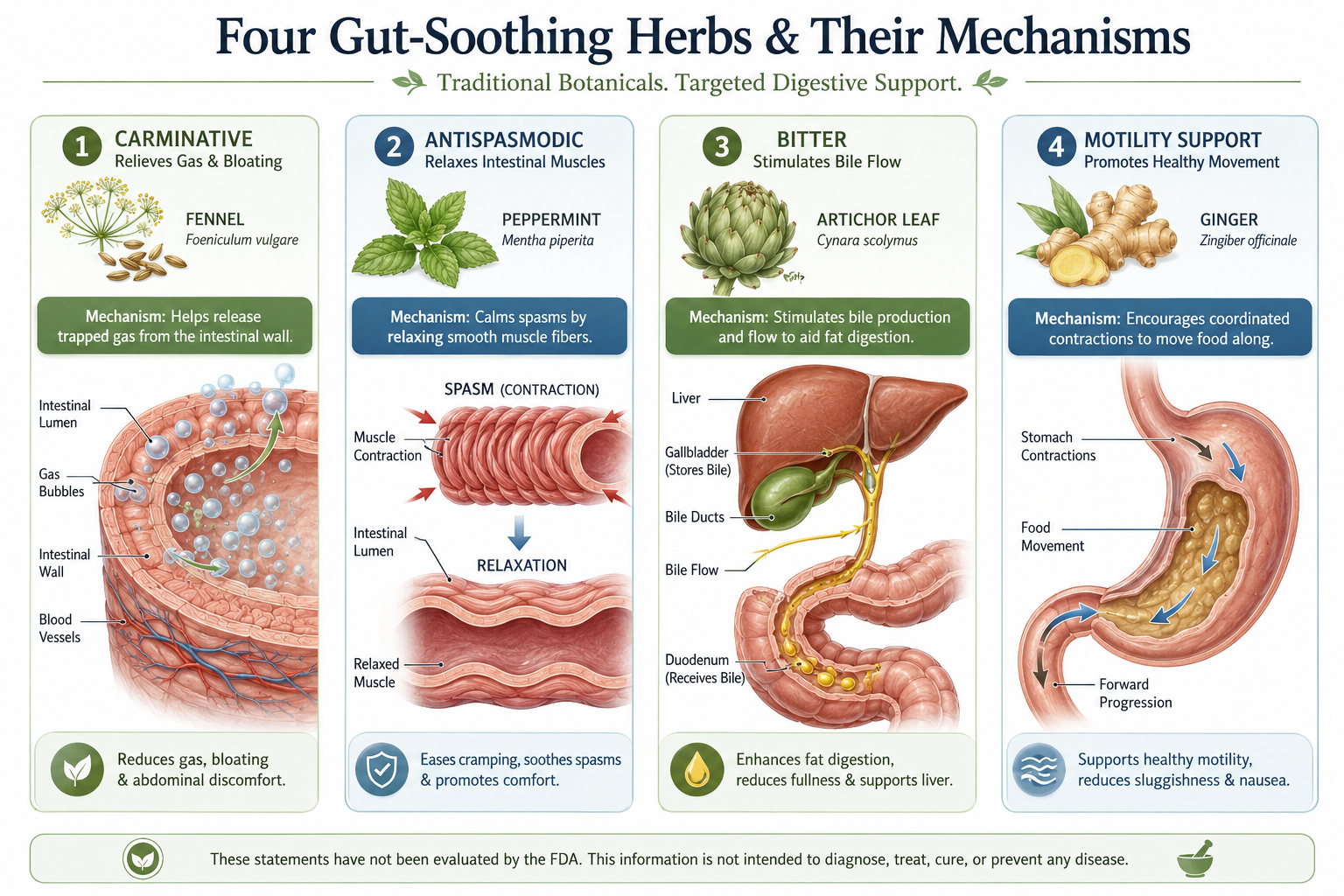
Digestive herbs do not all work the same way. Grouping them by their primary mechanism makes it easier to match the right herb to the right problem. Let’s keep this practical.
Carminative Herbs May Help With Gas and Bloating
Carminative herbs help relax the smooth muscle of the gut wall, which allows trapped gas to move and disperse more easily. Fennel, caraway, and peppermint all fall into this category. They are most useful when the main complaint is uncomfortable fullness or visible bloating from gas.
Antispasmodic Herbs May Calm Intestinal Cramping
Antispasmodic herbs reduce involuntary muscle contractions in the gut. Peppermint is the strongest example here, with clinical evidence supporting its use in IBS-related cramping. Chamomile also has antispasmodic properties, though the evidence is less robust.
Bitter Herbs May Support Digestive Secretions
Bitter herbs — including gentian root, wormwood, and artichoke leaf — stimulate the production of saliva, stomach acid, and bile. This can support the breakdown of fats and proteins, particularly after heavy meals. The evidence for bitters is mostly mechanistic and traditional, with some clinical support for artichoke leaf specifically.
Motility-Supporting Herbs May Help Post-Meal Fullness
Some herbs, particularly ginger, appear to support gastric motility — meaning they help the stomach empty more efficiently. This is relevant for people who feel uncomfortably full long after eating, a symptom pattern sometimes called functional dyspepsia.
Best Herbs for Digestion, Bloating, and Gas
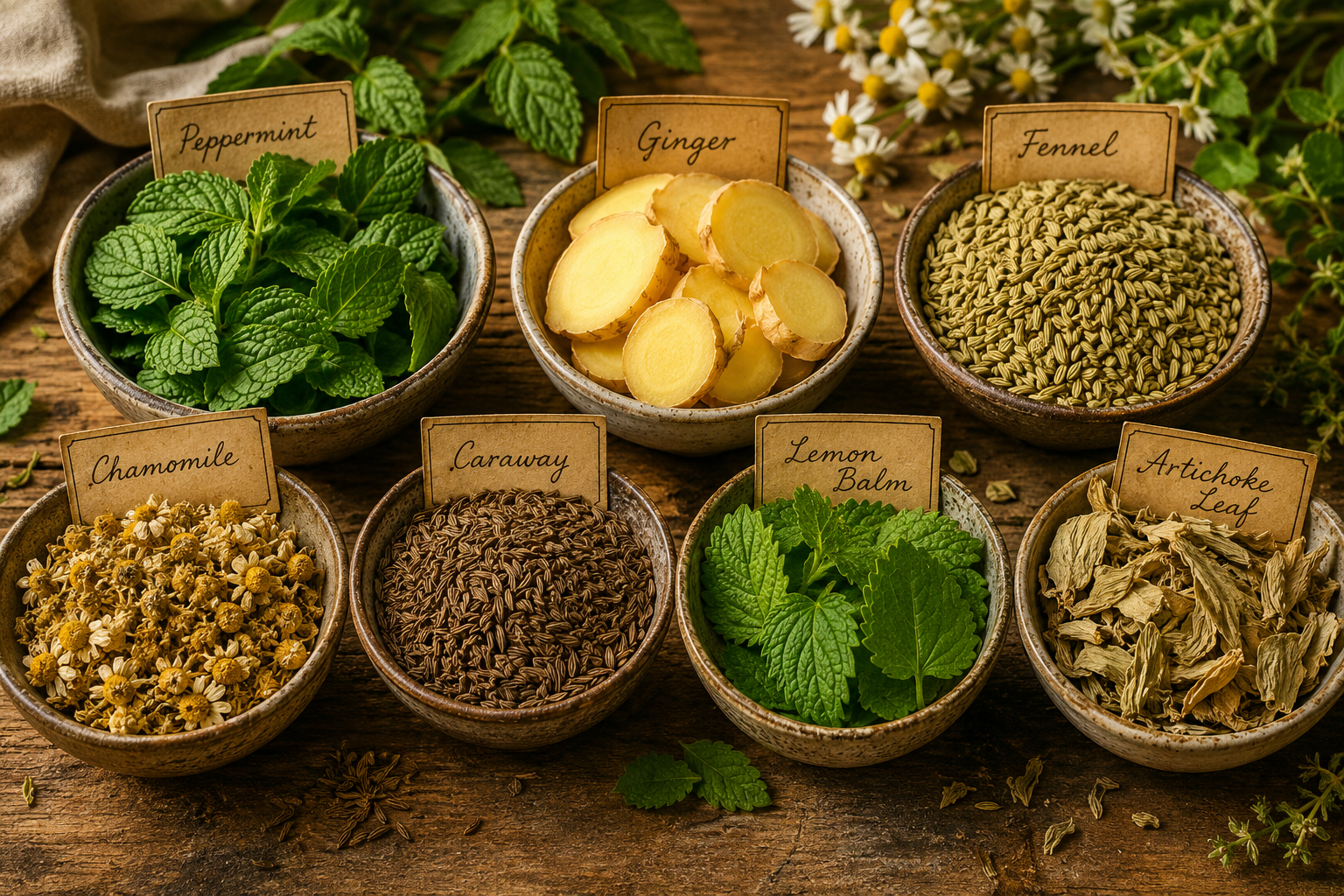
Peppermint: Best for IBS-Style Bloating, Gas, and Cramping
Peppermint is the most clinically studied herb for digestive complaints. Its active compound, menthol, relaxes smooth muscle in the gastrointestinal tract. Multiple randomized controlled trials and meta-analyses have found that enteric-coated peppermint oil capsules significantly reduce bloating, abdominal pain, and gas in people with irritable bowel syndrome (IBS).
The enteric coating matters. Plain peppermint tea or standard peppermint oil capsules dissolve in the stomach, which can worsen acid reflux and heartburn. Enteric-coated capsules pass through the stomach intact and release in the small intestine, where the antispasmodic effect is most useful.
Caution: Peppermint oil is not suitable for people with GERD, hiatal hernia, or frequent acid reflux. It relaxes the lower esophageal sphincter, which can make reflux symptoms worse. Peppermint tea is gentler but offers less therapeutic effect.
For a broader look at gut health and digestive wellness, including the role of the microbiome and diet, the APH gut health guide covers the full picture.
Ginger: Best for Nausea, Sluggish Digestion, and Post-Meal Fullness
Ginger has been used medicinally for over 2,500 years. Its bioactive compounds — gingerols and shogaols — have well-documented anti-nausea and pro-motility effects. Clinical studies have shown that ginger accelerates gastric emptying and can reduce symptoms of functional dyspepsia, including bloating, nausea, and post-meal fullness.
The evidence for ginger and nausea (particularly morning sickness and chemotherapy-induced nausea) is among the strongest in herbal medicine. For general digestive sluggishness, it is a sensible first choice.
Caution: At high doses, ginger may have mild blood-thinning effects. People on anticoagulant medications such as warfarin should check with their doctor before using ginger supplements. It is generally safe in culinary amounts and as a tea.
The health benefits of ginger article on APH covers ginger’s full evidence profile across digestion, inflammation, and immunity — worth reading alongside this guide.
Fennel: Best Traditional Herb for Gas and Mild Spasms
Fennel seeds have been chewed after meals in Indian and Mediterranean cultures for centuries as a natural digestive aid. The active compound, anethole, relaxes the smooth muscle of the digestive tract and reduces gas production. Fennel seed tea and fennel seed chewing are among the most widely used natural remedies for bloating globally.
The evidence base is primarily traditional and mechanistic, with some small clinical studies supporting its carminative effects. It is not as well-studied as peppermint or ginger, but its safety profile is excellent for most adults.
Caution: Fennel belongs to the carrot family (Apiaceae). People with allergies to celery, carrot, or mugwort may react to fennel. Fennel has mild estrogenic properties and should be used cautiously during pregnancy in amounts beyond normal food use.
Caraway: Best Paired With Peppermint for Functional Indigestion
Caraway seeds are less well-known in North America but have a long history of use in European herbal medicine for gas, bloating, and indigestion. The most interesting clinical evidence comes from a combination product pairing caraway oil with peppermint oil, which has been studied in several randomized trials for functional dyspepsia. The combination appears to outperform either herb alone for reducing post-meal discomfort and bloating.
On its own, caraway acts as a carminative and mild antispasmodic. It is commonly used as a tea or in seed form.
Caution: Similar allergy considerations to fennel apply. Not enough data to recommend during pregnancy beyond culinary use.
Chamomile: Best for Stress-Linked Digestive Discomfort
Chamomile has been used in European herbal traditions since at least ancient Rome. Its volatile oils and flavonoids — including apigenin — have anti-inflammatory, antispasmodic, and mild sedative properties. This combination makes chamomile particularly useful when digestive discomfort is connected to stress, anxiety, or nervous tension.
The evidence is mostly traditional and mechanistic, with limited clinical trials focused specifically on digestion. However, chamomile’s safety record is strong, and it is widely recommended in integrative medicine for mild, stress-related gut complaints.
Caution: Chamomile belongs to the daisy family (Asteraceae). People with ragweed, chrysanthemum, or daisy allergies may react to chamomile. It may also have mild sedative effects that interact with sleep medications or anxiolytics.
The connection between stress and gut function is real and well-documented. If stress is a driver of your digestive symptoms, the APH article on managing stress for long-term health is a useful companion read.
Lemon Balm: Best for Nervous Stomach and Mild Indigestion
Lemon balm (Melissa officinalis) is a member of the mint family with traditional use for digestive complaints linked to anxiety and nervous tension. Its carminative properties help relax the gut, and it is often combined with peppermint in commercial digestive teas. Early research suggests it may reduce symptoms of functional dyspepsia when combined with other herbs, though standalone clinical evidence is limited.
Caution: Lemon balm may interact with thyroid medications and sedatives. It is generally considered safe for short-term use in adults.
Artichoke Leaf: Best for Heavy Meals and Functional Dyspepsia Support
Artichoke leaf extract (Cynara scolymus) is one of the more interesting herbs in this category from an evidence standpoint. It stimulates bile production and flow, which supports fat digestion and can reduce the bloating and discomfort that follows heavy, fatty meals. Several clinical trials have found artichoke leaf extract helpful for functional dyspepsia symptoms including bloating, nausea, and abdominal pain.
Caution: Artichoke leaf should be avoided by people with gallstones or bile duct obstruction, as increased bile flow can trigger pain. It also belongs to the daisy family, so the same allergy caution applies as with chamomile.
Digestive Bitters: Best Before Meals, Not After Every Symptom
Bitter herbs — including gentian root, wormwood, and dandelion root — stimulate digestive secretions when taken before meals. They are best suited to people who feel that digestion is generally sluggish or that they struggle to break down rich foods. They are not the right tool for acute gas or cramping after eating.
Caution: Wormwood contains thujone, a compound that can be toxic in large amounts. It should not be used long-term or in high doses. Gentian should be avoided in people with peptic ulcers, as increased acid production can worsen symptoms.
Digestive Herb Comparison Chart
| Herb | Best For | Common Form | Evidence Level | Main Caution |
|---|---|---|---|---|
| Peppermint | IBS bloating, cramping, gas | Enteric-coated capsules, tea | Strong (IBS) | Avoid with GERD or acid reflux |
| Ginger | Nausea, post-meal fullness, sluggish digestion | Tea, capsules, fresh root | Strong (nausea), moderate (dyspepsia) | Caution with anticoagulants |
| Fennel | Gas, mild spasms, post-meal bloating | Seeds, tea | Traditional + early clinical | Apiaceae allergy; caution in pregnancy |
| Caraway | Functional indigestion, gas (best with peppermint) | Seeds, oil capsules, tea | Moderate (combination product) | Apiaceae allergy |
| Chamomile | Stress-related gut discomfort, mild cramping | Tea, tincture | Traditional + limited clinical | Asteraceae allergy; mild sedation |
| Lemon Balm | Nervous stomach, mild indigestion | Tea, tincture | Early/limited | Thyroid meds; sedatives |
| Artichoke Leaf | Heavy meal indigestion, functional dyspepsia | Capsules, tincture | Moderate clinical | Avoid with gallstones or bile duct issues |
| Digestive Bitters | Pre-meal digestive support, sluggish digestion | Tincture, drops | Traditional + mechanistic | Avoid with peptic ulcers; wormwood toxicity risk |
| Marshmallow Root | Gut lining irritation, mild reflux | Tea, capsules | Traditional + early | May slow drug absorption |
| Slippery Elm | Acid reflux, gut lining support | Powder, capsules | Traditional + limited clinical | May slow drug absorption |
What Is the Best Herb for Bloating? It Depends on the Cause
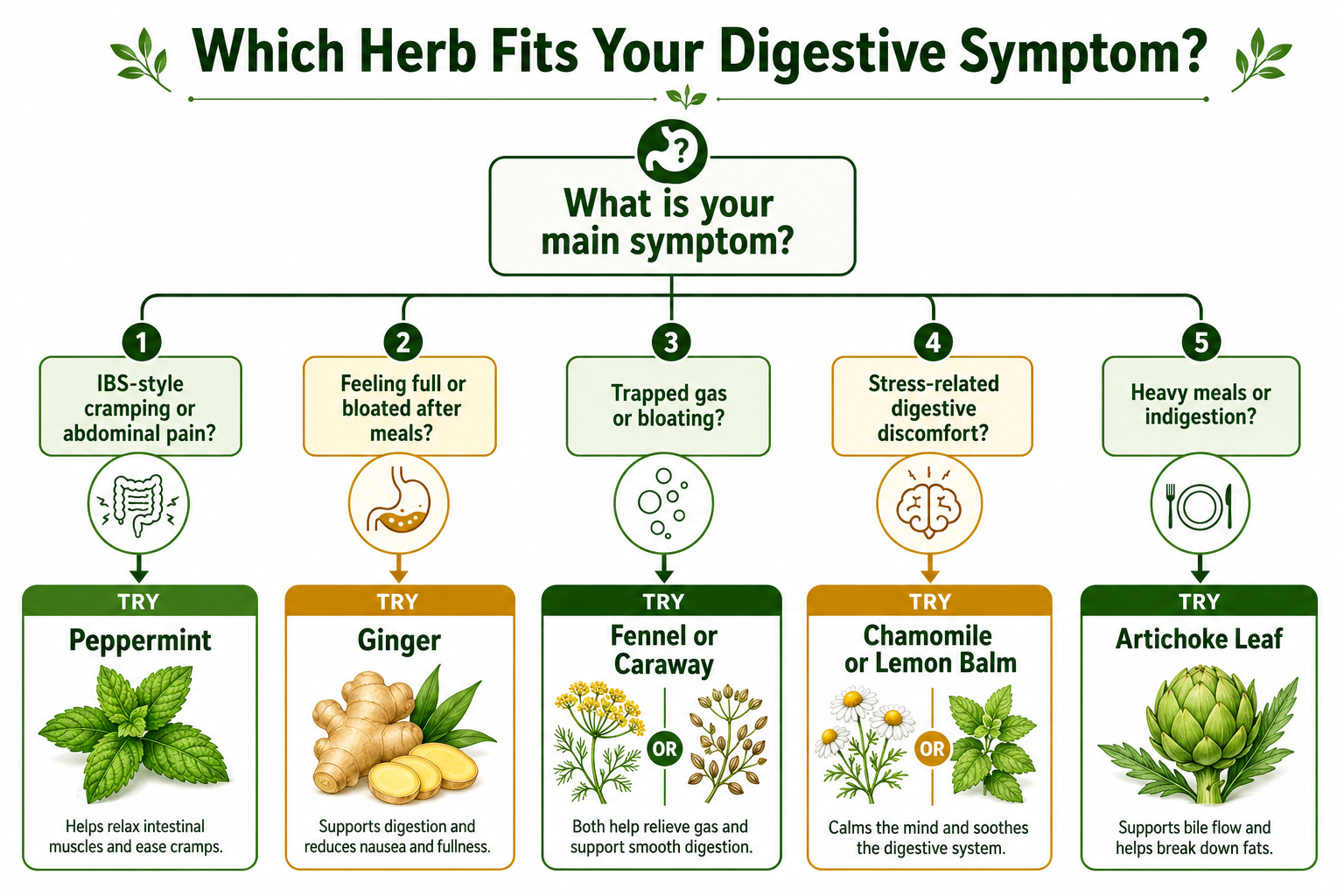
Here is the real issue with most “best herb for bloating” lists: bloating is not a single condition. It is a symptom with multiple possible causes. Matching the herb to the cause is what makes the difference.
If Bloating Comes With Cramps or IBS-Like Symptoms
Enteric-coated peppermint oil is the evidence-based starting point. It has the strongest clinical support for this specific symptom pattern. If you also experience reflux, peppermint is not appropriate — speak with your doctor about alternatives.
If Bloating Comes After Heavy Meals
Ginger tea or artichoke leaf extract are the more logical choices here. Ginger supports gastric emptying; artichoke leaf supports bile flow for fat digestion. Either can be used before or shortly after a large meal.
If Bloating Feels Like Trapped Gas
Fennel seeds, caraway seeds, or a caraway-peppermint combination are the most appropriate options. Chewing fennel seeds after meals is one of the simplest and most time-tested approaches.
If Bloating Happens When Stressed
Chamomile or lemon balm tea are the better fit. The antispasmodic and calming properties of both herbs address the nervous system component that stress-related gut symptoms often involve.
If Bloating Is Frequent or Worsening
This is where herbs step aside. Frequent, unexplained, or worsening bloating — particularly if accompanied by unintentional weight loss, blood in stool, persistent pain, or changes in bowel habits — requires medical evaluation. These are red flags that should not be managed with herbal teas.
The APH article on what causes bloating and how to fix it covers the full range of causes in more detail, including dietary and lifestyle factors.
How to Use Herbs for Digestion Safely
Start With Tea or Food Before Concentrated Supplements
A sensible starting point is to begin with the lowest-concentration form of any herb — usually a tea or the herb used in cooking. This reduces the risk of side effects and gives a reasonable indication of tolerance before moving to capsules or extracts.
Choose the Right Form for the Symptom
- Tea: Best for mild, general digestive support. Lower concentration, gentler effect.
- Enteric-coated capsules: Required for peppermint oil to work on the small intestine rather than the stomach.
- Tinctures: More concentrated than tea; useful when tea is impractical.
- Standardized extracts: Used in clinical trials; offer more predictable dosing (relevant for artichoke leaf, ginger).
Watch for Medication Interactions and Health Conditions
This is where context matters most. The following groups should consult a healthcare provider before using digestive herb supplements:
- Anticoagulant users (warfarin, aspirin, heparin): Ginger, garlic, and some bitters may have blood-thinning effects.
- Pregnant or breastfeeding women: Most digestive herbs are safe in food amounts; therapeutic doses of fennel, wormwood, and some bitters are not recommended.
- Children: Peppermint oil should not be applied near the face of infants or young children; herbal teas should be used cautiously and in age-appropriate amounts.
- People with GERD or hiatal hernia: Avoid peppermint oil, spearmint, and relaxant herbs that lower esophageal sphincter tone.
- Gallbladder disease or bile duct obstruction: Avoid artichoke leaf and other choleretic herbs.
- Peptic ulcers: Avoid bitter herbs that stimulate acid production.
- Liver disease: Some herbs are processed by the liver; consult a doctor before using concentrated herbal supplements.
- Asteraceae/Apiaceae allergies: Avoid chamomile, artichoke, fennel, caraway, and related herbs.
- Chronic GI conditions (Crohn’s, colitis, diverticulitis): Herbs are not a substitute for medical management; some may irritate inflamed tissue.
Supplements in the US are regulated as food products, not drugs. This means quality, purity, and dosage are not guaranteed by the FDA. Choosing products with third-party testing certification (such as USP, NSF, or ConsumerLab) reduces the risk of contamination or inaccurate labeling.
Know When Bloating Needs Medical Care
The following symptoms alongside bloating are red flags requiring prompt medical attention:
- Unintentional weight loss
- Blood in stool or black, tarry stools
- Persistent vomiting
- Severe or worsening abdominal pain
- Difficulty swallowing
- New bloating in someone over 50 with no obvious cause
Herbs for Digestion vs. Other Natural Bloating Remedies
Eating Habits Can Matter as Much as Herbs
In real-world terms, the way food is eaten often has as much impact on bloating as what is taken after the fact. Eating too quickly, swallowing air, consuming large portions, and eating high-fermentable foods (FODMAPs) are common drivers of bloating that no herb fully compensates for.
Dietary fiber deserves a mention here. Soluble fiber feeds the gut microbiome and supports regularity, but increasing fiber too quickly can temporarily worsen gas and bloating. The prebiotic foods guide on APH explains how to feed the gut microbiome effectively without aggravating symptoms.
Herbs May Work Better Alongside Simple Digestive Habits
The stronger evidence points to herbs working best as part of a broader approach — not as a standalone fix. Eating slowly, managing portion sizes, staying hydrated, and maintaining consistent meal timing all support digestive function in ways that complement what herbs can offer.
For those interested in how fermented foods and probiotics compare to herbal approaches, the APH article on fermented foods vs. probiotics vs. postbiotics covers that ground clearly.
Common Mistakes to Avoid With Digestive Herbs
Mistake 1: Assuming Natural Always Means Safe
There is no magic in it just because it comes from a plant. Wormwood can cause neurotoxicity in high doses. Comfrey can cause liver damage. Even fennel and chamomile carry allergy risks. Natural origin does not equal automatic safety, particularly at supplement doses.
Mistake 2: Taking Peppermint Oil When You Have Reflux
This is one of the most common and counterproductive mistakes. Peppermint relaxes the lower esophageal sphincter. For someone with IBS and no reflux, that is therapeutic. For someone with GERD, it makes symptoms worse. The herb is the same; the condition determines whether it helps or harms.
Mistake 3: Using Too Many Digestive Herbs at Once
More is not always better. Using five different digestive herbs simultaneously makes it impossible to know what is working, increases interaction risk, and adds unnecessary cost. Start with one herb matched to the primary symptom, give it two to four weeks, and assess.
Mistake 4: Ignoring the Root Cause of Recurring Bloating
It is not that simple. Herbs can manage symptoms, but they do not address underlying causes such as small intestinal bacterial overgrowth (SIBO), food intolerances, celiac disease, or structural issues. Recurring bloating that does not respond to simple measures deserves investigation, not more herbs.
Mistake 5: Treating Essential Oils Like Teas
Peppermint essential oil is not the same as peppermint tea, and it is not the same as enteric-coated peppermint oil capsules. Essential oils are highly concentrated and can cause burns, toxicity, or serious harm if ingested without appropriate dilution and guidance. This distinction matters.
Simple Digestive Herb Routine for Occasional Bloating
Before Meals
- Digestive bitters or ginger tea (15 to 30 minutes before eating): Supports digestive secretion and gastric motility, particularly before a large or rich meal.
After Meals
- Fennel or caraway seeds (chewed or as a tea): For gas and mild bloating.
- Chamomile or lemon balm tea: For stress-related discomfort or mild cramping.
- Ginger tea: For post-meal heaviness or nausea.
For Recurring Patterns
- Enteric-coated peppermint oil capsules (taken before meals, not after): For IBS-pattern bloating and cramping — but only if reflux is not a factor.
- Artichoke leaf extract: For regular post-meal indigestion and bloating after fatty meals, taken before eating.
Keep it simple and consistent. A routine that is easy to maintain will always outperform a complicated protocol that gets abandoned after a week.
Frequently Asked Questions About Herbs for Digestion
What herb is best for digestion?
There is no single best herb for digestion. The answer depends on the symptom. Peppermint (enteric-coated) has the strongest evidence for IBS-related bloating and cramping. Ginger is best for nausea and sluggish digestion. Fennel and caraway are well-suited to gas. Chamomile works best when stress is a factor.
What herb gets rid of gas fast?
Fennel seeds are among the fastest-acting natural remedies for trapped gas. Chewing a small amount of fennel seeds or drinking fennel tea after a meal can provide noticeable relief within 20 to 30 minutes for many people. Caraway seeds work similarly and are often combined with peppermint for stronger effect.
Is peppermint or ginger better for bloating?
It depends on the type of bloating. Peppermint is better for crampy, IBS-style bloating. Ginger is better for bloating caused by sluggish digestion or post-meal fullness. If reflux is present, neither peppermint oil nor large doses of ginger are ideal — ginger tea in moderate amounts is generally tolerated.
Can herbal tea help with bloating?
Yes, for mild and occasional bloating, herbal teas — particularly fennel, chamomile, peppermint, and ginger — can provide genuine relief. The effect is gentler than concentrated supplements, which makes tea a good starting point. For IBS-level symptoms, enteric-coated peppermint oil capsules have stronger evidence than tea.
Are digestive herbs safe every day?
Most culinary herbs used as teas — ginger, fennel, chamomile, peppermint — are safe for regular daily use in normal amounts for most healthy adults. Concentrated supplements and bitters are better used short-term or as needed. Wormwood should not be used long-term. Anyone on regular medication or with a chronic health condition should check with their doctor before making any herb a daily habit.
When should I see a doctor for bloating?
See a doctor if bloating is persistent, worsening, or accompanied by any of the following: unintentional weight loss, blood in stool, severe pain, difficulty swallowing, persistent vomiting, or if you are over 50 and experiencing new bloating without a clear dietary cause. These symptoms require medical evaluation, not herbal management.
Final Takeaway: Use the Right Herb for the Right Digestive Problem
The main takeaway is this: herbs for digestion are genuinely useful tools — but only when matched to the right symptom, used in the right form, and kept in proper perspective.
Peppermint oil (enteric-coated) has the strongest clinical evidence for IBS-related bloating and cramping. Ginger earns its place for nausea and sluggish gastric emptying. Fennel and caraway are practical, well-tolerated options for everyday gas and bloating. Chamomile and lemon balm address the stress-gut connection that is often overlooked. Artichoke leaf and digestive bitters have a role for people who struggle with heavy meals or generally sluggish digestion.
None of these herbs cure anything. They support comfort, ease symptoms, and complement a sensible digestive routine. That is a reasonable and honest claim — and it is worth more than overpromising.
I prefer to look at what actually works. For mild, occasional digestive discomfort, several of these herbs have earned their place in an evidence-aware toolkit. Start with one, use the right form, and give it time to work before adding more.
For a broader foundation, the APH guide to health benefits of natural foods and herbs provides the wider context for how food and plant compounds support health — a useful companion to this article.
And if your symptoms are persistent, worsening, or simply not responding to simple measures, that is the clearest signal to step away from the herb shelf and speak with your doctor.
📂 10 Best Herbs for Eye Health
This article is part of the APH cluster. Use the links below to move between the pillar and child articles.
- Read the pillar: 10 Best Herbs for Eye Health: Benefits, Active Compounds, and How to Use Them
- YOU ARE HERE Herbs for Digestion: Natural Remedies for Bloating, Gas, and Gut Comfort
- → Health Benefits of Ginger: Digestion, Inflammation, and Immunity
- → Adaptogenic Herbs for Stress and Resilience: Ashwagandha, Rhodiola, and Holy Basil
References
- [Video] Speaker. YouTube. https://www.youtube.com/watch?v=mYSpdMjkdMM