
What Are Polyphenols? Benefits, Food Sources and What the Evidence Shows
Last updated: April 3, 2026
Quick Answer
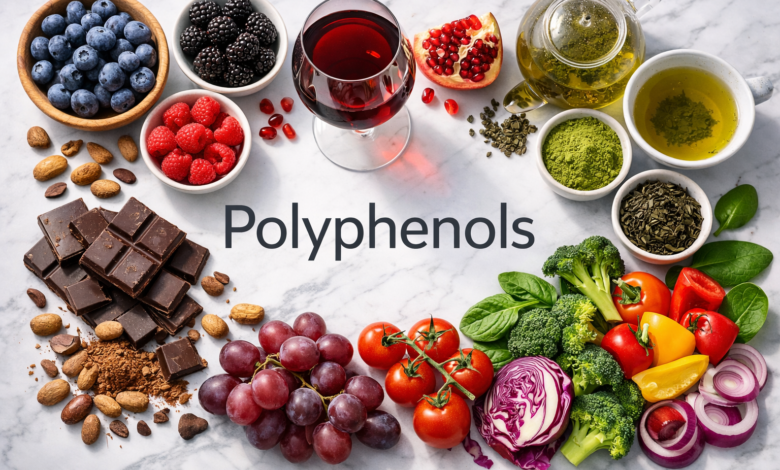
Polyphenols are a large family of naturally occurring plant compounds found in fruits, vegetables, tea, coffee, whole grains, and spices. They act primarily as antioxidants and anti-inflammatory agents in the body, and a growing body of research links regular dietary polyphenol intake to reduced risk of heart disease, type 2 diabetes, certain cancers, and cognitive decline. The best way to get them is through a varied, plant-rich diet — not supplements.
Understanding what are polyphenols is essential because they are vital to a healthy diet.
Key Takeaways
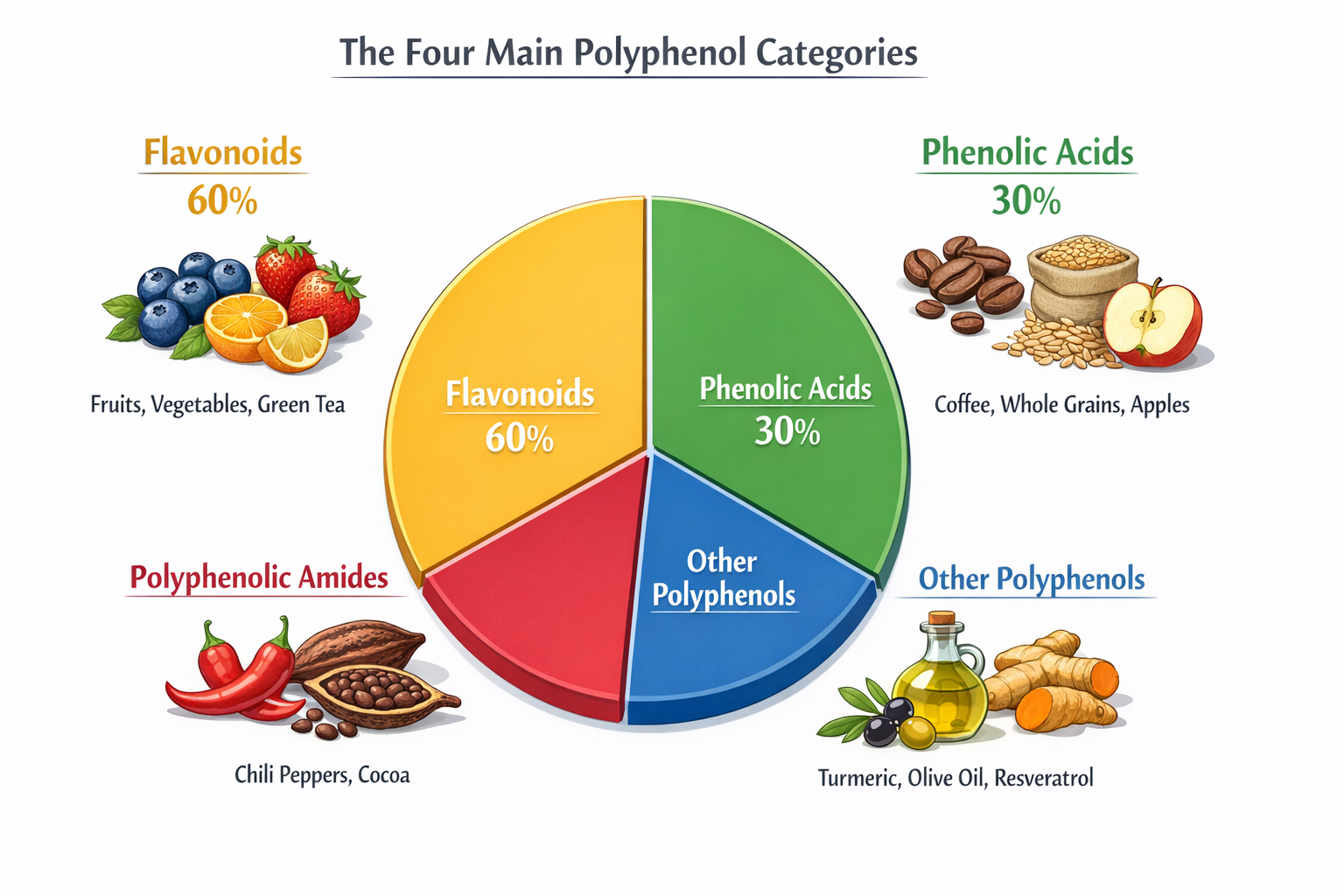
- Polyphenols are phytonutrients (plant chemicals) divided into four main categories: flavonoids, phenolic acids, polyphenolic amides, and other polyphenols such as stilbenes and lignans.
- Flavonoids make up roughly 60% of all dietary polyphenols; phenolic acids account for about 30%.
- Their primary mechanisms of action include neutralizing free radicals (antioxidant activity), reducing inflammatory signaling, and modulating gut microbiota composition.
- Regular consumption is associated with better blood sugar regulation, lower LDL cholesterol, improved blood pressure, and reduced cancer cell proliferation in laboratory studies.
- Polyphenol content in food varies based on ripeness, growing conditions, storage, and cooking method — raw or minimally processed foods generally retain more.
- Whole food sources outperform isolated supplements because polyphenols work synergistically with other plant compounds.
- High-dose polyphenol supplements carry real risks, including interactions with medications and potential thyroid disruption — always consult a healthcare provider before supplementing.
- Top dietary sources include cloves, dark berries (blueberries, blackberries), dark chocolate, green tea, extra-virgin olive oil, red onions, and flaxseeds.
- Polyphenols act as prebiotics, selectively feeding beneficial gut bacteria such as Bifidobacterium while inhibiting pathogenic strains.
- No universal recommended daily intake exists yet, but research consistently points to benefit from diets that include multiple polyphenol-rich foods daily.
What Exactly Are Polyphenols? Understanding what are polyphenols
In exploring what are polyphenols, it’s crucial to recognize their role in promoting health.
Polyphenols are a broad class of plant-derived chemical compounds characterized by multiple phenol rings in their molecular structure. Plants produce them as a natural defense against UV radiation, pathogens, and environmental stress — but when humans consume them, these compounds interact with our biology in ways that appear genuinely protective.
There are estimated to be over 8,000 identified polyphenolic compounds in plants, though research is still mapping their individual effects. They are not vitamins or minerals; they are bioactive phytochemicals, meaning they influence physiological processes without being classified as essential nutrients.
Why does the distinction matter? Because polyphenols don’t work like a single drug with a single target. They interact with multiple pathways simultaneously — which is part of why whole food sources tend to outperform isolated extracts in clinical outcomes.
What Are the Main Types of Polyphenols?
There are four primary categories, each with distinct food sources and mechanisms of action.
Flavonoids (approximately 60% of dietary polyphenols)
Flavonoids are the most studied and most abundant polyphenol group. They include several subclasses:
- Flavonols (quercetin, kaempferol) — found in onions, kale, apples, and broccoli
- Flavanols / flavan-3-ols (catechins, epicatechins) — found in green tea, dark chocolate, and grapes
- Flavanones (hesperidin, naringenin) — concentrated in citrus fruits
- Anthocyanins — responsible for the red, blue, and purple pigments in berries, red cabbage, and cherries
- Isoflavones (genistein, daidzein) — found primarily in soy and legumes
- Flavones (luteolin, apigenin) — found in parsley, celery, and chamomile tea
Flavonoids have well-documented antioxidant and anti-inflammatory properties. They also appear to modulate enzyme activity and influence cell signaling pathways involved in inflammation and cell proliferation.
Phenolic Acids (approximately 30% of dietary polyphenols)
Phenolic acids are divided into two main groups: hydroxybenzoic acids (such as gallic acid, found in tea and berries) and hydroxycinnamic acids (such as caffeic acid and ferulic acid, found in coffee, whole grains, and some vegetables).
These compounds are among the most bioavailable polyphenols — meaning the body absorbs and uses them relatively efficiently compared to some other polyphenol classes. Coffee, for example, is one of the largest single dietary sources of phenolic acids for many adults in Western populations.
Polyphenolic Amides
This smaller group includes capsaicinoids from chili peppers and avenanthramides from oats. Avenanthramides are particularly notable for their anti-inflammatory activity in the cardiovascular system. Capsaicinoids have demonstrated antimicrobial properties and are being studied as natural food preservatives. Both groups are less abundant in the typical diet but contribute meaningfully to overall polyphenol intake.
Other Polyphenols: Stilbenes, Lignans, and More
- Stilbenes — resveratrol (found in red grapes and red wine) is the most famous, though dietary amounts are modest
- Lignans — found in flaxseeds, sesame seeds, and whole grains; converted by gut bacteria into enterolignans, which have demonstrated hormonal and cardiovascular effects
- Ellagic acid and ellagitannins — found in pomegranates, walnuts, and berries; converted to urolithins by gut microbiota
- Curcumin — the active polyphenol in turmeric, extensively studied for anti-inflammatory effects
What Are the Proven Health Benefits of Polyphenols?
So, what are polyphenols, and why are they significant for health? They possess numerous benefits.
The evidence base for polyphenols is large but still evolving. Here’s what the research actually supports, organized by health outcome.
When considering what are polyphenols, you should also look at their health benefits.
1. Cardiovascular Health
Polyphenols support heart health through several mechanisms: reducing oxidative stress in arterial walls, lowering systemic inflammation, improving endothelial function (the health of blood vessel linings), and modestly reducing LDL cholesterol and blood pressure.
Multiple systematic reviews and meta-analyses have found that higher dietary polyphenol intake is associated with lower risk of cardiovascular events. Flavanols from cocoa and tea, in particular, have shown consistent effects on blood pressure and arterial stiffness in randomized controlled trials.
Lignans deserve special mention here. Research published in peer-reviewed cardiology journals has found that higher circulating levels of enterolactone — a biomarker of lignan intake — are associated with meaningfully lower risk of cardiovascular mortality. This is likely because lignans combine antioxidant activity with anti-inflammatory effects that slow atherosclerotic plaque development.
For more on anti-inflammatory foods that support heart health, including polyphenol-rich options, that guide covers the full dietary picture.
2. Blood Sugar Regulation and Type 2 Diabetes Risk
Polyphenols appear to lower postprandial (after-meal) blood glucose through two main pathways: inhibiting carbohydrate-digesting enzymes (alpha-amylase and alpha-glucosidase) in the gut, and improving insulin sensitivity in peripheral tissues.
Green tea catechins, berberine-like compounds in certain plants, and quercetin have all shown blood sugar-lowering effects in controlled studies. A diet consistently high in polyphenols — particularly from whole fruits, vegetables, and legumes — is associated with lower incidence of type 2 diabetes in large prospective cohort studies.
Important caveat: These effects are most consistent when polyphenols come from whole foods rather than isolated supplements. Fruit juice, for example, strips out fiber and can spike blood sugar despite containing polyphenols.
3. Gut Microbiome Support
Polyphenols act as prebiotics. Most dietary polyphenols are not fully absorbed in the small intestine — they pass into the colon, where gut bacteria ferment them into bioactive metabolites. In doing so, they selectively feed beneficial bacteria (particularly Bifidobacterium and Lactobacillus species) while inhibiting the growth of harmful pathogens.
This is one of the most exciting areas of polyphenol research. Studies have shown that tea polyphenols can increase Bifidobacterium populations while suppressing Clostridium difficile. Pomegranate ellagitannins are converted by gut bacteria into urolithins, which have demonstrated anti-inflammatory and anti-cancer properties in cell and animal studies.
For a deeper look at gut health and digestive wellness, including how diet shapes your microbiome, that resource provides a comprehensive overview.
4. Cancer Risk Reduction
Laboratory and epidemiological studies consistently show that polyphenols can inhibit cancer cell proliferation, promote apoptosis (programmed cell death in abnormal cells), and reduce DNA damage from oxidative stress. These effects have been observed across multiple cancer types, including breast, colon, prostate, and lung cancers.
However, it’s critical to be precise here: most mechanistic evidence comes from cell culture and animal studies. Large human clinical trials specifically testing polyphenols as cancer treatments are limited. What epidemiological data does support is that populations eating diets consistently high in plant foods — and therefore high in polyphenols — have lower rates of several cancers. Whether polyphenols are the primary driver or one factor among many (fiber, micronutrients, lower processed food intake) is still being studied.
Ellagic acid from pomegranates and berries, EGCG (epigallocatechin gallate) from green tea, and curcumin from turmeric are among the most studied polyphenols in cancer research.
5. Brain Health and Cognitive Function
Polyphenols cross the blood-brain barrier (at least partially) and appear to protect neurons from oxidative damage, reduce neuroinflammation, and improve cerebral blood flow. Flavanols from cocoa and berries have shown the most consistent cognitive benefits in human trials.
Research published in leading nutrition journals has found that regular consumption of flavanol-rich cocoa improved performance on working memory and attention tasks in healthy adults. Blueberry supplementation has shown improvements in memory recall in older adults with early cognitive decline in multiple small randomized trials.
Ginkgo biloba extracts, which are rich in flavonoid glycosides and terpenoids, have been studied specifically in dementia patients and show modest improvements in short-term memory and attention — though evidence for disease modification remains inconclusive.
The health benefits of dark chocolate are closely tied to its flavanol content, and that article explores the cognitive and cardiovascular evidence in more detail.
6. Immune System Modulation
Polyphenols influence immune function by modulating cytokine production (the signaling proteins that coordinate immune responses), increasing natural killer cell activity, and reducing chronic low-grade inflammation — the kind associated with aging and metabolic disease.
Elderberry extract, rich in anthocyanins, has shown the ability to increase cytokine production in immune cells in vitro. Quercetin has demonstrated antiviral properties in laboratory settings. While these findings are promising, translating them to specific clinical recommendations requires more robust human trial data.
What is well-established is that chronic inflammation is a driver of most major diseases, and polyphenols’ consistent anti-inflammatory effects make them valuable as part of a long-term dietary strategy.
7. Blood Clot Prevention
Some polyphenols, particularly quercetin and resveratrol, inhibit platelet aggregation — the process by which blood platelets clump together to form clots. Excess platelet aggregation contributes to deep vein thrombosis, stroke, and pulmonary embolism.
Practical note: If you are already taking anticoagulant medications (such as warfarin or aspirin), high-dose polyphenol supplements could amplify this effect and create bleeding risk. Food-based intake is unlikely to cause issues, but supplementation should be discussed with your doctor.
Which Foods Are the Richest Sources of Polyphenols?
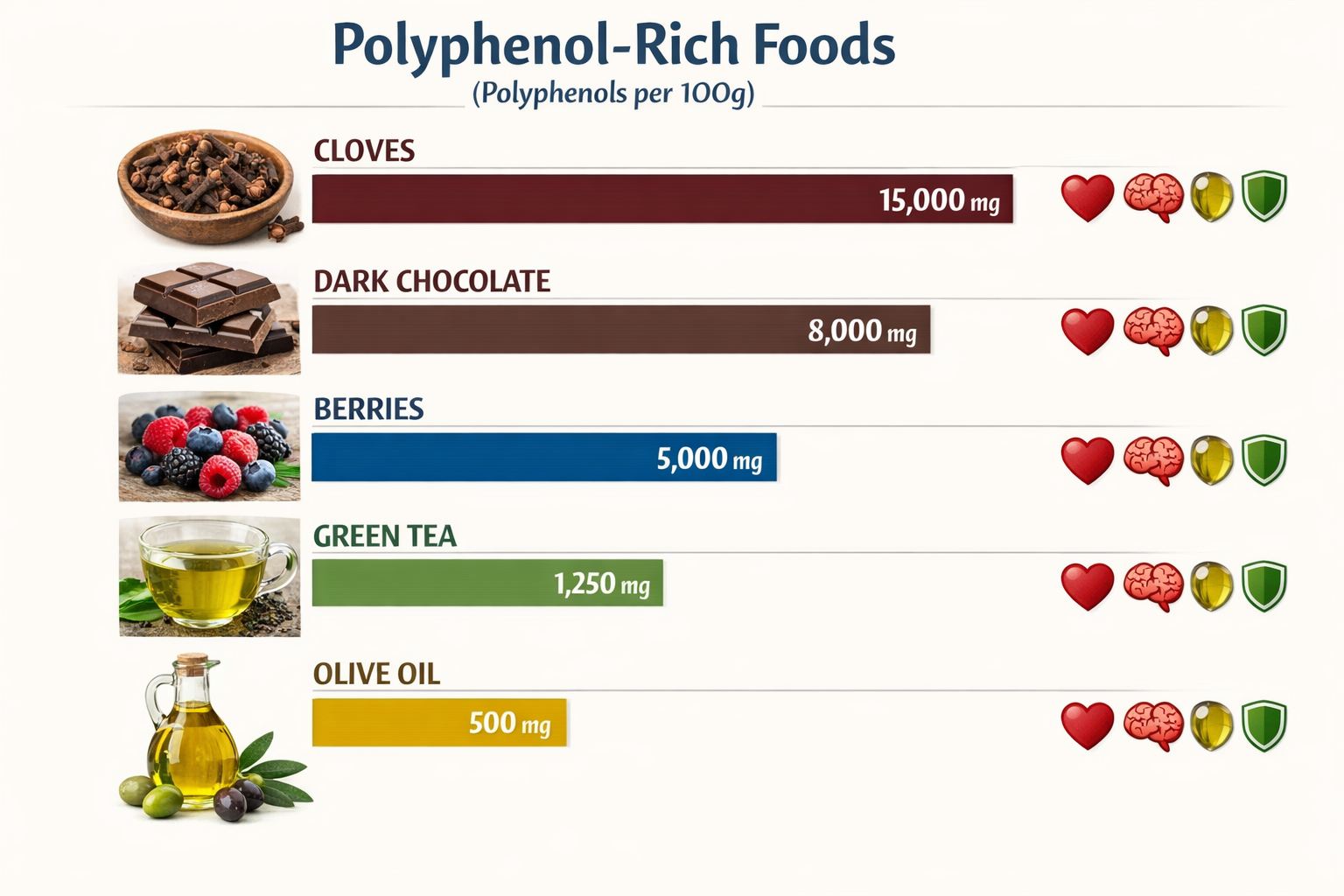
Polyphenol content varies significantly based on variety, ripeness, growing conditions, and preparation method. The following are among the highest-concentration sources based on data from the Phenol-Explorer database (a peer-reviewed reference database for dietary polyphenols):
When consuming foods high in polyphenols, always remember what are polyphenols and how they contribute to your well-being.
| Food | Primary Polyphenol Type | Notes |
|---|---|---|
| Cloves (dried) | Phenolic acids (eugenol) | Highest polyphenol density by weight of any food |
| Dark chocolate (≥70% cocoa) | Flavanols (catechins, epicatechins) | Processing reduces content; choose minimally processed |
| Blueberries | Anthocyanins | Wild blueberries have higher content than cultivated |
| Black and green tea | Catechins, theaflavins | Brewing time and temperature affect yield |
| Extra-virgin olive oil | Secoiridoids, hydroxytyrosol | Cold-pressed retains more polyphenols |
| Red onions | Quercetin (flavonol) | Outer layers have highest concentration |
| Pomegranate | Ellagitannins, anthocyanins | Juice retains most polyphenols; avoid added sugar versions |
| Flaxseeds | Lignans (secoisolariciresinol) | Ground flaxseed is more bioavailable than whole |
| Black beans | Anthocyanins, flavonols | Cooking reduces some content but food remains a good source |
| Coffee | Chlorogenic acids (phenolic acids) | One of the largest polyphenol sources in Western diets |
| Red wine | Resveratrol, quercetin, anthocyanins | Alcohol carries its own risks; polyphenols alone don’t justify consumption |
| Walnuts | Ellagitannins, flavonoids | Also high in omega-3s, which complement polyphenol effects |
Practical tips for maximizing polyphenol intake from food:
Additionally, knowing what are polyphenols can enhance your dietary choices.
- Eat the skins of fruits and vegetables where safe — polyphenols concentrate in outer layers
- Choose whole fruit over juice to retain fiber and slow polyphenol absorption
- Lightly steam rather than boil vegetables (boiling leaches water-soluble polyphenols)
- Store berries properly — refrigerate and consume within a few days of purchase
- Use herbs and spices liberally: oregano, rosemary, thyme, and turmeric are all polyphenol-dense
The health benefits of olive oil article covers how to choose and use extra-virgin olive oil to preserve its polyphenol content — a useful companion read.
Should You Take Polyphenol Supplements?
For instance, when discussing what are polyphenols, we should consider their sources and benefits.
For most people, whole food sources are the better choice. Here’s why — and when supplements might be considered.
Why Whole Foods Win
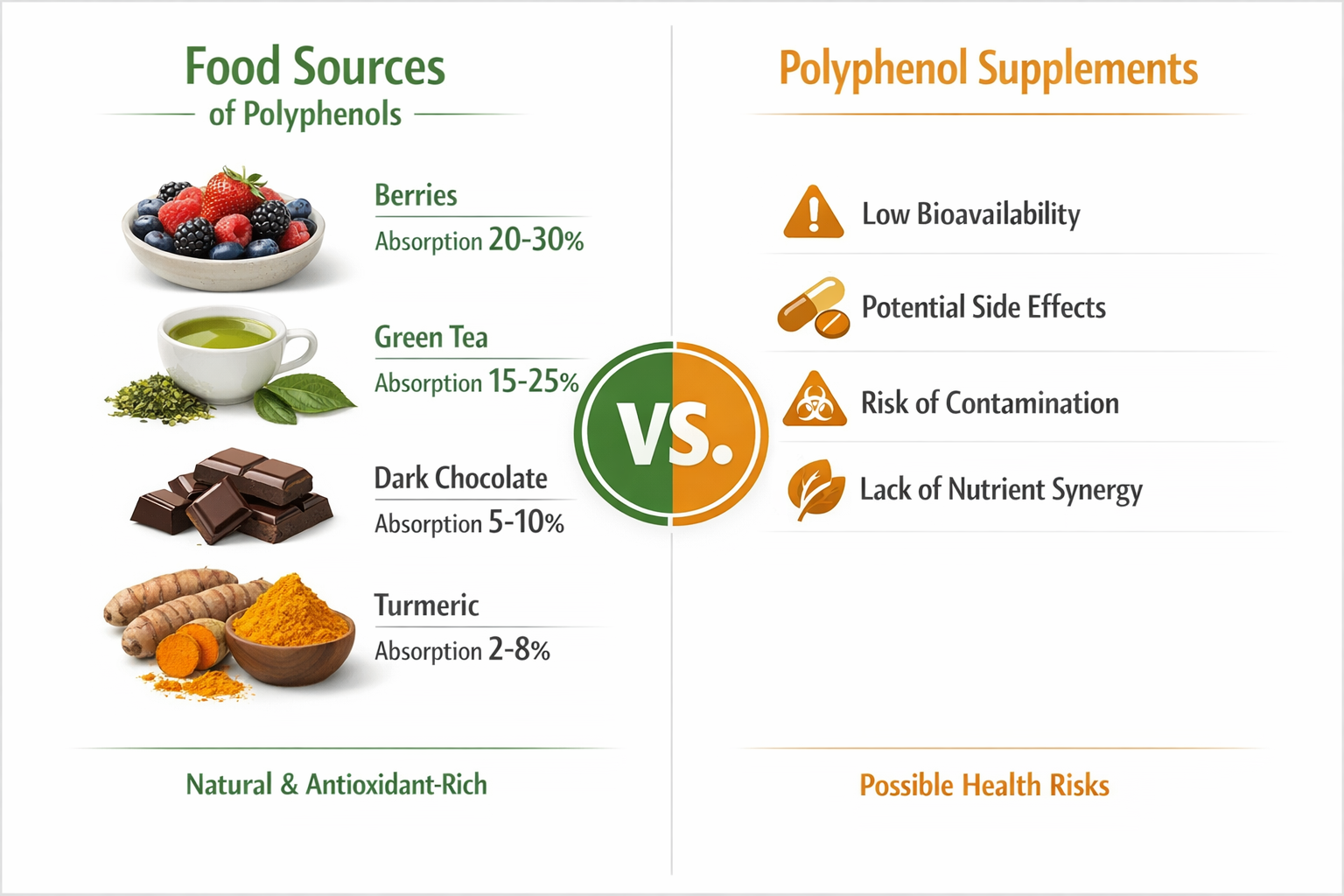
Polyphenols in food don’t act in isolation. They work alongside fiber, vitamins, minerals, and hundreds of other phytochemicals in a matrix that affects how they’re absorbed, metabolized, and used. Isolated polyphenol supplements strip away this context.
Several large studies that showed benefit from polyphenol-rich diets have not been replicated with equivalent doses of isolated supplements. This “food matrix effect” is well-documented in nutrition science and is one reason why the supplement industry’s promise of “concentrated benefits” often doesn’t hold up in clinical trials.
Supplement Risks to Know
High-dose polyphenol supplements are not tightly regulated in most countries, and some products contain doses far exceeding what you’d get from even a very polyphenol-rich diet. Known risks include:
Understanding what are polyphenols can inform your nutritional decisions.
- Drug interactions: Polyphenols can inhibit cytochrome P450 enzymes, affecting how the liver metabolizes medications including blood thinners, statins, and some heart medications
- Thyroid effects: High doses of certain flavonoids (quercetin, kaempferol) have been shown in animal studies to inhibit thyroid peroxidase, potentially disrupting thyroid hormone synthesis
- Kidney stress: Animal studies suggest very high doses may contribute to kidney damage — human equivalence is unclear but warrants caution
- Pro-oxidant effects at high doses: Paradoxically, very high concentrations of some polyphenols can act as pro-oxidants rather than antioxidants
The bottom line on supplements: If you eat a varied diet with plenty of fruits, vegetables, whole grains, tea, and quality fats like olive oil, you’re likely getting meaningful polyphenol intake without supplementation. If you’re considering a specific supplement (resveratrol, quercetin, curcumin), discuss it with a healthcare provider — especially if you take any regular medications.
How Do Polyphenols Compare to Other Antioxidants?
Polyphenols are often grouped with other antioxidants like vitamins C and E, beta-carotene, and selenium. They share the ability to neutralize free radicals, but they differ in important ways:
- Vitamins C and E are essential nutrients with defined deficiency states; polyphenols are not classified as essential
- Polyphenols are far more structurally diverse — over 8,000 compounds versus a handful of vitamins
- Polyphenols have additional non-antioxidant functions: enzyme inhibition, gene expression modulation, microbiome effects, and direct anti-inflammatory signaling
- Bioavailability varies enormously across polyphenol types — some (like quercetin from onions) are well-absorbed; others (like resveratrol) are poorly absorbed in standard dietary amounts
This diversity is actually an advantage. A diet rich in varied polyphenol sources provides broad-spectrum protection across multiple biological pathways — something no single antioxidant supplement can replicate.
For context on how polyphenols fit into a broader anti-inflammatory foods strategy, that guide covers the full spectrum of dietary compounds that reduce chronic inflammation.
Who Benefits Most from a High-Polyphenol Diet?
A polyphenol-rich diet is broadly beneficial, but certain groups have the most to gain:
- Adults over 50: Aging is associated with increased oxidative stress and chronic inflammation; polyphenols directly counteract both
- People with metabolic risk factors: Those with elevated blood sugar, high blood pressure, or high LDL cholesterol may see measurable improvements from consistent polyphenol intake
- People with poor gut microbiome diversity: The prebiotic effects of polyphenols are particularly valuable for those with dysbiosis (imbalanced gut bacteria)
- Those at elevated cancer risk: While polyphenols are not a treatment, a diet rich in them is a sensible component of a cancer-risk-reduction strategy
- People managing chronic inflammation: Conditions like arthritis, metabolic syndrome, and cardiovascular disease all involve chronic inflammatory pathways that polyphenols help modulate
Who should be cautious:
- People on blood-thinning medications (warfarin, aspirin) should avoid high-dose polyphenol supplements
- Those with thyroid conditions should discuss high-dose flavonoid supplements with their endocrinologist
- People with kidney disease should not use high-dose polyphenol supplements without medical supervision
Frequently Asked Questions About Polyphenols
Q: What are polyphenols in simple terms?
Polyphenols are natural plant compounds that protect plants from environmental stress. When you eat them, they act as antioxidants and anti-inflammatory agents in your body, helping reduce the risk of chronic diseases.
Q: What foods are highest in polyphenols?
Cloves, dark chocolate (70%+ cocoa), blueberries, black and green tea, extra-virgin olive oil, pomegranate, red onions, flaxseeds, and coffee are among the richest sources. Variety matters — different polyphenol types have different benefits.
Q: Can you get enough polyphenols from diet alone?
Yes, for most people. A diet that includes daily servings of fruits, vegetables, whole grains, legumes, tea or coffee, and quality fats like olive oil provides a broad range of polyphenols without supplementation.
Q: Are polyphenols safe?
Polyphenols from food are safe for virtually everyone. High-dose isolated supplements carry real risks, including drug interactions and potential thyroid or kidney effects. Stick to food sources unless a healthcare provider recommends otherwise.
Q: Do polyphenols survive cooking?
Some do, some don’t. Boiling leaches water-soluble polyphenols. Steaming, roasting, and sautéing generally preserve more. Fermentation (as in wine, miso, and some teas) can actually increase bioavailable polyphenol content.
Q: What is the difference between polyphenols and antioxidants?
Antioxidants are compounds that neutralize free radicals. Polyphenols are one type of antioxidant — but they also do much more, including modulating inflammation, influencing gene expression, and feeding beneficial gut bacteria. Not all antioxidants are polyphenols.
Q: Does red wine provide meaningful polyphenol benefits?
Red wine contains resveratrol, quercetin, and anthocyanins — but in amounts that are modest compared to whole food sources. The alcohol in wine carries its own health risks. You can get the same polyphenols from grapes, grape juice, or berries without the alcohol-related downsides.
Q: How do polyphenols help gut health?
Most polyphenols reach the colon undigested, where gut bacteria ferment them into bioactive metabolites. This process feeds beneficial bacteria (Bifidobacterium, Lactobacillus) and inhibits harmful ones, improving microbiome diversity and reducing gut inflammation.
Q: Is curcumin a polyphenol?
Yes. Curcumin is the primary polyphenolic compound in turmeric. It has well-documented anti-inflammatory effects, though its bioavailability is low on its own. Consuming it with black pepper (piperine) significantly increases absorption.
Q: Can polyphenols help with weight management?
Indirectly, yes. Polyphenols may improve insulin sensitivity, reduce fat cell formation, and support a healthier gut microbiome — all of which are relevant to weight regulation. But they’re not a weight-loss tool on their own. For a broader look at healthy meals for weight loss that incorporate polyphenol-rich foods, that resource offers practical meal planning guidance.
Q: What is the recommended daily intake of polyphenols?
No official recommended daily intake has been established. Research suggests that intakes of 1,000–2,000 mg per day from food sources are associated with health benefits in observational studies, but this figure varies widely by population and study design. Focus on variety and consistency rather than hitting a specific number.
Q: Are polyphenol supplements worth buying?
For most healthy adults eating a varied diet, no. The evidence for isolated polyphenol supplements is weaker than for whole food sources, and the risk profile is higher. Specific supplements (like curcumin for inflammation or quercetin for immune support) may have targeted uses, but always consult a healthcare provider first.
To summarize, what are polyphenols, and how do they fit into a healthy lifestyle?
Sources
-
Phenol-Explorer Database — Comprehensive database of polyphenol content in foods. http://phenol-explorer.eu
In this guide- What Exactly Are Polyphenols? Understanding what are polyphenols
- What Are the Main Types of Polyphenols?
- What Are the Proven Health Benefits of Polyphenols?
- Which Foods Are the Richest Sources of Polyphenols?
- Should You Take Polyphenol Supplements?
- How Do Polyphenols Compare to Other Antioxidants?
- Who Benefits Most from a High-Polyphenol Diet?
Scalbert A, Manach C, Morand C, Rémésy C, Jiménez L. Dietary polyphenols and the prevention of diseases. Critical Reviews in Food Science and Nutrition. 2005;45(4):287-306. https://pubmed.ncbi.nlm.nih.gov/16047496/
Manach C, Scalbert A, Morand C, Rémésy C, Jiménez L. Polyphenols: food sources and bioavailability. American Journal of Clinical Nutrition. 2004;79(5):727-747. https://pubmed.ncbi.nlm.nih.gov/15113710/
Del Rio D, Rodriguez-Mateos A, Spencer JPE, Tognolini M, Borges G, Crozier A. Dietary (poly)phenolics in human health: structures, bioavailability, and evidence of protective effects against chronic diseases. Antioxidants & Redox Signaling. 2013;18(14):1818-1892. https://pmc.ncbi.nlm.nih.gov/articles/PMC3619154/
*** More great articles that may be of interest to you 🙂
14 Health Benefits of Coffee in (2026)
Benefits of Dark Chocolate for Health

Dave James has spent 30+ years reading health and longevity research, and has run All Perfect Health for the past five. His background is in Australian mining and industrial engineering — disciplines built on questioning claims, measuring outcomes, and respecting evidence. He writes about what the research actually says, including where the experts disagree.
More about Dave & this site →
📂 Anti-Inflammatory Foods and Diets: Ultimate Guide
This article is part of the APH cluster. Use the links below to move between the pillar and child articles.
- Read the pillar: Anti-Inflammatory Foods and Diets: Ultimate Guide
- → Inflammation Is Not the Enemy: Glycine, Whole Foods and the Ultra-Processed Diet Problem
- → The Best Anti-Inflammatory Foods for Gut Health: A Complete Guide
- → Foods that are anti-inflammatory
- YOU ARE HERE What Are Polyphenols? Benefits, Food Sources and What the Evidence Shows
- → Polyphenol-Rich Foods Ranked: The Best Berries, Cacao, Coffee, Herbs, Spices, Green Tea, and Extracts
- → Health Benefits of Turmeric: What the Research Actually Shows
- → Olive Oil vs. Seed Oils: What the Evidence Actually Says About Cooking Fats and Inflammation