
BRAT Diet for Nausea: What to Eat, What to Avoid, and What Works Better

Last updated: October 4, 2026
Quick Answer: Is the BRAT Diet Useful for Nausea?
The BRAT diet, bananas, rice, applesauce, and toast, can offer a gentle starting point when nausea makes eating feel impossible. Some people find these foods manageable when nausea limits appetite. A strict BRAT diet is nutritionally incomplete and is not a treatment. The practical priority is adequate fluids and a broader range of tolerated foods as appetite returns; a return to normal eating does not require a fixed BRAT schedule.
Key Takeaways
- The BRAT diet stands for bananas, rice, applesauce, and toast, four bland, low-fiber foods historically used during stomach illness.
- These foods may be easy to tolerate for some people, but they do not treat the cause of nausea. There is no need to follow a strict timed BRAT protocol.
- The American Academy of Pediatrics stopped endorsing the BRAT diet in the 1990s due to concerns about nutritional inadequacy [2].
- Hydration comes first. Fluids and oral rehydration solutions matter more than which solid foods you choose [7].
- A broader range of tolerable foods, such as plain chicken, cooked carrots, crackers, or yogurt, may be workable as appetite returns. Tolerance varies by person and cause.
- Certain groups, including pregnant women, people on multiple medications, and those with chronic digestive conditions, need extra caution and should consult a healthcare provider before restricting their diet.
- Frequent vomiting, inability to keep fluids down, signs of dehydration, or blood in vomit or stool require prompt medical attention.
Table of Contents
- What Does BRAT Stand For, and Why Do People Use It?
- Does the BRAT Diet Actually Help With Nausea and Vomiting?
- When Bananas, Rice, Applesauce, and Toast May Be Easy to Tolerate
- Why a Strict BRAT Diet Is Not Nutritionally Complete
- Better Gentle-Food Options Beyond BRAT
- What to Drink When Nausea Is Present
- What to Do When Vomiting or Diarrhea Is Also Occurring
- Foods and Drinks That May Worsen Nausea
- A Simple First-Day Eating Approach
- Is the BRAT Diet Still Recommended by Doctors?
- BRAT Diet vs. Other Bland Diets for Stomach Issues
- Special Situations: Pregnancy, Medications, and Chronic Conditions
- When Nausea Requires Medical Care
- FAQ
- References
What Does BRAT Stand For, and Why Do People Use It?
BRAT is an acronym for bananas, rice, applesauce, and toast. These four foods share a common profile: they are bland, low in fat, low in fiber, and relatively easy for a stressed digestive system to handle. The approach became popular in the mid-twentieth century as a go-to recommendation for children and adults dealing with stomach illness, particularly nausea, vomiting, and diarrhea [1].
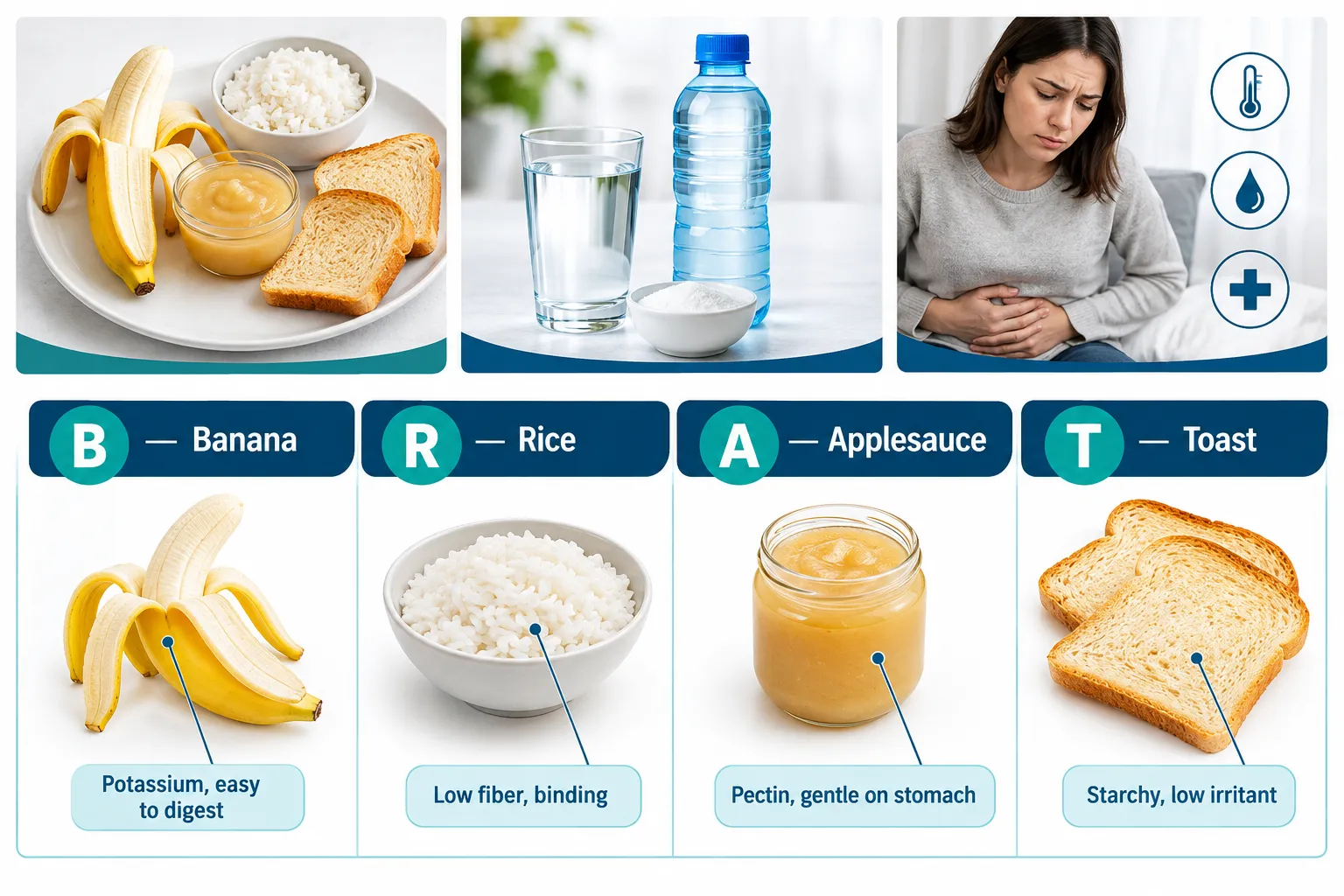
The logic behind the BRAT diet for nausea is straightforward. When the gut is irritated, high-fiber, fatty, or spicy foods can make symptoms worse. Bland, starchy foods are less likely to trigger further nausea and may be tolerated when nothing else sounds appealing. Bananas also provide potassium, which can be lost through vomiting [5].
Why the name stuck: The acronym is easy to remember, the foods are inexpensive and widely available, and they genuinely do feel manageable when eating is difficult. That practical simplicity explains why the BRAT diet for upset stomach remains one of the most searched dietary questions during bouts of illness, even as medical guidance has moved on [9].
Does the BRAT Diet Actually Help With Nausea and Vomiting?
In plain English: the BRAT diet does not cure nausea or speed recovery. What it does is reduce the chance of making symptoms worse by keeping food choices simple and non-irritating [2].
There is no strong clinical evidence that following the BRAT diet specifically improves nausea or vomiting outcomes compared to eating a normal, gentle diet. Experts interviewed for a 2026 New York Times feature confirmed that no clear evidence supports the BRAT diet as a primary treatment, and that age-appropriate eating plus adequate fluids performs at least as well [2].
The real issue here is this: nausea is a symptom, not a condition. What you eat matters less than why you are nauseated. If the cause is a stomach virus, food poisoning, medication side effects, or pregnancy, the food choices that help will vary. The BRAT diet does not address the underlying cause, it simply avoids making things worse during the worst hours.
Does the BRAT diet work for food poisoning? It can reduce irritation during the acute phase, but hydration and rest are the real priorities. The same applies to bland foods for stomach flu, they may feel manageable, but they are not treatment [5][7].
When Bananas, Rice, Applesauce, and Toast May Be Easy to Tolerate
These foods have a reasonable case for being included in a nausea recovery plan, even if the strict four-food protocol is outdated.
- Bananas are soft, require little digestion effort, and provide potassium and natural sugars for quick energy. They are also one of the few fruits that tend not to aggravate an upset stomach [1][5].
- White rice is low in fiber and highly digestible. It provides carbohydrates for energy without putting much demand on the gut [7].
- Applesauce is gentler than whole apples because the fiber structure is broken down. It is smooth and often easier to tolerate than whole fruit; individual responses vary [1].
- Plain white toast is starchy and dry, which some people find easier to tolerate when nausea is mild. Dry crackers serve a similar purpose [5][8].
These foods may be a sensible starting point if: You are in the first few hours of acute nausea and cannot face anything more complex. These foods are a reasonable starting point, not a full plan.
Can you use whole wheat bread on the BRAT diet? Technically, no, whole wheat is higher in fiber and may be harder to digest during active nausea. Plain white toast or simple crackers are the better choice when symptoms are at their worst. Once nausea is easing, whole grain options are fine to reintroduce [7].
Can you have honey or butter on the BRAT diet? A small amount of honey on toast is generally tolerated and adds a modest calorie boost. Butter adds fat, which can slow digestion and may worsen nausea in some people, keep it minimal or skip it on the first day [8].
Why a Strict BRAT Diet Is Not Nutritionally Complete
Here is the real issue with following BRAT strictly for more than a day: it does not provide enough protein, fat, or micronutrients to support recovery.
Pediatric gastroenterologist Dr. Debora Duro has noted that the diet should never be continued more than 24 hours after the first episode of diarrhea or vomiting, due to the risk of inadequate calorie and nutrient intake [3][10]. The same logic applies to adults.
What is missing from a strict BRAT diet:
| Nutrient | Why It Matters | Missing From BRAT |
|---|---|---|
| Protein | Tissue repair, immune function | Yes, no lean meat, eggs, or legumes |
| Healthy fats | Energy, fat-soluble vitamins | Yes, extremely low fat |
| B vitamins | Energy metabolism, nerve function | Largely absent |
| Calcium | Bone and muscle function | Absent, no dairy |
| Iron | Oxygen transport | Absent |
Prolonged use can hamper recovery and worsen malnutrition, particularly in older adults, children, and anyone already nutritionally depleted [2]. The basics are adequate fluids, sufficient calories, and a broader range of tolerated food as appetite returns. The National Institute of Diabetes and Digestive and Kidney Diseases notes that people can most often return to their normal diet when they feel like eating again.
Better Gentle-Food Options Beyond BRAT
A broader bland diet approach gives the gut the same gentleness as BRAT while providing meaningful nutrition. The Oregon Clinic’s updated 2026 guidance recasts BRAT as part of this wider framework rather than a stand-alone protocol [7].

Foods to consider adding once the first wave of nausea passes:
- Plain boiled or baked chicken (skinless), protein without fat load
- Cooked carrots, soft, low-fiber, easy to digest
- Plain crackers (saltines or water crackers), similar to toast, useful for absorbing stomach acid
- Cream of wheat or plain oatmeal, gentle grains with more nutrition than white rice alone
- Plain yogurt, provides protein and probiotics, well-tolerated by many people
- Scrambled eggs (no butter or seasoning), good protein source, easy to prepare
- Vegetable broth, adds electrolytes and warmth without solid food demands
For a full breakdown of what fits into gentle eating, the Bland Diet Food List: What To Eat And Avoid covers the wider range of options in detail. If you want a structured day of meals, the Bland Diet Meal Plan: 1-Day Gentle Recovery Guide offers a practical template.
Is the BRAT diet good for IBS and nausea? It depends on the conditions. For IBS, the triggers vary widely by individual. Some people with IBS tolerate BRAT foods well; others find applesauce or bananas problematic depending on their specific sensitivities. A low-FODMAP approach is generally better supported by evidence for IBS management than BRAT [6].
What to Drink When Nausea Is Present
Fluids come before food. When nausea is active, the priority is preventing dehydration, especially if vomiting is occurring [3][7].
Practical fluid guidance:
- Sip slowly. Large amounts of liquid at once can trigger vomiting. Small sips every few minutes work better than drinking a full glass.
- Oral rehydration solutions (ORS), such as Pedialyte or WHO-formulated ORS, replace electrolytes lost through vomiting and are more effective than plain water for rehydration [5][7].
- Clear broths add sodium and warmth and are often well-tolerated.
- Ginger tea (plain, without sweetener) has some evidence for mild nausea relief, though the effect is modest [6].
- Chamomile tea is another gentle option that many people find soothing.
- Water, plain, room temperature or slightly cool, is always appropriate.
What to avoid drinking: Caffeinated drinks, alcohol, carbonated sodas, full-fat milk, and fruit juices with high acid content (orange, grapefruit) can all worsen nausea [3][8].
What to Do When Vomiting or Diarrhea Is Also Occurring
When vomiting accompanies nausea, food takes a back seat to fluid management. The immediate goal is to keep fluids down, not to eat.
A sensible starting point is this sequence:
- Stop eating solid food temporarily if vomiting is active.
- Start with ice chips or very small sips of clear fluid (water or ORS) every 5 to 10 minutes.
- Once fluids stay down for 30 to 60 minutes, try a few plain crackers or a small amount of plain rice.
- If that stays down, gradually expand to other bland foods over the next several hours.
- Aim to return to a normal, varied diet within 24 to 48 hours as symptoms allow [7][8].
For guidance specifically on managing loose stools alongside nausea, the Bland Diet for Diarrhea: What To Eat And Avoid covers that combination in more depth.
Dehydration warning signs to watch for:
- Dry mouth and extreme thirst
- Dark-colored urine or no urination for 8 or more hours
- Dizziness or lightheadedness when standing
- Rapid heartbeat
- Confusion or unusual drowsiness
These signs indicate that bland food alone is not enough; contact a healthcare professional promptly.
Foods and Drinks That May Worsen Nausea

Context matters here. Not every person reacts to the same foods in the same way, but certain categories consistently appear as nausea triggers across clinical guidance.
Common nausea aggravators:
- High-fat foods, fried foods, fast food, rich sauces, full-fat dairy. Fat slows gastric emptying, which can intensify nausea.
- Spicy foods, chili, hot sauces, heavily seasoned dishes.
- Strong odors, cooking smells, coffee, garlic, and fish are frequent triggers, particularly in pregnancy-related nausea.
- Acidic foods and drinks, citrus juices, tomato-based sauces, vinegar-heavy foods.
- Caffeine, coffee, black tea, energy drinks. Caffeine can aggravate nausea for some people, particularly when the stomach is already unsettled.
- Alcohol, directly irritates the stomach lining.
- Very sweet foods, high-sugar items can sometimes trigger nausea, particularly when the stomach is already unsettled.
- Large portions, eating too much at once, even of bland foods, can overwhelm a sensitive stomach.
A Simple First-Day Eating Approach
When nausea makes food difficult, a flexible approach is more useful than a clock-based protocol.
- Prioritize fluids as tolerated. If fluids cannot be kept down, seek prompt medical advice.
- When appetite returns, start with small amounts of foods that feel manageable; BRAT foods are optional examples, not a required plan.
- Broaden food choices as appetite and tolerance return, unless a clinician has given different instructions.
Is the BRAT Diet Still Recommended by Doctors?
No, not as a formal protocol. The American Academy of Pediatrics stopped endorsing the BRAT diet in the 1990s, and current medical consensus does not recommend it as a primary treatment for nausea, vomiting, or diarrhea [2][3].
A 2026 New York Times feature confirmed that experts no longer recommend the BRAT diet as a primary approach, noting it was never supported by clear clinical evidence [2]. The New York Post summarized the same shift, reporting that the diet “won’t actually help diarrhea, nausea” and is considered too restrictive and nutritionally poor for routine use [3].
What doctors do recommend instead:
- Oral rehydration to prevent dehydration
- A return to age-appropriate, normal eating as soon as tolerated
- Avoidance of specific irritants (caffeine, alcohol, fatty and spicy foods)
- Medical evaluation if symptoms are severe or prolonged
That said, individual BRAT foods, particularly bananas, plain rice, and toast, remain reasonable choices for the first few hours of illness. The problem is the strict, exclusive protocol, not the individual foods themselves [1][7].
BRAT Diet vs. Other Bland Diets for Stomach Issues
The BRAT diet is a subset of the broader bland diet concept. The difference is scope.
BRAT diet: Four specific foods only. Highly restrictive, nutritionally incomplete, intended as a very short-term measure.
Bland diet: A wider framework that includes many low-fiber, low-fat, non-irritating foods, plain chicken, cooked vegetables, eggs, yogurt, crackers, and more. More nutritionally complete while still being gentle on the digestive system [7][8].
From a practical point of view, the bland diet approach is more sustainable and more useful for most adults dealing with nausea. It gives you more options, more nutrition, and a clearer path back to normal eating.
The Bland Diet Complete Guide covers the full framework if you want to understand how these approaches fit together.
What foods can you eat on the BRAT diet besides the core four? Within the strict BRAT framework, nothing else is included, but that is precisely why most clinicians now recommend the broader bland diet instead. Saltine crackers, plain boiled chicken, cooked carrots, and plain yogurt are all reasonable additions that keep the gut comfortable while adding meaningful nutrition [7].
Special Situations: Pregnancy, Medications, and Chronic Conditions
Pregnancy and nausea: Morning sickness affects a large proportion of pregnant women, particularly in the first trimester. BRAT foods may feel manageable during the worst moments, but pregnancy requires adequate nutrition for both mother and developing baby. Prolonged restriction is not appropriate. Ginger, vitamin B6 supplementation, and small frequent meals are better-supported options for pregnancy-related nausea, but always discuss with an obstetrician or midwife before making changes [6].
Medications: Some medications cause nausea as a side effect, including certain antibiotics, chemotherapy agents, opioids, and metformin. In these cases, the nausea is medication-driven, not gut-driven, and dietary changes alone may have limited effect. Taking medications with food (if permitted), adjusting timing, or speaking with a prescribing physician about anti-nausea options is often more useful than dietary restriction alone.
Chronic digestive conditions: People with gastroparesis, Crohn’s disease, ulcerative colitis, or chronic kidney disease have specific dietary needs that a generic BRAT approach may not address, and could complicate. I would be careful with any self-directed dietary restriction in these situations without guidance from a gastroenterologist or registered dietitian.
Older adults: Nutritional reserves are often lower in adults over 65. Prolonged food restriction carries a higher risk of weakness, electrolyte imbalance, and delayed recovery. The 24-hour limit on strict BRAT eating is especially important for this group.
When Nausea Requires Medical Care
Nausea has many possible causes. These situations warrant prompt medical attention:
Seek care the same day or go to urgent care if:
- Frequent vomiting or vomiting that is worsening
- You cannot keep fluids down
- You show signs of dehydration (see above)
- Nausea follows a head injury
- You suspect medication toxicity or poisoning
Call emergency services (911) or go to an emergency room if:
- Vomit contains blood or material that looks like coffee grounds
- Severe abdominal pain accompanies nausea
- Chest pain, difficulty breathing, or confusion is present
- Nausea follows a potential overdose
For children: The thresholds are lower. Vomiting in young children can lead to dehydration faster than in adults. Contact a pediatrician promptly if a child cannot keep fluids down, shows signs of dehydration, or has a high fever alongside vomiting.
FAQ
How long should you stay on the BRAT diet for nausea?
There is no fixed BRAT timeline. Use foods that feel manageable, and broaden food choices as appetite and tolerance return. Seek clinical advice for persistent, worsening, or concerning symptoms.
Can adults use the BRAT diet, or is it just for kids?
Adults may choose individual BRAT foods if they are tolerable, but there is no need to follow a formal protocol or fixed time limit.
Is the BRAT diet good for nausea caused by a stomach virus?
BRAT foods may be tolerable during the worst phase of a stomach virus, but they do not treat the virus itself. Hydration is the priority. Return to normal eating as soon as the stomach allows [2][7].
Can you drink sports drinks like Gatorade on the BRAT diet for nausea?
Sports drinks are better than nothing but are not ideal for rehydration during illness, they contain more sugar and less sodium than oral rehydration solutions. ORS products like Pedialyte are more appropriate when vomiting or diarrhea is causing fluid loss [5][7].
What if the BRAT diet makes nausea worse?
Pause solids if they are not tolerated and focus on fluids as tolerated. Try food again when appetite returns; if nausea is persistent, worsening, or accompanied by warning signs, seek medical advice.
Is the BRAT diet safe for people with diabetes?
The BRAT diet is high in simple carbohydrates and low in protein and fat, which can cause blood sugar fluctuations. People with diabetes should monitor blood glucose closely and aim to reintroduce protein-containing foods as soon as tolerated. Consult a healthcare provider if nausea is prolonged.
When should you stop the BRAT diet and go back to normal eating?
As soon as you can tolerate it, typically within 24 hours. There is no benefit to extending the restriction. The goal is a gradual return to a normal, varied diet, not a prolonged period of bland eating [2][3].
Conclusion
The BRAT diet for nausea has a long history and a simple logic: when the stomach is upset, bland and easy-to-digest foods are less likely to make things worse. That part still holds up. Bananas, rice, applesauce, and toast are reasonable choices for the first several hours of acute nausea.
What does not hold up is the idea of following the strict four-food protocol for more than a day. The evidence suggests it is nutritionally incomplete, and current medical guidance, including from the AAP and multiple gastroenterology experts, recommends against it as a primary treatment [2][3][7].
The main takeaway is this: start with fluids, use bland foods as a bridge, and return to a normal diet as soon as your body allows. The basics still do the heavy lifting. Hydration, rest, and gradual reintroduction of food are more useful than any specific food acronym.
Practical next steps:
- Prioritize oral rehydration before solid food
- Use BRAT foods only as a short-term starting point (under 24 hours)
- Expand to a broader bland diet as symptoms ease
- Return to normal eating within 24 to 48 hours if possible
- Seek medical care if vomiting persists, dehydration signs appear, or symptoms are severe
For more on building a gentle eating plan during recovery, explore the Bland Diet Food List: What To Eat And Avoid and the Bland Diet Meal Plan: 1-Day Gentle Recovery Guide.
References
[1] Brat Diet – https://health.clevelandclinic.org/brat-diet
[2] Brat Diet Diarrhea Stomach Bug – https://www.nytimes.com/2026/08/11/well/brat-diet-diarrhea-stomach-bug.html
[3] Once Recommended Brat Diet Wont Actually Help Diarrhea Nausea – https://nypost.com/2026/08/16/health/once-recommended-brat-diet-wont-actually-help-diarrhea-nausea/
[5] Brat Diet For Diarrhea Nausea And Vomiting – https://resources.healthgrades.com/right-care/digestive-health/brat-diet-for-diarrhea-nausea-and-vomiting
[6] Bland Diet Nausea – https://nimbera.app/remedies/bland-diet-nausea
[7] Diets Brat – https://www.oregonclinic.com/resource/diets-brat/
[8] Brat Diet – https://www.ccsu.edu/health-services/brat-diet
[9] Brat Diet Rcna172481 – https://www.today.com/health/diet-fitness/brat-diet-rcna172481
[10] Duroarticle June 07 – https://med.virginia.edu/ginutrition/wp-content/uploads/sites/199/2015/11/DuroArticle-June-07.pdf
Medical Disclaimer: This article is for informational purposes only and does not constitute medical advice. Always consult a qualified healthcare provider for diagnosis and treatment of nausea, vomiting, or any other medical condition. If you are pregnant, taking medications, or managing a chronic health condition, speak with your doctor before making dietary changes.

Dave James is a health researcher and writer specialising in evidence-aware nutrition, digestive health, exercise and longevity. He founded All Perfect Health to provide clear, practical health guidance rooted in current research and real-world experience.
📂 Bland Diet & Digestive Recovery
This article is part of the All Perfect Health Bland Diet cluster. Use the links below to move between the pillar and supporting guides.
→ Bland Diet for Diarrhea: What to Eat, What to Avoid, and When to Get Help
→ Stomach Flu (Gastroenteritis): Symptoms, Causes, Treatment, and When to Get Help
YOU ARE HEREBRAT Diet for Nausea: What to Eat, What to Avoid, and What Works Better
→ Bland Diet Food List: Gentle Foods to Eat, Foods to Avoid and a Simple Grocery List
→ Bland Diet Meal Plan: A Gentle 1-Day Plan for Breakfast, Lunch, Dinner and Snacks
→ 6 Best Bland Diet Recipes for Digestive Recovery (2026)
→ Bland Diet Breakfast: 15 Satisfying Recipes That Won’t Upset Your Stomach
→ Bland Food Diet Guide: Gentle Foods, Meal Ideas and What to Avoid
→ Can a Bland Diet Cause Constipation? What to Know and When to Change Course