Bland Diet & Digestive Recovery: The Complete Guide to Gentle Foods, Meal Planning and Getting Back to Normal
Last updated: October 4, 2026
Quick Answer: What Is a Bland Diet?
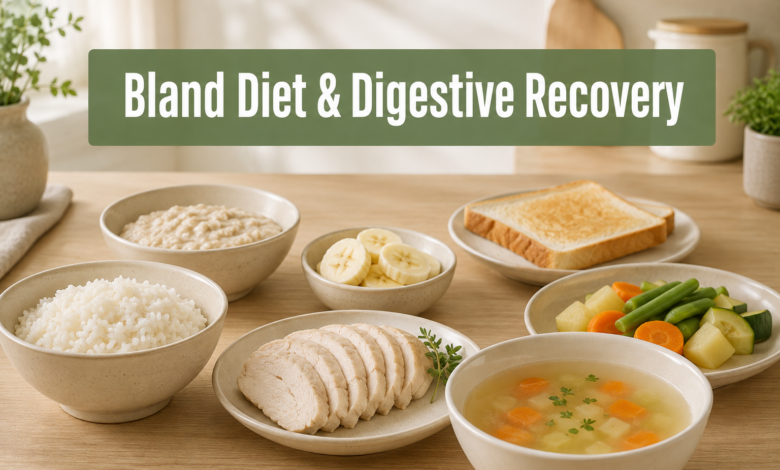
A bland diet is a short-term eating pattern built around soft, low-fat, low-fiber foods that are easy for the digestive system to process. It avoids spicy, fried, acidic, and high-fiber foods. Doctors and dietitians sometimes recommend it during episodes of nausea, vomiting, diarrhea, or stomach upset, and after certain gastrointestinal procedures or surgeries. It is a tool for symptom management, not a long-term nutritional plan [1][3].
Key Takeaways
- A bland diet focuses on soft, easily digestible foods, plain grains, cooked vegetables, lean proteins, and low-fat dairy, while avoiding spicy, fried, acidic, and high-fiber foods.
- It is a short-term, optional food pattern some people use when appetite or tolerance is reduced. There is no universal duration; the right approach depends on the reason for symptoms and any clinician-provided instructions.
- People may choose gentler foods around short-term stomach upset or a reduced appetite. For diagnosed ulcers, reflux, or post-surgery needs, use condition-specific clinical advice rather than a generic bland-diet plan.
- There is no single universal bland diet food list; what works varies by person and condition.
- How you eat matters as much as what you eat: small meals, slow chewing, and avoiding food close to bedtime all support recovery.
- Long-term use can lead to nutritional gaps, particularly in fiber, vitamins, and protein.
- Certain groups, including older adults, children, pregnant women, people with diabetes, kidney disease, or inflammatory bowel disease, should follow a bland diet only under medical supervision.
- As appetite returns, many people can expand their usual foods as tolerated. Individual instructions may differ after surgery or for a diagnosed condition.
- Seek medical care promptly for severe abdominal pain, blood in stool or vomit, signs of dehydration, persistent vomiting, unexplained weight loss, or fever.
Table of Contents
- 1. Hydration First During Vomiting or Diarrhea
- 2. What a Bland Diet Is, and What It Is Not
- 3. Bland Diet vs. BRAT Diet: What Is the Difference?
- 4. Why People Use Bland Diets During Digestive Recovery
- 5. Bland Diet Foods: What People Commonly Eat
- 6. Foods Commonly Avoided on a Bland Diet
- 7. Bland Diet Meal Planning: How to Build a Gentle Day of Food
- 8. Bland Diet Breakfast, Lunch and Dinner Ideas
- 9. Bland Diet Recipes: Simple Meals That Are Easy to Adapt
- 10. How Long Should You Stay on a Bland Diet?
- 11. How to Reintroduce Foods Without Rushing
- 12. Bland Diet Mistakes That Make Recovery Harder
- 13. Where Bland Diets Fit With Gut Health and Digestive Wellness
- 14. When to Talk to a Doctor
- 15. FAQ
- 16. References
Hydration First During Vomiting or Diarrhea
When vomiting or diarrhea is active, replacing lost fluids is often more urgent than choosing the perfect solid food. Take small, frequent sips of water, broth, or an appropriate oral rehydration solution as tolerated. Large amounts at once may be harder to keep down.
Once fluids are staying down, introduce small portions of simple foods as tolerated. People with kidney disease, heart failure, diabetes, or another condition requiring fluid or electrolyte limits should ask their clinician which drinks and rehydration products are appropriate.
What a Bland Diet Is, and What It Is Not
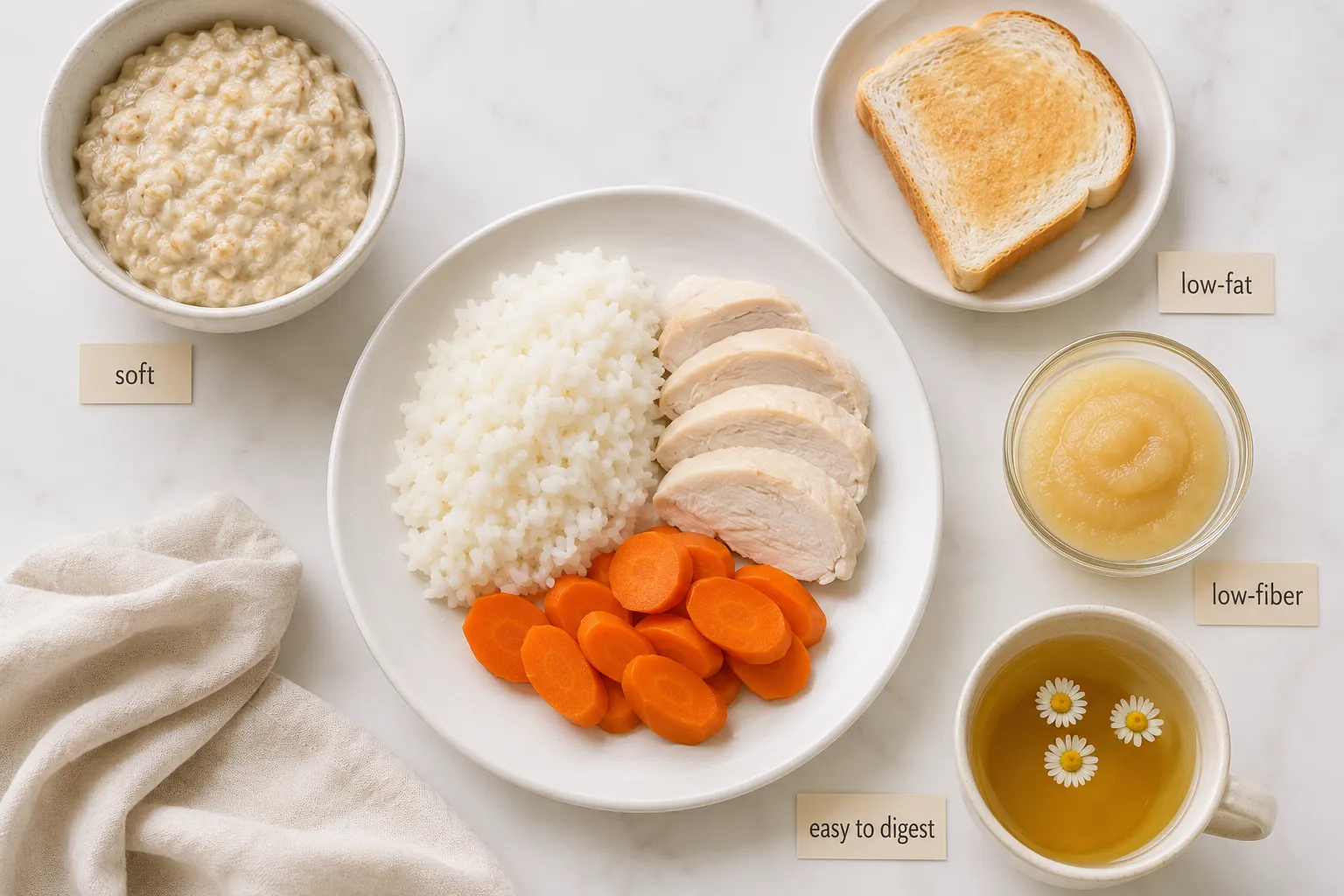
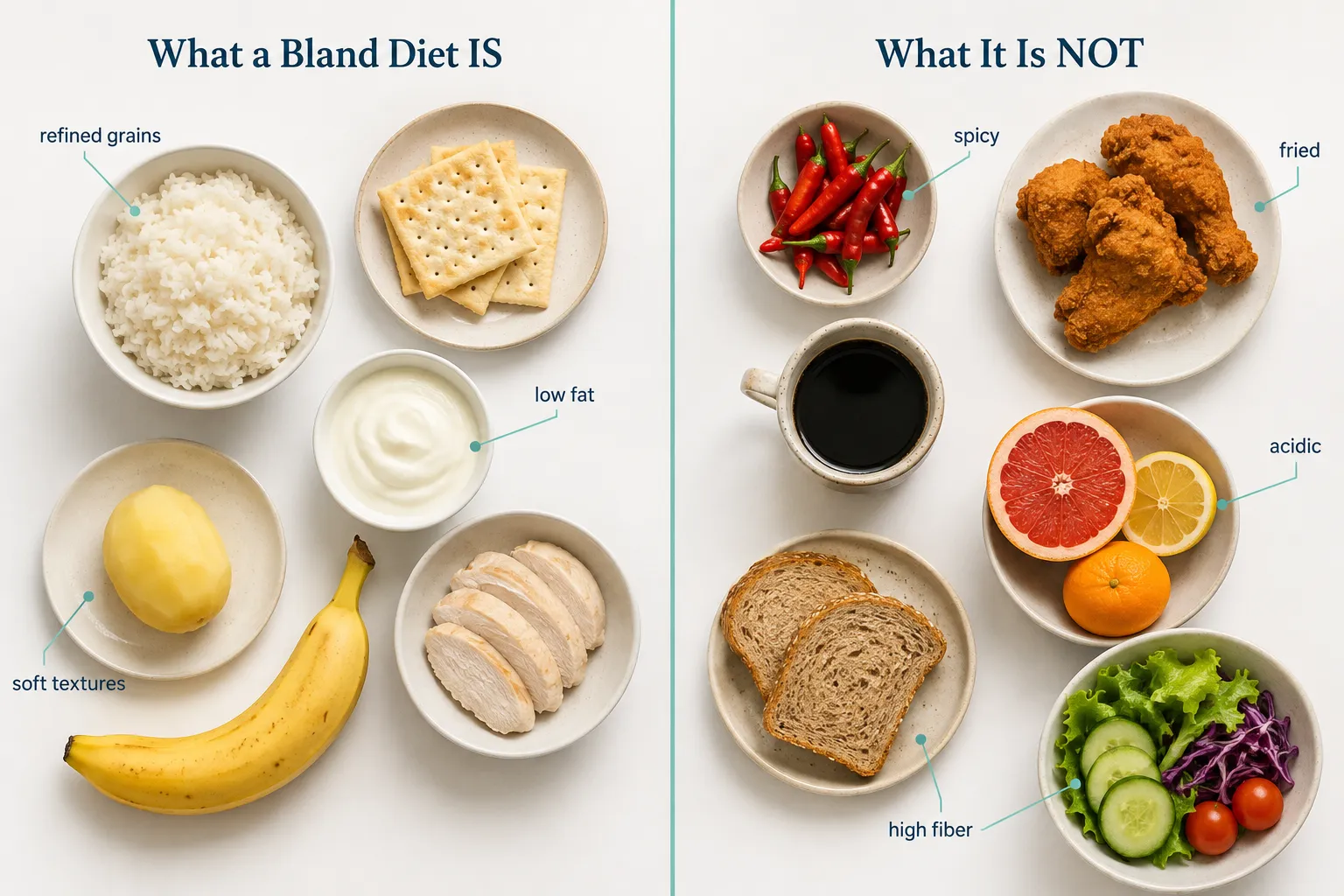
A bland diet is a short-term eating pattern that emphasizes foods that are soft, low in fat, low in fiber, and easy for the gut to process. MedlinePlus defines it as avoiding spicy, fried, and raw foods, along with alcohol and caffeinated beverages, while focusing on refined grains, low-fat dairy, and mild seasonings [1]. Memorial Sloan Kettering Cancer Center frames it simply as an “easy-to-digest” pattern, centered on soft grains, cooked vegetables, canned fruits, and lean proteins [4].
Here is what it is not: it is not a detox, a weight-loss program, or a long-term nutritional strategy. The USDA Dietary Guidelines for Americans do not endorse bland diets as a general recommendation, their emphasis remains on whole grains, fruits, vegetables, and adequate fiber [10]. A bland diet is a short-term clinical tool, used for specific reasons, for a limited time.
The practical point: food choices can be simplified briefly if that feels more manageable, then broadened as appetite and tolerance return or as a clinician advises.
Bland Diet vs. Low-Fiber Diet: What Is the Difference?
These two overlap but are not the same thing. A low-fiber diet restricts fiber specifically, often used for conditions like Crohn’s disease flares or pre-colonoscopy preparation. A bland diet goes further: it also restricts spicy foods, acidic foods, fried foods, caffeine, and alcohol, regardless of fiber content [3][9]. Some foods are low in fiber but still excluded from a bland diet because they are acidic (citrus) or irritating (coffee). If a clinician recommends one over the other, the distinction matters, so it is worth clarifying which approach applies to your situation.
Bland Diet vs. BRAT Diet: What Is the Difference?
The BRAT diet—bananas, rice, applesauce, and toast—is narrower than a bland diet. It may describe a few familiar foods, but it is not a complete nutrition plan and should not be treated as the only food a person can eat during recovery.
| Approach | What it includes | Important limitation |
|---|---|---|
| Bland diet | A broader pattern of mild, soft, lower-fat foods selected according to individual tolerance. | Still intended as short-term support, not a cure or permanent restriction. |
| BRAT diet | Bananas, rice, applesauce, and toast. | Too restrictive to provide complete nutrition if followed for long; hydration and a gradual return to normal eating remain important. |
For children, older adults, pregnant people, or anyone with ongoing vomiting or diarrhea, dietary decisions should be guided by symptoms, hydration status, and professional advice rather than by a rigid food list.
Why People Use Bland Diets During Digestive Recovery
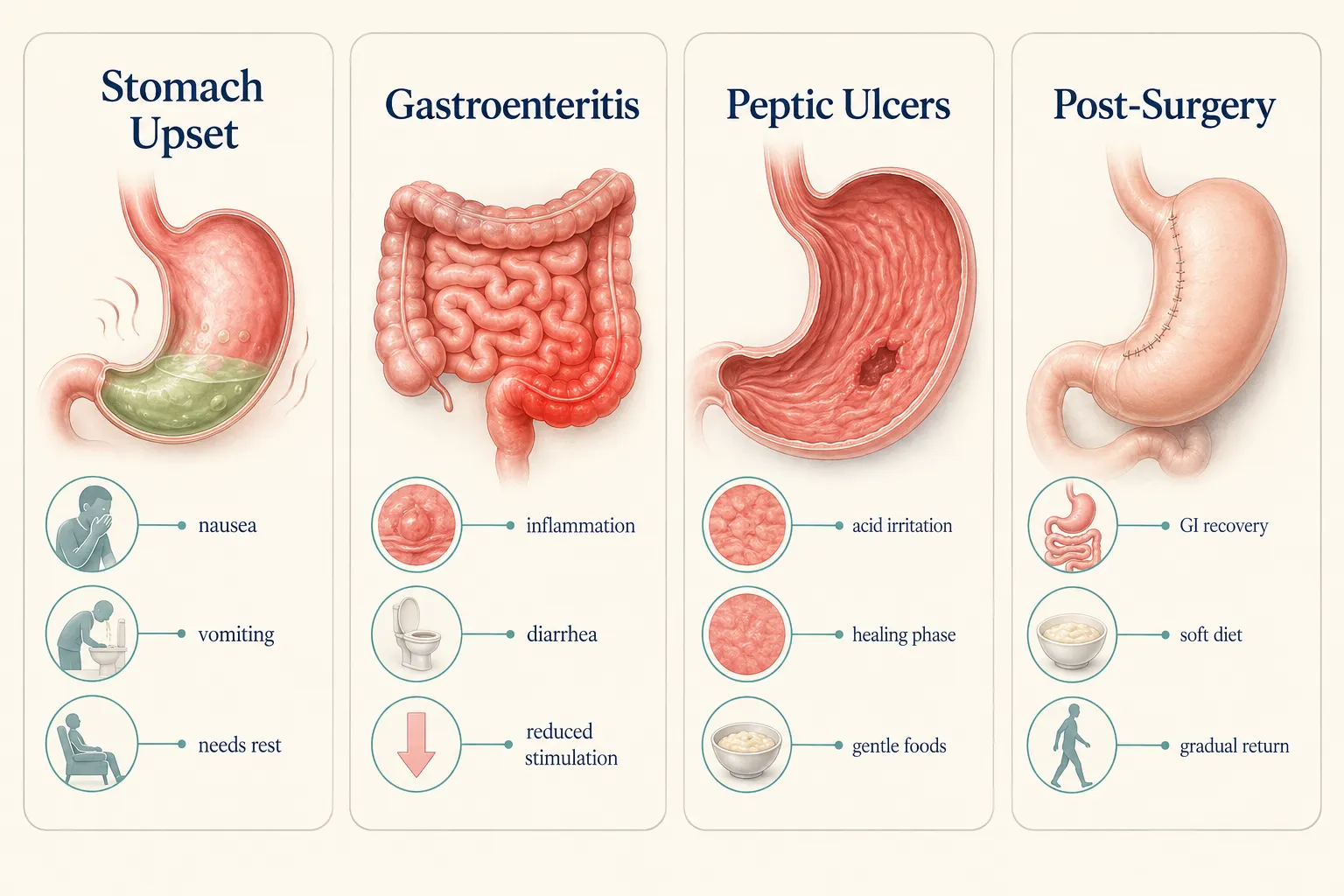
People sometimes choose simpler, less rich foods when appetite is reduced or certain foods feel uncomfortable. That can be a practical comfort measure, but it does not treat the underlying cause. For diagnosed digestive conditions or after surgery, use the condition-specific instructions from the treating clinician rather than a generic bland-diet plan.
Food tolerance varies. Some people find fatty, spicy, acidic, caffeinated, or alcohol-containing foods worsen their symptoms, while others do not. A generic bland diet should not be presented as a cure for ulcers, reflux, IBS, or other digestive conditions.
Is a bland diet good for acid reflux and GERD?
For people with reflux or GERD, identifying and limiting personal food triggers may help with symptoms. A bland diet is not a cure, and persistent reflux needs assessment rather than reliance on diet alone.
Does a bland diet help with IBS?
For IBS, food tolerance varies substantially. A generic bland diet is not a validated treatment, so longer-term changes should be discussed with a clinician or registered dietitian.
Can you lose weight on a bland diet?
Technically, some people do lose weight while following a bland diet, primarily because the food choices are simple, portion sizes tend to be smaller, and appetite is often reduced during illness. But this is not intentional weight loss, it is a side effect of eating less during a period of digestive distress. A bland diet is not designed or recommended for weight loss. If weight management is the goal, there are far more appropriate and nutritionally complete approaches available. See our complete guide to modern diets and nutrition for a broader overview of evidence-based options.
Bland Diet Foods: What People Commonly Eat
The core of a bland diet is foods that are soft, mild in flavor, low in fat, and easy to digest. The list below reflects what authoritative sources consistently recommend [1][4][8].
For a simpler shopping-style version, see our bland diet food list, which turns the foods-to-eat and foods-to-avoid guidance into a practical grocery list.
Grains and starches:
- White rice
- Plain white bread or toast
- Plain crackers (without seeds or seasonings)
- Plain pasta or noodles
- Boiled or mashed potatoes (without butter or cream)
- Refined hot cereals (cream of wheat, plain oatmeal)
Fruits:
- Bananas
- Applesauce
- Canned fruits in light syrup or juice (peaches, pears)
- Fruit juices without pulp (apple, white grape)
Vegetables:
- Well-cooked, soft vegetables (carrots, green beans, zucchini)
- Canned vegetables (low sodium where possible)
Proteins:
- Baked or roasted chicken or turkey without skin
- White fish (baked or steamed)
- Eggs (scrambled or soft-boiled)
- Smooth nut butters in small amounts (if tolerated)
- Tofu (soft or silken)
Dairy:
- Low-fat or fat-free milk
- Low-fat yogurt (plain, without fruit pieces)
- Mild cheeses (cottage cheese, ricotta)
Liquids:
- Clear broths (chicken, vegetable)
- Herbal teas (non-caffeinated)
- Water
- Electrolyte drinks (low sugar, if needed for hydration)
A sensible starting point is to focus on foods from this list that you can tolerate without discomfort, then expand gradually as symptoms improve.
Foods Commonly Avoided on a Bland Diet
The StatPearls clinical review notes that a bland diet largely excludes foods that are fried, spicy, acidic, high in fat, or high in fiber [3]. In practical terms, that means avoiding:
Spices and seasonings:
- Hot peppers, chili powder, cayenne
- Black pepper in large amounts
- Strong mustard, horseradish, hot sauce
High-fat and fried foods:
- Fried chicken, french fries, doughnuts
- Fatty cuts of meat (bacon, sausage, ribs)
- Rich cream sauces, full-fat gravies
- Nuts and seeds (high fat, difficult to digest)
High-fiber foods:
- Whole grain breads and cereals
- Raw vegetables
- Legumes (beans, lentils, chickpeas)
- Bran-based cereals
Acidic and irritating foods:
- Citrus fruits and juices (oranges, grapefruit, lemons)
- Tomatoes and tomato-based sauces
- Vinegar and pickled foods
- Strong cheeses
Beverages to avoid:
- Coffee and caffeinated teas
- Alcohol
- Carbonated drinks
- High-sugar beverages
Gas-forming vegetables:
- Cabbage, cauliflower, broccoli, onions, peppers, and beans can increase bloating and discomfort and are generally avoided [4][12].
Bland Diet Spices and Seasonings: What Is Allowed?
This is a common point of confusion. “Bland” does not mean completely flavorless. Mild seasonings are generally acceptable: small amounts of salt, mild herbs like parsley or thyme, a little butter or margarine, and simple dressings without vinegar or hot spices [8]. The goal is to avoid anything that stimulates gastric acid production or irritates the gut lining, not to make every meal taste like cardboard. A small amount of mild seasoning makes food more palatable and more likely to actually be eaten, which matters during recovery.
Bland Diet Meal Planning: How to Build a Gentle Day of Food
Need a practical schedule? Use our Bland Diet Meal Plan for a simple 1-day structure covering breakfast, lunch, dinner, snacks and gentle fluids.
UMass Memorial Health’s discharge instructions make a useful point: how you eat matters as much as what you eat [5]. Their guidance emphasizes small, frequent meals rather than large ones, eating slowly and chewing thoroughly, avoiding food within three hours of lying down, and elevating the head of the bed if reflux is a concern.
A practical framework for a bland diet day:
- Eat 5 to 6 small meals rather than 3 large ones
- Keep portions modest, the stomach handles smaller volumes more easily
- Chew food thoroughly before swallowing
- Eat slowly and without distraction
- Avoid lying down for at least two to three hours after eating
- Stay well hydrated with water, clear broths, and mild herbal teas
- If a medicine seems to worsen symptoms or you have questions about it, speak with the prescribing clinician or pharmacist rather than changing it yourself.
- Do not smoke, it worsens gastric irritation and slows healing
A simple one-day meal plan:
| Meal | Example |
|---|---|
| Breakfast | Plain oatmeal with a small banana, herbal tea |
| Mid-morning | Plain crackers with cottage cheese |
| Lunch | White rice with baked chicken breast, soft cooked carrots |
| Afternoon snack | Applesauce, plain yogurt |
| Dinner | Plain pasta with mild chicken broth, soft green beans |
| Evening (if needed) | Plain toast, chamomile tea |
This is a starting framework, not a rigid prescription. Adjust based on what you can tolerate and what your clinician has advised.
Bland Diet Breakfast, Lunch and Dinner Ideas
Finding meals that fit a bland diet without becoming repetitive is one of the most practical challenges people face. The good news is that there is more variety than most people expect.
For a broader set of morning meal ideas, see our bland diet breakfast ideas guide, which covers options beyond the standard toast-and-tea routine.
Breakfast ideas:
- Plain oatmeal with applesauce and a drizzle of honey
- Scrambled eggs with plain white toast
- Low-fat yogurt with a sliced banana
- Cream of wheat with a small amount of butter and mild seasoning
- Plain rice porridge (congee) with a little salt
Lunch ideas:
- Chicken broth soup with white rice or plain noodles
- Baked white fish with mashed potatoes and soft cooked carrots
- Cottage cheese with canned peaches
- Plain pasta with a small amount of butter and mild herbs
- Turkey breast on plain white bread with no condiments
Dinner ideas:
- Roasted chicken breast (no skin) with boiled potatoes and soft green beans
- Steamed white fish with white rice and well-cooked zucchini
- Egg drop soup with plain crackers
- Soft tofu with plain rice and mild broth
- Baked potato with low-fat cottage cheese
After-surgery bland diet: how strict do you need to be?
Post-surgical dietary requirements vary significantly depending on the type of surgery, the organ involved, and individual recovery progress. After gastrointestinal surgery, clinicians typically start patients on clear liquids, then progress to full liquids, then soft bland foods, before returning to a regular diet [4][5]. The timeline and specific restrictions should come directly from the surgical team. Do not self-direct post-surgical nutrition, the stakes are higher, and the appropriate approach is more individualized than a general bland diet guide can address.
Bland Diet Recipes: Simple Meals That Are Easy to Adapt
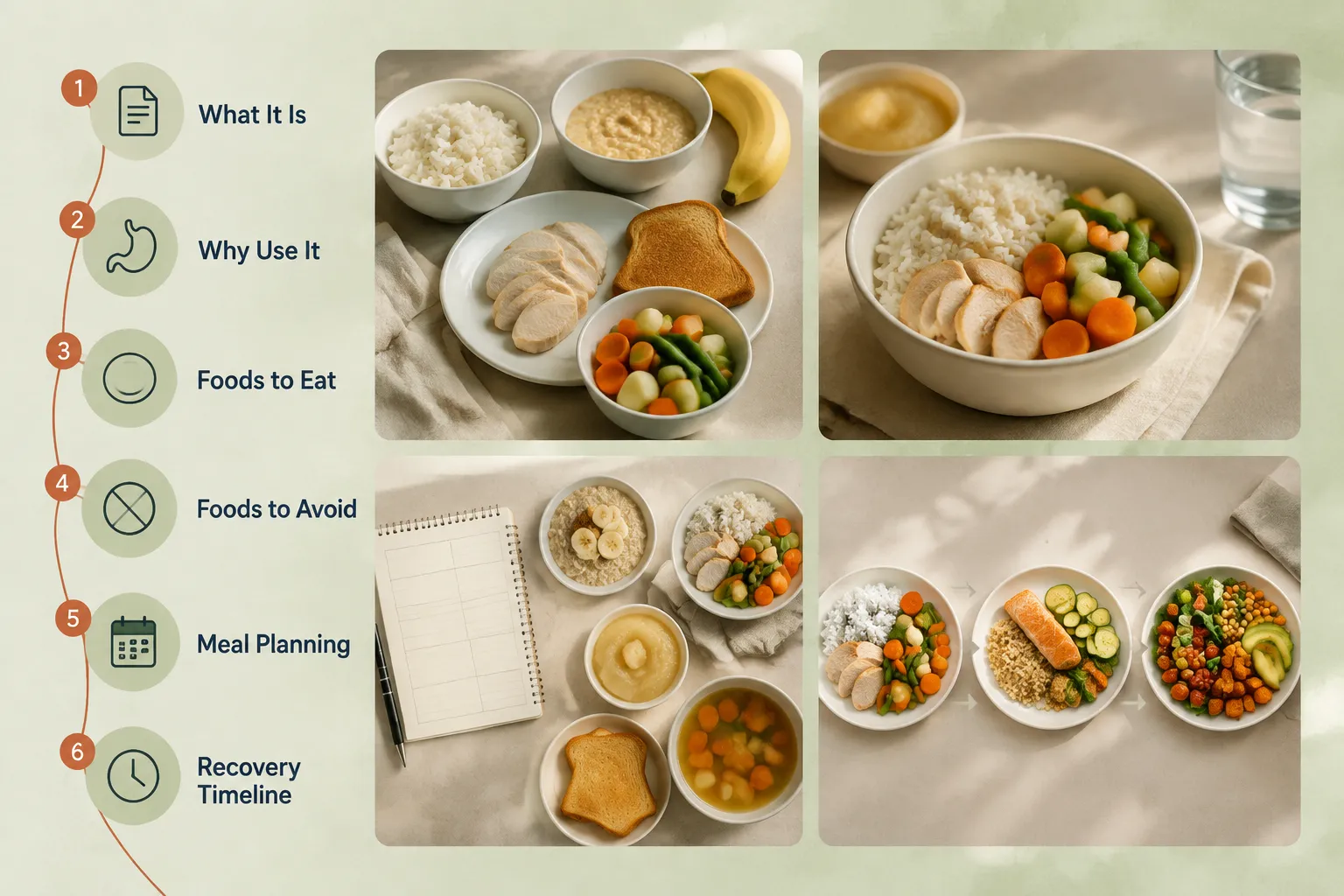
Recipes for a bland diet do not need to be complicated. The best ones are simple, use a short ingredient list, and can be adjusted based on what the person can tolerate on a given day.
For a full collection of practical meal ideas, visit our bland diet recipes page, which includes soups, grain dishes, and simple protein options.
Three simple recipe frameworks:
1. Plain chicken and rice soup
Simmer low-sodium chicken broth with diced cooked chicken breast and white rice. Add soft-cooked carrots if tolerated. Season with a small amount of salt and mild herbs. This is easy to digest, provides protein and carbohydrates, and is one of the most consistently well-tolerated bland meals.
2. Baked fish with mashed potato
Bake a mild white fish fillet (cod, tilapia, flounder) with a small amount of butter and salt. Serve with boiled, mashed potato made with low-fat milk. This provides protein and energy without fat overload.
3. Oatmeal with banana and honey
Cook plain rolled oats in water or low-fat milk. Top with half a sliced banana and a small drizzle of honey. This is gentle on the stomach, provides slow-release energy, and is a practical breakfast option during recovery.
A note on “best bland diet recipes that don’t taste boring”: The key is using mild herbs (parsley, thyme, dill), low-sodium broths as a cooking liquid, and varying textures where possible. Soft-cooked food does not have to be mush. Properly cooked rice, well-seasoned broth, and tender baked chicken can be genuinely satisfying, even without spice or richness.
How Long Should You Stay on a Bland Diet?
There is no single universal bland-diet timeline. For viral gastroenteritis, the National Institute of Diabetes and Digestive and Kidney Diseases notes that most people can return to their normal diet when appetite returns and that a restricted diet does not treat the illness. After surgery or with a diagnosed condition, follow the clinician’s specific instructions.
How to Reintroduce Foods Without Rushing
Reintroduction is where many people stumble. After a few days of plain food, the temptation to return immediately to normal eating is understandable, but moving too fast can bring symptoms back.
A sensible approach is to add one new food at a time, in small amounts, and wait to see how the digestive system responds before adding another. This mirrors the logic of an elimination diet reintroduction phase, where the goal is to identify what the body can handle without triggering a reaction.
A practical reintroduction sequence:
- Start with clear liquids (broth, water, diluted juice) if you have been unable to keep food down
- Move to soft bland solids (white rice, plain crackers, toast, banana) when liquids are tolerated
- Add soft cooked vegetables (carrots, zucchini, green beans) when solid foods are tolerated
- Introduce lean protein (baked chicken, white fish, eggs) as appetite improves
- Reintroduce dairy cautiously, some people find it worsens symptoms during recovery
- Add cooked whole grains, then raw vegetables, then higher-fiber foods gradually
- Reintroduce coffee, spicy foods, and alcohol last, if at all, and in small amounts initially
Context matters here. If a particular food causes symptoms to return, pull it back and wait another day or two before trying again. There is no fixed timeline, recovery is not linear, and individual tolerance varies.
Bland Diet Mistakes That Make Recovery Harder
The most common mistakes on a bland diet are not about choosing the wrong foods, they are about how people approach the process overall.
Mistake 1: Staying on it too long
A bland diet is a bridge, not a destination. Staying on it for weeks without medical guidance increases the risk of nutritional deficiency and does not address the underlying cause of symptoms.
Mistake 2: Eating large meals
Even bland foods can cause discomfort if eaten in large amounts. Small, frequent meals reduce the burden on the digestive system and are consistently recommended by clinical sources [5].
Mistake 3: Drinking the wrong things
Coffee, carbonated drinks, and alcohol are all excluded from a bland diet for good reason. Many people eliminate solid food triggers but continue drinking coffee or sparkling water, which can maintain irritation.
Mistake 4: Skipping protein
It is easy to focus on carbohydrates (rice, toast, crackers) and neglect protein. Harvard’s NutritionSource analysis of current dietary guidelines highlights that protein needs, particularly for older adults, are higher than many people assume, around 1.2 to 1.6 grams per kilogram of body weight per day. Plain chicken, fish, eggs, and low-fat dairy can all be incorporated without violating bland diet principles.
Mistake 5: Assuming bland means any soft food
Soft does not automatically mean bland-diet appropriate. Ice cream is soft but high in fat and sugar. Avocado is soft but high in fat. Processed soups can be high in sodium and contain spices. Read ingredients and focus on the actual criteria: low fat, low fiber, mild seasoning, easy to digest.
Mistake 6: Not addressing how you eat
Eating quickly, eating large portions, lying down after meals, and taking NSAIDs are all behaviors that can undermine recovery regardless of what foods are chosen [5]. The behavioral side of eating during recovery is as important as the food itself.
Mistake 7: Self-managing when medical care is needed
This is the most consequential mistake. A bland diet is appropriate for mild, self-limiting digestive upset. It is not a substitute for medical evaluation when symptoms are severe, persistent, or unusual.
For a broader look at digestive recovery strategies, our Bland Food Diet Guide covers the topic in more depth.
Where Bland Diets Fit With Gut Health and Digestive Wellness
A bland diet and long-term gut health are two different things, and it is worth being clear about where one ends and the other begins.
A bland diet is a short-term response to acute digestive distress. Long-term gut health, by contrast, is built on dietary diversity, adequate fiber, fermented foods, physical activity, stress management, and avoiding chronic gut irritants. The evidence for gut health is increasingly pointing toward feeding a diverse microbiome, which requires variety, not restriction [3][9].
In plain English: a bland diet temporarily removes the things that are irritating a troubled gut. It does not rebuild gut health. Once recovery is complete, returning to a diet rich in plant foods, fiber, and variety is what supports the gut over the long term.
For more on this, see our gut health and digestive wellness guide, which covers the evidence on microbiome support, dietary fiber, and digestive resilience. Our probiotics vs. prebiotics guide is also worth reading once you are past the recovery phase and thinking about longer-term gut support.
Bland diet alternatives if you can’t stick to it
Some people find a strict bland diet difficult to maintain, either because the food is too monotonous or because their symptoms are mild enough that full restriction feels unnecessary. Some practical middle-ground options:
- A low-irritant diet that removes only the most common triggers (spicy food, fried food, caffeine, alcohol) without restricting fiber or whole grains
- A low-FODMAP diet, which has stronger evidence for IBS and targets specific fermentable carbohydrates rather than fat and spice
- A soft diet, which focuses on texture rather than fat and fiber content, useful after dental procedures or for people with swallowing difficulties
- Working with a registered dietitian to identify personal triggers through a structured elimination diet
The right alternative depends on the underlying condition. A dietitian can help match the approach to the actual problem.
Bland diet for children and toddlers
The BRAT diet (bananas, rice, applesauce, toast) has historically been recommended for children with diarrhea or vomiting. Current pediatric guidance has moved away from strict BRAT-only approaches, as they are nutritionally limited and can prolong recovery if continued too long. For children, the general principle is to offer gentle, easily digestible foods while maintaining hydration, and to return to age-appropriate normal eating as soon as tolerated. For infants, toddlers, or children with persistent symptoms, always consult a pediatrician, self-managing a child’s digestive illness carries real risk.
For additional natural strategies to ease digestive discomfort, our article on 10 ways to soothe your stomach naturally covers complementary approaches that may support recovery.
When to Talk to a Doctor
A bland diet is appropriate for mild, self-limiting digestive upset in otherwise healthy adults. There are clear situations where it is not enough, and where delaying medical care can be harmful.
Seek medical attention promptly if you experience:
- Severe or worsening abdominal pain
- Blood in stool or vomit
- Signs of dehydration (extreme thirst, dark urine, dizziness, no urination for 8+ hours)
- Persistent vomiting that prevents keeping liquids down
- Fever above 101°F (38.3°C)
- Unexplained weight loss
- Symptoms that do not improve after two to three days
- Symptoms that improve and then return
Always consult a healthcare professional before starting a bland diet if you have:
- Diabetes (bland diet foods can affect blood sugar significantly)
- Kidney disease (protein and potassium intake require careful management)
- Inflammatory bowel disease (Crohn’s disease, ulcerative colitis)
- A history of eating disorders
- Are pregnant or breastfeeding
- Are managing a medically restricted diet
- Are recovering from gastrointestinal surgery
- Are an older adult with multiple health conditions
The evidence suggests that most mild digestive upsets in healthy adults resolve within a few days with rest, hydration, and gentle eating. But “most” is not “all,” and context matters. When in doubt, a phone call to a clinician is always the right move.
Explore the supporting guides in this Bland Diet cluster:
Bland Diet for Diarrhea: What to Eat, What to Avoid, and When to Get Help · Stomach Flu (Gastroenteritis): Symptoms, Causes, Treatment, and When to Get Help · Bland Diet Food List: Gentle Foods to Eat, Foods to Avoid and a Simple Grocery List · Bland Diet Meal Plan: A Gentle 1-Day Plan for Breakfast, Lunch, Dinner and Snacks · 6 Best Bland Diet Recipes for Digestive Recovery (2026) · Bland Diet Breakfast: 15 Satisfying Recipes That Won’t Upset Your Stomach · Bland Food Diet Guide: Gentle Foods, Meal Ideas and What to Avoid
FAQ
What exactly can I eat on a bland diet?
A bland diet centers on white rice, plain toast or crackers, boiled potatoes, bananas, applesauce, plain oatmeal, baked or boiled chicken without skin, white fish, scrambled eggs, low-fat yogurt, and mild broths. Foods should be soft, low in fat, and low in fiber. Avoid spicy, fried, acidic, and high-fiber foods, along with caffeine and alcohol [1][4][8].
How long should I follow a bland diet?
There is no fixed bland-diet timeline. For a short-term illness, food choices can broaden as appetite and tolerance return; after surgery or with a diagnosed condition, follow the clinician’s plan.
Is a bland diet the same as the BRAT diet?
They overlap significantly. The BRAT diet (bananas, rice, applesauce, toast) is a subset of bland diet foods and was historically used for children with diarrhea. A bland diet is broader, including additional foods like plain chicken, white fish, eggs, and low-fat dairy. Current guidance generally favors the broader bland diet approach over strict BRAT, as it provides better nutrition [3][9].
Can I drink coffee on a bland diet?
No. Coffee is excluded from a bland diet because caffeine stimulates gastric acid production and can irritate the stomach lining. Decaffeinated coffee is also generally avoided during the acute phase. Non-caffeinated herbal teas and water are the recommended alternatives [1][8].
What spices and seasonings are allowed on a bland diet?
Mild seasonings are generally acceptable: small amounts of salt, mild herbs like parsley, thyme, or dill, and a little butter or margarine. Avoid hot spices, chili, black pepper in large amounts, strong mustard, horseradish, and vinegar-based condiments [8]. The goal is to keep food palatable without stimulating gastric irritation.
When should I stop following a bland diet?
As appetite and tolerance return, many people can broaden their usual foods. If symptoms are worsening, persistent, or accompanied by warning signs, seek clinical advice rather than extending a restrictive diet.
Conclusion
A bland diet can be a short-term, optional way to simplify food choices when symptoms or appetite make regular meals less appealing. Its role is comfort and practicality, not treatment of the underlying condition.
A bland diet is not a long-term eating pattern, treatment for an underlying disease, or a substitute for medical care when symptoms are serious. Return to a varied diet as appetite and tolerance allow, unless a clinician gives different instructions.
Practical next steps:
- When vomiting or diarrhea is active, prioritize fluids; seek prompt care if fluids cannot be kept down or symptoms are worsening.
- Choose foods and portion sizes that fit your appetite and individual tolerance; there is no single required menu.
- Broaden food choices as appetite and tolerance return, unless a clinician has given a different plan.
- Seek medical advice for persistent or worsening symptoms, or for severe pain, blood in vomit or stool, signs of dehydration, or high fever.
For more detailed guidance, explore our Bland Food Diet Guide and our gut health and digestive wellness resource. And if you need breakfast inspiration that fits within these guidelines, our bland diet breakfast ideas is a useful starting point.
Keep it simple, be consistent, and let your body guide the pace of recovery.
References
[1] MedlinePlus, Bland Diet, https://medlineplus.gov/ency/patientinstructions/000068.htm [2] Healthline, Bland Diet, https://www.healthline.com/health/food-nutrition/bland-diet [3] NCBI Bookshelf (StatPearls), NBK538142, https://www.ncbi.nlm.nih.gov/books/NBK538142/ [4] Memorial Sloan Kettering Cancer Center, Bland Diet, https://www.mskcc.org/experience/patient-support/nutrition-cancer/diet-plans-cancer/bland-diet [5] UMass Memorial Health, Discharge Instructions: Eating a Soft Bland Diet, https://www.ummhealth.org/health-library/discharge-instructions-eating-a-soft-bland-diet [8] Premier Medical Group, Bland Diet, https://www.premiermedicalhv.com/divisions/diets/bland-diet/ [9] Wikipedia, Bland Diet, https://en.wikipedia.org/wiki/Bland_diet [10] USDA, Dietary Guidelines for Americans, https://www.fna.usda.gov/cnpp/dietary-guidelines-americansMedical Disclaimer
The information in this article is provided for general educational purposes only. It is not intended to diagnose, treat, cure, or prevent any disease or medical condition. A bland diet is a temporary dietary support measure and does not replace professional medical advice, diagnosis, or treatment. Consult a qualified healthcare provider if symptoms are severe, worsening, persistent, or accompanied by warning signs.

Dave James is a health researcher and writer specialising in evidence-aware nutrition, digestive health, exercise and longevity. He founded All Perfect Health to provide clear, practical health guidance rooted in current research and real-world experience. He writes about what the evidence does — and does not — show.
📂 Bland Diet & Digestive Recovery
This article is part of the All Perfect Health Bland Diet cluster. Use the links below to move between the pillar and supporting guides.
Pillar: YOU ARE HEREBland Diet & Digestive Recovery: The Complete Guide to Gentle Foods, Meal Planning and Getting Back to Normal
→ Bland Diet for Diarrhea: What to Eat, What to Avoid, and When to Get Help
→ Stomach Flu (Gastroenteritis): Symptoms, Causes, Treatment, and When to Get Help
→ BRAT Diet for Nausea: What to Eat, What to Avoid, and What Works Better
→ Bland Diet Food List: Gentle Foods to Eat, Foods to Avoid and a Simple Grocery List
→ Bland Diet Meal Plan: A Gentle 1-Day Plan for Breakfast, Lunch, Dinner and Snacks
→ 6 Best Bland Diet Recipes for Digestive Recovery (2026)
→ Bland Diet Breakfast: 15 Satisfying Recipes That Won’t Upset Your Stomach
→ Bland Food Diet Guide: Gentle Foods, Meal Ideas and What to Avoid
→ Can a Bland Diet Cause Constipation? What to Know and When to Change Course