Bland Diet Meal Plan: A Gentle 1-Day Plan for Breakfast, Lunch, Dinner and Snacks
Last updated: October 4, 2026
If your stomach is unsettled, the hardest question is often simple: what can I actually eat today?
A bland diet meal plan is not a medical treatment or a long-term wellness challenge. It is a short-term way to make meals simpler while your digestive system settles. The idea is practical: soft starches, lean protein, well-cooked vegetables, gentle fluids and smaller portions.
This guide gives you a simple 1-day bland diet meal plan for breakfast, lunch, dinner and snacks, with food swaps and safety notes so you know when to stop guessing and speak with a healthcare professional.
Key takeaways
- A bland diet is short term. There is no fixed duration; food choices can broaden as appetite and tolerance return.
- The basic plate is simple: soft starch + lean protein + optional well-cooked vegetables.
- Smaller meals often work better than two or three large meals when your stomach is sensitive.
- Avoid the obvious irritants first: spicy foods, fried foods, alcohol, strong coffee, high-fat foods and rough raw vegetables.
- Red flags matter. Blood or black stools, persistent vomiting, dehydration, fever, severe pain, or persistent/worsening symptoms need medical attention.
Table of contents
- Quick answer: what does a bland diet meal plan look like?
- Safety note: when food is not the answer
- Who this 1-day plan is for
- The bland diet plate formula
- Breakfast ideas
- Snack ideas
- Lunch ideas
- Dinner ideas
- Gentle fluids and drinks
- Foods to avoid
- Portions, texture and meal frequency
- How to transition back toward normal eating
- Printable-style 1-day meal plan
- FAQ
Quick answer: what does a bland diet meal plan look like?
A simple bland diet day usually looks like this:
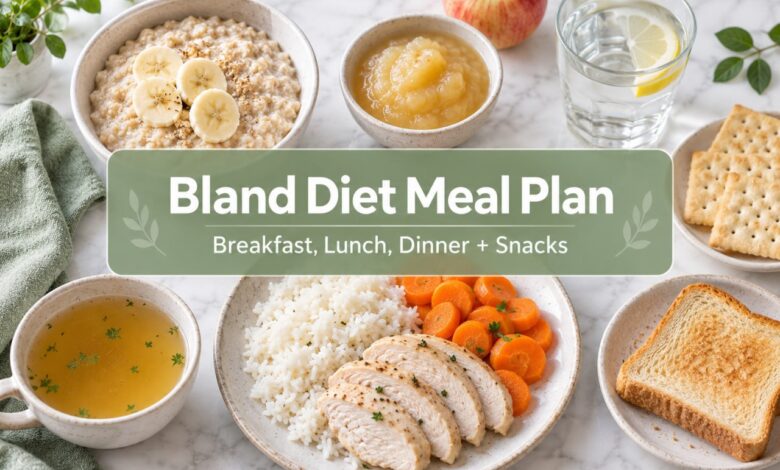
- Breakfast: plain oatmeal or cream of wheat, white toast and applesauce
- Morning snack: saltine crackers, rice cakes or a small ripe banana
- Lunch: poached chicken, mashed potato or white rice, and soft cooked carrots
- Afternoon snack: applesauce, crackers or plain low-fat yogurt if tolerated
- Dinner: baked white fish or chicken with white rice and steamed zucchini
- Fluids: water, clear broth, diluted juice or mild herbal tea
That is the whole idea. Keep it plain. Keep it low-fat. Keep the portions modest. If you need a broader food-by-food list, use the Bland Diet Food List alongside this meal plan.
Safety note: when food is not the answer
A meal plan is useful only when symptoms are mild enough to manage at home. Some symptoms should not be handled with food experiments.
Seek medical advice promptly if you have:
- blood in stool or vomit
- severe or worsening abdominal pain
- persistent vomiting or inability to keep fluids down
- signs of dehydration, such as dizziness, dark urine or very little urination
- fever with digestive symptoms
- unexplained weight loss
- symptoms after surgery or a medical procedure
- symptoms that do not improve after a few days
Do not try to out-plan red flags. If your body is clearly telling you something is wrong, get proper medical guidance.
Who this 1-day plan is for
This plan is best understood as a short-term template for adults who need gentle food ideas during a sensitive-stomach day. It may be useful when a healthcare professional has suggested bland foods, or when you are recovering from mild digestive upset and want a simple structure.
It is not designed for long-term weight loss, chronic digestive disease management, children, pregnancy, eating disorders or post-surgical recovery unless a clinician has told you it is appropriate.
If you have ongoing symptoms, this article should be a conversation starter with your healthcare provider, not a replacement for one.
The bland diet plate formula
The easiest way to build a bland diet meal is to use a three-part plate:
- Gentle starch: white rice, plain pasta, white toast, mashed potato without skin, cream of wheat or plain crackers
- Lean protein: poached chicken, baked white fish, soft scrambled eggs or low-fat cottage cheese if tolerated
- Soft cooked food: steamed carrots, cooked zucchini, mashed squash, applesauce or ripe banana
The boring version is often the point. A sensitive gut usually does not need more creativity. It needs fewer irritants and less work.
Breakfast ideas
Breakfast should be small, warm and easy to digest. If your appetite is low, start with half a portion and see how you feel.
Gentle breakfast options:
- plain oatmeal cooked soft with water or low-fat milk if tolerated
- cream of wheat with applesauce
- white toast with a small amount of plain cream cheese or ricotta
- soft scrambled egg with white toast
- a ripe banana with plain crackers
Skip fried eggs, greasy breakfast meats, seeded breads, granola, high-fat dairy and strong coffee. If mornings are your worst time, keep breakfast especially plain.
For more morning-specific options, see the APH guide to Bland Diet Breakfast Ideas.
Snack ideas
Snacks are not there to be exciting. They are there to keep you steady without forcing a large meal.
Simple bland diet snack ideas:
- saltine crackers
- plain rice cakes
- applesauce
- a small ripe banana
- plain low-fat yogurt if dairy is tolerated
- a small bowl of cream of wheat
If a snack makes symptoms worse, do not force it because it appears on a list. Individual tolerance matters.
Lunch ideas
Lunch is where the bland diet plate formula works well: a soft starch, a lean protein and a small portion of cooked vegetables if you tolerate them.
Easy lunch combinations:
- poached chicken breast with mashed potato and steamed carrots
- plain white rice with baked white fish and cooked zucchini
- chicken and rice soup made with low-sodium broth and no spice
- soft scrambled eggs on white toast with applesauce
Do not add spicy sauces, heavy gravy, fried toppings or acidic dressings. That is where a gentle meal can quickly stop being gentle.
For recipe-style ideas, use the APH guide to 6 Best Bland Diet Recipes for Digestive Recovery.
Dinner ideas
Dinner should usually be the calmest meal of the day. A large, heavy meal at night can be harder to tolerate if your stomach has already been unsettled.
Gentle dinner options:
- baked cod or tilapia with white rice and steamed zucchini
- poached chicken with mashed potato and soft carrots
- plain broth-based soup with rice or pasta
- scrambled egg on white toast if appetite is low
Use simple cooking methods: bake, boil, steam or poach. Avoid frying. Remove poultry skin. Keep fat and seasoning low.
Gentle fluids and drinks
Hydration matters, especially if vomiting or diarrhea has been part of the picture.
Common gentle fluids:
- plain water, sipped slowly
- clear broth
- diluted apple juice or white grape juice without pulp
- mild herbal tea if tolerated
- oral rehydration solution if dehydration is a concern
Avoid: alcohol, strong coffee, energy drinks, cola, carbonated drinks and acidic juices.
If you cannot keep fluids down, that is no longer a meal-planning problem. Seek medical advice.
Foods to avoid during this short-term plan
The biggest wins usually come from removing the obvious irritants first.
During a bland diet day, usually avoid:
- spicy foods, chilli, curry and hot sauces
- fried or greasy foods
- fatty meats such as bacon, sausage or fatty beef
- wholegrain, seeded or very high-fiber breads and cereals
- raw vegetables, especially cabbage, broccoli and cauliflower
- acidic foods, vinegar-based condiments and rich sauces
- full-fat dairy and rich desserts
- alcohol, strong coffee and fizzy drinks
Most bland diet mistakes are not complicated. People take a suitable base food, then add butter, spice, sauce, acid or a big portion. That is where the trouble often starts.
Portions, texture and meal frequency
A bland diet is not only about which foods you choose. It is also about how much you eat, how soft the food is and how often you eat.
Portions: start smaller than usual. You can always eat again later.
Texture: softer is often easier. Mashed potato may be easier than boiled potato. Applesauce may be easier than a whole apple.
Frequency: four to six smaller meals may feel better than two large meals.
Rest: eat slowly, chew well and avoid lying flat immediately after meals, especially if reflux is part of the problem.
How to transition back toward normal eating
A bland diet should not trap you in a tiny list of foods. Once symptoms improve, the goal is to move gradually back toward a more varied diet.
As appetite and tolerance return, broaden food choices gradually rather than following a fixed day-by-day schedule. If symptoms are persistent, worsening, or keep returning, seek medical advice.
Printable-style 1-day bland diet meal plan
Use this as a starting point, not a rulebook.
| Meal | What to eat | Simple swap |
|---|---|---|
| Breakfast | Cream of wheat, soft scrambled egg, white toast, applesauce | Plain oatmeal or rice porridge |
| Morning snack | Saltine crackers and a small ripe banana | Rice cakes or applesauce |
| Lunch | Poached chicken, mashed potato, steamed carrots | White rice, baked fish, cooked zucchini |
| Afternoon snack | Crackers, applesauce or plain low-fat yogurt if tolerated | Cream of wheat or banana |
| Dinner | Baked white fish, white rice, steamed zucchini | Chicken broth soup with rice or pasta |
| Fluids | Water, clear broth, diluted juice, mild herbal tea | Oral rehydration solution if needed |
Bottom line
A bland diet meal plan is best used as a temporary reset toward simpler meals: soft starches, lean proteins, cooked vegetables, gentle fluids and smaller portions.
Start with the 1-day plan above. Keep it plain for a short window. Then reintroduce normal foods gradually as symptoms improve.
And if symptoms are severe, persistent or unusual, do not keep experimenting with your plate. Get medical advice.
FAQ
How long should a bland diet meal plan last?
There is no fixed timeline for a bland meal plan. Broaden food choices as appetite and tolerance return; if symptoms persist, worsen, or keep returning, speak with a healthcare professional.
Can a bland diet help with acid reflux?
Some people find that limiting personal food triggers helps with reflux symptoms. A bland diet is not treatment for chronic reflux, and ongoing reflux should be assessed properly.
Is white rice better than brown rice on a bland diet?
White rice is lower in fiber, and some people find it easier to tolerate when their stomach is unsettled. Brown rice may also be tolerated by some people; individual response matters.
Can bland diet foods be seasoned?
A small amount of salt may be tolerated. Avoid chilli, hot sauce, garlic-heavy seasoning, vinegar, peppery sauces and acidic condiments while symptoms are active.
Is a bland diet the same as the BRAT diet?
No. The BRAT diet — bananas, rice, applesauce and toast — is narrower. A bland diet can include more foods, such as lean protein, soft cooked vegetables and some low-fat dairy if tolerated.
What if I am lactose intolerant?
Skip dairy if it worsens symptoms. Use non-dairy options you tolerate, or focus on the starch, lean protein and cooked-vegetable parts of the plan.
References
- MedlinePlus. Bland diet.
- Memorial Sloan Kettering Cancer Center. Bland diet.
- NCBI Bookshelf. Dietary approaches in gastrointestinal symptoms.
- The Portland Clinic. Bland diet patient guidance.
- NIDDK. Digestive diseases health information.

Dave James is a health researcher and writer specialising in evidence-aware nutrition, digestive health, exercise and longevity. He founded All Perfect Health to provide clear, practical health guidance rooted in current research and real-world experience. He writes about what the evidence does — and does not — show.
📂 Bland Diet & Digestive Recovery
This article is part of the All Perfect Health Bland Diet cluster. Use the links below to move between the pillar and supporting guides.
→ Bland Diet for Diarrhea: What to Eat, What to Avoid, and When to Get Help
→ Stomach Flu (Gastroenteritis): Symptoms, Causes, Treatment, and When to Get Help
→ BRAT Diet for Nausea: What to Eat, What to Avoid, and What Works Better
→ Bland Diet Food List: Gentle Foods to Eat, Foods to Avoid and a Simple Grocery List
YOU ARE HEREBland Diet Meal Plan: A Gentle 1-Day Plan for Breakfast, Lunch, Dinner and Snacks
→ 6 Best Bland Diet Recipes for Digestive Recovery (2026)
→ Bland Diet Breakfast: 15 Satisfying Recipes That Won’t Upset Your Stomach
→ Bland Food Diet Guide: Gentle Foods, Meal Ideas and What to Avoid
→ Can a Bland Diet Cause Constipation? What to Know and When to Change Course