
The 5 Best Oils for Dry Skin: Benefits, Uses, and How to Choose the Best Oil for Dry Skin
Last updated: March 28, 2026
Quick Answer
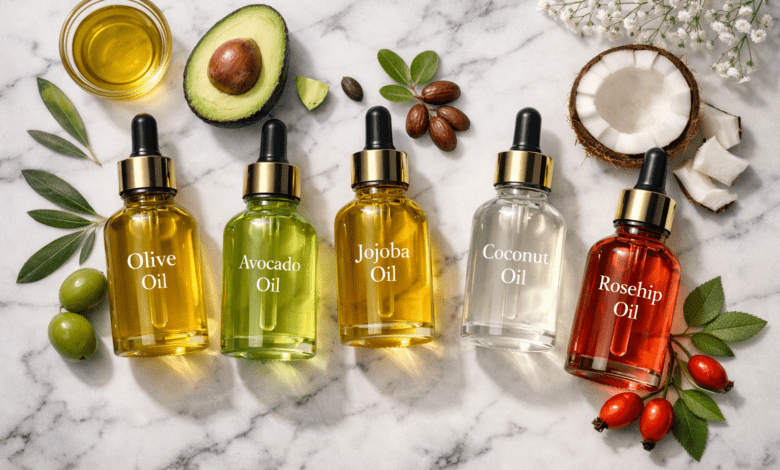
The best oils for dry skin are olive oil, avocado oil, jojoba oil, coconut oil, and rosehip oil. Each works differently: some mimic the skin’s natural sebum, others deliver concentrated fatty acids or vitamins that repair the moisture barrier. The right choice depends on your skin type, sensitivity level, and whether you’re targeting basic hydration or specific concerns like aging or acne-prone dryness.
Finding the best oil for dry skin can enhance your skincare routine significantly.
Key Takeaways
- Dry skin loses moisture because its lipid barrier is compromised — the right oil helps seal that barrier and slow water loss
- Jojoba oil is technically a wax ester, not an oil, making it the closest match to skin’s natural sebum and the least likely to clog pores
- Rosehip oil is the strongest option for anti-aging dry skin, thanks to its high vitamin C and essential fatty acid content
- Coconut oil is effective but comedogenic — best for body use rather than facial application on acne-prone skin
- Avocado oil is one of the heaviest and most nourishing options, ideal for very dry or mature skin
- Olive oil suits dry skin well but should be used sparingly on the face, as it can disrupt the skin barrier in some people when used in large amounts
- Always apply oil to slightly damp skin to lock in moisture, not to completely dry skin
- Patch test any new oil on the inner forearm for 24 hours before applying to the face
- Oils work best as the final step in a skincare routine, layered over water-based serums or moisturizers
- None of these oils replace SPF — some offer minor incidental UV protection, but not enough to substitute sunscreen
Why Do Oils Help Dry Skin in the First Place?
Dry skin is primarily a barrier problem. The outermost layer of skin — the stratum corneum — relies on a mix of lipids (fats) to hold moisture in and irritants out. When that lipid layer is depleted by weather, harsh cleansers, aging, or genetics, water evaporates from the skin faster than it can be replenished. This is called transepidermal water loss (TEWL).
Natural oils help in two ways. First, they physically sit on the skin’s surface and slow TEWL, acting as occlusives. Second, oils rich in fatty acids like linoleic acid and oleic acid can integrate into the lipid barrier itself, helping to structurally repair it over time.
Not all oils do both equally well. Some are better occlusives (coconut oil), others are better barrier-repair agents (rosehip, jojoba). Knowing the difference helps you pick the right one — or combine two for better results.
What Makes an Oil Good for Dry Skin?
A good oil for dry skin has three qualities: it absorbs without leaving a heavy residue, it contains fatty acids that support the skin barrier, and it doesn’t trigger breakouts or irritation.
Key ingredients to look for:
- Oleic acid (omega-9): A heavier fatty acid that deeply moisturizes. Found in olive and avocado oil. Best for dry, non-acne-prone skin.
- Linoleic acid (omega-6): A lighter fatty acid that helps repair the skin barrier. Found in rosehip and jojoba oil. Better for sensitive or acne-prone dry skin.
- Vitamin E (tocopherol): An antioxidant that protects skin from oxidative stress and supports healing.
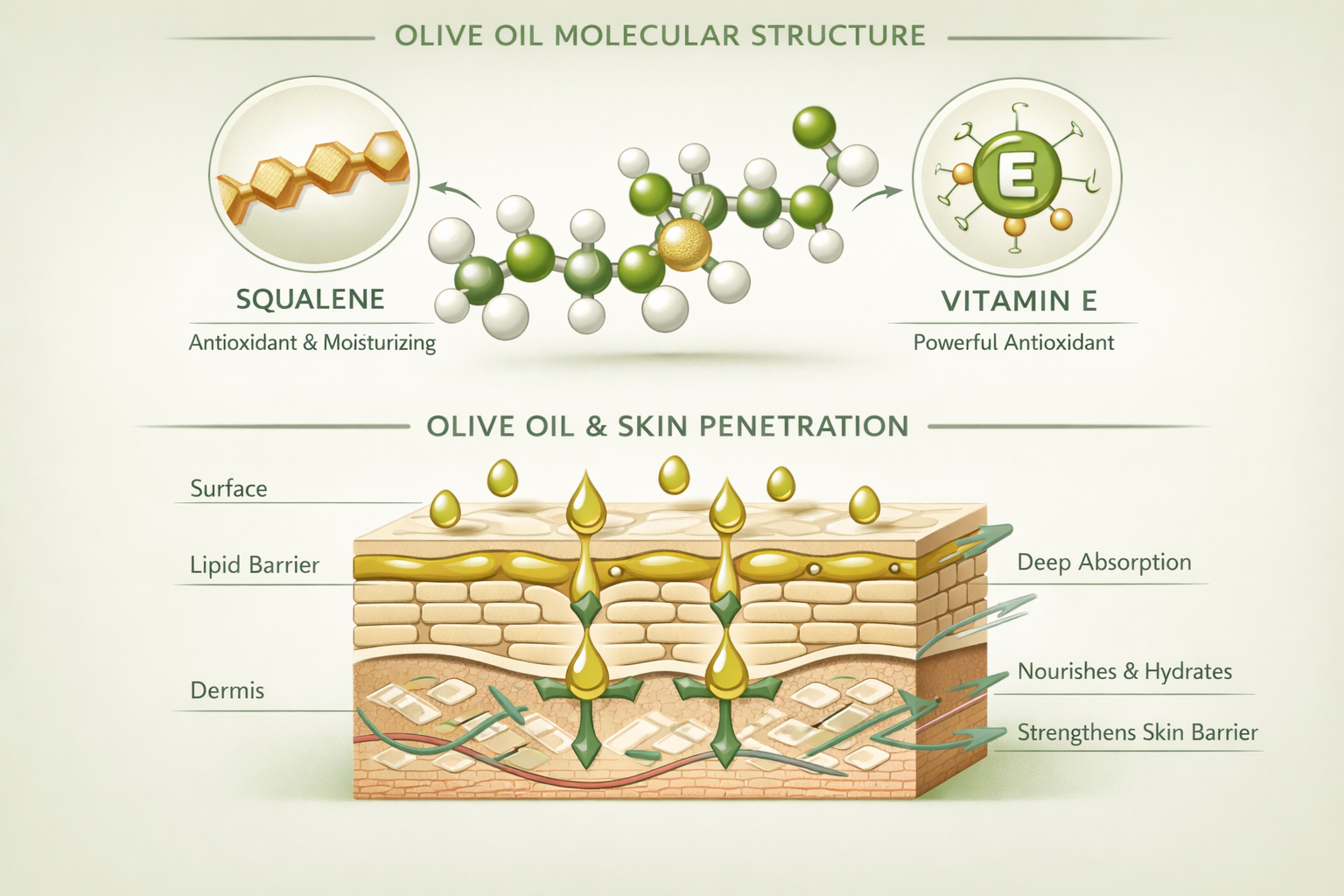
- Squalene: A natural skin lipid found in olive oil that moisturizes without greasiness and is well-tolerated by most skin types.
- Carotenoids and vitamin C precursors: Found in rosehip and avocado oil, these support collagen production and skin tone over time.
Decision rule: If your dry skin is also oily or acne-prone, choose oils higher in linoleic acid (rosehip, jojoba). If your skin is simply dry with no breakout tendency, oleic-acid-rich oils like avocado or olive oil will feel more nourishing.
Olive Oil: Is It Actually Good for Dry Skin?
Olive oil is one of the most studied plant oils for skin, and yes — it genuinely hydrates dry skin for most people. It’s rich in oleic acid (roughly 55–83% of its fatty acid profile), vitamin E, and squalene, a lipid that closely resembles what human skin produces naturally.
What squalene does: Human skin produces squalene as part of its sebum, and levels decline with age. Applying an external source can help compensate for that loss, improving softness and reducing the tight, flaky feeling of dry skin.
Anti-aging angle: Vitamin E in olive oil is a fat-soluble antioxidant. It helps neutralize free radicals — unstable molecules generated by UV exposure and pollution that degrade collagen and accelerate visible aging.
Important caveat: Some research (including a 2013 study published in Pediatric Dermatology) found that olive oil can disrupt the skin barrier with repeated use in certain individuals, particularly those with eczema-prone skin. This doesn’t make it harmful for most people, but it’s worth monitoring. Use a small amount and observe how your skin responds over two to three weeks.
Best uses for olive oil on dry skin:
- As a body moisturizer applied after showering
- Mixed into a DIY hair mask for dry scalp
- As an overnight hand treatment under cotton gloves
- A few drops added to a bath
For more on olive oil’s broader health profile, see this guide to the health benefits of olive oil.
Avocado Oil: The Best Choice for Very Dry or Mature Skin?
Avocado oil is one of the richest and heaviest oils on this list. It’s high in oleic acid, beta-sitosterol, vitamins A, D, and E, and contains a meaningful amount of beta carotene — a precursor to vitamin A that supports skin cell turnover.
Because of its thick consistency, avocado oil is particularly well-suited to very dry, mature, or weather-damaged skin. It absorbs more slowly than jojoba or rosehip oil, which means it provides longer-lasting surface hydration.
Key benefits:
- Deeply nourishes cracked or severely dry skin
- Supports collagen synthesis through vitamins A and E
- Beta carotene provides antioxidant protection against environmental damage
- Contains sterols that may help reduce inflammation in irritated skin
On sun protection: Avocado oil does contain compounds with some UV-absorbing properties, but the SPF equivalent is negligible — estimated at SPF 4–15 in some informal tests. This is not a substitute for broad-spectrum sunscreen. Think of it as a minor bonus, not a feature.
Common mistake: Using avocado oil as a daily facial moisturizer on combination skin. Its heavy oleic acid content can feel suffocating on oilier areas and may contribute to congestion. Reserve it for dry patches, the body, or nighttime use on the face.
Who it’s for: People with dry, mature, or eczema-prone skin who need maximum nourishment. Also useful for dry elbows, knees, and heels.
If you’re interested in avocado’s broader health benefits beyond skin, this deep-dive on avocado nutrition and wellness covers the full picture.
Jojoba Oil: Why Is It Different From Every Other Oil?
Jojoba oil is the most unique option on this list — and for dry skin that’s also prone to breakouts, it’s arguably the most versatile. Technically, jojoba is not an oil at all. It’s a liquid wax ester extracted from the seeds of the Simmondsia chinensis shrub native to the Sonoran Desert.
This distinction matters because wax esters are the primary component of human sebum. When you apply jojoba to skin, it mimics the skin’s own natural lubricant more closely than any other plant-derived oil. This allows it to:
- Moisturize without disrupting the skin’s natural oil balance
- Signal to sebaceous glands that sufficient oil is present, potentially reducing overproduction
- Form a breathable, non-occlusive film that protects without suffocating pores
Non-comedogenic rating: Jojoba scores 2 out of 5 on the comedogenic scale — meaning it’s very unlikely to clog pores. This makes it one of the few oils appropriate for dry skin that also experiences occasional breakouts.
Additional benefits:
- Hypoallergenic and well-tolerated by sensitive skin
- Stable shelf life (wax esters resist oxidation better than most oils)
- Works as a makeup remover, beard oil, or scalp treatment
- Suitable for all skin types, including oily and combination
Best uses: As a daily facial moisturizer, a carrier oil for essential oils, or a lightweight body oil for mildly dry skin.
Coconut Oil: Effective Body Moisturizer, But Use Caution on the Face
Coconut oil is one of the most popular natural skincare ingredients, and it does deliver genuine moisturizing benefits — but it comes with important limitations that are often glossed over.
Coconut oil is primarily composed of saturated fatty acids, particularly lauric acid (roughly 49% of its composition). Lauric acid has demonstrated antimicrobial properties in laboratory studies, which is why coconut oil is sometimes recommended for conditions like folliculitis or minor skin infections. It’s also an effective occlusive, forming a strong surface barrier that slows moisture loss.
Where coconut oil excels:
- As a body moisturizer for dry legs, arms, and torso
- As a lip balm or cuticle treatment
- As a hair mask for dry or damaged hair
- As a bath oil for general skin softening
- For dry, cracked heels used overnight with socks
The comedogenic problem: Coconut oil scores 4 out of 5 on the comedogenic scale — meaning it has a high likelihood of clogging pores for many people. Applying it regularly to the face, particularly around the nose, chin, and forehead, frequently causes breakouts even in people who don’t normally experience acne.
Practical rule: Use coconut oil freely on the body. Use it on the face only if you have very dry, non-acne-prone skin and have confirmed through patch testing that it doesn’t cause congestion.
Application tips:
- Apply to damp skin after a shower for better absorption
- A small amount goes a long way — start with a pea-sized amount for the body
- Opt for virgin or cold-pressed coconut oil to preserve its beneficial compounds
- Store in a cool place; it solidifies below 76°F (24°C) but melts on contact with skin
Rosehip Oil: The Best Oil for Anti-Aging Dry Skin
Rosehip oil is pressed from the seeds of rose bushes, primarily Rosa canina. It stands apart from the other oils on this list because of its exceptionally high linoleic acid content and its natural concentration of vitamin C precursors, specifically trans-retinoic acid (a natural form of vitamin A) and ascorbic acid derivatives.
These compounds make rosehip oil the strongest option for dry skin with visible aging concerns — fine lines, uneven tone, sun spots, and loss of firmness.
Why vitamin C matters for skin: Vitamin C is essential for collagen synthesis. Collagen is the structural protein that keeps skin firm and plump. As we age, collagen production slows, and external stressors like UV exposure accelerate its breakdown. Applying vitamin C topically (in a stable form) helps support ongoing collagen production and can gradually fade hyperpigmentation.
Key benefits of rosehip oil:
- High linoleic acid content supports barrier repair without clogging pores (comedogenic rating: 1/5)
- Natural trans-retinoic acid supports cell turnover and may reduce fine lines over time
- Vitamin C derivatives help even skin tone and brighten dullness
- Antioxidants protect against environmental damage
- Absorbs relatively quickly compared to avocado or coconut oil
Who it’s for: Adults with dry skin who also notice signs of aging, uneven tone, or post-inflammatory hyperpigmentation (dark spots left by acne or sun damage).
Common mistake: Expecting overnight results. Rosehip oil works gradually — most users see meaningful improvement in skin texture and tone after six to twelve weeks of consistent nightly use.
Storage note: Rosehip oil oxidizes faster than most oils. Buy it in a dark glass bottle, store it in the refrigerator after opening, and use it within three to six months.
For those interested in how other natural ingredients support skin health, the guide on cinnamon benefits for skin covers another plant-based option worth knowing.
How to Apply Oil for Dry Skin: A Step-by-Step Approach
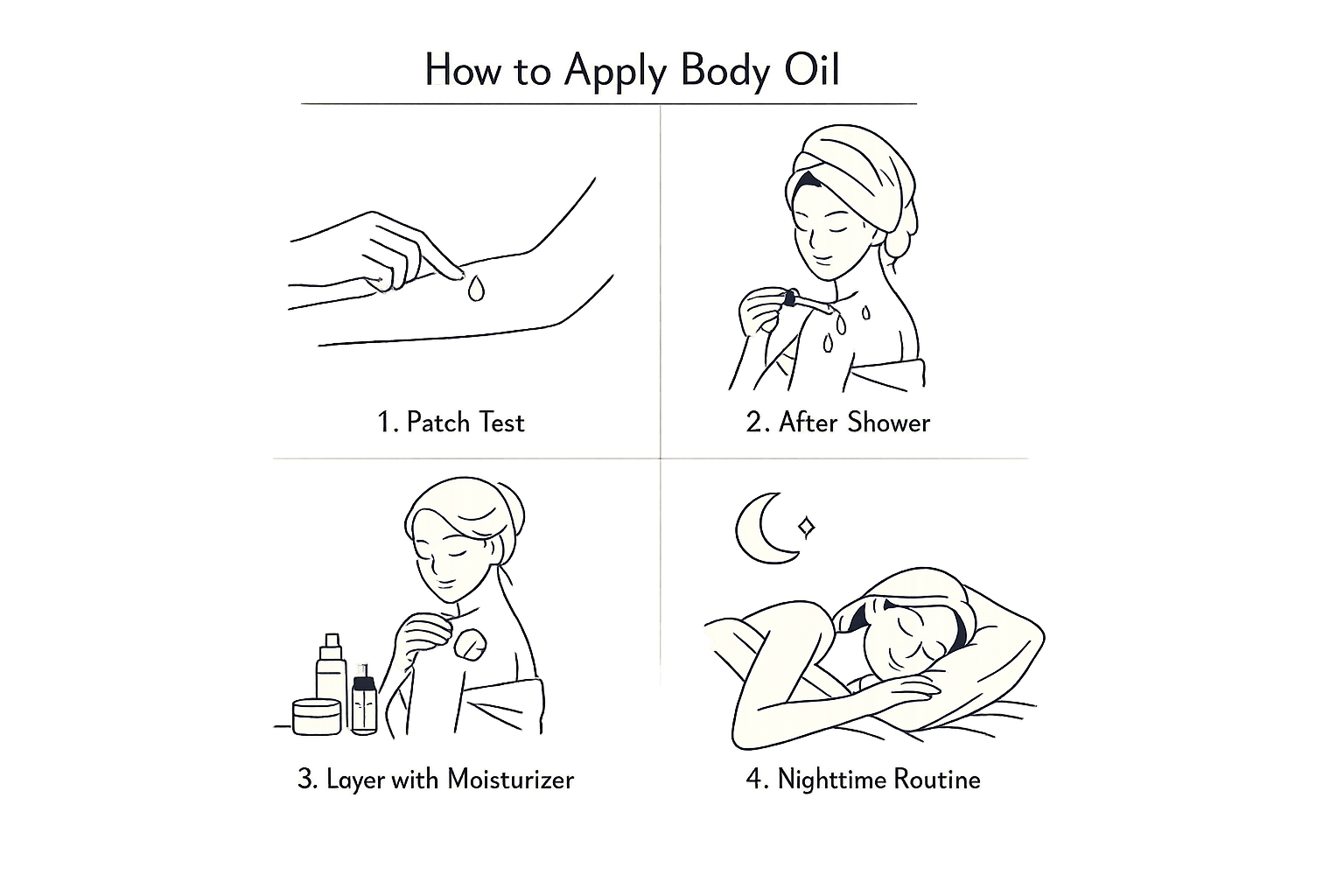
Applying oil correctly makes a significant difference in how well it works. Here’s a method that works for most skin types:
- Cleanse gently. Use a mild, sulfate-free cleanser. Harsh cleansers strip the skin barrier and undermine what the oil is trying to do.
- Don’t fully dry your face. Pat skin with a towel but leave it slightly damp. Oil applied to damp skin traps the existing moisture rather than sitting on a dry surface.
- Apply water-based products first. If you use a serum or toner, apply it before the oil. Water-based products can’t penetrate an oil layer, so they go on first. (A good toner for dry skin can be a useful first step.)
- Warm the oil in your palms. Dispense two to four drops into clean hands, rub palms together, then press gently onto the face. Don’t rub aggressively.
- Allow to absorb before SPF or makeup. Give the oil one to two minutes to settle before layering sunscreen or foundation on top.
- Use at night for maximum benefit. Skin repairs itself during sleep. Applying oil as the last step in your evening routine gives it uninterrupted time to work.
Comparison Table: Which Oil Is Right for Your Skin?
| Oil | Best For | Comedogenic Rating | Key Compound | Absorption Speed |
|---|---|---|---|---|
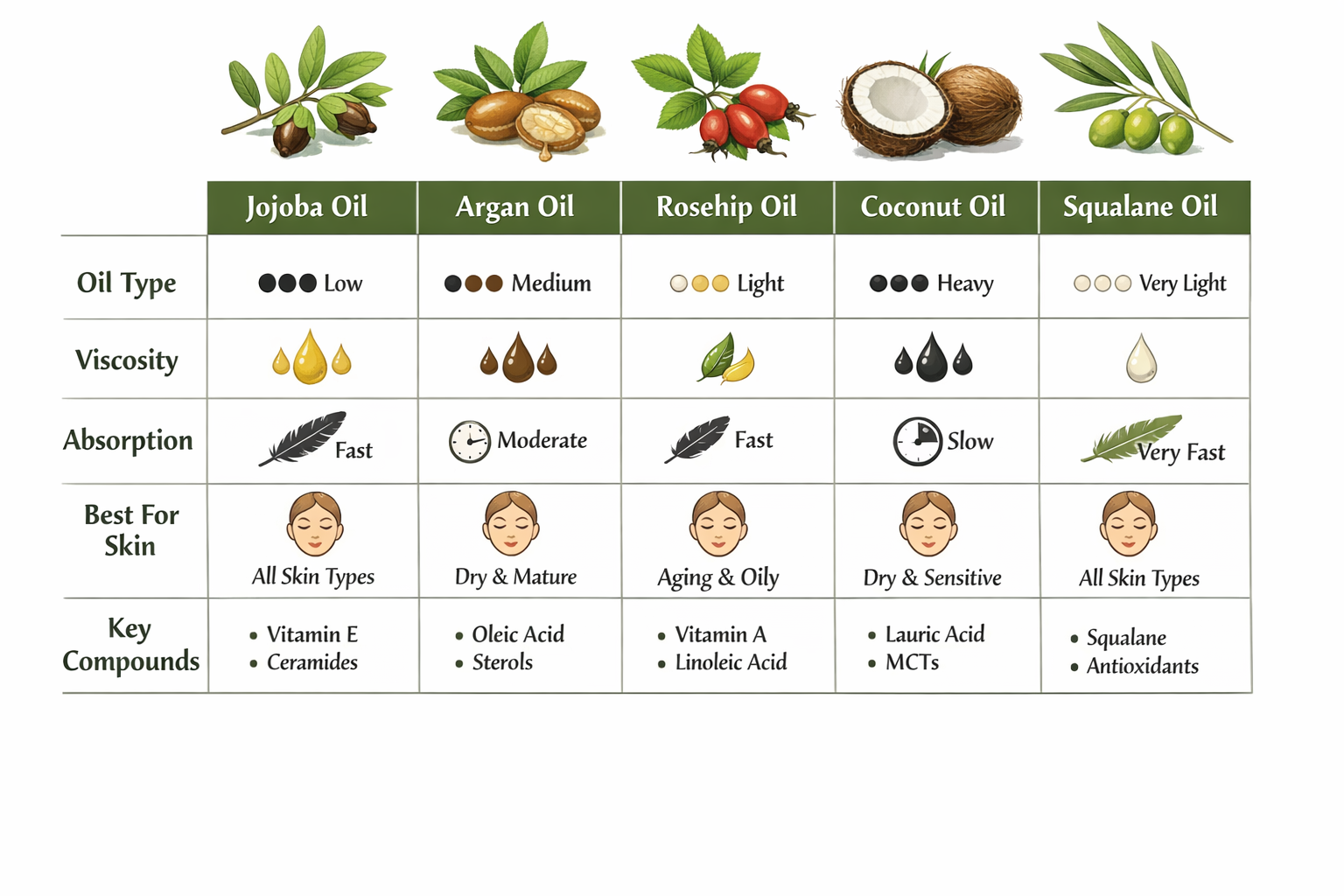
| Olive Oil | Dry, normal skin (body/face) | 2/5 | Squalene, oleic acid | Medium |
| Avocado Oil | Very dry, mature skin | 3/5 | Oleic acid, vitamin E | Slow |
| Jojoba Oil | All skin types, sensitive skin | 2/5 | Wax esters | Fast |
| Coconut Oil | Body, hair, lips | 4/5 | Lauric acid | Medium |
| Rosehip Oil | Dry + aging, uneven tone | 1/5 | Linoleic acid, vitamin C | Fast–Medium |
What Mistakes Should You Avoid When Using Oils for Dry Skin?
Using too much. More is not better with facial oils. Two to four drops is typically sufficient for the entire face. Excess oil sits on the surface, feels greasy, and can transfer onto pillowcases without benefiting skin.
Applying oil to completely dry skin. Oil is an occlusive — it seals in what’s already there. If skin is completely dry, you’re sealing in dryness. Always apply to damp skin or layer over a hydrating serum.
Skipping the patch test. Even natural oils can cause reactions in sensitive individuals. Test any new oil on the inner forearm for 24 hours before using it on your face.
Using coconut oil on acne-prone facial skin. This is the most common mistake. Coconut oil’s high comedogenic rating makes it a frequent cause of new breakouts, even in people who don’t normally experience acne.
Replacing moisturizer entirely with oil. Oils don’t add water to skin — they seal it in. If you skip your moisturizer and use only oil, you may find your skin feels soft initially but becomes drier over time. Use both.
Ignoring oxidation. Oils high in polyunsaturated fatty acids (rosehip, especially) go rancid quickly. Rancid oil can cause irritation and free radical damage — the opposite of what you want. Check for a change in smell (sharp or crayon-like) and discard if detected.
Frequently Asked Questions
Can I use these oils if I have sensitive skin?
Yes, but jojoba oil is the safest starting point for sensitive skin. Its wax ester structure closely matches skin’s natural sebum, and it’s hypoallergenic with a very low risk of reaction. Always patch test first, regardless of oil type.
Should I use oil instead of moisturizer?
No. Oils and moisturizers serve different functions. Moisturizers (particularly those containing humectants like hyaluronic acid or glycerin) draw water into the skin. Oils seal that moisture in. Use them together for best results — moisturizer first, oil second.
Can I use these oils around my eyes?
Some oils, particularly rosehip and jojoba, are gentle enough for the orbital area. Avoid getting any oil directly in the eyes. Use only a tiny amount (one drop warmed between fingertips) and pat gently — never rub — around the eye area.
How long does it take to see results from using facial oils?
For basic hydration, you’ll notice softer skin within a few days. For anti-aging or tone-evening benefits (rosehip oil, specifically), expect six to twelve weeks of consistent use before seeing meaningful change.
Can I mix two oils together?
Yes. A common combination for dry, aging skin is jojoba oil (as a base) with a few drops of rosehip oil. This balances fast absorption with the vitamin C and linoleic acid benefits of rosehip. Avoid mixing more than two or three oils — it makes it harder to identify what’s working or causing a reaction.
Are these oils safe during pregnancy?
Olive, avocado, jojoba, and coconut oils are generally considered safe topically during pregnancy. Rosehip oil contains natural retinoids (trans-retinoic acid), and while topical application involves far lower exposure than oral retinoids, some practitioners advise caution. Consult your healthcare provider before using rosehip oil during pregnancy.
Do these oils expire?
Yes. Most natural oils have a shelf life of one to two years unopened. Once opened, oils high in polyunsaturated fats (rosehip, avocado) should be used within three to six months. Store in dark glass bottles away from heat and light.
Can men use these oils for dry skin?
Absolutely. Dry skin affects all genders equally, and these oils work the same way regardless. Men with dry facial skin from frequent shaving may find jojoba oil particularly useful as a post-shave treatment. For more on male-specific skincare, see this guide on skin care tips for men.
Is it safe to use oils on children’s dry skin?
Coconut oil and jojoba oil are commonly used on children and are generally well-tolerated. Avoid essential oils and avoid rosehip oil on very young children without medical guidance. Always patch test.
Do any of these oils have anti-inflammatory benefits?
Yes. Avocado oil contains plant sterols with mild anti-inflammatory properties. Rosehip oil’s linoleic acid and antioxidant compounds may help calm irritated skin. For a broader look at how diet and topical choices intersect with inflammation, the guide on anti-inflammatory foods is a useful companion read.
Sources
-
Danby, S. G., AlEnezi, T., Sultan, A., Lavender, T., Chittock, J., Brown, K., Cork, M. J., & Bedwell, C. (2013). Effect of olive and sunflower seed oil on the adult skin barrier: Implications for neonatal skin care. Pediatric Dermatology, 30(1), 42–50. https://pubmed.ncbi.nlm.nih.gov/22995032/
In this guide- Why Do Oils Help Dry Skin in the First Place?
- What Makes an Oil Good for Dry Skin?
- Olive Oil: Is It Actually Good for Dry Skin?
- Avocado Oil: The Best Choice for Very Dry or Mature Skin?
- Jojoba Oil: Why Is It Different From Every Other Oil?
- Coconut Oil: Effective Body Moisturizer, But Use Caution on the Face
- Rosehip Oil: The Best Oil for Anti-Aging Dry Skin
- How to Apply Oil for Dry Skin: A Step-by-Step Approach
- Comparison Table: Which Oil Is Right for Your Skin?
- What Mistakes Should You Avoid When Using Oils for Dry Skin?
-
Healthline. (2017). Avocado oil for skin: Benefits, use, and more. Healthline. https://www.healthline.com/health/beauty-skin-care/avocado-oil-for-skin
-
Healthline. (2018). 13 reasons to add jojoba oil to your skin care routine. Healthline. https://www.healthline.com/health/beauty-skin-care/jojoba-oil-for-face
-
Medical News Today. (2018). Olive oil for the skin: Benefits, uses, and risks. Medical News Today. https://www.medicalnewstoday.com/articles/321246
*** More great articles that may be of interest to you 🙂
Top Skin Care Tips for Men: Unlocking Healthy & Glowing Skin

Dave James has spent 30+ years reading health and longevity research, and has run All Perfect Health for the past five. His background is in Australian mining and industrial engineering — disciplines built on questioning claims, measuring outcomes, and respecting evidence. He writes about what the research actually says, including where the experts disagree.
More about Dave & this site →