
The Protein Leverage Hypothesis: Why Protein Controls Your Weight
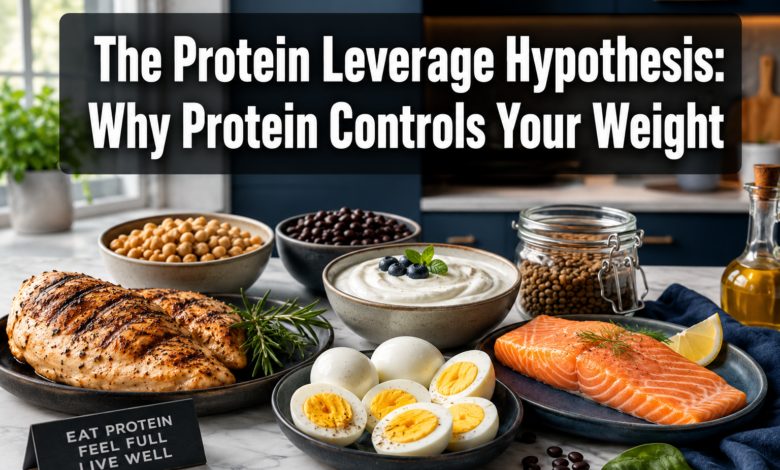
Most people trying to lose weight focus on eating less. The protein leverage hypothesis suggests the real problem is eating differently — specifically, not eating enough protein relative to everything else on the plate. When dietary protein is diluted by fats and carbohydrates, the body keeps driving hunger until its protein target is met. The result is overconsumption of total calories, not because of weak willpower, but because of a biological mechanism that most weight loss advice completely ignores. Understanding protein leverage weight loss is one of the most practically useful frameworks available in 2026 for anyone who has struggled to control appetite.
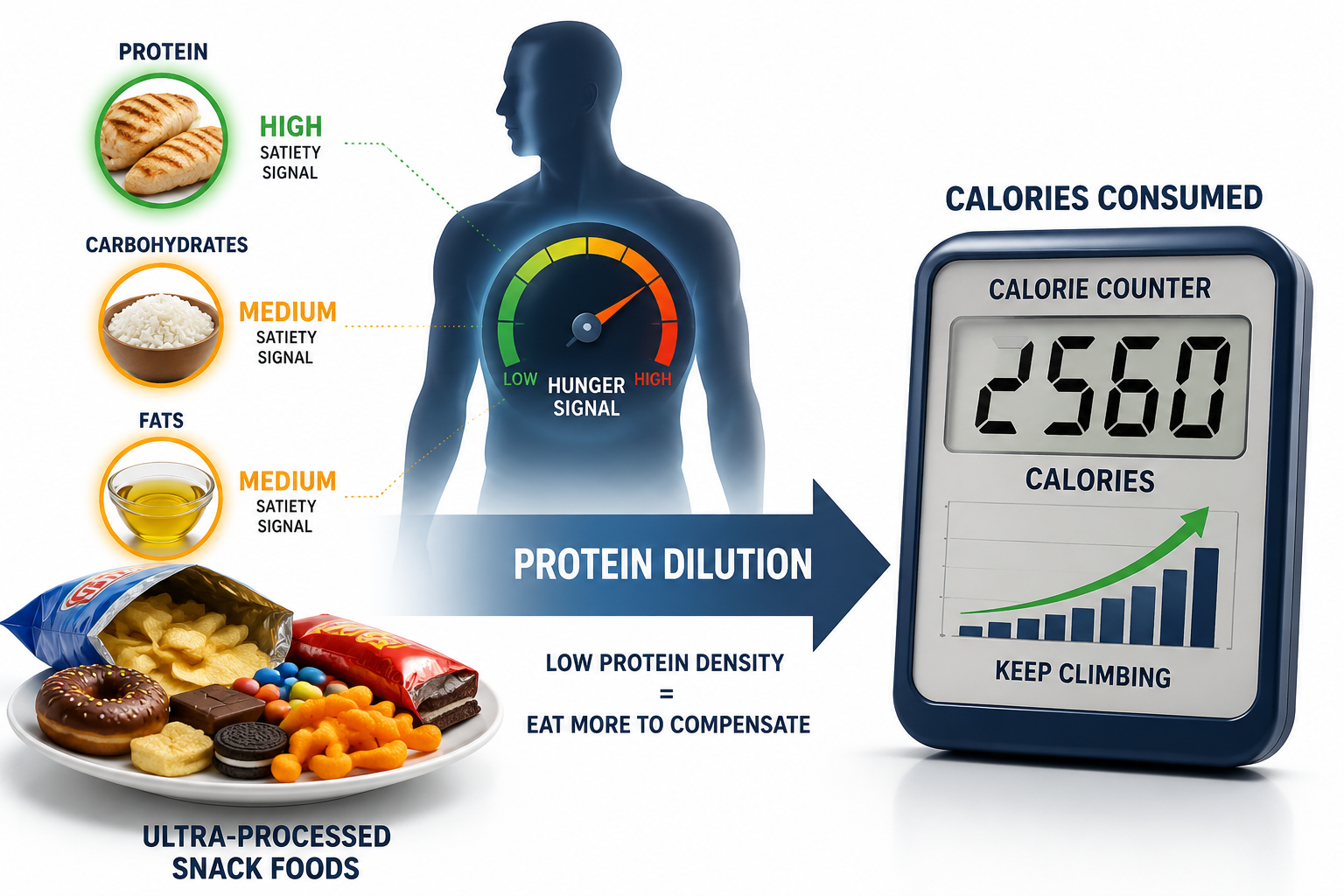
Table of Contents
- What the Protein Leverage Hypothesis Actually Says
- Featured Video: Why Protein Quality Determines Satiety and Metabolic Health
- The Thermic Effect of Protein — Why 30% of Protein Calories Are Burned Before Use
- Leucine Threshold: Why You Need Enough Per Meal
- Animal vs Plant Protein — What Bioavailability Data Shows
- Practical Protein Targets: How Much, When, and From What Sources
- Why Most People Stall Because of Low Protein
- Frequently Asked Questions
Key Takeaways
- The protein leverage hypothesis proposes that humans regulate food intake primarily around a protein target, not a calorie target
- When dietary protein is diluted by ultra-processed foods, total calorie intake rises to compensate
- Protein has a thermic effect of 20-30%, meaning the body burns a significant portion of protein calories during digestion
- Leucine, found in animal and some plant proteins, plays a key role in triggering muscle protein synthesis and satiety signalling
- Practical protein targets range from 1.2 to 2.2 grams per kilogram of body weight depending on age, activity, and goals
What the Protein Leverage Hypothesis Actually Says
The protein leverage hypothesis (PLH) was proposed by researchers Simpson and Raubenheimer in 2005. The core argument is straightforward: humans, like many other animals, have a strong physiological drive to reach a specific daily protein intake. When the proportion of protein in the diet falls, the body compensates by increasing total food consumption until the protein target is met [1].
In plain English, if your meals are low in protein but high in carbohydrates and fats, your appetite system does not switch off at an appropriate calorie level. It keeps pushing you to eat more because the protein need has not been satisfied.
This is not a minor effect. Research examining ultra-processed food consumption in the United States found that the rise of low-protein, energy-dense foods has contributed quantitatively to increased total energy intake — a direct test of the PLH in a real-world population [5]. A 2024 cohort study of older adults found strong evidence that protein leverage significantly influenced total energy intake, even when BMI effects were modest [2].
The simplest way to look at it is this: the modern food environment is built around foods that dilute protein. Biscuits, crisps, breakfast cereals, sweetened drinks, and fast food are all high in carbohydrates and fats but relatively low in protein. If your appetite is calibrated to seek protein, these foods will never fully satisfy it.
That said, the evidence is clear that PLH is a contributing factor in obesity, not the sole cause. A Royal Society Discussion Meeting examining the evidence concluded that protein appetite is a key integrator in the obesity system, but it operates alongside other biological, environmental, and behavioural factors [6].
Why Protein Quality Determines Satiety and Metabolic Health
Dave Asprey Has Drastically Changed His Mind on Protein
Speaker: Dave Asprey
Dave Asprey is the founder of Bulletproof and creator of the biohacking movement. He is a four-time New York Times bestselling author who has spent over two decades researching how to optimize human performance through nutrition, sleep, light, and mitochondrial health.
Not all protein is equal when it comes to appetite regulation and metabolic function. Protein quality refers to two things: the amino acid profile of a food, and how efficiently the body can absorb and use those amino acids.
High-quality proteins — those containing all essential amino acids in proportions the body can use — produce stronger satiety signals than lower-quality sources. This happens through several mechanisms:
- Hormonal signalling: Protein stimulates the release of peptide YY (PYY) and GLP-1, both of which reduce appetite. It also suppresses ghrelin, the hunger hormone [7].
- Amino acid sensing: The hypothalamus detects circulating amino acid levels. When protein intake is adequate, appetite suppression signals are stronger.
- Slower gastric emptying: Protein slows the movement of food through the stomach, extending the feeling of fullness after a meal.
Protein quality also matters for metabolic health. Diets adequate in high-quality protein support lean muscle mass, which is metabolically active tissue. More muscle means a higher resting metabolic rate — the number of calories burned at rest. This is particularly relevant for adults over 45, where muscle loss (sarcopenia) can silently reduce metabolic rate over time.
For a broader look at how specific foods support metabolic and satiety goals, the high protein diet for weight loss complete guide covers practical food choices in detail.
The Thermic Effect of Protein — Why 30% of Protein Calories Are Burned Before Use
The thermic effect of food (TEF) refers to the energy the body uses to digest, absorb, and process nutrients. Each macronutrient has a different TEF:
| Macronutrient | Thermic Effect |
|---|---|
| Protein | 20–30% |
| Carbohydrates | 5–10% |
| Fats | 0–3% |
This means that for every 100 calories of protein consumed, the body uses 20 to 30 calories just to process it. Carbohydrates cost 5 to 10 calories. Fats cost almost nothing to digest.
In real-world terms, this makes protein the most metabolically expensive macronutrient. A diet higher in protein produces a meaningfully higher total energy expenditure compared to an isocaloric diet higher in carbohydrates or fats — even before accounting for muscle retention or appetite effects [8].
This is not magic. There is no magic in it. It is simply the cost of breaking down and metabolising amino acids. But the practical implication is real: protein leverage weight loss works partly because higher protein diets naturally increase the number of calories burned each day without requiring more exercise.
Leucine Threshold: Why You Need Enough Per Meal
Leucine is a branched-chain amino acid (BCAA) that acts as a molecular trigger for muscle protein synthesis (MPS) — the process by which the body builds and repairs muscle tissue. The evidence suggests there is a threshold effect: muscle protein synthesis is not activated until leucine intake per meal reaches approximately 2 to 3 grams [9].
Below this threshold, protein intake may be insufficient to trigger the anabolic response that preserves muscle mass during weight loss. Above it, the body gets a clear signal to maintain and build lean tissue.
Why does this matter for weight loss?
Preserving muscle mass during a calorie deficit is critical. Muscle is metabolically active. Losing it during dieting reduces resting metabolic rate, making further weight loss harder and weight regain more likely. This is one of the main reasons people stall — a point covered in more detail in this guide on how to break a weight loss plateau.
Foods highest in leucine include:
- Beef, chicken, and pork
- Eggs and dairy (particularly whey protein)
- Tuna and salmon
- Soybeans and tofu (the best plant-based sources)
A practical rule: aim for at least 25 to 40 grams of high-quality protein per meal to reliably cross the leucine threshold. Spreading protein evenly across three meals appears more effective for MPS than concentrating most of it in one meal [9].
Animal vs Plant Protein — What Bioavailability Data Shows
The bioavailability of protein — how much the body can actually absorb and use — differs between animal and plant sources. The Digestible Indispensable Amino Acid Score (DIAAS) is the current gold standard for measuring protein quality.
Animal proteins (meat, fish, eggs, dairy) typically score above 1.0 on the DIAAS, meaning they provide all essential amino acids in proportions the body can use efficiently.
Plant proteins typically score below 1.0. Most are limited by one or more essential amino acids — lysine in grains, methionine in legumes. They also contain antinutrients such as phytates and tannins that can reduce absorption [10].
This does not mean plant proteins are without value. It means:
- Plant-based eaters need to consume more total protein to meet the same functional targets
- Combining plant proteins (e.g., rice and beans) improves the overall amino acid profile
- Leucine content is generally lower in plant proteins, which may require larger serving sizes to cross the MPS threshold
For those following a plant-based approach, understanding vegan diet weight loss evidence is worth reading alongside the protein quality data.
A sensible starting point is not to dismiss plant proteins, but to be realistic about the quantities needed and the importance of variety.
Practical Protein Targets: How Much, When, and From What Sources
Here is where the research translates into something actionable.
Daily protein targets by goal:
| Goal | Protein Target (per kg body weight) |
|---|---|
| General health maintenance | 1.2–1.6 g/kg |
| Active weight loss (preserving muscle) | 1.6–2.2 g/kg |
| Older adults (45+) | 1.6–2.0 g/kg (higher end recommended) |
| Resistance training | 1.8–2.2 g/kg |
A 75 kg adult aiming for active weight loss should target approximately 120 to 165 grams of protein per day. That is considerably more than the average Western diet provides.
Timing matters:
- Distribute protein across 3 to 4 meals rather than front- or back-loading
- Include a protein-rich meal within 1 to 2 hours of resistance training
- A pre-bed protein serving (20 to 40 grams of casein-rich food such as cottage cheese or Greek yogurt) has been shown to support overnight muscle protein synthesis and reduce morning hunger [4]
Practical whole-food sources:
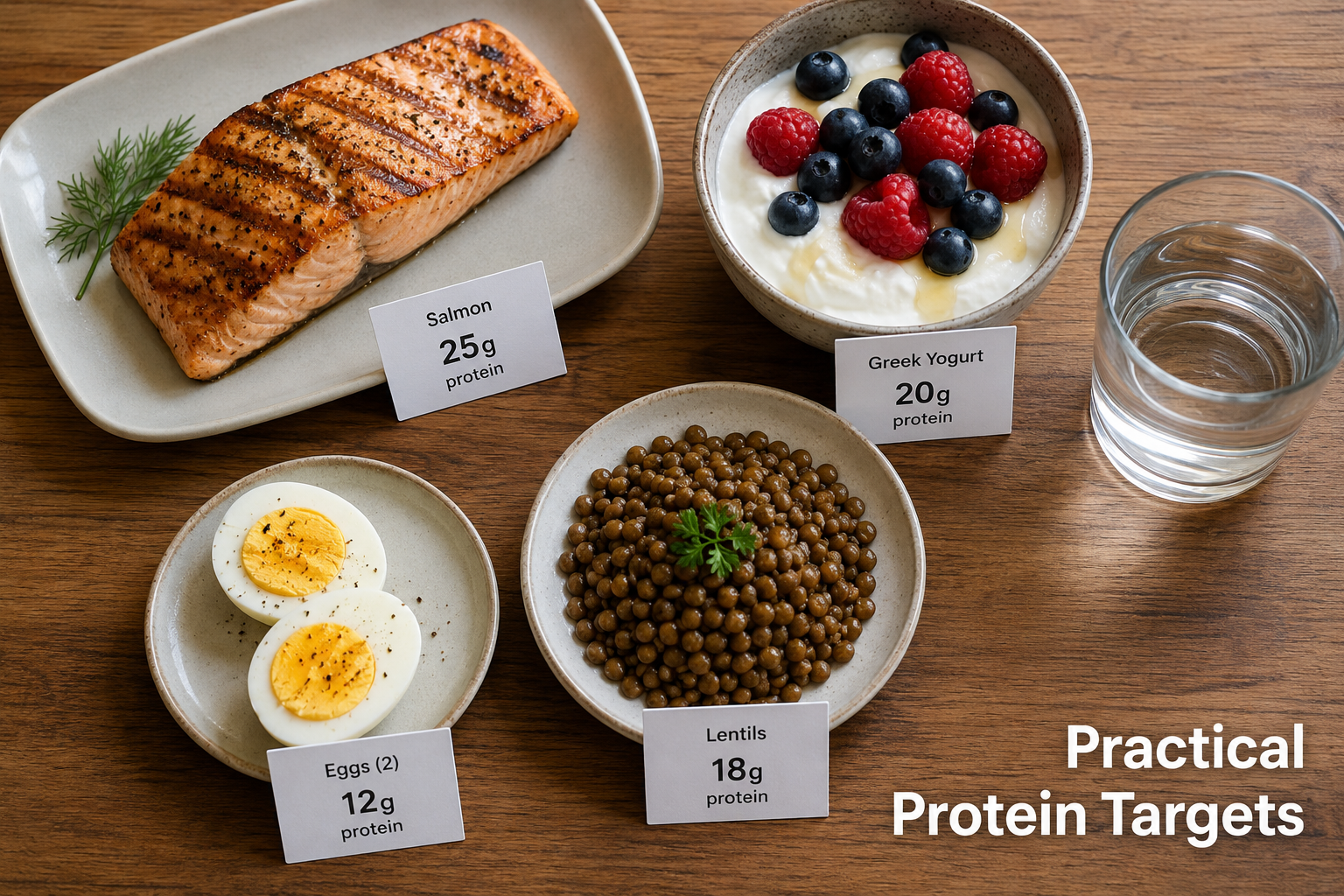
- Eggs: approximately 6 grams per egg (see hard-boiled egg nutrition for a full breakdown)
- Chicken breast: approximately 31 grams per 100 grams cooked
- Greek yogurt (full-fat): approximately 10 grams per 100 grams
- Tinned tuna: approximately 25 grams per 100 grams
- Lentils: approximately 9 grams per 100 grams cooked
- Cottage cheese: approximately 11 grams per 100 grams
For complete meal planning built around these targets, the healthy meals for weight loss practical guide provides structured options.
Why Most People Stall Because of Low Protein
Here is the real issue with most weight loss approaches: they reduce calories without adequately increasing protein as a proportion of the diet. When someone cuts total food intake but does not change the protein-to-calorie ratio, two things happen:
- Muscle loss accelerates. A calorie deficit without adequate protein causes the body to break down muscle for energy. This reduces metabolic rate over time.
- Hunger remains high. If protein leverage is real — and the evidence suggests it is — then a low-protein deficit diet will continue to drive appetite because the protein target has not been met.
A 2023 study found that protein leverage was present in children and adolescents, though it was partially offset by higher energy expenditure in younger populations [3]. In older adults, where energy expenditure is lower and muscle loss is a greater risk, the leverage effect on total calorie intake was more pronounced [2].
Context matters here. Protein leverage weight loss is not a standalone solution. It works alongside adequate fibre intake (which supports gut health and satiety — see high fibre foods for weight loss), appropriate calorie management, and consistent physical activity.
The stronger evidence points to protein adequacy as the foundation of a sustainable weight loss approach — not the only tool, but the one that most people underuse. For those combining protein focus with other dietary strategies, intermittent fasting for weight loss is one approach that can work well when protein targets are maintained within the eating window.
Frequently Asked Questions
What is the protein leverage hypothesis in simple terms?
It is the idea that the human body regulates food intake primarily around a protein target. When meals are low in protein, appetite stays elevated until the protein need is met, which leads to overconsumption of total calories.
How much protein do I actually need per day?
For most adults, 1.2 to 1.6 grams per kilogram of body weight is a reasonable baseline. During active weight loss or for adults over 45, 1.6 to 2.2 grams per kilogram is better supported by the evidence, particularly for preserving muscle mass.
Does the type of protein matter?
Yes. Animal proteins have higher bioavailability and better amino acid profiles than most plant proteins. That said, plant proteins can meet needs when consumed in sufficient variety and quantity. The leucine content of the protein source is particularly important for triggering muscle protein synthesis.
Is the protein leverage hypothesis proven?
It is well-supported but not universally accepted as the complete explanation for obesity. The evidence from population studies, controlled feeding trials, and mechanistic research is substantial, but most researchers view it as a major contributing factor rather than the single cause [6].
Can eating more protein really help me lose weight without counting calories?
The evidence suggests that increasing protein as a proportion of total diet can reduce spontaneous calorie intake because it satisfies the protein appetite drive more efficiently. However, this does not mean calorie intake is irrelevant — it means that meeting protein targets is a practical and effective way to reduce overconsumption naturally.
What is the best pre-bed protein source?
Casein-rich foods such as cottage cheese, Greek yogurt, or a casein protein supplement are the most studied options. They digest slowly, providing a sustained amino acid release overnight that supports muscle protein synthesis and may reduce morning hunger [4].
The Bottom Line
The protein leverage hypothesis offers a clear and evidence-grounded explanation for why so many people overeat without intending to. When the diet is dominated by low-protein, energy-dense foods — which describes most of the modern food environment — the appetite system keeps driving intake upward in search of adequate protein. The result is excess calorie consumption that has nothing to do with discipline and everything to do with biology.
The main takeaway is this: protein leverage weight loss is not a fad or a marketing concept. It is a mechanistic framework backed by feeding studies, population data, and decades of research into how humans and other animals regulate food intake [1][5][6].
Let’s keep this practical. Start with what gives the biggest return:
- Set a daily protein target of at least 1.6 grams per kilogram of body weight
- Distribute protein across meals, aiming for 25 to 40 grams per sitting
- Prioritise whole-food protein sources with high bioavailability
- Consider a casein-rich pre-bed snack if muscle retention is a priority
- Use protein adequacy as the foundation, then layer in fibre, calorie awareness, and activity
The basics still do the heavy lifting. Getting protein right does not require supplements, complicated meal plans, or expensive foods. It requires consistency and an understanding of why protein matters more than most conventional weight loss advice acknowledges.
References
- [Video] Speaker. YouTube. https://www.youtube.com/watch?v=0fVjKuH6OMo
- Simpson SJ, Raubenheimer D. Obesity: the protein leverage hypothesis. Obesity Reviews, 2005;6(2):133-142. https://doi.org/10.1111/j.1467-789X.2005.00178.x
- Simpson SJ, et al. Protein appetite as an integrator in the obesity system. Philosophical Transactions of the Royal Society B, 2022;377(1852):20220212. https://doi.org/10.1098/rstb.2022.0212
- Gosby AK, et al. Testing the protein leverage hypothesis in a free-living human population. Appetite, 2012;59(2):312-315. https://doi.org/10.1016/j.appet.2012.05.013
📂 Weight Loss & Metabolic Health
This article is part of the APH cluster. Use the links below to move between the pillar and child articles.
- Read the pillar: The Best Weight Loss Diet in 2026: A Science-Backed Guide to Every Major Approach
- → Intermittent Fasting for Weight Loss: Complete 2026 Guide
- → High Protein Diet for Weight Loss
- YOU ARE HERE The Protein Leverage Hypothesis: Why Protein Controls Your Weight
- → How to Break a Weight Loss Plateau: What the Evidence Actually Says
- → Breaking the Weight Loss Plateau: Metabolic Adaptation and How to Overcome It
- → Herbs for Weight Loss: 10 Evidence-Based Herbs That Boost Metabolism
- → 9 Healthy Meals for Weight Loss: A Practical Guide to Eating Well in 2026
- → The Best Weight Loss Diet in 2026: A Science-Backed Guide to Every Major Approach