6 Best Healthy Choice Meals: A Practical Guide to Eating Well
In this guide
- What Makes a Meal a Genuinely Healthy Choice?
- Meal 1: Grilled Chicken Breast with Roasted Vegetables
- Meal 2: Baked Salmon with Roasted Potatoes and Green Beans
- Meal 3: Turkey Burger with Roasted Sweet Potatoes and Green Beans
- Meal 4: Veggie Stir-Fry with Shrimp
- Meal 5: Grilled Chicken with Sweet Potatoes and Green Beans
- Meal 6: Turkey Burger with Sweet Potato Fries
- How Do These Meals Compare Nutritionally?
- What Are the Most Common Mistakes When Trying to Eat Healthy?
- How Can You Build a Weekly Meal Plan Around These Recipes?
- FAQ: Healthy Choice Meals
Last updated: March 28, 2026
Quick Answer
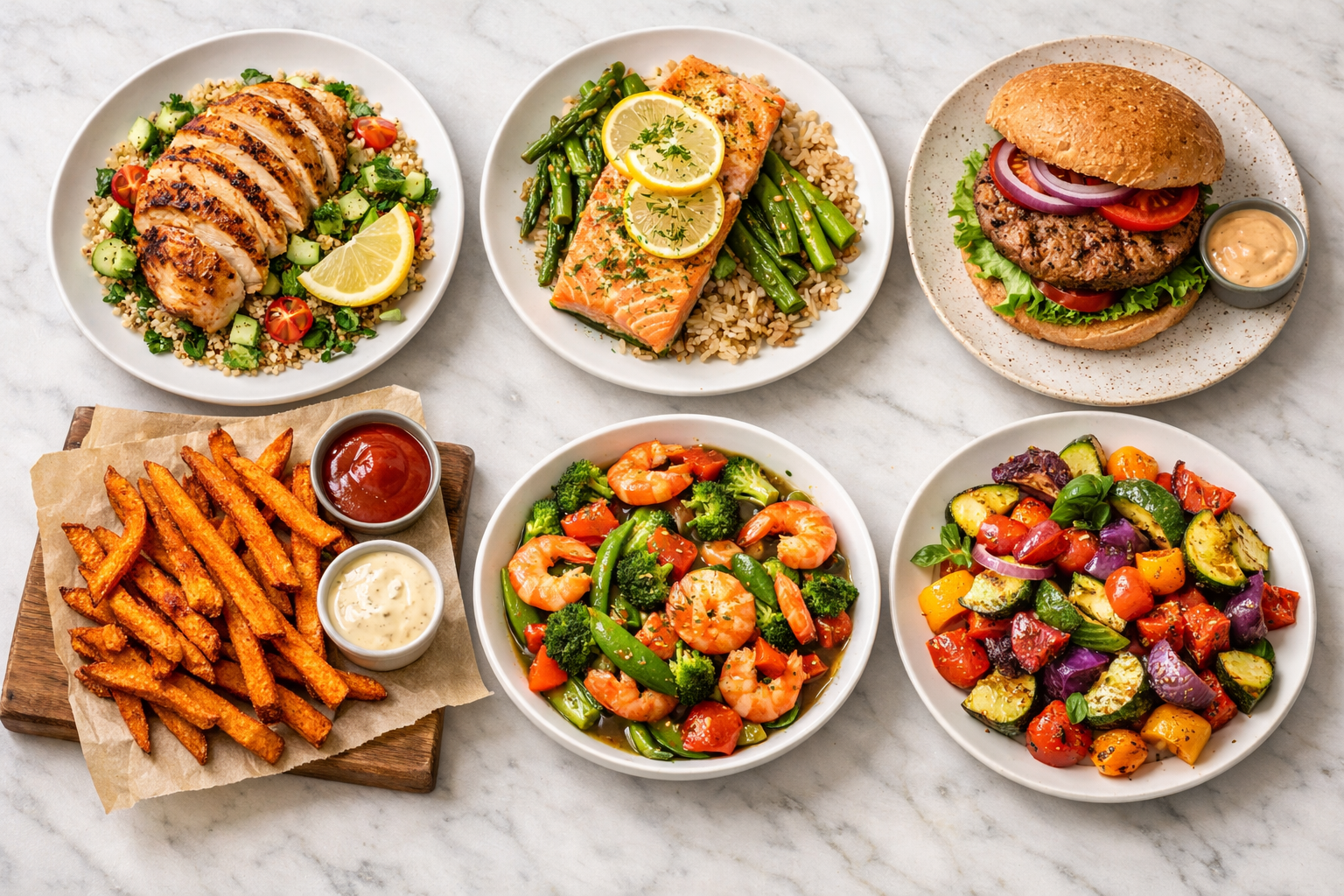
The best healthy choice meals combine lean protein, fiber-rich vegetables, and complex carbohydrates in balanced portions — and most can be prepared in under 30 minutes. Whether you’re trying to lose weight, build muscle, or simply eat better, meals like grilled chicken with roasted vegetables, baked salmon with potatoes and green beans, or a veggie shrimp stir-fry deliver real nutritional value without requiring advanced cooking skills. This guide covers six practical, nutritious meals with full ingredients, instructions, and the science behind why each one works.
Key Takeaways
- Lean proteins like chicken breast, salmon, turkey, and shrimp support muscle repair and help you stay full longer between meals.
- Roasted and stir-fried vegetables retain more nutrients than boiling and add fiber, vitamins, and antioxidants to any plate.
- Complex carbohydrates — sweet potatoes, brown rice, quinoa — provide sustained energy without the blood sugar spikes caused by refined grains.
- All six meals in this guide can be prepared in 30 minutes or less with basic kitchen equipment.
- Salmon is one of the most nutrient-dense proteins available, providing omega-3 fatty acids that support heart and brain health.
- Turkey burgers offer a lower-saturated-fat alternative to beef while still delivering satisfying protein.
- Meal variety matters: rotating between different proteins and vegetables helps cover a wider range of micronutrients across the week.
- You can adapt most of these recipes to suit dietary preferences — swap shrimp for tofu, or chicken for tempeh — without losing nutritional quality.
- Cooking at home consistently is one of the most reliable ways to control calorie intake and ingredient quality.
- Pairing these meals with adequate hydration and regular movement amplifies the health benefits significantly.
What Makes a Meal a Genuinely Healthy Choice?
A genuinely healthy meal delivers adequate protein, fiber, micronutrients, and healthy fats in proportions that match your energy needs — without excess sodium, added sugar, or refined ingredients.
The simplest framework: fill half your plate with non-starchy vegetables, one quarter with lean protein, and one quarter with a complex carbohydrate. This isn’t a rigid rule, but it’s a reliable starting point that most nutrition guidelines broadly agree on.
What to look for in a healthy meal:
- At least 20–30g of protein per serving (supports satiety and muscle maintenance)
- 5g or more of dietary fiber (aids digestion and blood sugar regulation)
- Minimal added sugar and sodium
- Healthy fats from sources like olive oil, salmon, or avocado
- Whole, minimally processed ingredients
What to avoid:
- Meals built around refined grains (white bread, white pasta) as the primary carbohydrate
- Sauces and dressings with hidden sugars or high sodium counts
- Ultra-processed proteins like deli meats or frozen patties with long ingredient lists
If you’re building a broader approach to nutrition, the comprehensive guide to modern diets covers the major dietary frameworks — from Mediterranean to plant-based — and how to choose the right one for your goals.
Meal 1: Grilled Chicken Breast with Roasted Vegetables
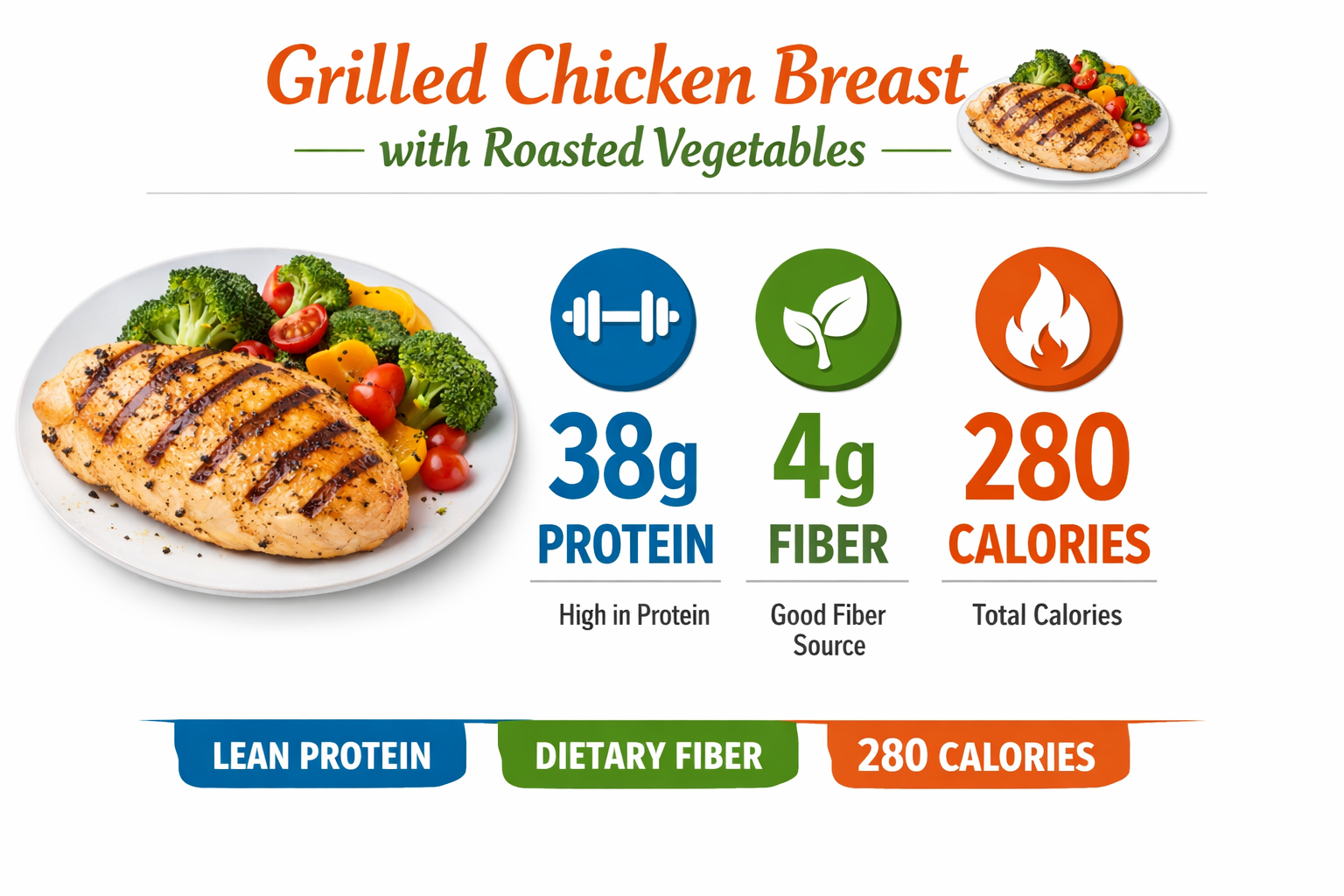
Grilled chicken breast with roasted vegetables is one of the most nutritionally balanced meals you can make. It’s high in protein, low in saturated fat, and the roasted vegetables add fiber, antioxidants, and essential vitamins with minimal calories.
A standard 4-ounce (113g) chicken breast provides roughly 26–28g of protein and fewer than 140 calories, making it one of the most efficient lean protein sources available. Roasting vegetables in a small amount of olive oil concentrates their natural sugars and improves palatability without significantly increasing calorie density.
Ingredients (serves 1)
- 1 boneless, skinless chicken breast (approximately 4–5 oz)
- 2 cups mixed vegetables (broccoli florets, cauliflower, carrots, bell peppers, zucchini)
- 1 tablespoon extra virgin olive oil
- Salt, black pepper, and garlic powder to taste
- Optional: fresh lemon juice, rosemary, or smoked paprika
Instructions
- Preheat oven to 400°F (205°C). Line a baking sheet with parchment paper.
- Toss vegetables in olive oil, salt, pepper, and garlic powder. Spread in a single layer on the baking sheet.
- Season chicken breast with salt, pepper, and your preferred spices. Place on a separate section of the baking sheet or a second pan.
- Roast for 20–25 minutes, or until the chicken reaches an internal temperature of 165°F (74°C) and the vegetables are tender with slightly caramelized edges.
- Rest chicken for 3–5 minutes before slicing. Serve together on a plate.
Tip: Add a squeeze of fresh lemon juice over the finished plate — it brightens the flavors and adds a small dose of vitamin C. For a more filling meal, serve over a half-cup of cooked quinoa or brown rice.
Common mistake: Overcrowding the baking sheet. If vegetables are piled on top of each other, they steam rather than roast, losing the caramelized texture that makes this dish satisfying.
Meal 2: Baked Salmon with Roasted Potatoes and Green Beans
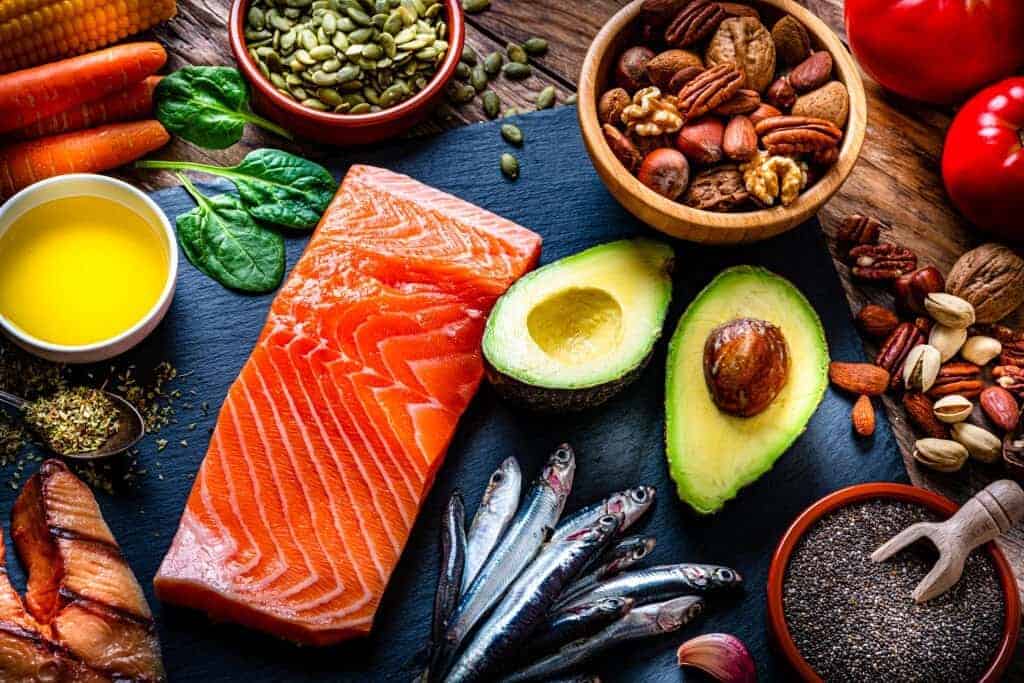
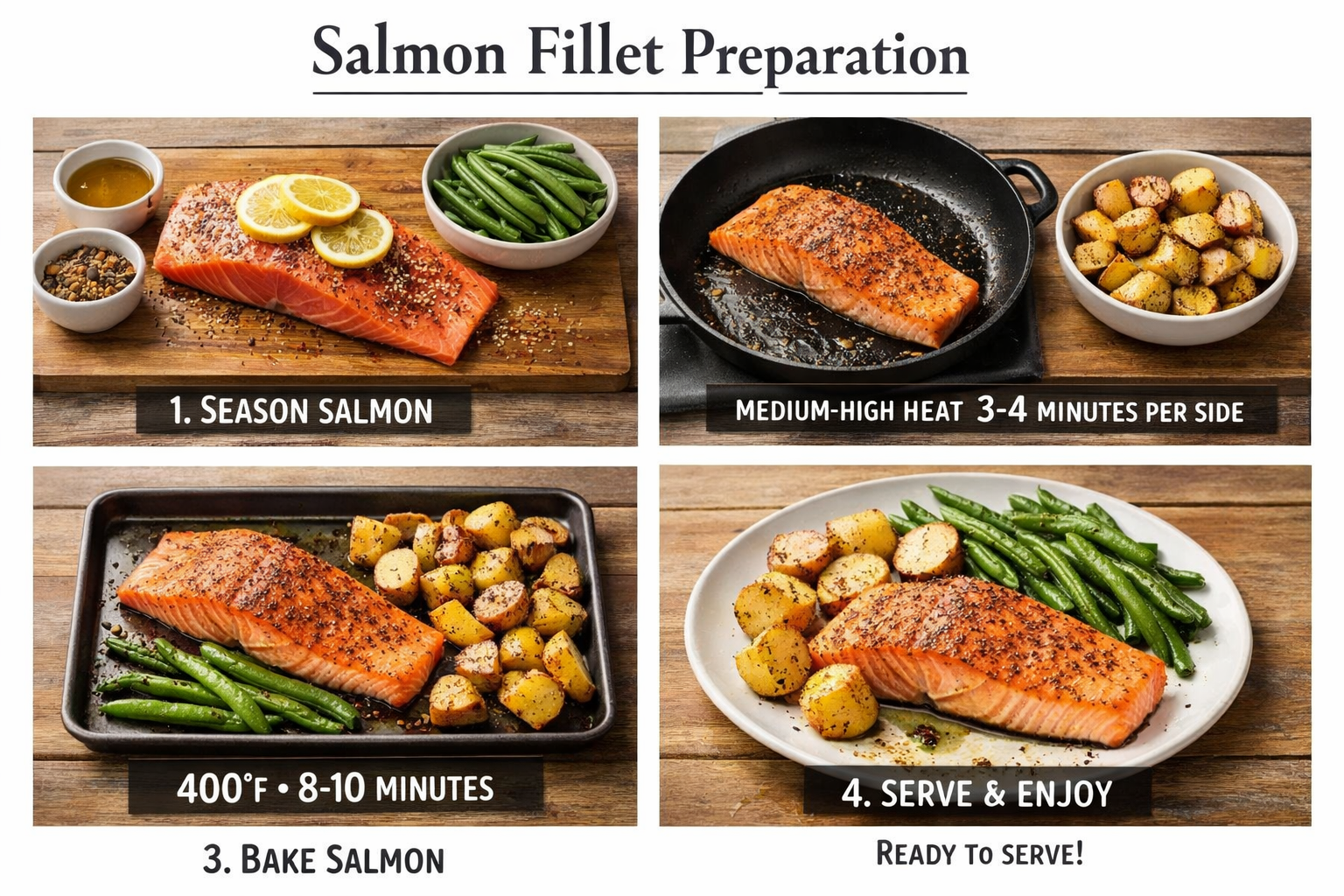
Baked salmon is one of the most nutrient-dense meals you can put on the table. A single 4-ounce serving of Atlantic salmon provides approximately 23g of protein and a significant dose of omega-3 fatty acids (EPA and DHA), which are associated with reduced inflammation and improved cardiovascular health.
Paired with roasted potatoes (a source of potassium and resistant starch) and green beans (rich in vitamins C and K), this meal covers a broad nutritional spectrum in under 30 minutes.
Ingredients (serves 1)
- 1 salmon fillet (4–6 oz), skin-on or skinless
- 1 medium potato, diced into 1-inch cubes
- 1 cup green beans, trimmed and halved
- 1 tablespoon olive oil
- Salt, black pepper, garlic, and dill or lemon zest to taste
Instructions
- Preheat oven to 400°F. Toss diced potatoes in olive oil, salt, and pepper. Spread on a baking sheet and roast for 20 minutes.
- After 20 minutes, push potatoes to one side and add green beans to the pan. Return to oven for 5 minutes.
- Meanwhile, place salmon fillet on a separate baking sheet. Season with salt, pepper, and dill. Bake for 12–15 minutes, until the fish flakes easily with a fork.
- Plate salmon alongside the roasted potatoes and green beans.
Choose this meal if you’re prioritizing heart health, brain function, or anti-inflammatory eating. Salmon’s omega-3 content is difficult to match with other common proteins. For more on foods that reduce inflammation, see this guide to anti-inflammatory foods.
Edge case: If you’re using frozen salmon, thaw completely in the refrigerator overnight before baking. Cooking from frozen results in uneven texture and makes it harder to judge doneness accurately.
Meal 3: Turkey Burger with Roasted Sweet Potatoes and Green Beans
A turkey burger with roasted sweet potatoes and green beans is a satisfying, protein-rich meal that significantly reduces saturated fat compared to a traditional beef burger. Ground turkey (93% lean) contains roughly 22g of protein per 4-ounce patty with considerably less saturated fat than an equivalent beef patty.
Sweet potatoes are one of the most nutritious carbohydrate sources available — rich in beta-carotene, potassium, vitamin C, and fiber. They also have a lower glycemic impact than white potatoes when eaten with protein and fat, making them a smart choice for blood sugar management.
Ingredients (serves 1)
- 4 oz lean ground turkey (93% lean)
- 1 small sweet potato, diced into 1-inch cubes
- 1 cup green beans, trimmed and halved
- 1 tablespoon olive oil
- Salt, pepper, garlic powder, and onion powder to taste
- Optional toppings: lettuce, tomato, sliced avocado, Dijon mustard
Instructions
- Preheat oven to 400°F. Toss sweet potato cubes in olive oil, salt, and pepper. Spread on a baking sheet and roast for 20 minutes.
- Add green beans to the baking sheet for the final 5 minutes of roasting.
- While vegetables roast, season ground turkey with garlic powder, onion powder, salt, and pepper. Form into a patty.
- Cook turkey patty in a nonstick skillet over medium heat for 4–5 minutes per side, until the internal temperature reaches 165°F.
- Serve the patty with roasted sweet potatoes and green beans. Add optional toppings as desired.
Tip: Sliced avocado is an excellent topping here — it adds healthy monounsaturated fats and makes the meal more filling without processed condiments. For more on avocado’s nutritional benefits, see this breakdown of avocado’s health properties.
Meal 4: Veggie Stir-Fry with Shrimp
A shrimp and vegetable stir-fry is one of the fastest high-protein meals you can make. Shrimp is extremely lean — a 3-ounce serving provides about 18–20g of protein with fewer than 90 calories. Combined with a colorful mix of vegetables and served over brown rice, this meal delivers protein, fiber, and a wide range of micronutrients in a single pan.
The key to a good stir-fry is high heat and minimal time. Vegetables should stay slightly crisp, not soft and waterlogged.
Ingredients (serves 2)
- 8 oz raw shrimp, peeled and deveined
- 1 cup broccoli florets
- 1 cup sliced bell peppers (any color)
- 1 medium onion, thinly sliced
- 2 cloves garlic, minced
- 1 tablespoon olive oil or avocado oil
- 2 tablespoons low-sodium soy sauce or coconut aminos
- 1 teaspoon sesame oil (optional, added at the end)
- 1 cup cooked brown rice, to serve
Instructions
- Heat oil in a large skillet or wok over medium-high heat until shimmering.
- Add onion and cook for 2–3 minutes until softened. Add garlic and cook for 30 seconds.
- Add bell peppers and broccoli. Stir-fry for 3–4 minutes, keeping the heat high.
- Add shrimp and soy sauce. Cook for 2–3 minutes until shrimp are pink and opaque.
- Drizzle with sesame oil if using. Serve over cooked brown rice.
Variation: Replace shrimp with firm tofu for a plant-based version. Press tofu dry before cooking to get a better sear. You can also add snap peas, bok choy, or mushrooms depending on what’s in season.
Common mistake: Adding shrimp too early. Shrimp cook in 2–3 minutes — overcooking makes them rubbery. Add them last, after the vegetables are nearly done.
Meal 5: Grilled Chicken with Sweet Potatoes and Green Beans
This is a slightly different take on the grilled chicken meal, using sweet potatoes instead of mixed vegetables for a heartier, more filling plate. It’s a particularly good option for active individuals or anyone with higher energy demands, since sweet potatoes provide complex carbohydrates that fuel sustained physical activity.
The combination of grilled chicken, sweet potato, and green beans covers protein, complex carbs, and fiber in one balanced plate — without requiring more than 30 minutes of active cooking time.
Ingredients (serves 1)
- 1 large boneless, skinless chicken breast
- 1 small sweet potato, diced
- 1 cup green beans, trimmed
- 1 tablespoon olive oil
- Salt, pepper, garlic powder, and paprika to taste
Instructions
- Preheat oven to 400°F. Toss sweet potato in olive oil and seasoning. Roast for 20 minutes.
- Add green beans to the pan for the final 5 minutes.
- Meanwhile, preheat a grill or grill pan to medium-high heat. Season chicken breast and grill for 6–8 minutes per side until internal temperature reaches 165°F.
- Rest chicken for 5 minutes before slicing. Plate with sweet potatoes and green beans.
Choose this meal if you exercise regularly and need a slightly higher carbohydrate intake to support recovery. The sweet potato provides potassium and glycogen-replenishing carbohydrates that are particularly useful after a workout.
If you’re pairing your nutrition with a fitness routine, starting with a good morning exercise habit can complement the dietary changes significantly.
Meal 6: Turkey Burger with Sweet Potato Fries
The final meal on this list is a crowd-pleasing option that feels indulgent but remains nutritionally sound. Homemade sweet potato fries — baked rather than fried — are a far better alternative to fast-food fries, delivering fiber, beta-carotene, and potassium instead of excess sodium and trans fats.
Paired with a lean turkey patty and a simple side salad, this becomes a complete, satisfying meal that works for lunch or dinner.
Ingredients (serves 1)
- 4 oz lean ground turkey (93% lean)
- 1 medium sweet potato, cut into thin wedges or strips
- 1 tablespoon olive oil
- Salt, pepper, paprika, and garlic powder to taste
- Side salad: kale or spinach, cherry tomatoes, red onion, cucumber, and a drizzle of olive oil and lemon juice
Instructions
- Preheat oven to 425°F. Toss sweet potato strips in olive oil, paprika, garlic powder, salt, and pepper. Spread in a single layer on a baking sheet. Roast for 25–30 minutes, flipping halfway, until crispy at the edges.
- Season ground turkey and form into a patty. Cook in a nonstick skillet over medium heat for 4–5 minutes per side until cooked through (165°F internal temperature).
- Assemble salad while the fries roast.
- Serve the turkey patty alongside sweet potato fries and the side salad.
Tip: For crispier fries, soak the cut sweet potato strips in cold water for 20–30 minutes before roasting. Pat completely dry before tossing in oil. This removes surface starch and improves crisping.
How Do These Meals Compare Nutritionally?
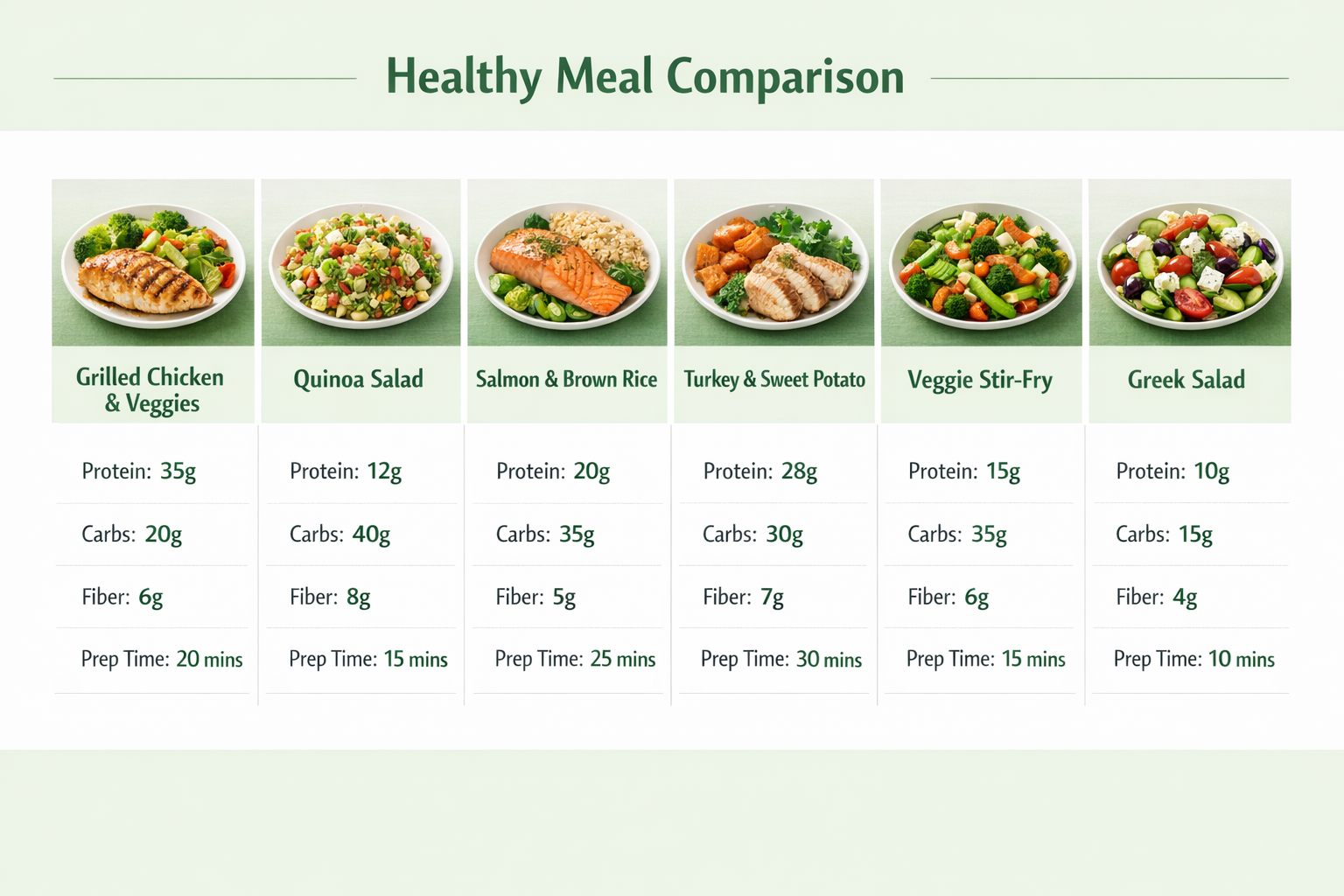
Here’s a general comparison of the six meals based on standard serving sizes. Note that exact values will vary based on portion size, specific ingredients, and preparation method.
| Meal | Protein (approx.) | Fiber (approx.) | Prep Time | Primary Benefit |
|---|---|---|---|---|
| Grilled Chicken + Roasted Veg | 28–32g | 6–8g | 25 min | Lean protein, antioxidants |
| Baked Salmon + Potatoes + Beans | 24–28g | 5–7g | 30 min | Omega-3s, heart health |
| Turkey Burger + Sweet Potato + Beans | 22–26g | 7–9g | 30 min | Lower saturated fat, beta-carotene |
| Shrimp Stir-Fry + Brown Rice | 22–26g | 5–7g | 20 min | Low calorie, high protein |
| Grilled Chicken + Sweet Potato + Beans | 28–32g | 7–9g | 30 min | Energy, post-workout recovery |
| Turkey Burger + Sweet Potato Fries | 22–26g | 6–8g | 35 min | Satisfying, nutrient-dense |
Values are estimates based on standard ingredient portions. Use a nutrition tracking app for precise figures.
What Are the Most Common Mistakes When Trying to Eat Healthy?
The biggest mistakes people make when trying to eat healthy are overcorrecting too fast, underestimating portion sizes, and relying on “healthy” packaged foods that are still heavily processed.
Mistakes to avoid:
- Cutting out entire food groups overnight. Sustainable healthy eating is gradual. Eliminating carbohydrates or fats entirely often leads to rebound eating.
- Ignoring protein. Many people trying to eat healthy focus on vegetables and reduce calories, but don’t eat enough protein. This leads to muscle loss and increased hunger.
- Assuming “low-fat” means healthy. Low-fat products often compensate with added sugar. Read ingredient labels, not just front-of-package claims.
- Not preparing in advance. The main reason people abandon healthy eating is convenience. Prepping proteins and vegetables in batches at the start of the week removes the daily decision-making burden.
- Drinking calories. Sugary drinks, flavored coffees, and even fruit juices can add hundreds of calories without contributing meaningful nutrition.
For people managing stress-related eating patterns alongside these changes, understanding mindful eating can make a significant difference in long-term consistency.
How Can You Build a Weekly Meal Plan Around These Recipes?
A practical weekly meal plan uses these six meals as a rotation, with simple batch-cooking to reduce daily prep time.
Sample weekly structure:
- Monday: Grilled chicken with roasted vegetables (batch-roast extra vegetables for Tuesday)
- Tuesday: Shrimp stir-fry with brown rice (use leftover roasted vegetables in the stir-fry)
- Wednesday: Baked salmon with roasted potatoes and green beans
- Thursday: Turkey burger with roasted sweet potatoes and green beans
- Friday: Grilled chicken with sweet potatoes and green beans
- Saturday: Turkey burger with sweet potato fries (a more relaxed, satisfying end-of-week meal)
- Sunday: Flexible — use up remaining ingredients in a grain bowl or simple salad
Batch-cooking tips:
- Cook a full pot of brown rice or quinoa at the start of the week. It keeps in the refrigerator for 4–5 days.
- Roast a large tray of mixed vegetables on Sunday. Use them across multiple meals.
- Pre-portion and marinate proteins the night before to reduce weeknight prep time.
If you’re also tracking calories or working toward a specific weight goal, pairing this approach with healthy meals for weight loss gives additional recipe variety and calorie guidance.
FAQ: Healthy Choice Meals
What is the healthiest meal you can eat regularly?
There’s no single “healthiest” meal, but meals combining lean protein, non-starchy vegetables, and a complex carbohydrate — like grilled salmon with roasted vegetables and quinoa — consistently appear in research as supportive of long-term health. Variety across the week matters more than any single perfect meal.
How much protein should a healthy meal contain?
Most adults benefit from 20–35g of protein per meal, depending on body weight and activity level. This range supports muscle maintenance, satiety, and metabolic function. Athletes or those in caloric deficits may need more.
Are these meals suitable for weight loss?
Yes. All six meals are moderate in calories, high in protein and fiber, and low in processed ingredients — a combination that supports fat loss while preserving muscle. Portion sizes and total daily calorie intake still matter, but these meals are structured to help you feel full without overeating.
Can I meal prep these recipes in advance?
Most of them, yes. Grilled chicken, baked salmon, roasted vegetables, and cooked grains all store well in the refrigerator for 3–4 days. The shrimp stir-fry is best eaten fresh, as shrimp texture degrades quickly when reheated. Turkey burgers can be formed and refrigerated raw, then cooked fresh in under 10 minutes.
What’s the best cooking oil to use for these meals?
Extra virgin olive oil is a strong choice for roasting and light sautéing — it’s rich in monounsaturated fats and antioxidants. For high-heat stir-frying, avocado oil has a higher smoke point and is more stable. For more on this topic, see the guide to health benefits of olive oil.
Are these meals suitable for people with diabetes?
Generally, yes — but individual responses to carbohydrates vary. Sweet potatoes and brown rice are lower on the glycemic index than white bread or white rice, especially when eaten alongside protein and fat. Anyone managing diabetes should work with a registered dietitian to tailor portion sizes and carbohydrate amounts to their specific needs.
How do I add more flavor without adding sodium or unhealthy sauces?
Use herbs, spices, citrus juice, and vinegars. Garlic, smoked paprika, cumin, fresh ginger, lemon zest, and fresh herbs like rosemary, thyme, and cilantro all add significant flavor without sodium. Acid (lemon juice, apple cider vinegar) is particularly effective at brightening dishes that taste flat.
What if I don’t eat meat? Can I adapt these meals?
Yes. Replace chicken or turkey with firm tofu, tempeh, or chickpeas. Replace shrimp with edamame or white beans. Salmon can be replaced with a plant-based omega-3 source like walnuts or hemp seeds added to a grain bowl, though the protein content will differ. The vegetable and carbohydrate components of every meal remain the same.
How do I know if a packaged “healthy choice” meal is actually healthy?
Check the nutrition label for sodium (aim for under 600mg per serving), added sugars (under 5g), and protein (at least 15g). Look at the ingredient list — if it’s longer than 10 items or contains ingredients you can’t identify, it’s likely heavily processed. Homemade versions of these meals almost always outperform packaged equivalents on all these metrics.
Is eating the same healthy meals every week bad for you?
Eating the same meals repeatedly isn’t harmful, but variety improves nutritional coverage. Different vegetables, proteins, and grains provide different micronutrients. Aim for variety across the week rather than within each meal — rotating through these six recipes already provides meaningful diversity.
Related Reading
- Healthy meals for weight loss — nine additional recipes with calorie guidance
- Anti-inflammatory foods guide — how to build meals that reduce chronic inflammation
- Comprehensive guide to modern diets — comparing Mediterranean, keto, plant-based, and other approaches
- Mindful eating and stress eating — behavioral strategies for sustainable healthy eating
- How to live a healthy lifestyle — broader context for integrating nutrition with sleep, movement, and stress management
More great articles that may be of interest to you 🙂
If you want to learn more information about healthy choice meals read this article: Healthy Choice Frozen Low-Calorie Meals
Related Reading
- The Comprehensive Guide to Modern Diets: What Actually Works in 2026
- Healthy Meals for Weight Loss in (2026)
- 19 Awesome Mediterranean Food Delights
- High Protein Diet for Weight Loss
- 4 Vegan Recipes to Melt Away Your Belly Fat (That Actually Taste Amazing)
- Exercise guide for better health

Dave James has spent 30+ years reading health and longevity research, and has run All Perfect Health for the past five. His background is in Australian mining and industrial engineering — disciplines built on questioning claims, measuring outcomes, and respecting evidence. He writes about what the research actually says, including where the experts disagree.