
What’s the Best Exercise Bike for Knee Issues? – All Perfect Health Explains
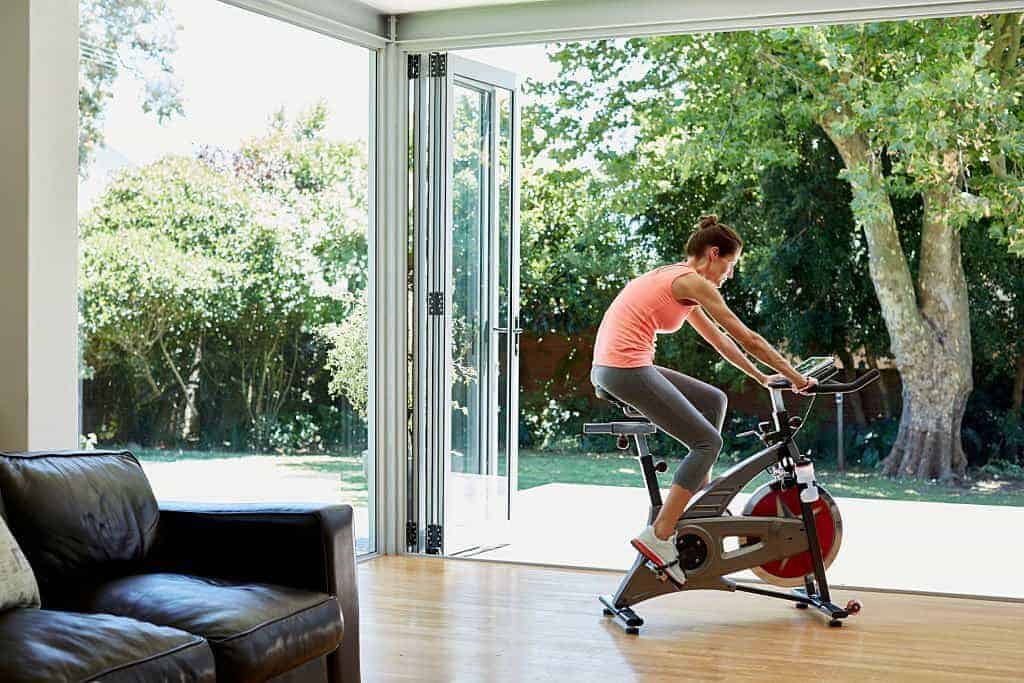
Best Exercise Bike for Knee Issues: A Complete 2026 Buying Guide
Last updated: March 28, 2026
Quick Answer
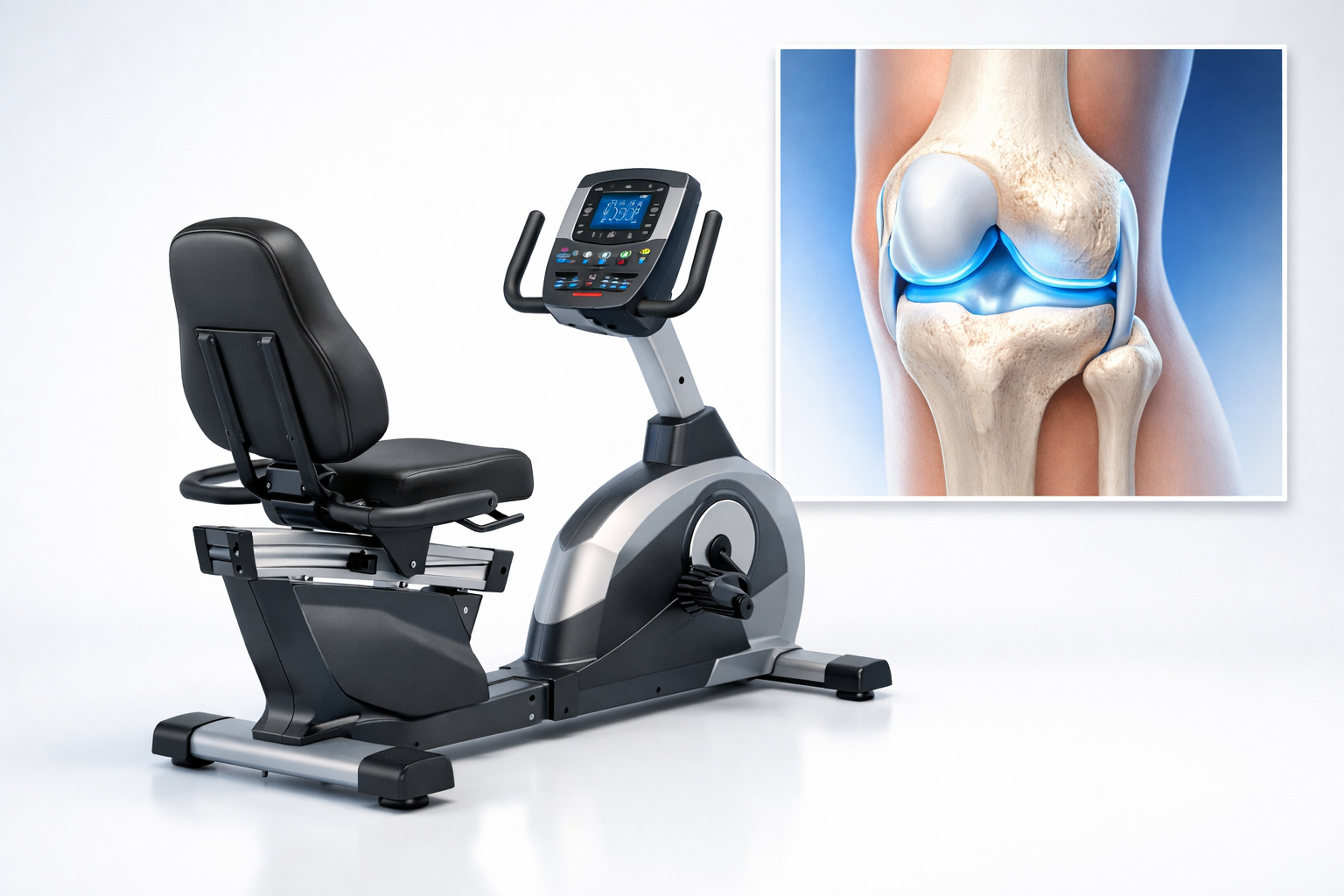
The best exercise bike for knee issues is a recumbent bike for most people, because the reclined seat reduces stress on the knee joint while still delivering an effective cardiovascular and muscle-strengthening workout. If you prefer an upright position, look for a bike with a wide seat height adjustment range, magnetic resistance, and smooth pedal motion. Spin bikes and high-resistance upright bikes are generally not recommended for people with active knee pain or recent knee surgery.
Key Takeaways
- Recumbent bikes are the most knee-friendly option because they distribute body weight across the back and seat rather than the knees.
- Proper seat height is the single most important fit adjustment for protecting your knees during cycling — your leg should have a slight bend (roughly 25–35 degrees) at the bottom of the pedal stroke.
- Low-impact cycling helps strengthen the quadriceps, hamstrings, and glutes, which are the primary muscle groups that support and stabilize the knee joint.
- Look for magnetic resistance over friction resistance — it provides smoother, quieter pedaling with less mechanical jolt to the joint.
- Upright bikes work well for mild knee pain; recumbent bikes are better for post-surgical recovery, arthritis, or chronic pain.
- Spin bikes place the most stress on the knee and are best avoided until you have medical clearance.
- Losing even a modest amount of body weight significantly reduces the load on your knees during any exercise — combining cycling with a healthy weight-loss approach accelerates recovery.
- Always consult a physical therapist or orthopedic specialist before starting a new exercise program if you have a diagnosed knee condition.
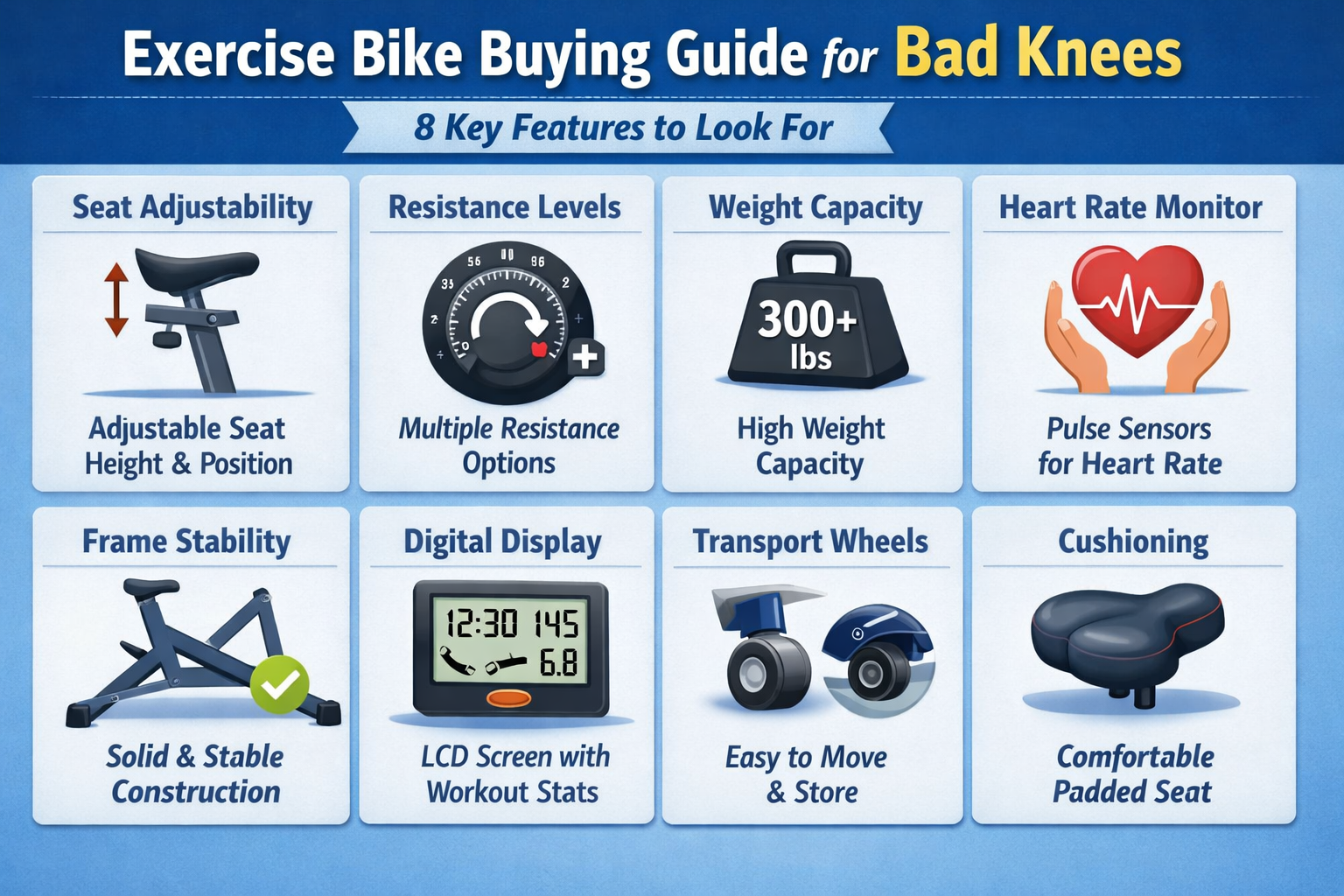
- Key features to prioritize: adjustable seat height, padded seat, multiple resistance levels, stable frame, and a weight capacity that matches your body weight.
- Anti-inflammatory nutrition can complement your exercise routine — foods that reduce joint inflammation may help manage knee pain alongside cycling.
What Causes Knee Pain, and Why Does It Matter for Choosing a Bike?
Knee pain is not a single condition — it’s a symptom with many possible causes, and the right exercise bike for you depends partly on which condition you’re managing. Understanding the source of your pain helps you make a smarter equipment choice and avoid exercises that could make things worse.
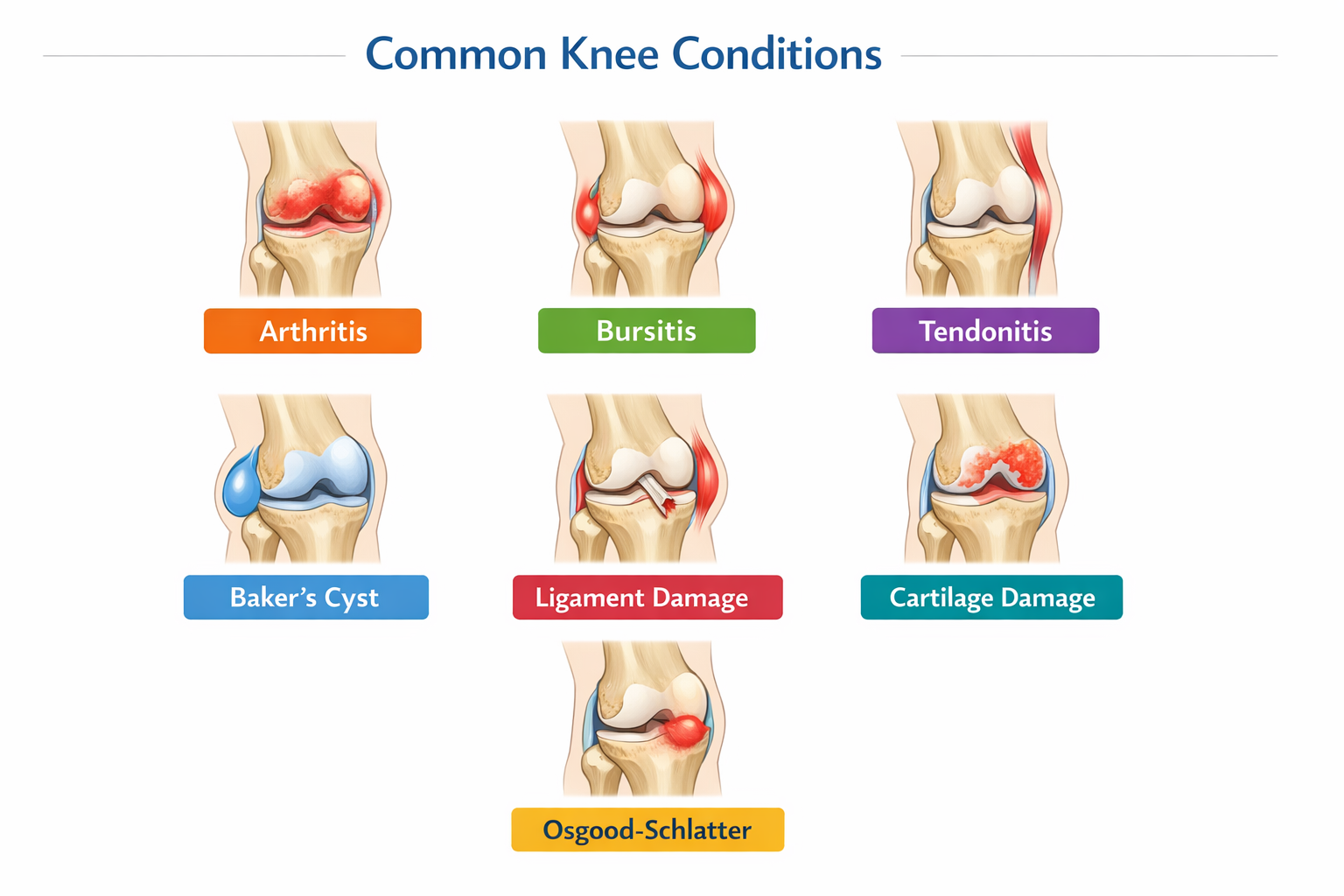
The most common knee conditions that affect exercise choices:
- Osteoarthritis: The most prevalent form of knee arthritis, caused by the gradual breakdown of cartilage between the bones. It’s common in adults over 50 and in people with a history of joint overuse. Low-impact cycling is widely recommended for osteoarthritis because it maintains joint mobility without grinding cartilage.
- Patellofemoral pain syndrome (runner’s knee): Pain around or behind the kneecap, often triggered by repetitive motion, muscle imbalance, or poor tracking of the kneecap. Seat height and cadence matter a great deal here — too low a seat increases patellofemoral stress.
- Ligament injuries (ACL, MCL, PCL): Damage to the ligaments that stabilize the knee joint. Post-surgical rehabilitation often includes stationary cycling as one of the first exercises, but only under medical guidance.
- Meniscus damage: Tears or degeneration of the cartilage pads inside the knee. Cycling is generally safe for minor meniscus issues, but high resistance or deep knee flexion can aggravate more serious tears.
- Knee bursitis: Inflammation of the fluid-filled sacs (bursae) that cushion the joint. Gentle, low-resistance cycling can help maintain mobility, but you should avoid high-intensity sessions during flare-ups.
- Tendonitis (patellar tendonitis): Inflammation of the tendon connecting the kneecap to the shinbone. Cycling is often used in rehabilitation, but resistance levels need to be carefully managed.
- Baker’s cyst: A fluid-filled swelling behind the knee, usually secondary to another condition like arthritis or a meniscus tear. Cycling is typically safe, but discomfort behind the knee should be monitored.
- Osgood-Schlatter disease: Primarily affects adolescents during growth spurts, causing pain and swelling just below the kneecap. Low-resistance cycling is usually well tolerated.
The key point: Not all knee pain responds the same way to exercise. If you have a diagnosed condition, always confirm with your doctor or physical therapist that cycling is appropriate before starting. For general knee discomfort, stiffness, or mild pain, an exercise bike is one of the safest and most effective tools available.
Why Is an Exercise Bike Good for Bad Knees?
An exercise bike is one of the best exercise options for people with knee problems because it provides cardiovascular and muscular benefits with minimal joint impact. Unlike running, jumping, or heavy squatting, cycling keeps your feet in contact with the pedals throughout the movement, which eliminates the high-impact loading that damages already-compromised joints.
Here’s why cycling specifically benefits the knees:
- Strengthens supporting muscles: The quadriceps, hamstrings, glutes, and calves all work during cycling. Stronger muscles around the knee reduce the load placed directly on the joint itself. This is one of the core principles of knee rehabilitation.
- Improves range of motion: The circular pedaling motion gently moves the knee joint through its range of motion, which helps reduce stiffness — particularly important for arthritis sufferers.
- Promotes synovial fluid circulation: Movement stimulates the production and distribution of synovial fluid, the natural lubricant inside the knee joint. This is why doctors often say “motion is lotion” for arthritic joints.
- Low impact on cartilage: Because you’re seated and supported, the compressive force on the knee cartilage during cycling is far lower than during walking, let alone running.
- Calorie burning and weight management: Reducing body weight directly reduces the load on the knees. Cycling burns a meaningful number of calories per session, supporting a sustainable weight-loss plan without punishing your joints in the process.
- Cardiovascular health: Knee pain often leads to reduced activity, which can negatively affect heart health over time. Cycling provides an effective cardio workout that keeps your fat-burning heart rate in a productive zone without stressing the knees.
Common mistake: Starting at too high a resistance level too soon. Many people assume more resistance means a better workout, but for knee rehabilitation or pain management, low-to-moderate resistance with a higher cadence (pedal speed) is safer and often more effective at building strength without aggravating the joint.
What Are the Different Types of Exercise Bikes, and Which Is Best for Knee Pain?
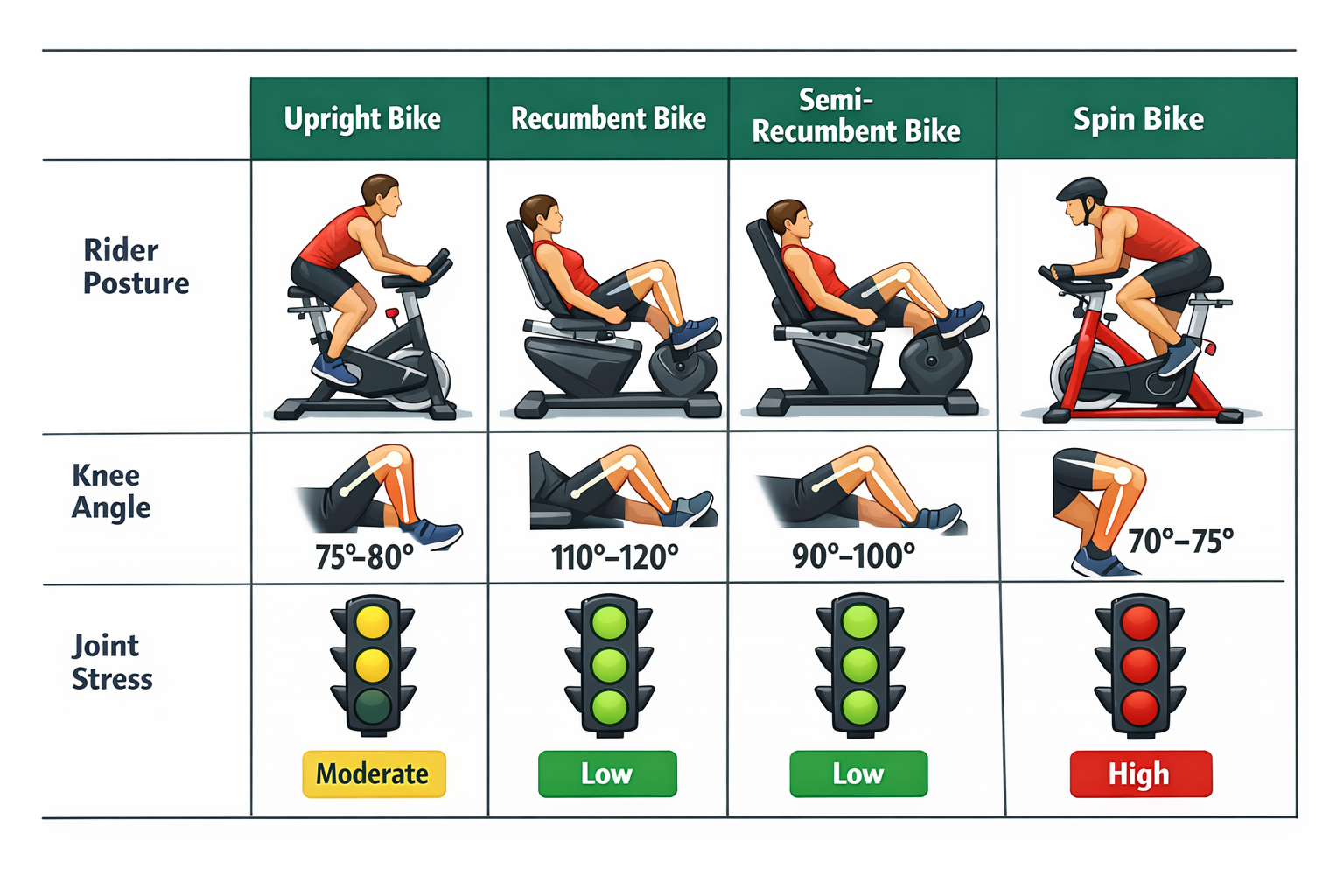
There are four main types of exercise bikes, and they are not equally suitable for people with knee issues. Choosing the right type is the first major decision you need to make.
1. Recumbent Bikes
A recumbent bike has a large, chair-like seat with a backrest, and the pedals are positioned in front of you rather than directly beneath. This design places your body in a reclined position, which distributes your weight across your back and seat rather than concentrating it on your knees and hips.
Best for: People with moderate to severe knee pain, post-surgical rehabilitation, arthritis, back problems, older adults, and anyone who finds upright cycling uncomfortable.
Advantages:
- Least stress on the knee joint of any bike type
- Built-in back support reduces compensatory strain
- Easy to get on and off — important after surgery or for older users
- Comfortable for longer sessions
Disadvantage: Takes up more floor space than upright bikes, and the seated position engages the glutes slightly less than upright cycling.
2. Upright Bikes
An upright bike mimics the geometry of a traditional bicycle. You sit directly above the pedals, and there’s no backrest. The riding position is more active, engaging your core and upper body slightly more than a recumbent.
Best for: People with mild knee discomfort, those who want a more traditional cycling feel, and anyone transitioning back to outdoor cycling.
Advantages:
- More natural cycling posture
- Engages a wider range of muscles
- Generally more compact and affordable than recumbent bikes
Disadvantage: Without a backrest, your body weight is partially supported through your arms and core. Poor posture or an ill-fitting seat height can increase knee stress.
3. Semi-Recumbent Bikes
A semi-recumbent bike sits between upright and recumbent designs. The seat is angled back slightly, and the pedals are positioned in front of the rider but not as far forward as a true recumbent. This hybrid design offers moderate back support while still engaging the core.
Best for: People who want more support than an upright bike but find a full recumbent too passive. Also good for those with mild back issues alongside knee pain.
4. Spin Bikes (Indoor Cycling Bikes)
Spin bikes are designed for high-intensity cycling. They use a heavy flywheel, allow standing pedaling, and are built for vigorous interval training. The riding position is aggressive — leaning forward with weight through the handlebars.
Best for: Fit individuals without significant joint issues who want an intense cardio workout.
Not recommended for: Anyone with active knee pain, arthritis, recent knee surgery, or significant joint sensitivity. The high resistance, forward lean, and potential for standing climbs place considerable stress on the knee joint.
Decision rule: Choose a recumbent if you have moderate-to-severe knee pain or are recovering from surgery. Choose an upright if your pain is mild and you want a more active workout. Avoid spin bikes until you have medical clearance and your knee pain is well managed.
What Features Should You Look for in an Exercise Bike for Knee Problems?
The right features can make the difference between a bike that helps your knees and one that makes things worse. Here’s what to prioritize.
Seat Height Adjustability
This is the most critical feature for knee health. If the seat is too low, your knee bends too deeply at the top of the pedal stroke, increasing patellofemoral stress. If it’s too high, your hips rock side to side, which can strain the IT band and outer knee.
Proper fit: At the bottom of the pedal stroke, your knee should have a slight bend — approximately 25 to 35 degrees of flexion. Your leg should never fully lock out, and it should never bend past 90 degrees at the top.
Look for a bike with a wide seat height range and clear adjustment markings so you can replicate your ideal position each session.
Magnetic Resistance
Exercise bikes use either friction resistance (a felt pad pressing against the flywheel) or magnetic resistance (a magnetic field that creates drag without contact). For knee health, magnetic resistance is strongly preferable because:
- The pedaling motion is smoother and more consistent
- There are no sudden jolts or resistance spikes that can stress the joint
- Resistance changes are gradual and precise
- The mechanism is quieter and requires less maintenance
Multiple Resistance Levels
A bike with at least 8 resistance levels gives you room to start very gently and progress as your knee strength improves. Bikes with 16 or more levels allow finer adjustments, which is particularly useful during rehabilitation when you need to increase load very gradually.
Seat Comfort and Width
A wide, well-padded seat is essential for longer sessions. Recumbent bikes typically have the most comfortable seats because they’re designed for extended use. For upright bikes, look for a seat with adequate padding and consider adding a gel seat cover if needed.
Frame Stability
A wobbly frame creates micro-movements during pedaling that can translate into uneven knee loading. Look for a bike with a solid, heavy base — particularly if you plan to use it at moderate-to-high resistance levels. Most quality bikes specify a maximum user weight; stay well within that limit for stability.
Weight Capacity
Always check the manufacturer’s stated weight limit and ensure it comfortably exceeds your body weight. Riding a bike at or near its weight limit compromises frame stability and can affect the smoothness of the pedaling motion.
Digital Display and Tracking
A basic display showing time, distance, speed, and calories burned helps you monitor your sessions and progress over time. Heart rate monitoring — either via handlebar sensors or chest strap compatibility — is a useful addition for keeping your workout in a safe, productive intensity zone.
Transport Wheels
If you need to move the bike for storage, built-in transport wheels make this practical without requiring you to lift the machine. This is a small feature but genuinely useful in smaller spaces.
How Do You Set Up an Exercise Bike Correctly for Knee Pain?
Even the best exercise bike for knee issues won’t help if it’s set up incorrectly. Proper bike fit is one of the most overlooked aspects of knee-safe cycling.
Step-by-step setup guide:
- Set seat height first. Stand next to the bike and adjust the seat so it’s level with your hip bone. This is a starting point — fine-tune from there based on how your knee feels during pedaling.
- Check your knee angle at the bottom of the stroke. Pedal slowly and observe your knee at the lowest point. There should be a visible, slight bend — not a straight leg, not a deeply bent one.
- Check your knee angle at the top of the stroke. Your knee should not rise above hip level. If it does, the seat is too low.
- Adjust seat fore-aft position (if available). On upright bikes, the seat can often slide forward or backward. When the pedal is at the 3 o’clock position (parallel to the floor), your kneecap should be directly above the pedal axle. This is the neutral knee alignment position.
- Set handlebar height. For knee pain specifically, slightly higher handlebars reduce the forward lean, which shifts more weight to the seat and less to the knee. This is particularly important on upright bikes.
- Start with zero or minimal resistance. For the first few sessions, use the lowest resistance setting and focus on smooth, consistent pedaling. Increase resistance only when you can complete 20–30 minutes without knee discomfort.
- Warm up and cool down. Begin each session with 5 minutes of very easy pedaling before increasing intensity, and end with 5 minutes of easy pedaling. Abrupt stops can cause stiffness.
Common mistake: Raising resistance too quickly. Many people feel fine during a session but experience increased knee pain the following day. If that happens, reduce resistance and duration, and increase more gradually.
What Are the Best Exercise Bikes for Knee Issues in 2026?
The following bikes represent strong options across different categories, budgets, and use cases. Each has been selected based on features relevant to knee health: seat adjustability, resistance smoothness, stability, and comfort.
Best Recumbent Bikes for Bad Knees
Schwinn 270 Recumbent Bike
One of the most well-regarded recumbent bikes available, the Schwinn 270 offers 25 levels of resistance, a dual-track LCD display, built-in heart rate monitoring via handlebar sensors, and a ventilated, contoured seat. The wide resistance range makes it suitable for both gentle rehabilitation sessions and more demanding cardio workouts. The seat adjusts easily, and the step-through frame design makes mounting and dismounting straightforward — an important consideration after knee surgery.
- 25 resistance levels
- Built-in heart rate monitoring
- Comfortable, ventilated seat with lumbar support
- Compatible with chest strap heart rate monitors
- Relatively large footprint
Marcy Recumbent Exercise Bike ME-709
A budget-friendly recumbent option that delivers solid performance for its price point. The ME-709 features 8 levels of magnetic resistance, a step-through frame, and a padded seat with backrest. It’s a good starting point for someone new to exercise biking for knee rehabilitation who doesn’t want to invest heavily before knowing if cycling suits them. Note that it lacks a digital monitor, which limits progress tracking.
- 8 resistance levels
- Affordable price point
- Step-through frame for easy access
- No digital display — a notable limitation
Exerpeutic 400XL Folding Recumbent Bike
The folding design makes this bike a practical choice for smaller spaces. It offers 8 resistance levels, a digital display tracking time, distance, speed, and calories, and a semi-recumbent seat position. The folding mechanism is straightforward and doesn’t require tools. It’s not as heavy-duty as the Schwinn 270, but for light-to-moderate use, it’s a cost-effective option.
- Folds for compact storage
- Digital display included
- 8 resistance levels
- Lower weight capacity than premium models
ProGear 190 Recumbent Exercise Bike
The ProGear 190 offers a reclined seat, 8 resistance levels, and a clear digital display. It’s designed for comfortable, extended sessions and is well suited to older adults or those in early-stage knee rehabilitation. The step-through frame is low, making it particularly easy to get on and off.
Best Upright Bikes for Mild Knee Pain
Schwinn 170 Upright Exercise Bike
For those who prefer an upright riding position and have mild knee discomfort rather than significant pain, the Schwinn 170 is a strong choice. It features 20 levels of resistance, a heart rate monitor, MP3 compatibility, and a comfortable padded seat. The wide resistance range allows for genuine progression over time, and the frame is stable enough for vigorous sessions.
- 20 resistance levels
- Heart rate monitoring
- Comfortable seat with good adjustability
- Heavier than some competitors — less portable
Sunny Health and Fitness Upright Exercise Bike
A compact, affordable upright bike with 8 resistance levels and a stable frame. It’s a practical entry-level option for people with mild knee discomfort who want to build a cycling habit without a large upfront investment. The seat and handlebars are both adjustable, which is important for achieving proper knee alignment.
- Budget-friendly
- 8 resistance levels
- Compact footprint
- Basic display — no heart rate monitoring
Hammer Upright Bike (24 Resistance Levels)
For those who want more resistance range on an upright bike, this model’s 24 levels provide significant room for progression. The stable frame and comfortable seat make it suitable for longer sessions. The higher resistance ceiling is useful for people whose knee condition is mild and who want to use the bike for genuine fitness training, not just rehabilitation.
- 24 resistance levels
- Stable, heavy frame
- Easy-to-read digital display
- Heavier and less portable
How Does Diet and Lifestyle Support Knee Health Alongside Cycling?
Exercise is only part of the picture for managing knee pain. What you eat and how you manage inflammation can significantly affect how your knees feel during and after cycling.
Weight management: Every kilogram of body weight you lose reduces the load on your knee joint by approximately 4 kilograms during walking (based on biomechanical estimates widely cited in orthopedic literature). Cycling combined with a calorie-conscious diet is one of the most joint-friendly approaches to weight loss available. For practical guidance, exploring healthy meals for weight loss can help you build a sustainable eating plan alongside your exercise routine.
Anti-inflammatory nutrition: Chronic low-grade inflammation contributes to joint pain in conditions like osteoarthritis and bursitis. A diet rich in anti-inflammatory foods — including fatty fish, leafy greens, berries, and olive oil — may help reduce joint inflammation over time. For a detailed breakdown, the anti-inflammatory foods guide covers the most evidence-supported dietary choices.
Calcium and bone health: Strong bones support healthy joints. Ensuring adequate calcium intake through diet is important, particularly for older adults at risk of osteoporosis. A useful reference is this overview of foods rich in calcium that can be incorporated into daily meals.
Ice and heat therapy: Applying ice to the knee for 15–20 minutes after exercise can reduce post-workout inflammation and swelling. Use a cloth between the ice pack and skin to avoid ice burns. Heat can be useful before exercise to loosen stiff joints, but avoid heat on an acutely inflamed or swollen knee.
Physical therapy: A physical therapist can design a program that complements your cycling routine, addressing muscle imbalances, gait issues, and specific weaknesses that may be contributing to your knee pain. This is particularly valuable after surgery or for complex conditions.
What Mistakes Should You Avoid When Using an Exercise Bike for Knee Pain?
Knowing what not to do is as important as knowing what to do. These are the most common errors people make when using an exercise bike for knee rehabilitation or pain management.
Starting with too much resistance. High resistance forces the knee to work against significant load before the supporting muscles are ready. Begin at the lowest resistance setting and only increase when you can complete your target duration comfortably.
Incorrect seat height. As covered in the setup section, a seat that’s too low dramatically increases patellofemoral stress. This is the most common cause of cycling-related knee pain on a stationary bike.
Pedaling too slowly. A slow cadence with high resistance places more stress on the knee than a faster cadence with lower resistance. Aim for 60–90 RPM (revolutions per minute) as a general target for knee-friendly cycling.
Ignoring pain signals. Mild muscle fatigue is normal. Sharp pain, clicking, or swelling during or after cycling is not. If you experience these symptoms, stop, reduce intensity, and consult a healthcare professional before continuing.
Skipping warm-up and cool-down. Starting at full intensity without warming up increases injury risk. A 5-minute easy pedaling warm-up prepares the joint and surrounding tissues.
Using a spin bike prematurely. Spin bikes are popular, but they’re not appropriate for people with active knee pain. The aggressive riding position and high-resistance intervals are too demanding for compromised joints.
Not tracking progress. Without tracking, it’s easy to increase intensity too quickly or fail to notice that your sessions are improving. Use the bike’s display to log time, distance, and resistance levels.
Frequently Asked Questions
Is cycling good for arthritic knees?
Yes. Low-resistance cycling is one of the most recommended exercises for knee osteoarthritis. It maintains joint mobility, strengthens supporting muscles, and avoids the high-impact loading that worsens cartilage damage. Start with short sessions (10–15 minutes) at minimal resistance and gradually increase duration before intensity.
Is a recumbent bike better than an upright bike for knee pain?
For most people with knee pain, yes. A recumbent bike reduces stress on the knee joint by supporting your weight through the seat and backrest rather than concentrating it at the knee. Upright bikes are suitable for mild knee discomfort, but recumbent bikes are the safer choice for moderate-to-severe pain or post-surgical recovery.
How long should I cycle if I have bad knees?
Start with 10–15 minutes per session at low resistance, 3–4 times per week. As your knee tolerates the exercise, gradually increase to 20–30 minutes. Most rehabilitation protocols suggest building to 30 minutes of continuous low-resistance cycling as a baseline goal.
Can I use an exercise bike after knee replacement surgery?
Stationary cycling is commonly prescribed as part of knee replacement rehabilitation, often beginning within the first few weeks post-surgery. However, the timing, resistance, and duration must be guided by your surgeon and physical therapist. Do not start cycling after knee replacement without explicit medical clearance.
What resistance level should I use for knee pain?
Start at the lowest available resistance level. For rehabilitation purposes, a light resistance that allows smooth, comfortable pedaling at 60–90 RPM is more effective and safer than high resistance. Increase resistance gradually — no more than one level per week — and only when the current level feels fully comfortable.
Does cycling strengthen the muscles around the knee?
Yes. Cycling primarily strengthens the quadriceps (front of the thigh), hamstrings (back of the thigh), and glutes. These muscles are the primary stabilizers of the knee joint. Stronger supporting muscles reduce the direct load on the knee cartilage and ligaments.
Can cycling make knee pain worse?
It can, if done incorrectly. The most common causes of cycling-related knee pain are incorrect seat height, too much resistance too soon, and pedaling at too low a cadence. If your knee pain increases after cycling sessions, review your bike setup and reduce intensity before continuing.
Is a spin bike bad for bad knees?
Generally, yes — for people with significant knee pain. Spin bikes encourage high resistance, standing climbs, and an aggressive forward lean, all of which increase knee stress. They’re better suited to people without joint issues or those who have fully recovered from a knee condition.
How do I know if my seat height is correct?
At the bottom of the pedal stroke, your knee should have a slight bend of roughly 25–35 degrees. Your leg should not fully straighten, and your hips should not rock from side to side. At the top of the stroke, your knee should not rise above hip level.
Can cycling help with weight loss to reduce knee pressure?
Yes. Cycling burns a meaningful number of calories per session and is sustainable for people with knee pain because it’s low-impact. Combining regular cycling with a calorie-conscious diet is an effective strategy for gradual weight loss that reduces long-term pressure on the knee joint.
What’s the difference between magnetic and friction resistance on exercise bikes?
Magnetic resistance uses a magnetic field to create drag on the flywheel without physical contact, resulting in smooth, quiet, consistent pedaling. Friction resistance uses a felt pad pressing against the flywheel, which can create uneven resistance and mechanical jolts — less ideal for sensitive joints. For knee health, magnetic resistance is the better choice.
Do I need to see a doctor before using an exercise bike for knee pain?
For general knee discomfort or mild stiffness, most adults can begin gentle cycling without a medical consultation. However, if you have a diagnosed knee condition, recent surgery, significant swelling, sharp pain, or instability, consult a doctor or physical therapist before starting. They can confirm that cycling is appropriate and guide your starting intensity.
Related Reading
- Anti-Inflammatory Foods: Ultimate Guide — Dietary strategies that may help reduce joint inflammation alongside exercise
- Best Exercises for Skiing — Strength and conditioning exercises that also support knee health
- Healthy Meals for Weight Loss — Nutrition guidance to complement a knee-friendly exercise routine
- Fat Burn Heart Rate — How to keep your cycling intensity in the right zone for both fat loss and joint safety
- Foods Rich in Calcium — Supporting bone and joint health through diet
This article is for informational purposes only and does not constitute medical advice. Always consult a qualified healthcare professional before beginning any exercise program, particularly if you have a diagnosed knee condition or have undergone knee surgery.
More great articles that may be of interest to you 🙂
A brief guide into weight loss: Simple and detailed suggestions