
Sauna, Medicines and Health Conditions: Questions to Take to a Clinician

Medical Disclaimer: This article is for general informational purposes only and does not constitute medical advice. Always consult a qualified healthcare provider before starting sauna use, especially if you have any existing health condition, take prescription medications, or are pregnant.
Quick Answer
Regular sauna use has been associated with cardiovascular and relaxation outcomes in healthy adults, with much of the cardiovascular evidence coming from large Finnish population studies [6]. However, the sauna benefits and risks picture is not one-sided. For people with a health condition, pregnancy, a history of heat intolerance or fainting, a recent illness, or medicines that can affect heat tolerance, the questions are personal. This page helps prepare a conversation with a clinician or pharmacist; it does not provide an age-based clearance or a medication plan.
Key Takeaways
- The evidence for cardiovascular benefit from regular sauna use is consistent but mostly observational, it shows association, not guaranteed cause and effect.
- Dehydration, overheating, dizziness, and blood pressure fluctuation are the most common practical risks, and they are manageable with simple precautions.
- Several medical conditions and common medications significantly raise the risk profile, these are not minor footnotes.
- Alcohol, sedatives, and sauna use are a genuinely dangerous combination and should never be mixed.
- Age alone is not a medical cutoff. Seek individual advice when your health history, symptoms or medicines may change heat risk.
What Sauna Use May Support, and What It Cannot Prove
A large Finnish cohort study published in JAMA Internal Medicine followed more than 2,000 middle-aged men over two decades. Men who used a sauna four to seven times per week had a 63% lower observed risk of sudden cardiac death than men who used it once a week [6]. That is a striking association, but it does not prove that sauna use caused the difference. The study population and its lifestyle factors matter.
A separate analysis extended these findings to women, confirming that the cardiovascular mortality association holds across sexes [9]. More recent reviews have also looked at neurological and cognitive outcomes, finding consistent but still observational links between regular sauna use and reduced dementia risk [1].
We need to separate fact from hype here. These studies are powerful, but they are observational. People who use saunas frequently may also exercise more, eat better, and manage stress more effectively. The sauna itself may be doing the work, or it may be a marker for a healthier lifestyle overall. The evidence suggests benefit, but it does not prove that sitting in a sauna will independently prevent heart disease or cognitive decline.
What the research does support, with reasonable confidence:
- Temporary reductions in blood pressure immediately following a session [5]
- Possible changes in vascular function reported in small or limited studies [5]
- Reduced muscle soreness and improved subjective relaxation
- A consistent association with lower cardiovascular mortality in large population studies [6][9]
What the research does not support:
- Sauna as a detox tool (the liver and kidneys handle detoxification, sweating removes trace amounts of some compounds, but this is not clinically meaningful detoxification)
- Guaranteed weight loss (fluid loss during a session is temporary and replaced when you rehydrate)
- Prevention or treatment of any specific disease
- A replacement for exercise, medication, or medical care
The UMass Medical School’s evidence-based review notes that while the data is promising, the field still needs well-designed randomized controlled trials to confirm causal relationships [4]. That is an honest and useful framing. For adults considering a home sauna, the evidence is encouraging, but it does not justify skipping medical advice or ignoring personal risk factors.
One practical parallel worth noting: the same principle applies to other evidence-based lifestyle habits. The sauna health benefits share a similar profile, strong observational support, genuine physiological mechanisms, and meaningful individual variation in who benefits most.
Sauna Risks: Dehydration, Overheating, Dizziness, Fainting and Burns

Here is the real issue with most sauna safety discussions: the risks are framed as rare edge cases when, for adults over 45, several of them are genuinely common and worth taking seriously.
Dehydration
A hot sauna can involve substantial fluid loss, but the amount varies with temperature, humidity, session length, body size, acclimatisation, and the individual. Losses can occur faster than some people expect. Dehydration lowers blood volume, raises heart rate, and can trigger dizziness or fainting, especially when standing up quickly after a session.
Practical baseline: Begin well hydrated, drink according to thirst, and replace fluids after a session. Avoid sauna use if you are already dehydrated from exercise, illness, heat, or alcohol.
Overheating (Hyperthermia)
Core body temperature rises during sauna use. In healthy adults, the body manages this well. In older adults, those with impaired thermoregulation, or those taking medications that affect sweating, the cooling mechanism is less reliable. Core temperature can climb to levels that strain the cardiovascular system.
Signs of overheating include: feeling suddenly very hot, nausea, confusion, or a rapid pounding heartbeat. These are not symptoms to push through.
Dizziness and Fainting
Dizziness on standing is common after sauna use due to peripheral vasodilation, blood vessels near the skin dilate to release heat, which can temporarily reduce blood pressure and brain perfusion. This can be more relevant when a person has factors that affect blood-pressure regulation or balance; age alone does not establish an individual response.
Stand up cautiously after a session and stop if you feel dizzy or faint. Do not turn a generic cooling routine into a personal treatment plan, especially if you have cardiovascular concerns.
Burns
This risk is straightforward but often overlooked. Sauna benches, metal fixtures, and steam stones reach temperatures that can cause contact burns, particularly in people with reduced skin sensitivity (see diabetes and neuropathy section below). Check surface temperatures before sitting or touching any metal element.
A comprehensive adverse-event review notes that serious sauna-related events are rare in the general population but are more concentrated in people with pre-existing conditions or those who combine sauna use with alcohol [10]. That is an important qualifier, rare in the general population does not mean rare in every subgroup.
Blood Pressure and Heart-Condition Cautions
Blood pressure and sauna use have a nuanced relationship. During a session, blood pressure typically drops as peripheral vessels dilate. Immediately after, there can be a rebound effect. Recent analyses suggest that sauna use may help offset risk in people with high-normal systolic blood pressure, but the picture is less clear, and potentially more concerning, for those with clearly elevated or uncontrolled hypertension [3].
In plain English: Whether sauna use is appropriate with blood-pressure concerns is individual. Ask the clinician managing the condition or the pharmacist who knows your medicines; do not change or skip treatment to use a sauna.
Heart conditions that require medical advice before sauna use:
| Condition | Guidance |
|---|---|
| Unstable angina | Do not use unless the treating clinician specifically advises otherwise |
| Recent heart attack or cardiac procedure | Do not start without specific advice from the treating clinician |
| Severe aortic stenosis | Requires specific clinical advice before use |
| Uncontrolled arrhythmia | Requires specific clinical advice before use |
| Compensated stable heart failure | Discuss with cardiologist, some evidence of benefit, but individual assessment required |
The Nature Reviews Cardiology analysis of sauna physiology notes that heat stress places real demands on cardiac output, the heart works harder to pump blood to the skin for cooling [5]. For a healthy heart, this is a manageable and potentially beneficial stimulus. For a compromised heart, it may be too much.
The long-term mortality data from Finnish cohort studies is compelling [2][6], but those populations were largely healthy adults without acute cardiac conditions. The numbers matter, and the populations those numbers came from matter equally.
Pregnancy, Kidney Disease, Diabetes and Neuropathy
Pregnancy
Significant heat exposure during pregnancy can be a concern, particularly early in pregnancy. People who are pregnant or may be pregnant should ask their maternity-care clinician about sauna use rather than relying on general guidance. This is one area where the precautionary principle applies clearly, the potential harm is serious and the benefit does not justify the risk.
Kidney Disease
The kidneys regulate fluid and electrolyte balance. Significant sweat loss during sauna use places additional demand on this system. For people with chronic kidney disease (CKD), particularly at moderate to advanced stages, this can disrupt electrolyte balance and strain already-compromised kidney function. Anyone with CKD should discuss sauna use specifically with their nephrologist before proceeding.
Diabetes and Neuropathy
Diabetes raises sauna risk through two distinct mechanisms. First, autonomic neuropathy, nerve damage that affects the body’s ability to regulate temperature and sweating, can impair the normal heat-dissipation response, increasing the risk of overheating without the usual warning signals.
Second, peripheral neuropathy reduces skin sensation, which means burns from hot surfaces or steam may not be felt until significant damage has occurred. This is not a theoretical risk, it is a practical one that requires specific precautions or avoidance.
People with well-controlled type 2 diabetes and no significant neuropathy may be able to use a sauna safely with appropriate precautions and medical guidance. Those with autonomic or peripheral neuropathy should exercise real caution and discuss this individually with their physician.
Medications, Alcohol and Sedatives
This section matters more than most people expect. Several common medication classes interact with sauna conditions in ways that raise risk meaningfully.
Medications that warrant specific caution:
- Diuretics: Increase fluid and electrolyte loss, compounding dehydration risk
- Beta-blockers: Blunt the heart rate response to heat stress, which can mask early warning signs of overheating
- Antihypertensives (especially alpha-blockers and calcium channel blockers): Can cause exaggerated blood pressure drops in the heat, increasing fainting risk
- Anticholinergics: Reduce sweating, impairing the body’s primary cooling mechanism
- Sedatives and sleep medications: Impair alertness and the ability to recognize and respond to overheating
- Lithium: Dehydration raises lithium levels in the blood, which can reach toxic ranges
If you take any prescription medication regularly, review sauna use with your prescribing physician or pharmacist before starting. This is not overcaution, it is basic due diligence.
Alcohol and Sedatives: A Clear Red Line
The evidence on this is unambiguous. Alcohol causes vasodilation, impairs thermoregulation, and reduces the ability to recognize heat stress. Combining alcohol with sauna use substantially increases the risk of fainting, cardiac events, and death. A review of sauna-related adverse events identifies alcohol as a consistent factor in serious outcomes [10].
I would be careful with that combination in the strongest possible terms: do not use a sauna while drinking or until you are sober, rehydrated, and feeling well. This applies equally to recreational sedatives and cannabis, which impair heat perception and response.
Safer Starting Guidance for Adults Over 45
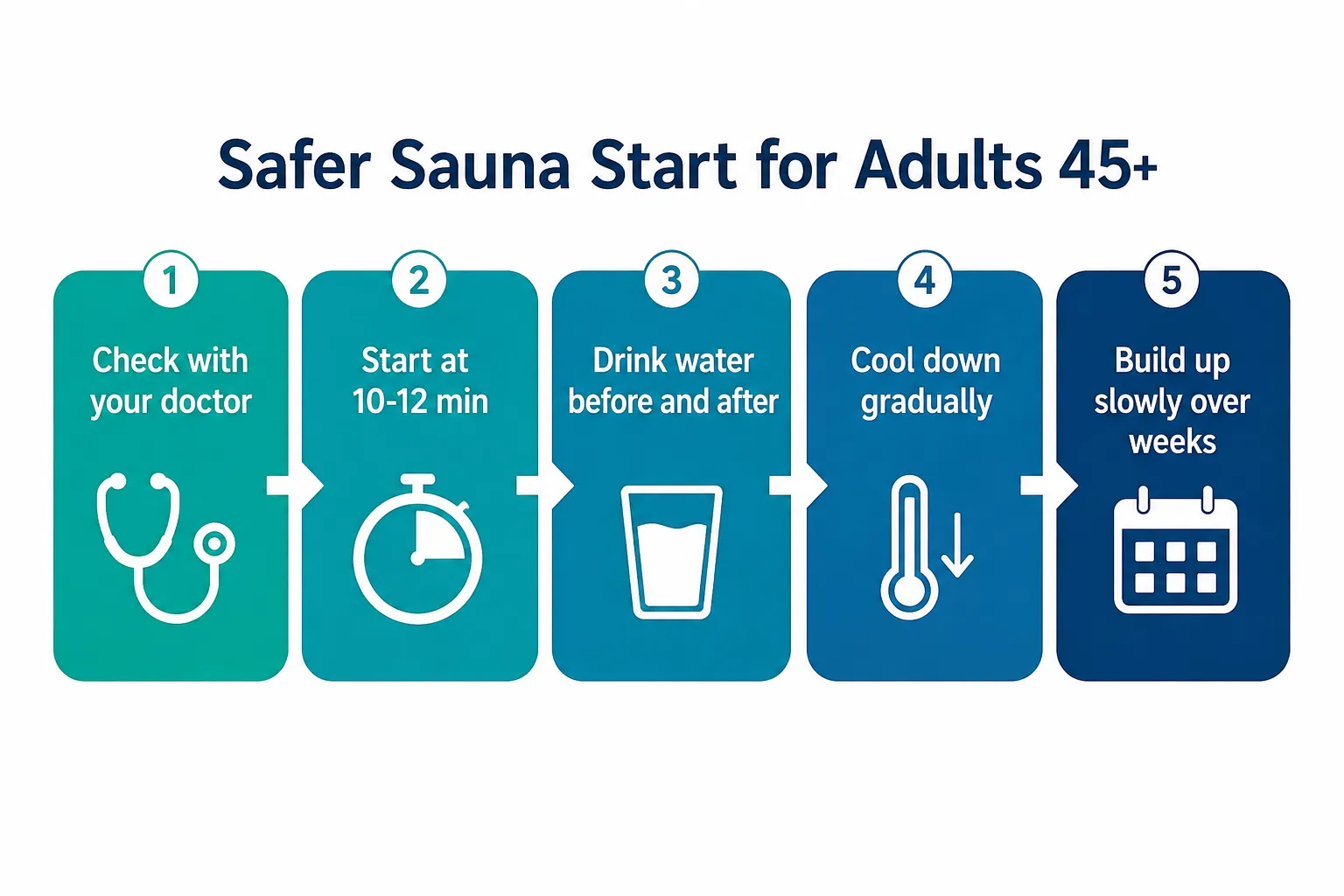
The main takeaway for this age group is that slower is better, and medical clearance is not optional if any chronic condition or regular medication is involved. There is no magic in starting at the highest temperature or the longest session, and more is not always better.
A sensible starting point is this framework:
- Get medical clearance first if you have any cardiovascular condition, kidney disease, diabetes, neuropathy, or take regular prescription medications.
- Start with 10-12 minutes at a moderate temperature (70-80°C / 158-176°F for traditional sauna). This gives the body time to adapt without excessive heat stress.
- Hydrate before, during (if sessions are longer), and after. Choose water or the fluid advised by your clinician; avoid alcohol.
- Cool down gradually. Sit in a cooler room for 5-10 minutes before showering. Avoid sudden extreme cold exposure if you have cardiovascular concerns or have not discussed it with a clinician.
- Build frequency slowly. Once a week for the first month, then assess how your body responds before increasing frequency.
- Never use a sauna alone if you are new to it, older, or have any health conditions. Have someone nearby who can check on you.
- Listen to your body. Dizziness, nausea, chest tightness, or a racing heart are signals to exit immediately, not push through.
The basics still do the heavy lifting here. Consistent, moderate sauna use with proper hydration and gradual progression is where the evidence-based benefit lives. Extreme sessions, high temperatures, and long durations add risk without proportional evidence of additional benefit.
Supporting your overall health foundation matters alongside any single practice. The broader home sauna guide and our home sauna safety guide provide useful context alongside, not instead of, practices like sauna use.
When to Stop and Seek Medical Help
Exit the sauna immediately and do not re-enter if you experience:
- Chest pain, pressure, or tightness
- Irregular or racing heartbeat
- Dizziness or lightheadedness that does not resolve within a minute of sitting down
- Nausea or vomiting
- Confusion, disorientation, or difficulty speaking
- Fainting or near-fainting
Seek emergency medical care (call 911) if:
- Chest pain persists after leaving the sauna
- You or someone else loses consciousness
- Symptoms suggest heatstroke: confusion, collapse, altered mental status or a very high body temperature. Sweating does not rule out heatstroke
- Any cardiac symptoms do not resolve quickly after cooling down and resting
See your doctor promptly (non-emergency) if:
- You experience persistent dizziness or palpitations after sauna sessions
- You notice unusual fatigue or weakness following use
- You are unsure whether a medication you take interacts with heat stress
Let’s keep this practical: the goal is to use sauna as a health-supporting habit, not to manage an emergency. Knowing when to stop is as important as knowing how to start.
FAQ
How long should a sauna session be for someone over 45?
A sensible starting point is 10-12 minutes per session. Experienced users with no health concerns may extend to 15-20 minutes, but there is no strong evidence that longer sessions produce proportionally greater benefit. Start shorter and build gradually.
Is an infrared sauna safer than a traditional sauna for older adults?
Infrared saunas operate at lower temperatures (typically 45-60°C / 113-140°F), which some people find easier to tolerate. However, the same core risks, dehydration, blood pressure changes, and medication interactions, apply. Lower temperature does not eliminate risk; it may reduce intensity. The evidence base for infrared sauna is also less robust than for traditional Finnish sauna.
Can sauna use help with high blood pressure?
The relationship is nuanced. Some evidence suggests regular sauna use may support vascular health and modestly reduce blood pressure over time [5]. However, sauna use can cause significant short-term blood pressure fluctuations, and people with uncontrolled hypertension should not use sauna without medical clearance. It is not a substitute for antihypertensive medication or lifestyle changes.
Is it safe to use a sauna every day?
The Finnish population studies showing the strongest mortality benefits involved frequent use, four to seven times per week [6]. However, those populations were largely healthy and acclimatized. For adults over 45 starting out, daily use is not a sensible starting point. Build to frequency gradually and only if your body responds well and your doctor has no concerns.
What should I eat or drink before a sauna session?
Drink 1-2 glasses of water before entering. Avoid heavy meals immediately before a session, as digestion competes with the cardiovascular demands of heat exposure. Avoid alcohol entirely. A light snack 1-2 hours before is fine for most people.
Can I use a sauna if I take blood pressure medication?
It depends on the medication and how well your blood pressure is controlled. Some antihypertensive medications, particularly alpha-blockers and calcium channel blockers, can cause exaggerated blood pressure drops in heat. Discuss this specifically with your prescribing physician before using a sauna. Do not assume it is safe without that conversation.
Conclusion
The sauna benefits and risks picture for adults over 45 is genuinely balanced, and that balance is worth taking seriously. The evidence for cardiovascular and relaxation benefits is among the more consistent in lifestyle medicine, particularly from long-term Finnish cohort data [6][9]. At the same time, the risks for specific subgroups, those with heart conditions, uncontrolled blood pressure, kidney disease, diabetes with neuropathy, or those taking certain medications, are real, specific, and not adequately addressed by generic safety advice.
Context matters. A healthy 52-year-old with no chronic conditions and no regular medications faces a very different risk profile than someone of the same age managing type 2 diabetes, taking a diuretic, and with early-stage CKD. The evidence does not apply uniformly across those two people.
The practical path forward is straightforward: get medical clearance if any health condition or medication is relevant, start with short moderate sessions, hydrate consistently, cool down gradually, and build frequency slowly over weeks. Keep it simple and consistent. That is where the real-world benefit lives, not in extreme protocols or overstated claims.
For a broader foundation of evidence-based health habits, the sauna health benefits and the role of complete home sauna guide are worth exploring as complementary pieces of the same picture.
References
[1] Pmc6262976 – https://pmc.ncbi.nlm.nih.gov/articles/PMC6262976/ [2] springermedizin.de – https://www.springermedizin.de/sauna-bathing-is-associated-with-reduced-cardiovascular-mortalit/16304780 [3] Tab2 – https://pmc.ncbi.nlm.nih.gov/articles/PMC12714005/table/TAB2/ [4] Regular Sauna Use – https://www.umassmed.edu/evidence-based-updates/blog/blog-posts/2016/03/regular-sauna-use/ [5] Nrcardio.2015 – https://www.nature.com/articles/nrcardio.2015.35 [6] jamanetwork – https://jamanetwork.com/journals/jamainternalmedicine/fullarticle/2130724 [9] Sauna Bathing Associated With Lower Risk Of Cardiovascular Death Among Men And Women – https://blogs.biomedcentral.com/on-medicine/2018/11/29/sauna-bathing-associated-with-lower-risk-of-cardiovascular-death-among-men-and-women/ [10] E114ms3604 – https://discoveryjournals.org/medicalscience/current_issue/v29/n161/e114ms3604.pdf
Dave James is the writer and editor behind All Perfect Health. He is not a doctor. His background is in Australian mining and industrial engineering, where careful assumptions and primary-source research matter. He writes practical, evidence-aware guidance for readers who want clear information without hype.
📂 HW-1: Home Saunas & Heat Therapy
This article is part of our home sauna and heat therapy cluster.
- → The Complete Home Sauna Guide: Types, Costs, Safety and How to Choose (PILLAR)
- YOU ARE HERE
Sauna, Medicines and Health Conditions: Questions to Take to a Clinician - → Sauna Health Benefits: What the Evidence Shows About Heat Therapy
- → Home Sauna Safety: Risks, Precautions and Who Should Be Careful