Bland Diet Food List: Gentle Foods to Eat, Foods to Avoid and a Simple Grocery List
Last updated: August 16, 2026
Quick Answer: What Foods Can You Eat on a Bland Diet?
A bland diet usually focuses on soft, mild, low-fat, lower-fiber foods that are easier for the digestive system to handle for a short period. Common choices include white rice, plain toast, crackers, bananas, applesauce, boiled potatoes, cooked carrots, skinless chicken, eggs, low-fat yogurt, plain pasta and simple soups. Foods commonly avoided include fried foods, spicy meals, alcohol, coffee, citrus, tomato-based sauces, raw vegetables, beans, seeds and high-fat dairy.
Part of the Bland Diet & Digestive Recovery cluster →
This article is for informational purposes only and does not provide medical advice. A bland diet is usually a short-term eating pattern. If symptoms are severe, persistent, recurring, or linked with dehydration, fever, blood in stool or vomit, unexplained weight loss, or significant pain, speak with a qualified healthcare professional promptly.
Key Takeaways
- A bland diet is a short-term food pattern often used when the stomach or intestines need gentler foods. It is not a wellness trend, detox, or weight-loss plan.
- The easiest way to think about it is simple: plain starch + gentle protein + soft fruit or cooked vegetable + fluids.
- Common starter foods include rice, toast, crackers, bananas, applesauce, potatoes, oatmeal, pasta, eggs, chicken, turkey, low-fat yogurt and broth-based soups.
- Foods commonly avoided include fried foods, spicy foods, alcohol, coffee, carbonated drinks, acidic foods, raw vegetables, beans, nuts, seeds and heavy sauces.
- Tolerance varies. A food that feels gentle for one person may not work for another.
- Once symptoms improve, foods are usually reintroduced gradually rather than staying on a restricted bland diet long term.
- People with diabetes, kidney disease, inflammatory bowel disease, eating disorders, pregnancy, or ongoing digestive symptoms should get professional guidance before following a restricted diet.
Table of Contents
- What Makes a Food “Bland”?
- Bland Diet Food List: Gentle Foods to Try
- Foods Commonly Avoided on a Bland Diet
- Simple Bland Diet Grocery List
- How to Build a Gentle Bland Diet Plate
- One-Day Bland Diet Food Example
- Pinterest-Friendly Bland Food Ideas
- How to Reintroduce Foods Gradually
- Common Bland Diet Food Mistakes
- When to Get Medical Help
- FAQ
- Related APH Guides
- References
What Makes a Food “Bland”?
In everyday language, bland food sounds boring. In digestive recovery, bland simply means the food is less likely to irritate an already unsettled stomach. It is usually mild in flavor, soft in texture, lower in fat, lower in fiber, and not heavily seasoned.
That does not mean every meal has to be dry toast. A bland meal can still be warm, comforting and useful. The goal is to reduce the workload on digestion for a short period, then return to a broader diet as tolerated.
Most bland diet food lists are built around four practical filters:
- Texture: soft, cooked, mashed, peeled, or easy to chew.
- Fat level: lower-fat cooking methods such as boiling, baking, poaching, steaming, or simmering.
- Fiber level: temporarily lower-fiber choices, especially if diarrhea or gut irritation is present.
- Irritation level: avoiding spices, acids, alcohol, caffeine and heavy sauces that may aggravate symptoms for some people.
The key word is temporarily. A bland diet can be useful during a short recovery window, but long-term restriction can reduce fiber, variety and overall nutrition.
Bland Diet Food List: Gentle Foods to Try
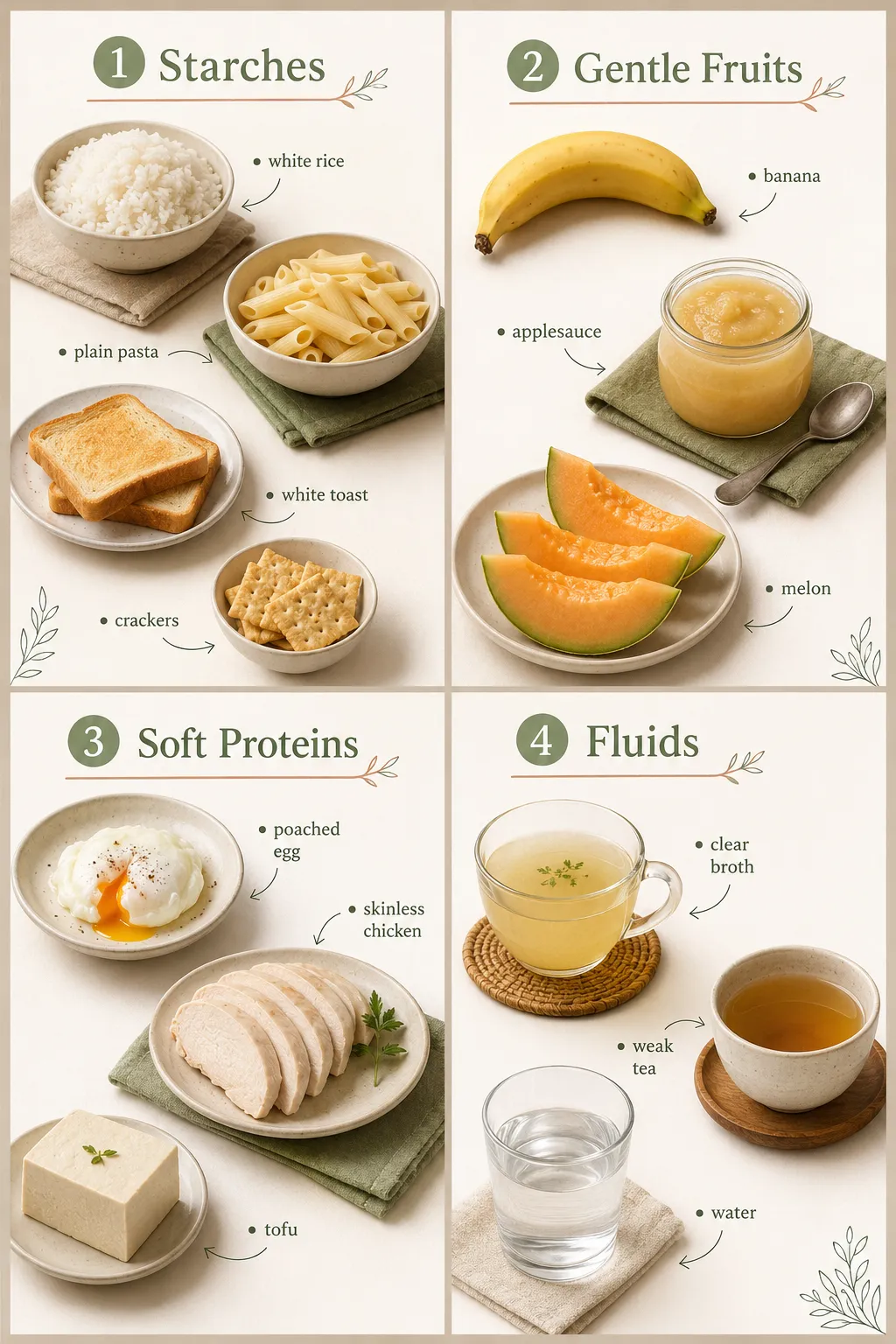
This list is designed as a practical starting point, not a rulebook. If a clinician gave different instructions, follow that advice first.
Plain starches and grains
- White rice
- Plain white bread or toast
- Plain crackers, such as saltines
- Plain pasta or noodles
- Boiled or mashed potatoes without skin
- Plain oatmeal, if tolerated
- Cream of wheat or other refined hot cereals
Gentle fruits
- Bananas
- Applesauce
- Canned peaches or pears in juice
- Soft ripe melon, if tolerated
- Apple juice or white grape juice without pulp, if tolerated
Soft cooked vegetables
- Cooked carrots
- Cooked green beans
- Cooked zucchini without skin, if tolerated
- Cooked pumpkin or squash
- Plain vegetable soup with soft, low-fiber vegetables
Gentle proteins
- Skinless chicken breast
- Skinless turkey
- Eggs, boiled, softly scrambled, or poached
- White fish
- Lean ground turkey or chicken
- Tofu, if normally tolerated
- Low-fat cottage cheese, if dairy is tolerated
- Low-fat plain yogurt, if dairy is tolerated
Fluids and simple additions
- Water
- Oral rehydration solution when recommended
- Broth
- Weak herbal tea, if tolerated
- Plain gelatin
- Small amounts of honey or jam, if tolerated
If nausea is the main problem, small portions often work better than full meals. If diarrhea is the main issue, fluid and electrolyte replacement may matter more than forcing food too quickly. If reflux is the main issue, portion size and timing can be just as important as the food list.
Foods Commonly Avoided on a Bland Diet
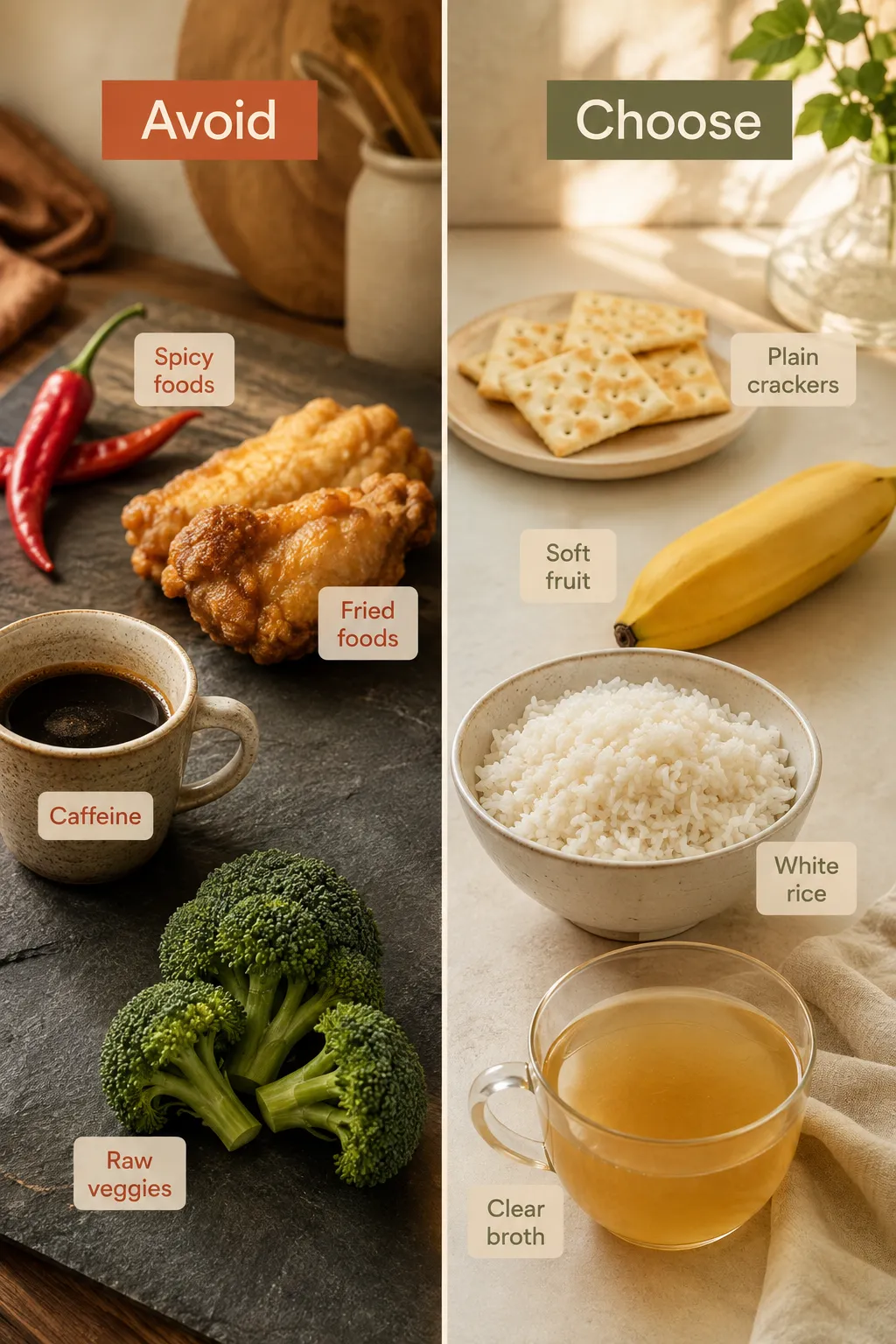
The avoid list is not about labeling foods as “bad.” Many foods temporarily avoided on a bland diet are normally healthy foods. Raw vegetables, beans, nuts and whole grains can be excellent foods in normal circumstances, but they may be harder to tolerate during digestive upset.
Spicy and acidic foods
- Hot sauce
- Chili powder
- Curry-heavy meals
- Tomato sauce
- Citrus fruits and juices
- Vinegar-heavy dressings
- Pickles and strong fermented condiments
Fried and high-fat foods
- Fried chicken
- French fries
- Greasy takeout
- Heavy cream sauces
- High-fat meats
- Butter-heavy mashed potatoes
- Rich desserts
High-fiber or gas-producing foods
- Beans and lentils
- Raw broccoli, cauliflower and cabbage
- Bran cereals
- Whole nuts and seeds
- Popcorn
- Dried fruit
- Very seedy breads
Drinks that may irritate symptoms
- Alcohol
- Coffee
- Strong tea
- Energy drinks
- Carbonated drinks
- Very acidic juices
Some people tolerate certain items on this list without trouble. Others notice symptoms quickly. The safest approach is to keep meals simple during the acute phase, then test foods back in one at a time.
Simple Bland Diet Grocery List
This is the kind of list that works well for Pinterest because it solves a real problem: “What do I actually buy?” Use it as a short-term shopping guide for simple meals.
Pantry
- White rice
- Plain pasta
- Saltine crackers
- Plain bread or toast
- Plain oatmeal or cream of wheat
- Applesauce cups
- Canned peaches or pears
- Low-sodium broth
- Plain gelatin
Fridge
- Eggs
- Skinless chicken breast
- Skinless turkey
- White fish
- Low-fat plain yogurt
- Low-fat cottage cheese
- Soft cooked carrots
- Cooked green beans
Produce
- Bananas
- Potatoes
- Carrots
- Zucchini
- Melon, if tolerated
Comfort extras
- Herbal tea
- Honey
- Oral rehydration solution, if recommended
- Unsweetened applesauce
- Plain rice cakes
For more meal-level ideas, see our bland diet recipes guide and our bland diet breakfast ideas.
How to Build a Gentle Bland Diet Plate
A simple plate formula makes bland eating easier, especially when the goal is not culinary creativity but getting through a short recovery period.
The APH gentle plate formula:
- 1 plain starch: rice, toast, pasta, potato, crackers, or oatmeal
- 1 gentle protein: chicken, turkey, egg, fish, tofu, or low-fat yogurt
- 1 soft fruit or cooked vegetable: banana, applesauce, carrots, green beans, or canned pears
- 1 gentle fluid: water, broth, weak herbal tea, or oral rehydration solution when appropriate
That formula creates meals such as rice with chicken and cooked carrots, toast with scrambled egg and applesauce, or plain pasta with turkey and soft zucchini. It is not glamorous, but it is practical, repeatable and easy to turn into a saveable Pin.
One-Day Bland Diet Food Example
This is an example only. Portion sizes, timing and food choices should be adjusted to the person, symptoms and any professional guidance.
Breakfast
- Plain oatmeal or cream of wheat
- Banana slices
- Water or weak herbal tea
Morning snack
- Applesauce
- Plain crackers
Lunch
- White rice
- Skinless chicken breast
- Soft cooked carrots
- Broth or water
Afternoon snack
- Low-fat plain yogurt, if tolerated
- Or canned pears in juice
Dinner
- Plain pasta or boiled potato
- Poached white fish or turkey
- Cooked green beans
For reflux-prone readers, smaller meals and avoiding food close to bedtime may matter. For diarrhea-prone readers, hydration and gradual food intake may matter more than forcing a full day of meals immediately.
Pinterest-Friendly Bland Food Ideas
These are the kinds of practical, saveable ideas that fit APH’s Pinterest audience while still staying medically conservative.
- Gentle breakfast bowl: oatmeal, banana and a small spoon of honey if tolerated.
- Simple rice plate: white rice, chicken and soft carrots.
- Toast plate: plain toast, scrambled egg and applesauce.
- Comfort soup: broth, rice, shredded chicken and very soft carrots.
- Soft potato plate: boiled potato, turkey and cooked green beans.
- Snack box: crackers, banana and applesauce.
- Plain pasta bowl: pasta, white fish and soft zucchini.
The visual rule is simple: one calm plate, one clear headline, no dramatic claim. A Pin titled “Bland Diet Grocery List” or “Gentle Foods for Digestive Recovery” is more aligned with Pinterest than a medical-sounding promise.
How to Reintroduce Foods Gradually
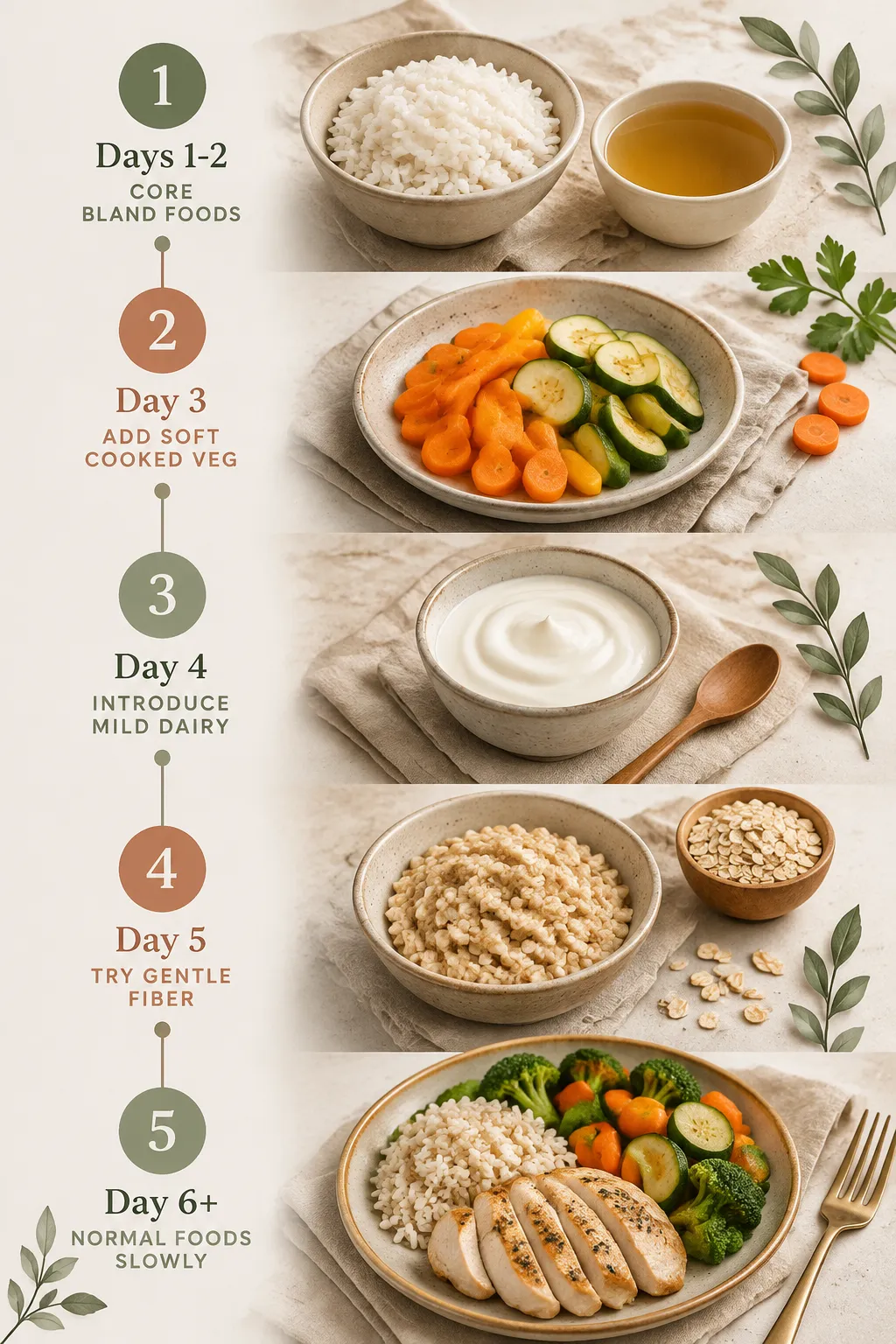
Once symptoms settle, the next step is usually not to stay on bland foods forever. It is to rebuild variety carefully. A practical approach is to add one new food at a time and watch how the body responds.
- Start with the most tolerated bland foods. Keep meals simple for a short window while symptoms improve.
- Add one slightly more normal food. For example, a small portion of cooked vegetables, a little extra fat, or a more textured grain.
- Wait and observe. Notice symptoms over the next day rather than changing five things at once.
- Keep what works. If a food feels fine, keep it in rotation.
- Pause what does not. If symptoms return, step back and consider professional advice if the pattern continues.
This keeps the process calm and practical. The point is not to fear food. The point is to avoid overwhelming digestion too soon.
Common Bland Diet Food Mistakes
Mistake 1: Staying bland for too long
A bland diet is usually short term. Staying restricted for too long can reduce fiber, micronutrients and food variety. If someone cannot move beyond bland foods, that is a reason to get proper medical guidance.
Mistake 2: Eating only toast and crackers
Plain starches can be useful during stomach upset, but recovery also needs fluids and, when tolerated, some protein. Eggs, chicken, turkey, fish, yogurt or tofu can make meals more complete.
Mistake 3: Adding hidden fat and heavy sauces
A potato may be bland. A potato loaded with butter, cheese and sour cream is not the same digestive experience. Keep cooking methods simple.
Mistake 4: Returning to high fiber too quickly
Fiber is important in a normal diet, but suddenly adding beans, bran cereal, raw vegetables and seeds after digestive upset can be too much for some people. Increase gradually.
Mistake 5: Using diet to ignore red flags
Diet can support comfort, but it should not delay care for serious symptoms. Severe pain, blood, dehydration, persistent vomiting, fever, or unexplained weight loss needs professional attention.
When to Get Medical Help
Speak with a qualified healthcare professional promptly if digestive symptoms are severe, persistent, recurring, or unusual for you. Seek urgent care for red flags such as:
- Blood in stool or vomit
- Severe or worsening abdominal pain
- Signs of dehydration
- Persistent vomiting
- High fever
- Unexplained weight loss
- Black or tarry stool
- Symptoms after surgery or a medical procedure
- Symptoms in infants, young children, older adults, pregnancy, or people with chronic conditions
People with diabetes, kidney disease, inflammatory bowel disease, swallowing issues, eating disorders, or medically prescribed diets should not rely on a generic bland diet list without professional guidance.
FAQ
Can you eat eggs on a bland diet?
Many bland diet lists include eggs because they are soft and provide protein. Boiled, poached, or softly scrambled eggs are usually gentler than fried eggs cooked in a lot of fat. Individual tolerance still matters.
Can you eat yogurt on a bland diet?
Low-fat plain yogurt is commonly included if dairy is tolerated. Sweetened, high-fat, or heavily flavored yogurt may be less suitable for some people. If dairy worsens symptoms, avoid it and ask a clinician or dietitian for alternatives.
Is oatmeal a bland diet food?
Plain oatmeal may be tolerated by some people, but it contains more fiber than white rice or refined hot cereals. If symptoms are active, some people do better starting with lower-fiber starches and adding oatmeal later.
Are bananas good on a bland diet?
Bananas are one of the most common bland diet fruits because they are soft, mild and easy to prepare. As with all foods, portion size and personal tolerance matter.
How long should you eat bland foods?
That depends on the reason for the bland diet. Many people use it only for a few days during short-term stomach upset, while others may receive specific instructions after illness, reflux symptoms, or a procedure. If symptoms persist or bland eating becomes the only tolerable pattern, get medical advice.
Is a bland diet good for weight loss?
No. A bland diet is not designed for weight loss. If weight changes occur during illness, they may reflect reduced intake or fluid changes rather than healthy fat loss. For sustainable nutrition, use a more complete eating pattern.
Related APH Guides
- Bland Diet & Digestive Recovery: The Complete Guide
- 6 Best Bland Diet Recipes for Digestive Recovery
- Bland Diet Breakfast: 15 Satisfying Recipes That Won’t Upset Your Stomach
- How to Soothe Your Stomach Naturally
- Gut Health and Digestive Wellness
About the author
Dave James is a health researcher and writer specialising in evidence-aware nutrition, digestive health, exercise and longevity. He founded All Perfect Health to provide clear, practical health guidance rooted in current research and real-world experience.
📂 Bland Diet & Digestive Recovery
This article is part of our Bland Diet & Digestive Recovery cluster. Use the links below to move between the main guide and practical child articles.
References
- MedlinePlus. “Bland diet.” https://medlineplus.gov/ency/patientinstructions/000068.htm
- National Institute of Diabetes and Digestive and Kidney Diseases. “Eating, Diet, & Nutrition for Diarrhea.” https://www.niddk.nih.gov/health-information/digestive-diseases/diarrhea/eating-diet-nutrition
- National Institute of Diabetes and Digestive and Kidney Diseases. “Treatment for GER & GERD in Adults.” https://www.niddk.nih.gov/health-information/digestive-diseases/acid-reflux-ger-gerd-adults/treatment