
How to Start Walking for Exercise
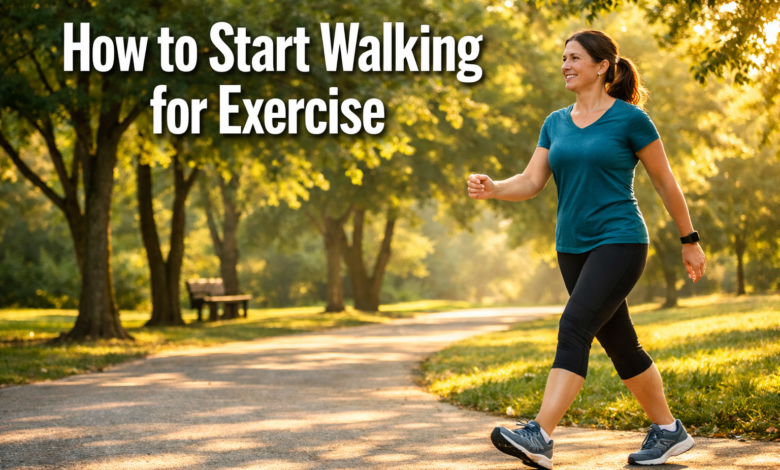
Learn how to start walking for exercise and improve your health.
Originally published: April 8, 2026 | Updated: September 30, 2026
Quick Answer: Walking for exercise is one of the most accessible and effective ways to improve your health. Start with 5 to 10 minutes at a comfortable pace, three to four days a week, and build gradually toward 30 minutes of brisk walking most days. You need no gym, no special skills, and very little equipment. The evidence is clear: even modest amounts of regular walking deliver real, measurable health benefits.
Key Takeaways
- Walking is low-impact, free, and suitable for almost any fitness level, including people with joint concerns
- The American Heart Association recommends 150 minutes of moderate-intensity activity per week — brisk walking counts fully toward that target
- Start with just 5 to 10 minutes if you are completely inactive; consistency matters far more than distance or speed in the early weeks
- Brisk walking (roughly 3 to 3.5 mph, or a pace where you can talk but not sing) is the intensity sweet spot for fitness benefits
- Short, regular walks still count; build the weekly habit before worrying about distance or speed
- Good walking shoes are the only real equipment investment worth making; everything else is optional
- Tracking your time, steps, or distance gives you concrete feedback and supports motivation
- Walking with a friend, pet, or podcast can make the habit easier to keep
- If you have joint issues, a history of injury, chest pain, or have been inactive for a long period, speak to your doctor before starting
Why Walking Is the Best Exercise for Beginners
Walking is the most accessible form of exercise available. It requires no gym membership, no complicated preparation, and no prior fitness experience — just you, a pair of decent shoes, and somewhere to go. For adults in the 30 to 60 age range who are time-poor, dealing with joint sensitivity, or simply returning to exercise after a long break, that simplicity is not a minor detail. It is the whole point.
For those wondering how to start walking for exercise, the journey begins with simple steps that anyone can take.
Low Impact, Low Cost, Easy to Start
Walking usually involves less impact than running because one foot stays in contact with the ground. That can make it a practical starting option when higher-impact activity is uncomfortable, although the right pace, surface, footwear, and total volume still depend on the person.
The cost barrier is essentially zero. You do not need a membership, a class, or a trainer. If you are looking for other low-impact options to complement your walking routine, the health benefits of swimming make it another strong choice, particularly for those with joint concerns.
Health Benefits of Regular Walking
Let’s keep this practical. The health benefits of regular walking are not vague or theoretical — they are well-documented across decades of research.
What the evidence shows:
- Cardiovascular health: Brisk walking for 150 minutes per week supports heart health, improves circulation, and reduces the risk of heart disease
- Mortality risk: Even 30 minutes of light daily activity is associated with a roughly 17% reduction in risk of premature death
- Mental health: Regular walking reduces symptoms of anxiety and depression, improves mood, and supports better sleep quality
- Weight management: Walking burns calories and, when combined with sensible eating habits, supports gradual, sustainable weight loss
- Blood sugar regulation: Regular aerobic exercise like walking improves insulin sensitivity and supports healthy blood glucose levels
- Joint health: Contrary to what some people assume, regular low-impact movement actually supports joint health by maintaining cartilage nutrition and reducing stiffness
Why Walking Is Easier to Stick With Than Harder Workouts
The strongest evidence points to this: the best exercise is the one you actually do consistently. Walking wins on that measure for most people because it fits into a normal day without requiring recovery time, special preparation, or a major time commitment. You can walk to work, walk at lunch, or walk after dinner. You can do it alone, with a friend, or with a dog. There is no equipment to set up and no class to book.
Harder workouts are not inherently better if they lead to injury, burnout, or simply being skipped three weeks out of four. For a broader look at how walking fits into a complete fitness approach, see our exercise guide for better health.
What You Need Before You Start Walking
You do not need much. But getting a few basics right at the start will make your walks more comfortable and reduce the risk of minor injuries that derail early momentum.
Comfortable Shoes and Supportive Clothing
This is the one area worth spending a little money. Your shoes are the main piece of equipment. Choose a pair that fits comfortably, has room for the toes, and feels stable on the surface you actually use. A shoe does not guarantee freedom from pain, but a poor fit is an unnecessary problem.
What to look for in a walking shoe:
- A firm heel counter (the back of the shoe) for stability
- Adequate cushioning in the midsole
- A slightly flexible forefoot to allow natural toe-off
- A fit that gives your toes room to spread without the heel slipping
Avoid old running shoes that have lost their cushioning, flat-soled casual shoes, or anything that causes friction on your heel or toes. If you have specific foot issues — flat arches, plantar fasciitis, or bunions — a specialist running or walking shoe shop can assess your gait and recommend appropriate footwear.
Clothing matters less. Wear something comfortable and breathable. Moisture-wicking fabrics are better than cotton for longer walks in warm weather, but do not let the absence of technical gear stop you from starting.
Picking a Safe, Simple Walking Route
Start with a route you know. A familiar neighbourhood loop, a local park path, or even a quiet residential street works perfectly well. The goal in the early weeks is to build the habit, not to explore challenging terrain.
Practical route considerations:
- Choose flat or gently undulating ground to start — hills add intensity quickly and can strain calves and Achilles tendons if introduced too soon
- Prioritise surfaces with good traction (pavements, grass paths, park trails) over loose gravel or uneven ground
- Walk in daylight or well-lit areas, particularly if you are alone
- If you have knee issues, softer surfaces like grass or compacted dirt paths are easier on joints than concrete
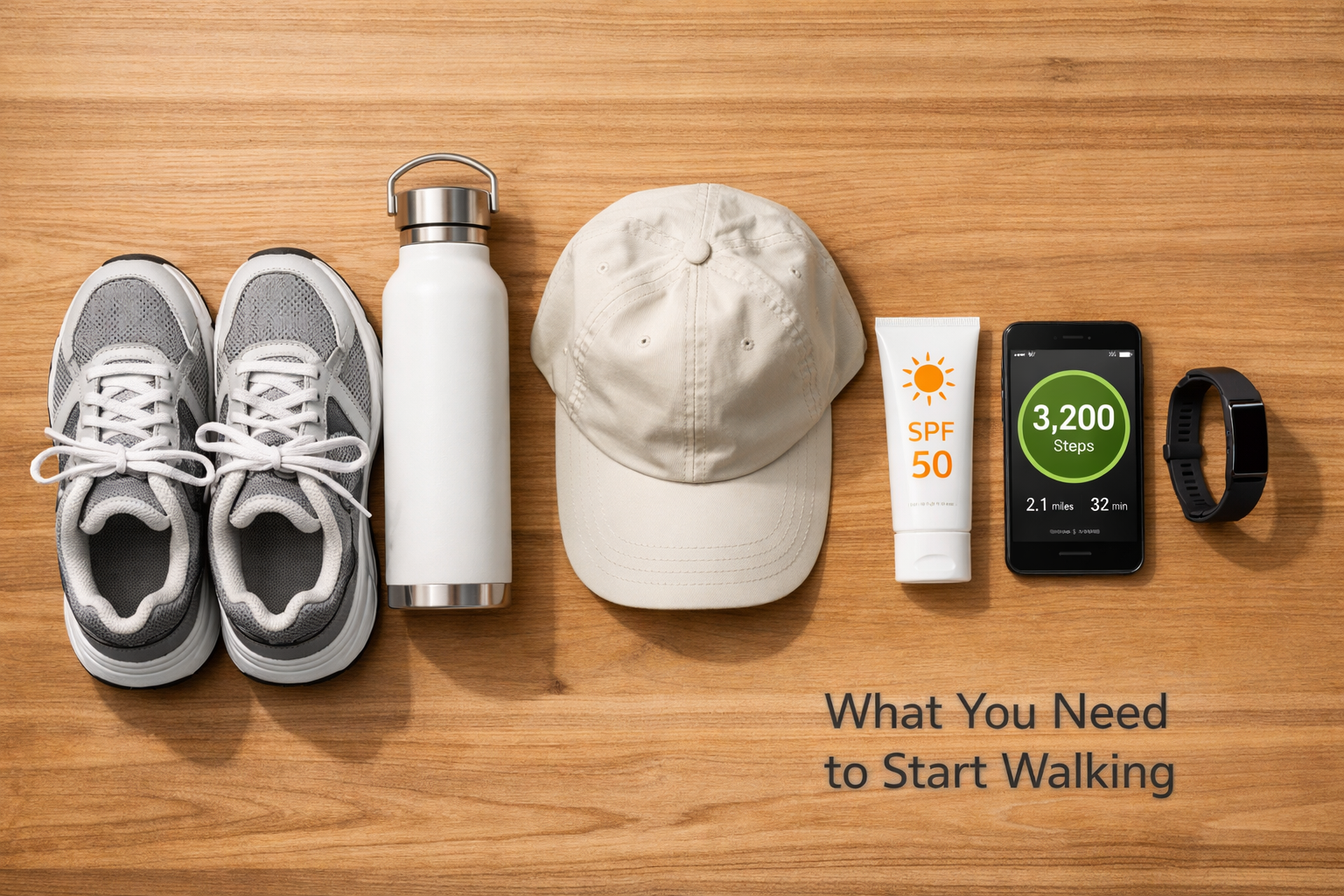
Optional Extras: Water, Hat, Sunscreen, Step Tracker, Walking App
For walks under 20 minutes, you probably do not need to carry water. For longer walks or warm weather, a small bottle is sensible. A hat and sunscreen matter more than most people think — sun exposure adds up quickly on regular outdoor walks.
A step tracker or walking app is optional but genuinely useful. Seeing your step count, distance, and time gives you concrete feedback that supports motivation. Popular free options include the built-in health apps on most smartphones, or dedicated apps like Strava and MapMyWalk. If you want to understand your effort level more precisely, tracking your fat burn heart rate can help you calibrate intensity.
How to Start Walking for Exercise If You Are Completely Inactive
The most common mistake beginners make is doing too much too soon. A sensible starting point is far shorter than most people expect.
Begin With 5 to 10 Minutes
If you have been sedentary for months or years, start with 5 to 10 minutes of easy walking, three to four days a week. That is not a failure of ambition — it is an accurate match between where your body is now and what it can adapt to without breaking down.
Your cardiovascular system, muscles, tendons, and connective tissue all need time to adapt to new loading. The muscles adapt relatively quickly. The tendons and connective tissue take longer. Doing too much in the first two weeks is the most reliable way to develop shin splints, Achilles soreness, or knee irritation that sidelines you for a month.
Expect some initial muscle soreness as your body adapts — this is normal and should not discourage you. The more useful question to ask yourself is not “when will I see results?” but “when will I start to feel better?” — and for most people, that answer is after just a few sessions.
Increase Time Gradually Each Week
Add roughly 5 minutes per week to your total walking time. This is the principle of progressive overload applied conservatively, and it works. By week four, a beginner who started at 10 minutes can comfortably reach 25 to 30 minutes without injury.
Simple weekly progression:
| Week | Duration per Walk | Days per Week | Total Weekly Time |
|---|---|---|---|
| 1 | 5–10 minutes | 3–4 | 15–40 minutes |
| 2 | 10–15 minutes | 4 | 40–60 minutes |
| 3 | 15–20 minutes | 4–5 | 60–100 minutes |
| 4 | 20–30 minutes | 5 | 100–150 minutes |
The target — 150 minutes of moderate-intensity walking per week — is reachable within four to six weeks for most beginners who start conservatively and stay consistent.
Use the Talk Test to Judge Intensity
The talk test is a simple, reliable way to gauge whether you are working at the right intensity. In plain English: you should be able to hold a conversation but not sing comfortably. If you can recite a poem without pausing for breath, you are walking too slowly to get a meaningful cardiovascular benefit. If you cannot string a sentence together, you are working too hard for a beginner aerobic session.
This is sometimes called the “moderate intensity” zone, and it is exactly where most of your walking should sit.
What Counts as a Good Walking Pace?
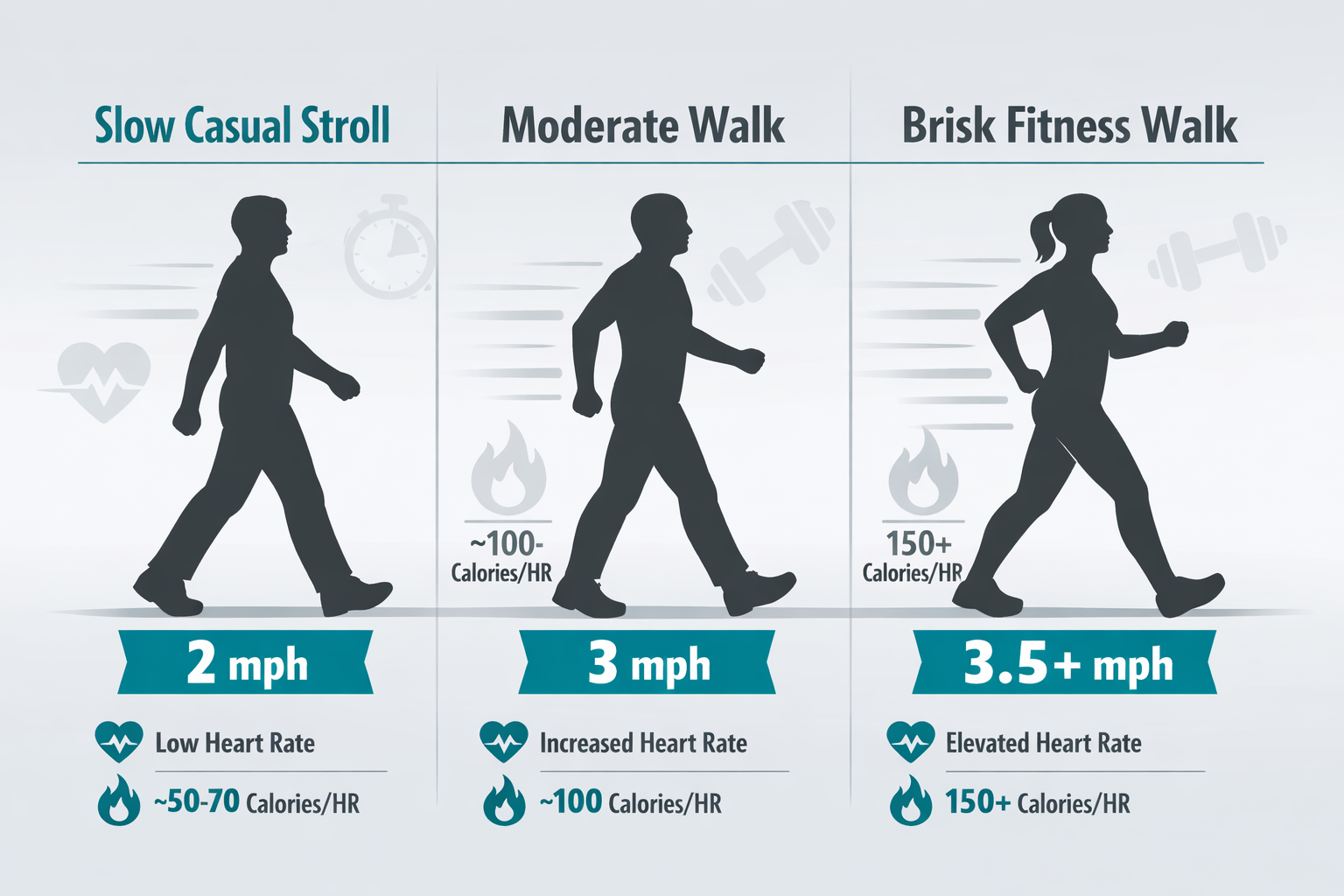
The right walking pace for fitness is brisk — roughly 3 to 3.5 mph — where you feel slightly breathless but can still hold a conversation. Casual strolling below 2.5 mph has some benefit, but it does not reliably raise your heart rate into the moderate-intensity zone needed for cardiovascular gains.
Easy Pace vs Moderate Pace vs Brisk Walking
| Pace Type | Speed (approx.) | Effort Feel | Fitness Benefit |
|---|---|---|---|
| Easy/casual | Under 2.5 mph | Comfortable, no breathlessness | Light; good for recovery days |
| Moderate | 2.5–3 mph | Slightly elevated breathing | Moderate; counts toward weekly guidelines |
| Brisk | 3–3.5 mph | Noticeably breathless, can talk | Strong; cardiovascular and metabolic benefit |
| Power walking | 3.5–4.5 mph | Effortful, limited conversation | High; approaches jogging intensity |
How to Know If You Are Walking Fast Enough
Beyond the talk test, a few practical signals tell you whether your pace is working:
- You feel warm within 3 to 5 minutes of starting
- Your breathing is deeper and faster than at rest
- You notice a slight increase in heart rate
- You would not choose this pace for a casual stroll
If none of those apply, pick up the pace slightly. You do not need to time yourself or measure your speed precisely — the physical sensations are enough to guide you.
Why Brisk Walking Matters for Fitness
Here’s the real issue with walking too slowly: below a certain intensity threshold, the cardiovascular and metabolic adaptations that make exercise beneficial are simply not triggered to the same degree. Brisk walking — the kind that makes you slightly breathless — elevates heart rate into the moderate-intensity zone, which is where the evidence for reduced cardiovascular disease risk, improved insulin sensitivity, and mood benefits is strongest.
That said, even easy walking is far better than sitting. For people recovering from illness, managing chronic pain, or just starting out, easy walking is a completely valid starting point. The goal is to gradually work toward brisk walking as your fitness improves.
Simple Beginner Walking Plan
A practical beginner walking plan for how to start walking for exercise should be short, progressive, and realistic. Here is a four-week structure based on the progressive overload principle.
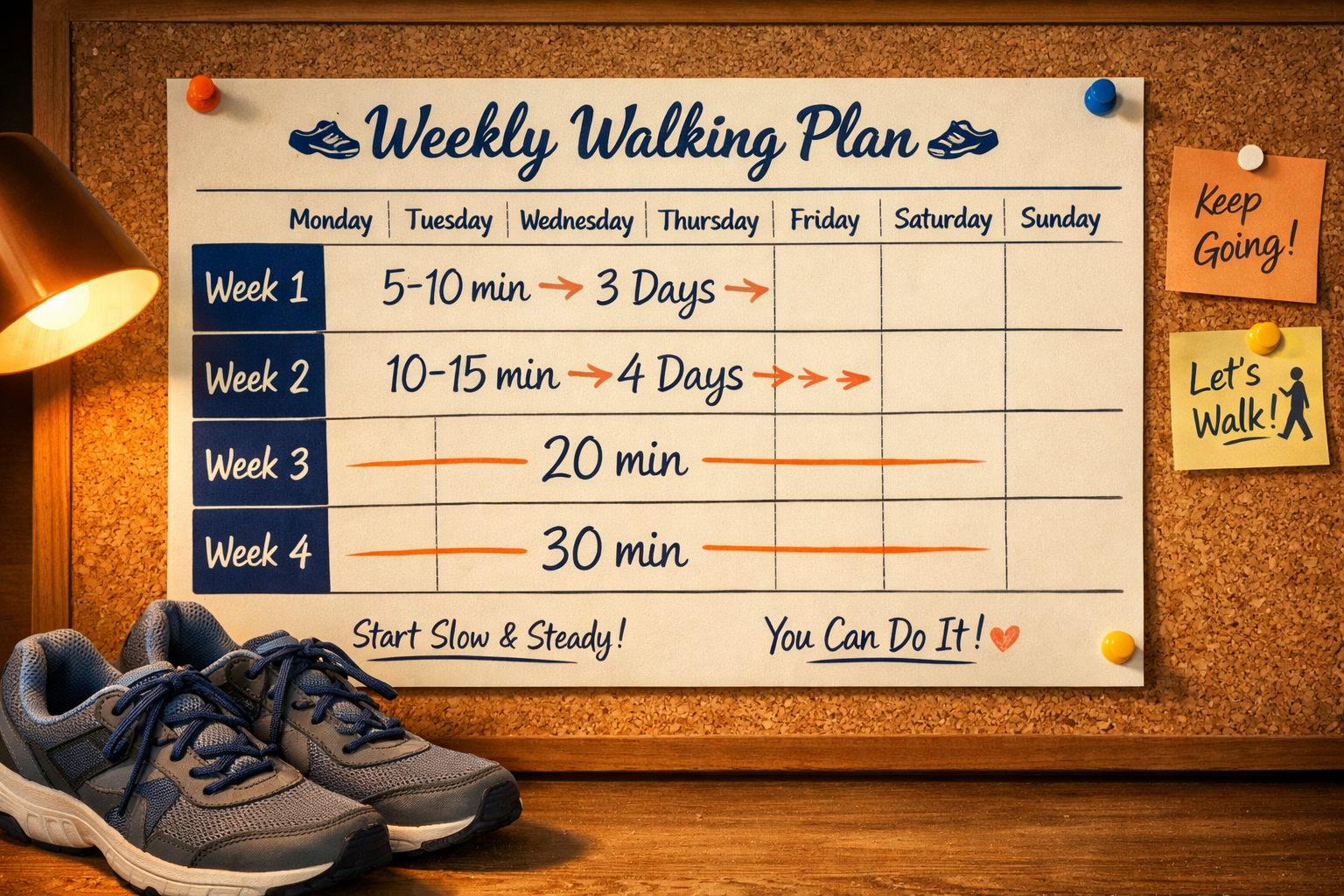
Week 1: 5 to 10 Minutes, 3 to 4 Days
Keep it short. The purpose of week one is to establish the habit and let your body register the new activity without overloading it. Walk at an easy to moderate pace. Focus on posture: head up, shoulders relaxed, arms swinging gently, heel striking first with a smooth roll through to your toes.
Week 1 checklist:
- Walk 5–10 minutes per session
- 3–4 sessions across the week
- Easy to moderate pace (talk test: comfortable conversation)
- Note any areas of soreness or discomfort after each walk
Week 2: 10 to 15 Minutes, 4 Days
Extend each session by 5 minutes. If week one felt very easy, aim for the higher end of the range. If you experienced soreness in your feet, shins, or calves, stay at 10 minutes and focus on pace rather than duration.
Weeks 3 to 4: Build Toward 20 to 30 Minutes
By week three, most beginners are ready to walk for 20 minutes continuously at a moderate pace. Week four is where you push toward 25 to 30 minutes and begin to introduce brisker sections — try walking at a brisk pace for 5 minutes, then easing back for 2 minutes, then brisk again.
This interval approach is particularly effective for building fitness without excessive fatigue.
When to Aim for 30 Minutes Most Days
Once you can comfortably walk for 30 minutes at a brisk pace, you are meeting the core physical activity guidelines for cardiovascular health. At that point, your options are to maintain that level for general health, add a fifth or sixth day per week, increase pace, or introduce hills and varied terrain for added challenge.
For those interested in supporting their walking with better nutrition, pairing regular exercise with anti-inflammatory foods can help manage post-exercise soreness and support recovery.
Tips to Stay Consistent With Walking
Consistency is the variable that matters most. A moderate walking routine done consistently for six months will produce far better results than an ambitious plan abandoned after three weeks.
Schedule Walks Into Your Day
The simplest way to look at it is this: if your walk is not in your calendar, it is optional. And optional things get skipped when life gets busy. Treat your walk like a meeting or a school run — a fixed commitment at a specific time.
Practical scheduling strategies:
- Morning walks before the day’s demands build up tend to have the highest completion rate
- Lunchtime walks work well for office-based workers — even 15 to 20 minutes counts
- Evening walks after dinner support digestion and help decompress from the day
- Walking as transport (to a nearby shop, to the train station) removes the need to find extra time entirely
Walk With a Friend, Podcast, or Routine Trigger
Walking with a friend or pet significantly increases accountability. When someone else is expecting you, the activation energy required to skip the walk is much higher. The TODAY Show’s four-week walking challenge, launched in April 2026, highlighted exactly this dynamic — fitness contributor Stephanie Mansour emphasised that building routine and having social accountability are what turn a good intention into a lasting habit.
If you walk alone, a podcast, audiobook, or playlist transforms the time from a chore into something you look forward to. Many regular walkers report that their walking time becomes the part of the day they guard most jealously.
A routine trigger also helps — something that reliably precedes your walk. Putting on your walking shoes immediately after breakfast, or leaving them by the door the night before, reduces the friction between intention and action.
Track Progress With Steps, Time, or Distance
Tracking does two things: it gives you honest feedback on whether you are actually doing what you planned, and it creates a record of progress that is genuinely motivating to look back on.
You do not need an expensive device. A basic pedometer, your phone’s built-in step counter, or a simple notebook where you record time and distance each day is enough. The numbers matter — not because hitting 10,000 steps is a magic threshold, but because seeing consistent effort over weeks and months reinforces the identity of someone who exercises regularly.
Common Beginner Mistakes to Avoid
Doing Too Much Too Soon
This is the most common reason beginners drop out. The body needs time to adapt, and the structures most vulnerable to overuse — tendons, the plantar fascia, the IT band — adapt more slowly than cardiovascular fitness does. You will feel capable of doing more long before your connective tissue is ready for it. Respect the progression. More is not always better.
Walking Too Slowly to Raise Intensity
The opposite problem is also common: walking at a pace that never challenges the cardiovascular system. If you are walking at the same pace you would use to browse a supermarket, you are unlikely to see significant fitness improvements. Use the talk test. Aim for slightly breathless.
Wearing Poor Shoes or Ignoring Soreness
Old, uncomfortable shoes can make a walking habit less pleasant. Replace footwear when the fit, tread, or comfort has clearly deteriorated rather than relying on a universal mileage rule.
Soreness in the muscles is normal and expected. Pain in a specific joint, sharp pain in the shin, or heel pain that worsens over days is a signal to rest and, if it persists, to see a physiotherapist or GP. Ignoring those signals is how minor issues become significant injuries.
For those who want to build additional resilience, adding strengthening exercises for the hips and core helps your body handle longer distances without developing joint pain. Our good morning exercises guide includes several movements that pair well with a walking routine.
When to Talk to a Doctor Before Starting
Most healthy adults can begin a gentle walking programme without medical clearance. However, a conversation with your GP or doctor first makes sense if any of the following apply.
Injury, Dizziness, Chest Pain, Joint Issues, or Long Inactivity
Speak to a doctor before starting if you:
- Have experienced chest pain, tightness, or palpitations during or after physical activity
- Feel dizzy or short of breath during light exertion
- Have a diagnosed heart condition, diabetes, or high blood pressure that is not well controlled
- Have a recent joint replacement, significant arthritis, or a lower limb injury that has not fully healed
- Have been completely sedentary for more than a year and are over 50
- Are pregnant or have recently given birth
This is not about gatekeeping exercise — it is about making sure your starting point is appropriate for your specific situation. In most cases, a doctor will encourage you to walk. The conversation is about getting the right starting intensity and any modifications that apply to you.
If you have knee issues specifically and are wondering whether other low-impact exercise might complement your walking, our guide to the best exercise bike for knee issues covers that ground in detail.
FAQs: How to Start Walking for Exercise

How long should a beginner walk each day?
A sensible starting point for a completely inactive beginner is 5 to 10 minutes per session, three to four days a week. Build toward 30 minutes per session over four to six weeks. Consistency across the week matters more than the length of any single walk.
Is a 10-minute walk enough to be worth doing?
Yes — a 10-minute walk is genuinely useful, particularly in the early weeks of a new routine. Short walks build the habit, allow your body to adapt, and contribute to your weekly activity total. Three 10-minute walks spread across a day have been shown to produce cardiovascular benefits comparable to a single 30-minute session for previously sedentary adults.
Should I walk every day?
Not necessarily, especially at first. Three to five days per week is a reasonable target for beginners. Rest days allow your muscles and connective tissue to recover and adapt. As your fitness improves, daily walking is fine — particularly if you vary the intensity, with some days at an easy recovery pace and others at a brisk fitness pace.
Is walking enough to lose weight and get fit?
Walking supports weight loss when combined with a sensible diet, but it is not a rapid fat-loss tool on its own. The calorie burn from a 30-minute brisk walk is roughly 150 to 200 calories for most adults — meaningful over time, but not dramatic in isolation. For weight management, walking works best as part of a broader approach that includes dietary awareness. Our guide to healthy meals for weight loss is a practical companion to a walking programme.
For general fitness — cardiovascular health, improved stamina, better mood, lower blood pressure — walking is genuinely sufficient, particularly for people who are currently inactive. The evidence supports it clearly.
What is the recommended walking speed for fitness?
Brisk walking at approximately 3 to 3.5 mph (roughly 17 to 20 minutes per mile) is the target for fitness benefits. At this pace, you should feel noticeably breathless but still able to hold a conversation. Use the talk test as your practical guide rather than worrying about exact speed.
How many minutes of walking per week for health benefits?
The physical activity guidelines supported by major health organisations recommend 150 minutes of moderate-intensity aerobic activity per week. Brisk walking counts fully toward this target. That works out to 30 minutes on five days, or roughly 22 minutes daily. Beginners should build toward this over four to six weeks rather than trying to hit it immediately.
Do I need to warm up before walking?
For short, easy walks, a formal warm-up is not essential. For brisk or longer walks, spend the first three to five minutes walking at an easy pace before picking up speed. This gradually raises your heart rate, increases blood flow to working muscles, and reduces the risk of early muscle strain. A short easy cool-down and mobility work may feel useful after longer or brisker walks; neither needs to become a complicated ritual.
Can I walk indoors if the weather is bad?
Absolutely. Walking on a treadmill, in a shopping centre, or along indoor corridors counts equally toward your weekly activity total. Many people find that having an indoor backup removes the weather excuse entirely and keeps their routine intact through winter months.
Conclusion: Start Simple, Stay Consistent
The main takeaway is this: learning how to start walking for exercise does not require a complicated plan, expensive gear, or a dramatic lifestyle overhaul. It requires a pair of decent shoes, a realistic starting point, and the discipline to show up consistently.
Start with 5 to 10 minutes if you need to. Build gradually. Use the talk test to find your brisk pace. Track your time or steps so you can see progress accumulating. Walk with someone when you can. And give it at least four weeks before you judge whether it is working — because the early weeks are about building the foundation, not seeing the results.
The evidence is clear and the barrier is low. There is no magic in it, and that is precisely the point. Walking works because it is sustainable, accessible, and genuinely good for your body and mind. The basics still do the heavy lifting here.
Your next steps:
- Put on your shoes and walk for 10 minutes today — just to start
- Schedule three walks into your calendar this week
- Note how you feel after each one
- Add 5 minutes next week and repeat
That is the whole plan. Keep it simple and consistent, and it will work.
References
- World Health Organization. WHO guidelines on physical activity and sedentary behaviour (2020).
- Oja P, et al. Effects of frequency, intensity, duration and volume of walking interventions on cardiovascular risk factors. British Journal of Sports Medicine (2018).
- Murphy MH, et al. The effect of walking on fitness, fatness and resting blood pressure: a meta-analysis of randomized controlled trials. Preventive Medicine (2007).
- Fekete M, et al. Physical activity trajectories and accumulation over adulthood and their associations with mortality: a systematic review and meta-analysis. British Journal of Sports Medicine (2025).

About Dave James
Dave is the founder of All Perfect Health. He focuses on practical, evidence-aware health guidance that people can use in real life without turning fitness into a full-time project.
📂 Exercise Guide for Better Health
This article is part of the APH cluster. Use the links below to move between the pillar and child articles.
- Read the pillar: Exercise Guide for Better Health
- → Body Mass Index (BMI) Chart
- YOU ARE HEREHow to Start Walking for Exercise
- → HIIT Workouts
- → Walking vs. Running for Weight Loss
- → Fat Burn Heart Rate
- → Zone 2 Cardio: A Practical Beginner’s Guide to Steady Aerobic Training
- → Health Benefits of Swimming
- → Explore all Exercise guides