
Infrared Sauna Benefits: What the Studies Show and What Remains Uncertain

Last updated: September 2026
Disclaimer: This article is for general informational purposes only and does not constitute medical advice. It is not a substitute for professional medical guidance, diagnosis, or treatment. Always consult a qualified healthcare provider before starting any new health practice, particularly if you have an existing medical condition, take prescription medications, are pregnant, or have been advised to restrict fluid intake.
Sales of home infrared saunas have grown steadily through the 2020s, yet the clinical evidence base has not kept pace with the marketing. Understanding what the research actually supports, and where the gaps remain, is more useful than either uncritical enthusiasm or flat dismissal. This article examines the infrared sauna benefits that human studies have investigated, draws clear lines around what the data cannot yet tell us, and flags the safety considerations that matter most for adults making an informed decision.
Quick Answer
Human studies on infrared sauna use, particularly far-infrared and Waon therapy protocols, have examined short-term heat responses, vascular measures, and post-exercise recovery; the direct evidence is still limited. Evidence for chronic conditions such as heart failure and chronic pain is preliminary and comes largely from small clinical trials. The large cardiovascular associations seen in Finnish sauna research cannot be applied to infrared cabins. No robust evidence establishes infrared sauna use as a treatment for any condition.
Key Takeaways
- Infrared sauna benefits studied in humans include acute reductions in blood pressure, improvements in arterial stiffness, and post-exercise recovery, but most trials are small and short-term.
- Large Finnish sauna cohort studies are observational, involve traditional high-heat steam saunas, and their associations cannot be transferred to infrared cabins.
- Specialised far-infrared and Waon clinical protocols differ meaningfully from ordinary home infrared sauna use, results from one do not automatically apply to the other.
- Infrared heat cabins and red or near-infrared (NIR) light therapy panels are separate technologies with separate evidence bases.
- Anyone with cardiovascular disease, low blood pressure, fluid restrictions, or relevant medications should discuss sauna use with a clinician before starting.
In this guide
- What an infrared sauna is
- Finnish sauna evidence vs infrared evidence
- What human infrared studies examined
- What the evidence does not establish
- Safety and cautions
- Infrared sauna vs red/NIR panels
- How to assess a claim
- FAQ
- References
What an Infrared Sauna Is, and What It Is Not
An infrared sauna is an enclosed cabin that uses infrared-emitting panels, typically far-infrared (FIR) in the wavelength range of roughly 5 to 15 micrometres, to warm the body directly rather than heating the surrounding air to the high temperatures used in traditional Finnish saunas. Cabin air temperatures are generally lower (often 45-60°C compared with 80-100°C in Finnish saunas), and the environment is dry rather than steam-filled.
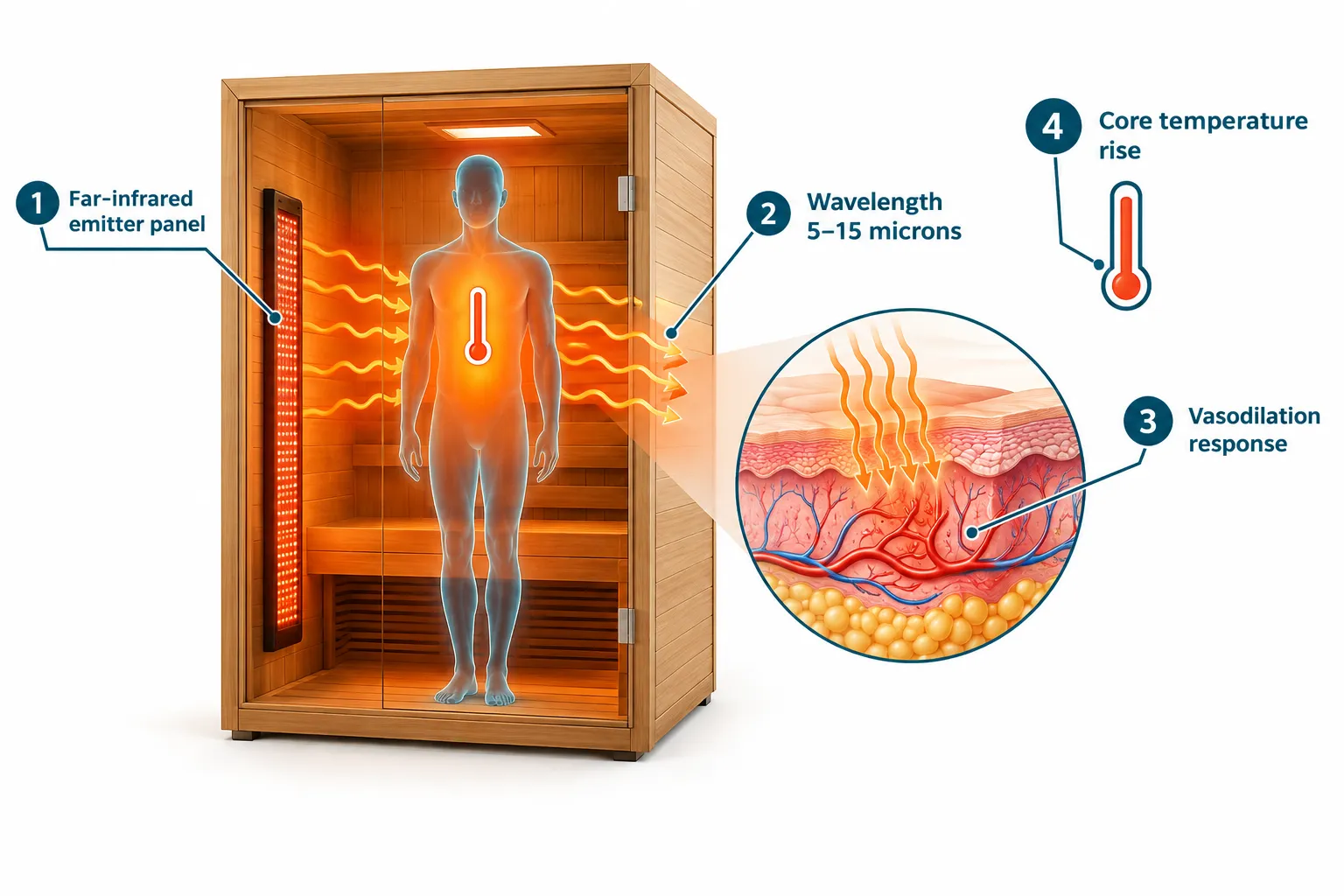
The mechanism of action is primarily thermoregulatory: the body absorbs radiant heat, core temperature rises, and the cardiovascular and autonomic systems respond, increasing heart rate, dilating blood vessels, and triggering sweating. A useful physiological analysis published on PubMed (ID 34954348) concludes that these responses are driven by heat stress and vasodilation rather than by full cardiorespiratory activation comparable to aerobic exercise. In plain English: the body works hard to manage heat, and that effort produces measurable physiological changes, but it is not the same as going for a run.
What an infrared sauna is not:
- A red light therapy or near-infrared (NIR) photobiomodulation device (covered separately below)
- A Finnish or traditional steam sauna
- A medical treatment or a substitute for prescribed therapy
- A detoxification system, the evidence does not support claims about removing specific toxins through sweat
Traditional Finnish Sauna Studies Are Not Infrared Sauna Studies
This distinction matters more than most sauna articles acknowledge. The most impressive cardiovascular associations in sauna research come from large Finnish cohort studies, observational data showing that frequent Finnish sauna users have substantially lower rates of fatal cardiovascular events compared with infrequent users.
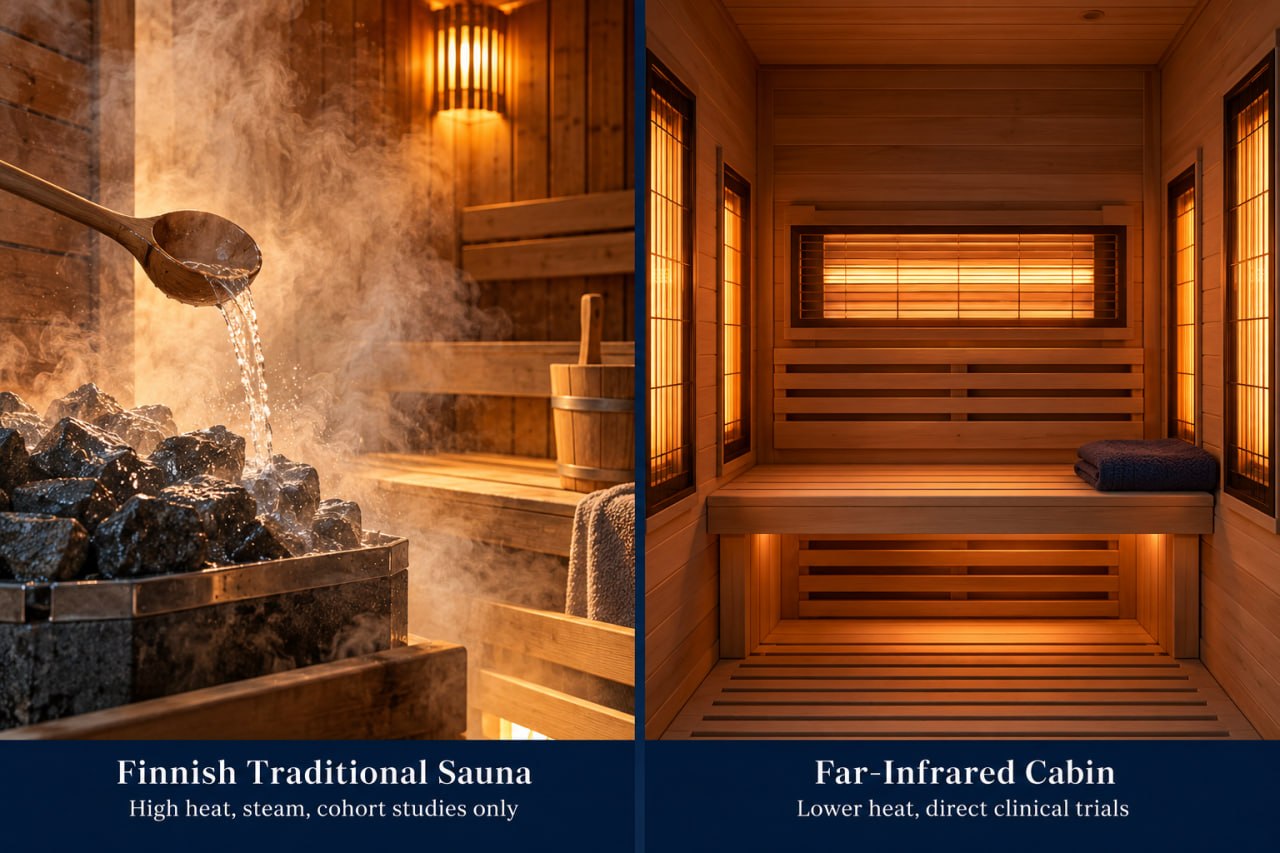
These are important findings. But they have three critical limitations when applied to infrared saunas:
| Factor | Finnish Cohort Studies | Infrared Cabin Studies |
|---|---|---|
| Sauna type | Traditional high-heat steam | Far-infrared or Waon cabin |
| Study design | Observational (association, not causation) | Small clinical trials, some randomised |
| Temperature | 80-100°C with steam | 45-60°C, dry |
| Population | Healthy Finnish adults, decades of follow-up | Clinical populations, short-term protocols |
Observational associations cannot be transferred to a different technology. The Finnish data tell us that people who use traditional saunas frequently tend to have better cardiovascular outcomes, but they cannot tell us whether infrared cabins produce the same outcomes, or whether the sauna itself (rather than lifestyle factors correlated with sauna use) is responsible. A comprehensive 2025 review of sauna bathing in ischemic heart disease acknowledges both Finnish and far-infrared evidence while being careful to treat them as separate bodies of literature.
The main takeaway is this: when a sauna brand cites Finnish longevity data to support an infrared product, that is a category error. The evidence does not transfer automatically.
For the wider practical picture of choosing and using a unit at home, see our complete home sauna guide.
What Human Infrared Studies Have Actually Examined
Acute Heat Responses and Modality Differences
Direct infrared sauna studies consistently show that a single session produces measurable acute physiological responses: heart rate increases, peripheral blood vessels dilate, blood pressure drops transiently, and core temperature rises. Heat can raise heart rate, widen peripheral blood vessels, and increase sweating; those short-term responses do not establish the long-term benefits of regular home use.
A 2026 study on infrared sauna blankets in young healthy adults found that a single 60-minute session produced pronounced heat stress, heart rates rose substantially and sweat loss exceeded one litre, with responses similar in character to traditional Finnish sauna exposure. The authors specifically highlighted the need for hydration awareness and cardiovascular screening in at-risk individuals.
These acute responses are real and measurable. The question is whether they translate into durable health improvements with repeated use, and that is where the evidence becomes thinner.
Specialised Far-Infrared and Waon Clinical Protocols
The strongest direct infrared evidence comes from Waon therapy, a specific Japanese clinical protocol involving 15 minutes in a far-infrared cabin at approximately 60°C followed by 30 minutes of supine rest under blankets, typically repeated daily or several times per week in a supervised medical setting. This is not the same as occasional home infrared sauna use.
Waon therapy trials have examined patients with chronic heart failure, peripheral arterial disease, and hypertension, showing improvements in cardiac function, exercise tolerance, and vascular markers in small randomised and non-randomised studies. A 2025 IHD review concludes that both Finnish and far-infrared protocols can improve vascular function, lower blood pressure, reduce arterial stiffness, and enhance endothelial function and nitric oxide bioavailability, describing the approach as a non-pharmacologic adjunct in ischemic heart disease management.
A widely cited 2009 far-infrared sauna evidence review found limited to moderate evidence for blood pressure normalisation and congestive heart failure treatment, fair evidence for chronic pain, and weak evidence for chronic fatigue. The same review found consistent evidence refuting cholesterol-lowering claims, no significant effects on LDL, HDL, or triglycerides across multiple studies.
The important caveat: these clinical protocols involve supervised, structured sessions in medical or research settings. Translating their results to unsupervised home use requires caution. The conditions, frequency, duration, and patient monitoring in clinical trials are rarely replicated in everyday home sauna practice.
Exercise Recovery and Other Small Studies
One area where direct infrared evidence is growing is post-exercise recovery. A 2022 randomised trial found that a single post-exercise infrared sauna session after resistance training reduced subjective muscle soreness one day later, attenuated the drop in explosive performance, and improved perceived recovery, without harming autonomic nervous system recovery or sleep quality. This is a practical finding for athletes and active adults, though long-term performance effects are not yet well characterised.
Small clinical studies and reviews have explored several conditions, but they do not establish infrared cabins as a treatment. Stronger, longer trials are still needed before readers should infer durable clinical benefits.
An active clinical trial (NCT07158047) is currently testing whether 30 sessions of far-infrared sauna can improve cardiovascular and metabolic function in adults with obesity. Results are not yet available, but the trial reflects the direction of current research interest.
What the Evidence Does Not Establish
Let’s be direct about the gaps. Based on current evidence, infrared sauna use has not been established as effective for:
- Weight loss or fat reduction, findings are inconsistent and effect sizes where present are small
- Cholesterol or triglyceride reduction, multiple studies show no significant effect
- Immune system enhancement, no robust human trial evidence supports this claim
- Detoxification or toxin removal, sweat is primarily water and electrolytes; the evidence does not support meaningful elimination of specific toxins
- Disease prevention or longevity extension, these are strong claims that require strong proof, and that proof does not exist for infrared cabins specifically
- Cortisol regulation, insufficient direct evidence in human infrared sauna trials
- Treatment equivalence, infrared sauna is not an equivalent substitute for prescribed medication, exercise, or other established therapies
WebMD’s overview frames sauna use as part of a broader lifestyle and medical plan, not a stand-alone treatment. An Everlab position statement reviewing contemporary evidence describes saunas as “secondary tools” after exercise, sleep, nutrition, weight management, and medications where indicated. That framing is accurate and worth holding onto.
This is where hype gets in the way: a real physiological response, a drop in blood pressure after one session, a reduction in perceived soreness, is not the same as a clinically meaningful long-term outcome. The numbers matter, and the study designs matter.
Safety, Medicines, Conditions, and When Individual Clinical Advice Matters
Infrared saunas are generally well tolerated by healthy adults, but several situations warrant a conversation with a clinician or pharmacist before starting:
Conditions requiring clinical discussion:
- Cardiovascular disease, heart failure, or arrhythmia, even though some clinical protocols use far-infrared for these conditions, they do so under medical supervision with careful monitoring
- Low or unstable blood pressure, the acute blood pressure reduction from a sauna session can be significant and potentially harmful
- Type 1 or Type 2 diabetes, heat affects blood glucose regulation and peripheral circulation
- Kidney disease or conditions requiring fluid restriction, sweat losses can be substantial (over one litre per session) and may be contraindicated
- Multiple sclerosis or other heat-sensitive neurological conditions, heat can temporarily worsen symptoms
- Skin conditions or open wounds, direct heat exposure may aggravate certain conditions
- Pregnancy, elevated core body temperature carries documented risks, particularly in the first trimester; discuss with an obstetrician
Medicines to discuss with a pharmacist or prescriber:
- Antihypertensives, additive blood pressure lowering may cause dizziness or fainting
- Diuretics, increased fluid loss from sweating raises dehydration and electrolyte imbalance risk
- Medications that impair heat tolerance, some antihistamines, antipsychotics, and anticholinergic drugs reduce the body’s ability to regulate temperature
- Blood thinners or anticoagulants, changes in circulation and fluid balance may affect drug behaviour
General safety considerations:
- Avoid alcohol before or during sauna use, it impairs thermoregulation and increases dehydration risk
- Exit the sauna if you feel dizzy, faint, or unwell
- Allow time to cool down gradually before standing up quickly
- Sauna use is not appropriate as a substitute for medical treatment
I would be careful with the assumption that “lower temperature means lower risk.” The heat stress from an infrared cabin is real, as the sweat-loss data from recent studies confirms. Lower air temperature does not mean the physiological demand is trivial.
For a fuller pre-use checklist, see home sauna safety risks and precautions.
Infrared Sauna Versus Red/NIR Light Panels: Separate Categories
This distinction is frequently blurred in wellness marketing and deserves a clear statement.
Infrared sauna cabins use far-infrared wavelengths primarily to generate heat. The mechanism of benefit is thermoregulatory, the body responds to heat stress.
Red light therapy and near-infrared (NIR) photobiomodulation panels use specific wavelengths (typically 630-850 nm) at low power densities that do not generate meaningful heat. The proposed mechanism involves direct photochemical effects on cellular mitochondria, not heat stress.
These are different technologies with different evidence bases. A study on red/NIR photobiomodulation panels does not apply to an infrared sauna cabin, and vice versa. When evaluating a claim, it is worth asking: which technology was actually studied, and which one is being sold?
For a broader look at what sauna research can and cannot support, read our guide to sauna health benefits.
Practical Questions to Ask Before Treating a Claim as Credible
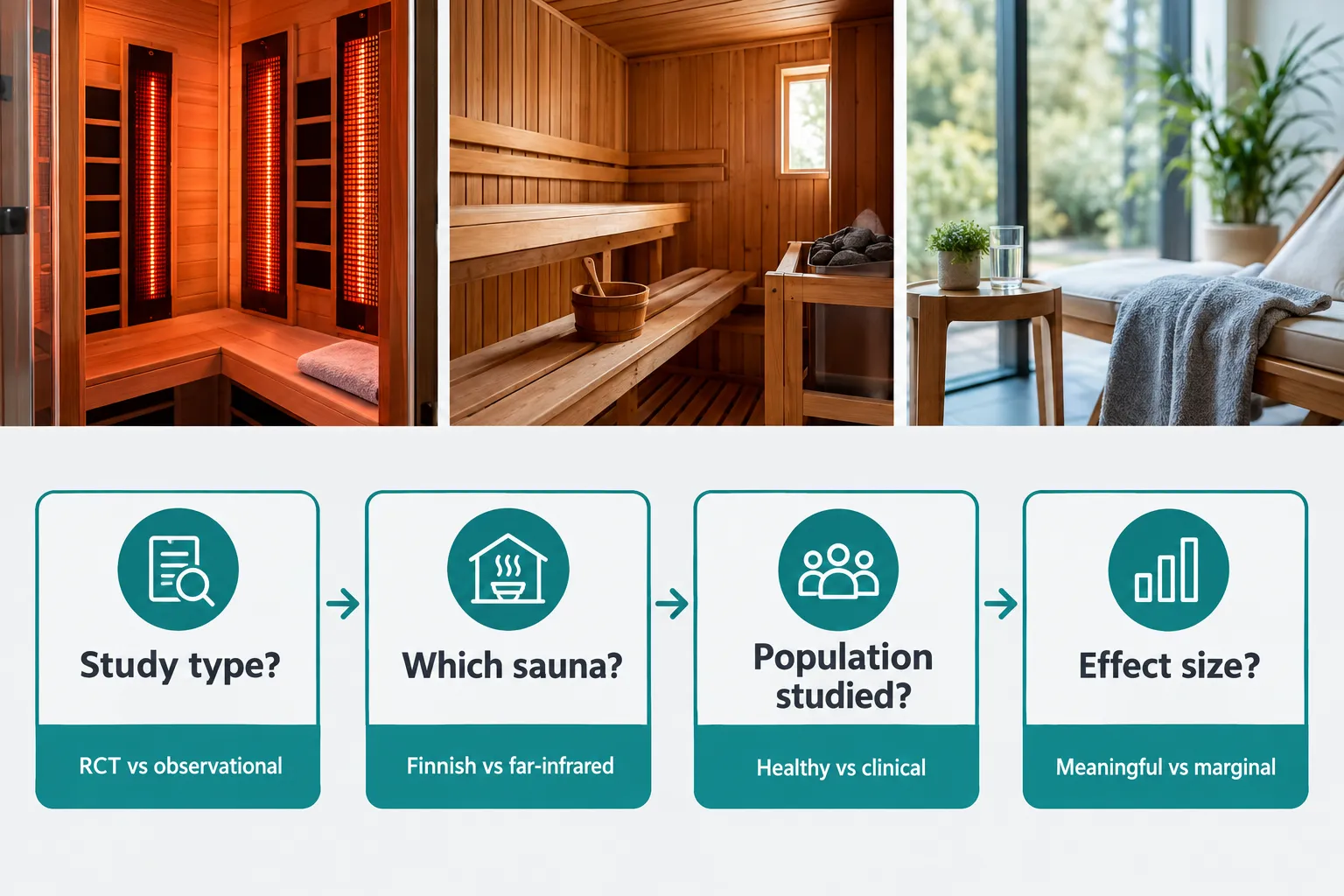
The evidence landscape for infrared saunas is genuinely mixed, some findings are meaningful, others are preliminary, and some claims circulating in wellness culture have no credible support. A sensible starting point is to apply a short checklist before accepting a claim:
1. Which sauna type was studied?
Finnish traditional sauna, far-infrared cabin, Waon therapy protocol, or infrared blanket? Results from one do not automatically apply to another.
2. What was the study design?
A randomised controlled trial in a clinical population is stronger evidence than an observational cohort study or a case series. Both have value, but they answer different questions.
3. Who were the participants?
Findings in patients with chronic heart failure may not apply to healthy middle-aged adults, and vice versa.
4. What was the outcome measured?
An acute drop in blood pressure after one session is not the same as a sustained reduction over months. Perceived recovery is not the same as objective performance improvement.
5. What was the effect size?
Statistically significant does not always mean clinically meaningful. The numbers matter.
6. Who is making the claim and why?
A peer-reviewed review published in a cardiology journal carries different weight than a product website citing the same study selectively.
There is no magic in it. The basics of evidence appraisal apply here just as they do anywhere else in health research.
FAQ
Q: Can an infrared sauna lower my blood pressure?
A: Acute blood pressure reductions after single sessions are well documented in multiple studies. Whether repeated use produces sustained long-term reductions in healthy adults is less certain, most of the stronger evidence comes from clinical populations in supervised protocols. If you have hypertension and take medication for it, discuss sauna use with your prescriber first, as the combined effect on blood pressure may be significant.
Q: Is infrared sauna evidence the same as Finnish sauna evidence?
A: No. Finnish sauna research involves traditional high-heat steam saunas, and the largest studies are observational cohort data from Finland. These findings cannot be directly applied to infrared cabins, which operate at lower temperatures via a different mechanism and have been studied in smaller, shorter clinical trials.
Q: Does infrared sauna use help with muscle recovery?
A: A 2022 randomised trial found that a single post-exercise infrared sauna session reduced perceived muscle soreness and attenuated performance decline the following day. This is a reasonably well-designed finding, though long-term effects on performance are not yet established. It is one of the more practically relevant pieces of direct infrared evidence currently available.
Q: Is an infrared sauna the same as red light therapy?
A: No. Neither is universally “better”: an infrared sauna is a heat-exposure device, while red and near-infrared (NIR) panels are photobiomodulation devices. The sensible choice depends on the outcome being considered and the evidence for that specific technology. Results from one cannot be assumed for the other.
Q: Are infrared saunas safe for everyone?
A: No. People with cardiovascular conditions, low blood pressure, kidney disease, fluid restrictions, heat-sensitive neurological conditions, or those who are pregnant should discuss sauna use with a clinician before starting. Several common medications, including antihypertensives, diuretics, and some antihistamines, may interact with the physiological demands of sauna use.
Q: Does infrared sauna use help with weight loss?
A: The evidence does not support this claim reliably. The 2009 far-infrared review found weak and inconsistent findings for obesity, and no robust human trial has demonstrated meaningful fat loss attributable to infrared sauna use. Fluid lost through sweating is water weight and is restored with rehydration.
Q: What is the downside to an infrared sauna?
A: The main downsides are the immediate effects of heat: dehydration, dizziness, fainting risk from a temporary blood-pressure drop, and discomfort if a session exceeds a person’s heat tolerance. Risk is more relevant for people with cardiovascular disease, fluid restrictions, heat-sensitive conditions, pregnancy, or medicines that affect blood pressure or sweating. A lower cabin-air temperature does not remove those considerations.
Q: How long should I sit in an infrared sauna?
A: There is no single evidence-based duration for ordinary home use. Research protocols, cabin temperatures, and participant health all vary. Follow the manufacturer’s instructions, keep expectations conservative, and leave immediately if you feel dizzy, faint, nauseated, or unwell. Anyone with a relevant health condition or medication should seek individual clinical advice before treating a routine sauna session as low risk.
Q: Why not shower immediately after an infrared sauna?
A: There is no universal rule that a healthy person must avoid showering after a sauna. The practical concern is abrupt temperature change or standing while light-headed after heat exposure. Let your body cool down, rehydrate, and avoid a very hot or very cold shower if you feel unwell. The priority is responding to symptoms, not following a ritual.
Conclusion
The infrared sauna benefits supported by human evidence are real but narrower than popular wellness culture suggests. The strongest direct signals are for acute reductions in blood pressure and arterial stiffness, improvements in vascular function in supervised clinical protocols for specific conditions, and short-term post-exercise recovery. These are meaningful findings worth taking seriously.
What the evidence does not support, at least not yet, includes cholesterol reduction, weight loss, immune enhancement, detoxification, or disease prevention. And the large, impressive associations from Finnish sauna cohort studies belong to a different technology and a different body of literature.
From a practical point of view, the most useful approach is to:
- Treat infrared sauna as a supportive wellness practice, not a medical treatment
- Distinguish between the supervised clinical protocols studied in trials and ordinary home use
- Have a direct conversation with a doctor, cardiologist, or pharmacist if you have any of the conditions or take any of the medications discussed above
- Apply basic evidence appraisal before accepting a specific health claim
- Keep expectations calibrated: the basics, exercise, sleep, nutrition, and prescribed medications where needed, still do the heavy lifting
The evidence is developing. More rigorous trials, including the ongoing NCT07158047 study, may sharpen the picture over the next few years. Until then, a measured, evidence-aware approach serves readers better than either dismissal or enthusiasm.
References
- Laukkanen T, et al. Association Between Sauna Bathing and Fatal Cardiovascular and All-Cause Mortality Events. JAMA Internal Medicine. 2015. Original study.
- Laukkanen JA, et al. Joint associations of sauna bathing and cardiorespiratory fitness on cardiovascular and all-cause mortality. BMC Medicine. 2018. Original study.
- Beever R. Far-infrared saunas for treatment of cardiovascular risk factors: summary of published evidence. Canadian Family Physician. 2009. Open-access review.
- Tei C, et al. Waon Therapy for Managing Chronic Heart Failure. 2016. PubMed record.
- Ahokas EK, et al. A post-exercise infrared sauna session improves recovery of neuromuscular performance and muscle soreness after resistance exercise training. 2023. PubMed record.
📂 Home Saunas & Heat Therapy
This article is part of the APH Home Saunas & Heat Therapy cluster.
- Pillar: The Complete Home Sauna Guide
- → Home Sauna Safety
- → Sauna Health Benefits: What the Evidence Shows
- → Sauna, Medicines and Health Conditions
- YOU ARE HEREInfrared Sauna Benefits: What the Studies Show and What Remains Uncertain