Intermittent Fasting for Weight Loss: Complete 2026 Guide
Last updated: April 7, 2026
Quick Answer: Intermittent fasting for weight loss is a structured eating pattern that cycles between defined periods of eating and fasting. It works not by telling you what to eat, but when to eat. The evidence suggests it can be an effective weight management tool for many people, particularly when combined with a high-protein, lower-carbohydrate diet, though a 2026 Cochrane review found it offers no significant advantage over conventional dieting in terms of raw weight loss numbers. The real value may lie in its simplicity, its effect on insulin regulation, and its sustainability for people who have failed with calorie counting.
Key Takeaways
- Intermittent fasting (IF) is an eating schedule, not a diet. It controls when you eat, not exclusively what you eat.
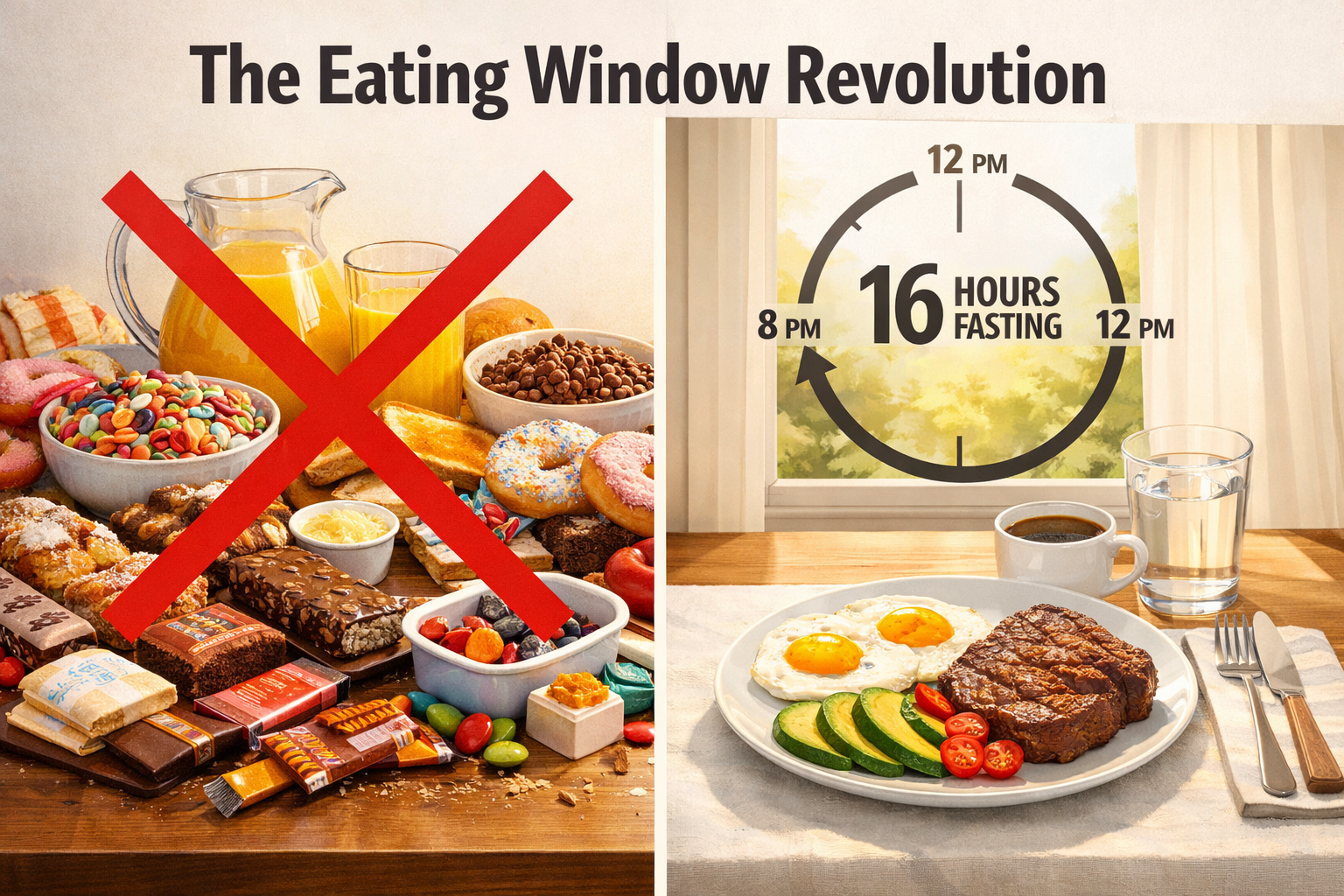
- The most practical method for beginners is the 16/8 protocol: fast for 16 hours, eat within an 8-hour window.
- A 2026 Cochrane systematic review of 22 trials found IF produces similar weight loss to conventional dieting, not dramatically more [1][2].
- What you eat during the eating window matters enormously. High-protein, lower-carb meals significantly improve outcomes.
- IF works partly by reducing insulin spikes, promoting fat burning, and triggering cellular repair (autophagy).
- Women over 40 and people with hormonal conditions should approach IF carefully and consider shorter fasting windows initially.
- Common mistakes that break a fast include flavoured water, sweetened coffee, BCAAs, and some protein supplements.
- IF is not suitable for everyone. Pregnant women, those with a history of eating disorders, and people on certain medications should consult a doctor first.
- Long-term success depends on combining IF with quality food choices, consistent sleep, and manageable stress levels.
What Is Intermittent Fasting, and Why Does It Challenge Everything You Were Told?
Intermittent fasting is a structured pattern of eating that alternates between defined fasting periods and eating windows. It does not prescribe specific foods or calorie targets. Instead, it restricts the hours during which you consume calories.
That sounds simple, and it is. But it runs directly against decades of mainstream nutrition advice that told us to eat five to six small meals a day, never skip breakfast, and keep our metabolism “stoked” with constant fuel. That advice, pushed heavily by food manufacturers and cereal companies with a financial stake in your morning routine, has not served public health well.
Let’s call it what it is: the “always be eating” model was built on weak science and strong marketing. The idea that your metabolism crashes if you go more than three hours without food is not supported by evidence. Humans evolved in environments where food was not always available. We are, physiologically, built to fast.
For adults aged 30 to 60 who have spent years counting calories, tracking macros, and still not getting results, intermittent fasting for weight loss offers a different framework. Instead of managing every meal, you manage the clock.
The ancestral context matters here. For most of human history, people ate one or two meals a day, often after periods of physical activity. The modern pattern of three meals plus snacks, bookended by a sugary breakfast cereal and a late-night snack, is historically unusual. IF is not a new fad. It is closer to how humans actually ate for most of our existence.
How Does Intermittent Fasting Work Physiologically?
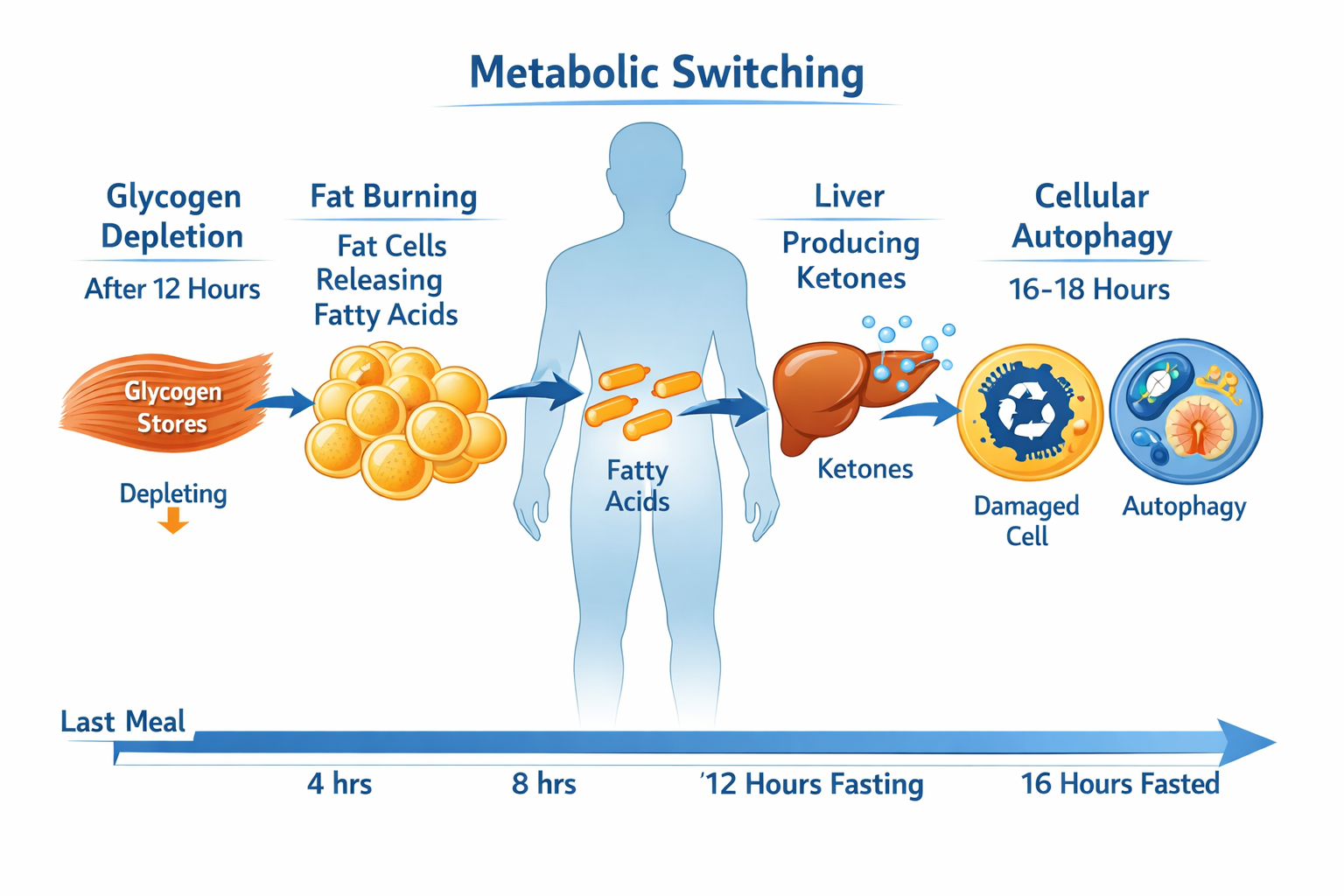
Intermittent fasting works by shifting your body’s primary fuel source from glucose to stored fat. This process, called metabolic switching, is well-documented and forms the physiological foundation of why fasting can support weight loss.
Here is what happens in plain English:
Hours 0–4 after eating: Blood glucose is elevated. Insulin is high. Your body is in storage mode, using glucose for energy and converting excess into glycogen (stored in the liver and muscles) or fat.
Hours 4–12: Blood glucose normalises. Insulin drops. Your body begins drawing on glycogen stores for energy.
Hours 12–16: Glycogen stores start to deplete. Insulin levels are low. Your body begins releasing fatty acids from fat tissue and converting them to ketones in the liver. This is where fat burning accelerates.
Hours 16–18+: Fat oxidation is well underway. Cellular autophagy, the process by which cells break down and recycle damaged components, becomes more active. This is linked to cellular repair and longevity research, though the full implications in humans are still being studied.
The insulin connection is central. Every time you eat, especially carbohydrates, insulin rises. Insulin’s job is to move glucose into cells, but it also signals the body to store fat and prevents fat from being released. If insulin is chronically elevated due to frequent eating and high-carb meals, fat burning is essentially switched off. Fasting lowers insulin, and lower insulin allows fat burning to resume.
This is also why what you eat during your eating window matters as much as the fasting window itself. A 16-hour fast followed by a meal of refined carbohydrates and seed-oil-laden processed food will blunt many of the metabolic benefits. More on that shortly.
What Are the Main Intermittent Fasting Methods?
Several fasting protocols exist. The right one depends on your lifestyle, health status, and how much structure you need.
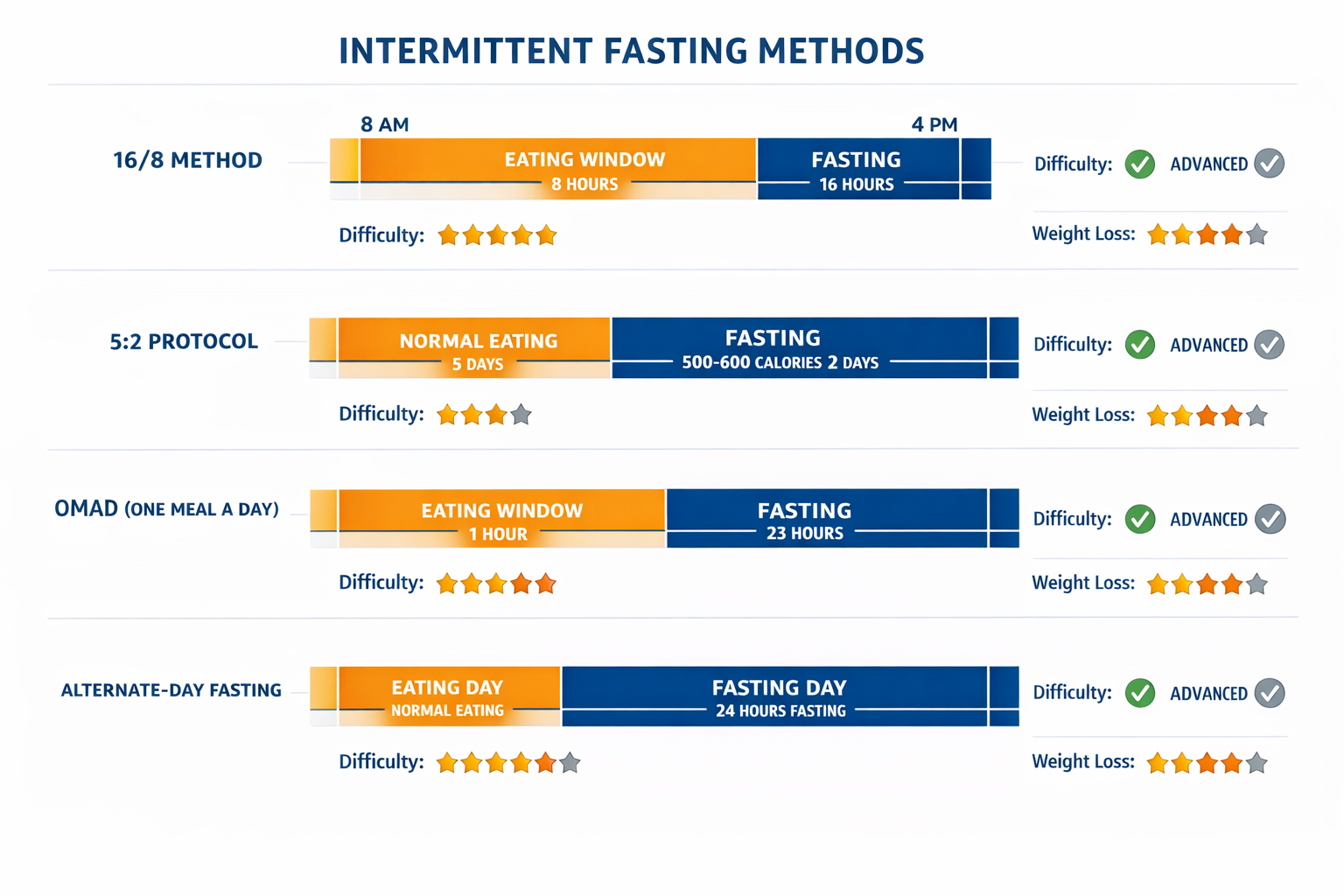
| Method | Fasting Period | Eating Window | Best For |
|---|---|---|---|
| 16/8 | 16 hours | 8 hours | Beginners, daily use |
| 18/6 | 18 hours | 6 hours | Intermediate, faster results |
| 5:2 | 2 days restricted (500–600 kcal) | 5 normal days | People who prefer weekly flexibility |
| OMAD | ~23 hours | 1 meal | Advanced, experienced fasters |
| Alternate Day Fasting | Every other day fasting | Alternating | Research setting, difficult long-term |
| 12/12 | 12 hours | 12 hours | Absolute beginners, maintenance |
The 16/8 Method: The Practical Starting Point
The 16/8 method is the most widely used and, from a practical standpoint, the easiest to sustain. A sensible starting point is skipping breakfast and eating between noon and 8pm, or between 10am and 6pm. You are already fasting while you sleep, so extending that fast by a few hours in the morning is less disruptive than it sounds.
Most people find that once they break the habit of eating first thing in the morning, morning hunger diminishes within one to two weeks. This is partly because morning hunger is often habitual and partly because blood sugar regulation improves as insulin sensitivity increases.
The 5:2 Protocol
On two non-consecutive days per week, you reduce calories to around 500–600. On the other five days, you eat normally. This suits people who find daily fasting difficult but can commit to two structured low-intake days. The evidence for the 5:2 is reasonable, though the Cochrane review noted that no single IF method showed a clear advantage over others in terms of weight outcomes [2].
OMAD and Alternate-Day Fasting
These are more aggressive protocols. OMAD (one meal a day) can produce rapid results but carries a higher risk of muscle loss if protein intake is insufficient. Alternate-day fasting is the most studied in research settings but the hardest to sustain in real life. I would be careful with either approach without proper planning.
What Does the Evidence Actually Say About Intermittent Fasting for Weight Loss?
Here is where we need to separate fact from hype, because the evidence is more nuanced than most IF advocates admit.
A 2026 Cochrane systematic review, one of the most rigorous assessments to date, examined 22 randomised clinical trials involving 1,995 adults across North America, Europe, China, Australia, and South America [1][2]. The findings were sobering for IF enthusiasts:
- Compared to conventional dietary advice, IF produced little to no difference in percentage weight loss (MD -0.33, 95% CI -0.92 to 0.26; low-certainty evidence) [2].
- Achieving a clinically meaningful 5% body weight reduction was no more likely with IF than with standard dieting (RR 0.98, 95% CI 0.82 to 1.18) [2].
- Quality of life was unaffected in either direction [2].
- Lead researcher Luis Garegnani concluded: “Intermittent fasting just doesn’t seem to work for overweight or obese adults trying to lose weight” [1].
- Senior author Eva Madrid added: “With the current evidence available, it’s hard to make a general recommendation. Doctors will need to take a case-by-case approach” [1].
The Smithsonian reported on these findings with a similar conclusion: IF may not live up to its weight-loss hype when studied against conventional dietary controls [3].
So should you dismiss IF entirely? Not necessarily. Here is the real issue with interpreting this data:
- Most trials did not control for what participants ate during the eating window. A fasting protocol layered over a poor diet will not produce strong results.
- Most trials lasted under one year, limiting conclusions about long-term sustainability [2].
- The evidence base of 22 trials is still relatively small and unevenly reported [1].
- The comparison was against “conventional diet advice,” which itself is often effective when followed. IF matching that outcome is not a failure; it is a viable alternative path.
The stronger evidence points to this: IF is not a magic bullet. But for people who struggle with calorie counting, find meal frequency exhausting, or want a simpler structure, it can produce comparable results with less cognitive load. That has real-world value.
For a broader look at weight loss approaches, see our guide to the best weight loss diet options.
What Should You Actually Eat During the Eating Window?
This is the question most IF guides completely ignore, and it is arguably the most important factor in your results.
Intermittent fasting controls the when. You still need to control the what, at least to a reasonable degree. Based on current evidence, the combination that produces the best outcomes is: high protein + lower carbohydrate + whole food sources.
Why High Protein Matters
Protein is the most satiating macronutrient. It also has the highest thermic effect, meaning your body burns more calories digesting it than it does with fat or carbohydrates. Critically, adequate protein during a calorie deficit preserves lean muscle mass, which matters more as you age.
For a detailed breakdown of the best sources, see our high protein diet for weight loss guide.
Practical protein targets during your eating window:
- Aim for 1.6–2.2g of protein per kg of bodyweight daily
- Prioritise animal-based sources: eggs, red meat, poultry, fish, full-fat dairy
- Include protein at every meal within your eating window
Why Lower Carbohydrate Helps
Lower carbohydrate intake keeps insulin lower, which complements the fasting-induced insulin reduction. You do not need to go fully ketogenic, but reducing refined carbohydrates, bread, pasta, sugary drinks, and processed snacks makes a significant difference.
Seed oils found in processed breakfast foods, granola bars, and most packaged snacks are worth avoiding. These oils, including soybean, canola, and sunflower oil, are highly processed, pro-inflammatory, and a far cry from the fats humans evolved eating.
Sample Eating Window Meals (16/8, noon–8pm)
Meal 1 (noon): Three eggs scrambled in butter, two rashers of bacon, half an avocado, black coffee or water.
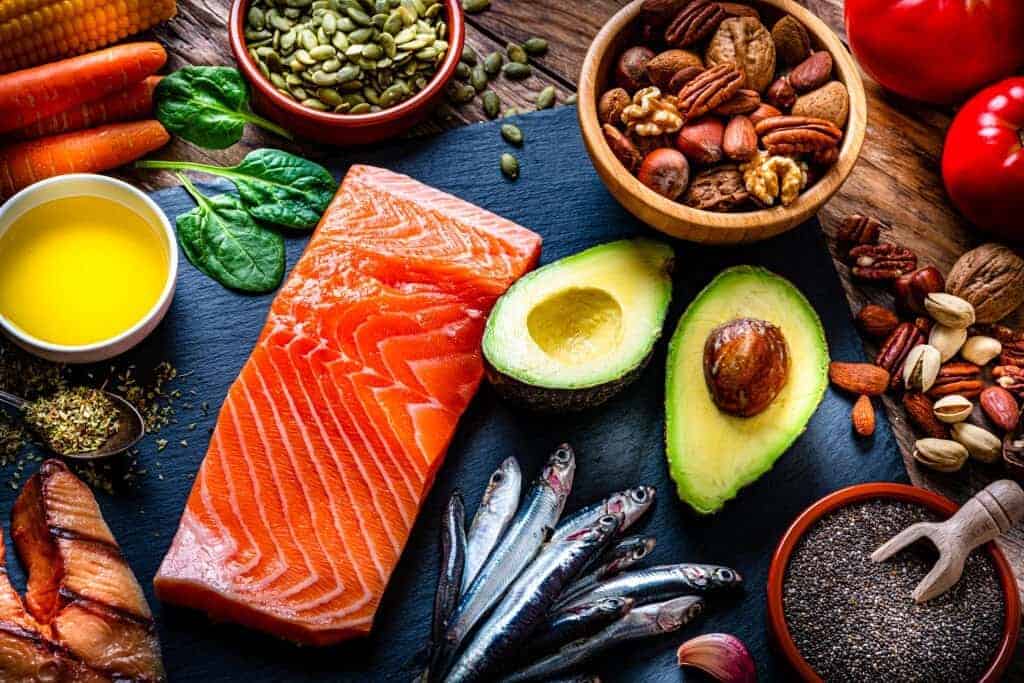
Meal 2 (4–5pm): 200g of grilled salmon or chicken thighs, a large leafy green salad with olive oil and lemon, a handful of nuts.
Meal 3 (7–8pm, optional): Full-fat Greek yogurt with berries, or a small portion of leftover protein from earlier.
This structure keeps insulin stable, provides adequate protein, and supports fat burning during the fasting window.
For ideas on high-fibre additions to your eating window, see our high fiber foods for weight loss guide.
Is Intermittent Fasting Safe? Who Should Be Careful?
For most healthy adults, intermittent fasting is safe. But context matters, and there are specific groups who need to approach it with more caution.
Generally Safe For:
- Healthy adults aged 18–65 with no underlying metabolic conditions
- People with mild to moderate overweight
- Those with stable type 2 diabetes (under medical supervision)
- Adults looking to improve insulin sensitivity and metabolic health
Use Caution If You Are:
- A woman over 40: Hormonal shifts during perimenopause and menopause can make extended fasting more disruptive. Some women experience increased cortisol, disrupted sleep, or worsened hormonal symptoms with aggressive fasting windows. Starting with 12/12 or 14/10 and building slowly is more appropriate.
- Over 60 with low muscle mass: Protein needs increase with age. Extended fasting without adequate protein intake can accelerate muscle loss (sarcopenia). Prioritise protein and consider shorter fasting windows.
- Managing blood sugar with medication: Fasting can lower blood glucose significantly, which interacts with insulin or sulfonylurea medications. Medical supervision is essential.
- Highly active or training for performance: Athletes with high training volumes may find extended fasting impairs recovery and performance. Shorter windows (12/12 or 14/10) are more practical.
Do Not Fast If You Are:
- Pregnant or breastfeeding
- Currently underweight or recovering from an eating disorder
- A child or teenager
- On medications that must be taken with food (check with your doctor)
Adverse events in the Cochrane review were unclear, with researchers noting that side effects were not consistently reported across studies (RR 1.45, 95% CI 0.64 to 3.28; 7 studies, 619 participants), making it difficult to fully assess potential risks [2]. That is not a reassuring finding, and it underscores why individual medical guidance matters.
Common Mistakes That Break a Fast Without You Knowing
This section catches most people out. A number of common products and habits break a fast by triggering an insulin response, even when they contain zero or minimal calories.
Things that break your fast:
- ☕ Flavoured or sweetened coffee drinks: A plain black coffee is fine. A latte, flavoured creamer, or “bulletproof coffee” with MCT oil and butter technically breaks a strict fast, though the metabolic impact varies.
- 🥤 Flavoured water or sparkling drinks with sweeteners: Artificial sweeteners may trigger an insulin response in some people, though the evidence here is mixed. Plain sparkling water is fine.
- 💊 BCAAs (branched-chain amino acids): These amino acids stimulate mTOR and insulin signalling. Taking BCAAs during a fast defeats much of the metabolic benefit. Save them for your eating window.
- 🍬 Chewing gum with sugar or sweeteners: Some gums trigger salivary amylase and a modest insulin response.
- 🥛 Protein shakes or meal replacement drinks: These clearly break a fast. They are food in liquid form.
- 💊 Some medications and supplements: Fat-soluble vitamins taken with food, certain medications, and even some herbal supplements can trigger a digestive response.
What does not break a fast:
- Plain black coffee or plain tea (no milk, no sweeteners)
- Still or sparkling water
- Black tea, green tea, herbal teas (no additives)
- Salt (electrolytes in water are fine for extended fasts)
How to Start Intermittent Fasting for Fast Weight Loss: A Practical Step-by-Step Plan
Starting intermittent fasting does not require a dramatic overnight overhaul. The most sustainable approach is a gradual transition.
Week-by-Week Starter Plan
Week 1–2: 12/12
Stop eating after 8pm. Do not eat before 8am. This is your baseline. Most people are already close to this without realising it.
Week 3–4: 14/10
Push your first meal to 10am and finish eating by 8pm. This is a comfortable middle ground that most people can sustain indefinitely.
Week 5–6: 16/8
First meal at noon, last meal by 8pm. This is the target protocol for most people using IF for weight loss.
Ongoing: Refine and adjust
Once 16/8 feels natural, you can experiment with 18/6 or adding a 24-hour fast once a week if you want to accelerate results.
Practical Tips for Getting Through the Fasting Window
- Stay hydrated. Thirst is often mistaken for hunger. Drink water, black coffee, or plain tea throughout the morning.
- Keep busy in the early hours. The first week is the hardest. Hunger during the fasting window is largely habitual and diminishes with consistency.
- Break your fast with protein first. Starting your eating window with a protein-rich meal reduces the likelihood of overeating later.
- Do not compensate with larger meals. IF works partly through calorie reduction. If you eat three times your normal intake in an 8-hour window, the benefits are limited.
- Sleep counts as fasting time. An 8pm to noon fast includes 7–8 hours of sleep. You are only extending the fast by 4 hours in the morning.
Tracking Progress
Use a fasting app (Zero, Fastic, or Simple are widely used) to track your fasting windows. Beyond the scale, track:
- Waist circumference (more informative than weight alone)
- Energy levels throughout the day
- Sleep quality
- Hunger patterns over time
For a broader weight management framework, see our complete guide to weight loss strategies.
Intermittent Fasting for People Over 40: What Changes?
Adults over 40 face a different metabolic landscape than younger people. Insulin sensitivity typically declines with age. Muscle mass begins to decrease from around 35–40 (a process called sarcopenia). Hormonal changes, particularly in women approaching perimenopause, alter how the body responds to calorie restriction and fasting stress.
For men over 40:
Testosterone levels begin a gradual decline from around 35. Fasting can support testosterone regulation by improving insulin sensitivity and reducing visceral fat, both of which are associated with better hormonal profiles. However, very aggressive fasting (OMAD or extended multi-day fasting) combined with high training loads can elevate cortisol, which suppresses testosterone. A moderate 16/8 approach with adequate protein is the better strategy.
For women over 40:
This is where I would be careful with blanket IF recommendations. Oestrogen fluctuations during perimenopause affect cortisol regulation, sleep quality, and appetite signalling. Some women find that extended fasting windows worsen sleep disruption, increase anxiety, or trigger stronger hunger responses. Starting with 12/12 and progressing slowly, while monitoring how you feel, is more appropriate than jumping straight to 16/8.
Women also tend to have lower lean muscle mass than men, making adequate protein intake during the eating window even more critical. Aim for at least 1.8–2.2g of protein per kg of bodyweight.
The metabolic flexibility angle:
One of the genuine benefits of IF for people over 40 is improving metabolic flexibility, the ability to switch efficiently between burning glucose and burning fat. This flexibility tends to decline with age and poor dietary habits. Fasting, particularly when combined with lower carbohydrate intake, helps restore it. This has implications not just for weight but for energy levels, cognitive function, and long-term metabolic health.
For a deeper look at how exercise complements these goals, our good morning exercise guide offers practical movement routines that pair well with a fasting schedule.
Psychological Strategies for Sticking With Intermittent Fasting
The physiology of fasting is straightforward. The psychology is where most people struggle. Here is what actually helps.
Reframe hunger as a signal, not an emergency. Most people in the modern food environment have never experienced true hunger. The mild discomfort of a 14-hour fast is not dangerous. Learning to sit with it, and recognising that it passes, is a skill that develops over two to three weeks.
Anchor your eating window to social patterns. If lunch with colleagues is part of your routine, make noon your first meal. If family dinner at 7pm matters, make that your last meal. IF works best when it fits your life, not when it fights it.
Avoid the all-or-nothing trap. If you eat at 10am instead of noon, you have not failed. You have done a 14-hour fast instead of a 16-hour one. That is still beneficial. Consistency over weeks matters more than perfection on any given day.
Plan your eating window meals in advance. The biggest risk in IF is arriving at your eating window ravenous and making poor food choices. Having a clear plan, even a rough one, prevents reactive eating.
Track something other than the scale. Weight fluctuates daily due to water, sodium, and hormonal cycles. Tracking waist measurements weekly, energy levels, and hunger patterns gives a more accurate picture of progress.
For more on the mindset side of eating, our mindful eating guide covers the psychological patterns that drive overeating and how to address them.
Which Intermittent Fasting Method Suits You?
Answer 4 quick questions to find the fasting protocol that fits your lifestyle and goals.
Frequently Asked Questions About Intermittent Fasting for Weight Loss
Q: Is breakfast really the most important meal of the day?
No. This claim was popularised by breakfast cereal manufacturers in the early 20th century and has been repeated so often it feels like fact. The evidence does not support it. Skipping breakfast does not slow metabolism, cause muscle loss, or impair cognitive function in healthy adults. For most people using IF, skipping breakfast is the simplest way to extend the fasting window.
Q: Will intermittent fasting slow my metabolism?
Short-term fasting (up to 72 hours) does not slow metabolism. Some research suggests it may modestly increase metabolic rate in the short term due to norepinephrine release. Prolonged severe calorie restriction is a different matter, but this is not what standard IF protocols involve.
Q: Can I exercise during the fasting window?
Yes, and many people find fasted training effective for fat burning. Low to moderate intensity exercise (walking, cycling, light resistance training) during a fasted state can increase fat oxidation. High-intensity training may feel harder without fuel. Experiment and see what works for your body.
Q: How long before I see results with intermittent fasting for weight loss?
Most people notice reduced hunger and improved energy within one to two weeks. Visible weight changes typically appear within two to four weeks, depending on dietary choices during the eating window, activity levels, and starting metabolic health.
Q: Can I drink coffee during the fast?
Yes. Plain black coffee is widely considered acceptable during a fasting window. It contains minimal calories, may suppress appetite, and some evidence suggests it can enhance fat oxidation. Avoid adding milk, cream, sugar, or flavoured syrups. For more on coffee’s health effects, see our health benefits of coffee guide.
Q: Does intermittent fasting cause muscle loss?
Not when protein intake is adequate. The risk of muscle loss increases with very long fasting periods (24+ hours) or when protein intake during the eating window is insufficient. Eating 1.6–2.2g of protein per kg of bodyweight and including resistance exercise largely prevents muscle loss during standard IF protocols.
Q: Is IF suitable for people with type 2 diabetes?
Potentially yes, but only under medical supervision. IF can improve insulin sensitivity and reduce blood glucose levels, which is beneficial for type 2 diabetes. However, it can also cause hypoglycaemia in people on insulin or sulfonylureas. Medical oversight is non-negotiable.
Q: What if I get headaches during the fasting window?
Headaches in the first one to two weeks are common and usually caused by one of three things: dehydration, low sodium (electrolyte imbalance), or caffeine withdrawal. Drink more water, add a pinch of salt to your water, and taper caffeine gradually if you are a heavy coffee drinker.
Q: Can I do IF and a low-carb diet at the same time?
Yes, and this combination is often more effective than either approach alone. Lower carbohydrate intake keeps insulin low during the eating window, which complements the insulin-lowering effect of fasting. Many people find that a lower-carb eating pattern also reduces hunger during the fasting window, making the protocol easier to sustain.
Q: How is IF different from just eating less?
Both approaches reduce calorie intake, but through different mechanisms. IF does not require calorie counting. It creates a natural calorie reduction by limiting the hours available for eating. It also specifically targets insulin regulation and metabolic switching in ways that simply eating less throughout the day does not. For some people, this makes it psychologically easier and physiologically more effective.
Conclusion: What Matters Most Is This
Intermittent fasting for weight loss is not magic, and the 2026 Cochrane review makes that clear [1][2]. It will not outperform a well-structured conventional diet in a controlled clinical trial. But that is not the right question for most people.
The right question is: what approach can you actually stick to, that fits your life, and that produces real results over months and years, not just weeks?
For adults who have spent years counting calories, eating five small meals a day, and still struggling, IF offers something genuinely different. It simplifies the decision-making. It improves insulin sensitivity. It aligns with how humans evolved to eat. And when combined with high-protein, lower-carbohydrate meals during the eating window, it becomes a genuinely effective weight management strategy.
Start with the 16/8 method. Break your fast with protein. Keep carbohydrates moderate. Stay consistent for at least four to six weeks before judging results. And be honest about what you are eating during the eating window, because that is where most people quietly undermine their own progress.
The basics still do the heavy lifting. IF is a framework that makes those basics easier to apply.
Your next steps:
- Choose your eating window (noon to 8pm is the simplest starting point)
- Plan your first week of eating window meals around protein and whole foods
- Download a fasting tracker app to monitor your windows
- Read our high protein diet for weight loss guide to optimise your eating window
- Review our complete weight loss guide for the broader context
Keep it simple and consistent. That is where the results come from.
References
[1] Intermittent Fasting Might Not Live Up To The Hype When It Comes To Weight Loss, New Research Suggests – https://www.smithsonianmag.com/smart-news/intermittent-fasting-might-not-live-up-to-they-hype-when-it-comes-to-weight-loss-new-research-suggests-180988218/ [2] Cochrane Review: Intermittent Fasting for Weight Loss in Adults – https://pubmed.ncbi.nlm.nih.gov/41692034/ [3] ScienceDaily: Comprehensive Review of Intermittent Fasting Trials – https://www.sciencedaily.com/releases/2026/02/260218044620.htm