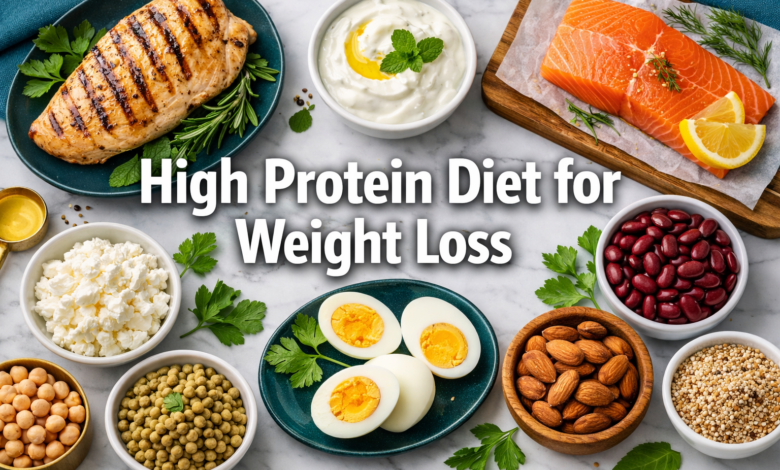
High Protein Diet for Weight Loss
Last updated: April 7, 2026
Quick Answer: A high protein diet for weight loss works by increasing satiety, raising your metabolic rate through the thermogenic effect of digestion, and preserving lean muscle mass during a calorie deficit. Most adults aiming to lose fat benefit from consuming 1.2 to 1.6 grams of protein per kilogram of body weight per day, spread across meals. It is not a magic fix, but the evidence supporting protein’s role in fat loss is among the strongest in nutrition science.
Key Takeaways
- Protein burns more calories to digest than carbohydrates or fat — roughly 20–30% of its caloric value is used in digestion alone.
- Daily protein targets for fat loss typically range from 1.2 to 2.2 g per kg of body weight, depending on activity level and body composition goals.
- Protein reduces appetite by influencing hunger hormones, specifically ghrelin (hunger) and GLP-1 and PYY (satiety signals).
- Muscle preservation during weight loss depends heavily on adequate protein intake — this matters more as you get older.
- Best protein food sources include chicken breast, eggs, Greek yogurt, fish, legumes, tofu, and cottage cheese.
- Vegetarians and vegans can meet high-protein targets with strategic food combinations and, where needed, plant-based protein supplements.
- Protein timing matters — distributing protein across 3–4 meals is more effective than concentrating it in one sitting.
- Risks are real but manageable — people with kidney disease, gout, or certain metabolic conditions need medical guidance before increasing protein significantly.
- Sustainability is the deciding factor — a protein-focused diet only works long-term if it fits your food preferences and lifestyle.
- Start with what gives the biggest return: calculate your target, identify your best food sources, and build meals around protein first.
How Does a High Protein Diet for Weight Loss Actually Work?
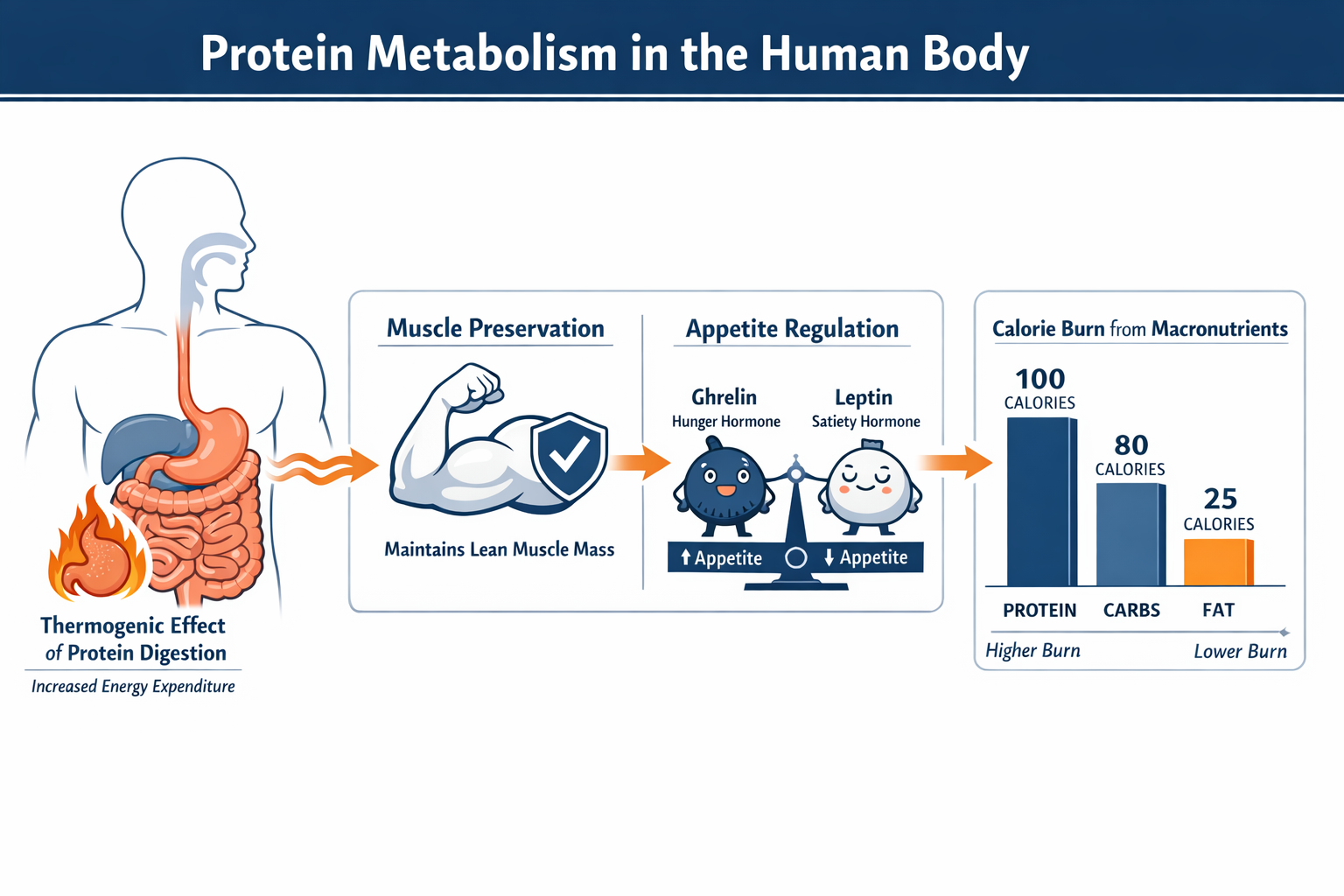
Protein supports weight loss through three well-established mechanisms: it costs more energy to digest, it reduces hunger more effectively than other macronutrients, and it protects muscle tissue during a calorie deficit.
Let’s keep this practical. When you eat protein, your body has to work harder to break it down into usable amino acids. This process, called the thermogenic effect of food (TEF), uses up roughly 20–30% of protein’s caloric content — compared to just 5–10% for carbohydrates and 0–3% for fat. In real-world terms, if you eat 100 calories of protein, your body only nets around 70–80 of those calories after digestion costs. That difference adds up over time.
Beyond thermogenesis, protein directly affects the hormones that control hunger. Research published in the American Journal of Clinical Nutrition has shown that higher protein intake suppresses ghrelin (the hormone that signals hunger) while increasing satiety hormones like GLP-1 and PYY. This is why people on higher-protein diets tend to eat less overall — not because they are exercising willpower, but because they are genuinely less hungry.
The third mechanism is muscle preservation. During any calorie-restricted diet, your body risks breaking down muscle tissue for energy. Muscle is metabolically active — it burns calories even at rest. Losing it slows your metabolic rate and makes long-term weight management harder. Adequate protein intake, combined with resistance exercise, largely prevents this.
The stronger evidence points to this: protein’s appetite-suppressing and muscle-preserving effects are the most practically significant factors for sustainable fat loss — not just the calorie burn from digestion.
How Much Protein Do You Need for Weight Loss?
For most adults targeting fat loss, a daily intake of 1.2 to 1.6 grams of protein per kilogram of body weight is a well-supported starting point. Active individuals, older adults, and those doing regular resistance training may benefit from the higher end of 1.6 to 2.2 g/kg.
Protein Intake Calculation Formula
Here is a simple way to calculate your daily protein target:
Step 1: Convert your weight to kilograms (divide pounds by 2.2)
Step 2: Multiply by your target range
| Goal | Protein Target |
|---|---|
| General weight loss (sedentary to lightly active) | 1.2 – 1.4 g per kg body weight |
| Active weight loss with cardio | 1.4 – 1.6 g per kg body weight |
| Weight loss with resistance training | 1.6 – 2.0 g per kg body weight |
| Muscle preservation during aggressive deficit | 2.0 – 2.2 g per kg body weight |
Example: A 75 kg person doing moderate exercise should aim for roughly 112–120 g of protein per day (75 × 1.5).
The standard recommended dietary allowance (RDA) of 0.8 g/kg was set to prevent deficiency in sedentary adults — not to optimize fat loss or muscle preservation. For weight loss purposes, that figure is too low for most people. The evidence suggests the 1.2–2.2 g/kg range is both safe and effective for healthy adults.
Protein Needs by Body Type and Activity Level
- Sedentary adults (desk job, minimal exercise): 1.2–1.4 g/kg — focus on lean sources to keep total calories in check
- Moderately active adults (3–4 workouts per week): 1.4–1.6 g/kg — distribute across 3–4 meals
- Highly active or strength training (5+ sessions per week): 1.6–2.2 g/kg — post-workout protein becomes more important
- Adults over 50: Aim for the higher end of any range — muscle protein synthesis becomes less efficient with age, so more protein is needed to achieve the same anabolic response
Best High Protein Foods for Weight Loss
The best high-protein foods for weight loss are those that deliver high protein per calorie, are nutrient-dense, and are practical enough to eat regularly.
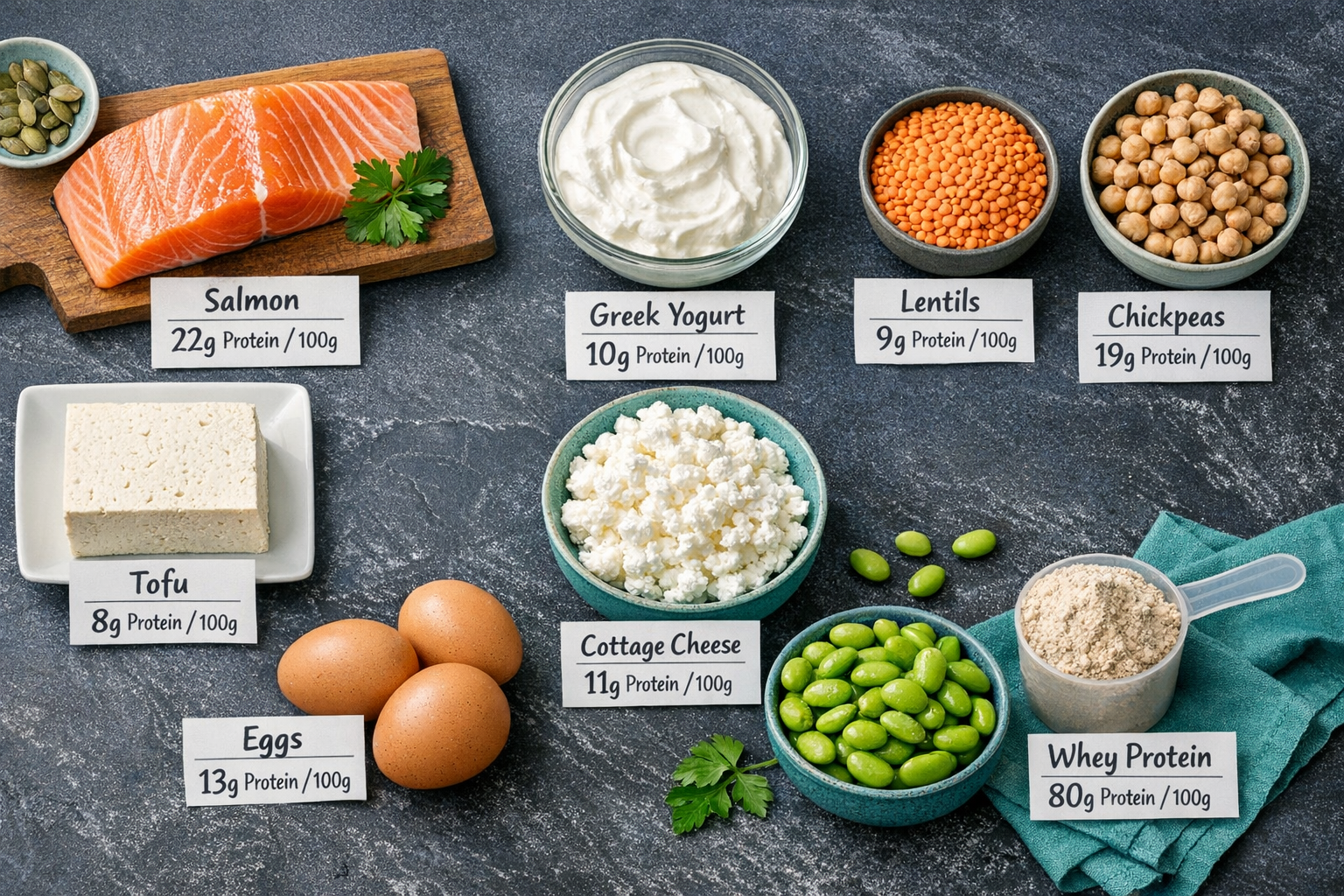
Here is a breakdown of the most effective options, with approximate protein content per 100g serving:
Animal-Based Protein Sources
| Food | Protein (per 100g) | Notes |
|---|---|---|
| Chicken breast (cooked) | ~31g | Lean, versatile, cost-effective |
| Turkey breast (cooked) | ~29g | Similar to chicken, slightly lower fat |
| Canned tuna (in water) | ~26g | Convenient, affordable |
| Salmon (cooked) | ~25g | Adds omega-3 fatty acids |
| Eggs (whole) | ~13g | Complete amino acid profile |
| Egg whites | ~11g | Very low calorie, high protein ratio |
| Greek yogurt (plain, 0%) | ~10g | Also provides probiotics |
| Cottage cheese (low-fat) | ~11g | Slow-digesting casein protein |
| Shrimp (cooked) | ~24g | Very low calorie |
Plant-Based Protein Sources
| Food | Protein (per 100g) | Notes |
|---|---|---|
| Tempeh | ~19g | Fermented, high bioavailability |
| Edamame | ~11g | Complete protein, also high in fiber |
| Lentils (cooked) | ~9g | Also high in fiber and iron |
| Chickpeas (cooked) | ~9g | Versatile, filling |
| Black beans (cooked) | ~8.9g | Good fiber-to-protein ratio |
| Tofu (firm) | ~8g | Neutral flavor, absorbs seasoning well |
| Seitan | ~25g | Wheat-based, very high protein |
| Hemp seeds | ~31g | Complete protein, easy to add to meals |
| Nutritional yeast | ~50g | Excellent topping or seasoning |
For a deeper look at building healthy meals for weight loss around these ingredients, including practical recipes, that guide covers the full picture.
Vegetarian and Vegan High-Protein Strategies
This is where most generic guides fall short. Plant proteins are often incomplete — meaning they lack one or more essential amino acids. The practical fix is food combining over the course of a day (not necessarily in the same meal):
- Rice + legumes — covers all essential amino acids
- Tofu + edamame — both soy-based, complete proteins
- Hemp seeds + lentils — good combination for smoothies and salads
- Tempeh + quinoa — both high-protein, both complete
Plant-based protein supplements (pea protein, rice protein blends, soy protein isolate) are a legitimate and well-studied option for vegans who struggle to hit protein targets through food alone.
How a High Protein Diet for Weight Loss Affects Your Hormones and Metabolism
Protein does more than fill you up — it interacts with several hormonal systems that regulate body weight, appetite, and energy balance.
Ghrelin suppression: Protein is the most effective macronutrient for reducing ghrelin, the primary hunger hormone. This effect is measurable within hours of a high-protein meal and explains why protein-rich breakfasts reduce calorie intake later in the day.
Insulin sensitivity: Higher protein diets, when replacing refined carbohydrates, tend to improve insulin sensitivity over time. This matters for weight loss because chronically elevated insulin promotes fat storage. If you are monitoring blood sugar or concerned about early signs of diabetes, protein intake is a relevant variable worth discussing with your doctor.
Glucagon activation: Protein stimulates glucagon release, which promotes fat breakdown (lipolysis) and helps maintain stable blood glucose. This is part of why protein-rich meals produce a more stable energy curve compared to high-carbohydrate meals.
Muscle protein synthesis: Leucine, an essential amino acid found in animal proteins and soy, is the primary trigger for muscle protein synthesis. Adequate leucine intake — roughly 2.5–3g per meal — is needed to stimulate muscle building and preservation. This is why protein quality, not just quantity, matters.
Cortisol and stress response: Chronically low protein intake can elevate cortisol, the stress hormone associated with abdominal fat accumulation. Maintaining adequate protein intake supports a healthier cortisol balance, particularly during periods of caloric restriction.
A Practical High Protein Meal Plan for Weight Loss
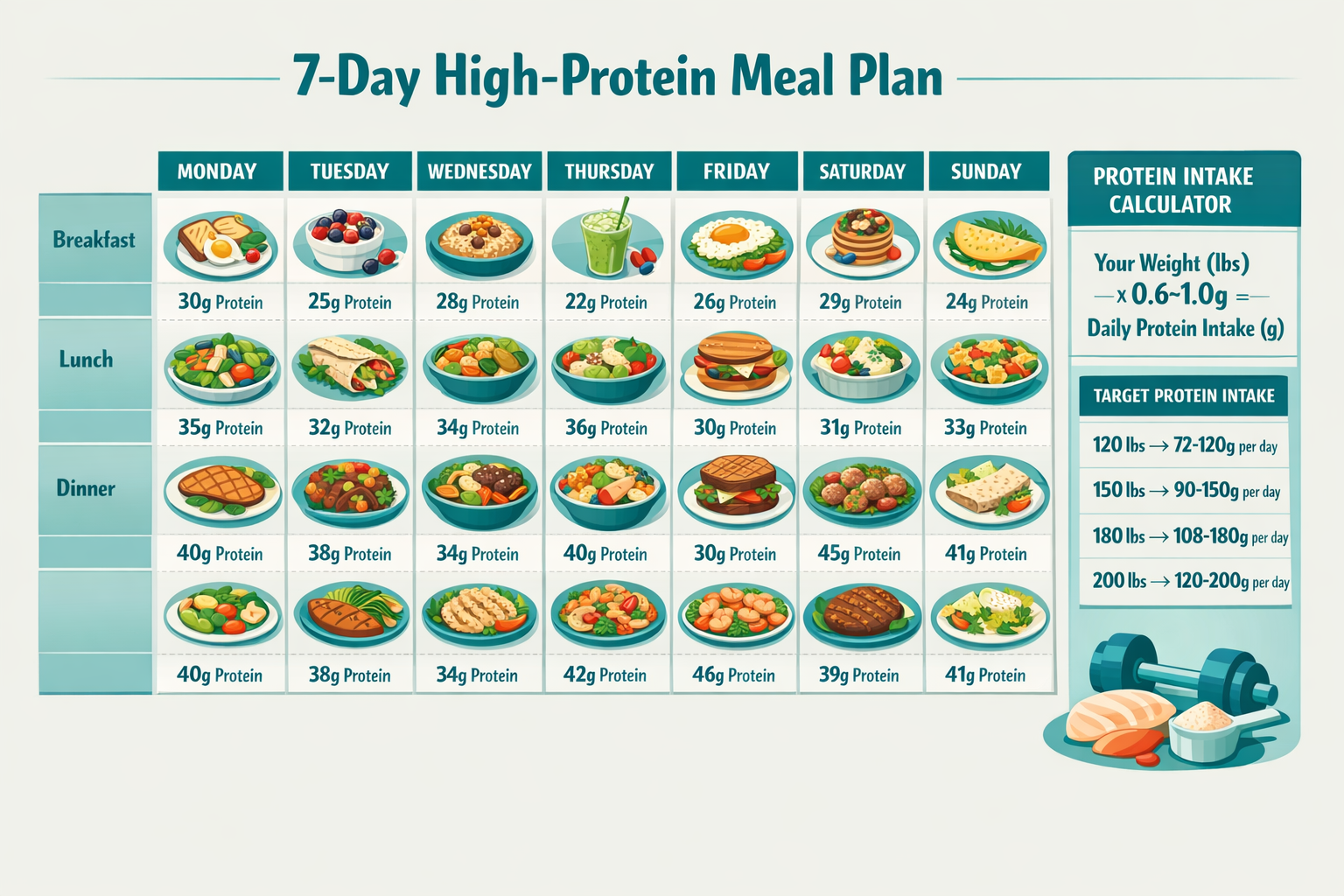
A good protein meal plan is built around a simple rule: anchor every meal with a protein source first, then add vegetables, then add carbohydrates or fats to reach your calorie target.
Here is a practical 5-day sample plan for a person targeting 130–140g of protein per day (suitable for an 80–85 kg moderately active adult):
Sample 5-Day High-Protein Meal Plan
Day 1
- Breakfast: 3 scrambled eggs + 150g Greek yogurt + berries (~38g protein)
- Lunch: Grilled chicken breast salad with chickpeas and olive oil dressing (~42g protein)
- Dinner: Baked salmon + steamed broccoli + quinoa (~38g protein)
- Snack: Cottage cheese + cucumber slices (~15g protein)
- Daily total: ~133g protein
Day 2
- Breakfast: Protein smoothie — 1 scoop whey protein, almond milk, spinach, banana (~30g protein)
- Lunch: Turkey and avocado wrap in a whole-grain tortilla (~35g protein)
- Dinner: Lean beef stir-fry with edamame and brown rice (~40g protein)
- Snack: Hard-boiled eggs × 2 (~13g protein)
- Daily total: ~118g protein
Day 3 (Plant-Based)
- Breakfast: Tofu scramble with nutritional yeast and spinach (~28g protein)
- Lunch: Lentil and tempeh curry with cauliflower rice (~36g protein)
- Dinner: Black bean tacos with hemp seed guacamole (~30g protein)
- Snack: Edamame + roasted chickpeas (~18g protein)
- Daily total: ~112g protein
Day 4
- Breakfast: Cottage cheese pancakes (cottage cheese, oats, eggs) (~32g protein)
- Lunch: Tuna and white bean salad with lemon dressing (~38g protein)
- Dinner: Grilled chicken thighs + roasted sweet potato + green beans (~40g protein)
- Snack: Greek yogurt + walnuts (~12g protein)
- Daily total: ~122g protein
Day 5
- Breakfast: 4 egg whites + 1 whole egg omelette with feta and vegetables (~28g protein)
- Lunch: Shrimp and quinoa bowl with avocado and lime (~38g protein)
- Dinner: Baked cod + lentil soup + side salad (~42g protein)
- Snack: Protein bar (check label: aim for 15–20g protein, low sugar) (~18g protein)
- Daily total: ~126g protein
For more structured meal ideas, the healthy meals for weight loss guide provides additional recipe options that work well alongside a high-protein approach.
Protein Timing: Does It Matter?
Based on current evidence, yes — to a degree. Spreading protein intake across 3–4 meals (roughly 30–40g per meal) produces better muscle protein synthesis than eating the same total amount in one or two large servings. This is particularly relevant for adults over 50, where muscle protein synthesis requires a stronger stimulus.
Practical rule: Aim for at least 25–30g of protein at breakfast. Studies suggest that people who front-load protein earlier in the day tend to eat fewer total calories and make better food choices throughout the day.
Protein Supplementation: When Food Is Not Enough
Whole food sources should always be the foundation of a high-protein diet. But protein supplements have a legitimate role when food intake falls short, particularly for people with busy schedules, high protein targets, or dietary restrictions.
Whey protein is the most researched option. It is fast-digesting, high in leucine, and well-suited to post-workout use. A standard serving provides 20–25g of protein.
Casein protein digests slowly and is better suited to use before bed or between meals, where a sustained amino acid release is more useful.
Pea protein isolate is the strongest plant-based option for those avoiding dairy. It has a good amino acid profile (though slightly low in methionine) and has been shown in studies to produce comparable muscle-building results to whey in resistance-trained individuals.
Soy protein isolate is a complete plant protein with a strong evidence base. It is a solid choice for vegans.
What to look for on a supplement label:
- 20–30g protein per serving
- Less than 5g of added sugar
- Minimal artificial fillers
- Third-party tested (NSF, Informed Sport, or similar)
I would be careful with protein bars that market themselves as meal replacements — many contain more sugar and processed fats than they do useful protein. Read labels, not packaging claims.
Potential Health Risks and Considerations
A high protein diet for weight loss is safe for most healthy adults, but context matters. Here is where I prefer to be accurate rather than reassuring.
Kidney health: The concern that high protein damages healthy kidneys is not well-supported by current evidence. Research published in the Journal of Nutrition and Metabolism and other peer-reviewed sources consistently shows that high protein intake does not harm kidney function in people with normal kidney health. However, for individuals with existing chronic kidney disease (CKD), high protein intake can accelerate progression. If you have any kidney condition, consult a nephrologist before increasing protein significantly.
Gout and uric acid: High intake of purine-rich proteins (red meat, organ meats, shellfish) can raise uric acid levels and trigger gout flares in susceptible individuals. Choosing lower-purine protein sources (chicken, eggs, dairy, legumes) reduces this risk.
Bone health: Some older research suggested high protein increased calcium excretion and harmed bones. More recent evidence suggests the opposite — adequate protein intake is associated with better bone density, particularly when calcium intake is also sufficient.
Digestive changes: Significantly increasing protein intake, especially from animal sources, can cause constipation if fiber intake does not keep pace. Pairing high-protein eating with high fiber foods for weight loss addresses this directly and also improves satiety further.
Cardiovascular considerations: The type of protein matters. Replacing refined carbohydrates with lean protein sources is associated with improved cardiovascular markers. Replacing those carbohydrates with high saturated fat protein sources (processed red meat, full-fat dairy in large amounts) shows a more mixed picture. Choose your protein sources with this in mind.
Common mistake: Jumping from a low-protein diet to a very high-protein diet too quickly. Digestive discomfort, bloating, and changes in bowel habits are common when protein intake increases sharply. A gradual increase over 2–3 weeks is more comfortable and sustainable.
Long-Term Sustainability and the Psychology of High-Protein Eating
The most effective diet is the one you can maintain. Here is the real issue with many high-protein plans: they work well short-term but fail because they are too rigid, too expensive, or too disconnected from how people actually eat.
A few observations worth noting:
Protein increases dietary satisfaction. Because protein is the most satiating macronutrient, people on higher-protein diets tend to report less hunger and fewer cravings. This psychological benefit is underrated. Feeling satisfied makes it easier to stay consistent without relying on willpower.
Protein reduces decision fatigue. When you build meals around a protein anchor, food choices become simpler. You are not calculating complex macronutrient ratios at every meal — you are asking one question: “What is my protein source for this meal?”
Social eating is manageable. Unlike very low-carb or elimination diets, a high-protein approach does not require avoiding entire food categories. Most restaurant menus, social gatherings, and family meals include high-protein options. This makes long-term adherence more realistic.
Tracking helps, at least initially. Using a nutrition tracking app (Cronometer, MyFitnessPal, or similar) for 2–4 weeks gives you a clear picture of where your protein actually comes from and where the gaps are. Many people discover they are eating far less protein than they assumed. You do not need to track forever — but the data from a short tracking period is genuinely useful.
For a broader view of how protein fits within a complete weight loss strategy, the best weight loss diet options guide covers how different dietary approaches compare and where high-protein eating fits in.
Common Mistakes on a High Protein Diet for Weight Loss

Even with good intentions, several patterns consistently undermine results. Here are the most frequent ones:
1. Eating too much protein at one meal and too little at others.
Protein synthesis has a ceiling per meal (roughly 30–40g for most adults). Eating 80g at dinner and 10g at breakfast is less effective than distributing intake evenly. Spread it out.
2. Choosing high-protein foods that are also high in calories.
Nuts, cheese, and fatty cuts of meat are protein sources, but they are also calorie-dense. If you are in a calorie deficit for fat loss, lean protein sources give you more protein per calorie. Use calorie-dense protein sources as additions, not foundations.
3. Neglecting fiber alongside protein.
High protein without adequate fiber often leads to digestive discomfort and reduced gut health over time. Vegetables, legumes, and whole grains should accompany protein at most meals. The high fiber foods guide is a practical companion resource here.
4. Relying on protein supplements instead of whole foods.
Supplements are convenient but they do not carry the micronutrients, fiber, and satiety compounds found in whole food protein sources. Use them to fill gaps, not as a primary strategy.
5. Ignoring total calorie intake.
Protein supports fat loss, but a calorie deficit is still required. Eating large amounts of protein on top of an already high-calorie diet will not produce weight loss. The numbers matter.
6. Not adjusting protein intake as body weight changes.
As you lose weight, your protein target (calculated per kg of body weight) changes. Recalculate every 5–10 kg of weight loss to stay on target.
Interactive Protein Intake Calculator
Use the calculator below to estimate your daily protein target based on your weight, activity level, and goal:
🥩 Daily Protein Intake Calculator
Estimate your optimal protein target for weight loss based on your body weight, activity level, and goal.
This is an estimate for healthy adults. If you have kidney disease, diabetes, or other metabolic conditions, consult a registered dietitian or your doctor before significantly changing your protein intake.
Frequently Asked Questions
How much protein should I eat daily for weight loss?
A sensible starting point is 1.2 to 1.6 grams of protein per kilogram of body weight per day for most adults. Active individuals and those over 50 may benefit from 1.6 to 2.2 g/kg. Use the calculator above to get a personalized estimate.
What are the best high-protein foods for weight loss?
The strongest options for lean protein per calorie are chicken breast, turkey breast, canned tuna, shrimp, egg whites, Greek yogurt, and cottage cheese. For plant-based eating, tempeh, edamame, lentils, and hemp seeds are the most practical choices.
Does eating more protein actually burn fat?
Protein does not directly burn fat, but it creates conditions that support fat loss: it raises the thermic effect of food (burning more calories during digestion), reduces hunger hormones, and preserves muscle mass — which keeps your metabolic rate higher during a calorie deficit.
Can I eat too much protein?
For healthy adults, the evidence does not support a strict upper limit for protein intake in the ranges typically discussed for weight loss (up to 2.2 g/kg). However, very high intakes (above 3 g/kg) offer no additional benefit and may cause digestive discomfort. People with kidney disease should follow medical guidance on protein limits.
Is a high-protein diet safe long-term?
Based on current evidence, yes — for healthy adults. Studies tracking high-protein diets over 12 months or more show maintained fat loss, preserved muscle mass, and no adverse effects on kidney function, bone density, or cardiovascular markers in people without pre-existing conditions.
What is the best time to eat protein for weight loss?
Distributing protein across 3–4 meals is more effective than concentrating it in one or two. Eating 25–30g of protein at breakfast is particularly well-supported for reducing total daily calorie intake and improving appetite control.
Do I need protein supplements to lose weight?
No. Whole food sources should be the foundation. Supplements are useful when food intake falls short of your target — particularly for people with high protein needs, busy schedules, or plant-based diets where hitting targets through food alone is more difficult.
Can vegetarians and vegans follow a high-protein diet for weight loss?
Yes. It requires more planning but is entirely achievable. Key plant-based sources include tempeh, edamame, lentils, chickpeas, tofu, seitan, hemp seeds, and nutritional yeast. Plant-based protein supplements (pea, rice, soy) can fill remaining gaps.
Will a high-protein diet cause kidney damage?
Not in people with healthy kidneys — this is one of the most persistent myths in nutrition. The evidence consistently shows no harm to kidney function from high protein intake in healthy adults. The concern is valid only for people with existing chronic kidney disease.
How long before I see results on a high-protein diet?
Most people notice reduced hunger within the first week. Measurable fat loss typically becomes visible within 3–4 weeks when protein intake is combined with a calorie deficit. Muscle preservation benefits accumulate over months, becoming especially noticeable if you are also doing resistance training.
Does protein help with belly fat specifically?
Higher protein intake is associated with reduced abdominal fat in several studies, partly through its effect on insulin and cortisol levels. However, spot reduction is not possible — fat loss occurs throughout the body. A high-protein diet in a calorie deficit reduces total body fat, including visceral (abdominal) fat over time.
What if I struggle to eat enough protein every day?
Start by identifying your biggest protein gap — usually breakfast. Adding Greek yogurt, eggs, or a protein smoothie to your morning routine is the single highest-return change most people can make. From there, build lunch and dinner around a protein anchor before adding other components.
Conclusion
A high protein diet for weight loss is one of the most evidence-supported dietary strategies available. The mechanisms are well-understood, the food sources are accessible, and the practical benefits — reduced hunger, preserved muscle, higher metabolic rate — are real and measurable.
The main takeaway is this: protein is not a supplement or a trick. It is a foundational macronutrient that most people in a typical Western diet are under-eating, particularly at breakfast and in the context of a calorie deficit.
Actionable next steps:
- Calculate your protein target using the calculator above or the formula (body weight in kg × 1.4–1.6g for moderate activity).
- Audit your current intake — track your food for 3–5 days to see where you actually stand.
- Identify your protein anchor for each meal — pick one high-protein food to build each meal around.
- Increase gradually — add 20–30g of protein per day over 2–3 weeks to avoid digestive discomfort.
- Pair protein with fiber — this combination produces the strongest satiety effect and supports gut health. See our high fiber foods for weight loss guide for practical pairing ideas.
- Reassess every 4–6 weeks — adjust your target as your body weight changes and your activity level evolves.
There is no magic in it. But done consistently, a well-structured high-protein approach to eating is one of the most practical and sustainable tools available for fat loss. Start with what gives the biggest return, keep it simple and consistent, and let the evidence do the work.
For a broader look at how protein fits within a complete dietary strategy, explore our guide to the best weight loss diet options and our practical weight loss techniques overview.
References
- Westerterp-Plantenga, M. S., Lemmens, S. G., & Westerterp, K. R. (2012). Dietary protein – its role in satiety, energetics, weight loss and health. British Journal of Nutrition, 108(S2), S105–S112. https://doi.org/10.1017/S0007114512002589
- Leidy, H. J., Clifton, P. M., Astrup, A., Wycherley, T. P., Westerterp-Plantenga, M. S., Luscombe-Marsh, N. D., … & Mattes, R. D. (2015). The role of protein in weight loss and maintenance. American Journal of Clinical Nutrition, 101(6), 1320S–1329S. https://doi.org/10.3945/ajcn.114.084038
- Morton, R. W., Murphy, K. T., McKellar, S. R., Schoenfeld, B. J., Henselmans, M., Helms, E., … & Phillips, S. M. (2018). A systematic review, meta-analysis and meta-regression of the effect of protein supplementation on resistance training-induced gains in muscle mass and strength in healthy adults. British Journal of Sports Medicine, 52(6), 376–384. https://doi.org/10.1136/bjsports-2017-097608
- Stokes, T., Hector, A. J., Morton, R. W., McGlory, C., & Phillips, S. M. (2018). Recent perspectives regarding the role of dietary protein for the promotion of muscle hypertrophy with resistance exercise training. Nutrients, 10(2), 180. https://doi.org/10.3390/nu10020180
- Antonio, J., Ellerbroek, A., Silver, T., Orris, S., Scheiner, M., Gonzalez, A., & Peacock, C. A. (2015). A high protein diet (3.4 g/kg/d) combined with a heavy resistance training program improves body composition in healthy trained men and women – a follow-up investigation. Journal of the International Society of Sports Nutrition, 12, 39. https://doi.org/10.1186/s12970-015-0100-0
- Gorissen, S. H. M., & Witard, O. C. (2018). Characterising the muscle anabolic potential of dairy, meat and plant-based protein sources in older adults. Proceedings of the Nutrition Society, 77(1), 20–31. https://doi.org/10.1017/S002966511700194X
- Delimaris, I. (2013). Adverse effects associated with protein intake above the recommended dietary allowance for adults. ISRN Nutrition, 2013, 126929. https://doi.org/10.5402/2013/126929
- Paddon-Jones, D., Westman, E., Mattes, R. D., Wolfe, R. R., Astrup, A., & Westerterp-Plantenga, M. (2008). Protein, weight management, and satiety. American Journal of Clinical Nutrition, 87(5), 1558S–1561S. https://doi.org/10.1093/ajcn/87.5.1558S