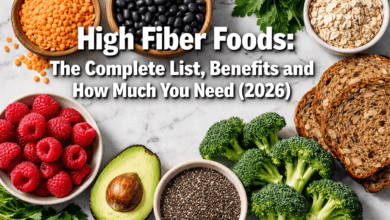
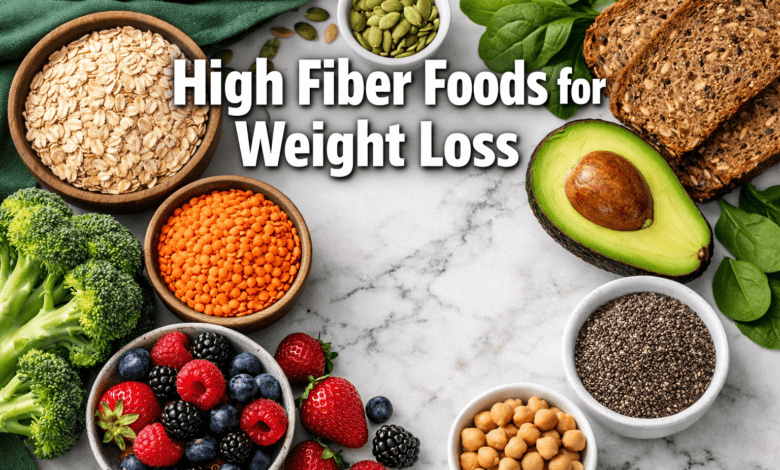
High Fiber Foods for Weight Loss
Last updated: April 5, 2026
Quick Answer
High fiber foods support weight loss primarily by slowing digestion, increasing satiety, and reducing overall calorie intake without requiring strict portion control. The most effective sources are whole plant foods: legumes, oats, berries, vegetables, chia seeds, and whole grains. Most adults need 25–35 grams of fiber per day, but the average American gets only 10–15 grams [2].
Key Takeaways
- The fiber gap is real: Most adults consume less than half the recommended daily fiber intake, which directly affects hunger, blood sugar control, and weight [2].
- Two types matter: Soluble fiber slows digestion and curbs hunger; insoluble fiber promotes regularity and gut health. You need both.
- Whole foods beat supplements: Beans, lentils, oats, berries, and vegetables deliver fiber alongside vitamins, minerals, and phytonutrients that isolated fiber powders cannot replicate [7].
- Increase slowly: Adding too much fiber too fast causes bloating and gas. A gradual increase of 2–3 grams per day allows your gut to adapt [2].
- Hydration is non-negotiable: Fiber without adequate water makes things worse, not better. Women need at least 9 cups of fluid daily; men need 11 cups [2].
- Resistant starch is worth knowing about: It ferments slowly and evenly in the gut, delivering fiber benefits with less digestive discomfort [4].
- 64% of Americans are now actively trying to eat more fiber, according to a 2025 poll, reflecting a genuine shift in how people approach weight and gut health [2].
- Context matters: Fiber works best as part of a broader eating pattern, not as a single fix bolted onto an otherwise poor diet.
Why High Fiber Foods Have Become the Focus of Weight Loss in 2026
Fiber is not a new discovery. But the level of attention it is getting in 2026 is genuinely different. Whole Foods named fiber one of its top food trends for the year [4]. EatingWell reported a 9,500% increase in page views on fiber-related content within the past year [5]. A social media movement called “fibermaxxing” has pushed the topic into mainstream health conversations, driven initially by younger consumers but now resonating across age groups [1].
Here is why this matters for anyone serious about weight loss: fiber is one of the few dietary changes with solid, consistent evidence behind it. It is not a supplement trend or a metabolic hack. It is a structural feature of whole plant foods that your body responds to in predictable, measurable ways.
59% of global consumers now list gut health as a priority in their overall wellbeing [6], and high-fiber foods sit at the center of that shift. The connection between gut health, appetite regulation, and body weight is increasingly well-supported by research, and it gives fiber a credibility that many other weight-loss strategies simply do not have.
We need to separate fact from hype here, though. Fiber is not magic. It does not burn fat. What it does is change the conditions under which you eat, digest, and feel hungry, and those changes add up over time.
For a deeper look at the full spectrum of fiber sources and daily targets, see our complete guide to high fiber foods, benefits, and daily needs.
What Are the Two Types of High Fiber Foods and Why Does the Difference Matter?
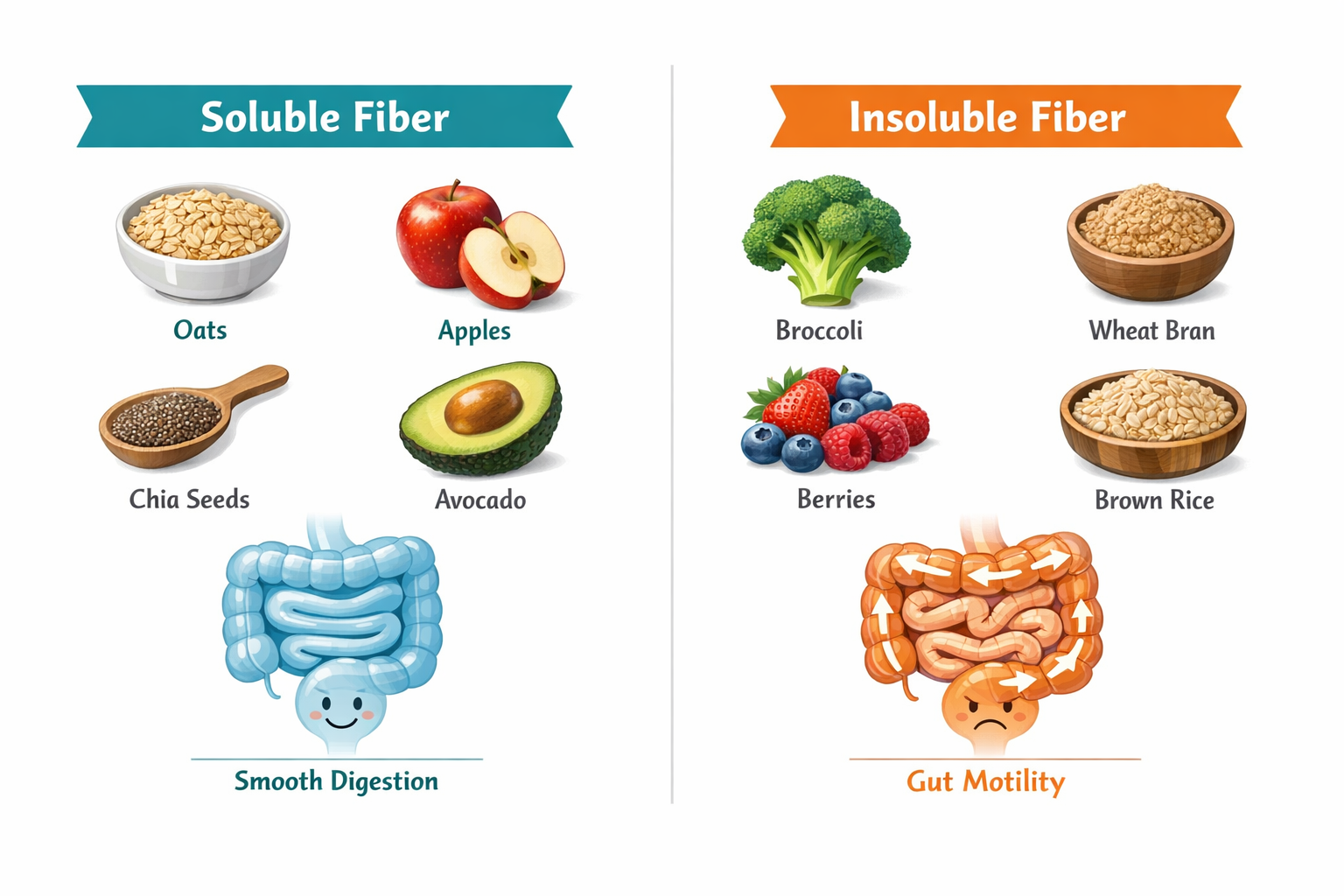
Soluble and insoluble fiber do different jobs in your body, and both contribute to weight loss through different mechanisms. Understanding the distinction helps you choose foods more deliberately rather than just chasing a gram count.
Soluble Fiber: The Satiety Driver
Soluble fiber dissolves in water and forms a gel-like substance in your digestive tract. That gel slows the movement of food through your stomach and small intestine, which means:
- You feel full for longer after meals
- Blood sugar rises more gradually after eating
- LDL cholesterol levels tend to decrease over time
- Food cravings between meals are reduced [2]
Best soluble fiber sources:
| Food | Serving | Approx. Fiber (g) |
|---|---|---|
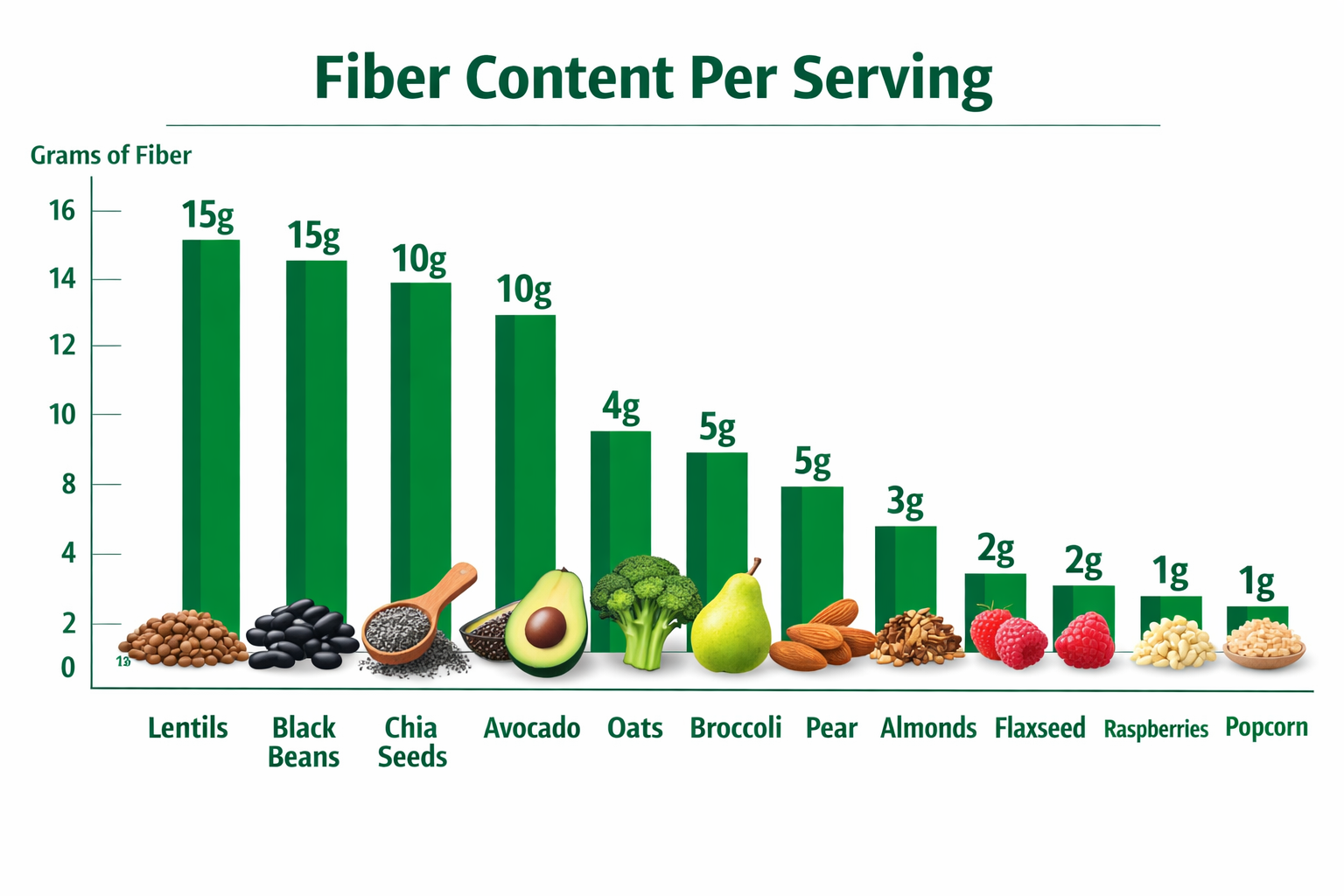
| Black beans | ½ cup cooked | 7–8g |
| Oatmeal | 1 cup cooked | 4g |
| Chia seeds | 2 tablespoons | 10g |
| Avocado | ½ medium | 5g |
| Apple (with skin) | 1 medium | 4–5g |
| Psyllium husk | 1 tablespoon | 5g |
| Banana | 1 medium | 3g |
For more on avocado’s nutritional profile, including its fiber and healthy fat content, see our avocado benefits guide.
Insoluble Fiber: The Gut Regulator
Insoluble fiber does not dissolve in water. Instead, it adds bulk to stool and speeds transit through the digestive tract. This matters for weight loss because a well-functioning digestive system reduces bloating, prevents the discomfort that derails healthy eating habits, and supports a gut microbiome that influences appetite hormones [2].
Best insoluble fiber sources:
- Wheat bran and whole grain bread
- Brown rice and quinoa
- Broccoli, cauliflower, and green beans
- Berries (especially raspberries and blackberries)
- Celery and edible vegetable skins
- Ground flaxseed
- Popcorn (air-popped)
The practical point: Most whole plant foods contain a mix of both types. You do not need to track them separately. Focus on variety across legumes, vegetables, fruits, and whole grains, and you will naturally get both.
Which High Fiber Foods Give the Biggest Return for Weight Loss?
Start with what gives the biggest return. In plain English, some fiber sources are significantly more efficient than others in terms of fiber per calorie, satiety effect, and ease of including in regular meals.
The Top Performers
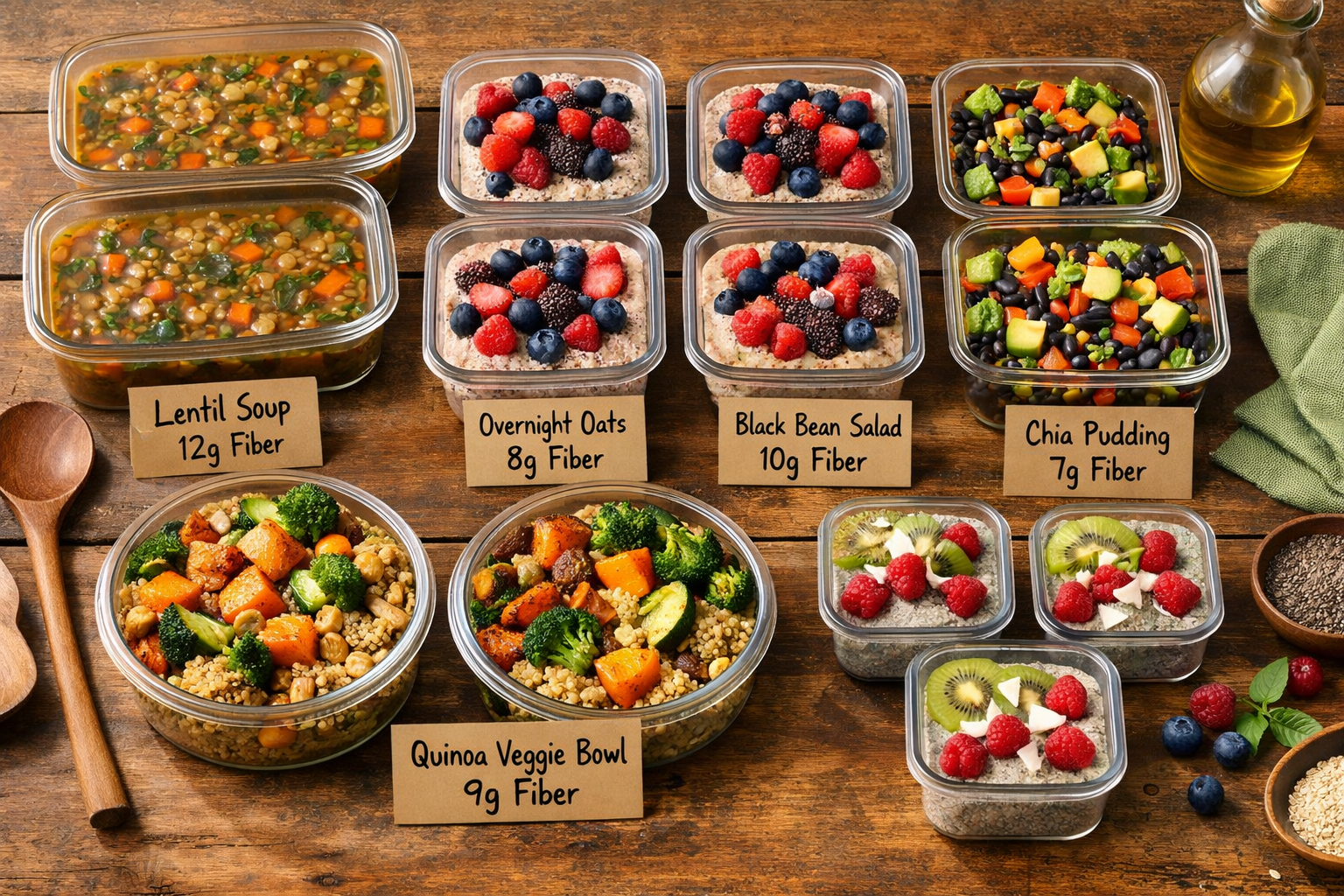
Legumes (beans, lentils, chickpeas) are the single most efficient fiber source for weight loss. A half-cup of cooked lentils delivers around 8 grams of fiber alongside plant protein that further extends satiety. They are inexpensive, versatile, and among the most studied foods for appetite control and metabolic health.
Chia seeds are worth the attention they get. Two tablespoons provide roughly 10 grams of fiber, mostly soluble, and they absorb water to form a gel that physically expands in your stomach. Add them to oats, smoothies, or yogurt.
Oats contain beta-glucan, a soluble fiber with particularly strong evidence for reducing post-meal blood sugar spikes and extending fullness. A bowl of oatmeal in the morning is one of the most practical, evidence-backed ways to start managing hunger earlier in the day.
Berries offer fiber with a low calorie load. Raspberries deliver about 8 grams per cup. They also contain polyphenols that support gut microbiome diversity, which connects to appetite regulation. For more on polyphenols and their broader health role, see what are polyphenols.
Vegetables with edible skins (broccoli, Brussels sprouts, carrots, sweet potato with skin) provide insoluble fiber alongside micronutrients and anti-inflammatory compounds. Our guide to anti-inflammatory foods covers many of the same foods that overlap with high-fiber eating.
A Note on Fiber Supplements
Psyllium husk, inulin, and isolated fiber powders can help fill a gap, but they are not equivalent to whole food sources. Whole foods deliver fiber alongside vitamins, minerals, phytonutrients, and water content that supplements cannot replicate [7]. I would treat supplements as a backup, not a primary strategy.
How Much Fiber Do You Actually Need for Weight Loss?
The recommended daily intake is 25 grams for women and 38 grams for men, according to the Institute of Medicine. For weight loss specifically, the evidence suggests that consistently hitting 25–35 grams per day from whole food sources produces meaningful improvements in satiety and calorie regulation [2].
The numbers matter here, but so does context. The average American currently gets 10–15 grams per day [2]. That means most people are not working from a baseline of adequate fiber and then fine-tuning. They are working from a significant deficit.
A sensible starting point is this: Add 2–3 grams of fiber per day each week until you reach your target. This gradual approach prevents the bloating and gas that cause many people to abandon higher-fiber eating before they experience its benefits.
What 30 Grams of Fiber Looks Like in a Day
| Meal | Food | Fiber |
|---|---|---|
| Breakfast | Oatmeal (1 cup) + chia seeds (1 tbsp) + raspberries (½ cup) | ~12g |
| Lunch | Lentil soup (1 cup) + whole grain bread (1 slice) | ~12g |
| Dinner | Roasted broccoli (1 cup) + brown rice (½ cup) | ~6g |
| Total | ~30g |
This is not an extreme eating plan. It is a practical daily structure built around foods most people already recognize and can find in any grocery store.
For practical meal ideas built around high-fiber whole foods, our healthy meals for weight loss guide covers complete day-by-day examples.
What Is Resistant Starch and Should You Care About It?
Resistant starch is a type of carbohydrate that behaves more like fiber than a standard starch. It resists digestion in the small intestine and instead ferments slowly in the large intestine, feeding beneficial gut bacteria.
The reason it is getting attention in 2026 is practical: resistant starch ferments more slowly and evenly than many fast-fermenting fibers, which means it delivers gut health benefits with significantly less bloating and gas [4]. For people who have tried increasing fiber and found the digestive side effects difficult to manage, resistant starch-rich foods are worth prioritizing.
Good sources of resistant starch:
- Cooked and cooled potatoes or rice (cooling increases resistant starch content)
- Green (unripe) bananas
- Cooked and cooled legumes
- Rolled oats (especially uncooked or minimally cooked)
- Whole grain barley
The simplest way to look at it is this: if you cook a batch of rice or potatoes and refrigerate them overnight, you are meaningfully increasing their resistant starch content without any additional effort.
What Are the Common Mistakes When Eating High Fiber Foods for Weight Loss?
Most people who try to increase fiber intake make a few predictable mistakes. Here is what to watch for.
Increasing Too Fast
This is the most common problem. Going from 12 grams to 35 grams of fiber in a week will cause significant bloating, gas, and discomfort for most people. The gut microbiome needs time to adjust to increased fermentation activity. Add fiber gradually, 2–3 grams per week, and the transition becomes manageable [2].
Not Drinking Enough Water
Fiber absorbs water. Without adequate hydration, increased fiber intake can actually worsen constipation rather than relieve it. Women should aim for at least 9 cups (72 ounces) of fluid daily when increasing fiber; men need at least 11 cups (88 ounces) [2]. This is non-negotiable.
Relying on Processed “High Fiber” Products
Fiber bars, high-fiber cereals, and fortified snack foods often contain isolated fibers (like chicory root or inulin) that ferment rapidly and cause more digestive discomfort than whole food sources. They also frequently come with added sugars and refined ingredients that undermine the weight-loss goal. The basics still do the heavy lifting here: whole grains, legumes, vegetables, and fruit.
Ignoring Mineral Absorption
Fiber exceeding 50–60 grams per day can bind with minerals including calcium, zinc, iron, and magnesium in the digestive tract, reducing their absorption [2]. This is not a concern at normal intake levels (25–35g), but it is worth knowing if you are considering aggressive supplementation. More is not always better.
Treating Fiber as a Standalone Fix
Here is the real issue: fiber works within the context of an overall eating pattern. Adding chia seeds to an otherwise poor diet will not produce meaningful weight loss. Fiber is most effective when it replaces lower-quality, lower-satiety foods rather than being added on top of them.
For a broader view of how fiber fits into effective weight management, see our weight loss strategy guide.
How Do You Build a Practical High-Fiber Eating Pattern?
The evidence suggests that consistency matters more than perfection. A practical high-fiber eating pattern does not require tracking every gram or overhauling your entire diet at once.
A Step-by-Step Approach
Step 1: Audit your current intake. For three days, note what you eat and roughly estimate the fiber content. Most people are surprised how low the number is. This gives you a realistic baseline.
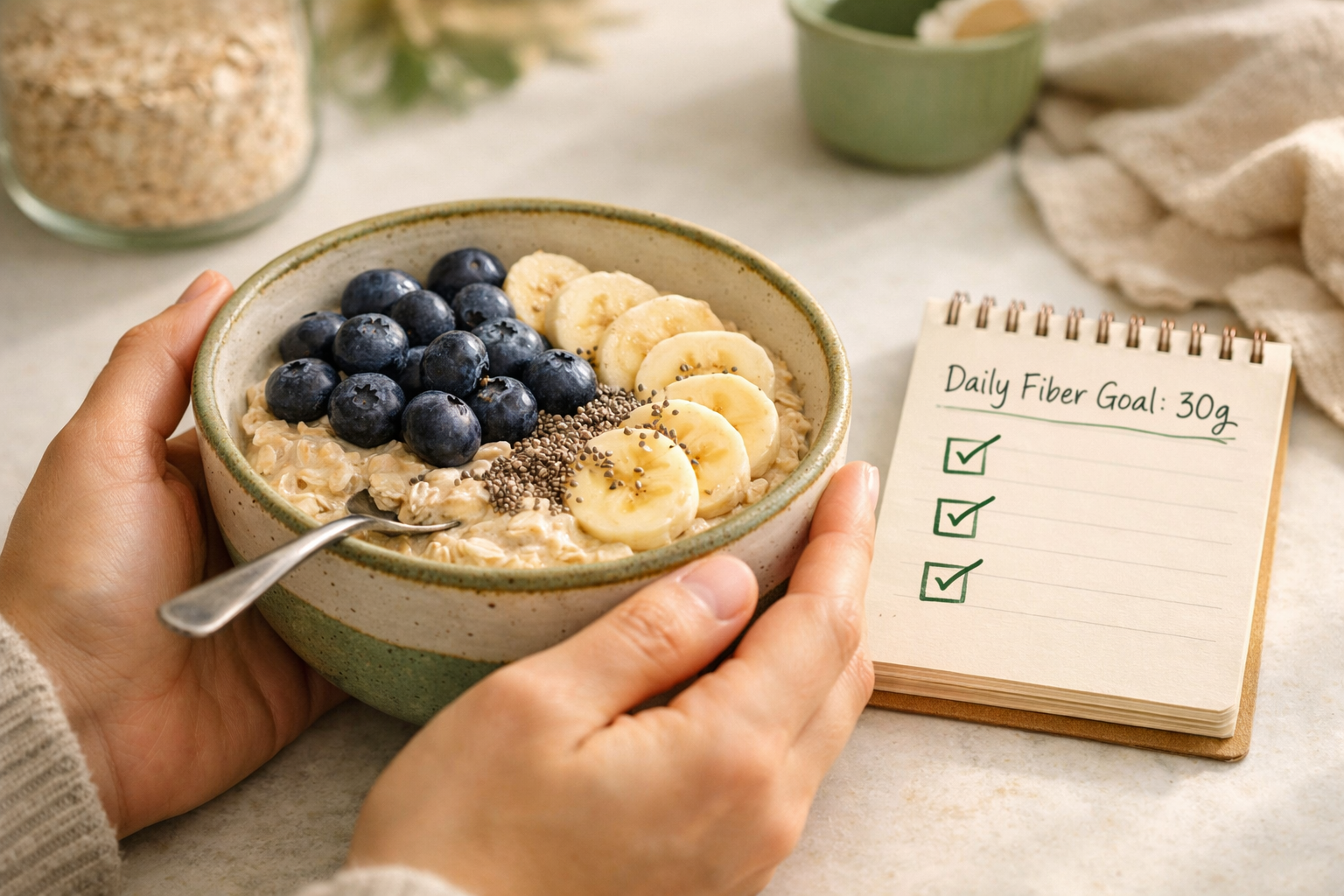
Step 2: Identify two or three anchor meals. Choose breakfast, lunch, or dinner as your primary fiber opportunities. Oatmeal with berries and chia seeds at breakfast is one of the highest-return single changes you can make.
Step 3: Add legumes twice a week. Lentils, black beans, chickpeas, and kidney beans are the most fiber-dense foods available. Even one cup of lentil soup delivers 15 grams of fiber. Start with two servings per week and build from there.
Step 4: Keep fruit and vegetables as the default snack. Apples, pears, carrots, and celery sticks are portable, inexpensive, and provide 3–5 grams of fiber per serving without requiring preparation.
Step 5: Swap refined grains for whole grains. Brown rice instead of white, whole grain bread instead of white, rolled oats instead of instant. These are low-effort substitutions with a meaningful cumulative effect.
Step 6: Increase water intake in parallel. For every significant fiber increase, add a glass of water to your daily intake.
Keep it simple and consistent. The goal is a sustainable pattern, not a short-term experiment.
Our gut health and digestive wellness guide covers the microbiome side of this in more detail, which is directly relevant to how fiber affects appetite and weight over time.
High Fiber Foods and the Gut-Weight Connection
The relationship between fiber, gut bacteria, and body weight is one of the more interesting areas of current nutrition research. The basic mechanism is this: fiber feeds beneficial gut bacteria, which produce short-chain fatty acids (SCFAs) as a byproduct. SCFAs influence appetite-regulating hormones, reduce inflammation, and improve insulin sensitivity, all of which affect how your body manages weight.
This is not speculative. The connection between gut microbiome diversity and healthy weight is increasingly well-documented, even if the precise mechanisms are still being studied. What is clear is that diets high in whole plant foods consistently support a more diverse gut microbiome, and that diversity correlates with better metabolic health outcomes [7].
The practical implication is straightforward: variety matters. Eating the same two or three high-fiber foods repeatedly is less effective than rotating across legumes, vegetables, fruits, whole grains, seeds, and nuts. Each food type feeds different bacterial populations, and diversity in your diet supports diversity in your gut.
For people interested in how food choices connect to inflammation and broader health markers, our foods that are anti-inflammatory article covers significant overlap with high-fiber eating patterns.
Daily Fiber Intake Tool
Use the interactive calculator below to estimate your current daily fiber intake and see how close you are to the recommended target.
🌿 Daily Fiber Intake Calculator
Select servings of foods you eat today to estimate your fiber intake.
FAQ: High Fiber Foods and Weight Loss
Q: How quickly will I see weight loss results from eating more fiber?
Most people notice reduced hunger and less snacking within one to two weeks of consistently hitting 25–30 grams of fiber per day. Measurable weight changes typically appear over four to eight weeks, depending on overall diet and activity level.
Q: Can I get enough fiber on a low-carb diet?
Yes, but it requires deliberate planning. Non-starchy vegetables, avocados, chia seeds, flaxseeds, and nuts are all low in net carbs and reasonably high in fiber. Legumes are harder to fit on strict low-carb plans due to their carbohydrate content.
Q: Is fiber from supplements as effective as fiber from food for weight loss?
No. Whole food fiber comes with additional nutrients, water content, and phytonutrients that amplify its effects. Supplements can help fill a gap, but they should not be the primary source.
Q: Why does eating more fiber cause gas and bloating?
Gut bacteria ferment fiber, producing gas as a byproduct. This is normal and typically decreases as your microbiome adapts. Increasing fiber gradually (2–3 grams per week) and drinking adequate water minimizes this effect significantly [2].
Q: Are high-fiber foods suitable for people with IBS?
It depends on the type of IBS and the specific fiber source. Some high-fiber foods (particularly those high in FODMAPs like certain legumes and wheat) can trigger symptoms in IBS sufferers. A registered dietitian familiar with the low-FODMAP approach can help identify which fiber sources are well-tolerated.
Q: What is the best high-fiber food to add first if I’m starting from scratch?
Oatmeal is the most practical starting point. It is widely available, inexpensive, easy to prepare, and delivers 4 grams of soluble fiber per cup. Pair it with berries and a tablespoon of chia seeds and you have roughly 14 grams of fiber in one meal.
Q: Does cooking affect the fiber content of vegetables?
Cooking softens fiber and can slightly reduce some types, but the difference is modest. Cooked vegetables are still excellent fiber sources, and cooking often makes them easier to eat in larger quantities.
Q: Can children and teenagers follow a high-fiber eating plan?
Yes, though fiber targets differ by age. The general rule for children is “age plus 5 grams” as a daily target (so a 10-year-old needs about 15 grams). Whole grains, fruits, vegetables, and legumes are appropriate for all ages.
Q: Is there a best time of day to eat high-fiber foods?
Starting the day with a fiber-rich breakfast (oats, berries, chia seeds) has the strongest evidence for reducing overall calorie intake throughout the day by managing hunger hormones from the morning onward.
Q: What happens if I eat too much fiber?
Above 50–60 grams per day, fiber can cause significant bloating, gas, and constipation, and may reduce absorption of minerals including calcium, iron, zinc, and magnesium [2]. Stay in the 25–35 gram range for most adults.
Conclusion: What Actually Moves the Needle
Let’s keep this practical. The evidence for high fiber foods in weight loss is not complicated. Fiber slows digestion, extends satiety, feeds a healthier gut microbiome, and helps regulate blood sugar. These mechanisms reduce calorie intake without requiring rigid restriction. That is a meaningful advantage for anyone trying to manage weight over the long term.
The main takeaway is this: close the fiber gap first. Most adults are eating less than half the recommended intake. Getting from 12 grams to 25–30 grams per day through whole foods (legumes, oats, vegetables, berries, seeds) is achievable, practical, and does not require an expensive supplement or a dramatic diet overhaul.
Your next steps:
- Estimate your current intake for three days using the calculator above.
- Add one high-fiber anchor meal per day, starting with breakfast (oats, berries, chia seeds).
- Include legumes twice a week as a primary protein and fiber source.
- Increase water intake alongside any fiber increase.
- Add 2–3 grams per week until you reach 25–35 grams daily. Do not rush this.
There is no magic in it. But done consistently, it works. And unlike many weight-loss strategies, it also improves gut health, blood sugar control, and cardiovascular markers at the same time.
For a broader look at how fiber fits into a complete weight-loss approach, explore our weight loss techniques guide and our guide to the best weight loss diets.