
Fat Burn Heart Rate: What It Is, How to Calculate It, and How to Use It

- What Is the Fat Burn Heart Rate and Why Does It Matter?
- How Do You Calculate Your Fat Burn Heart Rate?
- What Are the Five Heart Rate Zones and Where Does Fat Burning Fit?
- Which Exercises Best Target the Fat-Burning Heart Rate Zone?
- How Accurate Are Heart Rate Monitors for Tracking Fat Burn?
- Does Training in the Fat-Burning Zone Actually Lead to Fat Loss?
- What Lifestyle Factors Support Fat-Burning Zone Training?
- What Are the Most Common Mistakes When Training in the Fat-Burning Zone?
- Comparison: Fat-Burning Zone Training vs. High-Intensity Training
- FAQ
Last updated: April 3, 2026
Quick Answer
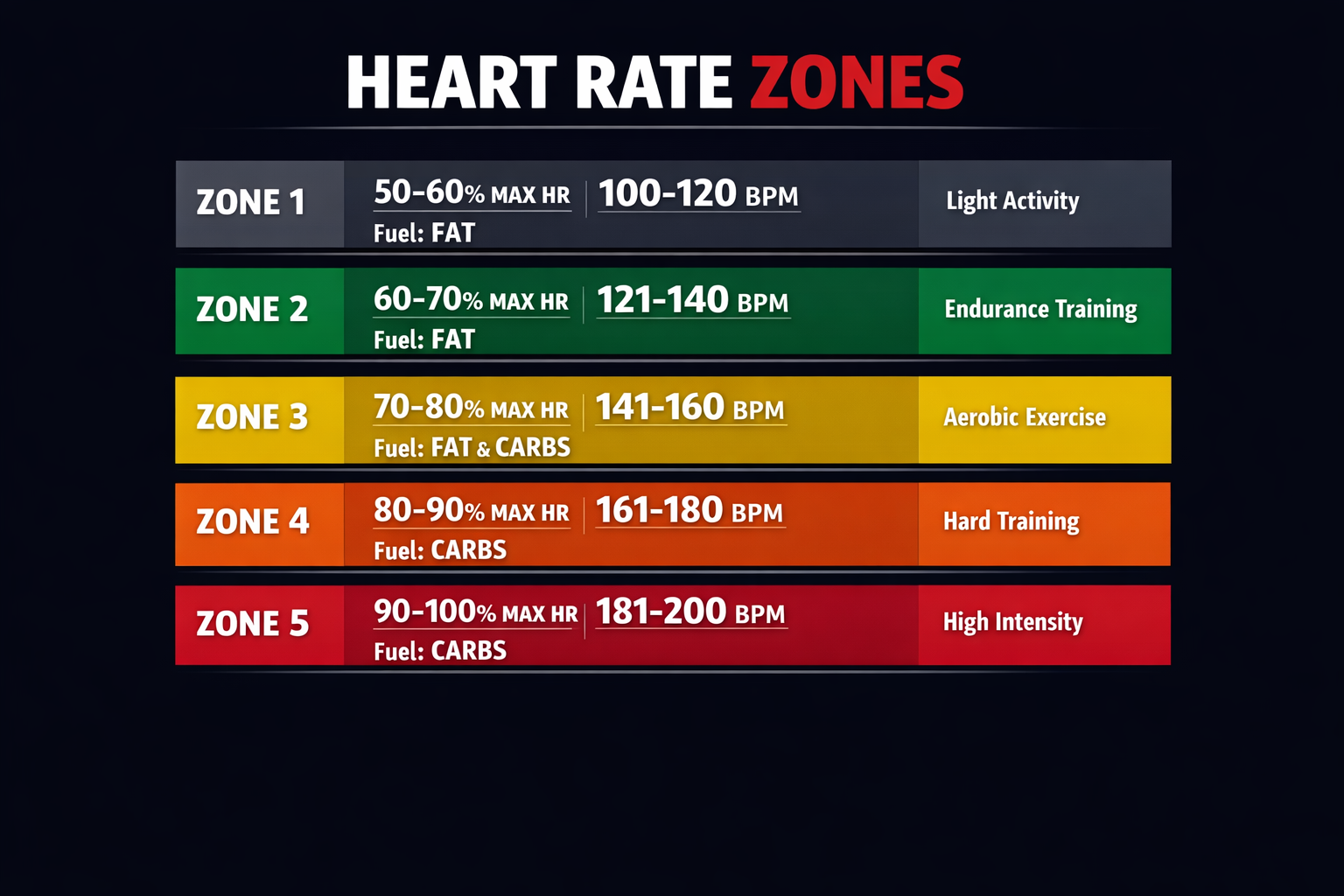
The fat burn heart rate is the exercise intensity range — typically 60–80% of your maximum heart rate (MHR) — at which the body draws a higher proportion of its energy from stored fat rather than carbohydrates. For most adults, this translates to a moderate-effort workout where breathing is elevated but conversation is still possible. Calculating it starts with one simple formula: subtract your age from 220 to estimate your MHR, then multiply by 0.6–0.8.
Key Takeaways
- The fat-burning zone is generally defined as 60–80% of your maximum heart rate, though some exercise scientists place the upper boundary closer to 70%.
- Maximum heart rate is estimated using the formula 220 minus age, though individual variation is significant.
- At lower intensities, fat contributes a larger percentage of fuel — but higher-intensity exercise burns more total calories, which also supports fat loss.
- Heart rate zones are numbered 1 through 5; Zone 2 and Zone 3 are most associated with fat oxidation.
- Chest strap monitors are the most accurate consumer-grade tools for tracking heart rate during exercise; wrist-based devices are convenient but less precise.
- Fat loss depends on total caloric deficit, not just which fuel source is used during a workout.
- Combining moderate-intensity cardio (fat-burn zone) with strength training produces better long-term fat loss results than either approach alone.
- Resting heart rate (RHR) is a useful baseline metric; a healthy RHR typically falls between 60–100 beats per minute (bpm).
- The Karvonen formula, which factors in resting heart rate, gives a more personalized target zone than age-based estimates alone.
- Non-exercise factors — sleep, diet quality, stress management, and hydration — significantly affect fat loss outcomes alongside training.
What Is the Fat Burn Heart Rate and Why Does It Matter?
The fat burn heart rate is the range of beats per minute at which the body preferentially oxidizes fat as its primary fuel source during exercise. At this moderate intensity, the aerobic energy system is dominant, meaning the body has sufficient oxygen to break down fatty acids for fuel rather than relying heavily on glucose from carbohydrates.
This matters for anyone trying to reduce body fat because training in this zone for sustained periods can increase the body’s efficiency at metabolizing fat — a benefit that extends beyond individual workouts over time. It also tends to be sustainable for longer durations than high-intensity training, making it accessible for beginners and useful for active recovery in trained athletes.
Why the zone concept exists: Exercise physiologists identified that fuel usage shifts along a continuum as intensity increases. At very low intensities, fat is the dominant fuel. As intensity rises toward and beyond the anaerobic threshold, carbohydrates take over. The “fat-burning zone” marks the sweet spot where fat oxidation is meaningfully elevated without crossing into predominantly anaerobic metabolism.
One important nuance: Training in the fat-burning zone burns a higher proportion of fat per minute, but higher-intensity exercise burns more total calories per minute. Both approaches contribute to fat loss — the optimal choice depends on fitness level, available time, and training goals.
How Do You Calculate Your Fat Burn Heart Rate?
Calculating a fat burn heart rate requires two values: an estimated maximum heart rate (MHR) and a target percentage range.
Step 1 — Estimate maximum heart rate:
The most widely used formula is:
MHR = 220 − Age
For a 35-year-old, that gives an MHR of 185 bpm. This is an estimate; actual MHR can vary by 10–20 bpm between individuals of the same age.
Step 2 — Apply the fat-burning percentage:
Multiply MHR by 0.60 and 0.80 to get the lower and upper boundaries of the fat-burning zone.
- 35-year-old example: 185 × 0.60 = 111 bpm (lower bound); 185 × 0.80 = 148 bpm (upper bound)
Step 3 (optional but more accurate) — Use the Karvonen formula:
The Karvonen method incorporates resting heart rate (RHR) for a more individualized result.
Target HR = ((MHR − RHR) × % intensity) + RHR
For a 35-year-old with an RHR of 65 bpm targeting 70% intensity:
- (185 − 65) × 0.70 + 65 = 84 + 65 = 149 bpm
This approach accounts for cardiovascular fitness level, making it more relevant for people who are already active.
Quick reference — estimated fat-burning zone by age (based on 60–80% of age-predicted MHR):
| Age | Lower Bound (60%) | Upper Bound (80%) |
|---|---|---|
| 20 | 120 bpm | 160 bpm |
| 30 | 114 bpm | 152 bpm |
| 40 | 108 bpm | 144 bpm |
| 50 | 102 bpm | 136 bpm |
| 60 | 96 bpm | 128 bpm |
| 70 | 90 bpm | 120 bpm |
Note: These are population-level estimates. Individual MHR can differ meaningfully from the 220-minus-age prediction.
Common mistake: Using only the 220-minus-age formula without accounting for fitness level. A highly trained 45-year-old may have a true MHR well above the formula’s prediction, making their fat-burning zone higher than the table suggests.
What Are the Five Heart Rate Zones and Where Does Fat Burning Fit?
Heart rate training zones divide the full spectrum of exercise intensity into five bands, each associated with distinct physiological responses and training benefits. Understanding where fat burning fits within this system helps with designing effective workouts.
Zone 1 — Very Light (50–60% MHR)
This is gentle movement: easy walking, light stretching, warm-ups. Fat is the primary fuel, but total energy expenditure is low. Best for recovery days and building aerobic base in beginners.
Zone 2 — Light to Moderate (60–70% MHR)
This is the core of the fat-burning zone. The body relies heavily on fat oxidation, the effort feels comfortable, and sessions can last 45–90 minutes or longer. Endurance athletes spend significant training volume here. For weight management, this zone offers the best combination of fat utilization and sustainability.
Zone 3 — Moderate to Aerobic (70–80% MHR)
Breathing becomes noticeably harder. Fat still contributes to fuel, but carbohydrates begin to play a larger role. This zone improves aerobic capacity and cardiovascular efficiency. It’s sometimes called the “tempo” zone.
Zone 4 — Threshold (80–90% MHR)
This is hard effort — near or at the anaerobic threshold. Carbohydrates are the dominant fuel. Lactic acid accumulates faster than it clears. Sessions in this zone are typically shorter (20–40 minutes) and build speed and power. Fat loss benefit comes primarily from elevated post-exercise calorie burn.
Zone 5 — Maximum (90–100% MHR)
All-out effort, sustainable only for seconds to a few minutes. Used in sprint intervals and competitive racing. Not appropriate for extended fat-burning sessions, but valuable for improving peak performance and metabolic rate.
Choose Zone 2 if: the goal is sustainable fat oxidation, building aerobic base, or recovering between harder sessions.
Choose Zone 3–4 if: time is limited and higher total calorie burn per session is the priority.
For those focused on rapid weight loss techniques, combining Zone 2 steady-state sessions with periodic Zone 4 intervals tends to outperform either approach used exclusively.
Which Exercises Best Target the Fat-Burning Heart Rate Zone?

Any sustained, rhythmic aerobic activity can keep heart rate in the fat-burning zone. The best choice is the one that can be maintained for 30–60 minutes at moderate effort without pushing into the anaerobic threshold.
Effective fat-burning zone exercises:
- Brisk walking — Accessible for all fitness levels; typically keeps most adults in Zone 2 without special equipment.
- Cycling (moderate pace) — Low joint impact; easy to sustain for longer durations. An exercise bike is particularly useful for those with knee concerns.
- Swimming — Full-body engagement with minimal joint stress; the health benefits of swimming extend beyond fat burning to cardiovascular and muscular conditioning.
- Jogging at a conversational pace — The “talk test” is a reliable field method: if full sentences are possible, the pace is likely in Zone 2–3.
- Elliptical training — Mimics running mechanics with reduced impact; heart rate response is similar to jogging.
- Rowing — Engages upper and lower body simultaneously; effective for reaching and sustaining the fat-burning zone.
- Dancing or group fitness classes — Social and enjoyable, which supports long-term adherence.
- Golf (walking the course) — Gentle, sustained activity that keeps heart rate in Zone 1–2 for extended periods.
Strength training and fat burning: Resistance training doesn’t typically sustain heart rate in the fat-burning zone during the session itself, but it builds lean muscle mass, which raises resting metabolic rate. This makes it a valuable complement to cardio for long-term fat loss. For those new to morning movement, pairing good morning exercises with a short Zone 2 cardio session is an effective starting routine.
Practical tip: Use the “talk test” as a low-tech alternative to a heart rate monitor. If maintaining a conversation requires noticeable effort but is still possible, the intensity is likely in the fat-burning zone.
How Accurate Are Heart Rate Monitors for Tracking Fat Burn?
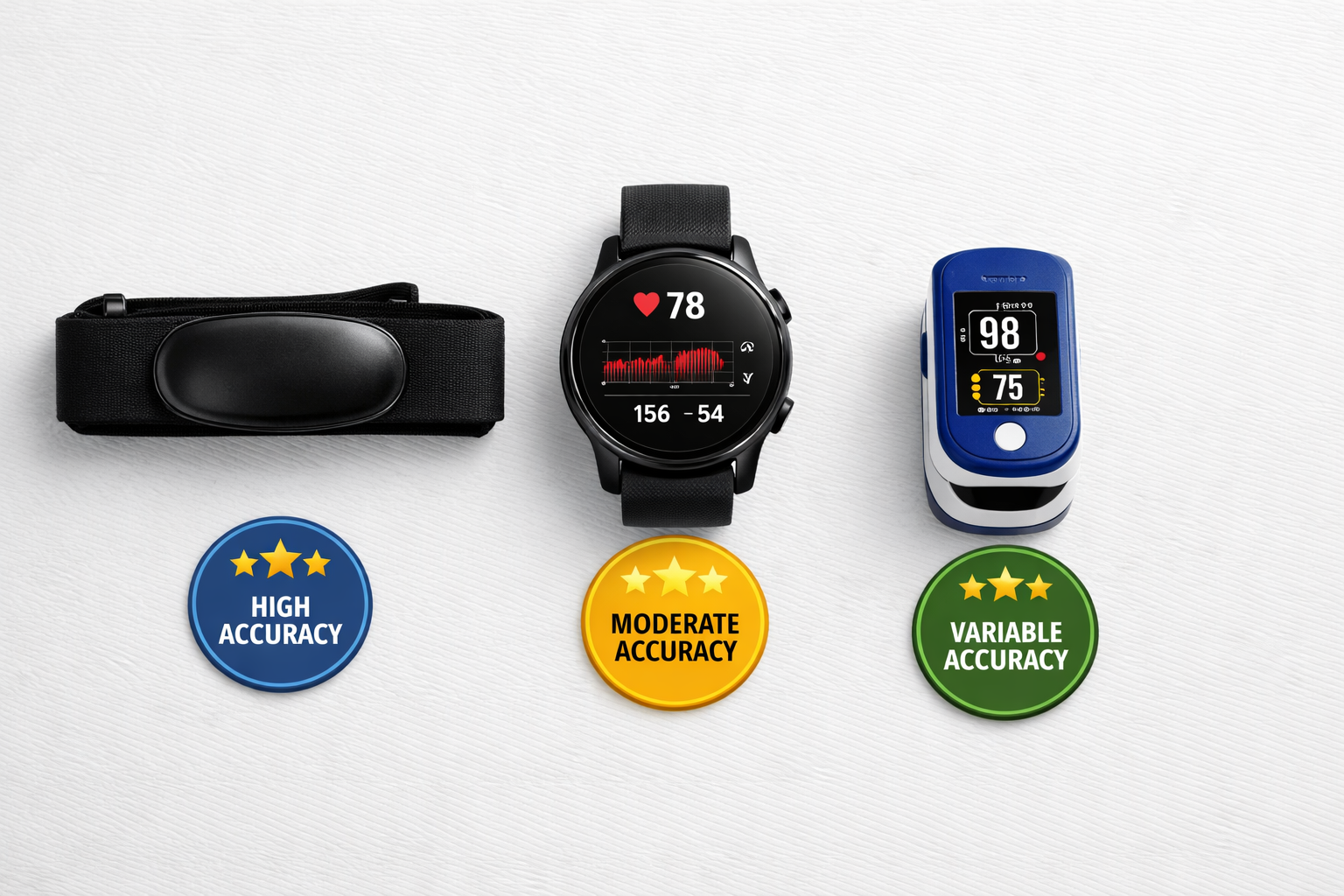
Heart rate monitors vary significantly in accuracy depending on type, placement, and movement. For fat-burning zone training, accuracy matters — being 15 bpm off could mean training in the wrong zone entirely.
Chest strap monitors
These are the most accurate consumer-grade option. They detect the heart’s electrical signals (like a simplified ECG) rather than optical pulse. Accuracy is generally within 1–2 bpm of clinical measurements during steady-state exercise. Chest straps are the preferred choice for serious training, interval work, or any situation where precise zone tracking is important.
Wrist-based monitors (smartwatches and fitness trackers)
These use optical sensors (photoplethysmography, or PPG) that detect blood flow changes beneath the skin. Accuracy is reasonable during steady-state activities like walking or cycling, but can degrade during high-intensity intervals, activities with wrist movement, or in cold conditions that reduce peripheral blood flow. For casual fat-burning zone monitoring, wrist devices are practical and sufficient.
Finger pulse oximeters
Designed primarily for measuring blood oxygen saturation, these devices also display heart rate. They’re accurate at rest but impractical during exercise. Useful as a quick resting heart rate check, not as a workout tool.
Smartphone camera-based apps
These use the phone camera and flash to detect pulse. Accuracy is limited and they require the user to remain still. Not suitable for exercise monitoring.
Choose a chest strap if: training intensity zones need to be precise, or if interval training is part of the routine.
Choose a wrist device if: convenience and all-day tracking are priorities and moderate accuracy is acceptable.
Does Training in the Fat-Burning Zone Actually Lead to Fat Loss?
Training in the fat-burning zone supports fat loss, but it’s one factor within a larger equation. The body’s fat stores are reduced when total energy expenditure consistently exceeds total energy intake — regardless of which fuel source is used during any given workout.
The fat oxidation advantage: During Zone 2 exercise, fat can contribute 50–65% of total fuel (compared to 30–40% at higher intensities, as a general estimate based on exercise physiology research). Over a 60-minute session, this means meaningfully more fat is oxidized per session compared to the same duration at lower or higher intensities.
The calorie burn trade-off: A 30-minute Zone 4 run burns more total calories than a 30-minute Zone 2 walk, even though the walk uses a higher fat percentage. If time is the limiting factor, higher-intensity training may produce greater total fat loss per unit of time.
What the evidence suggests: A balanced approach — using Zone 2 for longer sessions and adding Zone 3–4 intervals periodically — tends to produce better fat loss outcomes than either extreme. High-intensity interval training (HIIT) has been associated with improved fat oxidation and metabolic rate, while sustained Zone 2 training builds the aerobic base that supports all other training.
Diet remains the dominant variable. Exercise alone, without attention to caloric intake and food quality, rarely produces significant fat loss. Pairing fat-burning zone training with healthy meals for weight loss and mindful portion control is far more effective than exercise alone.
Edge case — overtrained athletes: Individuals who train exclusively at high intensities without Zone 2 work can develop reduced fat oxidation capacity. The body becomes efficient at using carbohydrates but less efficient at metabolizing fat. Incorporating more Zone 2 training can restore this balance.
What Lifestyle Factors Support Fat-Burning Zone Training?
Exercise is the foundation, but several lifestyle factors directly affect how efficiently the body burns fat during and after workouts.
Sleep
Sleep deprivation disrupts hormones that regulate appetite (ghrelin and leptin) and impairs fat metabolism. Adults who consistently sleep fewer than 7 hours per night tend to show reduced fat oxidation and increased fat storage, according to sleep research published in the past decade. Aim for 7–9 hours per night as a general target.
Hydration
Even mild dehydration (as little as 1–2% of body weight) can impair exercise performance and elevate perceived exertion, making it harder to sustain Zone 2 effort. Drinking adequate water throughout the day — not just during exercise — supports consistent training quality.
Diet quality
The composition of the diet affects fat oxidation capacity. Diets rich in whole foods, lean proteins, healthy fats, and fiber support stable blood glucose and better fat metabolism. Foods with anti-inflammatory properties may also support recovery and reduce exercise-related inflammation.
Stress management
Chronic stress elevates cortisol, which promotes fat storage (particularly around the abdomen) and can blunt the fat-burning response to exercise. Practices like structured breathing, walking in nature, or yoga can reduce cortisol levels and improve training outcomes.
Metabolic support through nutrition timing
Some evidence suggests that performing Zone 2 cardio in a fasted or low-glycogen state (such as before breakfast) increases fat oxidation during that session. This approach isn’t necessary for everyone, but it’s worth experimenting with for those who tolerate fasted training well. Herbs and compounds that boost metabolism naturally may complement — but not replace — consistent training and dietary habits.
What Are the Most Common Mistakes When Training in the Fat-Burning Zone?
Even with the right formula and a heart rate monitor, several common errors can undermine fat-burning zone training.
1. Training too hard, too often
Many people assume harder is always better. Consistently pushing into Zone 4–5 without adequate Zone 2 base work leads to fatigue, elevated cortisol, and reduced fat oxidation capacity. The fat-burning zone is intentionally moderate — it should feel easier than most people expect.
2. Ignoring resting heart rate trends
A resting heart rate that’s rising week over week is a signal of accumulated fatigue or overtraining. Monitoring RHR each morning (before getting out of bed) provides useful data about recovery status.
3. Relying solely on exercise for fat loss
Exercise accounts for a relatively small portion of total daily energy expenditure compared to basal metabolic rate and non-exercise activity. Without dietary adjustments, fat loss through exercise alone is slow. Reviewing weight loss strategies alongside a training plan produces better results.
4. Using inaccurate heart rate data
Wrist-based monitors can read 10–20 bpm high or low during certain activities. If zone training is a priority, validating wrist device readings against a chest strap periodically is worthwhile.
5. Neglecting strength training
Cardio in the fat-burning zone burns calories during the session, but muscle tissue burns calories at rest. Skipping resistance training means missing a significant long-term metabolic advantage.
6. Expecting fast results from Zone 2 alone
Zone 2 training builds aerobic capacity and fat oxidation efficiency over weeks and months. It’s not a rapid solution — but it creates a sustainable metabolic foundation that supports fat loss long-term.
Comparison: Fat-Burning Zone Training vs. High-Intensity Training
| Factor | Fat-Burning Zone (60–80% MHR) | High-Intensity Training (80–95% MHR) |
|---|---|---|
| Primary fuel | Fat (50–65% of energy) | Carbohydrates (60–80% of energy) |
| Calories burned per minute | Lower | Higher |
| Session duration | 30–90+ minutes | 15–40 minutes |
| Recovery required | Minimal | 24–48 hours |
| Fitness level required | Beginner-friendly | Intermediate to advanced |
| Long-term fat oxidation benefit | High | Moderate |
| Cardiovascular benefit | Strong aerobic base | Improved VO2 max and speed |
| Best for | Sustainable fat loss, beginners, recovery | Time-efficient calorie burn, performance |
The practical recommendation: Use fat-burning zone training as the foundation (3–4 sessions per week) and add 1–2 higher-intensity sessions for variety and metabolic stimulus. This combination addresses both fat oxidation efficiency and total calorie expenditure.
📂 Exercise Guide for Better Health
This article is part of the APH cluster. Use the links below to move between the pillar and child articles.
- Read the pillar: Exercise guide for better health
- → Walking vs Running for Weight Loss: Which Is Better for Beginners?
- → How to Start Walking for Exercise
- → Health Benefits of Swimming: The Complete Guide
- YOU ARE HERE Fat Burn Heart Rate: What It Is, How to Calculate It, and How to Use It
FAQ
What heart rate zone burns the most fat?
Zone 2 (60–70% of maximum heart rate) burns the highest proportion of fat per minute. However, higher-intensity zones burn more total calories, which also contributes to fat loss. For most people, Zone 2 is the most sustainable and effective zone for long-term fat reduction.
Is 70% of maximum heart rate a good fat-burning target?
Yes. Exercising at approximately 70% MHR places most people at the upper end of the fat-burning zone, where fat oxidation is high and the effort is still sustainable for 45–60 minutes. It’s a reliable target for moderate-intensity fat-burning sessions.
How long should a fat-burning zone workout last?
A minimum of 30 minutes is generally recommended to meaningfully tap into fat stores, as the body transitions more fully to fat oxidation after the first 15–20 minutes of sustained aerobic effort. Sessions of 45–60 minutes in Zone 2 are common for fat loss goals.
Can walking put you in the fat-burning zone?
For many adults, brisk walking (around 3.5–4.5 mph) does elevate heart rate into the 60–70% MHR range, placing them in Zone 2. The exact pace depends on age and fitness level. Using a heart rate monitor during walks confirms whether the target zone is being reached.
Does the fat-burning zone work for everyone?
The fat-burning zone concept applies broadly, but individual responses vary. Highly trained athletes may need to work harder to reach Zone 2, while deconditioned individuals may reach it with minimal effort. The formula is a starting point — actual training should be adjusted based on how the body responds.
What is the Karvonen formula and when should it be used?
The Karvonen formula calculates target heart rate by factoring in resting heart rate: Target HR = ((MHR − RHR) × % intensity) + RHR. It’s more accurate than simple age-based formulas, particularly for people who are fit (lower RHR) or deconditioned (higher RHR). Use it when a more personalized training zone is needed.
Is it better to exercise in the fat-burning zone or do HIIT for fat loss?
Both have merit. Fat-burning zone training is more sustainable and builds aerobic efficiency. HIIT burns more calories per minute and can elevate metabolic rate for hours post-exercise. Combining both across a weekly training plan tends to produce better results than relying on either exclusively.
How does age affect the fat-burning heart rate?
Because maximum heart rate declines with age (following the 220-minus-age estimate), the absolute bpm values for each zone decrease over time. A 60-year-old’s fat-burning zone (96–128 bpm) is lower in absolute terms than a 30-year-old’s (114–152 bpm), but the physiological principles are the same.
Can stress affect heart rate during exercise?
Yes. Elevated cortisol from chronic stress can raise resting and exercise heart rate, making it harder to stay in the intended training zone. Managing stress through sleep, recovery, and lifestyle habits supports more consistent heart rate responses during training.
What’s the most accurate way to find your true maximum heart rate?
A supervised VO2 max test in a clinical or sports science setting is the most accurate method. During this test, exercise intensity is progressively increased until the subject reaches exhaustion, revealing true MHR. For most people, the 220-minus-age formula is a practical and sufficient estimate.
Sources
1. American Heart Association — Target Heart Rate Guidelines
URL: https://www.heart.org/en/healthy-living/fitness/fitness-basics/target-heart-rates
This is the direct AHA page titled “Target Heart Rates Chart”, last reviewed August 11, 2024. It includes the 220-minus-age formula for estimated maximum heart rate and the full age-based target HR zone table (50–85% of HRmax).
2. Achten, Gleeson & Jeukendrup (2002) — Maximal Fat Oxidation
URL: https://pubmed.ncbi.nlm.nih.gov/11782653/
This is the PubMed record for the original paper “Determination of the exercise intensity that elicits maximal fat oxidation”, published in Medicine & Science in Sports & Exercise, 2002. It confirms the key finding: Fat(max) at 64 ± 4% VO₂max and 74 ± 3% HRmax.
3. Karvonen, Kentala & Mustala (1957) — Karvonen Formula Origin
URL: https://pubmed.ncbi.nlm.nih.gov/13470504/
This is the PubMed record for the original 1957 paper “The effects of training on heart rate; a longitudinal study”, published in Annales Medicinae Experimentalis et Biologiae Fenniae, 35(3):307–15. PMID 13470504 is the standard academic identifier used to cite this foundational work.
4. Kenney, Wilmore & Costill — Physiology of Sport and Exercise, 7th Ed.

Dave James has spent 30+ years reading health and longevity research, and has run All Perfect Health for the past five. His background is in Australian mining and industrial engineering — disciplines built on questioning claims, measuring outcomes, and respecting evidence. He writes about what the research actually says, including where the experts disagree.
More about Dave & this site →