
15 Proven Health Benefits of Olive Oil (And What the Science Actually Says)
Last updated: March 28, 2026
Quick Answer
Olive oil — especially extra virgin olive oil (EVOO) — is one of the most well-researched dietary fats in nutrition science. Its health benefits come primarily from its high monounsaturated fat content (mainly oleic acid), a rich concentration of polyphenols, and anti-inflammatory compounds like oleocanthal. Regular consumption is associated with reduced risk of heart disease, stroke, type 2 diabetes, and certain cancers, particularly when it forms part of a Mediterranean-style diet.
Key Takeaways
- Extra virgin olive oil is the least processed and most nutrient-dense form of olive oil — it should be your default choice for health purposes.
- The primary active compounds in EVOO are oleic acid, oleocanthal, oleuropein, and polyphenols — each with distinct, documented health effects.
- Research consistently links olive oil consumption to lower rates of cardiovascular disease, one of the leading causes of death globally.
- Olive oil’s anti-inflammatory properties make it relevant for conditions like rheumatoid arthritis, inflammatory bowel issues, and metabolic syndrome.
- Emerging research suggests EVOO may support brain health and reduce the risk of neurodegenerative diseases like Alzheimer’s.
- Olive oil is not a weight-gain food when consumed in appropriate amounts — its healthy fats can actually support satiety and metabolic function.
- It has legitimate topical uses for skin hydration and may reduce signs of oxidative aging when applied directly.
- The Mediterranean diet, which centers olive oil as its primary fat source, is consistently ranked among the most evidence-backed dietary patterns for longevity.
- Most nutrition experts suggest 1–2 tablespoons (15–30 ml) of EVOO per day as a practical daily target.
- Not all olive oils are equal — labeling, processing method, and storage conditions significantly affect the quality and potency of the oil you consume.
What Makes Olive Oil So Healthy? Understanding Its Key Compounds
Olive oil’s health benefits are not magic — they come from a specific set of bioactive compounds that interact with the body in measurable ways.
Oleic acid is a monounsaturated omega-9 fatty acid that makes up roughly 55–83% of olive oil’s fat content. It supports healthy cholesterol ratios, reduces low-grade inflammation, and improves insulin sensitivity. This is the same fatty acid found in avocados, which are also associated with significant cardiovascular and brain health benefits.
Polyphenols are plant-based antioxidants that protect cells from oxidative stress. EVOO contains dozens of distinct polyphenols, including oleuropein and hydroxytyrosol. These compounds are largely absent from refined or “light” olive oils because they are destroyed during processing.
Oleocanthal is a phenolic compound unique to olive oil that has been shown to mimic the anti-inflammatory action of ibuprofen at a molecular level — without the side effects associated with long-term NSAID use. It’s responsible for the characteristic throat-burn sensation in high-quality EVOO.
Vitamin E (tocopherol) acts as a fat-soluble antioxidant, protecting cell membranes from oxidative damage and supporting immune function.
The key point: the more processed the olive oil, the fewer of these compounds survive. Extra virgin olive oil retains the full spectrum. Refined and “extra light” varieties retain very little beyond the base fatty acid profile.
What Are the Different Types of Olive Oil — and Which Should You Buy?
Not all olive oils deliver the same health benefits. The type you choose matters significantly.
Extra Virgin Olive Oil (EVOO)
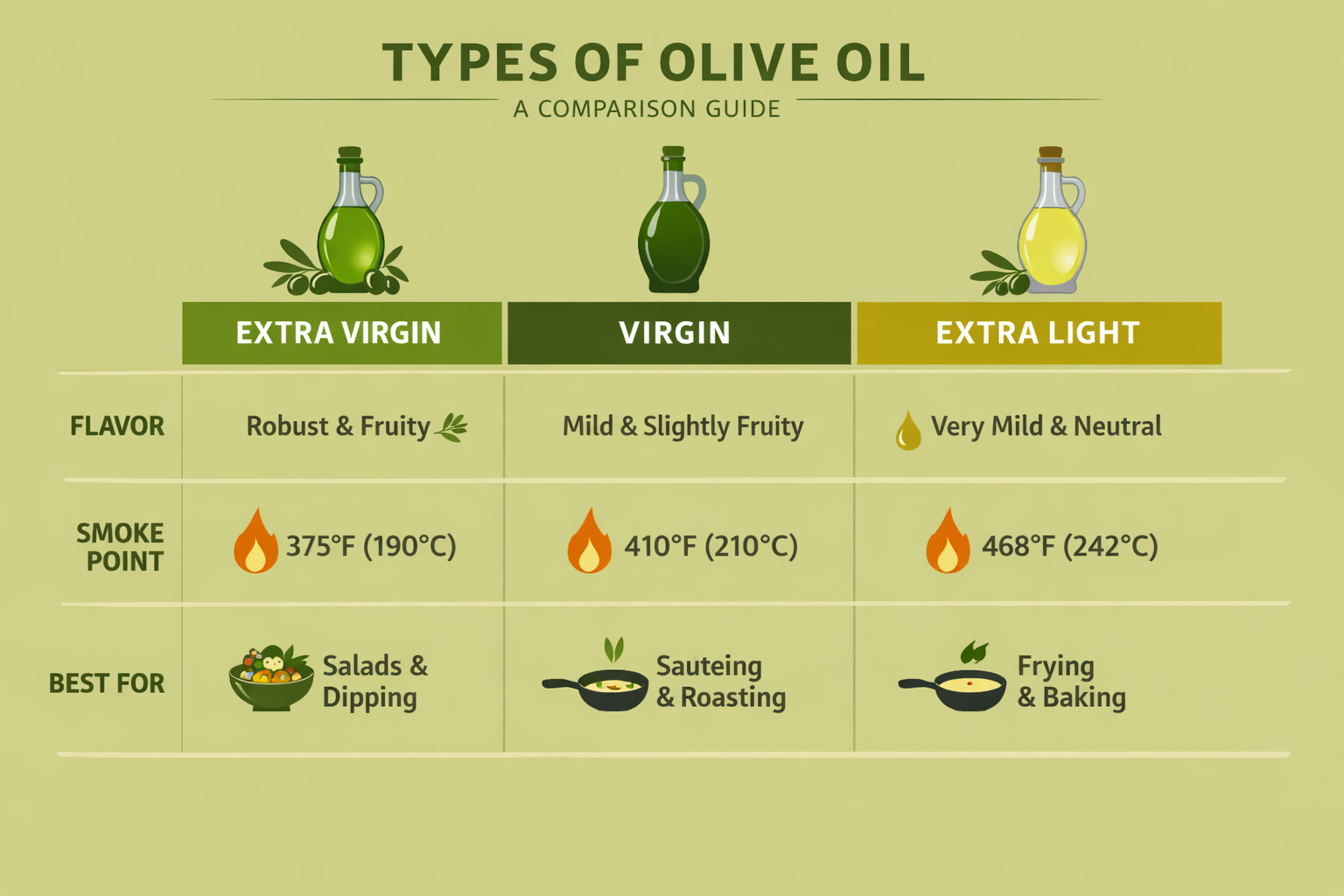
EVOO is produced by cold-pressing fresh olives without heat or chemical solvents. To qualify as “extra virgin,” the oil must meet strict standards: free acidity below 0.8%, no sensory defects, and a genuinely fruity, fresh flavor. It retains the highest concentration of polyphenols, oleocanthal, and vitamin E.
Choose EVOO if: you want maximum health benefit, you’re using it for salad dressings, finishing dishes, or low-to-medium heat cooking (up to around 375°F/190°C).
Virgin Olive Oil
Virgin olive oil is also cold-pressed but has slightly higher acidity (up to 2%) and may have minor sensory defects. It retains some polyphenols but fewer than EVOO. It’s a reasonable mid-tier option for everyday cooking.
Refined and “Extra Light” Olive Oil
These oils are chemically or heat-processed to remove defects and neutralize flavor. The result is a bland, high-smoke-point oil (around 465°F/240°C) that works well for high-heat cooking but provides minimal polyphenol content. “Light” refers to flavor, not calories — the fat content is identical to EVOO.
Common mistake: Assuming all olive oils on the shelf are equally healthy. Many products labeled “olive oil” are blends of refined and virgin oils. Check for a harvest date (within 18–24 months), a named region of origin, and a reputable certification seal.
How Does Olive Oil Support Heart Health?
Olive oil is one of the most studied dietary fats for cardiovascular protection, and the evidence is consistent across multiple research approaches.
Its primary cardiovascular effects include:
- Lowering LDL cholesterol oxidation — Polyphenols in EVOO prevent LDL particles from oxidizing, which is the key step in arterial plaque formation. Unoxidized LDL is far less damaging to arterial walls.
- Improving HDL function — Oleic acid and polyphenols help HDL cholesterol work more effectively at removing excess cholesterol from the bloodstream.
- Reducing blood pressure — Oleocanthal and polyphenols have vasodilatory effects, meaning they help relax blood vessel walls and reduce arterial stiffness.
- Decreasing inflammatory markers — Chronic low-grade inflammation is a major driver of atherosclerosis. EVOO’s anti-inflammatory compounds help suppress key inflammatory signals including interleukin-6 (IL-6) and C-reactive protein (CRP).
The PREDIMED trial (Prevención con Dieta Mediterránea), a large randomized controlled study published in the New England Journal of Medicine in 2013 and updated in 2018, found that a Mediterranean diet supplemented with extra virgin olive oil was associated with a significantly lower rate of major cardiovascular events compared to a low-fat control diet. This remains one of the most cited pieces of evidence for olive oil’s heart-protective effects.
For broader reading on anti-inflammatory eating patterns that complement olive oil’s benefits, see our complete guide to anti-inflammatory foods.
Can Olive Oil Help Prevent Stroke?
Yes — and the mechanism is well-documented. Olive oil reduces several independent risk factors for stroke simultaneously.
Strokes are caused either by blood clots blocking cerebral arteries (ischemic stroke) or by arterial rupture (hemorrhagic stroke). Olive oil addresses both pathways:
- It reduces arterial inflammation, which lowers the likelihood of plaque rupture and clot formation.
- Its antihypertensive effects reduce the pressure stress on arterial walls.
- Polyphenols improve endothelial function — the health of the thin cell layer lining blood vessels — which is a key determinant of stroke risk.
A 2011 observational study published in Neurology followed over 7,600 adults in France and found that those with the highest olive oil consumption had a 41% lower risk of stroke compared to those who never used olive oil. While observational data has limitations, this finding aligns with the biological mechanisms described above and has been replicated in subsequent Mediterranean cohort studies.
Does Olive Oil Help With Blood Sugar and Type 2 Diabetes Risk?
Olive oil has a meaningful role in blood sugar regulation, particularly for people managing insulin resistance or at risk of type 2 diabetes.
Oleic acid improves insulin sensitivity at the cellular level, meaning cells respond more efficiently to insulin signals and take up glucose more effectively. This reduces the burden on the pancreas and helps prevent the blood sugar spikes associated with insulin resistance.
Polyphenols in EVOO also appear to inhibit certain digestive enzymes involved in carbohydrate breakdown, slowing glucose absorption into the bloodstream after meals. This produces a more gradual blood sugar response — similar in principle to the effect of dietary fiber.
A meta-analysis published in Nutrients (2019) reviewed multiple randomized controlled trials and found that olive oil consumption was associated with statistically significant reductions in fasting blood glucose and HbA1c (a marker of long-term blood sugar control) in people with or at risk of type 2 diabetes.
Practical note: Olive oil works best as part of an overall dietary pattern, not as a standalone intervention. Replacing saturated fats (butter, lard, processed oils) with EVOO as your primary cooking fat is a simple, sustainable strategy.
What Are Olive Oil’s Anti-Inflammatory Properties?
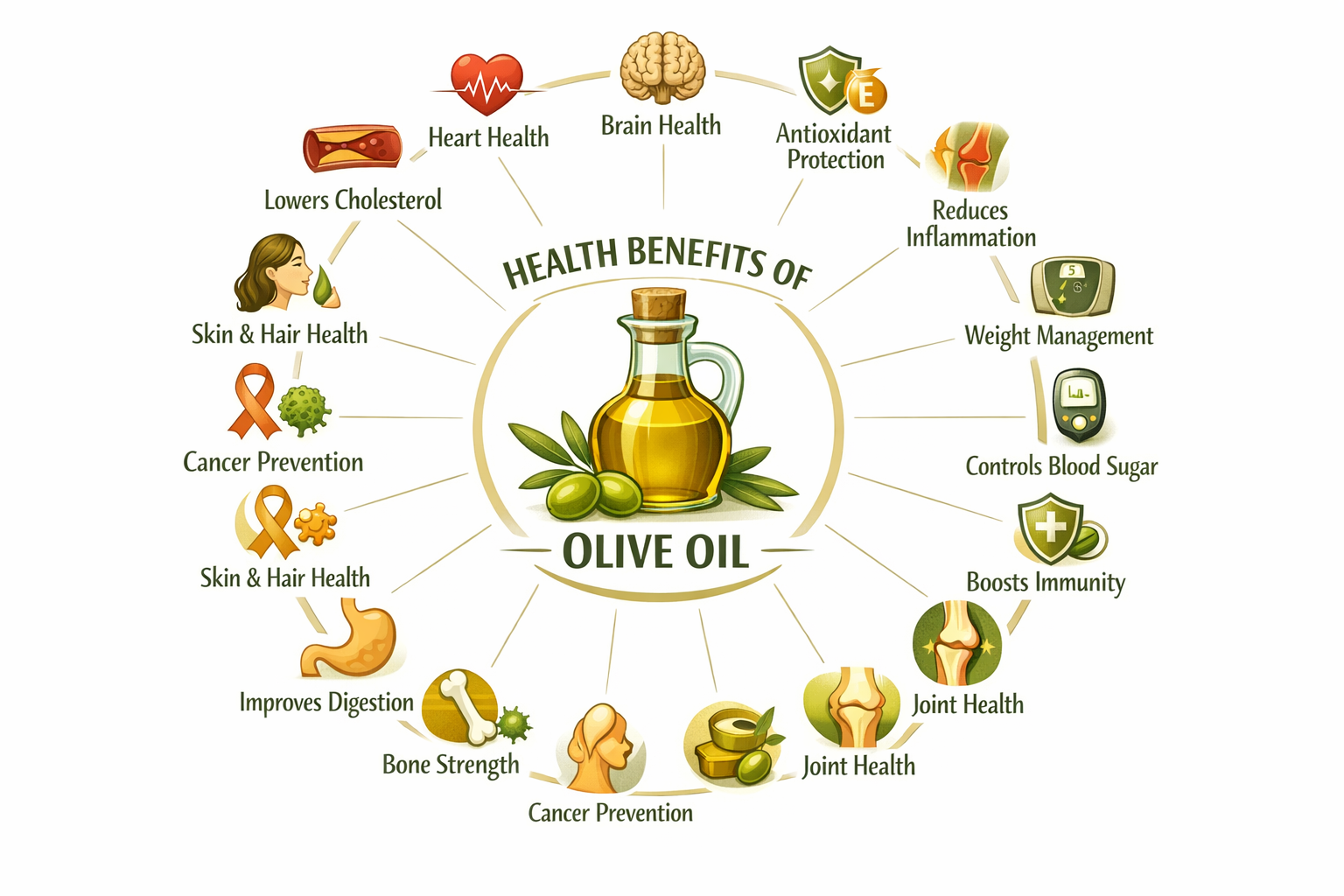
Chronic inflammation underlies most major non-communicable diseases, including heart disease, type 2 diabetes, cancer, and neurodegenerative conditions. Olive oil is one of the most potent dietary sources of natural anti-inflammatory compounds.
The three main anti-inflammatory agents in EVOO are:
- Oleocanthal — Inhibits the same enzymes (COX-1 and COX-2) targeted by ibuprofen. Regular EVOO consumption provides a mild but consistent anti-inflammatory effect without gastrointestinal side effects.
- Oleuropein — A polyphenol that reduces the production of inflammatory cytokines and protects against oxidative stress.
- Monounsaturated fatty acids (MUFAs) — Particularly oleic acid, which reduces the expression of pro-inflammatory genes at the cellular level.
For people with inflammatory conditions like rheumatoid arthritis, Crohn’s disease, or metabolic syndrome, incorporating EVOO into a diet already rich in anti-inflammatory foods can provide meaningful, cumulative relief. It won’t replace medical treatment, but it’s a well-supported dietary complement.
Can Olive Oil Protect Brain Health and Reduce Alzheimer’s Risk?
This is one of the more exciting areas of current olive oil research. The evidence is still developing, but it’s promising.
Alzheimer’s disease is characterized in part by the accumulation of amyloid-beta plaques and tau protein tangles in the brain. Oleocanthal has been shown in laboratory studies to enhance the brain’s ability to clear amyloid proteins — specifically by increasing the activity of proteins involved in the brain’s waste-clearance system (the glymphatic system).
Animal studies at Temple University (published in ACS Chemical Neuroscience, 2013 and subsequent follow-up work) demonstrated that mice fed an oleocanthal-enriched diet showed significantly reduced amyloid plaque burden and improved cognitive performance compared to controls.
Human epidemiological data supports this direction: populations following Mediterranean diets — in which EVOO is the primary fat source — consistently show lower rates of cognitive decline and dementia in long-term cohort studies.
Important caveat: Most mechanistic research on olive oil and Alzheimer’s is still in animal or cell-culture stages. Human clinical trials are ongoing. This is a promising area, not a proven cure or prevention strategy.
Does Olive Oil Support Weight Management?
Olive oil is calorie-dense (about 120 calories per tablespoon), so the question of whether it causes weight gain is reasonable. The evidence suggests that when consumed as a replacement for less healthy fats — rather than added on top of an existing diet — olive oil does not promote weight gain and may actually support weight management.
Several mechanisms explain this:
- Satiety: Oleic acid triggers the release of oleoylethanolamide (OEA), a gut hormone that signals fullness to the brain. This can reduce overall calorie intake by improving meal satisfaction.
- Metabolic efficiency: Monounsaturated fats are metabolized differently than saturated fats and are less likely to be stored as adipose tissue under normal dietary conditions.
- Reduced inflammation: Chronic inflammation is linked to leptin resistance, a hormonal state that disrupts hunger signaling and promotes fat storage. EVOO’s anti-inflammatory effects may help restore normal leptin function.
If you’re working on sustainable weight loss, replacing butter, margarine, or refined seed oils with EVOO is a practical, evidence-supported swap — not a reason to dramatically increase your total fat intake.
What Are the Skin Benefits of Olive Oil?
Olive oil has been used topically for skin care across Mediterranean cultures for thousands of years, and modern dermatology has identified several reasons why it works.
Moisturization: Olive oil’s fatty acid profile — particularly oleic acid and squalene — closely mimics the skin’s natural sebum. Applied topically, it penetrates the outer skin barrier and helps retain moisture without clogging pores in most skin types.
Antioxidant protection: Vitamin E and polyphenols in olive oil neutralize free radicals on the skin’s surface, reducing oxidative damage from UV exposure and environmental pollutants. This has a measurable effect on the rate of collagen degradation.
Anti-inflammatory relief: For dry, irritated, or eczema-prone skin, olive oil’s oleocanthal content can reduce surface inflammation and redness when applied as a topical treatment.
Practical uses:
- As an overnight facial oil or body moisturizer for dry skin types
- As a makeup remover or cleansing oil
- As a scalp treatment for dryness and flaking
- Mixed with sugar or sea salt as a gentle exfoliant
Edge case: Olive oil is not ideal for acne-prone or oily skin types. Oleic acid can disrupt the skin barrier in people whose skin is already sebum-rich, potentially worsening breakouts. For oily or combination skin, lighter oils (like jojoba or squalane) are better alternatives. For more on choosing the right oil for your skin type, see our guide to the best oils for dry skin.
Can Olive Oil Help Fight Harmful Bacteria and Support Gut Health?
Extra virgin olive oil has documented antimicrobial properties, particularly against bacteria that colonize the gastrointestinal tract.
Oleocanthal and oleuropein have both been shown in laboratory studies to inhibit the growth of Helicobacter pylori — the bacterium responsible for most peptic ulcers and a known risk factor for gastric cancer. A study published in the Journal of Agricultural and Food Chemistry (2007) found that EVOO polyphenols were effective against eight strains of H. pylori, including antibiotic-resistant strains.
Beyond H. pylori, the polyphenols in EVOO act as prebiotics — they selectively feed beneficial gut bacteria (particularly Lactobacillus and Bifidobacterium species) while inhibiting pathogenic strains. This supports a healthier gut microbiome composition overall.
For people interested in natural approaches to digestive health, incorporating EVOO into daily meals is a low-risk, evidence-supported strategy. It pairs well with fiber-rich plant foods that also nourish beneficial gut bacteria.
Does Olive Oil Have Anti-Cancer Properties?
The relationship between olive oil and cancer risk is an active area of research. The evidence is strongest for colorectal cancer and breast cancer, though it spans several cancer types.
The proposed mechanisms include:
- Polyphenol-driven apoptosis: Laboratory studies have shown that EVOO polyphenols (particularly oleocanthal and oleuropein) can trigger programmed cell death (apoptosis) in cancer cells while leaving healthy cells unaffected.
- Reduced oxidative DNA damage: Free radical damage to DNA is a primary driver of carcinogenesis. EVOO’s antioxidants reduce this damage at the cellular level.
- Anti-inflammatory pathway suppression: Chronic inflammation creates a cellular environment that promotes tumor growth. EVOO’s COX-inhibiting compounds disrupt this environment.
- Squalene content: Olive oil is one of the richest dietary sources of squalene, a compound that has shown antiproliferative effects against certain cancer cell lines in laboratory settings.
Important context: Most of this research is preclinical (cell cultures and animal models) or observational. Olive oil is not a cancer treatment, and no dietary intervention alone prevents cancer. What the evidence supports is that regular EVOO consumption, as part of a plant-rich diet, is associated with lower cancer incidence in population-level studies — particularly in Mediterranean cohorts.
How Does Olive Oil Fit Into the Mediterranean Diet?
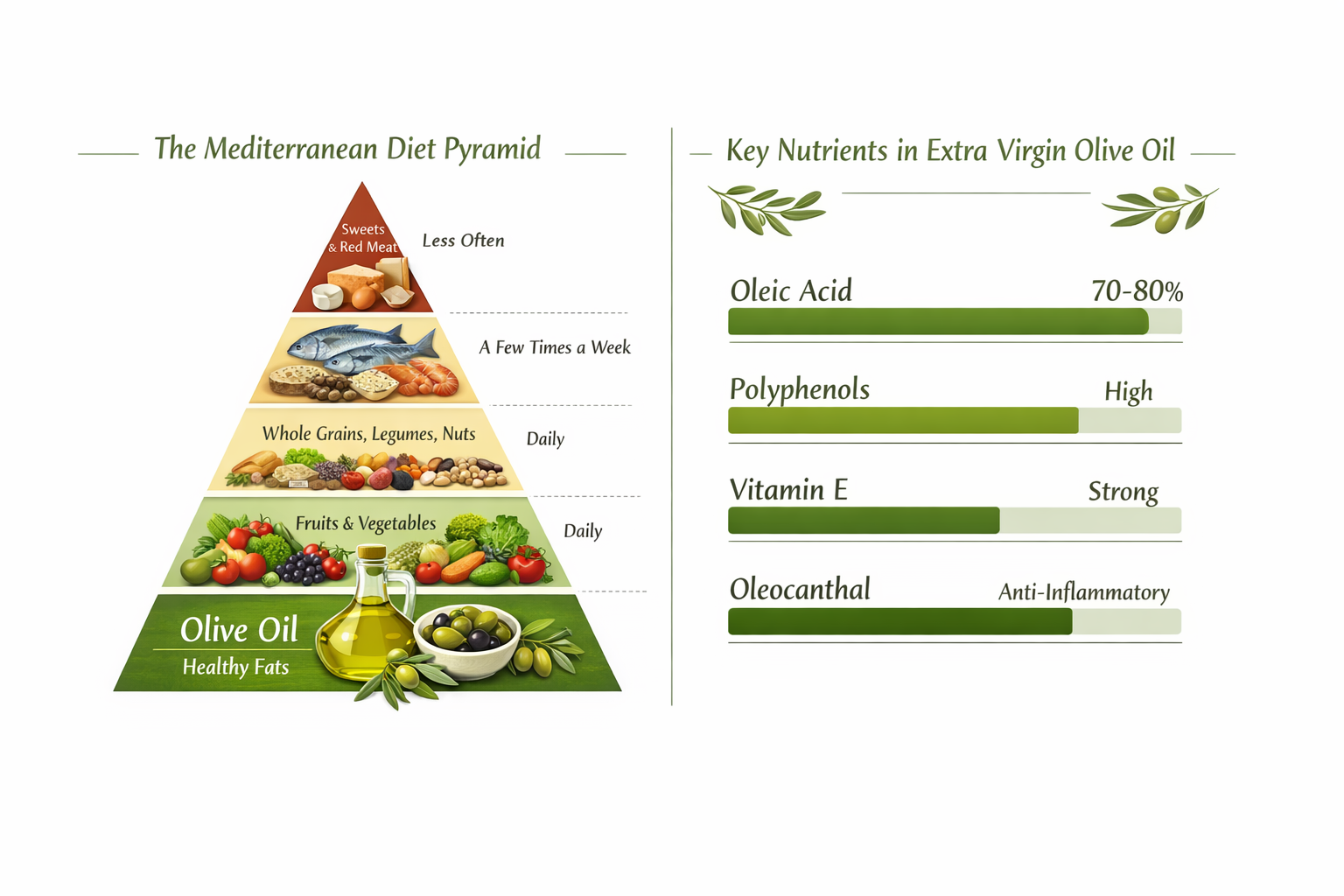
The Mediterranean diet is the dietary framework in which olive oil’s benefits are best documented. It’s not a rigid meal plan — it’s a pattern of eating centered on whole, minimally processed foods.
Core components of the Mediterranean diet:
- Abundant vegetables, fruits, legumes, whole grains, and nuts
- Fish and seafood several times per week
- Moderate amounts of poultry, eggs, and dairy
- Red meat limited to occasional consumption
- Extra virgin olive oil as the primary added fat
- Minimal ultra-processed foods, refined sugars, and industrial seed oils
Olive oil is foundational to this pattern — used for cooking, dressing salads, finishing soups, and dipping bread. The diet’s cardiovascular and longevity benefits documented in large studies like PREDIMED are inseparable from EVOO’s central role.
For a deeper look at Mediterranean eating, including meal ideas and food lists, see our Mediterranean food guide.
Comparison: Extra Virgin vs. Virgin vs. Refined Olive Oil
| Feature | Extra Virgin | Virgin | Refined/Light |
|---|---|---|---|
| Processing method | Cold-pressed, no chemicals | Cold-pressed, minor defects allowed | Chemical/heat refining |
| Free acidity | Below 0.8% | Below 2% | Negligible (neutralized) |
| Polyphenol content | High | Moderate | Very low |
| Oleocanthal present | Yes | Trace amounts | No |
| Smoke point | ~375°F (190°C) | ~390°F (199°C) | ~465°F (240°C) |
| Flavor | Fruity, peppery, grassy | Mild, slightly fruity | Neutral |
| Best use | Raw, low-heat cooking | Everyday cooking | High-heat cooking |
| Health benefit level | Highest | Moderate | Lowest |
How Much Olive Oil Should You Consume Daily?
Most nutrition research points to 1–4 tablespoons (15–60 ml) per day as the range associated with health benefits, with 2 tablespoons (30 ml) being a practical, sustainable daily target for most adults.
This amount provides:
- Approximately 240 calories
- Around 22 grams of monounsaturated fat
- A meaningful dose of polyphenols (assuming EVOO is used)
Practical ways to hit this target:
- Drizzle 1 tablespoon over a salad or cooked vegetables
- Use 1 tablespoon for sautéing vegetables or protein
- Finish soups, grains, or legume dishes with a light drizzle before serving
- Use EVOO as a bread dip instead of butter
Who should be cautious: People with very high caloric restriction needs (e.g., under medical supervision for obesity) should account for olive oil’s caloric density. Those with rare fat malabsorption conditions should consult a physician before significantly increasing fat intake.
📂 15 Proven Health Benefits of Olive Oil
This article is part of the APH cluster. Use the links below to move between the pillar and child articles.
- YOU ARE HERE 15 Proven Health Benefits of Olive Oil (And What the Science Actually Says)
- → 7 Evidence-Based Health Benefits of Avocados (Heart, Brain & More)
- → Health Benefits of Dark Chocolate: What the Evidence Says (2026)
- → 14 Evidence-Based Health Benefits of Coffee
- → Banana Nutrition Facts: Calories, Benefits and Best Ways to Eat Them (2026)
- → Hard-Boiled Egg Nutrition: Calories, Protein and Health Benefits
Frequently Asked Questions
Is extra virgin olive oil better than regular olive oil for health?
Yes, significantly. Extra virgin olive oil retains the full spectrum of polyphenols, oleocanthal, and vitamin E that are largely destroyed during the refining process used to make regular or “light” olive oil. For health purposes, EVOO is the clear choice.
Can I cook with extra virgin olive oil, or does heat destroy its benefits?
You can cook with EVOO at low to medium heat (up to about 375°F/190°C). Some polyphenols are reduced by heat, but the oil remains stable and retains most of its health-relevant fatty acid profile. For high-heat frying, refined olive oil or avocado oil is more appropriate.
How do I know if my olive oil is genuine and high quality?
Look for a harvest date (not just a “best by” date) within the past 18–24 months, a named region or estate of origin, and a certification seal (such as the California Olive Oil Council, EU Protected Designation of Origin, or similar). Genuine EVOO should have a distinctly fruity or grassy aroma and a mild peppery finish.
Does olive oil expire?
Yes. Olive oil oxidizes over time, which degrades its flavor and reduces its polyphenol content. Consume within 18–24 months of harvest, and within 3–6 months of opening. Store in a dark, cool place — away from heat sources and direct light. A tinted glass bottle or tin is ideal.
Can I use olive oil on my face every day?
For dry or normal skin types, daily use as a moisturizer or facial oil is generally safe and beneficial. For oily, acne-prone, or combination skin, daily use may worsen breakouts due to oleic acid’s occlusive properties. Test on a small area first and monitor your skin’s response.
Is olive oil safe during pregnancy?
Yes. Olive oil is a safe and nutritious fat source during pregnancy. Its vitamin E content and anti-inflammatory properties are beneficial for both maternal and fetal health. There are no known contraindications for normal dietary amounts.
Does olive oil help with constipation?
Olive oil can act as a mild laxative when consumed on an empty stomach. A tablespoon of EVOO in the morning is a traditional remedy for occasional constipation. It lubricates the intestinal walls and may stimulate bile production, which aids bowel movement. For broader digestive support strategies, see our guide to soothing your stomach naturally.
Can children consume olive oil?
Yes. Olive oil is appropriate for children from the time solid foods are introduced. Its monounsaturated fat content supports healthy brain development and growth. It can be drizzled over purees, mixed into soft foods, or used in family cooking.
Is olive oil good for hair?
Olive oil is commonly used as a hair mask or scalp treatment for dryness and frizz. It can temporarily improve hair’s moisture and shine, particularly for coarse or dry hair types. It’s not a substitute for medical treatment for scalp conditions like seborrheic dermatitis.
What’s the difference between olive oil and olive pomace oil?
Olive pomace oil is extracted from the solid residue (pomace) left after the first pressing, using chemical solvents. It is nutritionally inferior to EVOO or virgin olive oil and contains significantly fewer polyphenols. It’s used primarily in industrial food production and is not recommended as a health-focused dietary oil.
Sources
-
Estruch R, et al. “Primary Prevention of Cardiovascular Disease with a Mediterranean Diet Supplemented with Extra-Virgin Olive Oil or Nuts.” New England Journal of Medicine (2018). https://pubmed.ncbi.nlm.nih.gov/29897866/
In this guide
- What Makes Olive Oil So Healthy? Understanding Its Key Compounds
- What Are the Different Types of Olive Oil — and Which Should You Buy?
- How Does Olive Oil Support Heart Health?
- Can Olive Oil Help Prevent Stroke?
- Does Olive Oil Help With Blood Sugar and Type 2 Diabetes Risk?
- What Are Olive Oil’s Anti-Inflammatory Properties?
- Can Olive Oil Protect Brain Health and Reduce Alzheimer’s Risk?
- Does Olive Oil Support Weight Management?
- What Are the Skin Benefits of Olive Oil?
- Can Olive Oil Help Fight Harmful Bacteria and Support Gut Health?
- Does Olive Oil Have Anti-Cancer Properties?
- How Does Olive Oil Fit Into the Mediterranean Diet?
- Comparison: Extra Virgin vs. Virgin vs. Refined Olive Oil
- How Much Olive Oil Should You Consume Daily?
Valls-Pedret C, et al. “Mediterranean Diet and Age-Related Cognitive Decline.” JAMA Internal Medicine (2015). https://jamanetwork.com/journals/jamainternalmedicine/fullarticle/2293082
Guasch-Ferré M, et al. “Olive Oil Intake and Risk of Cardiovascular Disease and Mortality in the PREDIMED Study.” BMC Medicine (2014). https://pubmed.ncbi.nlm.nih.gov/24886626/
Parkinson L, Keast R. “Oleocanthal, a Phenolic Derived from Virgin Olive Oil: A Review of the Beneficial Effects on Inflammatory Disease.” International Journal of Molecular Sciences (2014). https://pubmed.ncbi.nlm.nih.gov/25019344/
Schwingshackl L, Hoffmann G. “Monounsaturated Fatty Acids, Olive Oil and Health Status.” Lipids in Health and Disease (2014). https://pubmed.ncbi.nlm.nih.gov/25274026/
Cicerale S, Lucas LJ, Keast RS. “Antimicrobial, Antioxidant and Anti-Inflammatory Phenolic Activities in Extra Virgin Olive Oil.” Current Opinion in Biotechnology (2012). https://pubmed.ncbi.nlm.nih.gov/22000808/
More great articles that may be of interest to you 🙂
Cinnamon Benefits for Skin: 11 Science-Backed Benefits
5 Best Oils For Dry Skin: Benefits, Uses, FAQs

Dave James has spent 30+ years reading health and longevity research, and has run All Perfect Health for the past five. His background is in Australian mining and industrial engineering — disciplines built on questioning claims, measuring outcomes, and respecting evidence. He writes about what the research actually says, including where the experts disagree.
More about Dave & this site →
For the full picture on how natural foods and herbs support health, see the broader guide on Health Benefits of Natural Foods and Herbs.