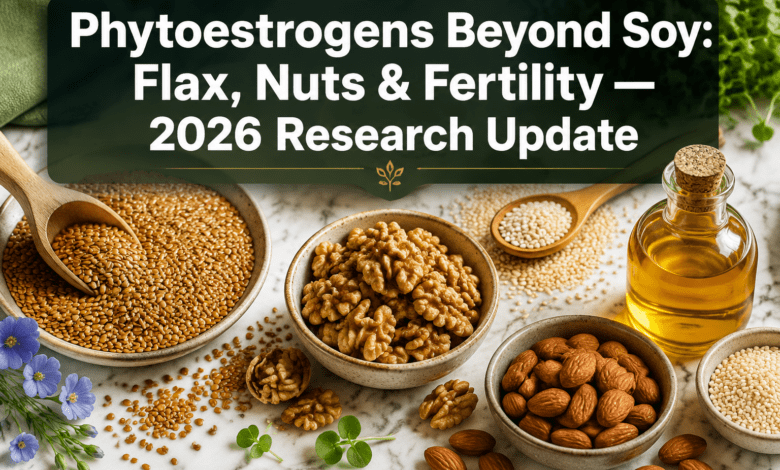
Phytoestrogens Beyond Soy: Flax, Nuts, and Fertility Impacts in 2026 Research
Last updated: May 10, 2026
Quick Answer: Phytoestrogens are plant compounds that interact with estrogen receptors in the body. Research in 2026 confirms they are found in far more foods than soy — including flaxseeds, walnuts, sesame seeds, and cruciferous vegetables. Their effects on fertility are real but context-dependent: higher phytoestrogen exposure is associated with improved IVF outcomes in some women, while effects on male fertility and on women with normal cycles remain less clear.
Key Takeaways
- Phytoestrogens are not just a soy story. Flaxseeds, nuts, seeds, sprouts, and legumes all contribute meaningful amounts. [2]
- Lignans — the dominant phytoestrogen in flaxseed — show inconsistent effects on fertility across studies, with some cohorts showing small gains and others showing slight decreases. [3]
- Higher phytoestrogen levels in follicular fluid are associated with increased implantation probability (odds ratio: 2.57), clinical pregnancy, and live birth rates in IVF patients. [2]
- Isoflavone intake may improve per-cycle conception probability (fecundability ratios of 1.12–1.19) in women aged 30 and over. [3]
- One systematic review found dietary isoflavones alone do not have a clear direct positive or negative effect on fertility — other compounds in plant foods may also matter. [1]
- Phytoestrogen-rich diets may offer some protection against endocrine-disrupting chemicals like bisphenol A. [2]
- Effects on estrogen metabolism ratios after flaxseed supplementation are inconsistent across studies. [4]
- Blood and urine testing for phytoestrogen metabolites is now available and increasingly used in clinical fertility assessments.
- Dosage thresholds matter. More is not always better, and individual metabolism — particularly gut microbiome composition — heavily shapes outcomes.
- Always discuss dietary changes with a qualified clinician before making significant adjustments during fertility treatment.
In this guide
- What Are Phytoestrogens and Why Does the Soy Conversation Miss the Bigger Picture?
- How Do Phytoestrogens Actually Affect Hormones?
- What Does 2026 Research Say About Flaxseed, Lignans, and Fertility?
- Nuts and Seeds: Which Ones Matter Most for Phytoestrogen Intake?
- Do Phytoestrogens Affect Male Fertility?
- Can Phytoestrogens Protect Against Environmental Estrogen Disruptors?
- Blood and Urine Testing for Phytoestrogen Exposure: What Is Available in 2026?
- Phytoestrogens Beyond Soy: Practical Dosage Guidance for 2026
- Common Mistakes and Edge Cases to Avoid
- FAQ: Phytoestrogens, Flax, Nuts, and Fertility
- Conclusion: What Actually Matters Here
What Are Phytoestrogens and Why Does the Soy Conversation Miss the Bigger Picture?
Phytoestrogens are naturally occurring plant compounds that can bind to estrogen receptors in the human body. They do not behave identically to the body’s own estrogen — they tend to produce weaker effects, and whether they act as mild estrogen mimics or mild estrogen blockers depends heavily on the tissue type, the individual’s hormonal environment, and the dose.
The public conversation has been almost entirely focused on soy. That focus is understandable — soy is a concentrated source of isoflavones — but it has created a blind spot. Phytoestrogens beyond soy: flax, nuts, and fertility impacts in 2026 research are now receiving serious scientific attention, and the picture that emerges is more nuanced and more useful than the soy debate alone.
The three main classes of dietary phytoestrogens are:
| Class | Primary Food Sources | Key Compounds |
|---|---|---|
| Isoflavones | Soy, legumes, split peas | Genistein, daidzein |
| Lignans | Flaxseed, sesame, whole grains, nuts | Secoisolariciresinol, enterolactone |
| Coumestans | Sprouts, clover, alfalfa | Coumestrol |
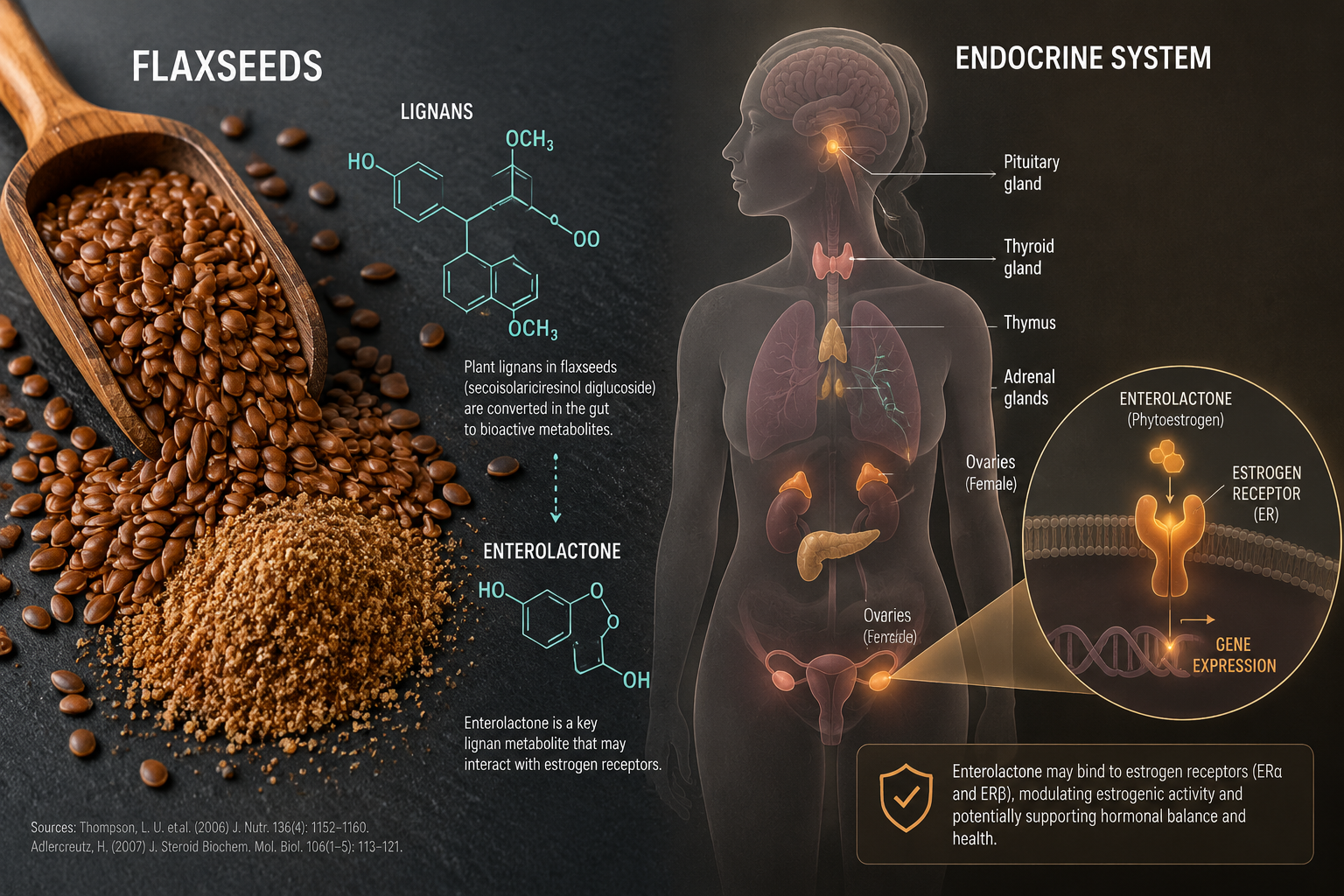
Flaxseed is by far the richest dietary source of lignans. A single tablespoon of ground flaxseed contains roughly 85 mg of secoisolariciresinol diglucoside (SDG), which gut bacteria convert into the active metabolites enterodiol and enterolactone. Walnuts, sesame seeds, and cruciferous vegetables contribute smaller but meaningful amounts. [3]
In plain English: if you eat a varied whole-food diet with seeds, nuts, and legumes, you are already consuming phytoestrogens — whether or not soy is on your plate.
How Do Phytoestrogens Actually Affect Hormones?
Phytoestrogens bind to both estrogen receptor alpha (ERα) and estrogen receptor beta (ERβ), but they show a preference for ERβ. This matters because ERα and ERβ have different distributions across tissues — ERβ is more prominent in the ovaries, brain, and bone, while ERα dominates in the uterus and breast tissue.
The practical result is that phytoestrogens do not simply “add estrogen” to the system. Their effects depend on:
- The individual’s baseline estrogen levels. In a low-estrogen environment (post-menopause, for example), phytoestrogens may produce mild estrogenic effects. In a high-estrogen environment, they may compete with endogenous estrogen and produce a net anti-estrogenic effect.
- Gut microbiome composition. Lignans from flaxseed must be converted by gut bacteria into active metabolites. People with different microbiome profiles produce very different amounts of enterolactone from the same flaxseed dose. This is one reason study results vary so much between individuals. [4]
- Dose and duration. Short-term supplementation studies often show different results from long-term dietary patterns.
Here’s the real issue: most public discussion treats phytoestrogens as a single category with a single effect. They are not. The class, the dose, the individual’s biology, and the food matrix all shape what actually happens.
“The evidence suggests that phytoestrogen effects are highly context-dependent — the same compound can behave differently depending on the hormonal environment, the tissue, and the individual’s microbiome.”
What Does 2026 Research Say About Flaxseed, Lignans, and Fertility?
The lignan story is where things get genuinely interesting — and genuinely complicated. Let’s keep this practical.
The positive signals:
Research has found that lignan intake is associated with slightly increased fecundability (the probability of conception per menstrual cycle) in some study cohorts. [3] Fecundability ratios in the range of 1.12–1.19 have been observed with increasing isoflavone intake in women aged 30 and over, suggesting a modest but real effect for this group. [3]
Higher phytoestrogen concentrations in follicular fluid — the fluid that surrounds the developing egg — have been significantly associated with better IVF outcomes, including implantation (odds ratio: 2.57), clinical pregnancy, and live birth rates. [2] That is a meaningful association, not a trivial one.
The complicating signals:
The same body of research shows that lignan intake decreased fecundability in other cohorts. [3] Results on estrogen metabolism ratios after flaxseed supplementation are inconsistent — some studies show changes in the 2:16α-hydroxylation ratio (a marker of estrogen metabolism), others show no difference at all. [4]
One systematic review concluded that dietary isoflavones do not have a clear direct positive or negative effect on fertility, and suggested that other phytochemicals in plant foods — particularly in black soy — may be contributing to observed benefits. [1]
What this means in real-world terms:
- Flaxseed is not a fertility drug. It is a food with biologically active compounds whose effects vary by individual.
- A sensible starting point is 1–2 tablespoons of ground flaxseed daily as part of a varied diet, rather than high-dose supplementation.
- Women undergoing IVF may have particular reason to pay attention to overall phytoestrogen intake, based on the follicular fluid data. [2]
- Anyone expecting a guaranteed outcome from flaxseed alone is going to be disappointed. There is no magic in it.
Nuts and Seeds: Which Ones Matter Most for Phytoestrogen Intake?
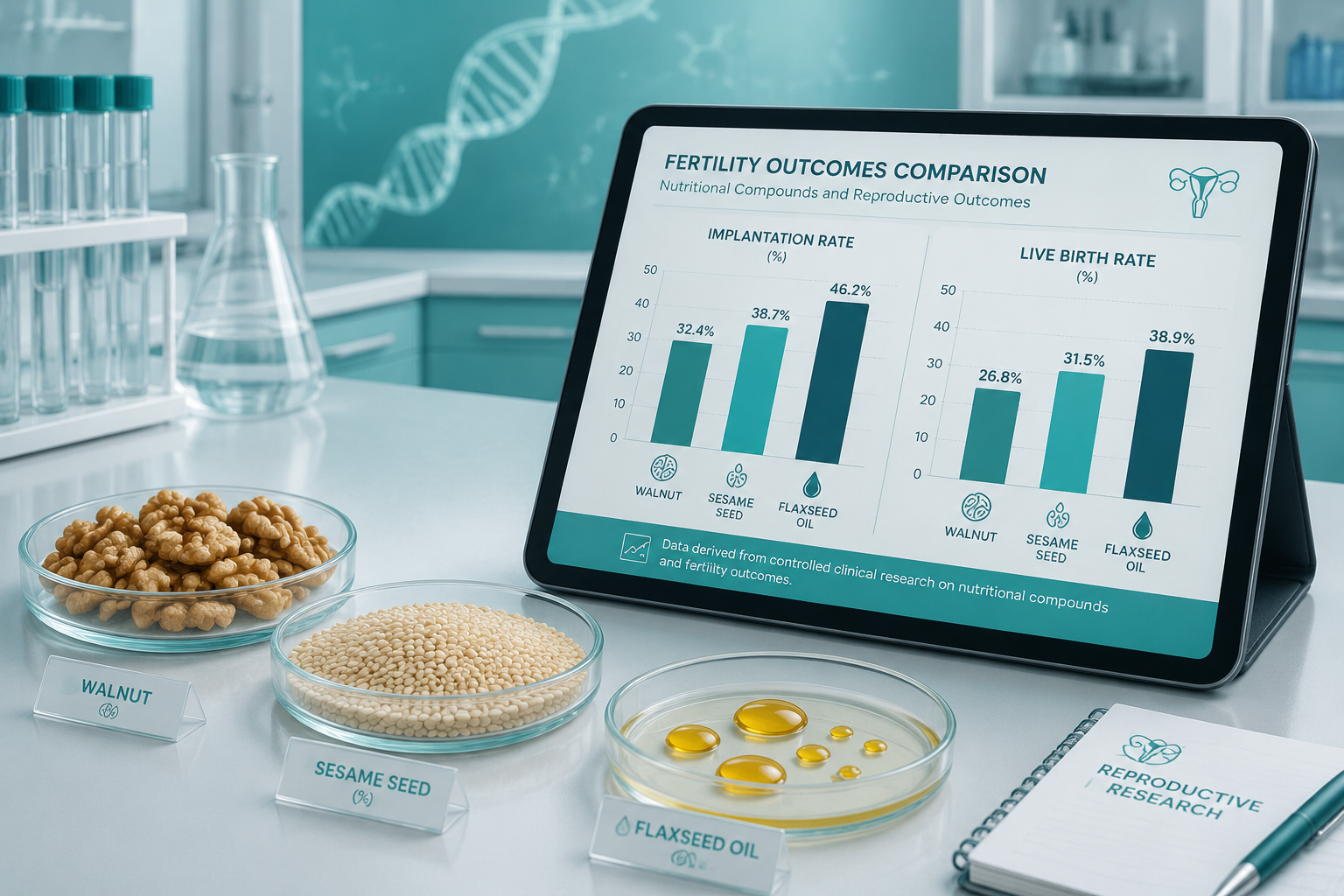
Phytoestrogens beyond soy — flax, nuts, and fertility impacts in 2026 research — increasingly point to a broader dietary pattern rather than any single food. Here is a practical breakdown of the non-soy sources that contribute most meaningfully.
Flaxseed (ground)
The clear leader for lignans. Ground flaxseed is far more bioavailable than whole seeds, which largely pass through undigested. Aim for ground or milled flaxseed rather than whole seeds. [3]
Sesame seeds
A solid secondary source of lignans, particularly sesamin and sesamolin. Tahini and sesame oil retain some lignan content, though less than whole seeds.
Walnuts
Walnuts contain lignans and also provide alpha-linolenic acid (ALA), an omega-3 fatty acid with its own anti-inflammatory properties. The combination may be relevant for reproductive health, though the research is not yet definitive.
Sunflower seeds and pumpkin seeds
Moderate lignan contributors. Worth including in a varied diet but not the primary lever to pull.
Cruciferous vegetables (broccoli, Brussels sprouts, cabbage)
These contain coumestans and some lignans. They also contain indole-3-carbinol, which influences estrogen metabolism independently of phytoestrogen receptor binding. [3]
Split peas and lentils
Often overlooked, split peas are a meaningful source of isoflavones. [3] They fit easily into everyday meals and contribute to overall phytoestrogen exposure without requiring any special dietary approach.
A practical daily pattern that covers multiple phytoestrogen classes without overdoing any single source:
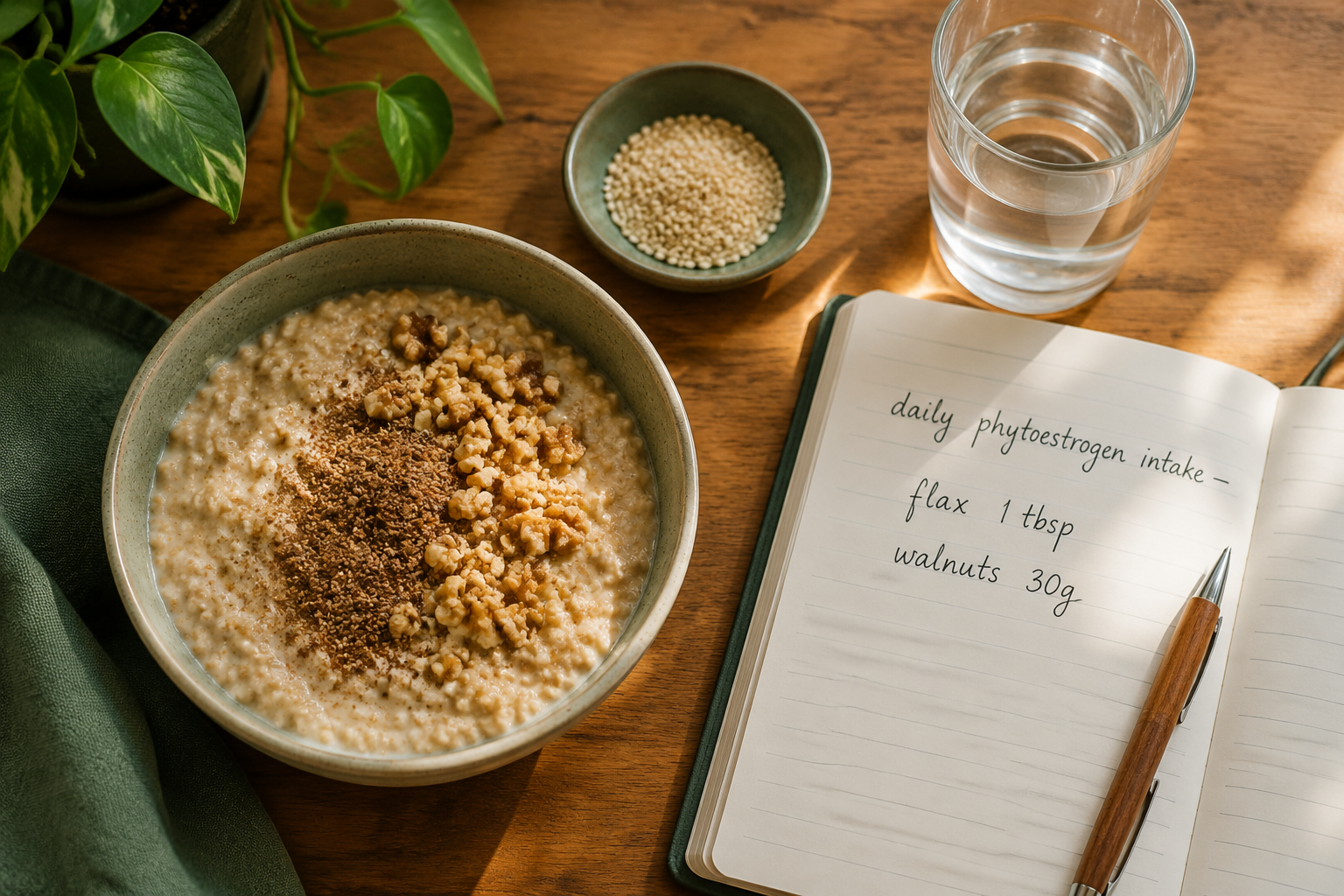
- 1 tbsp ground flaxseed added to oatmeal or yogurt
- A small handful of walnuts (approximately 30g)
- Regular inclusion of lentils or split peas in main meals
- Broccoli or Brussels sprouts 3–4 times per week
This is not a protocol. It is a sensible, food-first approach that aligns with a broader anti-inflammatory dietary pattern and does not require supplementation.
Do Phytoestrogens Affect Male Fertility?
This is a question that generates more heat than light in online discussions. Let’s call it what it is: the evidence in men is limited, and the alarm is largely disproportionate to what the data actually shows.
What the research shows:
- Most human studies on phytoestrogens and male fertility are small, short-term, and confounded by other dietary factors.
- High-dose isoflavone supplementation (well above typical dietary levels) has shown some effects on hormone levels in case reports, but population-level dietary studies have not consistently found negative effects on sperm parameters from normal food intake.
- The concern is biologically plausible — phytoestrogens can interact with androgen pathways — but the threshold at which this becomes clinically relevant from food sources alone is not clearly established.
The practical position:
Men consuming phytoestrogens through a normal varied diet — including moderate amounts of flaxseed, nuts, and legumes — are not in territory where the current evidence suggests harm. That said, very high-dose supplementation (e.g., concentrated isoflavone supplements at doses far above dietary levels) is a different matter, and I would be careful with that until better data exists.
Context matters here. A man eating a tablespoon of ground flaxseed daily is in a very different position from someone taking high-dose phytoestrogen supplements. The numbers matter, and the dose makes the difference.
Can Phytoestrogens Protect Against Environmental Estrogen Disruptors?
This is one of the more interesting angles in recent research. The evidence suggests that phytoestrogen-rich diets may offer some protection against endocrine-disrupting chemicals — specifically bisphenol A (BPA) and similar compounds found in plastics and food packaging. [2]
The proposed mechanism is competitive binding: phytoestrogens occupy estrogen receptors, potentially reducing the binding of more disruptive synthetic estrogens. Whether this translates into meaningful clinical protection is still being studied, but the signal is consistent enough to be worth noting.
For people concerned about environmental factors that affect health, a diet that naturally includes phytoestrogen-containing whole foods may offer a modest additional layer of resilience — without requiring any special supplementation.
There is also early evidence that phytoestrogen-rich diets may help protect against fertility damage from pelvic irradiation in cancer treatment contexts. [2] This is a specific clinical situation and not a general recommendation, but it illustrates that the biological effects are real and can work in protective directions.
Blood and Urine Testing for Phytoestrogen Exposure: What Is Available in 2026?
Testing for phytoestrogen exposure is now clinically available and increasingly used in fertility assessments. This is a practical development worth understanding.
What can be measured:
- Urinary isoflavones (genistein, daidzein, equol): Equol is a metabolite of daidzein produced by specific gut bacteria. Only about 30–50% of people are “equol producers,” and this significantly affects how isoflavones behave in the body.
- Serum and urinary lignans (enterolactone, enterodiol): These reflect lignan intake and gut conversion efficiency. Follicular fluid phytoestrogen levels have been measured in IVF research and correlate with outcomes. [2]
- Spot urine vs. 24-hour urine: Most clinical tests use spot urine samples with creatinine correction. 24-hour urine collection is more accurate but impractical for routine use.
Who might consider testing:
- Women undergoing IVF or assisted reproduction who want to understand their phytoestrogen exposure
- Individuals with unexplained hormonal irregularities
- People making significant dietary changes involving phytoestrogen-rich foods and wanting a baseline
What testing cannot tell you:
Testing shows exposure and metabolite levels — it does not tell you what the optimal level is for your specific fertility situation. The research has not yet established clear target ranges. Use testing as information, not as a prescription.
A qualified reproductive endocrinologist or functional medicine clinician can help interpret results in the context of a full hormonal picture.
Phytoestrogens Beyond Soy: Practical Dosage Guidance for 2026
We need to separate fact from hype here. There are no universally agreed clinical dosage thresholds for phytoestrogens from food sources in the context of fertility. What exists is a reasonable evidence base that allows some practical guidance.
For women:
- Lignans from flaxseed: 1–2 tablespoons of ground flaxseed daily (approximately 85–170 mg SDG) is the range used in most research. This is a food dose, not a supplement dose.
- Isoflavones from legumes: Regular inclusion of lentils, split peas, and beans provides a meaningful dietary contribution without approaching the high doses used in supplementation studies.
- IVF context: Based on follicular fluid data [2], maintaining a phytoestrogen-inclusive diet in the months before and during IVF cycles appears reasonable. Discuss this specifically with your reproductive specialist.
- Women over 30: The fecundability data showing ratios of 1.12–1.19 with isoflavone intake applies specifically to this age group. [3] Younger women with normal cycles have less evidence supporting a specific benefit.
For men:
- Dietary phytoestrogen intake from whole foods at normal levels is not currently associated with harm in the evidence base.
- Avoid high-dose isoflavone supplements without clinical guidance.
- If there are existing concerns about sperm parameters, discuss dietary phytoestrogen intake with a urologist or reproductive specialist.
General principle: Start with what gives the biggest return — a varied whole-food diet that naturally includes seeds, nuts, and legumes. That covers the phytoestrogen base without requiring any specific supplementation. For more on how fiber-rich foods fit into this pattern, see our guide to high fiber foods and their benefits.
Common Mistakes and Edge Cases to Avoid
Mistake 1: Treating all phytoestrogens as interchangeable
Lignans and isoflavones are different compounds with different mechanisms and different food sources. Research findings from isoflavone studies do not automatically apply to lignans, and vice versa.
Mistake 2: Assuming more is better
More is not always better. High-dose phytoestrogen supplementation is not the same as dietary inclusion, and the safety profile at very high doses is less established. Stick to food sources unless a clinician recommends otherwise.
Mistake 3: Ignoring gut microbiome variability
Whether you produce equol (from isoflavones) or efficiently convert lignans to enterolactone depends heavily on your gut bacteria. [4] Two people eating identical diets can have very different phytoestrogen metabolite profiles. This is why population averages from studies may not reflect your individual response. For context on how gut health shapes nutrient metabolism, see our gut health and digestive wellness guide.
Mistake 4: Relying on phytoestrogens as a standalone fertility strategy
The evidence supports phytoestrogen-inclusive diets as one component of a broader healthy dietary pattern — not as a primary fertility intervention. Sleep, physical activity, stress management, and overall diet quality all matter. For a broader view of lifestyle factors, see daily habits of people who live past 90.
Edge case: Thyroid conditions
Isoflavones can interfere with thyroid hormone synthesis and thyroid medication absorption at high doses. People with hypothyroidism should discuss dietary phytoestrogen intake with their endocrinologist before making significant changes.
Edge case: Hormone-sensitive conditions
Women with estrogen-receptor-positive breast cancer history or other hormone-sensitive conditions should seek specific clinical guidance before increasing phytoestrogen intake, even from food sources.
FAQ: Phytoestrogens, Flax, Nuts, and Fertility
Q: Is flaxseed safe to eat every day when trying to conceive?
For most healthy adults, 1–2 tablespoons of ground flaxseed daily is within the range studied in research and is generally considered safe. Always confirm with your doctor if you are in active fertility treatment.
Q: Do phytoestrogens raise estrogen levels?
Not reliably. Their effect depends on your baseline estrogen levels, the tissue type, and your individual metabolism. They can act as weak estrogen mimics or mild estrogen blockers depending on context.
Q: Which nuts are highest in phytoestrogens?
Walnuts and pistachios contain the most meaningful lignan content among common nuts. Sesame seeds, while technically a seed, are also a strong source.
Q: Can phytoestrogens help with IVF success?
Higher phytoestrogen levels in follicular fluid have been associated with better implantation and live birth rates in IVF research. [2] This does not mean supplementing with phytoestrogens guarantees better outcomes — discuss dietary strategy with your reproductive specialist.
Q: Do phytoestrogens affect sperm quality?
At normal dietary intake levels, the current evidence does not consistently show harm to sperm parameters. Very high-dose supplementation is a different situation and warrants clinical guidance.
Q: What is equol and why does it matter?
Equol is a metabolite produced when gut bacteria convert the isoflavone daidzein. It is more biologically active than daidzein itself. Only about 30–50% of people produce equol, which partly explains why isoflavone research results vary so much between individuals.
Q: Can I test my phytoestrogen levels?
Yes. Urinary and serum testing for phytoestrogen metabolites (enterolactone, equol, genistein, daidzein) is clinically available. Interpretation requires clinical context — there are no established optimal ranges for fertility specifically.
Q: Are phytoestrogen supplements better than food sources?
Based on current evidence, food sources are preferable. They come with fiber, polyphenols, and other compounds that may contribute to the observed effects. High-dose supplements carry more uncertainty and less evidence of benefit. For more on the role of polyphenols in health, see what are polyphenols and their benefits.
Q: Does cooking destroy phytoestrogens in flaxseed and nuts?
Lignans in flaxseed are relatively heat-stable and survive moderate cooking temperatures. Baking with ground flaxseed retains most of its lignan content.
Q: How long does it take for dietary phytoestrogens to affect hormone levels?
Most studies that show measurable effects use intervention periods of 4–12 weeks. Short-term changes of a few days are unlikely to produce significant hormonal shifts from food sources.
Conclusion: What Actually Matters Here
The main takeaway from phytoestrogens beyond soy — flax, nuts, and fertility impacts in 2026 research — is this: the evidence is real, the effects are context-dependent, and a food-first approach is the most defensible starting point.
Flaxseeds, walnuts, sesame seeds, lentils, and cruciferous vegetables all contribute to phytoestrogen intake in ways that matter biologically. The strongest signal in current research points to improved IVF outcomes associated with higher phytoestrogen exposure, particularly in follicular fluid. [2] The fecundability data for women over 30 is modest but consistent. [3] The lignan data is mixed and warrants honest acknowledgment of that uncertainty. [3][4]
Actionable next steps:
- Add ground flaxseed to your daily routine. One tablespoon in oatmeal, yogurt, or a smoothie is a practical, evidence-aligned starting point.
- Diversify your seed and nut intake. Walnuts, sesame seeds, and sunflower seeds all contribute to a broader phytoestrogen profile.
- Include legumes regularly. Lentils and split peas are underrated sources that fit easily into everyday meals.
- Support your gut microbiome. Since gut bacteria determine how well you convert phytoestrogens into active metabolites, overall gut health matters. See our guide to probiotics vs prebiotics for gut health for practical context.
- Consider testing if you are in active fertility treatment. Urinary phytoestrogen metabolite testing can give you a clearer picture of your actual exposure and conversion efficiency.
- Talk to your clinician. Particularly if you have thyroid issues, a history of hormone-sensitive conditions, or are undergoing assisted reproduction.
The basics still do the heavy lifting here. A varied, whole-food diet that naturally includes seeds, nuts, and legumes is a reasonable, evidence-aware approach — without hype, without magic, and without the need to treat any single food as a solution.
📂 Plant Toxins & Antinutrients
This article is part of our cluster. You are reading the featured article below.
- → Enzyme Inhibitors in Raw Plant Foods: Why Cooking Matters More Than Influencers Admit
- → Pesticides vs Plant Toxins: Which Is the Bigger Threat to Your Health and the Environment?
- → Global Toxicity Hotspots: Plant Toxins Amplified in China, Brazil, US Crops
- → Plant Toxins and Brain Fog: New 2026 Studies Linking Phytates to Cognitive Decline
- → Climate Change and Plant Toxins: Rising Levels of Alkaloids and Glycosides in Crops
- → Histamine Intolerance and Plant Lectins: The Overlooked Gut-Brain Connection
- → Antinutrients and Athletic Performance: How Plant Toxins Sabotage Endurance and Recovery
- → Kids and Plant Toxins: Antinutrient Impacts on Growth, ADHD, and Developing Brains
- YOU ARE HERE Phytoestrogens Beyond Soy: Flax, Nuts, and Fertility Impacts in 2026 Research
- → Synergistic Plant Toxin Effects: How Oxalates Amplify Lectin Damage in the Gut
- → Antinutrients and Skin Health: How Tannins and Phytoestrogens Trigger Eczema Flares
- → What Plant Toxins Actually Do to Your Body: Effects on Digestion, Absorption and Inflammation
View the full Plant Toxins & Antinutrients cluster page →
References
[1] PMC8922143 — https://pmc.ncbi.nlm.nih.gov/articles/PMC8922143/ [2] PMC10342078 — https://pmc.ncbi.nlm.nih.gov/articles/PMC10342078/ [3] PMC7198303 — https://pmc.ncbi.nlm.nih.gov/articles/PMC7198303/ [4] PMC7468963 — https://pmc.ncbi.nlm.nih.gov/articles/PMC7468963/
Dave James has spent 30+ years reading health and longevity research, and has run All Perfect Health for the past five. His background is in Australian mining and industrial engineering — disciplines built on questioning claims, measuring outcomes, and respecting evidence. He writes about what the research actually says, including where the experts disagree.
More about Dave & this site →